
Tags
Acoustic Energy, AE500, audio, Beth Orton, Bowers & Wilkins, Chord, Cosmotron, Elbow, GoGo Penguin, Music, new-music, Peter Gabriel, reviews, Rush, Technology, Tori Amos
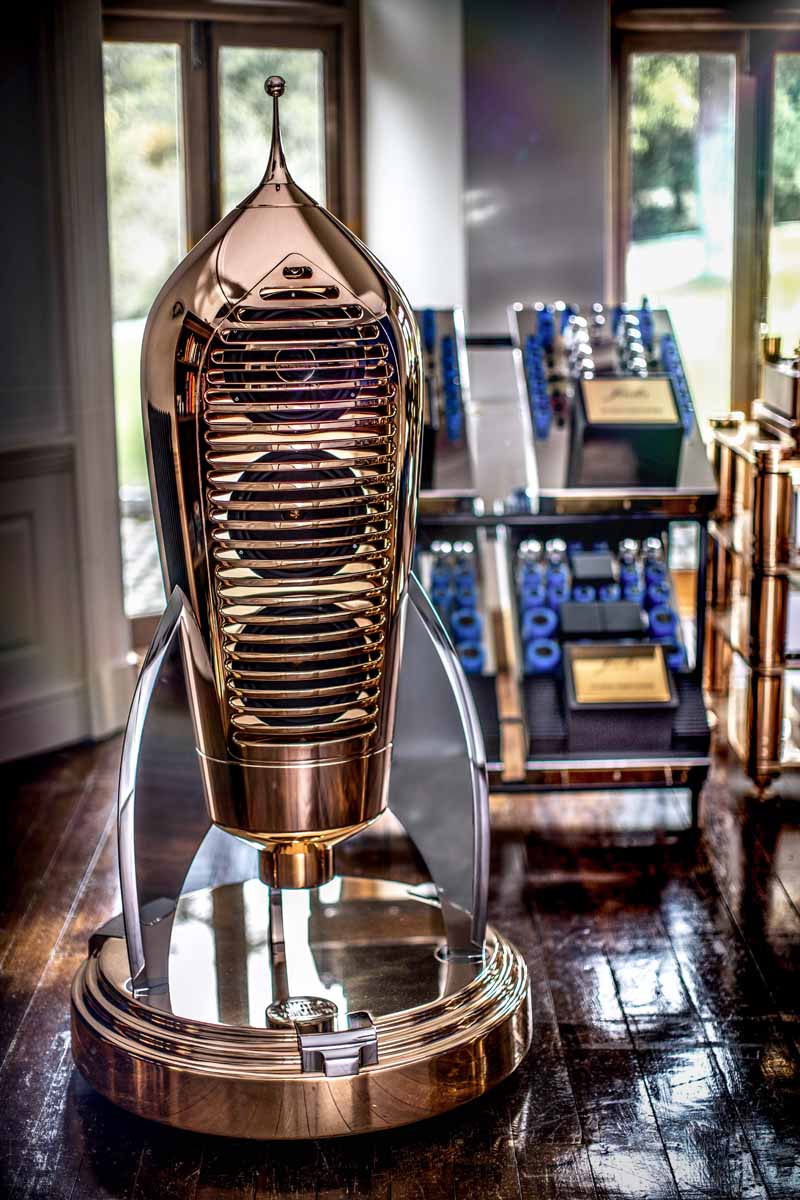
With some recent good news from work, I decided to treat myself to a speaker upgrade – Acoustic Energy 500s sat on some IsoAcoustic Aperta stands. While these would be considered audiophile – they’re still at the lower end – we’re not talking audio exotica like B& Nautilus at nearly hundred thousand pounds or the Cosmotron 130 at around the million pound mark.

So how can I decide and justify the expenditure, even if it’s a fraction of the loose change from the back of the sofa from buying these monsters? As friends have said to me in the past, the Samsung speakers on my stereo are just as good. Well there are a raft of things that will prevent speakers from performing well, from positioning, to the quality of their source.
The source material is often one of the biggest issues, particularly for rock and pop pushing the envelope with CDs. We saw what has become known as the loudness wars – where the dynamic range of the music was reduced. But music with a wide dynamic range with good speakers is great. A couple characteristics of good speakers is the containment of distortion – so if you have a song that is often quiet with occasional moments of loudness, the speaker drivers (cones) will be able to react properly to another sudden spike in signal occurs the sudden movement in the magnet moving the cone is handled rather than causing the speaker surface straining against its mounts.
Better speakers will result in better control of the cone (the visible bit of the speaker), making the cone’s movements more precisely revealing detail in the music. You’ll go from hearing a cymbal, to being able to tell how the cymbal was struck, a drum is no long a thump, but you’ll start to hear it resonate.
The cone moves backward and forwards to move the air, which affects air inside the speaker, not just outside. We don’t want the speaker casing to behave as a suction cup, preventing air movement and inhibiting the cone’s movement.
Improvements in speaker performance can help you recognize little details. For example, with a vocal performance, you’ll start to hear fine details, such as air drawn over the microphone as the singer inhales. You can also hear changes as a singer moves close to or away from the microphone, even if they alter their vocal volume.
I was experimenting with a loaned hi-fi kit once, listening to a Jamie Cullum live performance, and a detail that leapt out as I swapped in and out a piece of equipment was what sounded like background ambient noise, such as air conditioning. But suddenly, it became clear I wasn’t picking up ambient noise but the fan that was positioned behind Jamie.
It is always useful to have some good go-to pieces of music for trying out hi-fi. Being familiar with the music and knowing the production values applied means that if there are improvements, you’ll pick them up. So, what are my go-to pieces at the moment?
- Tori Amos – Me and a Gun — although any part of Little Earthquakes is good. This song is an acapella performance, recounting a rape. With just a voice, the miking of the vocal is very close, and you can hear the inhalation and the rawness of the performance.
- Beth Orton – Weather Alive — probably Beth’s best album to date. Here is another incredible voice, but also more delicate than Tori Amos, so the better the HiFi, the purer the performance will sound.
- GoGo Penguin – Branches Break from Man Made Objects – although just about any of their work will be good. This is a trio of piano, bass, and drums in a jazz/minimalist classical/chill beat crossover. This is a recording that should feel like it’s being performed in a big live sounding room. But you’ll hear each instrument clearly, particularly down to recognizing the loudness, varying attack, and decay of each note played.
- Rush – Red Sector A from Grace Under Pressure, perhaps not the best-produced album in the world, but before the loudness wars really took hold. Rush were a real bunch of prog rock musos with the late Neil Peart, who many considered to be one of the best ever drummers. This track will test the HiFi in terms of control – the drumming has a huge range of very fine cymbal work, some really deep bass drums, and tom-tom runs that make Phil Collin’s In The Air Tonight sound like child’s play.
- Elbow – One Day Like This – The Seldom Seen Kid (Live At Abbey Road Studios) — with a high-quality recording (Abbey Road’s special Half Speed Mastered edition), you’ll get a sense of staging and as the song grows scale with the choir. The strings will be natural and nuanced, in the early parts of the performance of the performance you’ll hear how dry Guy’s voice is – not a hint of vibrato or sibilance.
- Peter Gabriel – the Book Of Love — from Scratch My Back — another performance that should give a sense of staging and breadth with great dynamics and the strings swell and subside. Fronted by Peter’s voice which should weathered and world warn.
The list of music could go on. But, ultimately, it’s a very individual choice.
Final anecdote
Buying Hi-Fi is a law of diminishing returns. As you get better and better, the parts needed are more expensive and produced in fewer numbers, making the R&D more expensive, with costs to be covered by a small number of sales. But still, these esoteric, bank-crushing systems are amazing.
Some years back, I went to a HiFi show; if you’ve never been to such a show then picture this. A corridor of rooms is stripped of the beds and furnishings other than some chairs. Each company has a room and typically sets up its demo kit where the head of the bed would usually be. Everything would be positioned and mounted on professional hi-fi tables, etc, for the absolute best performance. The classic layout for a hotel room means as you walk into the room, you won’t see what is set, so the seconds it takes to walk past what is normally the bathroom is almost a blind test as you can’t see the HiFi, but you’ll be able to hear it.
So here we are, as we start to walk into a room that was pretty busy, so you didn’t see the main space for a minute or so, and we hear a performance of a beautifully played unaccompanied double bass. I could have sworn there was a musician in the room performing – the performance had that warmth, depth, and volume you’d expect. No hint of any recording artifacts. When we got to the main part of the room, we were stunned to see two speakers, big and rather boxy – no audio exotica beauty like Nautilus or Cosmotron — definitely all function, and little thought to form. With them, 3 large pieces of silver HiFisat on big chunky slabs of marble on the floor – what I assume to be a pre-amp and a power amp for each speaker. Plus a source – which might have been a turntable – but honestly, I can’t remember – whatever it was, the sound was breathtakingly natural sounding.

I do remember the price tags, and at the time, prices were around 50k a component- so little change out of a quarter of a million. It left me wishing I’d won the national lottery.
 Phil (aka MP3Monster)'s Blog