
• Home
  • Site Aliases
    • www.cloud-native.info
  • About
    • Background
    • Presenting Activities
    • Internet Profile
      • LinkedIn
    • About
  • Books & Publications
    • Log Generator
    • Logs and Telemetry using Fluent Bit
      • Fluent Bit book
      • Book Resources in GitHub
      • Fluent Bit Classic to YAML Format configurations
    • Logging in Action with Fluentd, Kubernetes and More
      • Logging in Action with Fluentd – Book
      • Fluentd Book Resources
      • Fluentd & Fluent Bit Additional stuff
    • API & API Platform
      • API Useful Resources
    • Oracle Integration
      • Book Website
      • Useful Reading Sources
    • Publication Contributions
  • Resources
    • GitHub
    • Oracle Integration Site
    • Oracle Resources
    • Mindmaps Index
    • Useful Tech Resources
      • Fluentd & Fluent Bit Additional stuff
      • Recommended Tech Podcasts
      • Official Sources for Product Logos
      • Java and Graal Useful Links
      • Python Setup & related stuff
      • DevTips
  • Music
    • Monster On Music
    • Music Listening
    • Music Reading

Phil (aka MP3Monster)'s Blog

~ from Technology to Music

Phil (aka MP3Monster)'s Blog

Tag Archives: IETF

Intersection of API documentation and Search optimisation

18 Wednesday Feb 2026

Posted by mp3monster in APIs & microservices, General, Technology

≈ Leave a comment

Tags

API, API Commons, APIs.io, Async API, IETF, OAS, RFC, specifications, Technology, WELL-KNOWN

I have long said that APIs are more than just payload definitions. For public APIs or those being made available within large organisations, where discoverability and making it easy for APIs to be adopted are just as important to the definition of the API. API specification standards such as Open API Specification and Asynchronous API Specification have addressed some of the challenges, the specifications don’t address everything.
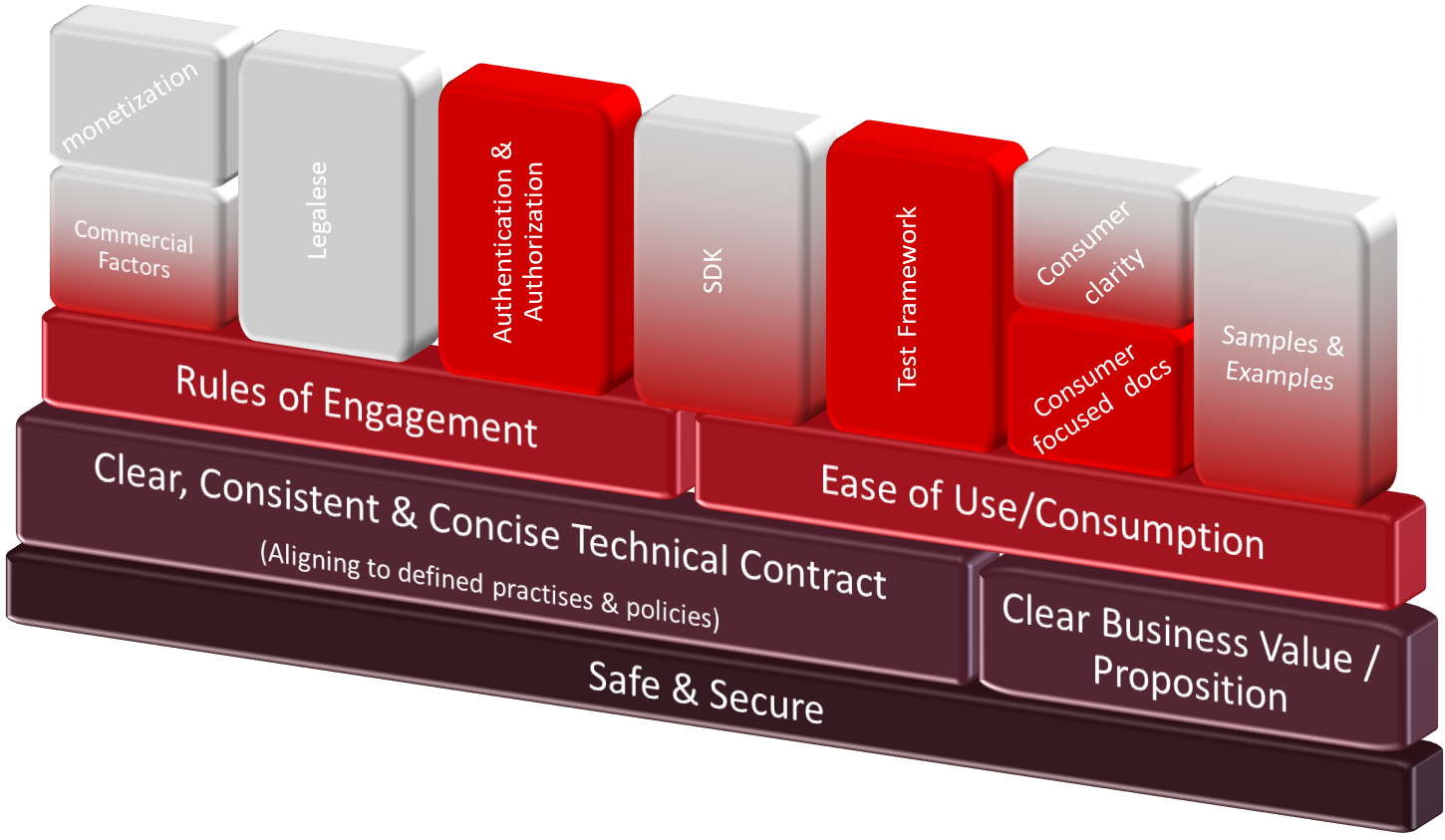
Diagram I was using in 2021, to convey the point that an API involves more than simply a specification – https://www.slideshare.net/slideshow/api-more-than-payload/247135283?utm_source=clipboard_share_button&utm_campaign=slideshare_make_sharing_viral_v2&utm_variation=control&utm_medium=share

I’ve recently been working on the public API and integration strategy for a product, and revisiting this very point to ensure there is time for the wider needs.

There is good news in this area. The IANA-governed WELL-KNOWN path has been added to as a result of the IETF RFC 9727, which defines a way of structuring a list of defined APIs for the api-catalog path (e.g., https://www.example.com/.well-known/api-catalog).

The URI then returns a JSON-based payload using the relatively new media type of linkset (application/linkset+json), which is consists of an anchor to the actual API. Additional attributes (per IETF recommendations) can be supplied to reference metadata, such as the API specification. and other attributes made up of an href and a type. The RFC includes a set of suggested additional metadata references, which could cover details such as:

Attribute NameDescription
service-docLink to the API specification document, such as the Open API Specification
statusLink to the endpoint providing status information the API, for example whether the service is currently available.
service-metaAdditional machine readable metadata that maybe needed.
availabilityDetails about the service availability, e.g. are there any SLAs/SLOs, when maintenance windows may occur etc
performanceDetails of any rate limits imposed upon the API
usageThe provider of the api-catalog may wish to correlate requests to the /.well-known/api-catalog URI with subsequent requests to the API URIs listed in the catalog
currentProvide information about which services may be deprecated or no longer available.
Suggested additional attributes.

Given this, the response data structure could look something like this:

{"linkset": [
{
"anchor": "https://developer.example.com/apis/foo_api",
"service-desc": [
{
"href": "https://developer.example.com/apis/foo_api/spec",
"type": "application/yaml"
}
],
"status": [
{
"href": "https://developer.example.com/apis/foo_api/status",
"type": "application/json"
}
],
"service-doc": [
{
"href": "https://developer.example.com/apis/foo_api/doc",
"type": "text/html"
}
]
},
[#... next API service]
}

This opens the door to referencing additional content that may not be available in the current API specifications (and for wrapping structural context around GraphQL APIs, which don’t have as good documentation semantics as OAS, for example). But, as we’ve mentioned, even OAS doesn’t provide an easy way to publish references to SDKs for example, which using the catalog could not be easily referenced. The question is: how do we identify these different building blocks? Here, apicommons.org can come to our rescue. Rather than provide a highly prescriptive specification like the OpenAPI Specification and others. It has reviewed the different standards and practices and identified the commonly needed resources, ranging from authentication details to versioning strategies. Each entry provides recommended tags or attributes to use, which map perfectly into the additional entries for the IETF 9727 linkset.

If you review all the aspects described in apicommons.org, you’ll note that the potential list of resources that you may wish to offer is extensive, and may not be best suited to all being in each catalog entry. This isn’t an issue. Alongside the API Commons site, there is another partner site, APIS.json. This offers a machine-readable API definition. It does not seek to compete with OAS, etc., or to disrupt or displace standards such as OAS; doing so would be a real uphill struggle, as it is too well adopted (to the point we’ve seen good alternatives such as API Blueprint, and RAML fall away to minimal or no advancement). APIs.json is a wrapper definition to the likes of OAS, providing a standardization of the elements identified by APICommons. So we could simplify our catalog to the mandatory API endpoint and a supporting reference to the API.json, which will bring all the resources mentioned together.

While these sights place a clear emphasis on JSON-centric APIs, nothing prevents much of this from being applied to non-JSON APIs (in fact, if you look at the spec for JSON.APIs, you’ll see references to technologies such as WADL and others). The only JSON restriction is that files must be defined in JSON or YAML.

Human-searchable API catalog

Until a few years ago, the Programmable Web website managed a curated catalog of APIs – and it was a fantastic resource, both for discovering potential third-party resources, but also ideas on how to best model your own API specifications, as the API Evangelist blogged that site has since closed its doors. With all the above efforts, there is clearly an opportunity to automate curation of public API services, which is much more viable. This is the direction APIs.io is taking: it is not crawling the web to collect API documents. However, given the support of a search engine and the WELL-KNOWN specification, it is certainly achievable and more a question of funding and, probably, investment in functionality to filter out poor or incomplete API specifications. Currently, to have an API integrated into the catalog, you must manually submit your APIs.json specification.

When using APIs.io, APIS.json, and API Commons, we should treat these resources with respect; they’re beautifully clean sites, knowledge-rich, with no advertising to fund them, and being paid for by the likes of Kin Lane (API Evangelist), Nicolas Grenier (Typeform Inc.), and Steven Willmott (Timewarp Labs).

Useful links

  • Nordic APIs on Linkset
  • API Commons
  • APIS.json
  • Open API Specification
  • Asynchronous API Specification
  • GraphQL Specification
  • API – more than a payload presentation
  • APIs.io searchable catalog
  • API Evangelist

Share this:

  • Share on Facebook (Opens in new window) Facebook
  • Share on X (Opens in new window) X
  • Share on Reddit (Opens in new window) Reddit
  • Email a link to a friend (Opens in new window) Email
  • Share on WhatsApp (Opens in new window) WhatsApp
  • Print (Opens in new window) Print
  • Share on Tumblr (Opens in new window) Tumblr
  • Share on Mastodon (Opens in new window) Mastodon
  • Share on Pinterest (Opens in new window) Pinterest
  • More
  • Share on Bluesky (Opens in new window) Bluesky
  • Share on LinkedIn (Opens in new window) LinkedIn
Like Loading...

Microservice & APIs Exploiting HTTP Response Codes

16 Tuesday Apr 2019

Posted by mp3monster in APIs & microservices, General, Technology

≈ Leave a comment

Tags

codes, HTTP, IANA, IETF, quickref, reference, RFC

When it comes to the use of micro-services and APIs. It appears pretty common for a few key response codes to be used. However, if you look at the IANA Status Code Registry of defined codes, there a number of other very useful codes that can help convey issues clearly, without compromising security.

The IANA list references the relevant IETF RFCs, but I’ve taken this a step further and obtained the relevant deep hyperlinks to the code explanations. In addition to that, I’ve also highlighted some response codes, that perhaps benefit from a closer look, or considered with caution.

Continue reading →

Share this:

  • Share on Facebook (Opens in new window) Facebook
  • Share on X (Opens in new window) X
  • Share on Reddit (Opens in new window) Reddit
  • Email a link to a friend (Opens in new window) Email
  • Share on WhatsApp (Opens in new window) WhatsApp
  • Print (Opens in new window) Print
  • Share on Tumblr (Opens in new window) Tumblr
  • Share on Mastodon (Opens in new window) Mastodon
  • Share on Pinterest (Opens in new window) Pinterest
  • More
  • Share on Bluesky (Opens in new window) Bluesky
  • Share on LinkedIn (Opens in new window) LinkedIn
Like Loading...

API Caching with the Oracle API Platform

01 Friday Feb 2019

Posted by mp3monster in API Platform CS, APIs & microservices, General, Oracle, Technology

≈ 4 Comments

Tags

API, API-CS, cache-control, caching, Coherence, ehcache, forceResponse, Helidon, IETF, Oracle, proxy, Redis, RGC

We have been developing some advanced custom API policies for a client and in the process picked up on a few insights that didn’t even make into the API book. One of these policies is to provide an optimization around caching of API calls. The rest of this blog will talk about the tricks we have specifically applied to link an API Gateway to a caching mechanism and why.

Before I go into the details, I’d like to thank the Oracle product management team and particularly Glenn Mi at Oracle for their support getting through the deeper undocumented elements of the capabilities of the API Platform SDK.

Caching Options

Caching comes in may forms, and is motivated by varying reasons and not always the wanting the same behaviours. When getting into the subject of caching it is surprising how polarised people’s view points can be about which cache strategies are correct. The following diagram illustrates the diversity of caches that could appear in an end to solution solution.

Bringing together a caching technology in the Reverse Proxy model and an API Gateway makes a lot of sense. Data being provided to API consumers needs to be protected whether it comes from a cache or an active back-end system. At the same time you also want to exploit an API Gateway to provide analytics on API traffic, so any caching needs to be behind the gateway. But, if In front of an application layer then we can reduce the application workload.

When it comes to caching technology to partner with the gateway, there are a number of options available from Coherence to ehCache, memcache and Redis. We have avoided Coherence, whilst the gateway currently runs on a WebLogic server, we don’t want to need to unduly distort the performance profile and configuration of the Gateway by forcing a cache onto that server. In addition to which as Coherence is a licensed addition to WebLogic it raises difficult questions about licensing when deploying gateways (with gateways licensed based on logical groupings and API volumes but Coherence is licensed by OCPU). We also know that Oracle is moving towards having a micro-gateway which may mean we see the gateway engine moved onto something like Helidon (but this last point is my speculation).

We have elected to use Redis for several reasons –

  • Available as a PaaS service with several cloud providers (AWS & Azure) so no setup or management effort but can also be deployed on-premises,
  • Has an out of the box deployment that means cached entities can have a time to live (TTL) rather than needing to implement separate processes to expire cached values,
  • The ability to make it scale through clustering,
  • Cost

This caching model also allows us to optionally allow application development teams to push into the cache directly results. So rather than waiting on TTL the cache can be refreshed directly or even primed, rather than having to create fake requests to prime a cache.

Custom Policy

Continue reading →

Share this:

  • Share on Facebook (Opens in new window) Facebook
  • Share on X (Opens in new window) X
  • Share on Reddit (Opens in new window) Reddit
  • Email a link to a friend (Opens in new window) Email
  • Share on WhatsApp (Opens in new window) WhatsApp
  • Print (Opens in new window) Print
  • Share on Tumblr (Opens in new window) Tumblr
  • Share on Mastodon (Opens in new window) Mastodon
  • Share on Pinterest (Opens in new window) Pinterest
  • More
  • Share on Bluesky (Opens in new window) Bluesky
  • Share on LinkedIn (Opens in new window) LinkedIn
Like Loading...

    I work for Oracle, all opinions here are my own & do not necessarily reflect the views of Oracle

    • About
      • Internet Profile
      • Music Buying
      • Presenting Activities
    • Books & Publications
      • Logging in Action with Fluentd, Kubernetes and More
      • Logs and Telemetry using Fluent Bit
      • Oracle Integration
      • API & API Platform
        • API Useful Resources
        • Useful Reading Sources
    • Mindmaps Index
    • Monster On Music
      • Music Listening
      • Music Reading
    • Oracle Resources
    • Useful Tech Resources
      • Fluentd & Fluent Bit Additional stuff
        • Logging Frameworks and Fluent Bit and Fluentd connectivity
        • REGEX for BIC and IBAN processing
      • Formatting etc
      • Java and Graal Useful Links
      • Official Sources for Product Logos
      • Python Setup & related tips
      • Recommended Tech Podcasts

    Oracle Ace Director Alumni

    TOGAF 9

    Logs and Telemetry using Fluent Bit


    Logging in Action — Fluentd

    Logging in Action with Fluentd


    Oracle Cloud Integration Book


    API Platform Book


    Oracle Dev Meetup London

    Blog Categories

    • App Ideas
    • Books
      • Book Reviews
      • manning
      • Oracle Press
      • Packt
    • Enterprise architecture
    • General
      • economy
      • ExternalWebPublications
      • LinkedIn
      • Website
    • Music
      • Music Resources
      • Music Reviews
    • Photography
    • Podcasts
    • Technology
      • AI
      • APIs & microservices
      • chatbots
      • Cloud
      • Cloud Native
      • Dev Meetup
      • development
        • languages
          • java
          • node.js
          • python
      • drone
      • Fluentbit
      • Fluentd
      • logsimulator
      • mindmap
      • OMESA
      • Oracle
        • API Platform CS
          • tools
        • Helidon
        • ITSO & OEAF
        • Java Cloud
        • NodeJS Cloud
        • OIC – ICS
        • Oracle Cloud Native
        • OUG
      • railroad diagrams
      • TOGAF
    • xxRetired
    • AI
    • API Platform CS
    • APIs & microservices
    • App Ideas
    • Book Reviews
    • Books
    • chatbots
    • Cloud
    • Cloud Native
    • Dev Meetup
    • development
    • drone
    • economy
    • Enterprise architecture
    • ExternalWebPublications
    • Fluentbit
    • Fluentd
    • General
    • Helidon
    • ITSO & OEAF
    • java
    • Java Cloud
    • languages
    • LinkedIn
    • logsimulator
    • manning
    • mindmap
    • Music
    • Music Resources
    • Music Reviews
    • node.js
    • NodeJS Cloud
    • OIC – ICS
    • OMESA
    • Oracle
    • Oracle Cloud Native
    • Oracle Press
    • OUG
    • Packt
    • Photography
    • Podcasts
    • python
    • railroad diagrams
    • Technology
    • TOGAF
    • tools
    • Website
    • xxRetired

    Enter your email address to subscribe to this blog and receive notifications of new posts by email.

    Join 2,556 other subscribers

    RSS

    RSS Feed RSS - Posts

    RSS Feed RSS - Comments

    February 2026
    M T W T F S S
     1
    2345678
    9101112131415
    16171819202122
    232425262728  
    « Jan    

    Twitter

    Tweets by mp3monster

    History

    Speaker Recognition

    Open Source Summit Speaker

    Flickr Pics

    Gogo Penguin at the BarbicanGogo Penguin at the BarbicanGogo Penguin at the BarbicanGogo Penguin at the Barbican
    More Photos

    Social

    • View @mp3monster’s profile on Twitter
    • View philwilkins’s profile on LinkedIn
    • View mp3monster’s profile on GitHub
    • View mp3monster’s profile on Flickr
    • View mp3muncher’s profile on WordPress.org
    • View philmp3monster’s profile on Twitch
    Follow Phil (aka MP3Monster)'s Blog on WordPress.com

    Blog at WordPress.com.

    • Subscribe Subscribed
      • Phil (aka MP3Monster)'s Blog
      • Join 234 other subscribers
      • Already have a WordPress.com account? Log in now.
      • Phil (aka MP3Monster)'s Blog
      • Subscribe Subscribed
      • Sign up
      • Log in
      • Report this content
      • View site in Reader
      • Manage subscriptions
      • Collapse this bar
     

    Loading Comments...
     

    You must be logged in to post a comment.

      Privacy & Cookies: This site uses cookies. By continuing to use this website, you agree to their use.
      To find out more, including how to control cookies, see here: Our Cookie Policy
      %d