
• Home
  • Site Aliases
    • www.cloud-native.info
  • About
    • Background
    • Presenting Activities
    • Internet Profile
      • LinkedIn
    • About
  • Books & Publications
    • Log Generator
    • Logs and Telemetry using Fluent Bit
      • Fluent Bit book
      • Book Resources in GitHub
      • Fluent Bit Classic to YAML Format configurations
    • Logging in Action with Fluentd, Kubernetes and More
      • Logging in Action with Fluentd – Book
      • Fluentd Book Resources
      • Fluentd & Fluent Bit Additional stuff
    • API & API Platform
      • API Useful Resources
    • Oracle Integration
      • Book Website
      • Useful Reading Sources
    • Publication Contributions
  • Resources
    • GitHub
    • Oracle Integration Site
    • Oracle Resources
    • Mindmaps Index
    • Useful Tech Resources
      • Fluentd & Fluent Bit Additional stuff
      • Recommended Tech Podcasts
      • Official Sources for Product Logos
      • Java and Graal Useful Links
      • Python Setup & related stuff
  • Music
    • Monster On Music
    • Music Listening
    • Music Reading

Phil (aka MP3Monster)'s Blog

~ from Technology to Music

Phil (aka MP3Monster)'s Blog

Tag Archives: learning

Working with interns

14 Wednesday May 2025

Posted by mp3monster in General, Technology

≈ 1 Comment

Tags

expectations, intern, learning, mentee, mentor, training

Oracle has an intern programme. While the programmes differ around the world because of the way relationships with educational establishments work and the number of interns that can be supported within a particular part of the organization, there is a common goal—transitioning (under)graduates from a world of theory into productive junior staff (in the cases I work with, that’s developers).

This blog summarizes the steps I have taken with my mentees and elaborates on how I personally approach the mentor role. It serves as a checklist for myself so I don’t have to recreate it as we embark on a new journey.

Interns typically have several lines of reporting – the intern programme leadership, an engineering manager, and a technical mentor. The engineering manager and technical mentor is typically a senior engineer or architect with battle-hardened experience who is able to explain the broader picture and why things are done in particular ways. The mentor and engineering manager roles can often overlap. But the two points of contact exist, as that is how we run our product teams.

Each of the following headings covers the different phases of an intern engagement.

Introduction conversation

When starting the intern programme, and as with any mid-sized organisation, there is a standard onboarding process, which will cover all the details such as corporate policy, and possibly mandatory development skills. While this is happening, I’ll reach out to briefly introduce myself, and tell the intern to let me know when they think they’ll have completed that initial work. We use that as the point at which we have an initial, wide-ranging conversation covering …

  • expectations, goals, and rules of engagement
    • I have a couple of simple rules, which I ask my team and interns to work by:
      • Don’t say you understand when you don’t – as a mentor, your learning is as much my ability to communicate as it is your attention
      • No question is stupid
        • Your questions help me understand you better, pitch my communication better, appreciate what needs to be explained, and point out the best resources to help.
        • The more you ask, the more I share, which will help you find your path.
      • Mistakes are fine (and often, you can learn a lot from them), but we should own them (no deflection, or hiding – if there is a mistake or problem, let’s address it as soon as possible) and never repeat the same mistake.
  • We discuss the product’s purpose, value proposition, and definition of success. How do the architecture and technologies being used contribute to the solution? This helps, particularly when some of the technologies may not be seen as cool. It also provides context for the stories the intern will pick up.

Ongoing dialogue

During the internship, we have a weekly one-to-one call. Initially, the focus is to discuss progress, but as things progress, I encourage the intern to use the session to discuss anything they wish. From technologies to what things they enjoy. How they’re progressing, what is good, what can be better. Resources available to learn from, things to try.

Importantly, I put emphasis on the fact that the interns feel part of the team, never need to wait for these weekly calls if they have concerns, questions, requests, need help, etc. We get a grip on it early before things start to go very wrong.

Tasks & backlog

While the interns may not (at least to start with) be working on a product or at least be focussed on immediate tasks, we adopt normal working processes and practices. So, we manage tasks through JIRA; development processes are the same.

  • The major goals during the internship need to support a narrative for the intern’s degree defence. At the same time, they need to get a taste of the technologies being used across the product, such as the front-end presentation tier and the persistence and integration tech stack. The work needs to ultimately contribute to the product development programme.
  • In the stories early on in the internship, we keep well off the critical path, which means we can take the time to learn and understand why things are the way they are without any pressure. As the internship progresses, we start to bring stories in that are linked to specific deliverable milestones.
  • try and have a narrative for their degree/post-grad defence

Being part of the team

A mentor is only one part of the intern’s education journey. Ideally, learning can come from very interaction, so we need to facilitate:

  • It’s important that the interns feel part of the team, so they’re included in all the stand-ups and sprint planning. The intern tasks are managed as stories, just like everyone else’s. Being part of a team will help ease the tensions that can be experienced if someone is working with someone they also know has to evaluate their progress.
  • This gives the interns the chance to build relationships with others with whom they can talk and learn from those who are closer to where they are in their career journey.

Helping their Learning

From a mentor supporting technical development, when questions are asked, we take the time to not only answer the immediate question but also talk about the context and rationale. We look at where sources of information can be found – we don’t want to get into spoon feeding people, otherwise they’ll never stand up and figure things out for themselves. It is better that people seek some direction and then figure things out. Then go back and present what the right answer is. This way you embed initiative, different perspectives can be seen and life is easier if you’re told of a problem and then offered a solution.

Feedback

Feedback is important; if they’re doing well, then it reassures them to know this, and you’ll see more of what they’re like if you hire them. If there are problems, it is best to have quiet, informal one-to-one conversations. Things aren’t bad, but we all can be better. This positioning is constructive, and as a mentor, I’m there to help the intern find the way to overcome any weaknesses, or to recognize that strengths may be suited in other roles. The outcome of an internship should not be a surprise, but simply a formalized ceremony.
Share this:

  • Share on Facebook (Opens in new window) Facebook
  • Share on X (Opens in new window) X
  • Share on Pocket (Opens in new window) Pocket
  • Share on Reddit (Opens in new window) Reddit
  • Email a link to a friend (Opens in new window) Email
  • Share on WhatsApp (Opens in new window) WhatsApp
  • Print (Opens in new window) Print
  • Share on Tumblr (Opens in new window) Tumblr
  • Share on Mastodon (Opens in new window) Mastodon
  • Share on Pinterest (Opens in new window) Pinterest
  • More
  • Share on Bluesky (Opens in new window) Bluesky
  • Share on LinkedIn (Opens in new window) LinkedIn
Like Loading...

Helping ‘mini me’ learn and practice Python coding

21 Thursday Apr 2022

Posted by mp3monster in development, General, Technology

≈ Leave a comment

Tags

children, coding, education, Flask, learning, Music, OrangeCD Catalog, programming, python, STEM

My eldest son is studying computer science at school. As part of that course, like most educational settings they’re using Python to teach programming skills. Having sat with my son to help him get to grips with the coding the different ways of looping, implementing conditions, variable scopes and so on it has been interesting to see that school student level programming books take developers through very very simple steps with the rewards of success immediate but of limited value.

The challenge and concern, with this, is the step from this to delivering something meaningful, that continues to provide a sense of reward, while also something that is closer to real-world work.

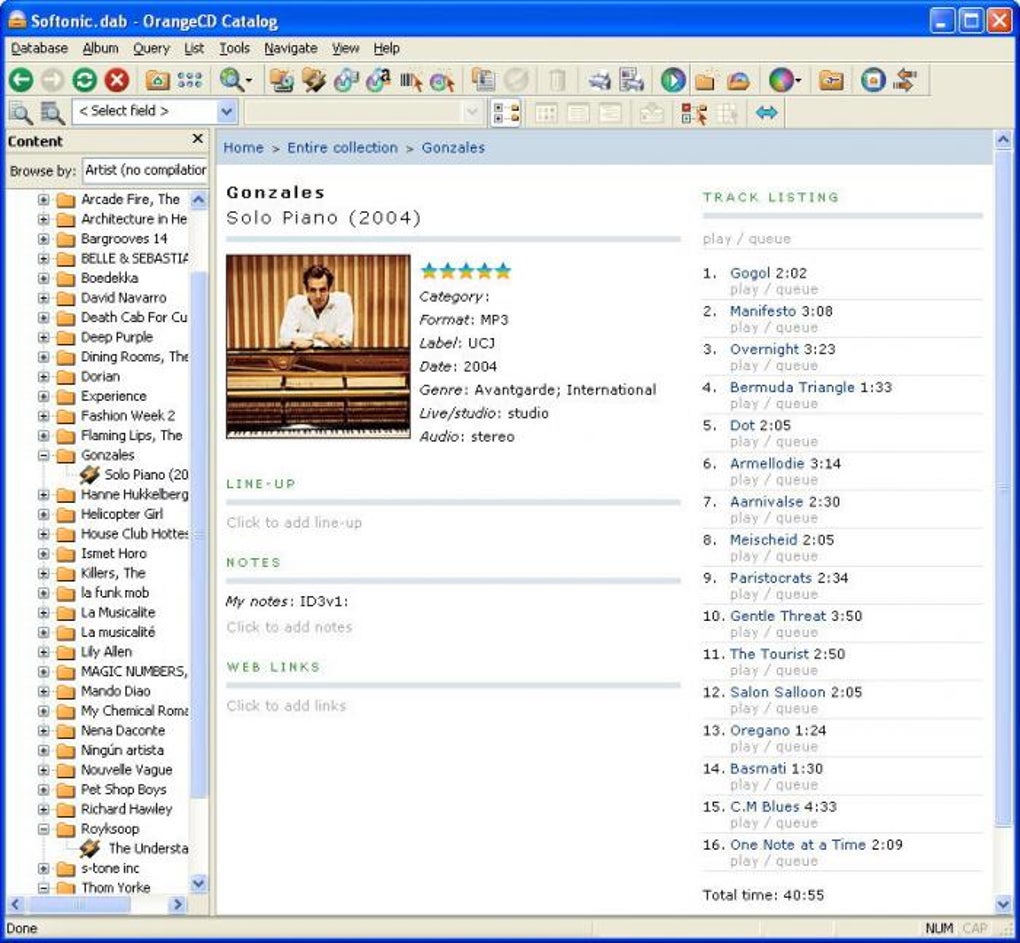
This is where a small project I had comes into play. I have for many years been using an app called Orange CD catalog to record all the details of my music collection. The only problem is that it is a thick desktop app and the web solution called Racks and Tags hasn’t seen much development from what I can see for a long time and by current user experience looks archaic. As you may have guessed our pet project is to provide a web interface for the exported data from the Orange CD catalog. You can see the code in my GitHub repo here). I’ve carefully structured the code so the logic of processing the data (i.e. loops and conditions using data structures – using Python’s XMLTree library, which behaves a lot like lists – helping with basic learning). The web serving tier is implemented with Flask using simple annotations. This provides a nice opportunity to talk about the use of HTTP. The Jinja templates are also kept separate, so we don’t get bogged down with HTML, which can be a bit messy (IMHO).

Orange CD Catalogue

We’ll deploy the solution to our little Raspberry Pi, so it can be used anywhere in our network. Ultimately we could use it to stream the albums I’ve ripped to MP3. If my son wants/needs to learn a little bit about databases – then migrating the data into something like SQLLite becomes a simple development opportunity.

This does mean some prep work and including part of the solution, so something works very quickly. For me that’s fine, my Python web skills could benefit from some work and Jinja2 is new to me. But I could take the project embed suitable security and deploy it to my free Oracle cloud instance as a container into K8s. Those bits I won’t be sharing (minimize the risk of someone wanting to test how well I patch code etc).

Feel free to take the code and use it for yourself, extend, etc. But you don’t have to use my idea. The important thing is the idea is going to interest your child. But keep it simple. for example, if your child is a gamer, then perhaps you generate a simple data extract from the gaming servers to capture player performance, then your app does simple things like searching the content, sorting it, and providing a vanilla UI. The secret I think is each bit of the project is simple steps and not over well with heaps of code. Provide results quickly for example just search for an album by its title, and get the results into a webpage quickly.

Share this:

  • Share on Facebook (Opens in new window) Facebook
  • Share on X (Opens in new window) X
  • Share on Pocket (Opens in new window) Pocket
  • Share on Reddit (Opens in new window) Reddit
  • Email a link to a friend (Opens in new window) Email
  • Share on WhatsApp (Opens in new window) WhatsApp
  • Print (Opens in new window) Print
  • Share on Tumblr (Opens in new window) Tumblr
  • Share on Mastodon (Opens in new window) Mastodon
  • Share on Pinterest (Opens in new window) Pinterest
  • More
  • Share on Bluesky (Opens in new window) Bluesky
  • Share on LinkedIn (Opens in new window) LinkedIn
Like Loading...

Learning Ansible Review Part 3

08 Sunday Mar 2015

Posted by mp3monster in Book Reviews, Books, Packt, Technology

≈ 1 Comment

Tags

Ansible, book, ebook, error, learning, Packt, publishing, python, reporting, review, rollback

Chapters 4 & 5 of Packt’s Learning Ansible continue to build out strategies needed for enterprise class deployment and configuration management, for example error handling, rollback and reporting in chapter 4.  As chapter, the amount of new Ansible capabilities being introduced is not as substantive as prior chapters, and emphasis is more only what could be described as best practise. For example creating Playbooks that have the means to be invoked to re-establish a prior state if the the execution of the current playbook was to throw up an error.  The callback explanation does need a bit more understanding of how Python works as implementing a callback involves a little bit of Python coding, but the points into which you can hook actions is very rich.

From knowing how to trap callbacks it becomes possible to initiate notifications when events occur in playbooks which is where this chapter moves onto with monitoring and alerting. This really focuses on has my playbook executed as expected and reporting back through means such as email, nagios and graphite.  The examples with email and nagios miss a trick, although the text says you can incorporate output from tasks – it isn’t illustrated; yet if something falters you’d want to see the task output.

Chapter 5 goes into how you might write your own custom modules and test them. Ansible will support any language that is available in your target environment, although Python is the recommended language given its general availability and is the language used to write Ansible, and Ansible modules can be leveraged to shorten the effort in creating custom modules. The chapter then walks through examples using Python, Bash shell scripting and Ruby. A lot of the work appears to be centred on extracting the appropriate parameters to allow the module to run with. The final part of the chapter looks at testing with the Python Nose library.

Solid chapters, and perhaps a little shorter than the first few, but importantly continuing to be well written although perhaps a couple of small missed opportunities to be great chapters.

Prior chapter reviews:

  • Learning Ansible Part 2
  • Learning Ansible Part 1

Share this:

  • Share on Facebook (Opens in new window) Facebook
  • Share on X (Opens in new window) X
  • Share on Pocket (Opens in new window) Pocket
  • Share on Reddit (Opens in new window) Reddit
  • Email a link to a friend (Opens in new window) Email
  • Share on WhatsApp (Opens in new window) WhatsApp
  • Print (Opens in new window) Print
  • Share on Tumblr (Opens in new window) Tumblr
  • Share on Mastodon (Opens in new window) Mastodon
  • Share on Pinterest (Opens in new window) Pinterest
  • More
  • Share on Bluesky (Opens in new window) Bluesky
  • Share on LinkedIn (Opens in new window) LinkedIn
Like Loading...

    I work for Oracle, all opinions here are my own & do not necessarily reflect the views of Oracle

    • About
      • Internet Profile
      • Music Buying
      • Presenting Activities
    • Books & Publications
      • Logging in Action with Fluentd, Kubernetes and More
      • Logs and Telemetry using Fluent Bit
      • Oracle Integration
      • API & API Platform
        • API Useful Resources
        • Useful Reading Sources
    • Mindmaps Index
    • Monster On Music
      • Music Listening
      • Music Reading
    • Oracle Resources
    • Useful Tech Resources
      • Fluentd & Fluent Bit Additional stuff
        • Logging Frameworks and Fluent Bit and Fluentd connectivity
        • REGEX for BIC and IBAN processing
      • Java and Graal Useful Links
      • Official Sources for Product Logos
      • Python Setup & related tips
      • Recommended Tech Podcasts

    Oracle Ace Director Alumni

    TOGAF 9

    Logs and Telemetry using Fluent Bit


    Logging in Action — Fluentd

    Logging in Action with Fluentd


    Oracle Cloud Integration Book


    API Platform Book


    Oracle Dev Meetup London

    Blog Categories

    • App Ideas
    • Books
      • Book Reviews
      • manning
      • Oracle Press
      • Packt
    • Enterprise architecture
    • General
      • economy
      • ExternalWebPublications
      • LinkedIn
      • Website
    • Music
      • Music Resources
      • Music Reviews
    • Photography
    • Podcasts
    • Technology
      • AI
      • APIs & microservices
      • chatbots
      • Cloud
      • Cloud Native
      • Dev Meetup
      • development
        • languages
          • java
          • node.js
          • python
      • drone
      • Fluentbit
      • Fluentd
      • logsimulator
      • mindmap
      • OMESA
      • Oracle
        • API Platform CS
          • tools
        • Helidon
        • ITSO & OEAF
        • Java Cloud
        • NodeJS Cloud
        • OIC – ICS
        • Oracle Cloud Native
        • OUG
      • railroad diagrams
      • TOGAF
    • xxRetired
    • AI
    • API Platform CS
    • APIs & microservices
    • App Ideas
    • Book Reviews
    • Books
    • chatbots
    • Cloud
    • Cloud Native
    • Dev Meetup
    • development
    • drone
    • economy
    • Enterprise architecture
    • ExternalWebPublications
    • Fluentbit
    • Fluentd
    • General
    • Helidon
    • ITSO & OEAF
    • java
    • Java Cloud
    • languages
    • LinkedIn
    • logsimulator
    • manning
    • mindmap
    • Music
    • Music Resources
    • Music Reviews
    • node.js
    • NodeJS Cloud
    • OIC – ICS
    • OMESA
    • Oracle
    • Oracle Cloud Native
    • Oracle Press
    • OUG
    • Packt
    • Photography
    • Podcasts
    • python
    • railroad diagrams
    • Technology
    • TOGAF
    • tools
    • Website
    • xxRetired

    Enter your email address to subscribe to this blog and receive notifications of new posts by email.

    Join 2,555 other subscribers

    RSS

    RSS Feed RSS - Posts

    RSS Feed RSS - Comments

    January 2026
    M T W T F S S
     1234
    567891011
    12131415161718
    19202122232425
    262728293031  
    « Nov    

    Twitter

    Tweets by mp3monster

    History

    Speaker Recognition

    Open Source Summit Speaker

    Flickr Pics

    Gogo Penguin at the BarbicanGogo Penguin at the BarbicanGogo Penguin at the BarbicanGogo Penguin at the Barbican
    More Photos

    Social

    • View @mp3monster’s profile on Twitter
    • View philwilkins’s profile on LinkedIn
    • View mp3monster’s profile on GitHub
    • View mp3monster’s profile on Flickr
    • View mp3muncher’s profile on WordPress.org
    • View philmp3monster’s profile on Twitch
    Follow Phil (aka MP3Monster)'s Blog on WordPress.com

    Blog at WordPress.com.

    • Subscribe Subscribed
      • Phil (aka MP3Monster)'s Blog
      • Join 233 other subscribers
      • Already have a WordPress.com account? Log in now.
      • Phil (aka MP3Monster)'s Blog
      • Subscribe Subscribed
      • Sign up
      • Log in
      • Report this content
      • View site in Reader
      • Manage subscriptions
      • Collapse this bar
     

    Loading Comments...
     

    You must be logged in to post a comment.

      Privacy & Cookies: This site uses cookies. By continuing to use this website, you agree to their use.
      To find out more, including how to control cookies, see here: Our Cookie Policy
      %d