
• Home
  • Site Aliases
    • www.cloud-native.info
  • About
    • Background
    • Presenting Activities
    • Internet Profile
      • LinkedIn
    • About
  • Books & Publications
    • Log Generator
    • Logs and Telemetry using Fluent Bit
      • Fluent Bit book
      • Book Resources in GitHub
      • Fluent Bit Classic to YAML Format configurations
    • Logging in Action with Fluentd, Kubernetes and More
      • Logging in Action with Fluentd – Book
      • Fluentd Book Resources
      • Fluentd & Fluent Bit Additional stuff
    • API & API Platform
      • API Useful Resources
    • Oracle Integration
      • Book Website
      • Useful Reading Sources
    • Publication Contributions
  • Resources
    • GitHub
    • Oracle Integration Site
    • Oracle Resources
    • Mindmaps Index
    • Useful Tech Resources
      • Fluentd & Fluent Bit Additional stuff
      • Recommended Tech Podcasts
      • Official Sources for Product Logos
      • Java and Graal Useful Links
      • Python Setup & related stuff
  • Music
    • Monster On Music
    • Music Listening
    • Music Reading

Phil (aka MP3Monster)'s Blog

~ from Technology to Music

Phil (aka MP3Monster)'s Blog

Tag Archives: PDH

Deployment considerations for Oracle Product Hub

09 Wednesday Sep 2015

Posted by mp3monster in General, Oracle, Technology

≈ Leave a comment

Tags

AIA, deployment, EBiz, Oracle, PDH, PIP

Aside from being big users of Oracle Middleware we use  make use of a range of Oracle application capabilities from the EBusiness Suite family. This includes several of the ‘hub’ products such as Product Data Hub which is central to our Master Data Management strategy for product data definition and creation. A commitment to remove all the different components in the legacy estate that can author or modify product data was made and has been rolled out – not all legacy authoring solutions have been decommissioned although this is more the nature of our legacy deployment strategy.

When we setup PDH the organisation went through a lot of internal debate on whether to deploy PDH as part of our core transactional  EBusiness Suite which performs all our accounting (and a lot more complex than may appear to be) or to adopt a separate deployment approach and keep the instances in sync using the Product Data MDM Process Integration Pack (PIP) which includes an extension to integrate with EBusiness. This later approach prevailed. However we are now in a place where we are having to re-examine this decision as a result of the PIP’s EBusiness extension hitting end of life (Oracle’s declared position being that the extension has so little adoption that it is economically not sensible to maintain it).

Rather than drag through our decision history, I thought it might be insightful to share the considerations being made on how do we go forward. So what are the perceived options? We see it as:

  1. Retain the deployment split and taken on the responsibility of maintaining the PIP
  2. As PDH is a discrete solution we could take the hit of adopting the Fusion Applications version of Product Data Hub and solve the synchronisation through the co-existence strategy
  3. Merge PDH into our main transactional EBusiness instance and remove the integration challenge by eliminating the need for it
  4. Build an alternate integration solution through the use of something like Golden Gate.

Clearly several of these options challenge the reasoning for separating the instances in the first place. So it is worth looking at the arguments for the separation and against it.

The key factors for separate instances:

  • System workloads in the transactional solution (for example end of month or year process runs) could impact user experience and productivity around the work of product data management. If this is the case and you can share the data but isolate the servers you will see a benefit
  • PDH and other hub solutions have dependencies on the core EBusiness suite, so if you want to capitalise on the improvements around the hub capability by upgrading, then isolating the instance minimises the upgrade depends considerations. If the hub was part of an EBusiness deployment with many components such as billing, manufacturing etc there is potentially a complex dependency chain to be resolved and upgrade activity that may become necessary with all the regression testing etc to be addressed with it.

The factors for keeping everything as one large EBusiness suite are:

  • The co-location of the hub and other features means that if you product authoring processes are complex and result in dependencies within the setup of other modules for example you want to align activities so buyers can both author the product data but also work with the purchasing processes you either have a multi phase authoring process – PDH to author the SKU which is distributed and then enriched within the other EBusiness instance of you end up with more modules in your hub instance and a data synchronisation challenge greater than can be resolved by the PIP.
  • remove the need for the additional licensed components – I.e. The PIP (therefore AIA foundation pack, SOA Suite, Weblogic,  OEM SOA Suite  monitoring etc).

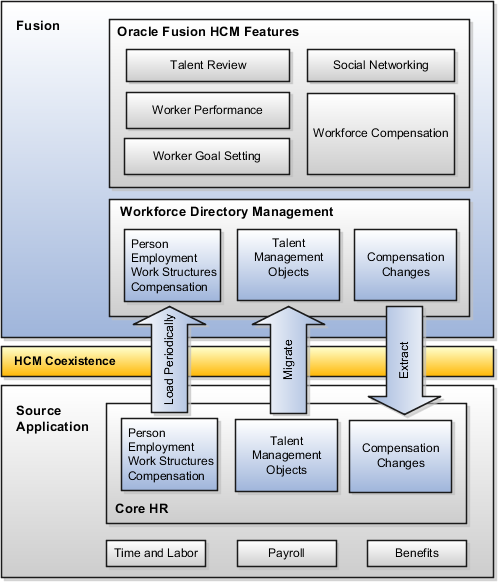
The Fusion apps option creates some interesting questions. So the messaging around Fusion is that you can migrate from the non Fusion environments in a phased approach through the idea of co-existance (effectively data replication and transformation). However, despite the fact Fusion apps are maturing, the capability atleast here we’re told this green, although the migration process is well established as a mix of automation and manual process all packaged up as a consulting engagement. In addition to this the AIA Product MDM connector which supports EBusiness needs some small changes to work with the Fusion application.

Why even look at Fusion, aside from we know that Fusion is Oracle’s long term strategic product, from the information provided to us, it has a number of handy features for us that are unlikely to be retrofitted to the EBusiness product.
Share this:

  • Click to share on Facebook (Opens in new window) Facebook
  • Click to share on X (Opens in new window) X
  • Click to share on Pocket (Opens in new window) Pocket
  • Click to share on Reddit (Opens in new window) Reddit
  • Click to email a link to a friend (Opens in new window) Email
  • Click to share on WhatsApp (Opens in new window) WhatsApp
  • Click to print (Opens in new window) Print
  • Click to share on Tumblr (Opens in new window) Tumblr
  • Click to share on Mastodon (Opens in new window) Mastodon
  • Click to share on Pinterest (Opens in new window) Pinterest
  • More
  • Click to share on Bluesky (Opens in new window) Bluesky
  • Click to share on LinkedIn (Opens in new window) LinkedIn
Like Loading...

Impact on Integration when Moving to Fusion Apps

17 Tuesday Jun 2014

Posted by mp3monster in General, Oracle, Technology

≈ Leave a comment

Tags

ABCS, AIA, EBO, EBusiness, Foundation Pack, fusion, integration, master data management, MDM, middleware, OER, Oracle, PDH, PIP, product data hub, R12, Siebel, SOA

So as a road mapping question I have been thinking about the migration to using Fusion Apps so we have a road map and more importantly design patterns that will support a transitions from the likes of Ebiz R12, Siebel etc to their Fusion successors.

Example of Coexistance

Example of Coexistance

In broad terms the application level transition through the principles of co-existence are well established. What is currently exercising the grey matter is the middle migration. Perhaps the best way to explain this is through an example. The Product Data Hub (PDH) solution exists to provide a Master Data Management capability for your widest and gadgets.

You will want to share that master data with other apps such as Ebiz so you can deal with say order management. All fairly obvious, and in Fusion Apps world the different components should inherently work together. Back in R12 world though you are probably going to be using the Product MDM PIP (Process Integration Pack) with the Ebiz extension pack. When using the PIP like this then it’s just a case of retiring the PIP. But this PIP is designed so that you can extend the process to publish Master Data to your own apps for example you also push the data to your design systems as you maybe sharing available parts data.

So now we have an extended PIP whic in a simple Fusion apps migration you’d leave behind. But leaving the PIP behind also means an integration gap. So what is the answer.

Well on the early days of Fusion Apps the suggestion was that AIA and PIPs would be part of the ongoing story. but the reality is little has moved in this space. Understandable, Fusion Apps development had been far bigger than anyone expected, if fusion Apps are directly conversant then how much real demand exists for the PIP transformation. So what is the answer, well at this stage I’m not sure. I can say I have seen ABCS’ mentioned in the public FusionAppsOER. We know that AIA Foundation Pack EBOs are realised in Fusion Apps albeit via ADF BCs.

Given Fusion Apps underpinnings are the same as AIA so it should be possible to drop the AIA Foundation Pack (FP) into your Fusion Apps environment (setting aside all the licensing questions it would raise). Can you therefore drop in the PIP and disable the legacy Oracle app elements leaving your custom extensions? Do you accept a rewrite of your integration all be it you should just need to redevelop the orchestration layer (ABCS’ for Fusion App exist and you can carry forward your own ABCS’ for your app such as the design system in our illustration)?

Deployment of Fusion Apps with Non Fusion Apps

Deployment of Fusion Apps with Non Fusion Apps

Hopefully in the coming weeks we will get the opportunity to uncover answers with Oracle.

Share this:

  • Click to share on Facebook (Opens in new window) Facebook
  • Click to share on X (Opens in new window) X
  • Click to share on Pocket (Opens in new window) Pocket
  • Click to share on Reddit (Opens in new window) Reddit
  • Click to email a link to a friend (Opens in new window) Email
  • Click to share on WhatsApp (Opens in new window) WhatsApp
  • Click to print (Opens in new window) Print
  • Click to share on Tumblr (Opens in new window) Tumblr
  • Click to share on Mastodon (Opens in new window) Mastodon
  • Click to share on Pinterest (Opens in new window) Pinterest
  • More
  • Click to share on Bluesky (Opens in new window) Bluesky
  • Click to share on LinkedIn (Opens in new window) LinkedIn
Like Loading...

    I work for Oracle, all opinions here are my own & do not necessarily reflect the views of Oracle

    • About
      • Internet Profile
      • Music Buying
      • Presenting Activities
    • Books & Publications
      • Logging in Action with Fluentd, Kubernetes and More
      • Logs and Telemetry using Fluent Bit
      • Oracle Integration
      • API & API Platform
        • API Useful Resources
        • Useful Reading Sources
    • Mindmaps Index
    • Monster On Music
      • Music Listening
      • Music Reading
    • Oracle Resources
    • Useful Tech Resources
      • Fluentd & Fluent Bit Additional stuff
        • Logging Frameworks and Fluent Bit and Fluentd connectivity
        • REGEX for BIC and IBAN processing
      • Java and Graal Useful Links
      • Official Sources for Product Logos
      • Python Setup & related tips
      • Recommended Tech Podcasts

    Oracle Ace Director Alumni

    TOGAF 9

    Logs and Telemetry using Fluent Bit


    Logging in Action — Fluentd

    Logging in Action with Fluentd


    Oracle Cloud Integration Book


    API Platform Book


    Oracle Dev Meetup London

    Blog Categories

    • App Ideas
    • Books
      • Book Reviews
      • manning
      • Oracle Press
      • Packt
    • Enterprise architecture
    • General
      • economy
      • ExternalWebPublications
      • LinkedIn
      • Website
    • Music
      • Music Resources
      • Music Reviews
    • Photography
    • Podcasts
    • Technology
      • AI
      • APIs & microservices
      • chatbots
      • Cloud
      • Cloud Native
      • Dev Meetup
      • development
        • languages
          • java
          • node.js
      • drone
      • Fluentbit
      • Fluentd
      • logsimulator
      • mindmap
      • OMESA
      • Oracle
        • API Platform CS
          • tools
        • Helidon
        • ITSO & OEAF
        • Java Cloud
        • NodeJS Cloud
        • OIC – ICS
        • Oracle Cloud Native
        • OUG
      • railroad diagrams
      • TOGAF
    • xxRetired
    • AI
    • API Platform CS
    • APIs & microservices
    • App Ideas
    • Book Reviews
    • Books
    • chatbots
    • Cloud
    • Cloud Native
    • Dev Meetup
    • development
    • drone
    • economy
    • Enterprise architecture
    • ExternalWebPublications
    • Fluentbit
    • Fluentd
    • General
    • Helidon
    • ITSO & OEAF
    • java
    • Java Cloud
    • languages
    • LinkedIn
    • logsimulator
    • manning
    • mindmap
    • Music
    • Music Resources
    • Music Reviews
    • node.js
    • NodeJS Cloud
    • OIC – ICS
    • OMESA
    • Oracle
    • Oracle Cloud Native
    • Oracle Press
    • OUG
    • Packt
    • Photography
    • Podcasts
    • railroad diagrams
    • Technology
    • TOGAF
    • tools
    • Website
    • xxRetired

    Enter your email address to subscribe to this blog and receive notifications of new posts by email.

    Join 2,555 other subscribers

    RSS

    RSS Feed RSS - Posts

    RSS Feed RSS - Comments

    December 2025
    M T W T F S S
    1234567
    891011121314
    15161718192021
    22232425262728
    293031  
    « Nov    

    Twitter

    Tweets by mp3monster

    History

    Speaker Recognition

    Open Source Summit Speaker

    Flickr Pics

    Turin Brakes Acoustic Tour 24 @ The Maltings FarnhamTurin Brakes Acoustic Tour 24 @ The Maltings FarnhamTurin Brakes Acoustic Tour 24 @ The Maltings FarnhamTurin Brakes Acoustic Tour 24 @ The Maltings Farnham
    More Photos

    Social

    • View @mp3monster’s profile on Twitter
    • View philwilkins’s profile on LinkedIn
    • View mp3monster’s profile on GitHub
    • View mp3monster’s profile on Flickr
    • View mp3muncher’s profile on WordPress.org
    • View philmp3monster’s profile on Twitch
    Follow Phil (aka MP3Monster)'s Blog on WordPress.com

    Blog at WordPress.com.

    • Subscribe Subscribed
      • Phil (aka MP3Monster)'s Blog
      • Join 233 other subscribers
      • Already have a WordPress.com account? Log in now.
      • Phil (aka MP3Monster)'s Blog
      • Subscribe Subscribed
      • Sign up
      • Log in
      • Report this content
      • View site in Reader
      • Manage subscriptions
      • Collapse this bar
    Privacy & Cookies: This site uses cookies. By continuing to use this website, you agree to their use.
    To find out more, including how to control cookies, see here: Our Cookie Policy
    %d