Podcasts come out more frequently than we’d like sometimes, and in 2018, I blogged about some of the more interesting sources (here). Since then, we’ve discovered some new ones that we like and think are worth sharing. Most of the links are to the Podtails tracker website or Podbean, no hunting for the RSS feed. So, here we go …
Rockenteurs with Gary Kemp and Guy Pratt – Rockenteurs has built a tremendous following, its success comes from the fact they personally know have worked with (or revolve in similar circles) many of the guests. This produces an immediate familiarity and a sense you’re part of a casual group conversation and everyone is relaxed and unhurried. For those less in the know Gary Kemp was part of Spandau Ballet, but since those days has performed as guitarist for higher. Guy Pratt, while not such as house hold name, is a highly respected bassist, session musician and essentially Pink Floyd’s bassist since Roger Water’s departure.
Alan Cross gives two for the money with the Ongoing History of New Music and Uncharted crime and mayhem in the music industry – Alan Cross is a Canadian music journalist, radio presenter and pod and videocaster. His primary output is the Ongoing History of New Music, which focusses on the Indie / Rock scene. But he has a second fortnightly podcast with a wider perspective. What really works here, is the depth of his knowledge, and the love of his subject (desire to see musicians do well and share the stories behind and around the music).
Bureau of Lost Culture – I came to Stephen Coates’ podcast as a result of hearing about Bone Music and reading his book, by that title. Stephen’s podcasts tend to gravitate to all aspects of music, but his focus is ‘count culture’. The subjects can look a little academic, but the way the stories are told is very human centered and explorers the impacts his subjects have had.
BBC provides a vast library of podcasts, some are regular, some are more episodic, but all are worth checking out …
This Cultural Life – Best described as a successor to Mastertapes, as the presenter, John Wilson, has moved on to this show. Although the podcast goes beyond music to a broader cultural portfolio of guests/subjects.
Eras – A more mainstream look at big-name artists such as Sting, Abba, Kylie with 4-6 episodes per artist in an episodic release.
Legend – A bit like Eras, but covers artists like Joni Mitchell and Springsteen.
Artist own podcasts can be a bit hit a miss, but these have some great episodes …
Moby Pod – Moby’s self deprecation, and history has resulted in some fascinating podcasts, both looking at music broadly (and personally) as he is as much an interviewee as interviewer on these podcasts. His name and reputation has meant he has also had some more influential names on the podcast, but these tend to be aligned with his animal rights and vegan passions. But these aren’t presented in a preaching manner, as is Moby’s way he recognizes these are his beliefs and not everyone may agree.
Norah Jones is Playing Along – This has been an interesting podcast as Norah talks with a musician and records material with them. After the 1st season (we saw some of those recordings released as an album). There has been a cvouple of years gap between the the first series and the second once started recently (Octob ’25).
James Lavelle (Living In My Headphones) aka Unkle – A monthly slot on Soho Radio, this is very much a DJ mix session, but the diversity of music used is fascinating.
Broken Record – Part of Malcolm Gladwell’s growing Pushkin empire of podcasts. These can be a bit hit and miss, but when they hit – the insightful, interesting and enjoyable to listen to, and among the best there is.
So when you’re not dialed in with your latest vinyl/CD/download I’d recommend checking these out.
Following on from my previous piece, I thought I’d cover additional music options that aren’t necessarily vinyl.
Not vinyl, but…
Super Deluxe Editions (SDE)
SDE produces Blu-ray versions of albums. These typically consist of high-quality audio mixes of the albums, along with surround sound audio mixes for an immersive sound experience. While not marketed as limited editions specifically, they appear to be produced in limited quantities, with pre-order volumes dictating the number of copies to be produced.
If you have an artist you like, an established rock or indie act that is about to reissue a successful album or release a new title with high expectations, it’s worth checking in with SDE if Blu-ray audio is of interest. To date, releases have been made available for Paul McCartney, Tears for Fears, Kraftwerk, Suede, Bob Dylan, and others.
Subscriptions
Many artists, particularly those who are not multi-million-selling artists, are exploring the use of subscription models through services such as Patreon and Bandcamp. It is possible to buy such subscriptions as gifts.
The subscription’s benefits vary from artist to artist, but they usually involve additional releases not available elsewhere. Examples of this include Thea Gilmore (a new song every month) and Peter Gabriel (previously unreleased recordings, versions of songs during their development, etc.).
Books
Books seem to be a growing area, not just in the form of biographies, but also in narratives about music collections, album artwork, and so on.
Aubrey ‘Po’ Powell – complete Hipgnosis Catalogue (I got my copy from Hypergallery)
Dust & Grooves is the best book I’ve seen on vinyl collecting
Some of these books, while substantial volumes, are getting very expensive. We have a signed copy of Aubrey Powell’s Complete Hipgnosis Catalogue (the group responsible for the art on all of Pink Floyd’s albums) from a couple of years ago for less than £50. The second volume of Dust & Grooves, released this year, costs £100 for a standard copy.
Some indie record stores are expanding to cover music-related books, such as Resident Music.
Kit
Aside from buying music, another option is resources to help care for a vinyl collection. There are some nice kits available, which bundle vinyl brushes, cleaning solutions, and more. But such kits have limited benefit. To provide proper care, consider a suitable vinyl cleaning machine. Good ones start at a couple of hundred pounds and are best purchased through a hi-fi dealer, such as Audio-T or Sevenoaks Sound and Vision. They typically use ironised water to gently wash the vinyl. Don’t suggest tap or typical bottled water as these will contain small impurities that dry into the grooves – the very thing you’re trying to avoid.


Better still, to minimize the problems of dust and dirt, is to store records within antistatic inserts. Have you ever noticed how brand-new vinyl can be challenging to remove from the inner sleeve? That’s static at play, and it also attracts dust and dirt into the grooves. The static will build up as you slide the vinyl in and out of the inner sleeves. So, putting the vinyl into an antistatic sleeve first removes that problem. Some record companies provide the albums in a paper inner sleeve, which is lined with an anti-static layer – Godwana Records do this. However, the inner sleeve is typically plain, without any printing (i.e., printed lyrics, musician details, or artist commentary).
Pro-Ject VC-E2 Vinyl Record Cleaner – from dealers like Audio-T
There are several brands available, but the best ones, which many people swear by, are Nagaoka RS-LP2 Anti-Static Record Sleeves, also referred to as Nagaoka No. 102. These usually come in packs of 50, and you can expect to pay £30 per pack.
If the records are not being stored in a nice soft-lined sturdy record case, then consider outer sleeves. This will help in several ways …
Reduces dust and dirt getting into the sleeve in the first place.
Reduces the potential for sleeve wear (corners and edges can show wear) as the records are slid in and out of shelves.
Reducing sun bleaching of the sleeve is the shelving that gets exposed to direct sunlight.
Replace the PVC packaging that records are shipped in, as it can cause the sleeve and record to tarnish over time due to plastic ‘off-gassing’ (a more detailed explanation can be found here). You want to replace that with Polyethylene (also known as polythene) sleeves.
These are pretty easy to source. Personally, I’ve dealt with Covers33 and found their products to be of good quality and well-priced. Remember, if you’re using sleeves for box sets, you’ll need larger sleeves, which are not always easy to obtain.
Artwork
Most people think of hanging original or limited, signed prints from artists or photographers, where the art was not created for a specific purpose, such as album sleeves. However, the art for album sleeves is no less of an artistic endeavour, and doesn’t have to be plastered with titles and other text. You can collect such art with limited-edition prints approved and signed by the artist and/or the musician. You can find this sort of thing at galleries such as Hypergallery or St Paul’s Gallery. If you go something like this, the picture needs to be framed appropriately and, importantly, has a certificate of authenticity.
Conclusion
These two posts started out as just sharing some brief thoughts, but have morphed into a bit of a monster. I hope you find them useful. As I wrote these two posts, a couple of pieces on HiFi Pig Magazine came to mind, which I thought were worth sharing as they do reflect aspects of the mind of vinyl music collectors:
Buying vinyl as a gift for a loved one can be tricky if you’re not an aficionado. Buying vinyl generally is easy – just hitting a box shifter like Amazon can do it. However, in most cases, you will only get a generic pressing for mainstream artists, and won’t receive something collectible.
This isn’t a hint for me, as I always keep a list of suggestions for those significant dates. As I’m not the only vinyl fan in our extended family, I thought I’d share the thinking I go through – or at least that is how this post started out.
New releases
From a collector’s perspective, like books generally, 1st issues are more collectible than later additional pressings or reissues. Often, reissues will be on standard black vinyl with a standard sleeve. There are some things where reissues are worth considering, and we’ll come back to this.
In the last couple of years, new releases have seen multiple versions being made available. The versions differ in two ways. Firstly,y special editions will come with extra tracks, typically these tracks are:
Alternate mixes result from how the song is put together in the studio.
Demos, early versions that artists have put together before entering the studio to produce the song properly. In some cases, these versions can turn out to be better than the final production (as was the case with Norah Jones’ debut album).
Live performances, artists often record their own shows, even if it’s just to review and improve.
B-sides, when vinyl and CD singles were dominant, you would have multiple additional tracks. It was once common for an artist to record 20 or more songs for an album. Ten or so tracks would make the album, and others would be included as B-sides.
A recent development is the emergence of different audio mixes, such as 5.1 or 7.1 mixes, which often accompany Blu-ray Disc releases.
The most common variations are the different coloured vinyl. Indie record stores often offer a limited run of coloured vinyl. Sometimes, even picture discs, and in recent years, Zoetrope art and etched album sides. These are harder and more expensive to produce, so they are rarer, often limited runs, so more collectible.
Explanation to zoetrope vinyl
Coloured Vinyl sources
As just mentioned, artists and record labels have supported independent record stores by providing not only the standard black, but also coloured vinyl versions. This has expanded in recent years to having special colors being offered to fans through streaming services such as Spotify and artist websites.
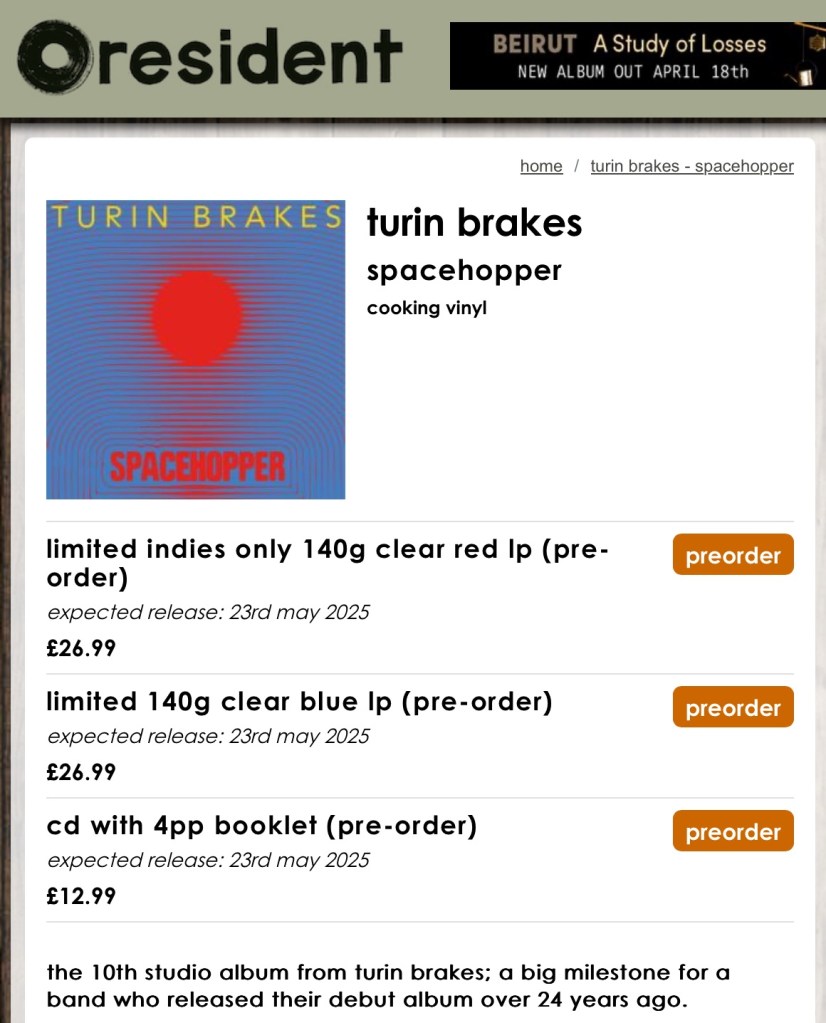
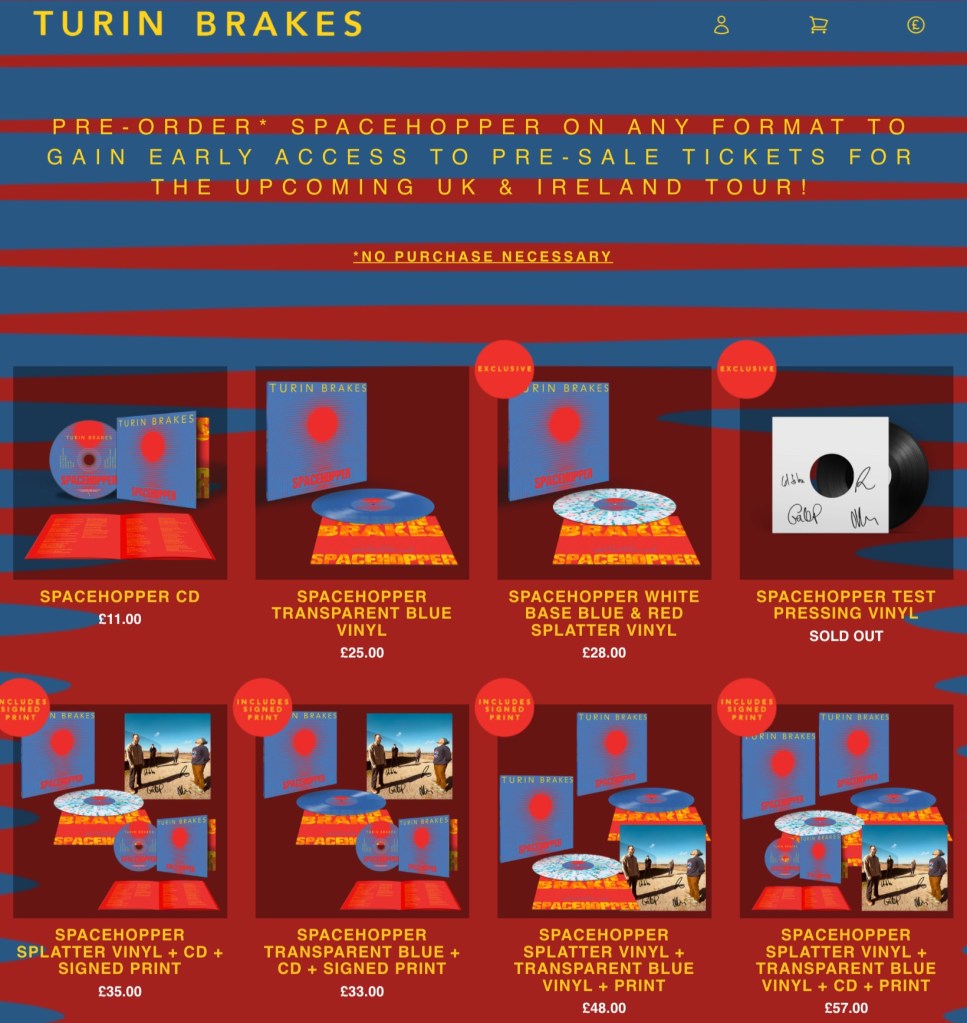
Resident Music details for the new Turin Brakes album, vs the band’s (label-managed) website
Sadly, this approach has been adopted by some very successful artists to entice their loyal fans to buy multiple copies of the same album, with even Amazon getting its own special, colored vinyl. I personally feel Taylor Swift having more than 45 versions of one album is somewhat exploitative of her fan base.
Numbered Editions
We’ve mentioned that often, the colored vinyl runs will be limited. How limited it can vary, so when a release is listed as a limited edition, it is worth checking if a number of copies is identified. These releases will also have numbering printed and written onto them. How many in the run will influence that value? Some runs can be as many as 10,000. For a popular artist, it’s still relatively rare, but not for a smaller name. Others will be as low as 500 copies. So, consider the artist’s popularity when looking at the numbering.
Dinked Editions
In the U.K., a group of indie record stores have been working with smaller indie artists to release ‘Dinked Editions‘ of albums. These versions have been developed with the artists, and often have different album covers, additional tracks on a supplemental single, and will be numbered as part of a limited edition. These are usually numbered and have between 500 and 1000 copies.
Signed artwork
Artists signing the albums will always make the records more collectible. But, signing sleeves can be problematic (doing it once an album is packaged means a lot of weight has to be transferred around). Sign the sleeve before adding the record, as this may impact production. As a result, sadly, the signed piece is a separate art card. So a signed, genuine sleeve will always be more collectible.
Record Store Day / National Album Day
Record Store Days (RSDs) have been going for approaching 20 years. Started as a lifeline to help keep independent record stores stay alive when a lot of stores were closing down. RSD releases are usually limited runs, where just enough copies are produced to sell in stores on a specific date. RSD releases tend to go beyond just coloured vinyl to artists releasing ‘new’ (sometimes older but previously unreleased, remastered, or demo material).
While RSD releases are aimed at physical instore sale events, on the Monday evening after the RSD stores can then sell their RSD overstock online. Occasionally, you may find a store with an odd copy lingering well after the RSD event, but these are relatively rare.
So getting an RSD release involves a bit of luck and timing. Being willing to queue at a store will boost the chances of getting the desired RSD release. It does help in advance of the RSD day, the releases for the event are published, so you know in advance what to get.
RSDs normally take place on a Saturday in April and have become a bit of an event. So, if you’re not that interested in the music you’re buying for someone, you’re better off gambling on a store having it online on the following Monday at 8pm. Most indie stores have online sales channels (often this is how they survive during quiet times), so bookmark several to try.
Unlike RSD, National Album Day isn’t a global setup, although there are similarities National Album Day currently doesn’t carry the same impact.
Vinyl weight and Audiophile pressings
It is worth keeping an eye on the vinyl weight referenced. Good-quality releases are typically 180 g, although 140 g is not uncommon; standard releases can be as low as 100-120 g. The heavier the vinyl, the less susceptible it is to warping, and any surface scuffing is less likely to impact sound reproduction.
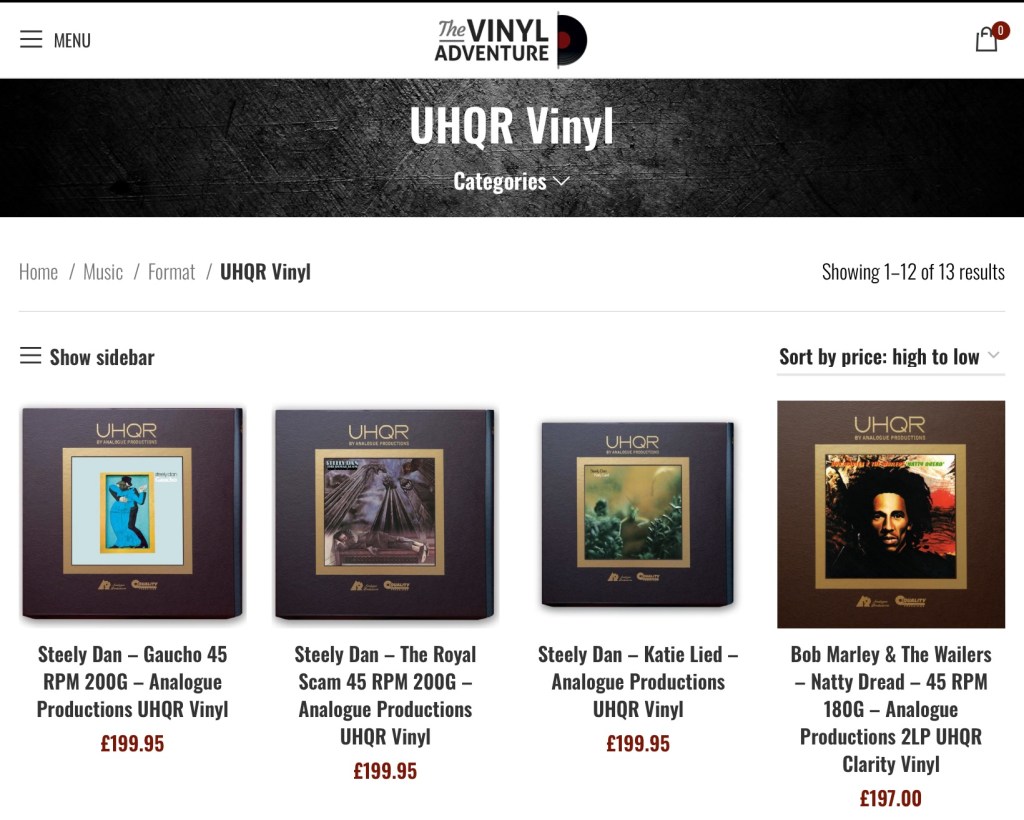
There is a correlation between vinyl weight and vinyl quality, with some specialist pressings over 180 g. These come from specialist companies such as Mobile Fidelity Sound Lab. These releases will also feature albums playing back at 45 RPM, as this effectively adds 50% more groove length to the recording. These releases can cost multiples of a standard release. Such purchases will pay off when used with an audiophile setup.
Box sets
Album box sets can be an attractive vinyl gift option, but can be rather expensive for the quantity of music that can be included. Not all box sets are published as Limited Editions, but in most cases, they can be considered so because the number of buyers prepared to spend hundreds of pounds on a small set of new actual material. For example, Rush R50 has 7 new previously recorded tracks with a 234.99 price tag.
The recovery of vinyl has also driven the bootleg market. Bootleg (sometimes referred to as Recordings Of Illegitimate Origin – ROIO) really took off with CDs, as the production costs are low, and even more with downloading. While downloading has dented the value of the market. What it doesn’t replace is the sleeves and artwork that can go into such releases.
When it comes to the legality of such recordings, some legal loopholes in the U.K. can give sufficient legitimacy to the releases, which is why they do show up in record stores.
There is an important consideration when buying bootlegs, which is the lineage of the recording. For example, a recording taken from an FM broadcast is transferred to a cheap cassette before being transferred to vinyl. Some labels, and bootleg series have a reputation for quality lineage, such as Transmission Impossible.
Sometimes, a bootleg recording of a specific performance is worth having, regardless of its quality. But to know this requires research and understanding of the performances and bootlegging labels.
Rare Vinyl
Like rare books, rare record buying can need an understanding of what is valuable and what is not. Many factors can influence value, factors such as:
Flawed productions or label printing,
Original pressings and pressings of the wrong version of an album (different mixes etc.).
Alternate sleeves, or where early releases had gatefold sleeves, but later changed to have a conventional sleeve.
Artists signing the sleeve.
First pressings of some albums.
In addition to these points, all the previous considerations, such as numbering, limited issues, coloured vinyl, etc., what is important is evidence of authenticity. Some details such as matrix codes etched in the vinyl, which can help identify specific versions (such information can be found on sites like Discogs).
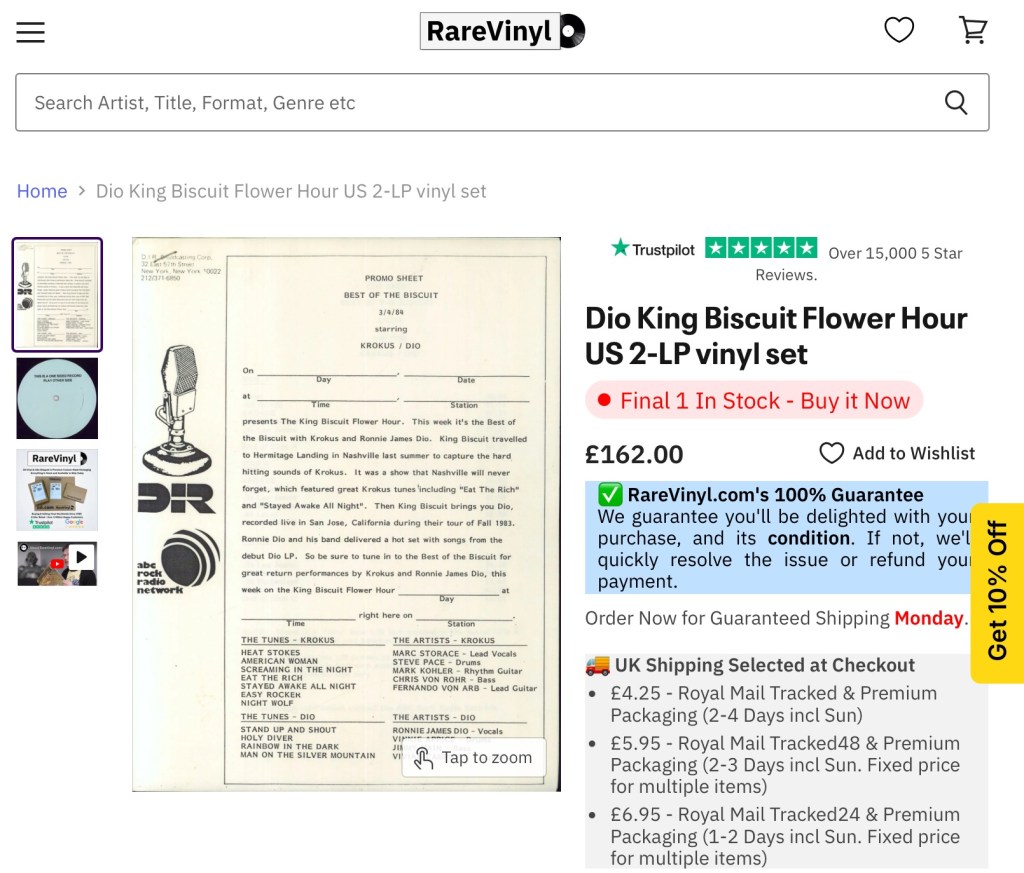
However, there are some easy value propositions, such as pressed broadcasts like King Biscuit Flower Hour and BBC Top of the Pops, which had limited pressings made so that the vinyl copies could be distributed to regional radio stations.
Understanding the value and pricing becomes easier when you understand how second-hand vinyl is graded. The sleeves and vinyl are graded separately. Grading goes from mint (like new), near mint (NM), very-good (VG), excellent (Ex), and so on. Personally, I would focus on VG or better, except in some exceptional cases (a more precise definition can be seen here).
Finding Your Indie Store
As I’ve mentioned Indie record stores several times, the question becomes, where are they, how do I find them? Well, most cities these days will have an indie store, but they aren’t usually on the high street. You’ll need to find them. Of course, a LOT (not all) are also online. The easiest places to locate your nearest indie store are via:
We’ve covered a lot of possibilities here. However, this is far from exhaustive, and we will follow up with another post that explores other ideas, although not all of them involve vinyl.
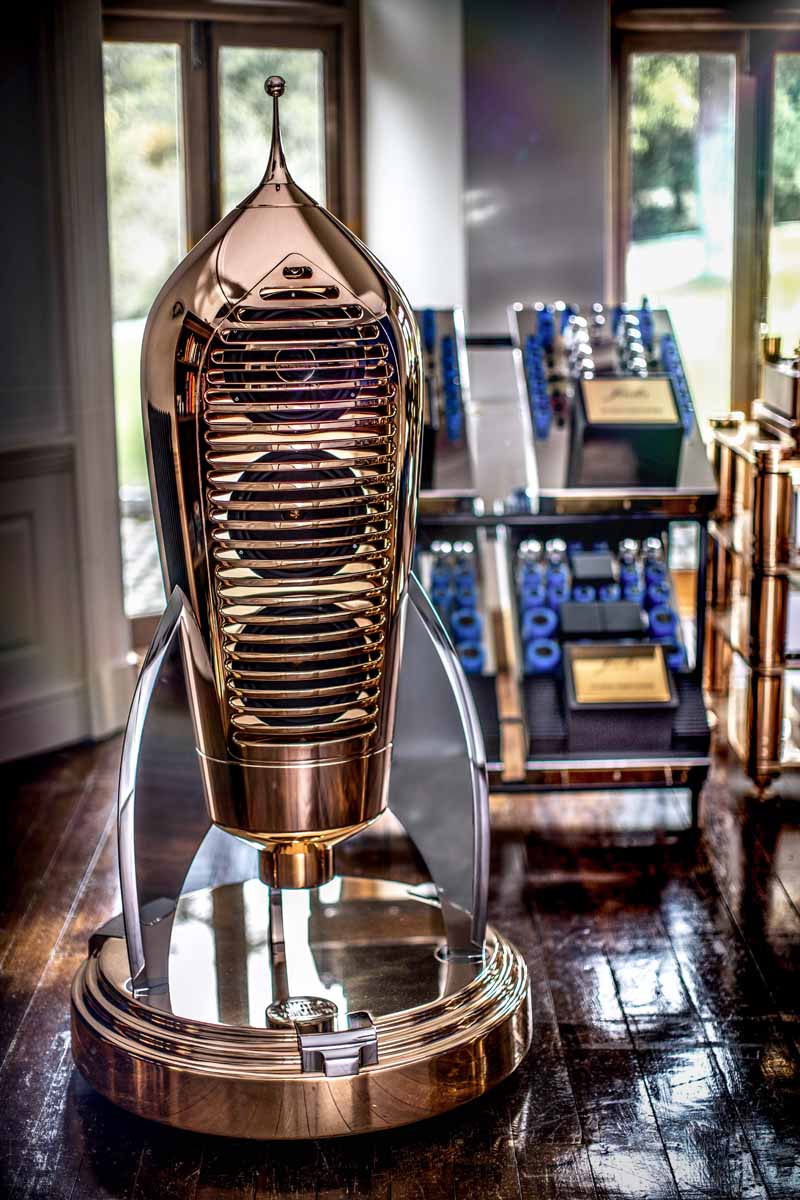
With some recent good news from work, I decided to treat myself to a speaker upgrade – Acoustic Energy 500s sat on some IsoAcoustic Aperta stands. While these would be considered audiophile – they’re still at the lower end – we’re not talking audio exotica like B& Nautilus at nearly hundred thousand pounds or the Cosmotron 130 at around the million pound mark.
Bowers & Wilkins – Nautilus Speaker – a snip at £90,000
So how can I decide and justify the expenditure, even if it’s a fraction of the loose change from the back of the sofa from buying these monsters? As friends have said to me in the past, the Samsung speakers on my stereo are just as good. Well there are a raft of things that will prevent speakers from performing well, from positioning, to the quality of their source.
Cosmotrom priced at £1M
The source material is often one of the biggest issues, particularly for rock and pop pushing the envelope with CDs. We saw what has become known as the loudness wars – where the dynamic range of the music was reduced. But music with a wide dynamic range with good speakers is great. A couple characteristics of good speakers is the containment of distortion – so if you have a song that is often quiet with occasional moments of loudness, the speaker drivers (cones) will be able to react properly to another sudden spike in signal occurs the sudden movement in the magnet moving the cone is handled rather than causing the speaker surface straining against its mounts.
Better speakers will result in better control of the cone (the visible bit of the speaker), making the cone’s movements more precisely revealing detail in the music. You’ll go from hearing a cymbal, to being able to tell how the cymbal was struck, a drum is no long a thump, but you’ll start to hear it resonate.
The cone moves backward and forwards to move the air, which affects air inside the speaker, not just outside. We don’t want the speaker casing to behave as a suction cup, preventing air movement and inhibiting the cone’s movement.
Improvements in speaker performance can help you recognize little details. For example, with a vocal performance, you’ll start to hear fine details, such as air drawn over the microphone as the singer inhales. You can also hear changes as a singer moves close to or away from the microphone, even if they alter their vocal volume.
I was experimenting with a loaned hi-fi kit once, listening to a Jamie Cullum live performance, and a detail that leapt out as I swapped in and out a piece of equipment was what sounded like background ambient noise, such as air conditioning. But suddenly, it became clear I wasn’t picking up ambient noise but the fan that was positioned behind Jamie.
It is always useful to have some good go-to pieces of music for trying out hi-fi. Being familiar with the music and knowing the production values applied means that if there are improvements, you’ll pick them up. So, what are my go-to pieces at the moment?
Tori Amos – Me and a Gun — although any part of Little Earthquakes is good. This song is an acapella performance, recounting a rape. With just a voice, the miking of the vocal is very close, and you can hear the inhalation and the rawness of the performance.
Beth Orton – Weather Alive — probably Beth’s best album to date. Here is another incredible voice, but also more delicate than Tori Amos, so the better the HiFi, the purer the performance will sound.
GoGo Penguin – Branches Break from Man Made Objects – although just about any of their work will be good. This is a trio of piano, bass, and drums in a jazz/minimalist classical/chill beat crossover. This is a recording that should feel like it’s being performed in a big live sounding room. But you’ll hear each instrument clearly, particularly down to recognizing the loudness, varying attack, and decay of each note played.
Rush – Red Sector A from Grace Under Pressure, perhaps not the best-produced album in the world, but before the loudness wars really took hold. Rush were a real bunch of prog rock musos with the late Neil Peart, who many considered to be one of the best ever drummers. This track will test the HiFi in terms of control – the drumming has a huge range of very fine cymbal work, some really deep bass drums, and tom-tom runs that make Phil Collin’s In The Air Tonight sound like child’s play.
Elbow – One Day Like This – The Seldom Seen Kid (Live At Abbey Road Studios) — with a high-quality recording (Abbey Road’s special Half Speed Mastered edition), you’ll get a sense of staging and as the song grows scale with the choir. The strings will be natural and nuanced, in the early parts of the performance of the performance you’ll hear how dry Guy’s voice is – not a hint of vibrato or sibilance.
Peter Gabriel – the Book Of Love — from Scratch My Back — another performance that should give a sense of staging and breadth with great dynamics and the strings swell and subside. Fronted by Peter’s voice which should weathered and world warn.
The list of music could go on. But, ultimately, it’s a very individual choice.
Final anecdote
Buying Hi-Fi is a law of diminishing returns. As you get better and better, the parts needed are more expensive and produced in fewer numbers, making the R&D more expensive, with costs to be covered by a small number of sales. But still, these esoteric, bank-crushing systems are amazing.
Some years back, I went to a HiFi show; if you’ve never been to such a show then picture this. A corridor of rooms is stripped of the beds and furnishings other than some chairs. Each company has a room and typically sets up its demo kit where the head of the bed would usually be. Everything would be positioned and mounted on professional hi-fi tables, etc, for the absolute best performance. The classic layout for a hotel room means as you walk into the room, you won’t see what is set, so the seconds it takes to walk past what is normally the bathroom is almost a blind test as you can’t see the HiFi, but you’ll be able to hear it.
So here we are, as we start to walk into a room that was pretty busy, so you didn’t see the main space for a minute or so, and we hear a performance of a beautifully played unaccompanied double bass. I could have sworn there was a musician in the room performing – the performance had that warmth, depth, and volume you’d expect. No hint of any recording artifacts. When we got to the main part of the room, we were stunned to see two speakers, big and rather boxy – no audio exotica beauty like Nautilus or Cosmotron — definitely all function, and little thought to form. With them, 3 large pieces of silver HiFisat on big chunky slabs of marble on the floor – what I assume to be a pre-amp and a power amp for each speaker. Plus a source – which might have been a turntable – but honestly, I can’t remember – whatever it was, the sound was breathtakingly natural sounding.
Chord Monobloc Power Amplifier £350,000 per bloc – you’d need two, plus a pre-amp for a basic arrangement.
I do remember the price tags, and at the time, prices were around 50k a component- so little change out of a quarter of a million. It left me wishing I’d won the national lottery.
I don’t blog about gigs very often, usually because I can never remember the set list by the end of the evening, and I’m on a euphoric buzz (no chemicals involved).
This evening wasn’t that much different. There was a euphoric buzz, and I loved the music. But as the tour is celebrating Play’s 25th anniversary, and we’ve had 25 years to put titles to songs.
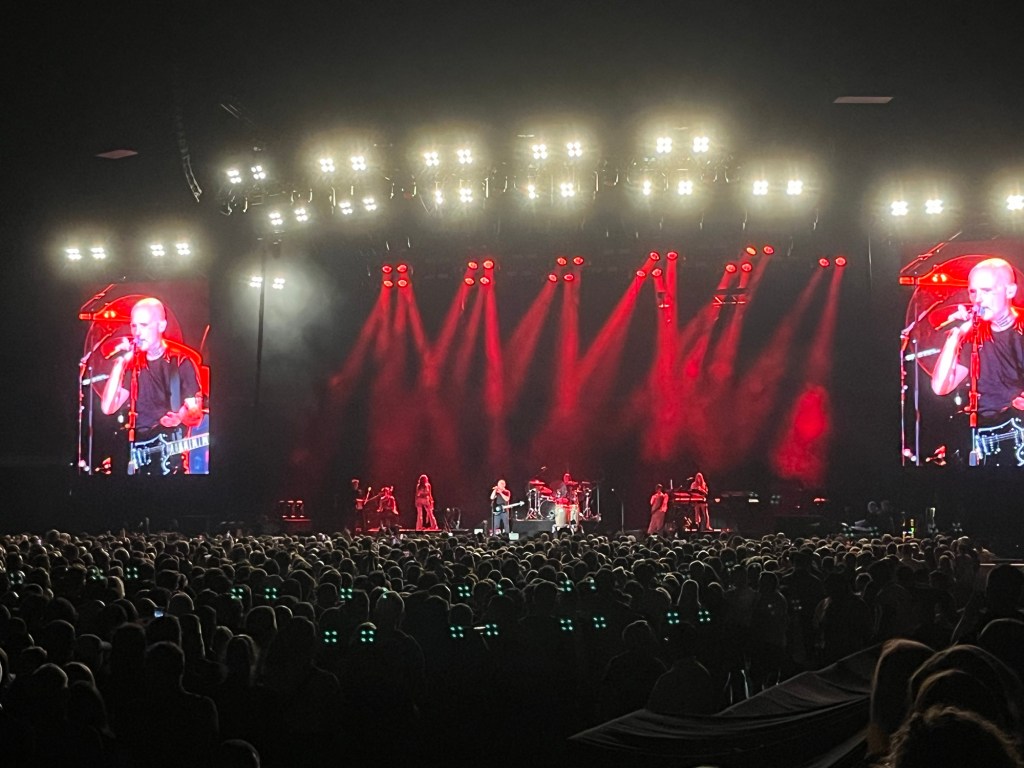
Moby had what looked a lot like a fifty-something audience (some with their teenage and twenty-something children with them) immediately on their feet. The vibe was as if everyone had shed 20+ years and was clubbing again, with DJ smoothness as songs transitioned into each other.
The slower tracks performed have been spiced up a bit to keep things moving, and tracks like Bodyrock went all out on the rock.
When Moby originally toured Play, he worked pretty hard behind the keyboards and occasionally thrashed at his guitar. This time out, he was willing to lean on a very talented band, two singers, and guest appearances from Lady Blackbird (who initially performed with Moby for tracks like Dark Days). This meant Moby could dash around the stage and play his guitar and take the occasional turn with a keyboard and congas.
Visually, the lighting, etc., hadn’t really moved on in 25 years. While it would be nieve to think he would compete with the likes of Peter Gabriel, the lighting did look dated against the likes of Elbow, who aren’t known for visual spectacle. This didn’t diminish the live energy, though – and chances are he was controlling costs so the charities who got the profits from the shows saw more money.
The set finished on the traditional Moby way, acknowledging his rave roots with Feel So Real and Thousand. For Thousand, the imp of a man would have climbed on top of his keyboards and launched himself off the keyboards at the climax of the song. Today, it is a bit more sedate, with the stage crew rolling on a flight case to climb onto and no spectacular leaping.
Overall, it was great to see him live again, but I suspect we’ll not see him tour again. By his own confession, he loves simply performing in his garden with friends in LA.
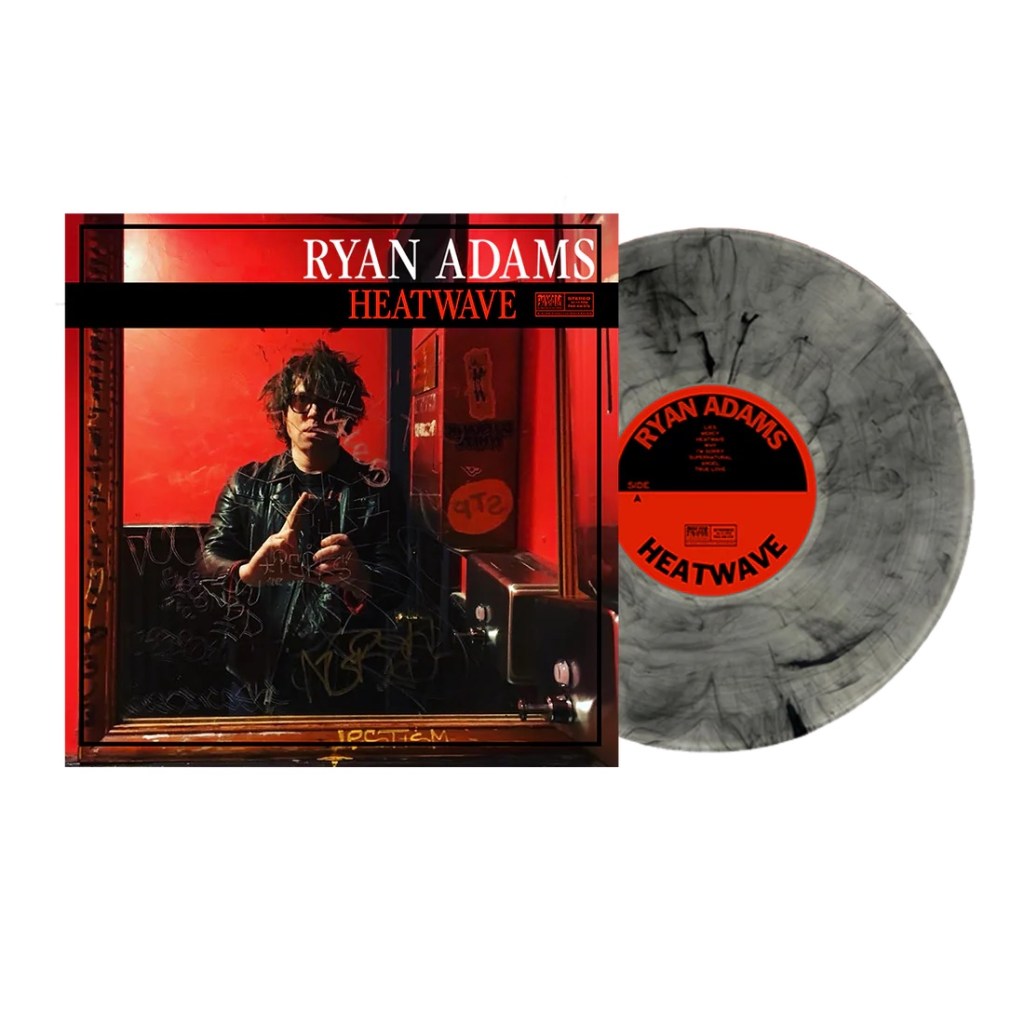
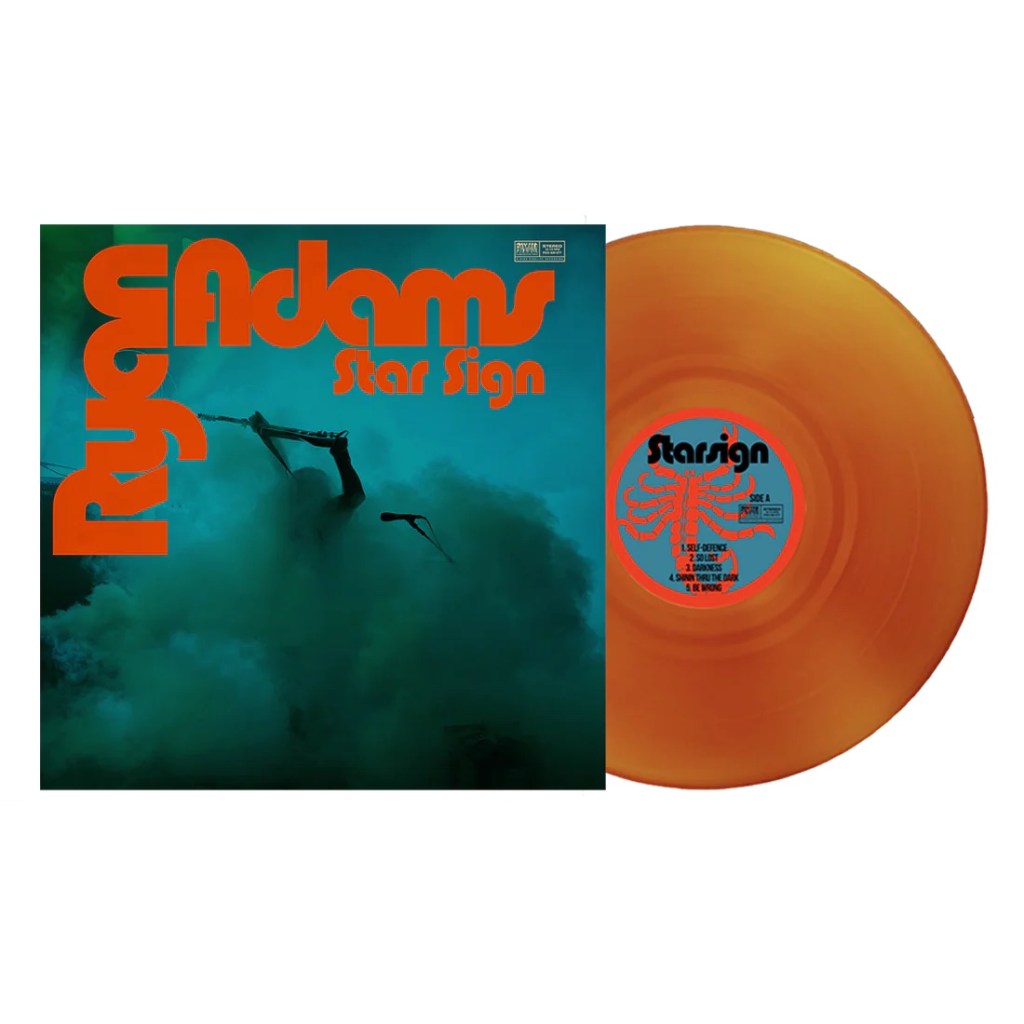
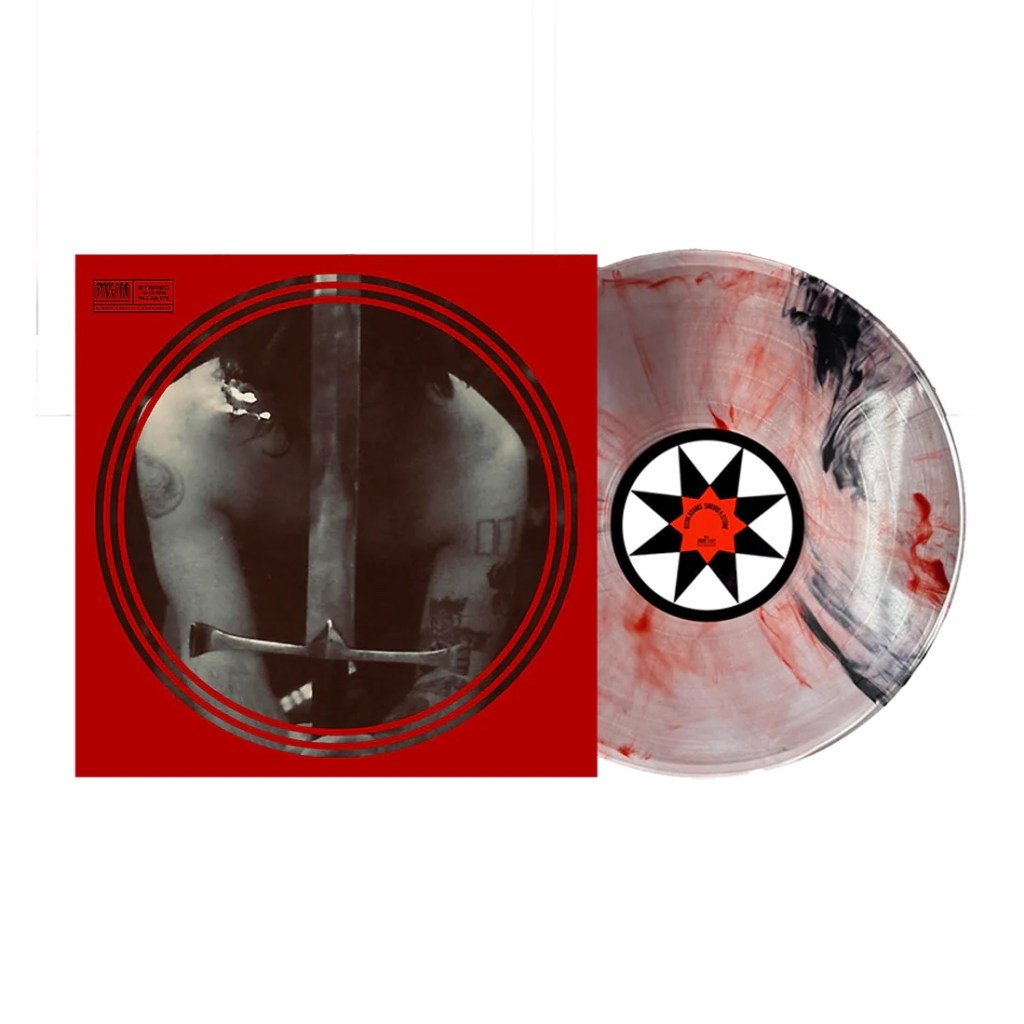
All the signs are that we’ll be seeing another avalanche of material from Ryan Adams in the new year.
Adams is incredibly prolific. But unlike the steady flow of releases from, say Van Morrison (1 or 2 every year for the last 10+ years), or Tangerine Dream (120 releases if you include all their soundtrack)., Adams’ release pattern has shifted towards releasing albums as a known series of albums to multiple albums at once. Last year, we saw Chris, FM, Devolver, and Romeo and Juliet come out at once. Then, later two cover albums very close together (Nebraska, Blood on the Tracks). This year, we’ve had the Return to Carnegie Hall box set and Morning Glory.
This shift has really kicked in since Adams resurfaced after being investigated for possible criminal sexual behavior, messy divorce, and other such accusations. Which may well be linked to changes in his record label relationships. I’m not going to suggest Adams is an angel; it’s clear he is a flawed individual. But being flawed doesn’t mean he isn’t talented. Just look at Prince or Michael Jackson to see that
Despite the number of albums being released, the quality is remarkable. But I can’t help wondering if he was working within the constraints of a more conventional record company, whether we would see fewer official albums, but at a standard that equals or surpasses that of Gold or Cold Roses – considered as possibly his best work. Plus, a lot of bootleg releases with the rest of the material.
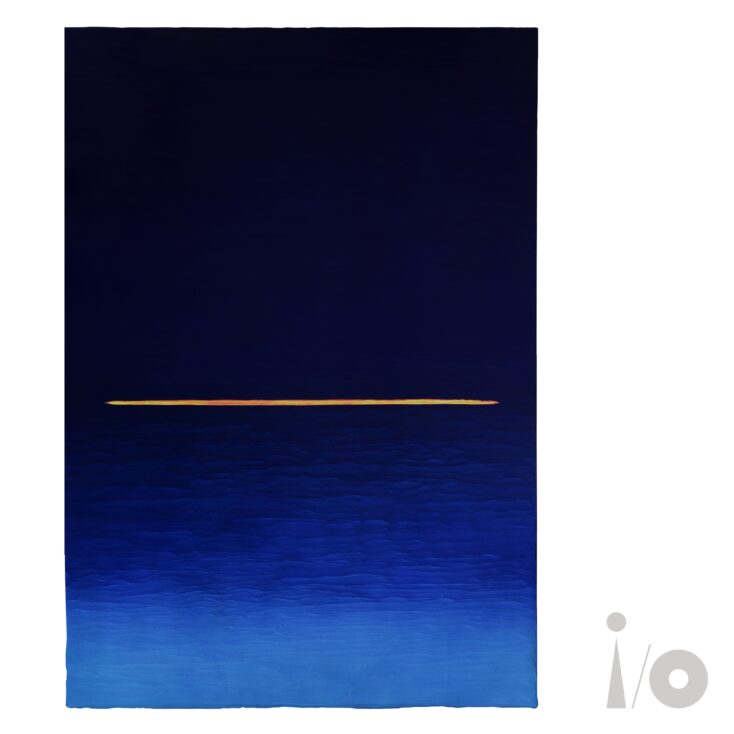
It’s been about twenty years since we’ve had any new original songs from Peter Gabriel. Now, for the last year, he has been teasing us by releasing a new track every month with two mixes called The Bright Side and The Dark Side. which sort of makes sense, given you could see I/O as a rather abstract representation of Ying and Yang.
With a track, each month has created an interesting experience, as it has given us time to absorb each track, rather than a big audio feast of an album, where the singles leap out at you, and then you start to appreciate the other tracks. If there is a downside, it is probably the fact it is no longer easy to say – these tracks are the singles. But to be honest I don’t think it matters to Peter Gabriel. There may be fan favorites, but that’s it certainly as far as it goes since Us.
However, even knowing which tracks are becoming fan favorites has been tough as Peter toured the album, and depending upon where you are in the world, you’ll have only heard some of the new songs, even though the core of the live show has been I/O.
The musical core of the band remains largely unchanged, with David Rhodes and Tony Levin with Manu Katche back on drums for most of the tracks. John Metcalfe is back, having also contributed so wonderfully with New Blood and the tours over the last ten years where Gabriel has used orchestral arrangement.
With this team, we have a real mix of style and sounds. From the very reflective Playing For Time, which opens with the muted horn reminiscent of tracks like Father Son on Ovo. Then there are tracks that are rhythm-heavy, like The Court, that would have fit in on the Up album.
As with all the two-letter-titled albums, there is a loose theme to the album. For I/O that is input and output, whether that is input from observation as suggested by Panopticom to the title track about how to absorb and contribute to the environment.
What the album shows and the tour demonstrated is that unlike some of his peers, Peter’s voice has changed, but the songs fit what sounds like a more weathered voice. The older songs, which may have been pitched higher, still have the energy and dynamics but perhaps pitched a little differently. So none of the challenges faced like Jim Kerr, who leans more of backing vocalists live, or Sting and Bono, who you can hear have to really work to hit some of the notes.
Peter has continued the idea that each song gets its own artwork associated with it, which came to prominence on the Us album (you can see more with Art From US). Some videos of this work can be seen here.
I/OPanopticom (artist Davif Spriggs)The CourtPlaying For TimeOlive Tree (artist Barthélémy Toguo)Love Can Heal (Artist Antony Micallef)This Is Home (artist David Moreno)And Still (Artist Megan Rooney)Road To Joy (Artist Ai Weiwei)Four Kinds of Horses (artist Cornelia Parker)
Along with the artwork, there have been some amazing videos. This is not big news, and the use of technology – particularly the application of some Generative AI. Check out these:
I’ve always had a fascination for pirate radio. A chance to hear non-mainstream playlisted music – that Peelsque subversiveness. My inner DJ may not be John Peel, probably closer to Lauren Laverne and Jo Whiley with the geekiness of Paul Gambaccini, but here are some suggested playlists …
I don’t often write about music, but this demented idea came to mind largely because Mrs Monster is more of a visual person whereas I prefer to have music on. The obvious intersection is music videos, so why can’t Spotify keep the metadata for videos on you tube. If you play a song on Spotify with a video, then YouTube is told to stream it to you if you have a session active.
The hardest bit for this would be linking the media together with the metadata but I’m sure artists and fans a like would crowd source that metadata quickly enough. Should You Tube actually pay artists for streams then it helps bolster the musician’s streaming income.
It would be interesting to see what it did to the music video interest if such as an idea took off as there would be incentive to get videos for every track. Perhaps with a little luck it would encourage artists to support grass roots film makers.
Some might say why not just stream video playlists, well how many people’s TV speakers get anywhere near the fidelity of a good hifi? Audio streams within many You Tube videos are often inferior because the key element is the visual not the audio.
The other thing is music on You Tube is entire album or just the tracks with videos recorded. But artists often have incredible b-sides or remixes – they currently don’t get loaded onto You Tube.
An Unkle performance is always going to be a little unusual given James Lavelle is very eclectic crossing many genres such as the groundbreaking Psyence Fiction album.
The first half of the performance was very much DJ lead by James at a desk and decks, live drums, keyboard/guitarist and Cello. This instrumentation alone really shows the diversity of the musical styling.
No live locals, as a result, the staging certainly didn’t have a central focus, everyone was with their instruments. Even Moby who crosses genres, as a live artist is in front of the other musicians or moving around the stage when not using a singer. Like any rock concert, the performance ebbed and flowed with raising and lowering of the tempo. With the slower pieces being the more cinematic pieces like Heaven.
Unlike a conventional performance the lighting didn’t pick out any of the performers, and like a club made more use of strobing light effects, but in contrast, a lot of videos were used as well including the amazing Spike Jonze directed skateboarders for Heaven.
Part 2 …
An intermission or perhaps a very long encore? Not what you’d expect halfway through a performance of this nature. But the change gave emphasis to the use of 5 different vocalists.
This changed the dynamic but also gave the second half a bit of a stuttering feel as the different singers can on stage and left.
Added to the fact that the delivery of performances originally by the likes of Ian Brown and Richard Ashcroft had the timbre of a female voice. But things got going and then just built to a thumping finale.
Interestingly even with the use of live vocalists, they weren’t lit up.
All said and done, Unkle doesn’t perform live very often and it’s great hearing the music performed live. I would love to have caught James Lavelle working with the Orchestra as he did with the Heritage Orchestra.
You must be logged in to post a comment.