• Home
  • About
    • Background
    • LinkedIn
    • Presenting Activities
    • Internet Profile
    • About
    • www.cloud-native.info
    • AI Disclosure
  • Observability, Fluent(d) Bit & OpAMP
    • OpAMP Product
    • OpAMP Overview
    • Log Generator
    • Fluent Bit Classic to YAML Format configurations
  • My Books
    • Logs and Telemetry using Fluent Bit
      • Fluent Bit book
      • Book Resources in GitHub
    • Logging in Action with Fluentd, Kubernetes and More
      • Logging in Action with Fluentd – Book
      • Fluentd Book Resources
      • Fluentd & Fluent Bit Additional stuff
    • API & API Platform
      • API Useful Resources
    • Oracle Integration
      • Book Website
      • Useful Reading Sources
    • Publication Contributions
  • Resources
    • GitHub
    • Oracle Integration Site
    • Oracle Resources
    • Mindmaps Index
    • Useful Tech Resources
      • Fluentd & Fluent Bit Additional stuff
      • Recommended Tech Podcasts
      • Official Sources for Product Logos
      • Java and Graal Useful Links
      • DevTips
  • Music
    • Monster On Music
    • Music Listening
    • Music Reading

Phil (aka MP3Monster)'s Blog

~ from Technology to Music

Phil (aka MP3Monster)'s Blog

Tag Archives: collector

Moving Open Source Observability backend closer to turn-key solutions

09 Monday Nov 2026

Posted by mp3monster in AI, Cloud Native, Fluent Observability, General, Technology

≈ Leave a comment

Tags

agentic, agents, AI, collector, Fluent Bit, Fluentd, Lua, observability, open-source, OpenTelemetry, OTel, OTTL, Transformation, Vector

In our first post on Moving Open-Source Observability closer to turn-key solutions, we discussed how we can automate the source-to-pipeline. But turn-key solutions also flow data to the backend and provide logs and metrics that are contextually aware of the systems being monitored.

While detecting sources and building the capture mechanism may seem more challenging at first glance, it is easier – we have a defined technology, and our observability agent defines the output structure. So what makes the pipeline to the backend more complex?

  • We’re more likely to have a variety of products, and some products may have functional overlaps.
  • Greater configuration diversity in how tools can be configured.
  • Greater contextual awareness is needed.

Let’s break these down in more detail.

Greater variety of tools means we need a common way to set up transformations; otherwise, the mechanics of a transformation process in our pipeline will explode in complexity.

One benefit of going open source is that you can choose the tools that fit your needs for log analytics, metrics, alert routing, and so on, but this can lead to functional overlaps. For example, you may use Prometheus for infrastructure-based metrics, but want to use Elastic APM for Application Performance Management (APM) as you’re using an Elastic Java stack for app development.

The different approaches to configuring tools, or configuration diversity, is probably the single largest challenge, and the number of approaches multiplies the number of configuration permutations that must be achievable. While there appears to be some initia behind the support the Prometheus mixin framework which provides templates for different scenarios such as infrastructure dashboards and alerts. It is far from universal adoption today. For example, Prometheus and Grafana support its use. But other solution stacks such as Elastic do not. If you align on a common technology stack, the chances of a harmonised configuration process rise.

We need contextual awareness from the source, as well as the collected data, to map data to the table(s). For efficiency, if we can avoid putting all metrics into a single table, queries could have one less dimension to filter. Context awareness will inform how we render the dashboards and set alert thresholds. For example, general filesystem storage capacity thresholds would be hugely different to database storage thresholds.

All of this means that if we want a deterministic, transformation-based process, we’ll end up with an unsustainable set of combinations that need to be mappable, testable, and maintainable as the different solutions grow, evolve, and occasionally get archived as contributions dry up.

As turnkey solutions, bring an opinionated answer and either build their own backends from scratch (e.g. Oracle’s Enterprise Manager) and leveraging open source as building blocks – they effectively eliminate the challenges of functional overlaps and configuration diversity – at the same time removing that flexibility. To underline how messy things could get, we experimented in a branch of the repo to see how messy it could get, while trying to keep the divergence as narrow as possible. This diagram illustrates the point visually.
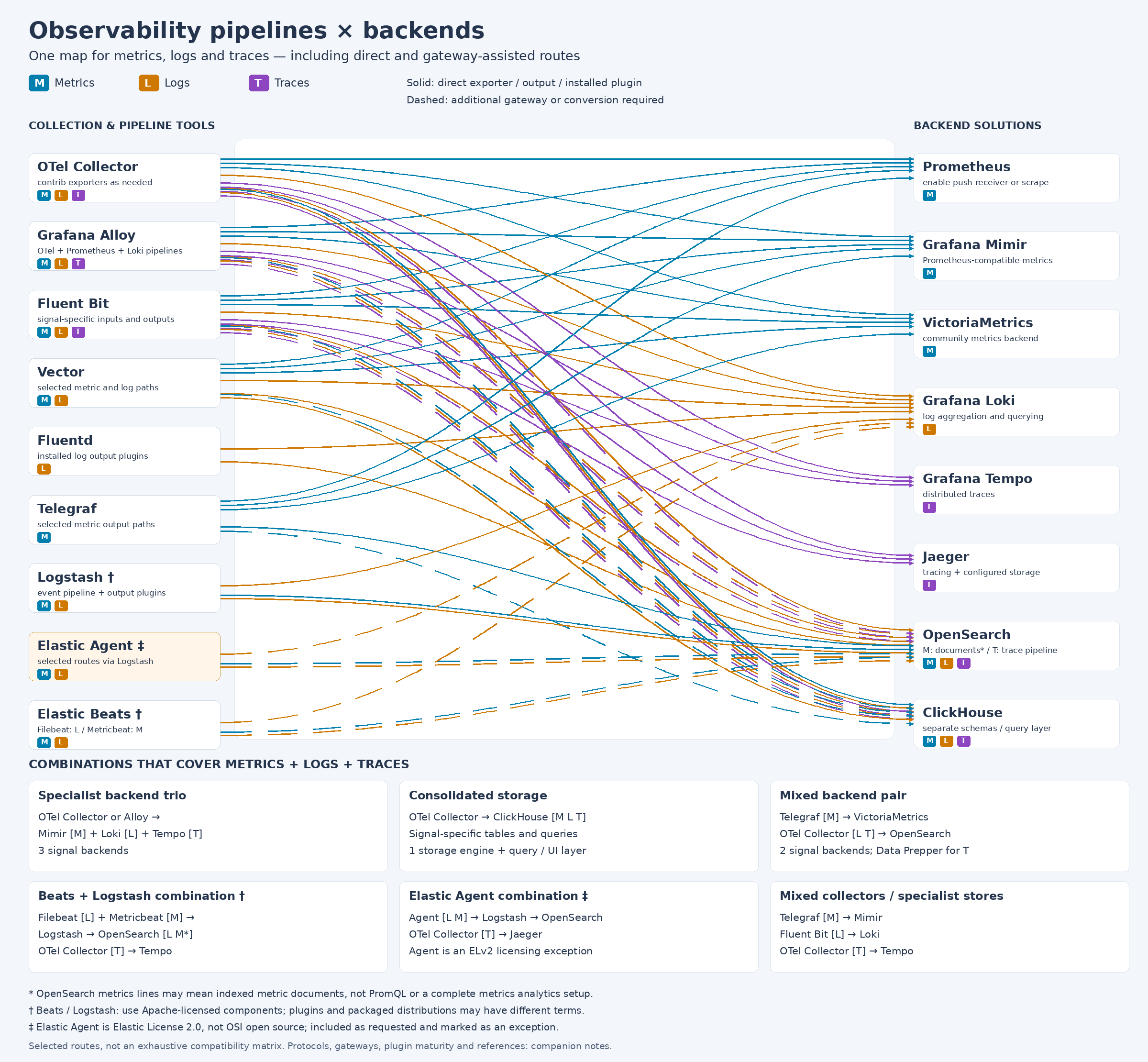
The complexity and variability of pipeline tools and observability back ends

Solution

If a deterministic approach is unsustainable, are there options to ease the challenge or achieve a solution?

Simplification option

One option that can simplify, but certainly doesn’t solve, the challenge is to leverage OpenTelemetry’s work on semantic conventions, where they have been cultivating naming conventions that define data elements likely to be transmitted. When you manually map data, the process becomes more intuitive (and therefore quicker) and improves the chances of an AI agent mapping successfully. In some respects, this is like middleware-driven efforts to build data ontologies, so you need to avoid the problems global ontologies had.

Bringing AI to the game

Because configuration is linguistic and well documented, you can apply an LLM-based approach to the problem. The process of mapping from the ingestion part of the pipeline to the back end needs to be flow-driven so we can:

  • Perform a validation process by selecting and using validation tools to verify the configuration(s).
  • When validations fail, the process can be pushed back to the configuration stage again.
  • When users are in the loop, it becomes possible to drive a conversation for more clarity.
  • With a conversational process, it becomes possible to create in-pipeline transforms as a result of user conversation, along with simpler transforms to handle possible data formats and names.

What we’re describing here isn’t trivial, and could arguably be offered as a commercial product in its own right. The config management feature of our OpAMP solution also provides meaningful inputs, as it defines valid data types for observability agents like Fluent Bit where a concrete schema is not provided.

Using AI – agent graph
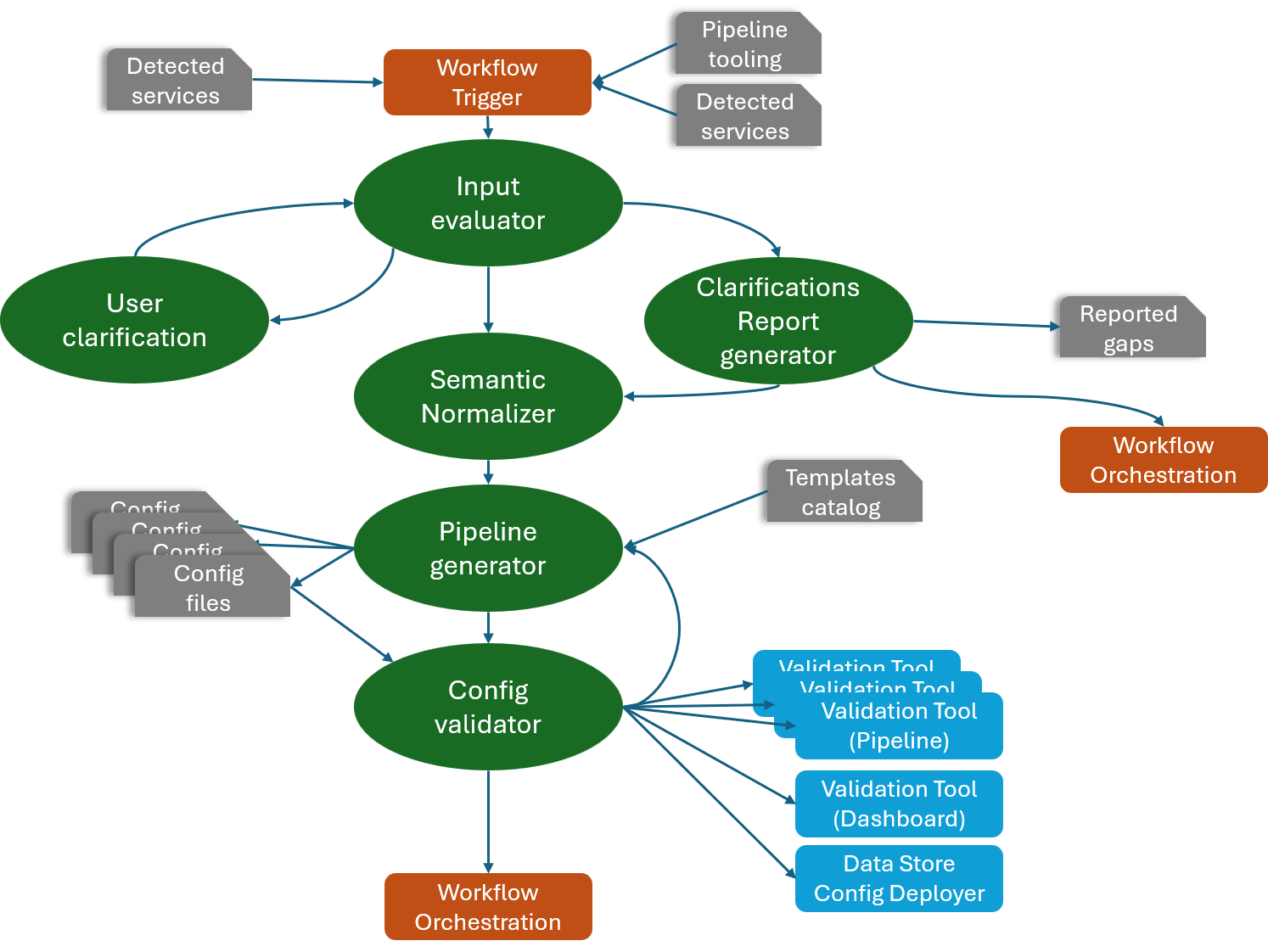
Agent descriptions

The agentic process illustrated in the preceding diagram is not trivial. It will be pretty context-heavy, as much of the information to work with can’t be easily addressed through targeted RAG or semantic search. In most cases, these core agents will need tools such as web search, since their training isn’t as up to date as the latest features of the different tools.

  • Input evaluator – We need a variety of inputs covering the target systems and, if there is overlap in capability, guidance on which ones to use. We need to tell the agent what tooling the pipeline needs. We’ll likely need metadata on the sources. For example, if we detect a database, we need to know which type so we can inject the correct queries. The input evaluator will use this to decide whether the detail is sufficient. The result of this analysis could be one of several things:
    • Use a client conversational agent that chats with the user to get clarifications; there is some overlap here, as the conversation will need to know what answers are needed, and some answers may open up new questions. Once this agent believes it has compiled the details for the answers. it returns to the Input Evaluator to reassess the picture.
    • We can ask the evaluator to pause the process and generate a report showing the gaps identified. This can be done using the Clarifications Report generator.
    • The Input evaluator may determine that it reports the gaps and presses on with a best effort.
  • Semantic normalizer – To simplify the flow, mapping source names to the semantic definitions from OpenTelemetry would need to understand the source and the OTel Semantic Naming model.
  • Pipeline generator – Once we confirm the details and have simplified semantics, we can have the AI build out the rest of the pipeline. The agent may need to be handed back to the agent for correction.
  • Config validator – once the pipeline generator hands off the configurations, the validator agent determines the best tools to verify whether the configurations are valid. If the tool returns an error, it hands the cause back to the pipeline generator. Ideally, tool calls will return meaningful error descriptions. But if not, we’d need to create a simple knowledge base to extract details from.
  • Clarifications Report generator – The clarifications report generator’s role is to take the gaps identified and generate and share them via a document repository or email in a user-friendly format
  • User clarification – The conversational interface with the user to obtain missing details, according to the Input evaluator. One difference between this and the Input evaluator is that this agent will need to consider conversational history to build the required additional detail. The input evaluator shouldn’t need prompting.

Controlling complexity

We’ve seen that allowing flexibility and removing the opinionated constraints of turnkey solutions increases complexity very quickly. The AI solution will become much more reliable if we strip back the options we allow agents to choose from, or if we push more organizations to standardize on consistent configuration strategies that enable a move toward templatization.

A Unified pipeline syntax

The other path that could radically simplify things is the Open Telemetry Transformation Language (OTTL), which has just reached the version 1 milestone. While it is not a complete solution, it offers a way to advance the standardized pipelines. We’ll explore OTTL in a separate blog in more depth. But essentially, if you look at the collector as two parts- the wire-level mechanism to capture or emit data and a second part for routing and manipulation- then OTTL is about the routing and manipulation. OTTL has both a formal syntax and an implementation as a Go library. While the library may not help if you’re using Vector, Fluentd, Fluent Bit, etc., the formal notation will work with ANTLR4; the resources are available through the OTLery OTTL-Lang repo. This allows us to generate, across many languages (C, Java, Ruby, Lua, etc.), a parser for the OTTL syntax into a tree structure that can then be walked. This still needs the intelligence to translate data references into references for the observability tool, and the functions, editors, and transformers to be implemented. Still, most of these can be mapped onto language-native libraries.

With a formal notation and a growing catalogue of prepared OTTL scripts and utilities, such as those offered by the OTLery repos, there is the ability to leverage AI to generate the transformation logic. As many observability tools such as Fluent Bit and Vector include support for scripting and plugins, incorporating a complete parser becomes a practical option. With both Vector and Fluent Bit, for example, supporting Lua being incorporated into the pipeline, and ANTLR4 supporting Lua as well, it should be possible to implement OTTL in those pipelines.

There is one downside to using OTTL: we lower our observability agents to the lowest common denominator. For example, Fluent Bit provides basic stream analytics. Transformations are now going through a parser phase rather than going directly to native binary processes.

Conclusion

The more we can restrict options, the closer we can get to being able to automate the creation of the observability pipeline quickly, and efficiently, but at the price of potentially not maximizing feature exploitation (the downside of using OTTL across different observability agents). The problem is to provide a solution that is very flexible, which will require a fair bit of effort. That flexibility also creates the possibility of exploiting the full feature set of the available tools.
Useful links

  • Prometheus Monitoring Mixins
  • OpenTelemetry Semantic Conventions
  • Elastic APM for Application Performance Management (APM)
  • Open Telemetry Transformation Language (OTTL)
  • OTLery OTTL-Lang
  • OTTL Go library
  • ANTLR4
  • Configuration Generator main repository

Share this:

  • Share on Facebook (Opens in new window) Facebook
  • Share on X (Opens in new window) X
  • Share on Reddit (Opens in new window) Reddit
  • Share on LinkedIn (Opens in new window) LinkedIn
  • Email a link to a friend (Opens in new window) Email
  • Share on WhatsApp (Opens in new window) WhatsApp
  • Print (Opens in new window) Print
  • Share on Tumblr (Opens in new window) Tumblr
  • Share on Mastodon (Opens in new window) Mastodon
  • Share on Pinterest (Opens in new window) Pinterest
  • Share on Bluesky (Opens in new window) Bluesky
Like Loading...

Getting the best vinyl gifts

21 Monday Apr 2025

Posted by mp3monster in Music, Music Resources

≈ 1 Comment

Tags

bootlegs, box set, collection, collector, color, discogs, Music, news, rare vinyl, records, RSD, vinyl, vinyl-records

Buying vinyl as a gift for a loved one can be tricky if you’re not an aficionado. Buying vinyl generally is easy – just hitting a box shifter like Amazon can do it. However, in most cases, you will only get a generic pressing for mainstream artists, and won’t receive something collectible.

This isn’t a hint for me, as I always keep a list of suggestions for those significant dates. As I’m not the only vinyl fan in our extended family, I thought I’d share the thinking I go through – or at least that is how this post started out.

New releases

From a collector’s perspective, like books generally, 1st issues are more collectible than later additional pressings or reissues. Often, reissues will be on standard black vinyl with a standard sleeve. There are some things where reissues are worth considering, and we’ll come back to this.

In the last couple of years, new releases have seen multiple versions being made available. The versions differ in two ways. Firstly,y special editions will come with extra tracks, typically these tracks are:

  • Alternate mixes result from how the song is put together in the studio.
  • Demos, early versions that artists have put together before entering the studio to produce the song properly. In some cases, these versions can turn out to be better than the final production (as was the case with Norah Jones’ debut album).
  • Live performances, artists often record their own shows, even if it’s just to review and improve.
  • B-sides, when vinyl and CD singles were dominant, you would have multiple additional tracks. It was once common for an artist to record 20 or more songs for an album. Ten or so tracks would make the album, and others would be included as B-sides.
  • A recent development is the emergence of different audio mixes, such as 5.1 or 7.1 mixes, which often accompany Blu-ray Disc releases.

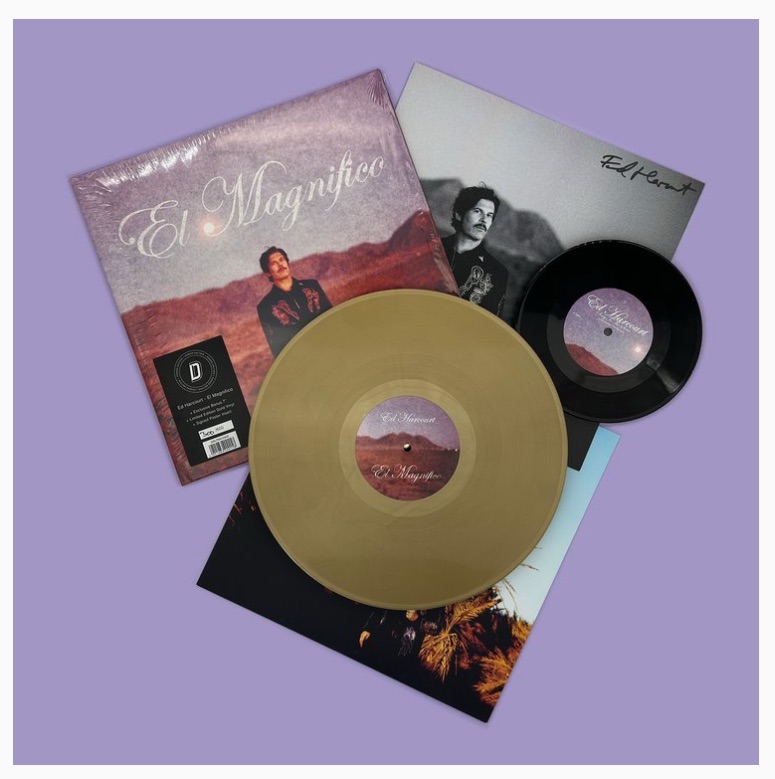
The most common variations are the different coloured vinyl. Indie record stores often offer a limited run of coloured vinyl. Sometimes, even picture discs, and in recent years, Zoetrope art and etched album sides. These are harder and more expensive to produce, so they are rarer, often limited runs, so more collectible.

Explanation to zoetrope vinyl

Coloured Vinyl sources

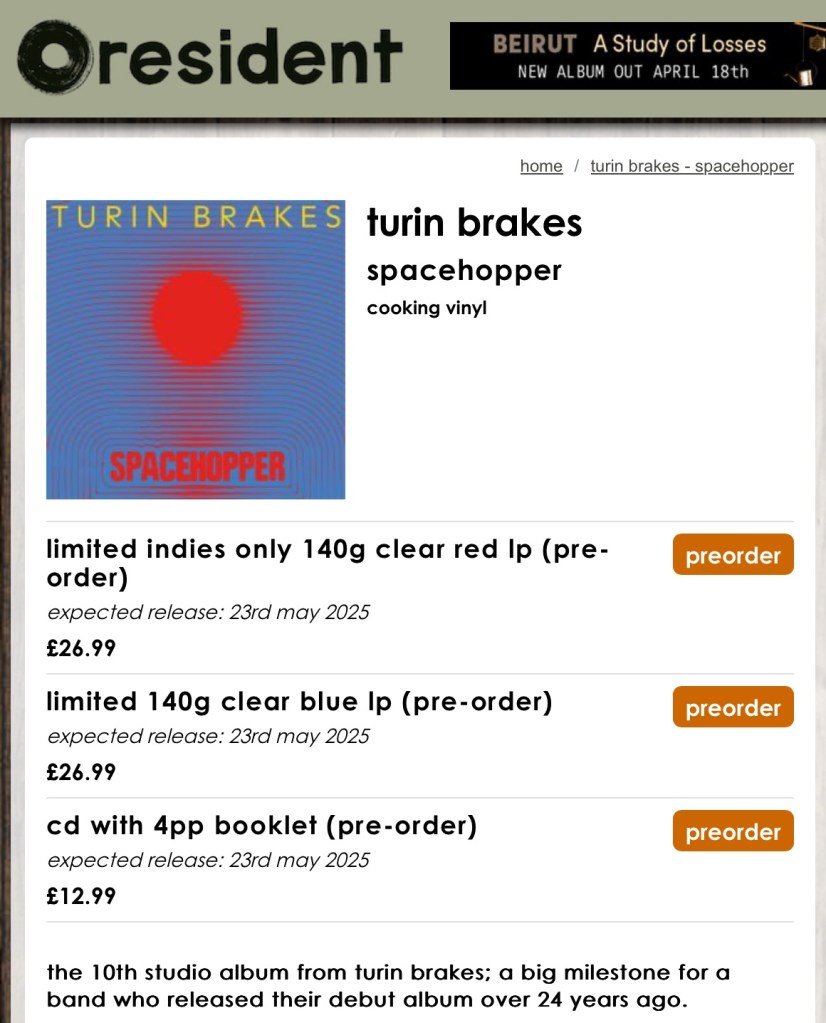
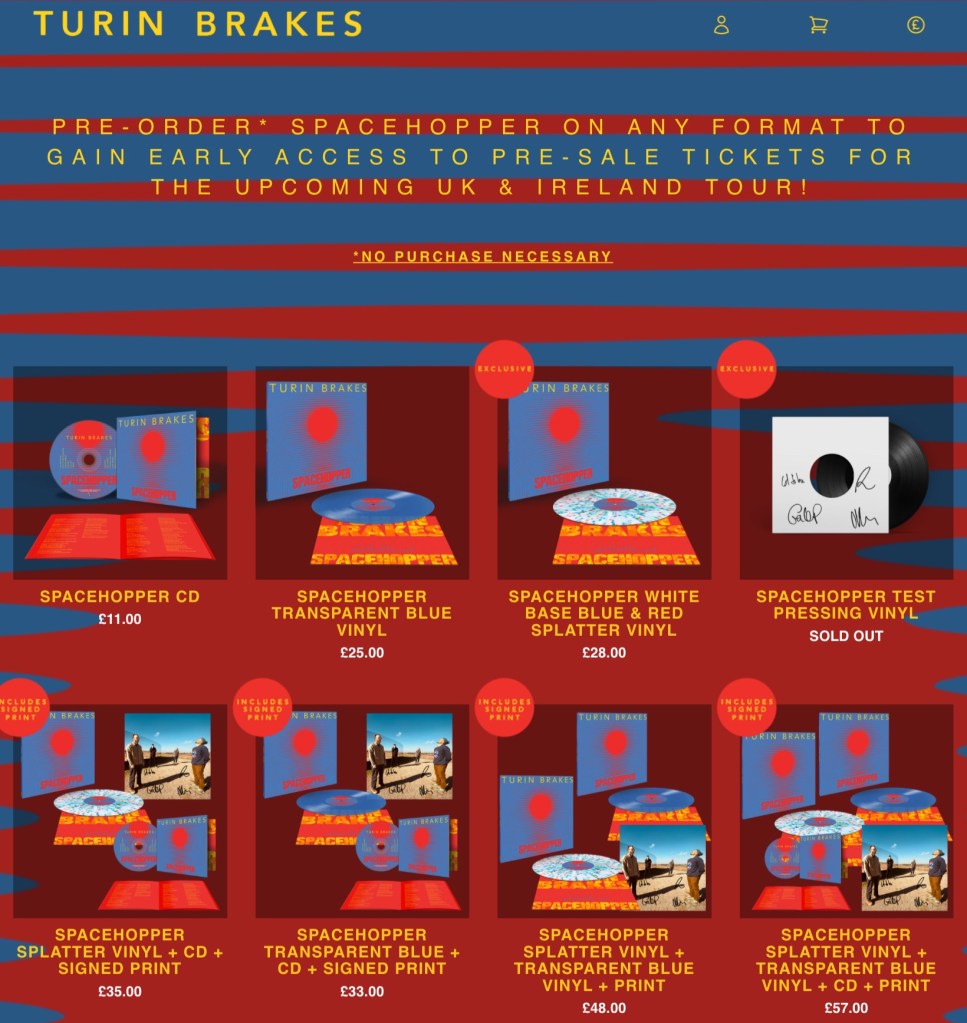
As just mentioned, artists and record labels have supported independent record stores by providing not only the standard black, but also coloured vinyl versions. This has expanded in recent years to having special colors being offered to fans through streaming services such as Spotify and artist websites.

Resident Music details for the new Turin Brakes album, vs the band’s (label-managed) website

Sadly, this approach has been adopted by some very successful artists to entice their loyal fans to buy multiple copies of the same album, with even Amazon getting its own special, colored vinyl. I personally feel Taylor Swift having more than 45 versions of one album is somewhat exploitative of her fan base.

Numbered Editions

We’ve mentioned that often, the colored vinyl runs will be limited. How limited it can vary, so when a release is listed as a limited edition, it is worth checking if a number of copies is identified. These releases will also have numbering printed and written onto them. How many in the run will influence that value? Some runs can be as many as 10,000. For a popular artist, it’s still relatively rare, but not for a smaller name. Others will be as low as 500 copies. So, consider the artist’s popularity when looking at the numbering.

Dinked Editions

In the U.K., a group of indie record stores have been working with smaller indie artists to release ‘Dinked Editions‘ of albums. These versions have been developed with the artists, and often have different album covers, additional tracks on a supplemental single, and will be numbered as part of a limited edition. These are usually numbered and have between 500 and 1000 copies.

Signed artwork

Artists signing the albums will always make the records more collectible. But, signing sleeves can be problematic (doing it once an album is packaged means a lot of weight has to be transferred around). Sign the sleeve before adding the record, as this may impact production. As a result, sadly, the signed piece is a separate art card. So a signed, genuine sleeve will always be more collectible.

Record Store Day / National Album Day

Record Store Days (RSDs) have been going for approaching 20 years. Started as a lifeline to help keep independent record stores stay alive when a lot of stores were closing down. RSD releases are usually limited runs, where just enough copies are produced to sell in stores on a specific date. RSD releases tend to go beyond just coloured vinyl to artists releasing ‘new’ (sometimes older but previously unreleased, remastered, or demo material).

While RSD releases are aimed at physical instore sale events, on the Monday evening after the RSD stores can then sell their RSD overstock online. Occasionally, you may find a store with an odd copy lingering well after the RSD event, but these are relatively rare.

So getting an RSD release involves a bit of luck and timing. Being willing to queue at a store will boost the chances of getting the desired RSD release. It does help in advance of the RSD day, the releases for the event are published, so you know in advance what to get.

RSDs normally take place on a Saturday in April and have become a bit of an event. So, if you’re not that interested in the music you’re buying for someone, you’re better off gambling on a store having it online on the following Monday at 8pm. Most indie stores have online sales channels (often this is how they survive during quiet times), so bookmark several to try.

Unlike RSD, National Album Day isn’t a global setup, although there are similarities National Album Day currently doesn’t carry the same impact.

Vinyl weight and Audiophile pressings

It is worth keeping an eye on the vinyl weight referenced. Good-quality releases are typically 180 g, although 140 g is not uncommon; standard releases can be as low as 100-120 g. The heavier the vinyl, the less susceptible it is to warping, and any surface scuffing is less likely to impact sound reproduction.

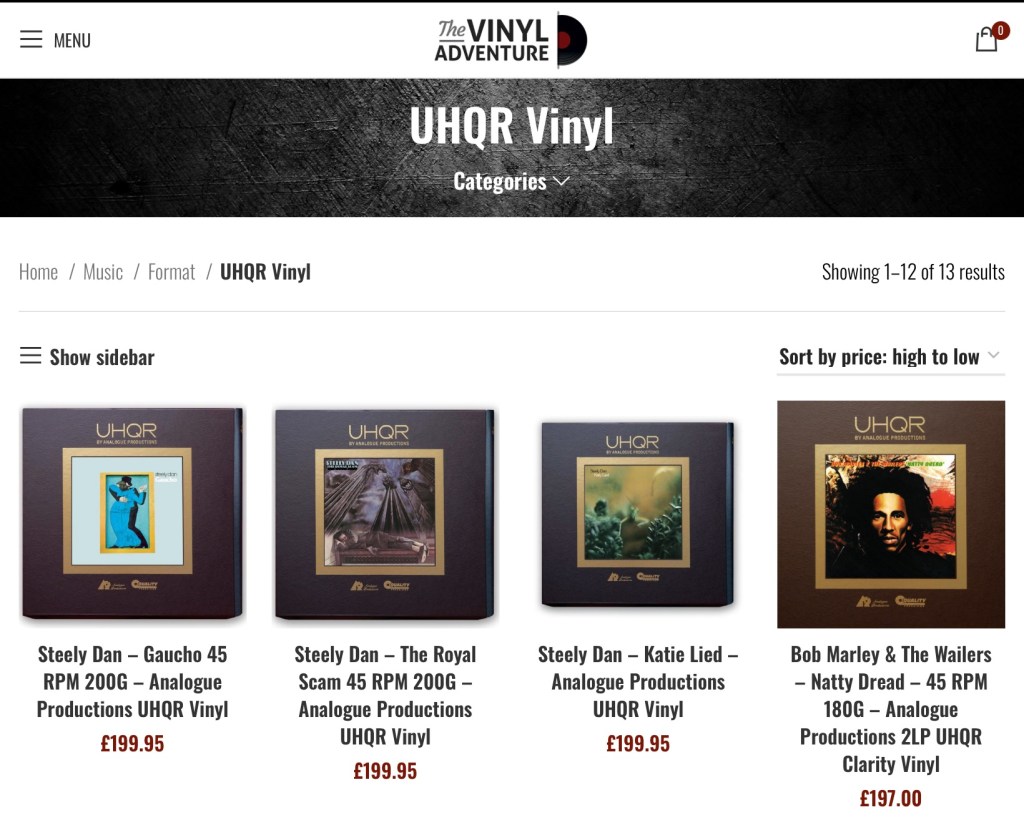
There is a correlation between vinyl weight and vinyl quality, with some specialist pressings over 180 g. These come from specialist companies such as Mobile Fidelity Sound Lab. These releases will also feature albums playing back at 45 RPM, as this effectively adds 50% more groove length to the recording. These releases can cost multiples of a standard release. Such purchases will pay off when used with an audiophile setup.

Box sets

Album box sets can be an attractive vinyl gift option, but can be rather expensive for the quantity of music that can be included. Not all box sets are published as Limited Editions, but in most cases, they can be considered so because the number of buyers prepared to spend hundreds of pounds on a small set of new actual material. For example, Rush R50 has 7 new previously recorded tracks with a 234.99 price tag.

While many box sets focus on a single release title, e.g., Peter Gabriel’s I/O or Genesis’ 50th Anniversary edition of Lamb Lies Down On Broadway. Another example is the new Springsteen’s Tracks II priced at nearly £300, but it does contain 7 albums worth of new material.

Vinyl Bootlegs

The recovery of vinyl has also driven the bootleg market. Bootleg (sometimes referred to as Recordings Of Illegitimate Origin – ROIO) really took off with CDs, as the production costs are low, and even more with downloading. While downloading has dented the value of the market. What it doesn’t replace is the sleeves and artwork that can go into such releases.

When it comes to the legality of such recordings, some legal loopholes in the U.K. can give sufficient legitimacy to the releases, which is why they do show up in record stores.

There is an important consideration when buying bootlegs, which is the lineage of the recording. For example, a recording taken from an FM broadcast is transferred to a cheap cassette before being transferred to vinyl. Some labels, and bootleg series have a reputation for quality lineage, such as Transmission Impossible.

Sometimes, a bootleg recording of a specific performance is worth having, regardless of its quality. But to know this requires research and understanding of the performances and bootlegging labels.

Rare Vinyl

Like rare books, rare record buying can need an understanding of what is valuable and what is not. Many factors can influence value, factors such as:

  • Flawed productions or label printing,
  • Original pressings and pressings of the wrong version of an album (different mixes etc.).
  • Alternate sleeves, or where early releases had gatefold sleeves, but later changed to have a conventional sleeve.
  • Artists signing the sleeve.
  • First pressings of some albums.

In addition to these points, all the previous considerations, such as numbering, limited issues, coloured vinyl, etc., what is important is evidence of authenticity. Some details such as matrix codes etched in the vinyl, which can help identify specific versions (such information can be found on sites like Discogs).

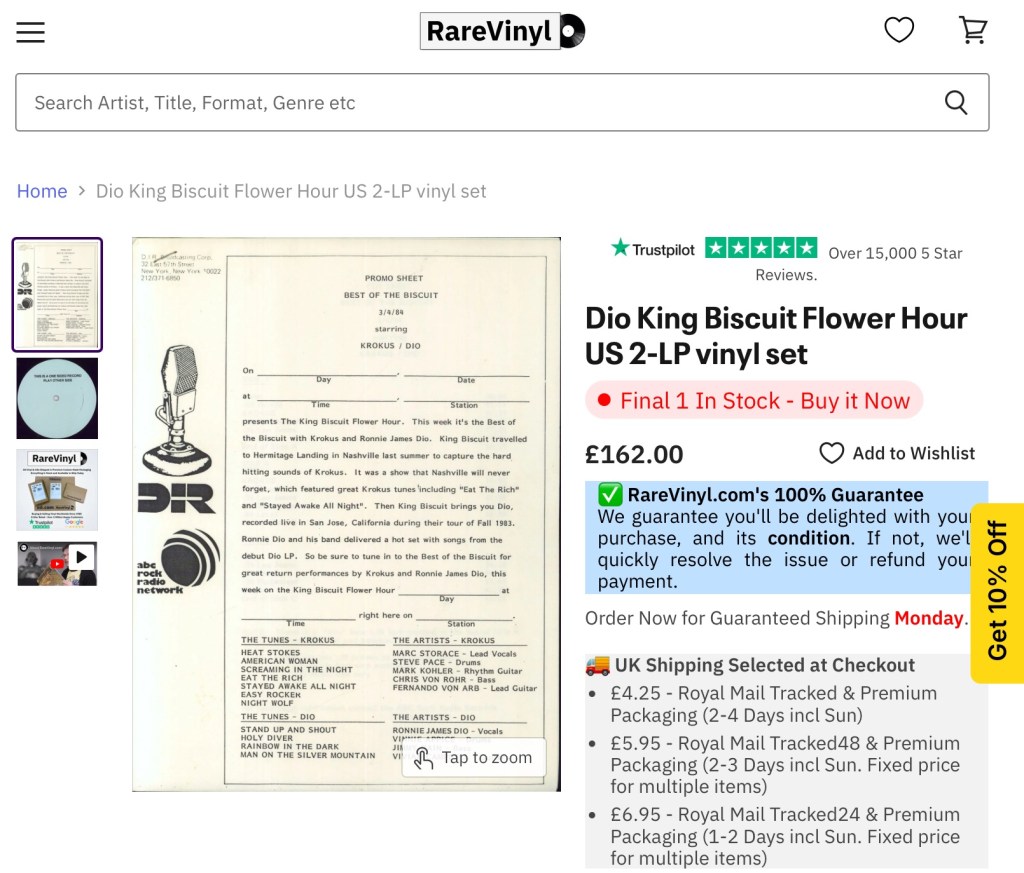
However, there are some easy value propositions, such as pressed broadcasts like King Biscuit Flower Hour and BBC Top of the Pops, which had limited pressings made so that the vinyl copies could be distributed to regional radio stations.

Understanding the value and pricing becomes easier when you understand how second-hand vinyl is graded. The sleeves and vinyl are graded separately. Grading goes from mint (like new), near mint (NM), very-good (VG), excellent (Ex), and so on. Personally, I would focus on VG or better, except in some exceptional cases (a more precise definition can be seen here).

Finding Your Indie Store

As I’ve mentioned Indie record stores several times, the question becomes, where are they, how do I find them? Well, most cities these days will have an indie store, but they aren’t usually on the high street. You’ll need to find them. Of course, a LOT (not all) are also online. The easiest places to locate your nearest indie store are via:

  • Google search with something like ‘indie record stores‘.
  • RSD Record Shop Locator
  • Discogs map

Conclusion

We’ve covered a lot of possibilities here. However, this is far from exhaustive, and we will follow up with another post that explores other ideas, although not all of them involve vinyl.

Share this:

  • Share on Facebook (Opens in new window) Facebook
  • Share on X (Opens in new window) X
  • Share on Reddit (Opens in new window) Reddit
  • Share on LinkedIn (Opens in new window) LinkedIn
  • Email a link to a friend (Opens in new window) Email
  • Share on WhatsApp (Opens in new window) WhatsApp
  • Print (Opens in new window) Print
  • Share on Tumblr (Opens in new window) Tumblr
  • Share on Mastodon (Opens in new window) Mastodon
  • Share on Pinterest (Opens in new window) Pinterest
  • Share on Bluesky (Opens in new window) Bluesky
Like Loading...
    • About
      • AI Disclosure
      • Internet Profile
      • Music Buying
      • Presenting Activities
    • Books & Publications
      • Logging in Action with Fluentd, Kubernetes and More
      • Logs and Telemetry using Fluent Bit
      • Oracle Integration
      • API & API Platform
        • API Useful Resources
        • Useful Reading Sources
    • Mindmaps Index
    • Monster On Music
      • Music Listening
      • Music Reading
    • OpAMP explained: the control plane for observability agents
    • Oracle Resources
    • Useful Tech Resources
      • Fluentd & Fluent Bit Additional stuff
        • Logging Frameworks and Fluent Bit and Fluentd connectivity
        • REGEX for BIC and IBAN processing
      • Formatting etc
      • Java and Graal Useful Links
      • Official Sources for Product Logos
      • Python Setup & related tips
      • Recommended Tech Podcasts

    TOGAF 9

    Logs and Telemetry using Fluent Bit


    Logging in Action — Fluentd

    Logging in Action with Fluentd


    Oracle Ace Director Alumni

    Oracle Cloud Integration Book


    API Platform Book


    Oracle Dev Meetup London

    Blog Categories

    • App Ideas
    • Books
    • Enterprise architecture
    • General
      • ExternalWebPublications
      • LinkedIn
      • Website
    • Music
      • Music Resources
      • Music Reviews
    • Photography
    • Podcasts
    • Security
    • Technology
      • AI
      • APIs & microservices
      • chatbots
      • Cloud
      • Cloud Native
      • Dev Meetup
      • development
        • languages
      • drone
      • Fluent Observability
        • Fluentbit
        • Fluentd
        • OpAMP
      • logsimulator
      • mindmap
      • OMESA
      • Oracle
        • API Platform CS
          • tools
        • ITSO & OEAF
        • OIC – ICS
        • Oracle Cloud Native
        • OUG
      • railroad diagrams
      • TOGAF

    Enter your email address to subscribe to this blog and receive notifications of new posts by email.

    Join 2,628 other subscribers

    RSS

    RSS Feed RSS - Posts

    RSS Feed RSS - Comments

    November 2026
    M T W T F S S
     1
    2345678
    9101112131415
    16171819202122
    23242526272829
    30  
    « Oct    

    Speaker Recognition

    Open Source Summit Speaker

    Twitter

    Tweets by mp3monster

    History

    Flickr Pics

    More Photos

    Social

    • View @mp3monster’s profile on Twitter
    • View philwilkins’s profile on LinkedIn
    • View mp3monster’s profile on GitHub
    • View mp3monster’s profile on Flickr
    • View mp3muncher’s profile on WordPress.org
    • View philmp3monster’s profile on Twitch
    Follow Phil (aka MP3Monster)'s Blog on WordPress.com

    Blog at WordPress.com.

    • Subscribe Subscribed
      Phil (aka MP3Monster)'s Blog
      Join 232 other subscribers

      Have a WordPress.com account? Log in now.

    • Phil (aka MP3Monster)'s Blog
      View site in Reader
      Manage subscriptionsSign upLog in
      Report this content
      Collapse this bar
    Loading Comments...

    You must be logged in to post a comment.

    Privacy & Cookies: This site uses cookies. By continuing to use this website, you agree to their use.
    To find out more, including how to control cookies, see here: Our Cookie Policy
    %d