• Home
  • Site Aliases
    • www.cloud-native.info
  • About
    • Background
    • Presenting Activities
    • Internet Profile
      • LinkedIn
    • About
  • Books & Publications
    • Log Generator
    • Logs and Telemetry using Fluent Bit
      • Fluent Bit book
      • Book Resources in GitHub
      • Fluent Bit Classic to YAML Format configurations
    • Logging in Action with Fluentd, Kubernetes and More
      • Logging in Action with Fluentd – Book
      • Fluentd Book Resources
      • Fluentd & Fluent Bit Additional stuff
    • API & API Platform
      • API Useful Resources
    • Oracle Integration
      • Book Website
      • Useful Reading Sources
    • Publication Contributions
  • Resources
    • GitHub
    • Oracle Integration Site
    • Oracle Resources
    • Mindmaps Index
    • Useful Tech Resources
      • Fluentd & Fluent Bit Additional stuff
      • Recommended Tech Podcasts
      • Official Sources for Product Logos
      • Java and Graal Useful Links
      • Python Setup & related stuff
      • DevTips
  • Music
    • Monster On Music
    • Music Listening
    • Music Reading

Phil (aka MP3Monster)'s Blog

~ from Technology to Music

Phil (aka MP3Monster)'s Blog

Category Archives: Technology

Review of Introduction to Oracle Event Processing – chapters 10 & 11

19 Wednesday Jun 2013

Posted by mp3monster in Book Reviews, Books, General, Packt, Technology

≈ 1 Comment

Tags

11g, book, CEP, events, Oracle, Packt, packtpub, review

The penultimate chapters don’t dive into the core Event Processing technology but look at some uses cases and the combination of CEP with Oracle’s spatial extensions and database capabilities. My initial reaction was that these chapters are perhaps more niche than I’d want, but when I thought a little longer it occurred to me that a lot of CEP use cases would include make use of spatial. Intact a system development I lead some years ago, if built today could be built using these features.

The book focuses on the idea of notifying people about a public transport service, but think about the great many mobile services evolving for smart phones given their push notification capability now you can see how e spatial features could offer a lot of value.

The chapters like everything else in this book are very well written, and worth reading.

If anything the questions left in my mind, are more commercial dimensions of such a technology – enterprise Oracle database which contains a number of the special feature is not cheap, and I’d imagine that the spatial cartridge isn’t cheap. This leads me to a natural next question, given the common application scenarios like e one described, has anyone stood up a SaaS service using this technology, and how cost effective/competitive/attractive would it be?

As you can see a thought provoking book.

Share this:

  • Share on Facebook (Opens in new window) Facebook
  • Share on X (Opens in new window) X
  • Share on Reddit (Opens in new window) Reddit
  • Email a link to a friend (Opens in new window) Email
  • Share on WhatsApp (Opens in new window) WhatsApp
  • Print (Opens in new window) Print
  • Share on Tumblr (Opens in new window) Tumblr
  • Share on Mastodon (Opens in new window) Mastodon
  • Share on Pinterest (Opens in new window) Pinterest
  • More
  • Share on Bluesky (Opens in new window) Bluesky
  • Share on LinkedIn (Opens in new window) LinkedIn
Like Loading...

Introduction to Oracle Event Processing – Chapters 6-9

15 Saturday Jun 2013

Posted by mp3monster in Book Reviews, Books, Packt, Technology

≈ Leave a comment

Tags

book, CEP, event, Oracl, review

Continuing to look at the Introduction to Oracle Event Processing book, by chapter 6 the books has covered the key principles and ideas for building a CEP solution, and we’re now need to consider deployment. But refreshingly the book also takes on a number of non functional requirement (NFR) areas such as the issue of monitoring, a subject area that many technical books tend to ignore. The attention to monitoring is admittedly driven by the fact that Event Processing is inherently sensitive to timing and system loading etc and will obviously have a direct impact on what outcomes are produced.

As the book takes you through aspects of building a simple solution – the CEP equivalent to writing ‘Hello World’ it would be great if the authors could make the implementation available for download, so you could go straight into deployment.

Chapter 7, then takes us into other performance improving aspects such as how to get event enrichment data, and importantly exploit caching to drive the performance. If you’re familiar with Coherence then this aspect should be pretty easy to get to grips with, and the book actually focuses on the OEP aspects of the setup. If you don’t know Coherence, you’d do well to look at additional sources of information.

Chapter 9 is a natural evolution of 8 as further develops performance thinking with clustering and with it High Availability dimensions.

Before looking at High Availability (HA) and scaling the book drives back into more advanced scenarios with CQL by introducing Java into the syntax.

Share this:

  • Share on Facebook (Opens in new window) Facebook
  • Share on X (Opens in new window) X
  • Share on Reddit (Opens in new window) Reddit
  • Email a link to a friend (Opens in new window) Email
  • Share on WhatsApp (Opens in new window) WhatsApp
  • Print (Opens in new window) Print
  • Share on Tumblr (Opens in new window) Tumblr
  • Share on Mastodon (Opens in new window) Mastodon
  • Share on Pinterest (Opens in new window) Pinterest
  • More
  • Share on Bluesky (Opens in new window) Bluesky
  • Share on LinkedIn (Opens in new window) LinkedIn
Like Loading...

Introduction to Oracle Event Processing – Chapters 3, 4 & 5

09 Sunday Jun 2013

Posted by mp3monster in Book Reviews, Books, Packt, Technology

≈ Leave a comment

Tags

book, Event Processing, OEP, Oracle, Packt, review

Continuing with the review of the Packt book Introduction to Oracle Event Processing (OEP) we find chapters 3,4 and 5 take a far more indepth dive into the product, what it can do and how to implement the features with examples of why you might want to use different features and capabilities.   Chapter 5 focuses specifically on the Complex Query Language (CQL) syntax which is a SQL based expression language for querying events and describing expressions with an obvious emphasis on time series data.

As the book isn’t a blow by blow, screen shoot by screen guide through creating an example application using OEP you are going to need to apply a bit of effort now in utilising the ideas and capabilities being explained here.

A very well executed set of chapters.

Share this:

  • Share on Facebook (Opens in new window) Facebook
  • Share on X (Opens in new window) X
  • Share on Reddit (Opens in new window) Reddit
  • Email a link to a friend (Opens in new window) Email
  • Share on WhatsApp (Opens in new window) WhatsApp
  • Print (Opens in new window) Print
  • Share on Tumblr (Opens in new window) Tumblr
  • Share on Mastodon (Opens in new window) Mastodon
  • Share on Pinterest (Opens in new window) Pinterest
  • More
  • Share on Bluesky (Opens in new window) Bluesky
  • Share on LinkedIn (Opens in new window) LinkedIn
Like Loading...

Introduction to Oracle Event Processing – Chapter 2

02 Sunday Jun 2013

Posted by mp3monster in Book Reviews, Books, Packt, Technology

≈ 1 Comment

Tags

book, CEP, Event Processing, Oracle, Packt, review

Chapter 2 of the Getting Started with Oracle Event Processing book is really two smaller chapters introducing the platform in terms of its history, building blocks and the challenges that have had to be solved in the creation of an event processing platform (such as managing the potential impact of the garbage collector when handling very high event rates).

Not many books go into the underlying details of how a product is created, but in doing so the authors have provided a lot insight into the art of the possible and avenues for developing further understanding.

The second half of the chapter walks through the use of a demo scenario. Rather than providing details from standard Oracle manuals in a click by click type of guide, the book uses the example to show a flavour of breadth and depth of the tool.

This chapter doesn’t try to describe the installation process, but points you to the Oracle documentation and explains what it should guide you through.

Even if you don’t intend to exercise the demo, it is well worth reading the chapter to understand the construction and breadth of the tool. Based on what has been shown here, I believe some of the Oracle products such as AIA tooling could learn from it.

Share this:

  • Share on Facebook (Opens in new window) Facebook
  • Share on X (Opens in new window) X
  • Share on Reddit (Opens in new window) Reddit
  • Email a link to a friend (Opens in new window) Email
  • Share on WhatsApp (Opens in new window) WhatsApp
  • Print (Opens in new window) Print
  • Share on Tumblr (Opens in new window) Tumblr
  • Share on Mastodon (Opens in new window) Mastodon
  • Share on Pinterest (Opens in new window) Pinterest
  • More
  • Share on Bluesky (Opens in new window) Bluesky
  • Share on LinkedIn (Opens in new window) LinkedIn
Like Loading...

Pair Programming and Introversion

01 Saturday Jun 2013

Posted by mp3monster in Books, General, Technology

≈ Leave a comment

Tags

Introvert, Quiet, Susan Cain

In the process of reading Susan Cain’s book Quiet I got to wondering about common traits of developers and the idea of pair programming.

Pair programming advocates the idea of 2 developers working on a single piece of code will produce better quality code with a lower big count on the basis that both developers catch each others mistakes and both will gravitate to the best ideas. To achieve this does need the subjection of egos.

Now, if the stereotype of developers being typically introverted individuals which I think holds water (certainly from my experience) then drawing from what Susan Cain has written about this development approach is going to be fatiguing and not sit easily with the personality of your average developer.

This would mean for pair programming to be effective then those involved must. Be able to bring Free Traits to bare (more in a moment). But those best able to bring such practices to effect must be truly motivated developers. Ironically I believe that those highly motivated and focused developers are the best out there. So how does this pact the value of such an. Approach?

As for Free Trait Theory this takes the view that when pursuing core values individuals can project (if not manifest) traits such as extroverted behaviour, albeit find it fatiguing.

All of this says to me is, don’t expect developers to live and breath the idea of pairing; and even expect reluctance (on the basis that not all developers see. Coding or the value of coding as a personal goal in life). But bursts of this approach may deliver value when working on a more challenging area of code or algorithm.

Share this:

  • Share on Facebook (Opens in new window) Facebook
  • Share on X (Opens in new window) X
  • Share on Reddit (Opens in new window) Reddit
  • Email a link to a friend (Opens in new window) Email
  • Share on WhatsApp (Opens in new window) WhatsApp
  • Print (Opens in new window) Print
  • Share on Tumblr (Opens in new window) Tumblr
  • Share on Mastodon (Opens in new window) Mastodon
  • Share on Pinterest (Opens in new window) Pinterest
  • More
  • Share on Bluesky (Opens in new window) Bluesky
  • Share on LinkedIn (Opens in new window) LinkedIn
Like Loading...

Chapter 1 of introduction to Event Processing

29 Wednesday May 2013

Posted by mp3monster in Book Reviews, Books, Oracle, Packt, Technology

≈ 1 Comment

Tags

book, CEP, Event Processing, Oracle, Packt, review

Although the book’s introduction says that its target audience is developers and architects the first chapter is a very good introduction to the ideas and goals of Complex Event Processing (CEP) for anyone in the IT industry. The chapter explains the ideas and goals of CEP  illustrating them with easy to grasp real examples.

Possibly one if the best starts to a Packt book I’ve seen.

If your going to get stuck in with the more practical pieces then I’d start downloading the tools from Oracle as early as possible as there is several GBs of software. You might also consider cheating by downloading a prebuilt VirtualBox with the majority of the software already installed and configured.

Share this:

  • Share on Facebook (Opens in new window) Facebook
  • Share on X (Opens in new window) X
  • Share on Reddit (Opens in new window) Reddit
  • Email a link to a friend (Opens in new window) Email
  • Share on WhatsApp (Opens in new window) WhatsApp
  • Print (Opens in new window) Print
  • Share on Tumblr (Opens in new window) Tumblr
  • Share on Mastodon (Opens in new window) Mastodon
  • Share on Pinterest (Opens in new window) Pinterest
  • More
  • Share on Bluesky (Opens in new window) Bluesky
  • Share on LinkedIn (Opens in new window) LinkedIn
Like Loading...

Getting Started with Oracle Event Processing – book review

28 Tuesday May 2013

Posted by mp3monster in Books, Oracle, Technology

≈ Leave a comment

Tags

Alexandre Alvis, Event Processing, Oracle, Packt

I shall be reviewing the new Packt book on Getting Started with Oracle Event Processing (details at http://bit.ly/ZTpzCh). The full review will be posted here, but will probably tweet as I go (www.twitter.com/mp3monster). Given one of the authors is Alexandre Alves I have high hopes for the book given what I found when reviewing of his OSGi In Depth book he wrote for Manning.

20130528-170923.jpg

Share this:

  • Share on Facebook (Opens in new window) Facebook
  • Share on X (Opens in new window) X
  • Share on Reddit (Opens in new window) Reddit
  • Email a link to a friend (Opens in new window) Email
  • Share on WhatsApp (Opens in new window) WhatsApp
  • Print (Opens in new window) Print
  • Share on Tumblr (Opens in new window) Tumblr
  • Share on Mastodon (Opens in new window) Mastodon
  • Share on Pinterest (Opens in new window) Pinterest
  • More
  • Share on Bluesky (Opens in new window) Bluesky
  • Share on LinkedIn (Opens in new window) LinkedIn
Like Loading...

Java EE With Netbeans Review

13 Monday May 2013

Posted by mp3monster in Book Reviews, Books, General, Technology

≈ Leave a comment

Tags

Netbeans JavaEE review

I recently completed a review for Packt Publishing of some course videos on Netbeans 7 with JavaEE, which concentrated particularly at JSF and related technologies such as JPQL. The videos are a natural follow on from the author’s book Java EE 6 Development With NetBeans 7.

I have to say that David Heffelfinger’s videos did a good job of walking through the basics of the technologies and would suggest that they’re worth checking out if you want to quickly get your head around this area of Java.

For more on this kind of thing checkout David’s blog – http://www.ensode.net/roller/dheffelfinger/

Only catch – I don’t know when the videos will get published officially at the moment.

Update:videos likely to be published mid June

Share this:

  • Share on Facebook (Opens in new window) Facebook
  • Share on X (Opens in new window) X
  • Share on Reddit (Opens in new window) Reddit
  • Email a link to a friend (Opens in new window) Email
  • Share on WhatsApp (Opens in new window) WhatsApp
  • Print (Opens in new window) Print
  • Share on Tumblr (Opens in new window) Tumblr
  • Share on Mastodon (Opens in new window) Mastodon
  • Share on Pinterest (Opens in new window) Pinterest
  • More
  • Share on Bluesky (Opens in new window) Bluesky
  • Share on LinkedIn (Opens in new window) LinkedIn
Like Loading...

JDeveloper & Copying Formatted Text

13 Monday May 2013

Posted by mp3monster in General, Technology

≈ Leave a comment

Tags

JDeveloper, Plugin, Pretty formatting, XSD


I’ve started to use Oracle’s JDeveloper more and more, not just because I’m working with the AIA (Application Integration Architecture) Foundation Pack but also as an XSD Editor for designing interface definitions.

I’ve spent sometime trying to find a solution that can compete with XML Spy but without the huge price tag.  I’ve tried OxygenXML, Eclipse, Visual Studio among others and concluded that its very good for a free tool. Perhaps still not as good as XMLSpy – but thats the difference between an IDE and a dedicated XSD/XML tool.
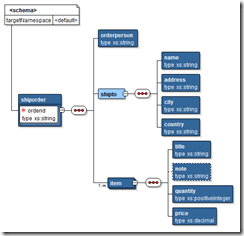
image JDeveloper design view- with a lot of similarities to XMLSpy in presentation

You might think, that to use JDeveloper I have to commit to using the Oracle technology stack (and the big price tag that comes with), but this isn’t the case.

Not to mention Oracle have very much caught up with the Open Source World of Maven, there is a growing library of plugins both Official and Open Source covering a plethora of things from JUnit integration to Python & Groovy language  syntaxes.

One of the nice things with XMLSpy and VisualStudio is the ability to copy into other documents the pretty formatted text (colour coded syntax etc) – making schemas or code fragments easier to look at in a document.  However out of the box JDeveloper doesn’t do this out of the box. But it would seem that this capability wasn’t just wanted by me, so an extension has been written Chris Hughes that solves this problem called jdev-copyashtml.


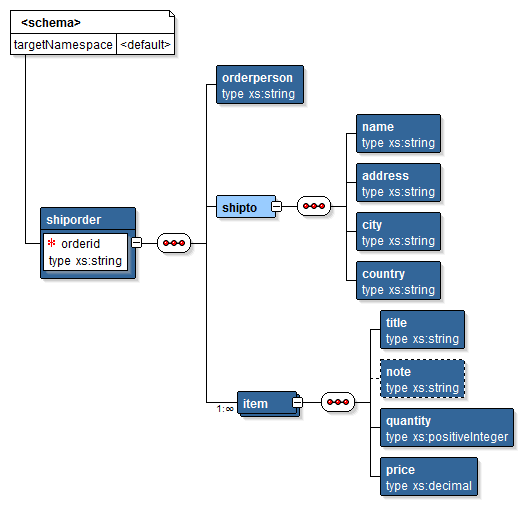
<?xmlversion="1.0"encoding="ISO-8859-1"?><xs:schemaxmlns:xs="http://www.w3.org/2001/XMLSchema"><xs:elementname="shiporder"><xs:complexType><xs:sequence><xs:elementname="orderperson"type="xs:string"/><xs:elementname="shipto"><xs:complexType><xs:sequence><xs:elementname="name"type="xs:string"/><xs:elementname="address"type="xs:string"/><xs:elementname="city"type="xs:string"/><xs:elementname="country"type="xs:string"/></xs:sequence></xs:complexType></xs:element><xs:elementname="item"maxOccurs="unbounded"><xs:complexType><xs:sequence><xs:elementname="title"type="xs:string"/><xs:elementname="note"type="xs:string"minOccurs="0"/><xs:elementname="quantity"type="xs:positiveInteger"/><xs:elementname="price"type="xs:decimal"/></xs:sequence></xs:complexType></xs:element></xs:sequence><xs:attributename="orderid"type="xs:string"use="required"/></xs:complexType></xs:element></xs:schema>


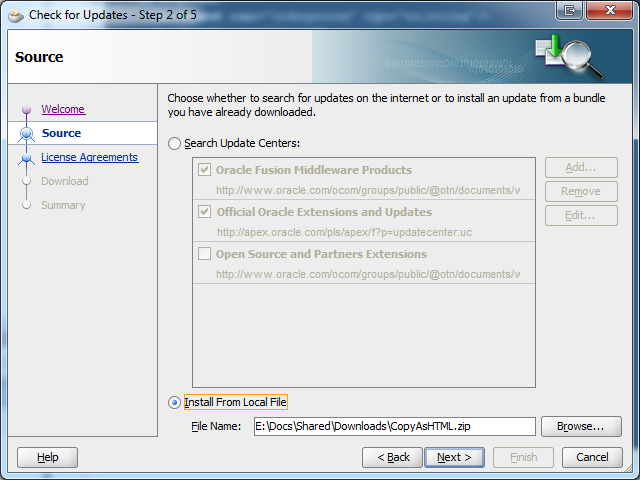
Once downloaded go to Help –> Check for Updates and step through so you can then choose your download – as shown.
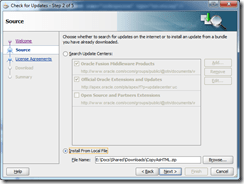
image

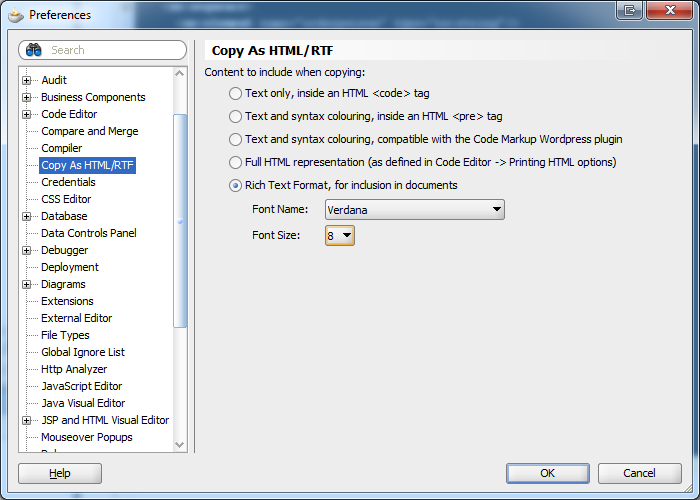
Once installed you’ll need to restart JDeveloper.  To then configure to plugin to work as you want go to Tools –> Preferences… Where you should be able to find Copy As HTML/RTF in the left menu tree to get the options to configure the plugin behaviour.
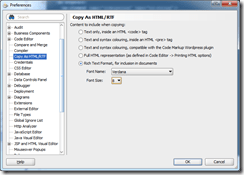
image

If you’re going from Windows application to another then you want the Rich Text Format setting.  After that rather than Ctrl+C its Ctrl+H to copy and carry the pretty formatting/colours etc.

Share this:

  • Share on Facebook (Opens in new window) Facebook
  • Share on X (Opens in new window) X
  • Share on Reddit (Opens in new window) Reddit
  • Email a link to a friend (Opens in new window) Email
  • Share on WhatsApp (Opens in new window) WhatsApp
  • Print (Opens in new window) Print
  • Share on Tumblr (Opens in new window) Tumblr
  • Share on Mastodon (Opens in new window) Mastodon
  • Share on Pinterest (Opens in new window) Pinterest
  • More
  • Share on Bluesky (Opens in new window) Bluesky
  • Share on LinkedIn (Opens in new window) LinkedIn
Like Loading...

TOGAF Skills Matrix

14 Monday Jan 2013

Posted by mp3monster in Technology, TOGAF

≈ Leave a comment

Tags

Open Group, Skills, Skills Framework, Spreadsheet, TOGAF

My employer is increasingly aligning its architecture team (of which I am a member) to TOGAF. As is the tradition, new year means start reviewing things like personal development plans. So I thought I’d compare my skills base against that of the TOGAF skills framework (http://pubs.opengroup.org/architecture/togaf9-doc/arch/chap52.html).   Now being a bit geeky, I wanted to do the comparison using a spreadsheet rather than print the document and scribble on it – means I can keep a tab on how things progress/change as go.  However I haven’t been able to locate a spreadsheet representation of the HTML/PDF documentation surprisingly, so I knocked one together.  Amusingly I found a couple of colour coding/level errors in the tables of version 8 of TOGAF as provided by the Open Group.

Feel free to use the spreadsheet as you see fit (TOGAF 9.1 Architecture Skills Framework Spreadsheet), obviously within the constraints of the Open Group’s terms.

Share this:

  • Share on Facebook (Opens in new window) Facebook
  • Share on X (Opens in new window) X
  • Share on Reddit (Opens in new window) Reddit
  • Email a link to a friend (Opens in new window) Email
  • Share on WhatsApp (Opens in new window) WhatsApp
  • Print (Opens in new window) Print
  • Share on Tumblr (Opens in new window) Tumblr
  • Share on Mastodon (Opens in new window) Mastodon
  • Share on Pinterest (Opens in new window) Pinterest
  • More
  • Share on Bluesky (Opens in new window) Bluesky
  • Share on LinkedIn (Opens in new window) LinkedIn
Like Loading...
← Older posts
Newer posts →

    I work for Oracle, all opinions here are my own & do not necessarily reflect the views of Oracle

    • About
      • Internet Profile
      • Music Buying
      • Presenting Activities
    • Books & Publications
      • Logging in Action with Fluentd, Kubernetes and More
      • Logs and Telemetry using Fluent Bit
      • Oracle Integration
      • API & API Platform
        • API Useful Resources
        • Useful Reading Sources
    • Mindmaps Index
    • Monster On Music
      • Music Listening
      • Music Reading
    • Oracle Resources
    • Useful Tech Resources
      • Fluentd & Fluent Bit Additional stuff
        • Logging Frameworks and Fluent Bit and Fluentd connectivity
        • REGEX for BIC and IBAN processing
      • Formatting etc
      • Java and Graal Useful Links
      • Official Sources for Product Logos
      • Python Setup & related tips
      • Recommended Tech Podcasts

    Oracle Ace Director Alumni

    TOGAF 9

    Logs and Telemetry using Fluent Bit


    Logging in Action — Fluentd

    Logging in Action with Fluentd


    Oracle Cloud Integration Book


    API Platform Book


    Oracle Dev Meetup London

    Blog Categories

    • App Ideas
    • Books
      • Book Reviews
      • manning
      • Oracle Press
      • Packt
    • Enterprise architecture
    • General
      • economy
      • ExternalWebPublications
      • LinkedIn
      • Website
    • Music
      • Music Resources
      • Music Reviews
    • Photography
    • Podcasts
    • Technology
      • AI
      • APIs & microservices
      • chatbots
      • Cloud
      • Cloud Native
      • Dev Meetup
      • development
        • languages
          • java
          • node.js
          • python
      • drone
      • Fluent Observability
        • Fluentbit
        • Fluentd
        • OpAMP
      • logsimulator
      • mindmap
      • OMESA
      • Oracle
        • API Platform CS
          • tools
        • Helidon
        • ITSO & OEAF
        • Java Cloud
        • NodeJS Cloud
        • OIC – ICS
        • Oracle Cloud Native
        • OUG
      • railroad diagrams
      • TOGAF
    • xxRetired
    • AI
    • API Platform CS
    • APIs & microservices
    • App Ideas
    • Book Reviews
    • Books
    • chatbots
    • Cloud
    • Cloud Native
    • Dev Meetup
    • development
    • drone
    • economy
    • Enterprise architecture
    • ExternalWebPublications
    • Fluent Observability
    • Fluentbit
    • Fluentd
    • General
    • Helidon
    • ITSO & OEAF
    • java
    • Java Cloud
    • languages
    • LinkedIn
    • logsimulator
    • manning
    • mindmap
    • Music
    • Music Resources
    • Music Reviews
    • node.js
    • NodeJS Cloud
    • OIC – ICS
    • OMESA
    • OpAMP
    • Oracle
    • Oracle Cloud Native
    • Oracle Press
    • OUG
    • Packt
    • Photography
    • Podcasts
    • python
    • railroad diagrams
    • Technology
    • TOGAF
    • tools
    • Website
    • xxRetired

    Enter your email address to subscribe to this blog and receive notifications of new posts by email.

    Join 2,616 other subscribers

    RSS

    RSS Feed RSS - Posts

    RSS Feed RSS - Comments

    April 2026
    M T W T F S S
     12345
    6789101112
    13141516171819
    20212223242526
    27282930  
    « Mar    

    Twitter

    Tweets by mp3monster

    History

    Speaker Recognition

    Open Source Summit Speaker

    Flickr Pics

    Boxer Rebellion @ Brixton ElectricBoxer Rebellion @ Brixton ElectricBoxer Rebellion @ Brixton ElectricBoxer Rebellion @ Brixton Electric
    More Photos

    Social

    • View @mp3monster’s profile on Twitter
    • View philwilkins’s profile on LinkedIn
    • View mp3monster’s profile on GitHub
    • View mp3monster’s profile on Flickr
    • View mp3muncher’s profile on WordPress.org
    • View philmp3monster’s profile on Twitch
    Follow Phil (aka MP3Monster)'s Blog on WordPress.com

    Blog at WordPress.com.

    • Subscribe Subscribed
      • Phil (aka MP3Monster)'s Blog
      • Join 228 other subscribers
      • Already have a WordPress.com account? Log in now.
      • Phil (aka MP3Monster)'s Blog
      • Subscribe Subscribed
      • Sign up
      • Log in
      • Report this content
      • View site in Reader
      • Manage subscriptions
      • Collapse this bar
    Privacy & Cookies: This site uses cookies. By continuing to use this website, you agree to their use.
    To find out more, including how to control cookies, see here: Our Cookie Policy
    %d