
• Home
  • Site Aliases
    • www.cloud-native.info
  • About
    • Background
    • Presenting Activities
    • Internet Profile
      • LinkedIn
    • About
  • Books & Publications
    • Log Generator
    • Logs and Telemetry using Fluent Bit
      • Fluent Bit book
      • Book Resources in GitHub
      • Fluent Bit Classic to YAML Format configurations
    • Logging in Action with Fluentd, Kubernetes and More
      • Logging in Action with Fluentd – Book
      • Fluentd Book Resources
      • Fluentd & Fluent Bit Additional stuff
    • API & API Platform
      • API Useful Resources
    • Oracle Integration
      • Book Website
      • Useful Reading Sources
    • Publication Contributions
  • Resources
    • GitHub
    • Oracle Integration Site
    • Oracle Resources
    • Mindmaps Index
    • Useful Tech Resources
      • Fluentd & Fluent Bit Additional stuff
      • Recommended Tech Podcasts
      • Official Sources for Product Logos
      • Java and Graal Useful Links
      • Python Setup & related stuff
  • Music
    • Monster On Music
    • Music Listening
    • Music Reading

Phil (aka MP3Monster)'s Blog

~ from Technology to Music

Phil (aka MP3Monster)'s Blog

Tag Archives: code

Validating API Platform Policies & Gateway Deployments

01 Thursday Feb 2018

Posted by mp3monster in API Platform CS, APIs & microservices, General, Oracle, Technology

≈ 3 Comments

Tags

API, API Platform, code, development, node.js, Oracle, PlatformTest, policies

When configuring API Policies in the the Oracle API Platform it helps if there is a simple back end that can take the received payload and record the sent values (header & body) as well as reflect the call details back as the response, or possibly respond with a test payload (so that response policies, particularly policies that require payload navigation  can be exercised correctly).  By having this facility it becomes a lot easier to determine whether the policies are executing correctly in terms of routing, transforming, filtering etc. without needing to worry about whether the API implementation is correct. You could say that this is a kind of mock for testing the API Platform.

The added benefit of having a mock back end is that it is easy to ‘smoke test’ a gateway deployment very easily.  Particularly if the mock is happy to receive any form of call.

Whilst implementing such a capability can be done in pretty much any language and platform you like.  We have in the past for example built a Springboot Java application that can have the dependencies configured to then deploy into WebLogic for example.  We have come to refer these test apps/mocks as PlatformTests as that’s exactly what they help do. A Node.js implementation of a PlatformTest such as as the following implementation is particularly appealing as the Node.js footprint is small and simple to deploy and undeploy. A basic Node.js implementation can also consume any URL and operation you choose to use. The nature of JavaScript makes it very quick to adapt the mock if need be. Although in the ideal world, we write the solution once and then use simple configuration to tune behavior.

The following code looks for a local file called testResponse.json if found then returns the content of the file (assumed to be JSON) otherwise it reflects back in the body, the received header and body.  This reflection makes it extremely easy to see how the policies have changed the inbound call.  The content is also logged to the console – making it easy to also see what came through to the back end.

The implementation also assumes port 8080, but changing the port is exceptionally easy.

There one enhancement planned, and this is to allow the response test payload to be handled as XML.  This will need a little tweaking of the code as presently a JSON Object is currently stringified.
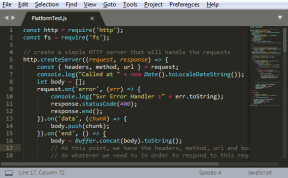
JavaScriptThe code is also available in my GitHub repository – https://github.com/mp3monster/Utils/blob/master/PlatformTest.js and an example test response file is at https://github.com/mp3monster/Utils/blob/master/testResponse.json

const http = require('http');
const fs = require('fs');

// create a simple HTTP server that will handle the requests
http.createServer((request, response) => {
const { headers, method, url } = request;
console.log("Called at " + new Date().toLocaleDateString());
let body = [];
request.on('error', (err) => {
console.log("Svr Error Handler :" + err.toString);
response.statusCode(400);
response.end();
}).on('data', (chunk) => {
body.push(chunk);
}).on('end', () => {
body = Buffer.concat(body).toString();
// At this point, we have the headers, method, url and body, and can now
// do whatever we need to in order to respond to this request.

});

// record in the console what details have been received
console.log ("Received:\nMethod:" + method.toString() +
"\n URL:"+ url.toString + "\nheaders:\n"+headers.toString() +
"\nBody:\n" + body);
// now build the response
response.setHeader('Content-Type', 'application/json');
response.setHeader('PlatformTestTime', new Date().toLocaleDateString());

// initialise our response object so that if we don't load a response
// file then we reflect the content
var responseBody = { headers, method, url, body };

try {
// try reading a response file
fs.readFile('testResponse.json', function(err, data) {
console.log("handling file");
if (err != null) {
if (err.code === 'ENOENT') {
console.log("on return file - will reflect");
} else {
console.log("Read error:" + err.toString());
}
} else {
// a file exists - but is empty?
if ((data != null) && (data.length > 0)) {
// we have a file with content - lets process so it into a JSON
// object
if (Buffer.isBuffer(data)) {
// convert the buffer from hex to an ASCII string
body = data.toString('utf8');
console.log("test response:" + body);
responseBody = JSON.parse(body);
}
}
}

// create an array with our values and then make it

// JSON with stringfy

var output = JSON.stringify(responseBody);
response.write(output);
console.log("Returning:" + output);
response.statusCode = 200;
response.end();

});

} catch (err) {

if (err.code === 'ENOENT') {
console.log("on return file - will reflect");
} else {
console.log(err.toString());
}
var output = JSON.stringify(responseBody);
response.write(output);
console.log("Returning:" + output);
response.statusCode = 200;
response.end();
}
}).listen(8080); // Activates this server, listening on port 8080.

Share this:

  • Click to share on Facebook (Opens in new window) Facebook
  • Click to share on X (Opens in new window) X
  • Click to share on Pocket (Opens in new window) Pocket
  • Click to share on Reddit (Opens in new window) Reddit
  • Click to email a link to a friend (Opens in new window) Email
  • Click to share on WhatsApp (Opens in new window) WhatsApp
  • Click to print (Opens in new window) Print
  • Click to share on Tumblr (Opens in new window) Tumblr
  • Click to share on Mastodon (Opens in new window) Mastodon
  • Click to share on Pinterest (Opens in new window) Pinterest
  • More
  • Click to share on Bluesky (Opens in new window) Bluesky
  • Click to share on LinkedIn (Opens in new window) LinkedIn
Like Loading...

OracleCode London 2017

21 Friday Apr 2017

Posted by mp3monster in General, Oracle, Technology

≈ 1 Comment

Tags

Ace, Adam Bien, code, conference, event, Java One, London, Lucas Jemella, Luis Weir, OOW, Oracle, presenting, rockstar, Sebastian Daschner, Tim Hall

My colleague & boss Ace Director Luis Weir and I were invited to present at Thursday 20th’s Oracle Code London.

oracle_codeThe request to present came late as we where needed to cover someone who had to cancel (not that we aren’t grateful for the opportunity). This did mean getting the presentation together was a little bit of a scramble, unfortunately I missed a couple of sessions as I needed to assemble an environment, work out how I wanted to explain the point Luis’ slides where communicating as this was the first time presenting with Luis as a double act. Add to that address the day to day work demands.

Despite these challenges, I think the presentation went very smoothly (and we’re looking forward to receiving the feedback). The slides can be found here …

I did catch a few presentations, including the keynote by Adam Bien, Tim Hall‘s presentation on exposing databases using REST services, Lucas Jemella‘s microservices and eventing backbone and finally CQRS by Sebastian Daschner. All presentations  where all top notch, loaded with useful information.  I’ve been fortunate to see both Lucas and Tim presenting before so knew I would in for a really good presentations.  So if you ever want to know about Oracle DB stuff with practical honest insights I’d recommend looking Tim up.  Like wise in the middleware space for Lucas.

Seeing the presentations and different presenting styles was interesting. Those presenters with a Java Rockstar background vs those from an Oracle Ace background. The Java guys taking a very minimalist (if any) slides and all code / demo – but blink and you’ll miss it, where as the Ace community (of which I am fortunate enough to be a member) with slides that are often visually very strong and still supported by demos.

Whilst I’ve attended Oracle Open World, I’ve not yet seen the parrallel Java One conference in San Francisco. That said, the feel of the day’s event (and presumably the goal) is what I’d expect Java One to be like. I have in the past attended similar RedHat events, whilst the venue has a similar feel (not unsurprising as both have used SkillsMatter venues), what was different between the Oracle and RedHat events was that the atmosphere felt a lot friendlier and communial at Oracle Code. This maybe down in part to the fact that I know more of the people both Aces and Oracle employees, although that can’t be the only reason as when I was involved in the RedHat environment I had known senior people within the organisation and encountered presenters.

My last observation, more technical is the fact that JavaEE was mentioned a lot more than I’d expected, even those much maligned EJBs got a mention. Is JavaEE making a reassurgence?

So, if you get a chance to attend OracleCode – as an architect or developer I’d recommend that you take the opportunity. Whilst Devox maybe bigger with the really big name speakers, the day was both informative, engaging and rewarding.

25-04-17 UPDATE: Oracle have just made all the OracleCode London sessions available on YouTube here, and our session specifically here.

Share this:

  • Click to share on Facebook (Opens in new window) Facebook
  • Click to share on X (Opens in new window) X
  • Click to share on Pocket (Opens in new window) Pocket
  • Click to share on Reddit (Opens in new window) Reddit
  • Click to email a link to a friend (Opens in new window) Email
  • Click to share on WhatsApp (Opens in new window) WhatsApp
  • Click to print (Opens in new window) Print
  • Click to share on Tumblr (Opens in new window) Tumblr
  • Click to share on Mastodon (Opens in new window) Mastodon
  • Click to share on Pinterest (Opens in new window) Pinterest
  • More
  • Click to share on Bluesky (Opens in new window) Bluesky
  • Click to share on LinkedIn (Opens in new window) LinkedIn
Like Loading...

SQL Static Code analysis for MySQL

05 Thursday Sep 2013

Posted by mp3monster in General, Technology

≈ Leave a comment

Tags

analysis, app, code, MySQL, sql

With MySQL now capable of features such as stored procedures and functions the need for tooling to support SQL code quality is greater than ever. A number of tools provide editors with syntax support and all the fancy features you’d expect from a modern IDE (see Toad as a leading product).

However the means to assess the quality of the procedures or scripts written for MySQL or the divergence from ISO standards doesn’t exist, although plenty of options exist for T-SQL (MS SQL Server), PL/SQL (Oracle) and even some tooling for DB2 and Informix.

The value of the static analysis tool means you can implement quality measures, controls and reporting through Continuous Integration tooling such as Jenkins, Sonar etc. All of which is a little ironic when you consider a lot of energy in CI (and Continuous Delivery appears to come from the open source community) which usually supports MySQL as one of the 1st options for databases.

Does this mean there is a gap in the market? Such capabilities dont seem to be in the MySQL WorkBench roadmap. Would love to know what people think?

Of course if you can support MySQL, then the offshoots such as MariaDB wouldn’t be too difficult.

Share this:

  • Click to share on Facebook (Opens in new window) Facebook
  • Click to share on X (Opens in new window) X
  • Click to share on Pocket (Opens in new window) Pocket
  • Click to share on Reddit (Opens in new window) Reddit
  • Click to email a link to a friend (Opens in new window) Email
  • Click to share on WhatsApp (Opens in new window) WhatsApp
  • Click to print (Opens in new window) Print
  • Click to share on Tumblr (Opens in new window) Tumblr
  • Click to share on Mastodon (Opens in new window) Mastodon
  • Click to share on Pinterest (Opens in new window) Pinterest
  • More
  • Click to share on Bluesky (Opens in new window) Bluesky
  • Click to share on LinkedIn (Opens in new window) LinkedIn
Like Loading...
Newer posts →

    I work for Oracle, all opinions here are my own & do not necessarily reflect the views of Oracle

    • About
      • Internet Profile
      • Music Buying
      • Presenting Activities
    • Books & Publications
      • Logging in Action with Fluentd, Kubernetes and More
      • Logs and Telemetry using Fluent Bit
      • Oracle Integration
      • API & API Platform
        • API Useful Resources
        • Useful Reading Sources
    • Mindmaps Index
    • Monster On Music
      • Music Listening
      • Music Reading
    • Oracle Resources
    • Useful Tech Resources
      • Fluentd & Fluent Bit Additional stuff
        • Logging Frameworks and Fluent Bit and Fluentd connectivity
        • REGEX for BIC and IBAN processing
      • Java and Graal Useful Links
      • Official Sources for Product Logos
      • Python Setup & related tips
      • Recommended Tech Podcasts

    Oracle Ace Director Alumni

    TOGAF 9

    Logs and Telemetry using Fluent Bit


    Logging in Action — Fluentd

    Logging in Action with Fluentd


    Oracle Cloud Integration Book


    API Platform Book


    Oracle Dev Meetup London

    Blog Categories

    • App Ideas
    • Books
      • Book Reviews
      • manning
      • Oracle Press
      • Packt
    • Enterprise architecture
    • General
      • economy
      • ExternalWebPublications
      • LinkedIn
      • Website
    • Music
      • Music Resources
      • Music Reviews
    • Photography
    • Podcasts
    • Technology
      • AI
      • APIs & microservices
      • chatbots
      • Cloud
      • Cloud Native
      • Dev Meetup
      • development
        • languages
          • java
          • node.js
      • drone
      • Fluentbit
      • Fluentd
      • logsimulator
      • mindmap
      • OMESA
      • Oracle
        • API Platform CS
          • tools
        • Helidon
        • ITSO & OEAF
        • Java Cloud
        • NodeJS Cloud
        • OIC – ICS
        • Oracle Cloud Native
        • OUG
      • railroad diagrams
      • TOGAF
    • xxRetired
    • AI
    • API Platform CS
    • APIs & microservices
    • App Ideas
    • Book Reviews
    • Books
    • chatbots
    • Cloud
    • Cloud Native
    • Dev Meetup
    • development
    • drone
    • economy
    • Enterprise architecture
    • ExternalWebPublications
    • Fluentbit
    • Fluentd
    • General
    • Helidon
    • ITSO & OEAF
    • java
    • Java Cloud
    • languages
    • LinkedIn
    • logsimulator
    • manning
    • mindmap
    • Music
    • Music Resources
    • Music Reviews
    • node.js
    • NodeJS Cloud
    • OIC – ICS
    • OMESA
    • Oracle
    • Oracle Cloud Native
    • Oracle Press
    • OUG
    • Packt
    • Photography
    • Podcasts
    • railroad diagrams
    • Technology
    • TOGAF
    • tools
    • Website
    • xxRetired

    Enter your email address to subscribe to this blog and receive notifications of new posts by email.

    Join 2,555 other subscribers

    RSS

    RSS Feed RSS - Posts

    RSS Feed RSS - Comments

    January 2026
    M T W T F S S
     1234
    567891011
    12131415161718
    19202122232425
    262728293031  
    « Nov    

    Twitter

    Tweets by mp3monster

    History

    Speaker Recognition

    Open Source Summit Speaker

    Flickr Pics

    Gogo Penguin at the BarbicanGogo Penguin at the BarbicanGogo Penguin at the BarbicanGogo Penguin at the Barbican
    More Photos

    Social

    • View @mp3monster’s profile on Twitter
    • View philwilkins’s profile on LinkedIn
    • View mp3monster’s profile on GitHub
    • View mp3monster’s profile on Flickr
    • View mp3muncher’s profile on WordPress.org
    • View philmp3monster’s profile on Twitch
    Follow Phil (aka MP3Monster)'s Blog on WordPress.com

    Blog at WordPress.com.

    • Subscribe Subscribed
      • Phil (aka MP3Monster)'s Blog
      • Join 233 other subscribers
      • Already have a WordPress.com account? Log in now.
      • Phil (aka MP3Monster)'s Blog
      • Subscribe Subscribed
      • Sign up
      • Log in
      • Report this content
      • View site in Reader
      • Manage subscriptions
      • Collapse this bar
     

    Loading Comments...
     

    You must be logged in to post a comment.

      Privacy & Cookies: This site uses cookies. By continuing to use this website, you agree to their use.
      To find out more, including how to control cookies, see here: Our Cookie Policy
      %d