• Home
  • Site Aliases
    • www.cloud-native.info
  • About
    • Background
    • Presenting Activities
    • Internet Profile
      • LinkedIn
    • About
  • Books & Publications
    • Log Generator
    • Logs and Telemetry using Fluent Bit
      • Fluent Bit book
      • Book Resources in GitHub
      • Fluent Bit Classic to YAML Format configurations
    • Logging in Action with Fluentd, Kubernetes and More
      • Logging in Action with Fluentd – Book
      • Fluentd Book Resources
      • Fluentd & Fluent Bit Additional stuff
    • API & API Platform
      • API Useful Resources
    • Oracle Integration
      • Book Website
      • Useful Reading Sources
    • Publication Contributions
  • Resources
    • GitHub
    • Oracle Integration Site
    • Oracle Resources
    • Mindmaps Index
    • Useful Tech Resources
      • Fluentd & Fluent Bit Additional stuff
      • Recommended Tech Podcasts
      • Official Sources for Product Logos
      • Java and Graal Useful Links
      • Python Setup & related stuff
  • Music
    • Monster On Music
    • Music Listening
    • Music Reading

Phil (aka MP3Monster)'s Blog

~ from Technology to Music

Phil (aka MP3Monster)'s Blog

Tag Archives: integration

Citizen Integrators – Excel for Integration?

10 Wednesday Jun 2015

Posted by mp3monster in General, Technology

≈ 1 Comment

Tags

bimodal, Boomi, Citizen Integrator, enterprise, Excel, Gartner, integration, iTunes, Jason Bloomberg, OIC - ICS, Oracle

Over the last year or so I have been looking a lot at technologies that Gartner and others have branded as ‘Citizen Integrators‘ – products such as Dell Boomi, and the recently launched Oracle Integration Cloud Service.  What I believe we are seeing is the appearance of a product family that in many respects will be to Integration what Excel has been to Finance systems.  This is to say that Finance Systems such as large ERPs tend to be changed slowly when it comes to introducing process changes, but users can get reports easily to extract data into their Excel spreadsheets.  We have the old joke that organisations finance can end up being run on Excel (http://www.wired.com/2014/03/many-spreadsheets-take-run-fortune-500-company/).

So don’t get me wrong,  I’m not saying these tool are evil and should be banned or the such like, as such thinking is utter folly.  I am looking at the quote much attributed to Spiderman (Stan Lee) but has been traced back to Voltaire:

With great power comes great responsibility

Why do I use this quote, well my experience (and that established by many others) is that with ease and agility comes a quick answer rather than a well thought out answer. That ease can be through cost (how many times have organisations discovered key systems solutions being run off someone’s desktop stuffed away in the corner of an office because they have been able to cheaply acquire the hardware and software get setup and then had viral adoption).

cityIt is therefore beholden on those of us that understand the challenges of integration should be seeking to help our ‘citizens’ appreciate (not lecture, brow beat etc) the implications and some intelligent governance to ensure systems are not accidentally ‘poisoned with unexpected data’ and you don’t fall foul of legal obligations.

The biggest challenge, is for SME’s to ensure that their colleagues within the IT organisation who face into the business organisation understand and promote the right thinking. After all, developers and architects alike, think like all drivers -that they’re at least above average if not good drivers – after all why would we be in the job?  But to set the average we can’t all be in that place (http://www.psychologicalscience.org/index.php/news/motr/when-it-comes-to-driving-most-people-think-their-skills-are-above-average.html).

This of course also touches upon the arguments with Gartner’s bi-modal approach to IT, such as those presented by Jason Bloomberg. Personally I believe pace layering is right, but bi-modal thinking can create opportunities for things to be done badly – not an absolute certainty, but to work needs some strong hands trusted by organisational executives to steer successfully – something that  seems rather rare.

Share this:

  • Click to share on Facebook (Opens in new window) Facebook
  • Click to share on X (Opens in new window) X
  • Click to share on Pocket (Opens in new window) Pocket
  • Click to share on Reddit (Opens in new window) Reddit
  • Click to email a link to a friend (Opens in new window) Email
  • Click to share on WhatsApp (Opens in new window) WhatsApp
  • Click to print (Opens in new window) Print
  • Click to share on Tumblr (Opens in new window) Tumblr
  • Click to share on Mastodon (Opens in new window) Mastodon
  • Click to share on Pinterest (Opens in new window) Pinterest
  • More
  • Click to share on Bluesky (Opens in new window) Bluesky
  • Click to share on LinkedIn (Opens in new window) LinkedIn
Like Loading...

Oracle Cloud Integration – book

29 Friday May 2015

Posted by mp3monster in Books, Oracle

≈ Leave a comment

Tags

book, Cloud, demographics, integration, Oracle

We’re progressing with our Oracle Cloud Integration book idea now that we’ve had some publisher interest. 1st cycle around defining the book should be submitted in the next day or so.  Will starting to write the initial chapters very soon. Exciting times as they say.

Share this:

  • Click to share on Facebook (Opens in new window) Facebook
  • Click to share on X (Opens in new window) X
  • Click to share on Pocket (Opens in new window) Pocket
  • Click to share on Reddit (Opens in new window) Reddit
  • Click to email a link to a friend (Opens in new window) Email
  • Click to share on WhatsApp (Opens in new window) WhatsApp
  • Click to print (Opens in new window) Print
  • Click to share on Tumblr (Opens in new window) Tumblr
  • Click to share on Mastodon (Opens in new window) Mastodon
  • Click to share on Pinterest (Opens in new window) Pinterest
  • More
  • Click to share on Bluesky (Opens in new window) Bluesky
  • Click to share on LinkedIn (Opens in new window) LinkedIn
Like Loading...

Impact on Integration when Moving to Fusion Apps

17 Tuesday Jun 2014

Posted by mp3monster in General, Oracle, Technology

≈ Leave a comment

Tags

ABCS, AIA, EBO, EBusiness, Foundation Pack, fusion, integration, master data management, MDM, middleware, OER, Oracle, PDH, PIP, product data hub, R12, Siebel, SOA

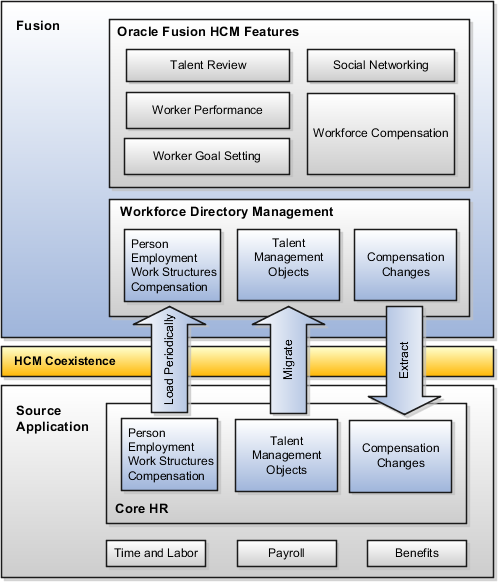
So as a road mapping question I have been thinking about the migration to using Fusion Apps so we have a road map and more importantly design patterns that will support a transitions from the likes of Ebiz R12, Siebel etc to their Fusion successors.

Example of Coexistance

Example of Coexistance

In broad terms the application level transition through the principles of co-existence are well established. What is currently exercising the grey matter is the middle migration. Perhaps the best way to explain this is through an example. The Product Data Hub (PDH) solution exists to provide a Master Data Management capability for your widest and gadgets.

You will want to share that master data with other apps such as Ebiz so you can deal with say order management. All fairly obvious, and in Fusion Apps world the different components should inherently work together. Back in R12 world though you are probably going to be using the Product MDM PIP (Process Integration Pack) with the Ebiz extension pack. When using the PIP like this then it’s just a case of retiring the PIP. But this PIP is designed so that you can extend the process to publish Master Data to your own apps for example you also push the data to your design systems as you maybe sharing available parts data.

So now we have an extended PIP whic in a simple Fusion apps migration you’d leave behind. But leaving the PIP behind also means an integration gap. So what is the answer.

Well on the early days of Fusion Apps the suggestion was that AIA and PIPs would be part of the ongoing story. but the reality is little has moved in this space. Understandable, Fusion Apps development had been far bigger than anyone expected, if fusion Apps are directly conversant then how much real demand exists for the PIP transformation. So what is the answer, well at this stage I’m not sure. I can say I have seen ABCS’ mentioned in the public FusionAppsOER. We know that AIA Foundation Pack EBOs are realised in Fusion Apps albeit via ADF BCs.

Given Fusion Apps underpinnings are the same as AIA so it should be possible to drop the AIA Foundation Pack (FP) into your Fusion Apps environment (setting aside all the licensing questions it would raise). Can you therefore drop in the PIP and disable the legacy Oracle app elements leaving your custom extensions? Do you accept a rewrite of your integration all be it you should just need to redevelop the orchestration layer (ABCS’ for Fusion App exist and you can carry forward your own ABCS’ for your app such as the design system in our illustration)?

Deployment of Fusion Apps with Non Fusion Apps

Deployment of Fusion Apps with Non Fusion Apps

Hopefully in the coming weeks we will get the opportunity to uncover answers with Oracle.

Share this:

  • Click to share on Facebook (Opens in new window) Facebook
  • Click to share on X (Opens in new window) X
  • Click to share on Pocket (Opens in new window) Pocket
  • Click to share on Reddit (Opens in new window) Reddit
  • Click to email a link to a friend (Opens in new window) Email
  • Click to share on WhatsApp (Opens in new window) WhatsApp
  • Click to print (Opens in new window) Print
  • Click to share on Tumblr (Opens in new window) Tumblr
  • Click to share on Mastodon (Opens in new window) Mastodon
  • Click to share on Pinterest (Opens in new window) Pinterest
  • More
  • Click to share on Bluesky (Opens in new window) Bluesky
  • Click to share on LinkedIn (Opens in new window) LinkedIn
Like Loading...

Oracle Fusion Applications Development and Extensibility Handbook – Chapters 13, 14 & 15 reviewed

12 Saturday Apr 2014

Posted by mp3monster in Book Reviews, Books, General, Oracle, Oracle Press, Technology

≈ 1 Comment

Tags

ADF, applications, book, fusion, integration, look and feel, OER, Oracle, Oracle Press, review, scheduler, Scheduling

Our final detailed visit to  Oracle Fusion Applications Development and Extensibility Handbook (Oracle Press) covers the final 3 chapters which engage with the Scheduler, Look and Feel customisation and the relationship with integration and service concepts (dare I use the acronym SOA).

The chapter on the scheduler is pretty short, but then compared to many other chapters the size of the product/component is small. The book relates how the scheduler behaves compared to the Schedule Management offered in EBusiness. The surprising things is that each product domain (Financials, HCM, CRM etc) has its own scheduler rather than a single shared service; the book doesn’t attempt to explain the rational here which is a shame.  It does describe how it deploys into each domain, where the configuration exists and how to work with the configuration of the scheduler itself (e.g. where logging goes etc) and attempts to address some obvious questions from a administration perspective.  It then goes onto how to create a custom scheduled process with a worked illustration. All very well done, although I have to admit to a nagging feeling of I’m missing something – it maybe simply that deployment is very much through server administration rather than through an automated mechanism (so if you develop and test in a preproduction environment, you can package up the process of deploying config custom app to your production environment without needing to repeat the admin UI interactions, so you can be assured there is no inconsistency between deployment instances).

The Look and Feel chapter is about largely applying the changes so that the product feels like part of your business’ corporate solution – important if you’re exposing any aspects of it to the outside world. So aside from the use of the tools you have the ADF controls to effectively ‘skin’ the product. The chapter provides a brief but concise view of how skinning works, in relation to the old EBusiness technologies (CLAF and UIX) and current HTML technology of CSS and the key part of ADF (Rich Faces). More importantly it points out the relevant documentation on all the sources of information, and tooling such as the skinning editor. Not to mention addressing the issue of deployment. Obviously there is a short illustration demonstrating an element of skinning.

ADF Architecture

The initial emphasis on the last chapter is the reality that organisations can’t simply migrate all non Fusion Apps such as EBusines, Seibel etc to the Fusion solutions in one hit therefore you need to provide a degree of integration between solutions for as long as the transition may take. This neatly leads into the question of well how do I know what components exist to support integration, which brings OER (Oracle Enterprise Repository) into the picture. So obviously the book provides a brief overview to the use of OER. The various Fusion apps offer different interfaces for different tasks (from bulk data export to business events) so each of these ‘patterns’ are briefly explianed and as Fusion apps is offered as a SaaS solution how that might impact the ‘pattern’ availability. The chapter finishes by walking through the use of using a SCA Composite and web services to interact with a Fusion App – probably one of the most common approaches to integration at a transactional (rather than bulk) manner.  The only thing missing for me would be a brief discussion on Process Integration Packs (PIPs) which leverage all of  the technologies underpinning Fusion Apps into a custom package of integration operations or ready made integrations.

So the final chapters provide a strong close to the book continuing to offer an excellent overview, pointing you to resources to ‘deep dive’ as necessary.


Previous Chapter reviews:

    • Chapters 1 & 2
    • Chapters 3 & 4
    • Chapters 5 & 6
    • Chapters 7 & 8
    • Chapters 9 & 10
    • Chapters 11 & 12

Share this:

  • Click to share on Facebook (Opens in new window) Facebook
  • Click to share on X (Opens in new window) X
  • Click to share on Pocket (Opens in new window) Pocket
  • Click to share on Reddit (Opens in new window) Reddit
  • Click to email a link to a friend (Opens in new window) Email
  • Click to share on WhatsApp (Opens in new window) WhatsApp
  • Click to print (Opens in new window) Print
  • Click to share on Tumblr (Opens in new window) Tumblr
  • Click to share on Mastodon (Opens in new window) Mastodon
  • Click to share on Pinterest (Opens in new window) Pinterest
  • More
  • Click to share on Bluesky (Opens in new window) Bluesky
  • Click to share on LinkedIn (Opens in new window) LinkedIn
Like Loading...

Gaps in Oracle’s Cloud Cover?

20 Monday Jan 2014

Posted by mp3monster in General, Oracle

≈ 2 Comments

Tags

AWS, Cloud, connector, development, integration, Oracle, Salesforce, SOA Suite

As an Enterprise Integration Architect I need to get my hands dirty with products such as Oracle’s SOA suite and AIA Foundation Pack.  In the past, I’ve dealt with this by talking with our infrastructure team – obtaining a VM or a laptop with sufficient guts to host SOA Suite (and it doesn’t have a small footprint).  This is all well and fine, but means I have to lug a big old laptop (our current standard laptop spec’s are lovely light machines with SSD’s but just don’t pack the punch for SOA Suite when it comes to memory) or have to leap through a series of security steps to get remote access – again not a problem unless I want to share my skunk works with someone outside the organisation.  Nor, do I really want to invest chunks of time building a SOA Suite environment to work with – I don’t do it enough to be able to throw these things together quickly.  Even Oracle recognise that with the support for a prebuilt VirtualBox with SOA Suite and BPM. The only problem with VirtualBox is I’ve saved on the build time, but still need that heavy laptop or remote access.

Oracle Cloud Java

With the rise of the cloud, particularly Oracle’s big push (announcements at Open World 2013), Amazon offering small footprint dev platforms more or less for free I thought we’d be able to get a PaaS deployment of SOA Suite – after all Oracle offer a range of Fusion Apps in the cloud (built on top of SOA Suite technologies), have launched development of Java and ADF solutions in their cloud and even offer Weblogic on Microsoft’s Azure.  How I wrong could I have been.  So I started looking around, perhaps someone has an AMI ready to go – well sort of if I want 10g.  So I’ve dug around, and found the odd provider who could deliver what was needed (e.g. Titan GS) but we’re talking big bucks – not a low cost dev/skunk works environment.  

This is very surprising really, and sort of ironic, given Oracle’s recent announcement for SaaS Adapters for the likes of SalesForce and WorkDay along with convenience tooling to connect to Oracle Cloud solutions such as HCM.  I say ironic, because to use the cloud adapters you can’t have a SaaS middleware; in fact the whitepaper Oracle published on Simplifying Cloud Integration infers/assumes that you’d be hosting your own middleware.  So if a midsized business has Has HCM, Taleo etc for their staffing management, SalesForce for the Sales/CRM operations and perhaps EBis or JD Edwards to move your business into the cloud you have to either go IaaS and carry the labour of maintaining the middleware platform or self host (one of the things the adoption of SaaS is trying to free you from).

All of this seems to be a really missed opportunity for Oracle.  If the oracle wants to host the world (and I think Larry Ellison would like that) and definitely get into that midmarket sector that JDEwards particularly tries to inhabit they need to make it easy for businesses to cloud all aspects of their IT solution, that includes orchestrating specialist solutions that will be hosted by someone other than Oracle (shock, horror). All of which means SOA Suite (and ideally AIA) need to be in the cloud.

As for my problem, its either the pain of building something on Amazon or setting up several copies of the VirtualBox deployment linked to a common GIT repository, and hope those I would like to collaborate with can also get their hands on the virtualbox and connect to GIT.

Share this:

  • Click to share on Facebook (Opens in new window) Facebook
  • Click to share on X (Opens in new window) X
  • Click to share on Pocket (Opens in new window) Pocket
  • Click to share on Reddit (Opens in new window) Reddit
  • Click to email a link to a friend (Opens in new window) Email
  • Click to share on WhatsApp (Opens in new window) WhatsApp
  • Click to print (Opens in new window) Print
  • Click to share on Tumblr (Opens in new window) Tumblr
  • Click to share on Mastodon (Opens in new window) Mastodon
  • Click to share on Pinterest (Opens in new window) Pinterest
  • More
  • Click to share on Bluesky (Opens in new window) Bluesky
  • Click to share on LinkedIn (Opens in new window) LinkedIn
Like Loading...
Newer posts →

    I work for Oracle, all opinions here are my own & do not necessarily reflect the views of Oracle

    • About
      • Internet Profile
      • Music Buying
      • Presenting Activities
    • Books & Publications
      • Logging in Action with Fluentd, Kubernetes and More
      • Logs and Telemetry using Fluent Bit
      • Oracle Integration
      • API & API Platform
        • API Useful Resources
        • Useful Reading Sources
    • Mindmaps Index
    • Monster On Music
      • Music Listening
      • Music Reading
    • Oracle Resources
    • Useful Tech Resources
      • Fluentd & Fluent Bit Additional stuff
        • Logging Frameworks and Fluent Bit and Fluentd connectivity
        • REGEX for BIC and IBAN processing
      • Java and Graal Useful Links
      • Official Sources for Product Logos
      • Python Setup & related tips
      • Recommended Tech Podcasts

    Oracle Ace Director Alumni

    TOGAF 9

    Logs and Telemetry using Fluent Bit


    Logging in Action — Fluentd

    Logging in Action with Fluentd


    Oracle Cloud Integration Book


    API Platform Book


    Oracle Dev Meetup London

    Blog Categories

    • App Ideas
    • Books
      • Book Reviews
      • manning
      • Oracle Press
      • Packt
    • Enterprise architecture
    • General
      • economy
      • ExternalWebPublications
      • LinkedIn
      • Website
    • Music
      • Music Resources
      • Music Reviews
    • Photography
    • Podcasts
    • Technology
      • AI
      • APIs & microservices
      • chatbots
      • Cloud
      • Cloud Native
      • Dev Meetup
      • development
        • languages
          • java
          • node.js
      • drone
      • Fluentbit
      • Fluentd
      • logsimulator
      • mindmap
      • OMESA
      • Oracle
        • API Platform CS
          • tools
        • Helidon
        • ITSO & OEAF
        • Java Cloud
        • NodeJS Cloud
        • OIC – ICS
        • Oracle Cloud Native
        • OUG
      • railroad diagrams
      • TOGAF
    • xxRetired
    • AI
    • API Platform CS
    • APIs & microservices
    • App Ideas
    • Book Reviews
    • Books
    • chatbots
    • Cloud
    • Cloud Native
    • Dev Meetup
    • development
    • drone
    • economy
    • Enterprise architecture
    • ExternalWebPublications
    • Fluentbit
    • Fluentd
    • General
    • Helidon
    • ITSO & OEAF
    • java
    • Java Cloud
    • languages
    • LinkedIn
    • logsimulator
    • manning
    • mindmap
    • Music
    • Music Resources
    • Music Reviews
    • node.js
    • NodeJS Cloud
    • OIC – ICS
    • OMESA
    • Oracle
    • Oracle Cloud Native
    • Oracle Press
    • OUG
    • Packt
    • Photography
    • Podcasts
    • railroad diagrams
    • Technology
    • TOGAF
    • tools
    • Website
    • xxRetired

    Enter your email address to subscribe to this blog and receive notifications of new posts by email.

    Join 2,555 other subscribers

    RSS

    RSS Feed RSS - Posts

    RSS Feed RSS - Comments

    January 2026
    M T W T F S S
     1234
    567891011
    12131415161718
    19202122232425
    262728293031  
    « Nov    

    Twitter

    Tweets by mp3monster

    History

    Speaker Recognition

    Open Source Summit Speaker

    Flickr Pics

    Gogo Penguin at the BarbicanGogo Penguin at the BarbicanGogo Penguin at the BarbicanGogo Penguin at the Barbican
    More Photos

    Social

    • View @mp3monster’s profile on Twitter
    • View philwilkins’s profile on LinkedIn
    • View mp3monster’s profile on GitHub
    • View mp3monster’s profile on Flickr
    • View mp3muncher’s profile on WordPress.org
    • View philmp3monster’s profile on Twitch
    Follow Phil (aka MP3Monster)'s Blog on WordPress.com

    Blog at WordPress.com.

    • Subscribe Subscribed
      • Phil (aka MP3Monster)'s Blog
      • Join 233 other subscribers
      • Already have a WordPress.com account? Log in now.
      • Phil (aka MP3Monster)'s Blog
      • Subscribe Subscribed
      • Sign up
      • Log in
      • Report this content
      • View site in Reader
      • Manage subscriptions
      • Collapse this bar
     

    Loading Comments...
     

    You must be logged in to post a comment.

      Privacy & Cookies: This site uses cookies. By continuing to use this website, you agree to their use.
      To find out more, including how to control cookies, see here: Our Cookie Policy
      %d