
• Home
  • Site Aliases
    • www.cloud-native.info
  • About
    • Background
    • Presenting Activities
    • Internet Profile
      • LinkedIn
    • About
  • Books & Publications
    • Log Generator
    • Logs and Telemetry using Fluent Bit
      • Fluent Bit book
      • Book Resources in GitHub
      • Fluent Bit Classic to YAML Format configurations
    • Logging in Action with Fluentd, Kubernetes and More
      • Logging in Action with Fluentd – Book
      • Fluentd Book Resources
      • Fluentd & Fluent Bit Additional stuff
    • API & API Platform
      • API Useful Resources
    • Oracle Integration
      • Book Website
      • Useful Reading Sources
    • Publication Contributions
  • Resources
    • GitHub
    • Oracle Integration Site
    • Oracle Resources
    • Mindmaps Index
    • Useful Tech Resources
      • Fluentd & Fluent Bit Additional stuff
      • Recommended Tech Podcasts
      • Official Sources for Product Logos
      • Java and Graal Useful Links
      • Python Setup & related stuff
  • Music
    • Monster On Music
    • Music Listening
    • Music Reading

Phil (aka MP3Monster)'s Blog

~ from Technology to Music

Phil (aka MP3Monster)'s Blog

Tag Archives: review

Oracle Fusion Applications Development and Extensibility Handbook – Chapters 11 & 12 reviewed

08 Tuesday Apr 2014

Posted by mp3monster in Book Reviews, Books, General, Oracle, Oracle Press, Technology

≈ 2 Comments

Tags

applications, book, fusion, OBIEE, Oracle, Oracle Press, Oracle Transactional Business Intelligence, review

We continue on in our review of Oracle Fusion Applications Development and Extensibility Handbook (Oracle Press) to chapters 11 and 12 which look at Reporting and Analytics respectively.

Reporting in Fusion Apps is based upon OBIEE rather than vanilla BI Publisher against the application database. This means that you and build your reporting capability against a far more diverse set of data sources (license permitting of course). It does also mean that the steps for creating reports at least to start with are more complex as OBIEE realizes a multi-tier approach to report generation. The chapter goes onto to describe the types of data source, the means by which reports can be configured conditional execution and then through ideas such as ‘bursting’ where the report generating process can be partitioned and run in parallel by multiple processes each concentrate on a range of data (sound a little like Map Reduce doesn’t it). Finally how to format the output. All of which is then supported with a detailed illustration.  As you might imagine there are prepackaged reports and templates, so loading and configuring these in an environment is considered.

The book recognises that in a single chapter you can only really scratch the surface of reporting and makes reference to other tools in the OBIEE kit bag such as OTBI (Oracle Transactional Business Intelligence) BI and Mobile BI composer.  The only little trick here is the opportunity to point out some good sources of information.  But that isn’t a significant, there is such a thing as Google and it might take a bit more reading to find the best resources around these tools.

Chapter 12 looks briefly at the use of Analytics through OBIA (Oracle Business Intelligence Applications), Oracle Hyperion (also known as Essbase) that is available with Financial Reporting studio and focuses on OBTI. The chapter feels pretty standalone from the preceding chapter on reporting – which when using the book more as a reference is great, but from a cover to cover read can niggle a little, particularly when both chapters rely on OBIEE background.  But to be honest we are nit picking here. As with previous chapters there is an illustrated scenario walked through (the layout of which isn’t as good as previous chapters – but it is a relative observation), the illustration perhaps misses the opportunity for a killer blow of referencing the core app customisation to show how you might bind the dynamic reporting provided by OBTI view into the core CRM with the customisation. I have to say I am impressed by the OBTI technologies given the integration into the Fusion security framework, leveraging ADF and its optimisation strategies – all of which are clearly explained here.

It would have been nice to explore OBIA and Oracle Hyperion a bit further, but doing so would probably have warranted additional chapters. Overall a good chapter again, covering a lot of capability efficiently.


OTBI Architecture

Previous Chapter reviews:

    • Chapters 1 & 2
    • Chapters 3 & 4
    • Chapters 5 & 6
    • Chapters 7 & 8
    • Chapters 9 & 10


Share this:

  • Share on Facebook (Opens in new window) Facebook
  • Share on X (Opens in new window) X
  • Share on Pocket (Opens in new window) Pocket
  • Share on Reddit (Opens in new window) Reddit
  • Email a link to a friend (Opens in new window) Email
  • Share on WhatsApp (Opens in new window) WhatsApp
  • Print (Opens in new window) Print
  • Share on Tumblr (Opens in new window) Tumblr
  • Share on Mastodon (Opens in new window) Mastodon
  • Share on Pinterest (Opens in new window) Pinterest
  • More
  • Share on Bluesky (Opens in new window) Bluesky
  • Share on LinkedIn (Opens in new window) LinkedIn
Like Loading...

Oracle Fusion Applications Development and Extensibility Handbook – Chapters 9 & 10 reviewed

08 Tuesday Apr 2014

Posted by mp3monster in Book Reviews, Books, General, Oracle, Oracle Press, Technology

≈ 3 Comments

Tags

application, book, BPM, BPMN, development, EDN, fusion, Oracle, review

Back to the the review of Oracle Fusion Applications Development and Extensibility Handbook (Oracle Press), Chapters 9 & 10 take us from developing ADF based extensions to BPM and developing capabilities using a lot more of the SOA based building blocks such as Human Workflow.
The BPM chapter isn’t huge as actually the real effort behind BPM driven processes are more SOA based development. But the book does step back to explain Oracle’s history in the BPM and BPMN space and how Fusion Apps work using these technologies. So what we have is a good chapter more focusing on ideas and principles.

Chapter 10 naturally takes us into building full extensions which could be implementing the activities needed to realise a BPMN processes. The chapter is almost two separate halves, the first being the ideas and approaches adopted by Fusion Apps – such as the triggering of processes through EDN and onto into approval framework and how it compared to the preFusion products. The second half of the chapter turns all of this on practical steps in the various tools to realize functional extensions in a series of comprehensive steps.

Finally the chapter tackles the issues of deploying the customisation and the implications to patching and updating your Fusion Apps.

So yet again the authors have managed to cover a lot of ideas very effectively providing sufficient insight that you should able to find the necessary information if you’re working with a Fusion application not discussed here.


Previous Chapter reviews:

  • Chapters 1 & 2
  • Chapters 3 & 4
  • Chapters 5 & 6
  • Chapters 7 & 8

Share this:

  • Share on Facebook (Opens in new window) Facebook
  • Share on X (Opens in new window) X
  • Share on Pocket (Opens in new window) Pocket
  • Share on Reddit (Opens in new window) Reddit
  • Email a link to a friend (Opens in new window) Email
  • Share on WhatsApp (Opens in new window) WhatsApp
  • Print (Opens in new window) Print
  • Share on Tumblr (Opens in new window) Tumblr
  • Share on Mastodon (Opens in new window) Mastodon
  • Share on Pinterest (Opens in new window) Pinterest
  • More
  • Share on Bluesky (Opens in new window) Bluesky
  • Share on LinkedIn (Opens in new window) LinkedIn
Like Loading...

Oracle Fusion Applications Development and Extensibility Handbook Chapters 7 & 8

01 Tuesday Apr 2014

Posted by mp3monster in Book Reviews, Books, General, Oracle, Oracle Press, Technology

≈ 4 Comments

Tags

ADF, book, CRM, EBis, extension, fusion, HCM, JDeveloper, Oracle, Oracle Fusion Applications Development, Oracle Press, review

continuing with the review of  Oracle Fusion Applications Development and Extensibility Handbook (Oracle Press), Chapters 7 & 8 get into the development side of building extensions through the use of JDeveloper and the ADF framework, although this approach is not recommended for CRM if it can be helped, bu then the Page Composer is far more powerful in the CRM context.

Chapter 7 walks you quickly through the process of establishing JDeveloper so that you can get underway with the customisation. Along the way the book references the very detailed Oracle guides and shares useful tips as well (for example how to share configuration between JDeveloper instances for connecting to a Fusion apps server without having to go through reconfiguration.

As Fusion Apps uses ADF for its framework, knowledge of this is going to help you understand more easily what is going as the book is not an ADF guide and focuses upon the use of the framework providing some honest hints and observations (e.g. it is necessary to know which task flow forms the basis of any page depending upon the product the identification of this information can be easy or difficult depending on the product).  The bulk of chapter 7 is focused to guiding you through 2 scenarios for customisation.

By the end of chapter 7, although a lot of information has been shared I’d have liked to have seen a couple of things addressed, how to minimise the risk/impact of customisation so that deploying a patch doesn’t clash or has minimal impact with any customisation. It is also too easy for organisations to customise a product to the point the C in COTs far out weighs the O and T. Remember CEMLI? The second aspect I’d hoped to have seen is the incorporation of configuration control of the development changes – but this probably more one of my pet issues showing.

Chapter 8 goes into the mechanics of developing your own UI within an Fusion App, covering DB table creation, business components, UI and so on including the security framework, creation of workflow elements and so on.  I have to admit that I found this chapter easier, than the pure customisation work of chapter 7 – although that could be because the whole mechanism is a bit more discrete.

Neither chapter really take on the question of testing (integration or unit level) – I’m sure that given all the good guidance here, that the authors have a few good practises and tricks that they could share on how to make testing as simple as possible.

Aside from a couple of small points, all said and done, the book does a tremendous job of addressing an enormous subject area, and recognises that it isn’t giving you every little detail by telling you which sections of the Fusion Developers guide will provide more detailed information. Bottom line, what the book doesn’t explain you have the insight into the official Oracle online docs to go find the rest of the information (without having to plough through a 1000+ pages of developer guide).


See earlier chapter reviews at:

  • Chapters 1 & 2
  • Chapters 3 & 4
  • Chapters 5 & 6

Share this:

  • Share on Facebook (Opens in new window) Facebook
  • Share on X (Opens in new window) X
  • Share on Pocket (Opens in new window) Pocket
  • Share on Reddit (Opens in new window) Reddit
  • Email a link to a friend (Opens in new window) Email
  • Share on WhatsApp (Opens in new window) WhatsApp
  • Print (Opens in new window) Print
  • Share on Tumblr (Opens in new window) Tumblr
  • Share on Mastodon (Opens in new window) Mastodon
  • Share on Pinterest (Opens in new window) Pinterest
  • More
  • Share on Bluesky (Opens in new window) Bluesky
  • Share on LinkedIn (Opens in new window) LinkedIn
Like Loading...

Oracle Fusion Applications Development and Extensibility Handbook Chapters 5 & 6

31 Monday Mar 2014

Posted by mp3monster in Book Reviews, Books, General, Oracle, Oracle Press

≈ 5 Comments

Tags

book, fusion, Fusion Applications, Oracle, Oracle Press, review

Continuing with the review of Oracle Fusion Applications Development and Extensibility Handbook (Oracle Press) into Chapters 5 & 6. We start to be taken into a lot more detail on the different types of customisation. Chapters 5 & 6 looks at the page composer capabilities. Chapter 6, specifically focuses on CRM because of the differences it has, although the core principles are the same and chapter 5, tends to be look at it for everything else. For non CRM solutions the users get a limited Page Composer capability, and Administrators get a more powerful level of capabilities in the form of being able to control what information is hidden or presented. The fact that the book identifies the differences in behaviour between the likes of the  HCM and Financials etc is of serious credit to the authors as it requires a lot of effort to check and verify such differences.

The chapters although following the previous ones providing a breadth of coverage also now dive into some detailed step by step examples of customisation. The examples don’t cover every possible type of customisation, but a good example from each area for example adding details to a form and re-arrange form layout and labelling through to changing the navigation menus.  My only small criticism is that there is no clear statement about the start state (i.e. which components are deployed and their initial configuration, is there any prior data needing to be loaded etc). For me at least, I tend to look at the step by step guides as being comparable to the detail necessary to manually run test scenarios. That said, this shortcoming isn’t the end of the world and I’m sure with a standard deployment of the fusion apps to hand to experiment with you should be able follow achieve the points being demonstrated even if you have to err away from the precise actions described.

The CRM Fusion Application appears to have a lot more capability within the Composer approach to extensions with ability to develop scripts using Groovy and ADF Business Components. The definition of event triggers, simple workflows and user alerts via the likes of email.

I had hoped that the chapters would perhaps touch upon internationalisation and localisation (e.g. making labels language specific, currency presentation) but checking the Oracle documentation this is a development (JDeveloper) style activity – so I’m sure that the next chapters will address as they look at customisation from a JDeveloper perspective.

Over all a well written pair of chapters managing to walk that fine line of providing breadth of information whilst still going into enough detailed depth for you to understand what is involved in implementing these customisations.


See earlier chapter reviews at:

  • Chapters 1 & 2
  • Chapters 3 & 4

Share this:

  • Share on Facebook (Opens in new window) Facebook
  • Share on X (Opens in new window) X
  • Share on Pocket (Opens in new window) Pocket
  • Share on Reddit (Opens in new window) Reddit
  • Email a link to a friend (Opens in new window) Email
  • Share on WhatsApp (Opens in new window) WhatsApp
  • Print (Opens in new window) Print
  • Share on Tumblr (Opens in new window) Tumblr
  • Share on Mastodon (Opens in new window) Mastodon
  • Share on Pinterest (Opens in new window) Pinterest
  • More
  • Share on Bluesky (Opens in new window) Bluesky
  • Share on LinkedIn (Opens in new window) LinkedIn
Like Loading...

Oracle Fusion Applications Development and Extensibility Handbook Chapters 3 & 4

23 Sunday Mar 2014

Posted by mp3monster in Book Reviews, Books, General, Oracle, Oracle Press, Technology

≈ 6 Comments

Tags

applications, book, flexfields, fusion, Fusion Applications, Oracle, Oracle Press, review, Security

Continuing with the review of Oracle Fusion Applications Development and Extensibility Handbook (Oracle Press) I’m going to look at chapters 3 & 4. Chapter 3 looks at the different types of Flex Fields from the well known Dynamic Flexfields (DFF) and the more advanced EFFs and KFFs (different ways to provide more advanced flex values such as linking other tables of data).

The book describes briefly the steps to utilise many of the capabilities with some screenshots but don’t mistake this for a detailed key this value followed by click that button combined with screenshots of every step for all aspects (if you did that we’d probably trying to read 5000 pages not 500). So if you want to see and feel all the different aspects explained you will need to have an instance of Fusion apps to try the techniques out with. For me, this is no bad thing, I want to understand what the capabilities are and a sense of the effort and complexity involved – if I want to have blow by blow guide I’d turn to OTN and the tutorial video clips being made available everyday by Oracle on YouTube.

The book also recognises not all strategies are available with all Fusion apps and what can therefore be done. Either by implementing the capability yourself, or asking Oracle to prioritise feature development in the Fusion apps domain.

Unusually rather than continuing with customisation capabilities in Chapter 4 we look at Security. This is no bad thing as if you want to achieve security in depth you need to understand how it can be incorporated at every level as you go rather than as an after thought at the end. But as you go through this chapter you’ll see just how central the security framework is to working with Fusion Apps.

The security perspective comes primarily from an authentication and authorisation (A&A) perspective so bringing in OAM and OID along with related tooling (including APM which is a central tool for Fusion Apps Security). The A&A framework provides an advanced hierarchy of roles and permissions as the capability to integrate extensions with it. The book again provides a solid foundation on which you can build specific implementation understanding.  Security comes in two forms – functional (i.e. restricting access to Fusion app capabilities) and data (which records a user can or cant see). The fascinating aspect for me is the data view because the different organisational possibilities that can influence the data you can or can’t see – for example by value, by internal organisational structures such as departments, by suppliers/partners/customers and so on (Oracle use the terminology of sets).

Security considerations go beyond just managing major roles, but how to autoprovision users (i.e. I create an OID entry for a new employee – how to provide them with a standard set of credentials). How to interact with Fusion Apps at the web service level from inside or outside the secured FusionApps environment.

As with Chapter 3, there are illustrations on how to establish some security settings and leverage security for your own development, but not in an exhaustive click by click manner.

Both chapters, particularly Chapter 4 introduce the ideas and approaches in a succinct manner explaining both the more well known concepts but also the more advanced capabilities along with identifying some common challenges and how they can be overcome (through the provision of tooling or technique for diagnosis).

So far this has been the best introduction to Fusion Applications I have come across.

Share this:

  • Share on Facebook (Opens in new window) Facebook
  • Share on X (Opens in new window) X
  • Share on Pocket (Opens in new window) Pocket
  • Share on Reddit (Opens in new window) Reddit
  • Email a link to a friend (Opens in new window) Email
  • Share on WhatsApp (Opens in new window) WhatsApp
  • Print (Opens in new window) Print
  • Share on Tumblr (Opens in new window) Tumblr
  • Share on Mastodon (Opens in new window) Mastodon
  • Share on Pinterest (Opens in new window) Pinterest
  • More
  • Share on Bluesky (Opens in new window) Bluesky
  • Share on LinkedIn (Opens in new window) LinkedIn
Like Loading...

Enterprise Security – A Data Centric Approach – A brief review

05 Wednesday Feb 2014

Posted by mp3monster in Book Reviews, Books, General, Packt, Technology

≈ Leave a comment

Tags

Aaron Woody, book, data, datasec, enterprise, Packt, review, Security

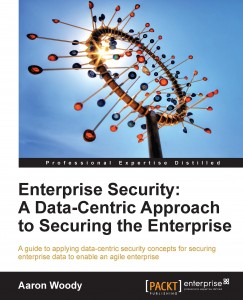
So I have previously blogged a series of largely chapter by chapter reviews of Aaron Woody’s book Enterprise Security – A Data Centric Approach. This post tries to provide a brief summarised view pulling my thoughts of the book overall together.

As an Enterprise Architect I took an interest in this book as an opportunity to validate my understanding of security and ensure in the design and guidance work that I do I am providing good insights and directions so that the application architects and developers are both ensuring good security practices and also asking the helpful information available to other teams such as IT Security, operational support and so on.

The book has been overall very well written and extremely accessible to even those not versed in the dark arts of IT Security. Anyone in my position, or fulfilling a role as an application designer or product development manager would really benefit from this book. Even those on the business end of IT would probably benefit in terms of garnering an insight into what IT Security should be seeking to achieve and why they often appear to make lives more difficult (I.e. putting restrictions in, perhaps blocking your favourite websites).

So why so helpful, well Aaron has explained the issues and challenges that need to be confronted in terms of Security from the perspective of the organisations key assets – mainly its data (certainly the asset that is likely to cause most visible problems if compromised). Not only that the book presents a framework to help qualify and quantify the risks as a result device a justifiable approach to securing the data and most importantly make defensible cases for budget spend.

I have to admit that the 1st chapter that that introduces the initial step in the strategy was a bit of a struggle as it seemed to adopt and try to define a view of the world that felt a little too simplistic. The truth is that this the 1st step in a journey, and in hindsight important – so stick with it.

Once the basic framework is in place we start looking at tooling strategies and technologies to start facilitating security. The book addresses categories of product rather than specific solutions so the book isn’t going to date too quickly. The solution examination includes the pros and cons of their use (e.g wifi lock down) which is very helpful.

Finally to really help the book comes with a rich set of appendices providing a raft of references to additional material that will help people translate principles into practice.

To conclude, a little effort maybe needed to get you started but ultimately a well written, informative, information rich book on security.

Previous blog entries:

  • Chapter 1
  • Chapter 2
  • Chapter 3
  • Chapter 4
  • Chapter 5 & 6
  • Chapter 7 & 8
  • Final Chapter

There is also a supporting website for the book athttp://www.datacentricsec.com/
Enterprise Security - A Data Centric Approach

Share this:

  • Share on Facebook (Opens in new window) Facebook
  • Share on X (Opens in new window) X
  • Share on Pocket (Opens in new window) Pocket
  • Share on Reddit (Opens in new window) Reddit
  • Email a link to a friend (Opens in new window) Email
  • Share on WhatsApp (Opens in new window) WhatsApp
  • Print (Opens in new window) Print
  • Share on Tumblr (Opens in new window) Tumblr
  • Share on Mastodon (Opens in new window) Mastodon
  • Share on Pinterest (Opens in new window) Pinterest
  • More
  • Share on Bluesky (Opens in new window) Bluesky
  • Share on LinkedIn (Opens in new window) LinkedIn
Like Loading...

Enterprise Security – A Data Centric Approach – the final chapter

05 Wednesday Feb 2014

Posted by mp3monster in Book Reviews, Books, General, Packt, Technology

≈ 1 Comment

Tags

Aaron Woody, book, data, enterprise, Packt, review, Security

so I have reached the final chapter of the book which covers the handling of security events and security incidents (the differentiation of the two being the consequences of the event – a piece of malware being detected on a desktop can an event as the consequences are relatively trivial compared to the defacing of an e’tailer’s website).

I have to admit I glossed through this chapter as my role within an organisation doesn’t demand the operational management of issues. That said, the book provides some clear guidance on how to develop a process to support the handling of a security issue – important as you don’t want be figuring these things out when something happens, you want to get on and focus on execution. s with previous chapters, this well written and doesn’t demand knowledge of security dark arts to get to grips with.

The book finishes with a series of appendices which provides some illustrative information for chapters in the book, plus a series of appendices of really useful additional reference information sites cover a spectrum of information from security education resources to security tools.

This series of blogs on this book will wrapped up with a short review of the whole book. But I would like to congratulate Aaron Woody on a fine book rich with helpful additional information.

Previous blog entries:

  • Chapter 1
  • Chapter 2
  • Chapter 3
  • Chapter 4
  • Chapter 5 & 6
  • Chapter 7 & 8

There is also a supporting website for the book athttp://www.datacentricsec.com/
Enterprise Security - A Data Centric Approach

Share this:

  • Share on Facebook (Opens in new window) Facebook
  • Share on X (Opens in new window) X
  • Share on Pocket (Opens in new window) Pocket
  • Share on Reddit (Opens in new window) Reddit
  • Email a link to a friend (Opens in new window) Email
  • Share on WhatsApp (Opens in new window) WhatsApp
  • Print (Opens in new window) Print
  • Share on Tumblr (Opens in new window) Tumblr
  • Share on Mastodon (Opens in new window) Mastodon
  • Share on Pinterest (Opens in new window) Pinterest
  • More
  • Share on Bluesky (Opens in new window) Bluesky
  • Share on LinkedIn (Opens in new window) LinkedIn
Like Loading...

Enterprise Security – A Data Centric Approach – Chapters 7 & 8

28 Tuesday Jan 2014

Posted by mp3monster in Book Reviews, Books, General, Packt

≈ 2 Comments

Tags

Aaron Woody, engineering, enterprise, Kevin Mitnick, networks, review, Security, social, social engineering, wireless

Chapters 7 and 8 of the book in many respects are the polar opposites in their nature, with Chapter 7 looking at Wireless networks in the Enterprise and technicalities of different encryption frameworks, authentication and authorization.  Then at the other end is chapter 8 facing into the difficulties of social engineering – the approach of using people’s own nature to divulge sensitive information.  Probably one of the most famous people for this sort of thing is Kevin Mitnick and to acts of social engineering are will illustrated in the influential book  Bruce Stirling’s Hacker Crackdown.

Although Chapter 7 is addressing an area many would view as the dark art of wireless network setup; it is well explained and actually worth reading by anyone who would like to better understand their own home wireless network as lot of the information (not all) is relevant even in that context. For example the benefit of supressing the visibility of the Network ID (SSID) doesn’t make the network invisible – it simply makes it harder to spot as any device such as smart phone will call out yo the network to see if it is present and this information can be picked up just as easily if you know what you’re doing.

Drilling into the social engineering aspect, the book looks at the more obvious and perhaps brute force models such as spam to increasingly subtle takes such using social media communications through the likes of linkedin to send emails loaded with malware and see the end user open them. For example pretending to be an agent with a job offer who has found you via LinkedIn. But beyond that, the amount of information being made available via social sites as it can be a means to establish a organisations’ IT fingerprint and therefore suggest the best routes to attacking IT.  The chapter addresses training, and the pros and cons of different approaches, plus mitigation strategies for the different attack strategies.

Previous blog entries:

  • Chapter 1
  • Chapter 2
  • Chapter 3
  • Chapter 4
  • Chapter 5 & 6

There is also a supporting website for the book athttp://www.datacentricsec.com/
Enterprise Security - A Data Centric Approach

Share this:

  • Share on Facebook (Opens in new window) Facebook
  • Share on X (Opens in new window) X
  • Share on Pocket (Opens in new window) Pocket
  • Share on Reddit (Opens in new window) Reddit
  • Email a link to a friend (Opens in new window) Email
  • Share on WhatsApp (Opens in new window) WhatsApp
  • Print (Opens in new window) Print
  • Share on Tumblr (Opens in new window) Tumblr
  • Share on Mastodon (Opens in new window) Mastodon
  • Share on Pinterest (Opens in new window) Pinterest
  • More
  • Share on Bluesky (Opens in new window) Bluesky
  • Share on LinkedIn (Opens in new window) LinkedIn
Like Loading...

Ed Harcourt – Time Of Dust

09 Thursday Jan 2014

Posted by mp3monster in Music, Music Reviews

≈ Leave a comment

Tags

Ed Harcourt, Kathryn Williams, Music, Parliament of Rooks, review

So we’re not even 2 weeks into 2014 and its time to get excited about a new album release. Ed’s latest is more of a mini album available now as a download and physical media at the end of month.

Unlike the more acoustic work of late, this release takes the piano lead performance to but leverages rich orchestral and synth layers giving a more of widescreen drama.

The widescreen drama coupled with some really amazing lyrics from the horrors of war (Parliament of Rooks) “we were only doing what the captain said, we all went down with the ship” to the safest of love songs “love is like a minor key, a jaded weeping willow tree, it hooks its claws until blood is drawn“.

Finally a bonus of Kathryn Williams on backing vocals you really can’t go wrong with your £3.49 on iTunes or £8 on Amazon for the CD and immediate auto rip download.

Ed, we want more….. Play it again Sam

Ed’s site – http://edharcourt.com/

Share this:

  • Share on Facebook (Opens in new window) Facebook
  • Share on X (Opens in new window) X
  • Share on Pocket (Opens in new window) Pocket
  • Share on Reddit (Opens in new window) Reddit
  • Email a link to a friend (Opens in new window) Email
  • Share on WhatsApp (Opens in new window) WhatsApp
  • Print (Opens in new window) Print
  • Share on Tumblr (Opens in new window) Tumblr
  • Share on Mastodon (Opens in new window) Mastodon
  • Share on Pinterest (Opens in new window) Pinterest
  • More
  • Share on Bluesky (Opens in new window) Bluesky
  • Share on LinkedIn (Opens in new window) LinkedIn
Like Loading...

Enterprise Security – A Data Centric Approach — Chapter 3

29 Sunday Dec 2013

Posted by mp3monster in Books, General, Technology

≈ 5 Comments

Tags

Aaron Woody, book, Data-Centric Approach, review, risk, Security

So I’m back to reading Enterprise Security: A Data-Centric Approach to Securing the Enterprise by Aaron Woody. I’ve not finished reading the book yet but as I’m reviewing one or two chapters at a time, I thought I’d blog about Chapter 3 – particularly given its value (previous blog entry here and here).

Chapter 3 goes by the name of Security As A Process, which addresses the processes to determining security risk, the analysis of cost benefit of implementing security features to address those risks. The chapter then goes on to provide guidance on defining good policies and standards.

In hindsight the process for determining and analyzing the security risks and classifying them is fairly obvious – it took the reading to to draw the points and the mechanisms into focus. But the fact it makes sense in hindsight suggests that the approach the workability and the chance for the business to understand the risks and challenges being taken on.

The chapter also provides some really good information sources for people to use to support the adotion of the processes described. Some I’ve known about such as the SANS Institute others I hadn’t.

I have to say that based on the strength of this chapter alone I’d recommend the book to any architect who is seeking to develop practical appreciation of addressing security considerations or understand what they should be looking for what to ask for in a new organisation. Those trying to drive up the quality of processes or get across the need for a more proactive security strategy that is also pragmatic – reading this chapter alone should help provide some serious points to get a handle on things.

The book has been published by Packt (who at the time of writing are running a promotion – more here)

There is also a supporting website for the book at http://www.datacentricsec.com/
Enterprise Security - A Data Centric Approach

Share this:

  • Share on Facebook (Opens in new window) Facebook
  • Share on X (Opens in new window) X
  • Share on Pocket (Opens in new window) Pocket
  • Share on Reddit (Opens in new window) Reddit
  • Email a link to a friend (Opens in new window) Email
  • Share on WhatsApp (Opens in new window) WhatsApp
  • Print (Opens in new window) Print
  • Share on Tumblr (Opens in new window) Tumblr
  • Share on Mastodon (Opens in new window) Mastodon
  • Share on Pinterest (Opens in new window) Pinterest
  • More
  • Share on Bluesky (Opens in new window) Bluesky
  • Share on LinkedIn (Opens in new window) LinkedIn
Like Loading...
← Older posts
Newer posts →

    I work for Oracle, all opinions here are my own & do not necessarily reflect the views of Oracle

    • About
      • Internet Profile
      • Music Buying
      • Presenting Activities
    • Books & Publications
      • Logging in Action with Fluentd, Kubernetes and More
      • Logs and Telemetry using Fluent Bit
      • Oracle Integration
      • API & API Platform
        • API Useful Resources
        • Useful Reading Sources
    • Mindmaps Index
    • Monster On Music
      • Music Listening
      • Music Reading
    • Oracle Resources
    • Useful Tech Resources
      • Fluentd & Fluent Bit Additional stuff
        • Logging Frameworks and Fluent Bit and Fluentd connectivity
        • REGEX for BIC and IBAN processing
      • Java and Graal Useful Links
      • Official Sources for Product Logos
      • Python Setup & related tips
      • Recommended Tech Podcasts

    Oracle Ace Director Alumni

    TOGAF 9

    Logs and Telemetry using Fluent Bit


    Logging in Action — Fluentd

    Logging in Action with Fluentd


    Oracle Cloud Integration Book


    API Platform Book


    Oracle Dev Meetup London

    Blog Categories

    • App Ideas
    • Books
      • Book Reviews
      • manning
      • Oracle Press
      • Packt
    • Enterprise architecture
    • General
      • economy
      • ExternalWebPublications
      • LinkedIn
      • Website
    • Music
      • Music Resources
      • Music Reviews
    • Photography
    • Podcasts
    • Technology
      • AI
      • APIs & microservices
      • chatbots
      • Cloud
      • Cloud Native
      • Dev Meetup
      • development
        • languages
          • java
          • node.js
          • python
      • drone
      • Fluentbit
      • Fluentd
      • logsimulator
      • mindmap
      • OMESA
      • Oracle
        • API Platform CS
          • tools
        • Helidon
        • ITSO & OEAF
        • Java Cloud
        • NodeJS Cloud
        • OIC – ICS
        • Oracle Cloud Native
        • OUG
      • railroad diagrams
      • TOGAF
    • xxRetired
    • AI
    • API Platform CS
    • APIs & microservices
    • App Ideas
    • Book Reviews
    • Books
    • chatbots
    • Cloud
    • Cloud Native
    • Dev Meetup
    • development
    • drone
    • economy
    • Enterprise architecture
    • ExternalWebPublications
    • Fluentbit
    • Fluentd
    • General
    • Helidon
    • ITSO & OEAF
    • java
    • Java Cloud
    • languages
    • LinkedIn
    • logsimulator
    • manning
    • mindmap
    • Music
    • Music Resources
    • Music Reviews
    • node.js
    • NodeJS Cloud
    • OIC – ICS
    • OMESA
    • Oracle
    • Oracle Cloud Native
    • Oracle Press
    • OUG
    • Packt
    • Photography
    • Podcasts
    • python
    • railroad diagrams
    • Technology
    • TOGAF
    • tools
    • Website
    • xxRetired

    Enter your email address to subscribe to this blog and receive notifications of new posts by email.

    Join 2,555 other subscribers

    RSS

    RSS Feed RSS - Posts

    RSS Feed RSS - Comments

    February 2026
    M T W T F S S
     1
    2345678
    9101112131415
    16171819202122
    232425262728  
    « Jan    

    Twitter

    Tweets by mp3monster

    History

    Speaker Recognition

    Open Source Summit Speaker

    Flickr Pics

    Gogo Penguin at the BarbicanGogo Penguin at the BarbicanGogo Penguin at the BarbicanGogo Penguin at the Barbican
    More Photos

    Social

    • View @mp3monster’s profile on Twitter
    • View philwilkins’s profile on LinkedIn
    • View mp3monster’s profile on GitHub
    • View mp3monster’s profile on Flickr
    • View mp3muncher’s profile on WordPress.org
    • View philmp3monster’s profile on Twitch
    Follow Phil (aka MP3Monster)'s Blog on WordPress.com

    Blog at WordPress.com.

    • Subscribe Subscribed
      • Phil (aka MP3Monster)'s Blog
      • Join 233 other subscribers
      • Already have a WordPress.com account? Log in now.
      • Phil (aka MP3Monster)'s Blog
      • Subscribe Subscribed
      • Sign up
      • Log in
      • Report this content
      • View site in Reader
      • Manage subscriptions
      • Collapse this bar
    Privacy & Cookies: This site uses cookies. By continuing to use this website, you agree to their use.
    To find out more, including how to control cookies, see here: Our Cookie Policy
    %d