
Tags
CEMLI, Mythos, patching, prioritization, RBVM, risk, Security, Technology, vulnerability
Ok, as a heading, that is a bit clickbait. But the underlying message is true. Let’s ask ourselves some simple questions. What is a patch? The Cambridge Dictionary says within the context a computers:
small computer program that can be added to an existing program in order to make the existing program work as it should
The key here is change to make something existing to be correct. That means there is something wrong. this can include a means to circumvent security. But to need a fix, we first need to find the fault. As a result that must mean we there is ALWAYS the chance of a fault. Simply put, there is always a vulnerability before a fix. Therefore regardless of how patched we are there is always a possibility however small of their being a vulnerability and that a malicious actor (or hopefully a bug bonus schema or something like Mythos) finds it first.
Cultural challenge
As an industry, our first question when there is a problem is, have you applied the patches (or bug fixes), or have you upgraded to the latest version yet? This is almost as pervasive as the old joke when there is a computer problem: Have you turned it off and on again?
Don’t get me wrong, if you have patches, I’d err towards applying them. But, I’d also advocate trying make a risk assessment as to what patching could go wrong; if you can safely eliminate a problem, it is better to do so. But, blindly patching can be an issue. Patches can conflict other parts of the system, be applied to systems resulting devices being ‘bricked‘ or hitting the ‘blue screen of death‘.
Let me illustrate, using desktop PC. When I receive a windows update, it takes a couple of minutes to see what is there. If the update looks like a malware signatures update – no hesitation, the risk of not taking the change is bigger than bot. If the update is for a driver, then we’re more cautious, which driver, can I install the older one. Time to make sure there is an OS recovery point. If it’s something like a H1 or H2 cumulative and features update – time to run a backup and a restore point.
In an enterprise software environment, be that monolithic on-premises ERPs, through to vast microservice deployments there are the potential for problems. Particularly when you consider the amount of possible customisation that could be involved (in the Oracle domain you’ll hear about CEMLI). This means the possible permutations makes it impossible for the vendor to provide assurances. Not to mention if you’ve applied Modification level changes a patch may well conflict with your modification.
Security in Depth
But security, and the principle of security in depth, is far more than just patching. But I will always advocate more. The ideal world is that we have layers of security, so if one can’t be patched, then other layers are mitigations, or to use another term often used in enterprise security, a ‘compensating controls’ (the idea that if you can’t address a vulnerability in one place, you have security controls elsewhere that can compensate for a weakness).
But we forget – breaches precede patches
The thing we tend to overlook when we get fixated on the idea that staying patched means we’re secure is that a patch always follows a breach. Remember, somewhere along the line, a ‘hacker’ (preferably a security researcher, penetration tester, or a white-hat hacker looking to earn money through bug bounty schemes) will find a vulnerability and breach a system as a result. It is only now that the exploit (vulnerability) is known that the work on creating a patch to address it.
But sometimes a patch isn’t practical (it has massive performance implications and demands a rewrite of a key element of the solution). Therefore, we can address the issue with mitigating controls – this could be at a code level, e.g. adding upfront checks for a specific scenario, through to preventing a piece of software from being used in a particular way.
A vulnerability doesn’t mean you’re vulnerable
This is the difficult perspective, and makes interpreting vulnerability scanner data hard to understand. Often, vulnerability scanners will look across a server and determine what products and components are deployed, and what versions of that functionality are deployed. Then look up those components for the list of attributed vulnerabilities. This is helpful, you know, you need to give this some due consideration. But we should not forget that software (and particularly enterprise software) has many configuration points that can cause it to follow different paths, and the vulnerability may lie only in one path. The latest version of WebLogic server has 650-700 mBeans (one of the techniques to configure the WLS behavior).
Look at it another way, you’re a single person with a car (which usually has 4 seats). You need the car to commute to and from work, and to do common chores like going shopping. But one of the back seats ended up getting ripped. The garage wants thousands to replace it. This does not stop you from using the car to commute to work and to do other necessary tasks. Yo have probably unconsciously applied a ‘compensating control’ – never take more than 2 other people in the car with you, and prevent a back seat passenger from sitting on the ripped seat. Frustrating – maybe, but not inoperable. Of course, applying that compensating control to use the car as a taxi would not be commercially viable. You, as the car owner, need to do some due diligence, such as ensuring the rip isn’t a symptom of a more fundamental risk? Yes. Do you need to consider the likelihood of needing more than 2 passengers? Yes.
Patch velocity
One of the challenges that are developing is the velocity of patches coming as AI is able to be used to locate potential errors that then get addressed. This creates an issue of the organization’s being able to rollout patches. This may not sound too challenging, until consider
- not all organizations have a pure Kubernetes ecosystem with the means to orchestrate node replacement quickly and easily.
- Capacity demands (people, and or compute resources) needed for performing verification steps for any change can out strip resources, or impact other change effort – such as legal compliance, or changes to keep you in business (although a breach could be just as catastrophic).
- Demand impacts, when organizations are also trying to create bandwidth and/or budget to transition off vulnerable systems can end up being blocked.
- Patch volumes for an environment that is already considered ‘fragile’ are going to generate a lot of work, as not only does the patch need to be applied, but a lot of effort will be needed to demonstrate the the wider business the possible impact has been validated.
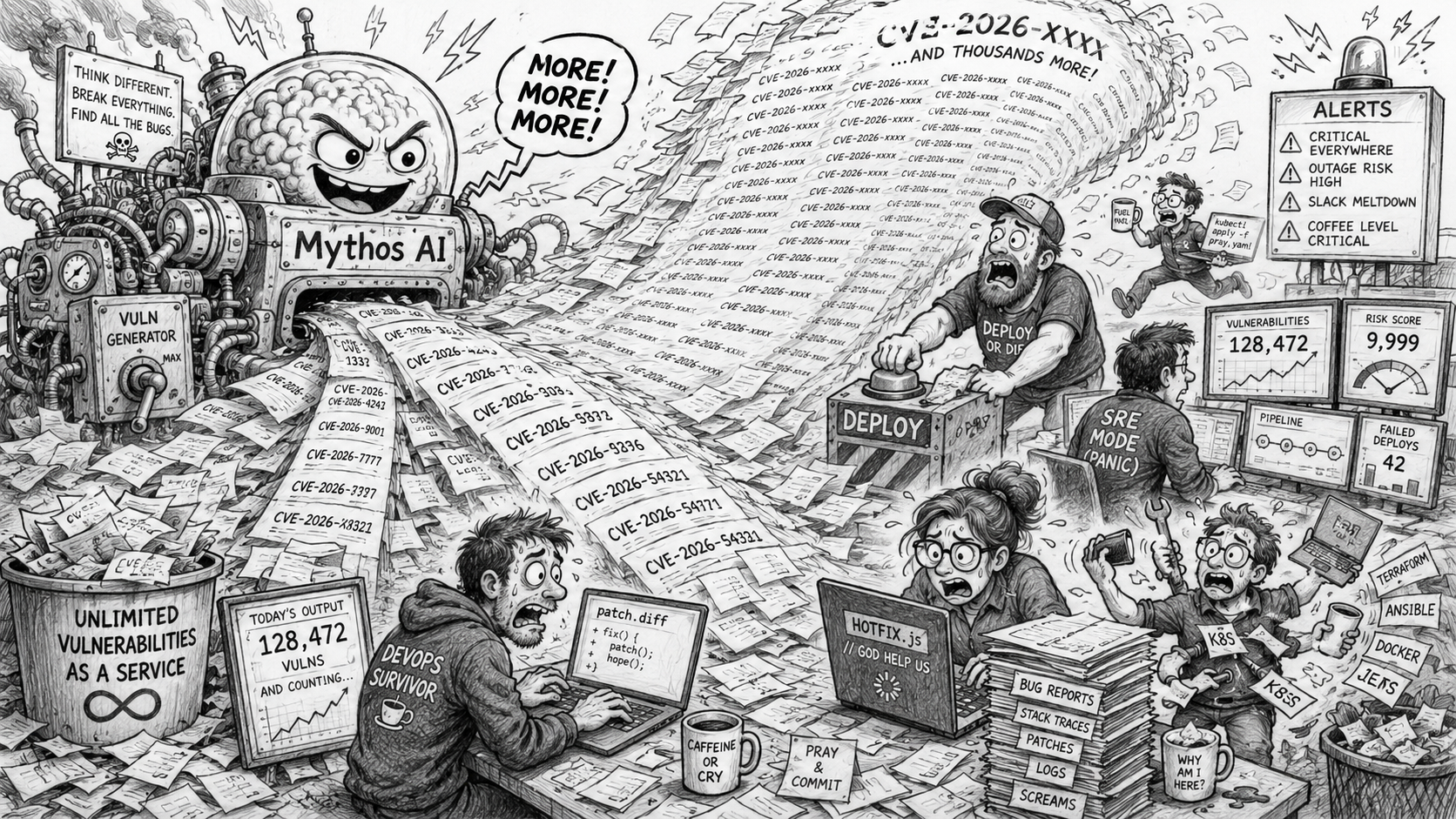
To combat velocity, is to work on ccompensating controls in other areas of your system. If the application has a networking weakness, consider not patching the software, and ensuring networking configurations block the network port(s) that are associated with the vulnerability. Add monitoring, and checks to ensure the change to the network aren’t accidentally undone. If you do later apply the patch to address the weakness, don’t unpick the network mitigations, as this gives you ‘security in depth’.
Scanning tools
We can also use detection or scanning tooling to help. For solutions that you have development control over, and preproduction environments should be using these tools. But we have to be careful how we interpret the outcomes of these tools. Blindly take their reports can send us chasing issues, that aren’t really issues. While measuring detecting and measuring risk management is a positive thing, it needs to be done in an informed way.
For example, you run the scanning tool with admin level privileges so it can inspect everything. But, then it detects the finger print of an old version of Java with vulnerabilities in the Swing UI library. But the only reason Java is present is to run some CLI admin utilities. It is never used by the core application, there are no deployed Swing solutions in the environment. If we don’t give consideration to the context of the problem, we end up patching an issue that is in all probability going to be a problem.
At the same time, we can use this understanding to prioritise patching. Yes, applying a patch if available is good, but if applying a patch that breaks your tool is not. Spending time patching a vulnerability, when you don’t use the vulnerable code is eating into capacity to actually implement business change which may well eliminate the problem anyway (for example standardising scripting tools on Python).
What does this all mean?
Bottom line is, if you can patch, you have the ability and capacity to do so then it’s better to do so, as it keeps another layer of defence in place. But you don’t have access to patches (out of support etc), capacity to solve everything immediately then intelligent assessment of the vulnerability, risk driven prioritisation, look to mitigation strategies.
Defence in depth is not a security seller’s motto, but a genuine way to ensure that if one point fails, the next should protect you. But if you can’t patch, understand what the vulnerability is, and ensure you have mitigations in place. Ensure the issue and its implications in your context are documented along with the mitigations – so you have auditable content for any audit. You have been told where the minefield is, so you’ve fenced the area off, so people don’t wander into the issue unwittingly.


You must be logged in to post a comment.