• Home
  • Site Aliases
    • www.cloud-native.info
  • About
    • Background
    • Presenting Activities
    • Internet Profile
      • LinkedIn
    • About
  • Books & Publications
    • Log Generator
    • Logs and Telemetry using Fluent Bit
      • Fluent Bit book
      • Book Resources in GitHub
      • Fluent Bit Classic to YAML Format configurations
    • Logging in Action with Fluentd, Kubernetes and More
      • Logging in Action with Fluentd – Book
      • Fluentd Book Resources
      • Fluentd & Fluent Bit Additional stuff
    • API & API Platform
      • API Useful Resources
    • Oracle Integration
      • Book Website
      • Useful Reading Sources
    • Publication Contributions
  • Resources
    • GitHub
    • Oracle Integration Site
    • Oracle Resources
    • Mindmaps Index
    • Useful Tech Resources
      • Fluentd & Fluent Bit Additional stuff
      • Recommended Tech Podcasts
      • Official Sources for Product Logos
      • Java and Graal Useful Links
      • Python Setup & related stuff
      • DevTips
  • Music
    • Monster On Music
    • Music Listening
    • Music Reading

Phil (aka MP3Monster)'s Blog

~ from Technology to Music

Phil (aka MP3Monster)'s Blog

Author Archives: mp3monster

My experience writing a technical book

26 Monday Dec 2016

Posted by mp3monster in Books, General, Packt

≈ 2 Comments

Tags

AMIS, book, ebook, integration, OIC - ICS, Oracle, Packt, press, publishing, writing

We have just supplied our publisher with the final draft of the final chapter in our book about Oracle Integration Cloud Service (ICS). Before we get too chilled out waiting to see the printed article as Packt Sort out the final publishing I thought it might be helpful to share some observations from our experiences.

Let’s start with some background. I have been acting as a peer reviewer for Packt for some years now, and in fact Packt had approached me in the past to write a book, however I had declined their proposals as I didn’t want to write on a subject that people had already written about. So when I was introduced to ICS, this felt like a good subject to write a book on, certainly represents something that it is going to have a significant future and deserved a book to help people get beyond a basic user guide.

Choosing to write a book is not a small undertaking, so make sure you’re going to do this for the right reasons. Let’s be honest, very few books make much money. You have to be  lucky, writing a subject you know us going to be game changing (think Gang of Four and Thomas Erl) or have a definitive text on the next big thing that everyone will use. Publishers also run promotions, discounts and give aways, some more than others, but that will all eat into you share, not to mention unless you self publish or you’re a rock star author you will not see big percentage royalty rates coming your way.

So first steps, for us was to get a publisher on board, given it was an Oracle product I wanted to talk to Oracle Press (or here) first which is run by McGraw-Hill. They weren’t too sure about the idea, having not been successful with previous cloud books. So we went back to Packt, they do have Oracle based books, and I had a relationship there.

With some initial positive feedback, I needed to get things moving. Thinking through this I concluded that the entire book alone could be a lot of very hard graft when working with a new product and I didn’t have the access to the same level of resources working for a customer organisation as you can with an Oracle partner company. So I needed a co-author who was involved with ICS, and ideally working for an Oracle partner. I had seen Robert van Mölken blogging about ICS, and working for AMIS suggested he would be a very capable person, not to mention AMIS is a respected partner. Robert has shown himself to be more than capable, and getting him signed up to the idea was a good call.

Next, was to start properly developing the idea, which means chapters, subheadings, and  book introduction.  Very quickly the chapters and subsections where finalised, along with our approach to the examples. I was very keen that the examples where routed in plausible scenarios and that would help the ideas without getting caught up explaining the detail.  Not to mention the examples should feel less superficial. Additionally, we have recognised that a book about a cloud solution means that things will move far faster than something that is deployed on-premises, so how we approach this book needs to hold true and relevant even if there are new features and aesthetic changes for a good while.

We divided the work up between us, I think Robert in hindsight took on the more troublesome chapters, in so far needing to understand more social APIs. So when plotting out the division of work, also think about the technical challenges you might have and need to explain. Whilst you won’t have this in perhaps a ‘hello world’ level of functionality when you past this effort builds up, if you’re working on a cookbook it may we’ll be an important factor.

Our original goal had been to publish in time for Open World. But the realities of a job, both of us being active with events such as user groups meant these things would eat into the available writing time as demos, presentations would also need to be written. We also uncovered a couple of bugs that delayed things, both in waiting for the patch, but also confirming that what we where seeing was a bug, and not an issue of understanding.

In hindsight I think perhaps we should have done more work during the planning to  build the example scenarios. There is no doubt that planning before actually writing makes a significant difference. It would have given us more time in working through the questions and challenges. The risk would have been that it would have been a lot longer before we actually produced some content, and there is certainly something psychological about getting those initial chapters written.

1905356542-video-conferencing-webmarketing-inner-blog-umr8sp-clipartDuring the core writing phase Robert and I would gave weekly call to catchup, it meant that we could discuss the chapter scenarios, details, and assumptions that meant we were aligned. Whilst not necessary, and this could be done be email, a short conversation was a lot easier and it helped keep focus. Not to mention probably reduced the differences in writing that can occur with different authors.

When comes to the writing itself I found the clearer my thinking was on the specific  points I wanted to convey the easier the writing became and the writing of the chapter just flowed. The question I still haven’t really answered in my own mind is whether I should have been a lot more attentive to the formatting the publishers wanted us to adopt, applying it retrospectively took a couple of passes as you would spot something that had omitted the correct style. But diligently applying the right styles would have been disruptive to the writing style.

153493174We found that most chapters overran the page count by about 10%-15% the publisher was pretty cool about this – they definitely agreed a good book over a book that was edited to a specific length was most important. We can put the over run down largely to the fact we didn’t allow for the formatting of the page, which meant more white space that we had anticipated, plus in the drafts we needed to put additional publication notes in such as references to the images being used. It is worth looking at this before finalising your chapter lengths.

The last thing we did during the writing of the 1st drafts was reviewing each other’s work before submitting the chapters. This probably helped a lot in so far as Robert would often pickup on issues with my screenshots and I would tend to finesse wording – when you write in a more conversational style those little quirks of speaking can come through.

thumb_colourbox10196464Completing all the chapters in 1st draft felt pretty satisfying, and certainly a morale boost as we had overrun our original estimates, as it meant we where we we’re well over 50% complete, probably nearer to 75% complete in terms of effort. In the contract with Packt this was also the 1st milestone for the advance, which is a long way into the process and the payment has yet to be received. Some of this delay has been organisational, but things don’t happen quickly on that front.

Before we started the project one of the Oracle Ace Directors we knew provided some observations, suggesting that each page will probably take a couple of hours to write. I have to admit to being a little sceptical of this as it would mean roughly a year of writing every evening for both of us if you look at it from an elapsed time it isn’t so far from the truth. If you look at the actual effort, those weeks where I was just working on the book rather than presentations or work demands. I think it would have been fair to suggest about 8-12 hours of effort went into the book each week which is about 450 pages in length. In the end I think we probably where writing at twice that speed if you measure effort from 1st to last draft.

Colorful letters background. 3d rendered illustrationSecond draft is about addressing the review feedback from the peer reviewers. For us that was pretty straight forward,the feedback we received was very positive and making suggestions on how to improve things. As we wrote about a cloud product that is developing and improving quickly we needed to double check the screens hadn’t changed. We did see 1 challenge in the reviewing.  We wrote the Preface to help provide context to the book, but I didn’t get sent before the 1st chapters went to review some comments as a result perhaps weren’t so intune with the books underpinning goals.  Should the reviewer need to have had the preface first, debatable. We took advantage of this lesson, to reduce the dependency on having read the preface.

Most changes where about fixing formatting, then adding a couple of additional screenshots and some clarifying text. Each chapter probably only needed 1 additional paragraph per chapter. So working through this was pretty quick. Then it has been over to the publisher to finishing things off and assemble the book.

Going forward, we will continue to write additional material, initially for the blog (oracle-integration.cloud) but we are exploring the idea of a living book where the book version will undergo quarterly updates. But time will tell as to whether this makes a difference.

The book can be found at:

  • Packt
  • Amazon

Share this:

  • Share on Facebook (Opens in new window) Facebook
  • Share on X (Opens in new window) X
  • Share on Reddit (Opens in new window) Reddit
  • Email a link to a friend (Opens in new window) Email
  • Share on WhatsApp (Opens in new window) WhatsApp
  • Print (Opens in new window) Print
  • Share on Tumblr (Opens in new window) Tumblr
  • Share on Mastodon (Opens in new window) Mastodon
  • Share on Pinterest (Opens in new window) Pinterest
  • More
  • Share on Bluesky (Opens in new window) Bluesky
  • Share on LinkedIn (Opens in new window) LinkedIn
Like Loading...

Packt Book Promotion

18 Sunday Dec 2016

Posted by mp3monster in Books, General, Packt, Technology

≈ Leave a comment

Tags

ebooks, Packt, promotion

Packt’s Christmas Book promotion has been launched again – all books or videos for $5 = £4.74

5dollar2016-home-front

This includes the pre-order of our book (Implementing Oracle Cloud Integration), which will be out in a matter of weeks now.


Share this:

  • Share on Facebook (Opens in new window) Facebook
  • Share on X (Opens in new window) X
  • Share on Reddit (Opens in new window) Reddit
  • Email a link to a friend (Opens in new window) Email
  • Share on WhatsApp (Opens in new window) WhatsApp
  • Print (Opens in new window) Print
  • Share on Tumblr (Opens in new window) Tumblr
  • Share on Mastodon (Opens in new window) Mastodon
  • Share on Pinterest (Opens in new window) Pinterest
  • More
  • Share on Bluesky (Opens in new window) Bluesky
  • Share on LinkedIn (Opens in new window) LinkedIn
Like Loading...

UKOUG Tech16 Presentation Slides, Apex & Oracle Cloud

15 Thursday Dec 2016

Posted by mp3monster in General, Oracle, Technology

≈ Leave a comment

Tags

APEX, Cloud, Oracle, OUG, tech16

My presentation for UKOUG Tech 16 can be seen by following the link – Introduction to SOA CS. or see below   It was a tremendous 4 days (if you include the Tech stream’s Super Sunday).  If you are a UKOUG member and didn’t make it to the conference I’d look out for the material to be become available.

Whilst I’m not a big Apex fan (stitching business logic into the persistence layer feels wrong to a middleware person), i did attend the keynote session which covered Apex’s history and future direction, and there are some very exiciting things coming and if everything materialises as I understand it then some big steps to getting developers engaged with Oracle cloud offerings.

Oracle has done a lot of work on the middleware layer with apps container (using common Docker configurations without needing to worry about Docker), Kafka, Node.js and others to engage developers and provide the means to offer a polyglot microservices platform that is not just attractive to  the traditional Oracle customer base but also those wanting the middle ground of supported open source. What Oracle are missing is the means to get developers trying the technology and being creative with it. Amazon and Red Hat have got this by offering limited footprints for a long time. Oracle offer 30 day trials which is fine to do a project sponsored PoC. But to hook grass roots users you need a lengthy period where people in spare time can built some cool/geeky solutions.

Now this maybe down to the fact that Oracle cloud is built on their Exa machines with clever on silicon security features, and Oracle can’t manufacture it quick enough. Whereas other cloud providers work with largely commodity components. But if they want to challenge Amazon as Ellison says they need to change this.


Share this:

  • Share on Facebook (Opens in new window) Facebook
  • Share on X (Opens in new window) X
  • Share on Reddit (Opens in new window) Reddit
  • Email a link to a friend (Opens in new window) Email
  • Share on WhatsApp (Opens in new window) WhatsApp
  • Print (Opens in new window) Print
  • Share on Tumblr (Opens in new window) Tumblr
  • Share on Mastodon (Opens in new window) Mastodon
  • Share on Pinterest (Opens in new window) Pinterest
  • More
  • Share on Bluesky (Opens in new window) Bluesky
  • Share on LinkedIn (Opens in new window) LinkedIn
Like Loading...

UKOUG Oracle Scene – Another Article Published

16 Wednesday Nov 2016

Posted by mp3monster in Cloud, General, Oracle, Technology

≈ Leave a comment

The latest edition of the UK Oracle User Group (UKOUG) Oracle Scene Journal is out now with another article from me, in addition to some great content from other contributors. This article builds upon and updates an article previously published in the Oracle Apps User Group about 18 months ago. We updated and republished as part of the run up to the UKOUG special Event in March next year which will be fully announced at the conference in a couple of weeks. You can see it here Oracle Scene Edition 62 – Journey to the Cloud


Share this:

  • Share on Facebook (Opens in new window) Facebook
  • Share on X (Opens in new window) X
  • Share on Reddit (Opens in new window) Reddit
  • Email a link to a friend (Opens in new window) Email
  • Share on WhatsApp (Opens in new window) WhatsApp
  • Print (Opens in new window) Print
  • Share on Tumblr (Opens in new window) Tumblr
  • Share on Mastodon (Opens in new window) Mastodon
  • Share on Pinterest (Opens in new window) Pinterest
  • More
  • Share on Bluesky (Opens in new window) Bluesky
  • Share on LinkedIn (Opens in new window) LinkedIn
Like Loading...

Oracle 2 Minute Tech Tip

06 Sunday Nov 2016

Posted by mp3monster in General, Oracle

≈ Leave a comment

Tags

2MTT, OMCS, Oracle, video, yip

The Oracle Technology Network (OTN) promote/encourage people to submit short videos as 2 minute tech tips – you can check my 1st attempt out …

Share this:

  • Share on Facebook (Opens in new window) Facebook
  • Share on X (Opens in new window) X
  • Share on Reddit (Opens in new window) Reddit
  • Email a link to a friend (Opens in new window) Email
  • Share on WhatsApp (Opens in new window) WhatsApp
  • Print (Opens in new window) Print
  • Share on Tumblr (Opens in new window) Tumblr
  • Share on Mastodon (Opens in new window) Mastodon
  • Share on Pinterest (Opens in new window) Pinterest
  • More
  • Share on Bluesky (Opens in new window) Bluesky
  • Share on LinkedIn (Opens in new window) LinkedIn
Like Loading...

OTN Appreciation Day : OMCS Push Listeners

11 Tuesday Oct 2016

Posted by mp3monster in General, Oracle, Technology

≈ Leave a comment

Tags

#ThanksOTN, Appreciation Day, Cloud, Cloud Service, integration, JMS, messaging, Messaging CS, OMCS, Oracle, oracle-base, OTN, Push Listener, Technology Network

The background to this post, and the OTN Appreciation Day can be seen at Oracle-Base.

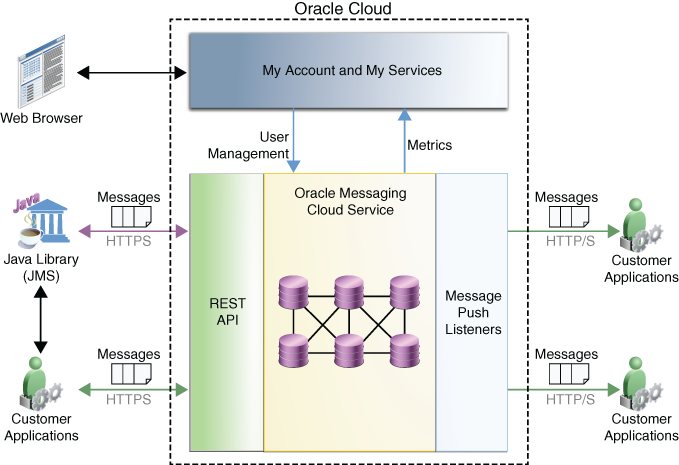
Oracle Messaging Cloud Service (OMCS) is I think an overlooked gem of Oracle iPaaS portfolio.  I say this as it offers a JMS 1.1 compliant Java library but at the same time provides a means through which integration through REST APIs can be performed.  This means it is possible to pretty transparently connect legacy JMS based integrations with new REST based products.  The magic sauce (and therefore my favourite feature) is the concept of the Push Listener. Through the REST API it is possible to register a REST URL as a target for queues and topics to have messages sent to. Once registered when a message appears on the queue or topic it will get passed on as a REST call. Whilst is is possible to do with with a little bit of Java code. the Push Listener simplifies the job to a REST call with a bit of XML configuration.

There is one small challenge that makes the integration completely transparent to the recipient of the PushListener today, and that is it currently demands that authentication process take place on initial contact. This is not a complicated or challenging thing to address, but does require a tiny bit of code to address.

Share this:

  • Share on Facebook (Opens in new window) Facebook
  • Share on X (Opens in new window) X
  • Share on Reddit (Opens in new window) Reddit
  • Email a link to a friend (Opens in new window) Email
  • Share on WhatsApp (Opens in new window) WhatsApp
  • Print (Opens in new window) Print
  • Share on Tumblr (Opens in new window) Tumblr
  • Share on Mastodon (Opens in new window) Mastodon
  • Share on Pinterest (Opens in new window) Pinterest
  • More
  • Share on Bluesky (Opens in new window) Bluesky
  • Share on LinkedIn (Opens in new window) LinkedIn
Like Loading...

eBook(lets) from O’Reilly

27 Tuesday Sep 2016

Posted by mp3monster in Books, General, Technology

≈ Leave a comment

Tags

architecture, Big Data, booklet, books, creative commons, Design, development, ebook, ebooks, free, open books, oreilly, vJUG

I received an email through the virtual Java User Group highlighting the availability of a couple of eBooks around Java published by O’Reilly. The details are below. The books are more booklets (nothing wrong with that). The key difference being that they are shorter and focused on one or two focused subjects (in this case Java 8’s Lambda’s & Streams) which is great because I don’t want a whole Java book again, I just want to get a handle on the key changes and language innovations. It is worth highlighting that these aren’t just ‘free chapters’ which is what you see happen sometimes as the goal of the book is described, doesn’t depend on prior chapters to work the illustrated material and structured with the appropriate cover material contents, index etc so works as a discrete entity.

This approach seems to be coming more common at O’Reilly at least as a marketing device, and we have seen this being done with the Dummies brand where the booklets have then been printed as conference give aways.

Some may argue that this is a reflection of our ever shortening attention span with books. This maybe the case for some, but I suspect it is more about providing some that is more digestible than a ‘free chapter’, but more importantly reflects the recognition that for books that are providing guides (as opposed to reference books – which I’d include patterns books) people don’t want to buy a latest edition of a book where the 1st chapters are exactly the same as the previous edition of the book and that the only significant change is a new section on Lambdas for example.

Any way the latest book details received are:

Introducing Java 8
by Raoul-Gabriel Urma
Offers a practical tutorial to some of the core Java 8 features and gets you programming quickly with Java 8.
Object Oriented vs Functional Programming
by Richard Warburton
Explains the similarities and differences between functional programming and object oriented programming with Java focused examples.

http://insightfullogic.com
@RichardWarburto

The other book(lets) that have drawn my attention to the trend include:

  • Static Site Generators
  • Migrating to Cloud-Native Application Architectures
  • Software Architecture Patterns
  • Little Book of HTML/CSS Coding Guidelines
  • Java the Legend – history of Java
  • Designing Great Web APIs
  • Modern Java Script
  • Hadoop with Python
  • Release Engineering How Google Builds and Delivers Software
  • Functional Programming in Python
  • 20 Python Libraries You Aren’t Using (But Should)
  • Monitoring Distributed Systems
  • Little Book of HTML/CSS Frameworks

In addition to these Book(let)s O’Reilly offer a range of ‘reports’ such as:

  • Mapping Big Data, Evaluating Machine Learning Models, Data Driven  (the full range can be seen at Free Data Reports)
  • Open by Design
  • Design for Voice Interfaces (Siri, Cortana etc)


In addition O’Reilly have a page on ‘Open Books’ (here) – covering significant texts O’Reilly have had some involvement in but published under licenses such as Create Commons.


  • [18-01-16 Update] New booklet added for Modern Java Script
  • [13-03-16 Update] New booklet Continuous Delivery With Windows and Dot Net
  • [14-03-16 Update] New booklet Modern Java EE Design Patterns
  • [13-08-16 Update] New booklet Release Engineering How Google Builds and Delivers Software and Functional Programming in Python
  • [16-09-16 Update] new booklet
    • 20 Python Libraries You Aren’t Using (But Should)
  • [19-09-16 Update] New Booklet Monitoring Distributed Systems
  • [28-09-16]New Booklet Little Book of HTML/CSS Frameworks

Share this:

  • Share on Facebook (Opens in new window) Facebook
  • Share on X (Opens in new window) X
  • Share on Reddit (Opens in new window) Reddit
  • Email a link to a friend (Opens in new window) Email
  • Share on WhatsApp (Opens in new window) WhatsApp
  • Print (Opens in new window) Print
  • Share on Tumblr (Opens in new window) Tumblr
  • Share on Mastodon (Opens in new window) Mastodon
  • Share on Pinterest (Opens in new window) Pinterest
  • More
  • Share on Bluesky (Opens in new window) Bluesky
  • Share on LinkedIn (Opens in new window) LinkedIn
Like Loading...

Open World – Key Messages

22 Thursday Sep 2016

Posted by mp3monster in Cloud, General, Oracle, Technology

≈ 1 Comment

As Oracle Open World comes to a close. What are the big take homes? Well I have to admit to not having been at OOW phyiscally this year, but tracking things from the UK. That sais from this vantage point …

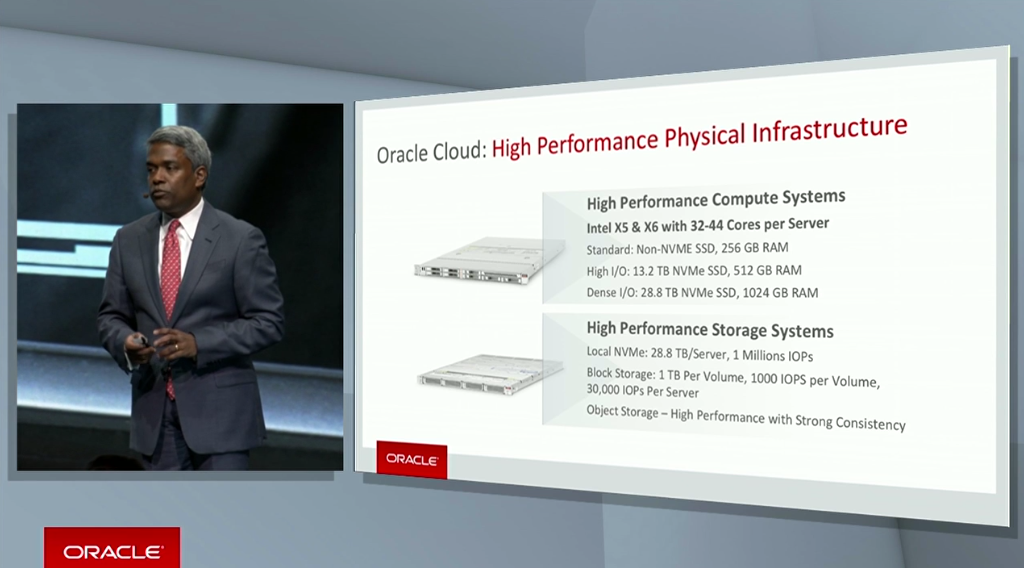
  • 2nd Generation IaaS. The announcements on the evolution of Oracle’s offfering bring some significant steps forward with multi data centre resilience within each region /geographical area. What isn’t clear is whether the resilience will be OOTB on all services, or a cost add at the IaaS and some of the PaaS services. But for SaaS I’d be expecting it to be part of the offering. Below are a couple of screen grabs from Thomas Kurian’s keynote to help convey the details …
Regions Around the World

Regions Around the World

Regions Linked

Regions Highly Permant Linkage

Data Centre Compute

Illustrative details of Data Centre nodes

IaaS Hardware and Platform Supported

IaaS Hardware and Platform Supported

The 2Gen IaaS is interesting because previously Oracle have underplayed the IaaS offering on the basis that it had been necessary to help pitch PaaS and SaaS. But this year with the new generation there seems to be a fair bit of detail on the IaaS make up to help convey and provide clarity of a robust underpinning in capacity, capability, power and security. Which aside from help sell more IaaS it should help reinforce the messaging on the higher order offerings about foundation strength.

  • The IaaS message also makes it easier to convey the message that Oracle cloud doesn’t have to mean Oracle software – it is just as capable with OpenSource tech. This had felt a little niche with the Java cloud services. It certainly appears that Oracle wants to take the fight if not to AWS certainly with Azure, Rackspace etc
  • Following this IaaS message is the cloud in your own data centre. Which addresses residency questions, but provides the cloud software stack and cloud financial models. What will be interesting is how the auditors (as anything likely to demand on-premise deployment is likely to have compliance needs and audit with it) are satisfied that despite Oracle maintaining all the cloud software remotely won’t represent an issue.
  • How the IaaS data centre level resiliency will impact the PaaS offerings is going to be very interesting as SOA providing high availability across multiple locations is not trivial.
  • We have also seen signs of far more dynamic elasticity being shown with examples of being able attach policies to a service to trigger scale up. It will be interesting to see if the ability to mix metered and unmetered resources has also improved. Presently they have to be run as discrete domains because of the pricing models involved.
  • More broadly Oracle are filling out their cloud portfolio and offerings are starting to be harmonised – but there is a long way to go, for example ICS and SOA CS don’t OOTB link to Log Analytics for example). But MySQL as a PaaS offering has crept up on me, with the smallest compute footprint being 24p an hour it is time to take notice.

Share this:

  • Share on Facebook (Opens in new window) Facebook
  • Share on X (Opens in new window) X
  • Share on Reddit (Opens in new window) Reddit
  • Email a link to a friend (Opens in new window) Email
  • Share on WhatsApp (Opens in new window) WhatsApp
  • Print (Opens in new window) Print
  • Share on Tumblr (Opens in new window) Tumblr
  • Share on Mastodon (Opens in new window) Mastodon
  • Share on Pinterest (Opens in new window) Pinterest
  • More
  • Share on Bluesky (Opens in new window) Bluesky
  • Share on LinkedIn (Opens in new window) LinkedIn
Like Loading...

New Kid on the Block and others

12 Monday Sep 2016

Posted by mp3monster in General, Oracle

≈ Leave a comment

Tags

Cloud, journal, OIC - ICS, Oracle Scene, oracle-integration.cloud, OUG

So no new blog entries as I have been busy publishing elsewhere, with the Oracle User Group we appear in the latest edition of the Oracle Scene Journal:

UKOUG Scene Issue 61

click on the image to open the journal properly

We also have a submission in for the November edition, which will be published before the user group’s Tech 16 conference – which I will be presenting at.

UKOUG Tech 16

We have been posting a lot on our website that supports the book – oracle-integration.cloud. Lots of useful references to supporting resources, and some blog posts providing supporting information (and more in the pipeline). Not to mention with pressing on with the last couple of chapters.

Then finally a webinar, the first in a series for the UKOUG about adopting cloud – details at – http://www.ukoug.org/events/ukoug-applications-journey-to-cloud-webinar-1/. The webinar was recorded and the presentation that went with it are accessible if you are a UKOUG member.

Share this:

  • Share on Facebook (Opens in new window) Facebook
  • Share on X (Opens in new window) X
  • Share on Reddit (Opens in new window) Reddit
  • Email a link to a friend (Opens in new window) Email
  • Share on WhatsApp (Opens in new window) WhatsApp
  • Print (Opens in new window) Print
  • Share on Tumblr (Opens in new window) Tumblr
  • Share on Mastodon (Opens in new window) Mastodon
  • Share on Pinterest (Opens in new window) Pinterest
  • More
  • Share on Bluesky (Opens in new window) Bluesky
  • Share on LinkedIn (Opens in new window) LinkedIn
Like Loading...

Implementing Oracle Integration Cloud Service – Gone Alpha

13 Saturday Aug 2016

Posted by mp3monster in Books, General, Oracle, Packt, Technology

≈ Leave a comment

Tags

alpha, book, Cloud, OIC - ICS, Oracle, Packt

alpha-logoWe have taken our book on ICS into Packt Publishing’s Alpha programme so that if you order the book now – you can see the chapters as soon as they have received editorial approval and the complete final book will be made available to you as soon as we’re have addressed all the feedback, made any final improvements we have identified once we have completed the book’s draft.

img_0282-1The book can be found on the Packt website – here

Details about the Authors from Packt can be seen at:

  • Phil Wilkins
  • Robert  van Mölken

Share this:

  • Share on Facebook (Opens in new window) Facebook
  • Share on X (Opens in new window) X
  • Share on Reddit (Opens in new window) Reddit
  • Email a link to a friend (Opens in new window) Email
  • Share on WhatsApp (Opens in new window) WhatsApp
  • Print (Opens in new window) Print
  • Share on Tumblr (Opens in new window) Tumblr
  • Share on Mastodon (Opens in new window) Mastodon
  • Share on Pinterest (Opens in new window) Pinterest
  • More
  • Share on Bluesky (Opens in new window) Bluesky
  • Share on LinkedIn (Opens in new window) LinkedIn
Like Loading...
← Older posts
Newer posts →

    I work for Oracle, all opinions here are my own & do not necessarily reflect the views of Oracle

    • About
      • Internet Profile
      • Music Buying
      • Presenting Activities
    • Books & Publications
      • Logging in Action with Fluentd, Kubernetes and More
      • Logs and Telemetry using Fluent Bit
      • Oracle Integration
      • API & API Platform
        • API Useful Resources
        • Useful Reading Sources
    • Mindmaps Index
    • Monster On Music
      • Music Listening
      • Music Reading
    • Oracle Resources
    • Useful Tech Resources
      • Fluentd & Fluent Bit Additional stuff
        • Logging Frameworks and Fluent Bit and Fluentd connectivity
        • REGEX for BIC and IBAN processing
      • Formatting etc
      • Java and Graal Useful Links
      • Official Sources for Product Logos
      • Python Setup & related tips
      • Recommended Tech Podcasts

    Oracle Ace Director Alumni

    TOGAF 9

    Logs and Telemetry using Fluent Bit


    Logging in Action — Fluentd

    Logging in Action with Fluentd


    Oracle Cloud Integration Book


    API Platform Book


    Oracle Dev Meetup London

    Blog Categories

    • App Ideas
    • Books
      • Book Reviews
      • manning
      • Oracle Press
      • Packt
    • Enterprise architecture
    • General
      • economy
      • ExternalWebPublications
      • LinkedIn
      • Website
    • Music
      • Music Resources
      • Music Reviews
    • Photography
    • Podcasts
    • Technology
      • AI
      • APIs & microservices
      • chatbots
      • Cloud
      • Cloud Native
      • Dev Meetup
      • development
        • languages
          • java
          • node.js
          • python
      • drone
      • Fluent Observability
        • Fluentbit
        • Fluentd
        • OpAMP
      • logsimulator
      • mindmap
      • OMESA
      • Oracle
        • API Platform CS
          • tools
        • Helidon
        • ITSO & OEAF
        • Java Cloud
        • NodeJS Cloud
        • OIC – ICS
        • Oracle Cloud Native
        • OUG
      • railroad diagrams
      • TOGAF
    • xxRetired
    • AI
    • API Platform CS
    • APIs & microservices
    • App Ideas
    • Book Reviews
    • Books
    • chatbots
    • Cloud
    • Cloud Native
    • Dev Meetup
    • development
    • drone
    • economy
    • Enterprise architecture
    • ExternalWebPublications
    • Fluent Observability
    • Fluentbit
    • Fluentd
    • General
    • Helidon
    • ITSO & OEAF
    • java
    • Java Cloud
    • languages
    • LinkedIn
    • logsimulator
    • manning
    • mindmap
    • Music
    • Music Resources
    • Music Reviews
    • node.js
    • NodeJS Cloud
    • OIC – ICS
    • OMESA
    • OpAMP
    • Oracle
    • Oracle Cloud Native
    • Oracle Press
    • OUG
    • Packt
    • Photography
    • Podcasts
    • python
    • railroad diagrams
    • Technology
    • TOGAF
    • tools
    • Website
    • xxRetired

    Enter your email address to subscribe to this blog and receive notifications of new posts by email.

    Join 2,616 other subscribers

    RSS

    RSS Feed RSS - Posts

    RSS Feed RSS - Comments

    April 2026
    M T W T F S S
     12345
    6789101112
    13141516171819
    20212223242526
    27282930  
    « Mar    

    Twitter

    Tweets by mp3monster

    Meta

    • Create account
    • Log in
    • Entries feed
    • Comments feed
    • WordPress.com

    History

    Speaker Recognition

    Open Source Summit Speaker

    Flickr Pics

    Boxer Rebellion @ Brixton ElectricBoxer Rebellion @ Brixton ElectricBoxer Rebellion @ Brixton ElectricBoxer Rebellion @ Brixton Electric
    More Photos

    Meta

    • Create account
    • Log in
    • Entries feed
    • Comments feed
    • WordPress.com

    Social

    • View @mp3monster’s profile on Twitter
    • View philwilkins’s profile on LinkedIn
    • View mp3monster’s profile on GitHub
    • View mp3monster’s profile on Flickr
    • View mp3muncher’s profile on WordPress.org
    • View philmp3monster’s profile on Twitch
    Follow Phil (aka MP3Monster)'s Blog on WordPress.com

    Blog at WordPress.com.

    • Subscribe Subscribed
      • Phil (aka MP3Monster)'s Blog
      • Join 228 other subscribers
      • Already have a WordPress.com account? Log in now.
      • Phil (aka MP3Monster)'s Blog
      • Subscribe Subscribed
      • Sign up
      • Log in
      • Report this content
      • View site in Reader
      • Manage subscriptions
      • Collapse this bar
     

    Loading Comments...
     

    You must be logged in to post a comment.

      Privacy & Cookies: This site uses cookies. By continuing to use this website, you agree to their use.
      To find out more, including how to control cookies, see here: Our Cookie Policy
      %d