Packt’s Christmas Book promotion has been launched again – all books or videos for $5 = £4.74

This includes the pre-order of our book (Implementing Oracle Cloud Integration), which will be out in a matter of weeks now.

18 Sunday Dec 2016
Posted in Books, General, Packt, Technology
Packt’s Christmas Book promotion has been launched again – all books or videos for $5 = £4.74
This includes the pre-order of our book (Implementing Oracle Cloud Integration), which will be out in a matter of weeks now.
15 Thursday Dec 2016
Posted in General, Oracle, Technology
 My presentation for UKOUG Tech 16 can be seen by following the link – Introduction to SOA CS. or see below It was a tremendous 4 days (if you include the Tech stream’s Super Sunday). If you are a UKOUG member and didn’t make it to the conference I’d look out for the material to be become available.
 Whilst I’m not a big Apex fan (stitching business logic into the persistence layer feels wrong to a middleware person), i did attend the keynote session which covered Apex’s history and future direction, and there are some very exiciting things coming and if everything materialises as I understand it then some big steps to getting developers engaged with Oracle cloud offerings.
Oracle has done a lot of work on the middleware layer with apps container (using common Docker configurations without needing to worry about Docker), Kafka, Node.js and others to engage developers and provide the means to offer a polyglot microservices platform that is not just attractive to the traditional Oracle customer base but also those wanting the middle ground of supported open source. What Oracle are missing is the means to get developers trying the technology and being creative with it. Amazon and Red Hat have got this by offering limited footprints for a long time. Oracle offer 30 day trials which is fine to do a project sponsored PoC. But to hook grass roots users you need a lengthy period where people in spare time can built some cool/geeky solutions.
 Now this maybe down to the fact that Oracle cloud is built on their Exa machines with clever on silicon security features, and Oracle can’t manufacture it quick enough. Whereas other cloud providers work with largely commodity components. But if they want to challenge Amazon as Ellison says they need to change this.
16 Wednesday Nov 2016
Posted in Cloud, General, Oracle, Technology
The latest edition of the UK Oracle User Group (UKOUG) Oracle Scene Journal is out now with another article from me, in addition to some great content from other contributors. This article builds upon and updates an article previously published in the Oracle Apps User Group about 18 months ago. We updated and republished as part of the run up to the UKOUG special Event in March next year which will be fully announced at the conference in a couple of weeks. You can see it here Oracle Scene Edition 62 – Journey to the Cloud
06 Sunday Nov 2016
11 Tuesday Oct 2016
Posted in General, Oracle, Technology
Tags
#ThanksOTN, Appreciation Day, Cloud, Cloud Service, integration, JMS, messaging, Messaging CS, OMCS, Oracle, oracle-base, OTN, Push Listener, Technology Network
The background to this post, and the OTN Appreciation Day can be seen at Oracle-Base.
Oracle Messaging Cloud Service (OMCS) is I think an overlooked gem of Oracle iPaaS portfolio. I say this as it offers a JMS 1.1 compliant Java library but at the same time provides a means through which integration through REST APIs can be performed. This means it is possible to pretty transparently connect legacy JMS based integrations with new REST based products. The magic sauce (and therefore my favourite feature) is the concept of the Push Listener. Through the REST API it is possible to register a REST URL as a target for queues and topics to have messages sent to. Once registered when a message appears on the queue or topic it will get passed on as a REST call. Whilst is is possible to do with with a little bit of Java code. the Push Listener simplifies the job to a REST call with a bit of XML configuration.
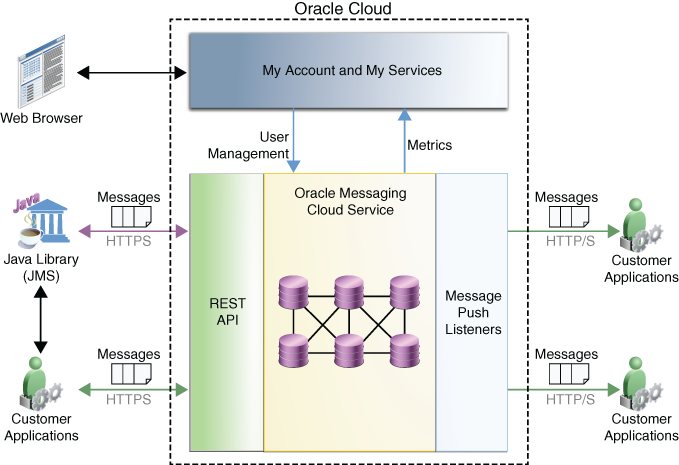
There is one small challenge that makes the integration completely transparent to the recipient of the PushListener today, and that is it currently demands that authentication process take place on initial contact. This is not a complicated or challenging thing to address, but does require a tiny bit of code to address.
27 Tuesday Sep 2016
Posted in Books, General, Technology
Tags
architecture, Big Data, booklet, books, creative commons, Design, development, ebook, ebooks, free, open books, oreilly, vJUG
 I received an email through the virtual Java User Group highlighting the availability of a couple of eBooks around Java published by O’Reilly. The details are below. The books are more booklets (nothing wrong with that). The key difference being that they are shorter and focused on one or two focused subjects (in this case Java 8’s Lambda’s & Streams) which is great because I don’t want a whole Java book again, I just want to get a handle on the key changes and language innovations. It is worth highlighting that these aren’t just ‘free chapters’ which is what you see happen sometimes as the goal of the book is described, doesn’t depend on prior chapters to work the illustrated material and structured with the appropriate cover material contents, index etc so works as a discrete entity.
This approach seems to be coming more common at O’Reilly at least as a marketing device, and we have seen this being done with the Dummies brand where the booklets have then been printed as conference give aways.
Some may argue that this is a reflection of our ever shortening attention span with books. This maybe the case for some, but I suspect it is more about providing some that is more digestible than a ‘free chapter’, but more importantly reflects the recognition that for books that are providing guides (as opposed to reference books – which I’d include patterns books) people don’t want to buy a latest edition of a book where the 1st chapters are exactly the same as the previous edition of the book and that the only significant change is a new section on Lambdas for example.
Any way the latest book details received are:
by Raoul-Gabriel UrmaOffers a practical tutorial to some of the core Java 8 features and gets you programming quickly with Java 8.by Richard WarburtonExplains the similarities and differences between functional programming and object oriented programming with Java focused examples.http://insightfullogic.com
@RichardWarburto
The other book(lets) that have drawn my attention to the trend include:
In addition to these Book(let)s O’Reilly offer a range of ‘reports’ such as:
In addition O’Reilly have a page on ‘Open Books’ (here) – covering significant texts O’Reilly have had some involvement in but published under licenses such as Create Commons.
22 Thursday Sep 2016
Posted in Cloud, General, Oracle, Technology
As Oracle Open World comes to a close. What are the big take homes? Well I have to admit to not having been at OOW phyiscally this year, but tracking things from the UK. That sais from this vantage point …

Regions Around the World

Regions Highly Permant Linkage
Illustrative details of Data Centre nodes

IaaS Hardware and Platform Supported
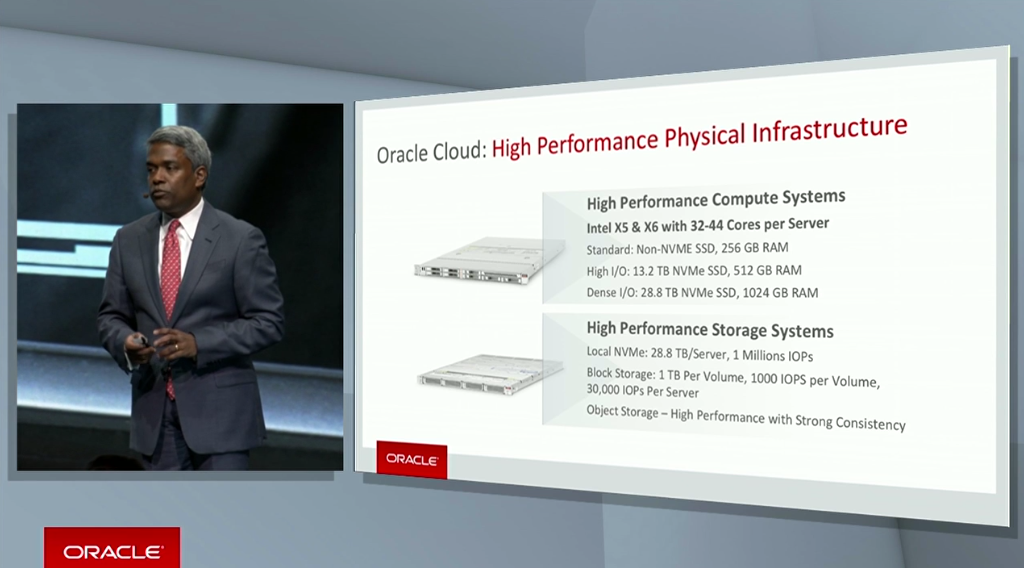
The 2Gen IaaS is interesting because previously Oracle have underplayed the IaaS offering on the basis that it had been necessary to help pitch PaaS and SaaS. But this year with the new generation there seems to be a fair bit of detail on the IaaS make up to help convey and provide clarity of a robust underpinning in capacity, capability, power and security. Which aside from help sell more IaaS it should help reinforce the messaging on the higher order offerings about foundation strength.
12 Monday Sep 2016
So no new blog entries as I have been busy publishing elsewhere, with the Oracle User Group we appear in the latest edition of the Oracle Scene Journal:

click on the image to open the journal properly
We also have a submission in for the November edition, which will be published before the user group’s Tech 16 conference – which I will be presenting at.

We have been posting a lot on our website that supports the book – oracle-integration.cloud. Lots of useful references to supporting resources, and some blog posts providing supporting information (and more in the pipeline). Not to mention with pressing on with the last couple of chapters.
Then finally a webinar, the first in a series for the UKOUG about adopting cloud – details at – http://www.ukoug.org/events/ukoug-applications-journey-to-cloud-webinar-1/. The webinar was recorded and the presentation that went with it are accessible if you are a UKOUG member.
13 Saturday Aug 2016
Posted in Books, General, Oracle, Packt, Technology
 We have taken our book on ICS into Packt Publishing’s Alpha programme so that if you order the book now – you can see the chapters as soon as they have received editorial approval and the complete final book will be made available to you as soon as we’re have addressed all the feedback, made any final improvements we have identified once we have completed the book’s draft.
 The book can be found on the Packt website – here
Details about the Authors from Packt can be seen at:
20 Wednesday Jul 2016
Posted in General, Technology
Tags
Recently I like many have upgraded from Windows 7 (pro) to Windows 10 by passing the much disliked Windows 8. Whilst it has taken some to settle down with Windows 10 – the UI changes whilst good in some areas have niggled in others.
 But I have learnt a nasty little lesson in the last 24 hours. I always used to have Windows 7 configured to create restore points – so an app installation typically would also result in a restore point being established. Well that I discovered appears to have been switched off as a result of the Windows 10 upgrade – so I’ve had to explicitly re-enable it. Fortunately I found this out as result of another problem that I managed to recover from.
As to my other problem, I am also disappointed with the way Windows 10 reacts. This one is perhaps a little more unusual – I run my desktop with mirrored drives. Whilst I I haven’t switched my system disk over to an SSD (migrating a system disk still involves an OS rebuild – which I never seem to have time for) the mirroring was intended to do 2 things 1 resilience so if a drive lets go then I’m not dead in the water but also more performance as the OS should be smart enough to read from both disks. However, every now and again when shutting down in Windows 7 (and Windows 10 I have now discovered) will lose synchronization.
Whilst a pain – and also a little unsettling as there is always the question of data corruption. Identifying the problem and resolving in Windows 7 wasn’t difficult – electing which drive image to boot from, then going into Windows management and ensuring disks were ok, and setting the resync activity off. But under Windows 10 – not so great. So you get stuck into a reboot error cycle with a volmgrx_internal_error. I have a USB stick with a Windows 10 Recovery image – what a waste of space. Having looked around on the net saw the usual guidance of get to a shell ruin chkdsk etc. Well getting to a prompt is fiddly, and chkdsk doesn’t recognize an issue! Finally I decided to try the Windows 7 image you can retain when installing – and although slow booting compared to Windows 10. We’re in and see the problem – usual actions, a reboot and all is well.
So lessons, re-enable check pointing, create a restore drive image (probably easier to recover from). Reconsider a simpler single SSD boot drive, and bite the bullet of a system rebuild.
 Phil (aka MP3Monster)'s Blog
You must be logged in to post a comment.