Farnborough Airshow

Tags

, ,

I couldn’t resist sharing a few shots I got at the Farnborough Airshow (although they look far better in full resolution) …

Red Arrows with jet trails

A380

Typhoon with afterburners on and vapour forming around wings


For more photos pop over to ly Flockr account at photos.mp3monster.org

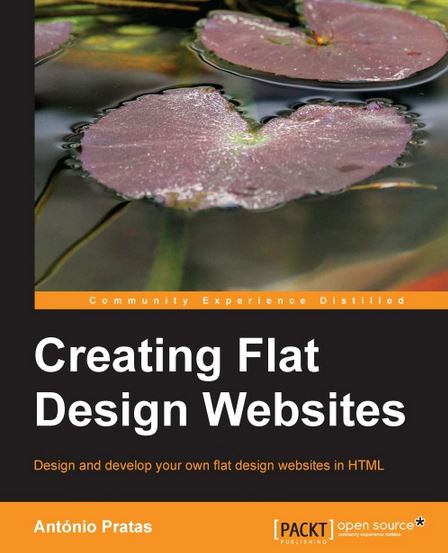
Review of Creating Flat Design Websites

Tags

, , , , , , , , ,

I always find when looking at book if I encounter early in the book comments such as “…eventually I found out that design is not about the answers, it’s about asking the right questions …” as Antonio Pratas does in the Acknowledgement of Creating Flat Design Websites that the book feels like I can trust the author as this sort of thing is both an honest observation and one that reflects some more considered thinking. The book beards this point out. For example rather than pitching the technology or approach as a tool for all things as many IT books have habit if doing, even in the first couple of chapters we are clearly informed that flat design isn’t necessarily correct approach in all cases and examples are given to illustrate the point.

The opening chapter explains the ideas of flat design vs skeuomorphic, and a brief history of the design approaches and “flat’s” ruse in popularity. Even providing an incredibly simple illustration that doesn’t demand that you be a graphic artist to achieve to show the differences and how you might move from skeuomorphic to flat.

The following chapters look at the consideration for usability, referencing Jakob Neilsen’s work (and if design piques your interest I’d highly recommend the work of Neilsen’s partner at NN/g – Don Norman with writing such as the Design of Everyday Things). The only criticism I might make here is with UI design, and specifically web there are legal (in the UK this cones presently as part if disability discrimination) and industry standards (particularly W3C’s WCAG standard/guidelines) aren’t really mentioned. But if you start digging into good usability material you will encounter these aspects.

From this point when are then guided through a design approach with plenty of recommendations on how to approach the design phase (from the basics of considering your target audience onwards).  It is only chapter 5 that really get stuck into web tech with HTML and the Designmodo framework built on Twitter’s Bootstrap and chapter 6 covers building your own flat UI framework. So this book maybe pitched at web app development, but actually the bulk of the books content holds true whether you’re working on web solutions, thick apps for the desktop or the mobile variety as it embodies the principles if good interface design.

Not only does it successfully talk about good design it bridges the gap between techies and graphic artists without the sense it is trying to address either skills base. No mean feat.

Rather than stealing the book’s wealth of useful resources, I’ll point you at links relevant the book and it’s author. From there you’ll find a cast array of helpful resources. The references :

CreatingFlatDesignWebsite

Pure REST is not always a good thing

Tags

, , , , ,

So following REST web service best practice is not always a good thing, but of a controversial statement. That said I came across a situation that beautifully illustrated it.

I was recently asked for my opinion on a web solution that had to interact with customer data. The developers concerned implemented the functionality using REST web services and followed the principles to the letter. Except one of the services needed to locate a unique customer object. To do this the service enough customer details are provided in the URL to obtain a unique record.

So regardless of the security Implemented using strong SSL and payload encryption in the solution implementation we have just exposed every element in the network that can log URIs to DPA levels of security (not to mention information commissioner requests). That is before you consider man in the middle and packet URL attacks.

What to do, such sensitive web services need to be delivered without personal data in the URL, we could go via WSDL (but our use case points to REST being a better approach) or we follow the object creation pattern for REST (and pay the price of not caching the results on the web tier although if we are concerned about security then this isn’t such a bad thing and we can still get performance on the DB tier. Using the payload is probably the right thing to do.

Packt Celebrating 10 Years with a promotion of course

Tags

, , , ,

Packt are celebrating 10 years as a publisher of books on Open Source. giving the chance for a number of Rock Star developers to become famous authors (well almost). In that time it has published over 2000 titles and helped projects become household names, awarding over $400,000 through its Open Source Project Royalty Scheme.

To celebrate this huge milestone, from June 26th Packt is offering all of its eBooks and Videos at just $10 each for 10 days – this promotion covers every title and customers can stock up on as many copies as they like until July 5th follow this link to get you deals …. : http://bit.ly/1iSnR1c

For Java developers I’d recommend checking out the videos by David Heffelfinger (@ensode).

If you’re heading over via Twitter etc then  http://bit.ly/1q8vtgN

10 days 10 years - Home Banner

Puppet Reporting & Monitoring Book Review

Tags

, , , , , , , ,

So the Packt book (Puppet Reporting and Monitoring) focuses down on a couple of aspects of the Puppet Toolset, as a result this is a relatively short book with only a couple hundred pages. As an enterprise architect I am no expert Puppet practitioner, my knowledge of Ruby is high level (part of the reason I reviewed this book is I wanted to better understand the art of the possible in these areas).  But despite this the book does an exceptionally good job defining a context and then explaining and showing what could be done, down to code examples.  In doing so, the author Michael Duffy introduces a number of open source libraries that can be leveraged to provide dashboard views, presentation of report content whilst maximising the leveraging of the Puppet ecosystem such as the Puppet DB (an abstracted database with a REST + JSON API).  The book goes beyond just implementation of monitoring and reporting but also engages with considerations such as deployment.  without ‘boiling the ocean’ the book provides a very good illustrations of the art of the possible and provides plenty of references to source information so working how you want to implement you own solutions.

My only criticism of the book, and it is a minor one at that is a few more diagrams to help illustrate ideas (particularly in the first chapter when discussing deployment considerations) would help get ideas across easily.

On the strength of this  book,  I hope that Michael considers taking on other authoring projects as this has been one of the best written technical books I’ve read in sometime.

Puppet Reporting & Monitoring
Useful Links:

Oracle SOA Suite, AIA, PIPs and Fusion apps

Tags

, , , , , , , , , , , ,

I recently presented on the subject of Oracle middleware (FMW) with an emphasis on  SOA Suite, Application Integration Architecture (AIA), Process Integration Packs (PIPs) and Oracle Fusion Applications.  Below is a derivative of the presentation.  I’ve sought to identify how the technologies relate, and how Fusion applications relate to the non Fusion products.

For those trying to get to grips with this technology stack – you might find the notes useful as I’ve included plenty of links to associated information.

SeeWhy and SAP

Tags

,

So recently SAP recently decided to acquire a startup I used to work for called SeeWhy. The journey for SeeWhy has had a few bumps (hence why I moved on). But this is great news for the guys and the end of the beginning as they move into a new chapter and I would like to congratulate the guys and wish them well in the arms of the new German parent.

http://seewhy.com/sap-acquire-seewhy/

Impact on Integration when Moving to Fusion Apps

Tags

, , , , , , , , , , , , , , , , ,

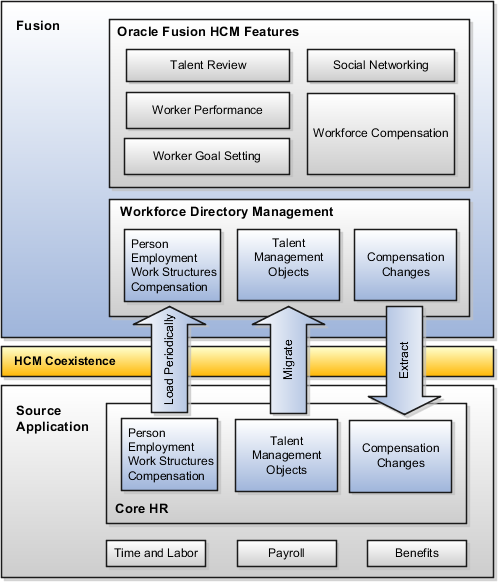
So as a road mapping question I have been thinking about the migration to using Fusion Apps so we have a road map and more importantly design patterns that will support a transitions from the likes of Ebiz R12Siebel etc to their Fusion successors.

Example of Coexistance

Example of Coexistance

In broad terms the application level transition through the principles of co-existence are well established. What is currently exercising the grey matter is the middle migration. Perhaps the best way to explain this is through an example. The Product Data Hub (PDH) solution exists to provide a Master Data Management capability for your widest and gadgets.

You will want to share that master data with other apps such as Ebiz so you can deal with say order management. All fairly obvious, and in Fusion Apps world the different components should inherently work together. Back in R12 world though you are probably going to be using the Product MDM PIP (Process Integration Pack) with the Ebiz extension pack. When using the PIP like this then it’s just a case of retiring the PIP. But this PIP is designed so that you can extend the process to publish Master Data to your own apps for example you also push the data to your design systems as you maybe sharing available parts data.

So now we have an extended PIP whic in a simple Fusion apps migration you’d leave behind. But leaving the PIP behind also means an integration gap. So what is the answer.

Well on the early days of Fusion Apps the suggestion was that AIA and PIPs would be part of the ongoing story. but the reality is little has moved in this space. Understandable, Fusion Apps development had been far bigger than anyone expected, if fusion Apps are directly conversant then how much real demand exists for the PIP transformation. So what is the answer, well at this stage I’m not sure. I can say I have seen ABCS’ mentioned in the public FusionAppsOER. We know that AIA Foundation Pack EBOs are realised in Fusion Apps albeit via ADF BCs.

Given Fusion Apps underpinnings are the same as AIA so it should be possible to drop the AIA Foundation Pack (FP) into your Fusion Apps environment (setting aside all the licensing questions it would raise). Can you therefore drop in the PIP and disable the legacy Oracle app elements leaving your custom extensions? Do you accept a rewrite of your integration all be it you should just need to redevelop the orchestration layer (ABCS’ for Fusion App exist and you can carry forward your own ABCS’ for your app such as the design system in our illustration)?

Deployment of Fusion Apps with Non Fusion Apps

Deployment of Fusion Apps with Non Fusion Apps

Hopefully in the coming weeks we will get the opportunity to uncover answers with Oracle.

Designing in a license constrainted World – Reprise

Tags

, , ,

A while back I blogged (here) about designing in a license constrained world.  Well I’ve taken that blog further and developed a supporting slide deck, to help elaborate on the thinking.


Oracle Press Offer More Free Books

Tags

, , , , , ,

Oracle press are offering another free book Simplified User Experience Design Patterns for the Oracle Applications Cloud Service in addition to the previously mentioned

  • Getting Started with Oracle NoSQL Database
  • Securing Oracle Database 12c: A Technical Primer

Just need to go to http://eservice.mhprofessional.com/vm.asp?i=57A08X3D95X5 and register.