• Home
  • Site Aliases
    • www.cloud-native.info
  • About
    • Background
    • Presenting Activities
    • Internet Profile
      • LinkedIn
    • About
  • Books & Publications
    • Log Generator
    • Logs and Telemetry using Fluent Bit
      • Fluent Bit book
      • Book Resources in GitHub
      • Fluent Bit Classic to YAML Format configurations
    • Logging in Action with Fluentd, Kubernetes and More
      • Logging in Action with Fluentd – Book
      • Fluentd Book Resources
      • Fluentd & Fluent Bit Additional stuff
    • API & API Platform
      • API Useful Resources
    • Oracle Integration
      • Book Website
      • Useful Reading Sources
    • Publication Contributions
  • Resources
    • GitHub
    • Oracle Integration Site
    • Oracle Resources
    • Mindmaps Index
    • Useful Tech Resources
      • Fluentd & Fluent Bit Additional stuff
      • Recommended Tech Podcasts
      • Official Sources for Product Logos
      • Java and Graal Useful Links
      • Python Setup & related stuff
      • DevTips
  • Music
    • Monster On Music
    • Music Listening
    • Music Reading

Phil (aka MP3Monster)'s Blog

~ from Technology to Music

Phil (aka MP3Monster)'s Blog

Tag Archives: book

Another book review on the way

27 Tuesday Jan 2015

Posted by mp3monster in Books, Packt

≈ Leave a comment

Tags

Ansible, book, Chef, code ignite, Packt, Puppet, review

Packt Publishing have given me the opportunity to review their book on Learning Ansible – an IT environment/apps/deployment automation framework. Should be interesting to see how Ansible compares to the big names of Chef and Puppet.  Flicking through the book, there appear to be plenty of examples and illustrations using common open source tools such as MySQL and Apache.

We’ll blog as we go, so should have a post every few chapters, so watch this space.

Things are going to be busy as I am also technically reviewing another Camel Book for Packt as well.

Share this:

  • Share on Facebook (Opens in new window) Facebook
  • Share on X (Opens in new window) X
  • Share on Reddit (Opens in new window) Reddit
  • Email a link to a friend (Opens in new window) Email
  • Share on WhatsApp (Opens in new window) WhatsApp
  • Print (Opens in new window) Print
  • Share on Tumblr (Opens in new window) Tumblr
  • Share on Mastodon (Opens in new window) Mastodon
  • Share on Pinterest (Opens in new window) Pinterest
  • More
  • Share on Bluesky (Opens in new window) Bluesky
  • Share on LinkedIn (Opens in new window) LinkedIn
Like Loading...

Packt has sent another Camel along

08 Monday Dec 2014

Posted by mp3monster in Books, Packt, Technology

≈ 1 Comment

Tags

Apache, Apache Camel, book, camel, cookbook, Packt, review

 Having been a little inactive on the book reviewing front with Packt in the last couple of months.  They have been working on a new Camel book – in addition to the excellent Apache Camel Developer’s Cookbook and several smaller Instant books (Instant Apache Camel Message Routing, Instant Apache Camel Messaging System) and asked me to again prepublication review.

Does Packt need another Camel book?  Maybe, this new volume from what I have reviewed so far is focusing on custom development and certainly starts with the real Camel development basics.  So feels like it is more targeted to a complete newbie to Camel. Several chapters in and the book hasn’t faced into how Camel supports Enterprise Integration Patterns in a deep manner – although that may yet come.  Watch this space as I’ll  post on how the book is likely to shape up.

Share this:

  • Share on Facebook (Opens in new window) Facebook
  • Share on X (Opens in new window) X
  • Share on Reddit (Opens in new window) Reddit
  • Email a link to a friend (Opens in new window) Email
  • Share on WhatsApp (Opens in new window) WhatsApp
  • Print (Opens in new window) Print
  • Share on Tumblr (Opens in new window) Tumblr
  • Share on Mastodon (Opens in new window) Mastodon
  • Share on Pinterest (Opens in new window) Pinterest
  • More
  • Share on Bluesky (Opens in new window) Bluesky
  • Share on LinkedIn (Opens in new window) LinkedIn
Like Loading...

Next Generation SOA book

12 Wednesday Nov 2014

Posted by mp3monster in Books, General, Technology

≈ Leave a comment

Tags

Arciture, book, reviewer, SOA

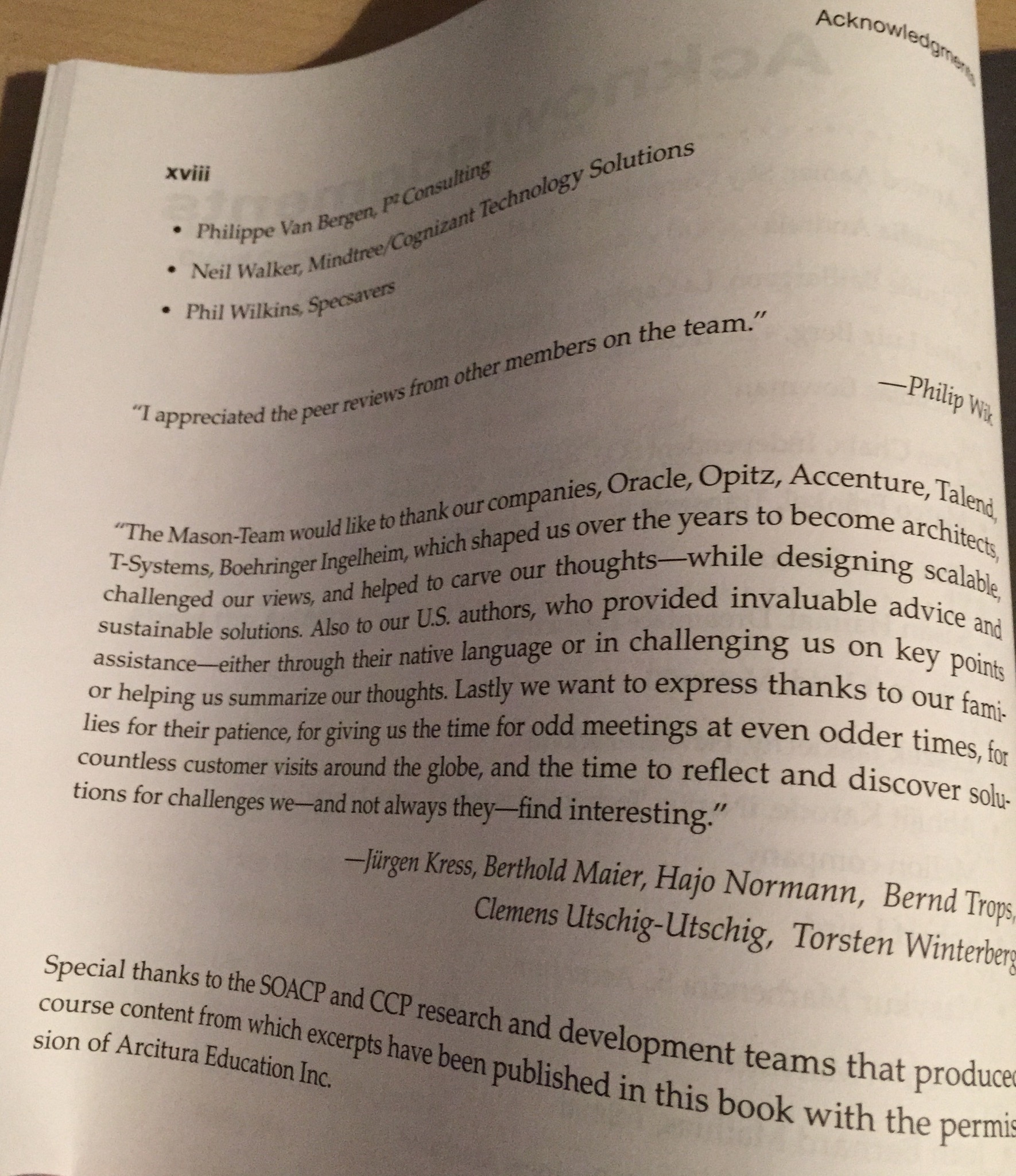
My copy of the Next Generation SOA on the Service Tech Press /Prentice Hall arrived today. This is first Prentice Hall book I have contributed to as a pre publication reviewer. It is always nice to see a recognition in the book, particularly when the draft of the book is of such a high standing your feedback is more helping finesse things.

Acknowledgements

Next Generation SOA

I have previously blogged that this is a book I would highly recommend, it isn’t a vast heavyweight text, but provides a great broad view of SOA in the current IT landscape.  If you’re not adverse to eBooks you might consider getting the ebook version as the diagrams look far better in colour than in the grayscale of the print edition.

Next Generation SOA

Share this:

  • Share on Facebook (Opens in new window) Facebook
  • Share on X (Opens in new window) X
  • Share on Reddit (Opens in new window) Reddit
  • Email a link to a friend (Opens in new window) Email
  • Share on WhatsApp (Opens in new window) WhatsApp
  • Print (Opens in new window) Print
  • Share on Tumblr (Opens in new window) Tumblr
  • Share on Mastodon (Opens in new window) Mastodon
  • Share on Pinterest (Opens in new window) Pinterest
  • More
  • Share on Bluesky (Opens in new window) Bluesky
  • Share on LinkedIn (Opens in new window) LinkedIn
Like Loading...

Next Generation SOA book – part of the Thomas Erl Series

14 Sunday Sep 2014

Posted by mp3monster in Book Reviews, Books, General

≈ 1 Comment

Tags

book, erl, next gen, praise, review, SOA

I recently contributed to the prepublication review of the Next Generation SOA book. Aside from offering feedback, I also provided some praise for the book which has been published at servicetechbooks.com/nextgen and quoted below …

“This is the perfect book for anyone who wants to refresh, or get a handle on the foundations of SOA without delving into the deep technical details & implementation specifics. By working from the principles, the book shows how the SOA concepts and goals have matured, influenced and grown with technologies such as Master Data, Virtualization and Cloud. The book points to other volumes in the series for the depth of detail and technicalities, allowing you to get the broad picture view and without any vendor colouration.”

– Phil Wilkins, Enterprise Integration Architect

I would actively recommend the book to anyone who has an IT leadership role.

IMG_0099.JPG

Share this:

  • Share on Facebook (Opens in new window) Facebook
  • Share on X (Opens in new window) X
  • Share on Reddit (Opens in new window) Reddit
  • Email a link to a friend (Opens in new window) Email
  • Share on WhatsApp (Opens in new window) WhatsApp
  • Print (Opens in new window) Print
  • Share on Tumblr (Opens in new window) Tumblr
  • Share on Mastodon (Opens in new window) Mastodon
  • Share on Pinterest (Opens in new window) Pinterest
  • More
  • Share on Bluesky (Opens in new window) Bluesky
  • Share on LinkedIn (Opens in new window) LinkedIn
Like Loading...

Mastering Puppet Review

09 Tuesday Sep 2014

Posted by mp3monster in Books, General, Technology

≈ Leave a comment

Tags

book, EasticSearch, Foreman, Kibana, Logstash, mCollective, Packt, Pulp, Puppet, review, Ruby, Splunk, Thomas Uphill, YAML

Packt’s Mastering Puppet kicks off with substantial first chapter on how to setup Puppet in a manner that can then scale. The core of this is driven by an explanation of the constituent parts of a Puppet solution and where the workload is. In terms of execution this is as much about understanding the configuration of things like Apache, Passenger and Ningx as it is Puppet. As part of the explanation there are indicative numbers in terms of supportable scale which reflects the knowledge of the product.

Looking at configuration distribution for headless deployments with Git is a solid well considered piece and the writing suggests considers all the needs of a solid deployment of a production quality solution such as access control, whilst supporting collaborative working etc. it would be interesting to have seen how that would have stacked against capabilities such as Zookeeper.

As we move through the chapters the books continues with more advanced themes such as using Hiera as a object hierarchical framework for managing configuration and on into leveraging Puppet forge and various Git repositories (and the challenges when linking to git repositories of the latest code vs a release). With the repositories we can draw in additional tooling and how to incorporate these capabilities into a deployment. This includes looking at several modules that practical experience from the author would recommend.

By chapter 6 we’re into writing our own custom modules and facts and deploying them. So you can do things such as create modules to manage your custom solutions.

The next natural step is to look at the reporting aspects of Puppet, orchestration through marionette collective (mCollective). Obviously to report you need to gather the activity information, so the book touches on the out of the box (OOTB) approach and moves onto the idea of using IRC; presentation via Foreman and Puppet Dashboard. Finally then with a reporting view, the next step is to dynamically query the nodes in Puppet environment which uses mcollective to communicate back & forth with the nodes.

So now we have a dynamically configurable set of Nodes, which can report and have dynamic querying against the nodes.  Final chapters cover the use of things like PuppetDB, roles & profiles and developing and debugging your puppet environment.

Reading the book, I get the feeling that a fair grasp of Linux system administration would help (i.e. a bit more than the average developer). There are a few useful touches that I think could have been included, such as external references such as man pages for RPM or site for the Pulp tool mentioned. But, as criticisms go, this as much me being too lazy to Google. The only other refinement would be inclusion of some diagrams to support the words. As they say a picture can tell a 1000 words, even if this was to just show the hierarchy or directory structures involved.

Compared to the recently reviewed Puppet Reporting book, this book isn’t for someone starting out with Puppet (but the Packt site says as much). You atleast need to have got some basic understanding or practical exposure to Puppet,  and exposure to a development environment is an added bonus.  So if you’re setting out with Puppet you might consider starting with the Puppet 3 Beginner’s Guide (Amazon) or Instant Puppet 3 Starter (Amazon).  Having got those under your belt, try this book to to really develop the use of Puppet configuration and deployment.  When it comes to reporting I’d look at this book along with reporting book (reviewed here).  This book feels like more options are on offer, but Puppet Reporting is a lot richer (but you’d expect that given the different book emphasis).

In summary – good solid book, full of practical experience and ideas.  But don’t try to use this as a jumpstart to Puppet.

Below are a few links I thought might be helpful as they aren’t in the book:

  • YAML – human readable serialization format
  • Pulp – software repository management app
  • Ruby – Open Source OO programming language
  • Foreman – tool capable of extending puppet to deliver PXE capabilities along with capabilities such as reporting
  • Splunk – BigData style analytics on log files etc
  • Elasticsearch / Logstash / Kibana (ELK) – set of tools to provide analytics against log files
  • ActiveMQ – Apache implementation of a JMS compliant messaging solution used my mcollective

Mastering Puppet at Amazon.

Share this:

  • Share on Facebook (Opens in new window) Facebook
  • Share on X (Opens in new window) X
  • Share on Reddit (Opens in new window) Reddit
  • Email a link to a friend (Opens in new window) Email
  • Share on WhatsApp (Opens in new window) WhatsApp
  • Print (Opens in new window) Print
  • Share on Tumblr (Opens in new window) Tumblr
  • Share on Mastodon (Opens in new window) Mastodon
  • Share on Pinterest (Opens in new window) Pinterest
  • More
  • Share on Bluesky (Opens in new window) Bluesky
  • Share on LinkedIn (Opens in new window) LinkedIn
Like Loading...

Booking Puppet and SOA

21 Thursday Aug 2014

Posted by mp3monster in Books, General, Technology

≈ Leave a comment

Tags

Archtura, book, books, Packt, Patterns, Puppet, review, SOA, Thomas Erl

So having been a little quiet on the book review side of things, having had a bit of time away with the family Packt have asked me to take a look at their book Mastering Puppet  (Packt site, Amazon); and excitingly I have been talking with people at Architura (the people behind the Thomas ERL SOA books published by Prentice Hall (Amazon)) and the architecture resources such as SOA Patterns with the possibility of contributing to the pre-publication reviewing of a new book in the series in the next month or so – should be interesting.
Talking of pre-publication reviews Applied SOA Patterns on the Oracle Platform which I contributed reviews to is now publisher on the Packt Site and Amazon.


Share this:

  • Share on Facebook (Opens in new window) Facebook
  • Share on X (Opens in new window) X
  • Share on Reddit (Opens in new window) Reddit
  • Email a link to a friend (Opens in new window) Email
  • Share on WhatsApp (Opens in new window) WhatsApp
  • Print (Opens in new window) Print
  • Share on Tumblr (Opens in new window) Tumblr
  • Share on Mastodon (Opens in new window) Mastodon
  • Share on Pinterest (Opens in new window) Pinterest
  • More
  • Share on Bluesky (Opens in new window) Bluesky
  • Share on LinkedIn (Opens in new window) LinkedIn
Like Loading...

Review of Creating Flat Design Websites

18 Friday Jul 2014

Posted by mp3monster in Books, General, Technology

≈ Leave a comment

Tags

book, Bootstrap, Design, Designmodo, HTML, Packt, review, skeuomorphic, UI, website

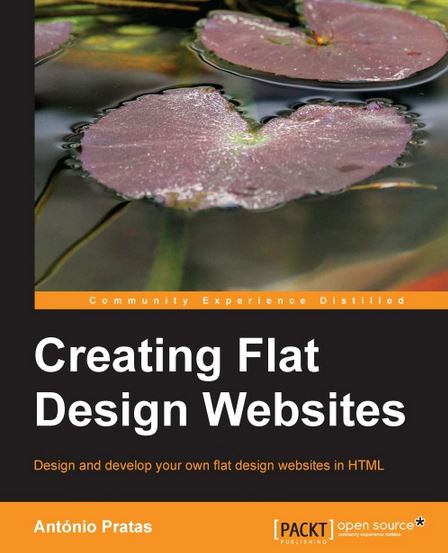
I always find when looking at book if I encounter early in the book comments such as “…eventually I found out that design is not about the answers, it’s about asking the right questions …” as Antonio Pratas does in the Acknowledgement of Creating Flat Design Websites that the book feels like I can trust the author as this sort of thing is both an honest observation and one that reflects some more considered thinking. The book beards this point out. For example rather than pitching the technology or approach as a tool for all things as many IT books have habit if doing, even in the first couple of chapters we are clearly informed that flat design isn’t necessarily correct approach in all cases and examples are given to illustrate the point.

The opening chapter explains the ideas of flat design vs skeuomorphic, and a brief history of the design approaches and “flat’s” ruse in popularity. Even providing an incredibly simple illustration that doesn’t demand that you be a graphic artist to achieve to show the differences and how you might move from skeuomorphic to flat.

The following chapters look at the consideration for usability, referencing Jakob Neilsen’s work (and if design piques your interest I’d highly recommend the work of Neilsen’s partner at NN/g – Don Norman with writing such as the Design of Everyday Things). The only criticism I might make here is with UI design, and specifically web there are legal (in the UK this cones presently as part if disability discrimination) and industry standards (particularly W3C’s WCAG standard/guidelines) aren’t really mentioned. But if you start digging into good usability material you will encounter these aspects.

From this point when are then guided through a design approach with plenty of recommendations on how to approach the design phase (from the basics of considering your target audience onwards).  It is only chapter 5 that really get stuck into web tech with HTML and the Designmodo framework built on Twitter’s Bootstrap and chapter 6 covers building your own flat UI framework. So this book maybe pitched at web app development, but actually the bulk of the books content holds true whether you’re working on web solutions, thick apps for the desktop or the mobile variety as it embodies the principles if good interface design.

Not only does it successfully talk about good design it bridges the gap between techies and graphic artists without the sense it is trying to address either skills base. No mean feat.

Rather than stealing the book’s wealth of useful resources, I’ll point you at links relevant the book and it’s author. From there you’ll find a cast array of helpful resources. The references :

  • Packt Book webpage
  • Antonio Pratas’ website
  • Antonio Pratas on LinkedIn
  • An article on skeuomorphic design
  • Twitter Bootstrap
  • Designmodo framework

CreatingFlatDesignWebsite

Share this:

  • Share on Facebook (Opens in new window) Facebook
  • Share on X (Opens in new window) X
  • Share on Reddit (Opens in new window) Reddit
  • Email a link to a friend (Opens in new window) Email
  • Share on WhatsApp (Opens in new window) WhatsApp
  • Print (Opens in new window) Print
  • Share on Tumblr (Opens in new window) Tumblr
  • Share on Mastodon (Opens in new window) Mastodon
  • Share on Pinterest (Opens in new window) Pinterest
  • More
  • Share on Bluesky (Opens in new window) Bluesky
  • Share on LinkedIn (Opens in new window) LinkedIn
Like Loading...

Puppet Reporting & Monitoring Book Review

27 Friday Jun 2014

Posted by mp3monster in Book Reviews, Books, General, Packt, Technology

≈ Leave a comment

Tags

book, Michael Duffy, monitoring, Packt, packtpub, Puppet, reporting, review, Ruby

So the Packt book (Puppet Reporting and Monitoring) focuses down on a couple of aspects of the Puppet Toolset, as a result this is a relatively short book with only a couple hundred pages. As an enterprise architect I am no expert Puppet practitioner, my knowledge of Ruby is high level (part of the reason I reviewed this book is I wanted to better understand the art of the possible in these areas).  But despite this the book does an exceptionally good job defining a context and then explaining and showing what could be done, down to code examples.  In doing so, the author Michael Duffy introduces a number of open source libraries that can be leveraged to provide dashboard views, presentation of report content whilst maximising the leveraging of the Puppet ecosystem such as the Puppet DB (an abstracted database with a REST + JSON API).  The book goes beyond just implementation of monitoring and reporting but also engages with considerations such as deployment.  without ‘boiling the ocean’ the book provides a very good illustrations of the art of the possible and provides plenty of references to source information so working how you want to implement you own solutions.

My only criticism of the book, and it is a minor one at that is a few more diagrams to help illustrate ideas (particularly in the first chapter when discussing deployment considerations) would help get ideas across easily.

On the strength of this  book,  I hope that Michael considers taking on other authoring projects as this has been one of the best written technical books I’ve read in sometime.

Puppet Reporting & Monitoring
Useful Links:

  • Book – http://bit.ly/1qbSxKC
  • Puppet Labs – http://puppetlabs.com/
  • Puppet DB – http://docs.puppetlabs.com/puppetdb/
  • Ruby – https://www.ruby-lang.org/
  • Michael Duffy – http://www.stunthamster.com/, http://uk.linkedin.com/pub/michael-duffy/40/809/17a

Share this:

  • Share on Facebook (Opens in new window) Facebook
  • Share on X (Opens in new window) X
  • Share on Reddit (Opens in new window) Reddit
  • Email a link to a friend (Opens in new window) Email
  • Share on WhatsApp (Opens in new window) WhatsApp
  • Print (Opens in new window) Print
  • Share on Tumblr (Opens in new window) Tumblr
  • Share on Mastodon (Opens in new window) Mastodon
  • Share on Pinterest (Opens in new window) Pinterest
  • More
  • Share on Bluesky (Opens in new window) Bluesky
  • Share on LinkedIn (Opens in new window) LinkedIn
Like Loading...

SOA Patterns on the Oracle Platform

12 Thursday Jun 2014

Posted by mp3monster in Books, General, Technology

≈ Leave a comment

Tags

book, Oracle, Packt, Patterns, review, SOA

The last Packt book I contributed to as a technical reviewer is due for release this month according to the Packt site (go here).  Looking forward to seeing the final result.


Share this:

  • Share on Facebook (Opens in new window) Facebook
  • Share on X (Opens in new window) X
  • Share on Reddit (Opens in new window) Reddit
  • Email a link to a friend (Opens in new window) Email
  • Share on WhatsApp (Opens in new window) WhatsApp
  • Print (Opens in new window) Print
  • Share on Tumblr (Opens in new window) Tumblr
  • Share on Mastodon (Opens in new window) Mastodon
  • Share on Pinterest (Opens in new window) Pinterest
  • More
  • Share on Bluesky (Opens in new window) Bluesky
  • Share on LinkedIn (Opens in new window) LinkedIn
Like Loading...

Oracle Big Data Handbook – summary review

05 Monday May 2014

Posted by mp3monster in Book Reviews, Books, Oracle, Oracle Press, Technology

≈ Leave a comment

Tags

Big Data, Big Data Appliance, book, Endeca, Enterprise R, Hadoop, NoSQL, ODI, Oracle, Oracle Big Data Handbook, Oracle Press

Having written several detailed reviews of Oracle Press’ Oracle Big Data Handbook (links below) I thought it useful to produce a summary. Over all is a very insightful and informative book covering the range of technologies that Oracle offers to address the ‘Big Data’ space from a number of view points such hardware with the Big Data Appliance (BDA), software with NoSQL, Enterprise R and Hadoop along with the various adapters (e.g. ODI) and existing product features that existing products make available to support the big data story and contribute to make a cohesive ecosystem. The book looks beyond the technologies classically linked to the ‘Big Data’  term to explore products such as Endeca. I like the act that the book tries to explain the rational behind some of the approaches adopted and the associated value propositions. Finally book looks at governance, maturity and architectural capabilities. All of which makes for an informative and insightful book.

The book isn’t flawless a few challenges that can make the reading a little frustrating occasionally (at least for me as I went cover to cover), for example,looking at the Big Data Appliance we seem to revisit the hardware specifications multiple times. The data governance perspective is data governance not specific to big data in my opinion. Occasionally the book seems to jump about when explaining a number of related areas which means that using the book as more a reference isn’t so easy. Don’t get me wrong these issues are hugely out weighed by the value it brings.

my detailed reviews:

  • Part 1
  • Part 2
  • Part 3
Oracle Big Data Handbook

Oracle Big Data Handbook

Share this:

  • Share on Facebook (Opens in new window) Facebook
  • Share on X (Opens in new window) X
  • Share on Reddit (Opens in new window) Reddit
  • Email a link to a friend (Opens in new window) Email
  • Share on WhatsApp (Opens in new window) WhatsApp
  • Print (Opens in new window) Print
  • Share on Tumblr (Opens in new window) Tumblr
  • Share on Mastodon (Opens in new window) Mastodon
  • Share on Pinterest (Opens in new window) Pinterest
  • More
  • Share on Bluesky (Opens in new window) Bluesky
  • Share on LinkedIn (Opens in new window) LinkedIn
Like Loading...
← Older posts
Newer posts →

    I work for Oracle, all opinions here are my own & do not necessarily reflect the views of Oracle

    • About
      • Internet Profile
      • Music Buying
      • Presenting Activities
    • Books & Publications
      • Logging in Action with Fluentd, Kubernetes and More
      • Logs and Telemetry using Fluent Bit
      • Oracle Integration
      • API & API Platform
        • API Useful Resources
        • Useful Reading Sources
    • Mindmaps Index
    • Monster On Music
      • Music Listening
      • Music Reading
    • Oracle Resources
    • Useful Tech Resources
      • Fluentd & Fluent Bit Additional stuff
        • Logging Frameworks and Fluent Bit and Fluentd connectivity
        • REGEX for BIC and IBAN processing
      • Formatting etc
      • Java and Graal Useful Links
      • Official Sources for Product Logos
      • Python Setup & related tips
      • Recommended Tech Podcasts

    Oracle Ace Director Alumni

    TOGAF 9

    Logs and Telemetry using Fluent Bit


    Logging in Action — Fluentd

    Logging in Action with Fluentd


    Oracle Cloud Integration Book


    API Platform Book


    Oracle Dev Meetup London

    Blog Categories

    • App Ideas
    • Books
      • Book Reviews
      • manning
      • Oracle Press
      • Packt
    • Enterprise architecture
    • General
      • economy
      • ExternalWebPublications
      • LinkedIn
      • Website
    • Music
      • Music Resources
      • Music Reviews
    • Photography
    • Podcasts
    • Technology
      • AI
      • APIs & microservices
      • chatbots
      • Cloud
      • Cloud Native
      • Dev Meetup
      • development
        • languages
          • java
          • node.js
          • python
      • drone
      • Fluentbit
      • Fluentd
      • logsimulator
      • mindmap
      • OMESA
      • Oracle
        • API Platform CS
          • tools
        • Helidon
        • ITSO & OEAF
        • Java Cloud
        • NodeJS Cloud
        • OIC – ICS
        • Oracle Cloud Native
        • OUG
      • railroad diagrams
      • TOGAF
    • xxRetired
    • AI
    • API Platform CS
    • APIs & microservices
    • App Ideas
    • Book Reviews
    • Books
    • chatbots
    • Cloud
    • Cloud Native
    • Dev Meetup
    • development
    • drone
    • economy
    • Enterprise architecture
    • ExternalWebPublications
    • Fluentbit
    • Fluentd
    • General
    • Helidon
    • ITSO & OEAF
    • java
    • Java Cloud
    • languages
    • LinkedIn
    • logsimulator
    • manning
    • mindmap
    • Music
    • Music Resources
    • Music Reviews
    • node.js
    • NodeJS Cloud
    • OIC – ICS
    • OMESA
    • Oracle
    • Oracle Cloud Native
    • Oracle Press
    • OUG
    • Packt
    • Photography
    • Podcasts
    • python
    • railroad diagrams
    • Technology
    • TOGAF
    • tools
    • Website
    • xxRetired

    Enter your email address to subscribe to this blog and receive notifications of new posts by email.

    Join 2,556 other subscribers

    RSS

    RSS Feed RSS - Posts

    RSS Feed RSS - Comments

    March 2026
    M T W T F S S
     1
    2345678
    9101112131415
    16171819202122
    23242526272829
    3031  
    « Feb    

    Twitter

    Tweets by mp3monster

    History

    Speaker Recognition

    Open Source Summit Speaker

    Flickr Pics

    Gogo Penguin at the BarbicanGogo Penguin at the BarbicanGogo Penguin at the BarbicanGogo Penguin at the Barbican
    More Photos

    Social

    • View @mp3monster’s profile on Twitter
    • View philwilkins’s profile on LinkedIn
    • View mp3monster’s profile on GitHub
    • View mp3monster’s profile on Flickr
    • View mp3muncher’s profile on WordPress.org
    • View philmp3monster’s profile on Twitch
    Follow Phil (aka MP3Monster)'s Blog on WordPress.com

    Blog at WordPress.com.

    • Subscribe Subscribed
      • Phil (aka MP3Monster)'s Blog
      • Join 234 other subscribers
      • Already have a WordPress.com account? Log in now.
      • Phil (aka MP3Monster)'s Blog
      • Subscribe Subscribed
      • Sign up
      • Log in
      • Report this content
      • View site in Reader
      • Manage subscriptions
      • Collapse this bar
     

    Loading Comments...
     

    You must be logged in to post a comment.

      Privacy & Cookies: This site uses cookies. By continuing to use this website, you agree to their use.
      To find out more, including how to control cookies, see here: Our Cookie Policy
      %d