• Home
  • Site Aliases
    • www.cloud-native.info
  • About
    • Background
    • Presenting Activities
    • Internet Profile
      • LinkedIn
    • About
  • Books & Publications
    • Log Generator
    • Logs and Telemetry using Fluent Bit
      • Fluent Bit book
      • Book Resources in GitHub
      • Fluent Bit Classic to YAML Format configurations
    • Logging in Action with Fluentd, Kubernetes and More
      • Logging in Action with Fluentd – Book
      • Fluentd Book Resources
      • Fluentd & Fluent Bit Additional stuff
    • API & API Platform
      • API Useful Resources
    • Oracle Integration
      • Book Website
      • Useful Reading Sources
    • Publication Contributions
  • Resources
    • GitHub
    • Oracle Integration Site
    • Oracle Resources
    • Mindmaps Index
    • Useful Tech Resources
      • Fluentd & Fluent Bit Additional stuff
      • Recommended Tech Podcasts
      • Official Sources for Product Logos
      • Java and Graal Useful Links
      • Python Setup & related stuff
  • Music
    • Monster On Music
    • Music Listening
    • Music Reading

Phil (aka MP3Monster)'s Blog

~ from Technology to Music

Phil (aka MP3Monster)'s Blog

Tag Archives: devops

Migrating from Fluentd to Fluent Bit

08 Tuesday Oct 2024

Posted by mp3monster in Fluentbit, Fluentd, General, Technology

≈ Leave a comment

Tags

devops, FluentBit, Fluentd, Kubernetes, mapping, migration, tooling, utility

Earlier in the year, I made a utility available that supported the migration from Fluent Bit classic configuration format to YAML. I also mentioned I would explore the migration of Fluentd to Fluent Bit. I say explore because while both tools have a common conceptual foundation, there are many differences in the structure of the configuration.

We discussed the bigger ones in the Logs and Telemetry book. But as we’ve been experimenting with creating a Fluentd migration tool, it is worth exploring the fine details and discussing how we’ve approached it as part of a utility to help the transformation.

Routing

Many of the challenges come from the key difference in terms of routing and consumption of events from the buffer. Fluentd assumes that an event is consumed by a single output; if you want to direct the output to more than one output, you need to copy the event. Fluent Bit looks at things very differently, with every output plugin having the potential to output every event – the determination of output is controlled by the match attribute. These two approaches put a different emphasis on the ordering of declarations. Fluent Bit focuses on routing and the use of tags and match declarations to control the rounding of output.

  <match *>
    @type copy
    <store>
      @type file
      path ./Chapter5/label-pipeline-file-output
      <buffer>
        delayed_commit_timeout 10
        flush_at_shutdown true
        chunk_limit_records 50
        flush_interval 15
        flush_mode interval
      </buffer>
      <format>
        @type out_file
        delimiter comma
        output_tag true
      </format> 
    </store>
    <store>
      @type relabel
      @label common
    </store>
  </match>

Hierarchical

We can also see that Fluentd’s directives are more hierarchical (e.g., buffer, and format are within the store) than the structures used by Fluentd Bit, so we need to be able to ‘flatten’ the hierarchy. As a result, it makes sense that where the copy occurs, we’ll define both outputs in the copy declaration as having their own output plugins.

Buffering

There is a notable difference between the outputs’ buffer configurations: in Fluent Bit, the output can only control how much storage in the filesystem can be used. As you can see in the preceding example, we can set the flushing frequency, control the number of chunks involved (regardless of storage type).

Pipelines

Fluentd allows us to implicitly define multiple pipelines of sources and destinations, as ordering of declarations and event consumption is key. ~In addition to this, we can group plugin behavior with the use of the Fluentd label attribute. But the YAML representation of a Fluent Bit doesn’t support this idea.

<source>
  @type dummy
  tag dummy
  auto_increment_key counter
  dummy {"hello":"me"}
  rate 1
</source>
<filter dummy>
 @type stdout
 </filter>
<match dummy>
  @id redisTarget
  @type redislist
  port 6379
</match>
<source>
  @id redisSource
  @type redislist
  tag redisSource
  run_interval 1
</source>
<match *>
  @type stdout
</match>

Secondary outputs

Fluentd also supports the idea of a secondary output as the following fragment illustrates. If the primary output failed, you could write the event to an alternate location. Fluent Bit doesn’t have an equivalent mechanism. To create a mapping tool, we’ve taken the view we should create a separate output.

<match *>
    @type roundrobin
    <store> 
      @type forward
      buffer_type memory
      flush_interval 1s  
      weight 50
      <server>
        host 127.0.0.1
        port 28080
      </server>  
    </store>
    <store>
      @type forward
      buffer_type memory
      flush_interval 1s        
        weight 50
      <server>
        host 127.0.0.1
        port 38080
      </server> 
    </store>
  <secondary>
    @type stdout
  </secondary>
</match>

The reworked structure requires consideration for the matching configuration, which isn’t so easily automated and can require manual intervention. To help with this, we’ve included an option to add comments to link the new output to the original configuration.

Configuration differences

While the plugins have a degree of consistency, a closer look shows that there are also attributes and, as a result, features of plugins that don’t translate. To address this, we have commented out the attribute so that the translated configuration can be seen in the new configuration to allow manual modification.

Conclusion

While the tool we’re slowly piecing together will do a lot of the work in converting Fluentd to Fluent Bit, there aren’t exact correlations for all attributes and plugins. So the utility will only be able to perform the simplest of mappings without developer involvement. But we can at least help show where the input is needed.

Resources

  • Fluent Bit from Classic to YAML
  • https://github.com/mp3monster/fluent-bit-classic-to-yaml-converter
  • Fluent Bit
  • Fluentd
  • https://github.com/mp3monster/fluent-bit-classic-to-yaml-converter/tree/fluentd-experimental
  • Logs and Telemetry book

Share this:

  • Click to share on Facebook (Opens in new window) Facebook
  • Click to share on X (Opens in new window) X
  • Click to share on Pocket (Opens in new window) Pocket
  • Click to share on Reddit (Opens in new window) Reddit
  • Click to email a link to a friend (Opens in new window) Email
  • Click to share on WhatsApp (Opens in new window) WhatsApp
  • Click to print (Opens in new window) Print
  • Click to share on Tumblr (Opens in new window) Tumblr
  • Click to share on Mastodon (Opens in new window) Mastodon
  • Click to share on Pinterest (Opens in new window) Pinterest
  • More
  • Click to share on Bluesky (Opens in new window) Bluesky
  • Click to share on LinkedIn (Opens in new window) LinkedIn
Like Loading...

Article in DevOps Magazine – Stop Polling Let’s Go Streaming

02 Tuesday May 2023

Posted by mp3monster in APIs & microservices, Books, General, Technology

≈ Leave a comment

Tags

API, API Conference, blog, demio, devops, JAXLondon, magazine, polling, streaming

DevOps Magazine 2-2023 which includes my article

A while back, I was invited to contribute to Devmio (the knowledge portal driven by the publishers involved with the JAX London and other events). After a little bit of delay from my end, I offered an article that they decided was sufficient to be incorporated into DevOps magazine.

You can check out the content at:

  • DevOps Magazine
  • Devmio
  • my article
  • JAXLondon and other conferences

Update (July 23) – no longer behind a paid wall

The article has been used in a blog post now and a mailout from the API Conference – read for free, check it out.

Share this:

  • Click to share on Facebook (Opens in new window) Facebook
  • Click to share on X (Opens in new window) X
  • Click to share on Pocket (Opens in new window) Pocket
  • Click to share on Reddit (Opens in new window) Reddit
  • Click to email a link to a friend (Opens in new window) Email
  • Click to share on WhatsApp (Opens in new window) WhatsApp
  • Click to print (Opens in new window) Print
  • Click to share on Tumblr (Opens in new window) Tumblr
  • Click to share on Mastodon (Opens in new window) Mastodon
  • Click to share on Pinterest (Opens in new window) Pinterest
  • More
  • Click to share on Bluesky (Opens in new window) Bluesky
  • Click to share on LinkedIn (Opens in new window) LinkedIn
Like Loading...

Phoenix project

21 Saturday Jan 2023

Posted by mp3monster in Book Reviews, Books, General, Technology

≈ 1 Comment

Tags

agility, automation, book, CI/CD, CICD, devops, DevSecOps, Gene Kim, IaC, OWASP Top 10, Phoenix project, Security, software, Work

The Phoenix Project by Gene Kim has been recommended reading for the IT industry for a long time now. It’s been on my to-read list for a good while, but to be candid, it never made the top of my reading list, as I had some reservations. Who wants to read a novel about IT if you already work and live it every day.

Recently IT Revolution, to celebrate its 10th anniversary, offered the book through Amazon for free for a limited period (even now, as a Kindle ebook, it isn’t that expensive anymore). Given I had determined I should read it at some point, I took the opportunity to get a copy. As it happens, through the Christmas break, I got into a run of reading books, and with it being at the top of my ebook list, I bit the bullet.

First of all, the story was engaging and very readable, characters are likable, human, and relatable. It isn’t a huge book either (perhaps I’ve been looking at too many 500+ page novels), making it a fairly quick read. As a pure novel, some of the devices to keep the narrative moving along were perhaps a little obvious, but then given the goal of the story, that isn’t really an issue. It didn’t break the reading flow, which did keep the pages turning with a plausible story; plausible enough to wonder how much of the story was based on a real-life experience of Gene or one of his writing collaborators.

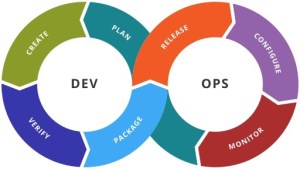
What struck me the most is that most industry writing I have read doesn’t address all the points the book makes. So, DevOps, as is typically presented by a lot (most ?) content, uses some variation of a diagram like the infinite cycle, as shown here:

Image courtesy of Amis.nl

Not only that, it is common to view DevOps as focusing on either :

  • Automation, particularly around CI/CD and IaC (Infrastructure as Code)
  • The development team also owns the operations tasks

But the book portrayed DevOps as both and neither of these. I say this as these approaches can help with the goal, but they should be subservient to the larger objective. Unfortunately, we do get caught up with the mechanics and tools and not the wider goal. The story is about how to deliver business value and needs in a streamlined manner, so we aren’t tying up the investment (time or spend) any longer than necessary. Yes, that does mean IaC and CI/CD style automation but only in service of the goal, which is the business need, not IaC.

The book also highlights the point of continuously working on improvement and paying down against debt, as removing debt is part of the way we remove the blockages to the streamlining (in the story, we actually see the release pipeline being temporarily stopped so that time could be invested in paying down the debt). Yet, this aspect is rarely discussed in a lot of the industry content on the subject. Maybe we are, in part, our own enemy here, as debit work is not greenfield. It is going back over old ground and making it better. We all love breaking new ground and leaving the past behind. Not to mention many organizations measure progress on the number of features rather than how well a feature serves the business goals. I have to admit to that mistake, which in our world of microservices is a bit of a mistake. After all, aren’t microservices about doing one thing and doing it well?

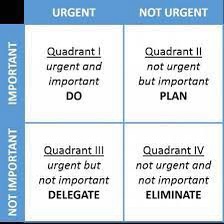
Another interesting view that the book put a lot of emphasis on was a variant of what is sometimes called the Eisenhower matrix. Anyone who has done any leadership training will most likely recognize it (see below).

However, the quadrants of work are as the book describes them are:

  • Quadrant 1 – Project work (i.e., planned activities central to the business)
  • Quadrant II – IT work (work that is planned and needed but doesn’t originate from the business, such as building new infrastructure)
  • Quadrant III – Updates and changes (e.g., system patching)
  • Quadrant IV – Unplanned (e.g., outage recovery work, demands on the team that has bypassed scheduling / divert individuals from the agreed goals, etc.)

The key difference between this representation and that of the book’s work definition is the words on each of the columns and rows. For example, Quadrant IV isn’t ‘Not Important’ and ‘Not Urgent’ – but it would be fair to say ‘Not Wanted’ and ‘Not Productive’. Unplanned work is the killer and roughly aligns with quadrant IV. This comes from the issues of not dealing with technical debt and solution facilities etc.

My last observation is that in the last couple of years, we have seen the rise of DevSecOps, which recognizes the need that security should be as much of the delivery process as Dev and Ops. The book (written 10 years ago) showed that security should be part of the DevOps process. Like other areas, the story seeks to address the point that security focussing on just the development and operational processes while necessary for things like catching OWASP Top 10 also needs to see the bigger picture otherwise, you could easily add additional needs that are already handled by controls elsewhere in the end-to-end business processes. That doesn’t mean to say security controls can5 be in software, but are they part o& improvement and pushing actions left vs. getting out of the starting blocks?

More reading

The book provides references, but for my own personal benefit, a number of particularly interesting and useful references are made, which may interest:

  • The Goal by Eliyahu M. Goldratt (a novel addressing his Theory of Constraints in the same way as The Phoenix Project is a novel around the DevOps handbook)
  • Beyond the Goal by Eliyahu M. Goldratt
  • Value stream mapping
  • Theory of Constraints
  • DevOps Kaizen: Find and Fix What Is Really Behind Your Problems
  • Tech debt spiral
  • Work In Progress and impact of high amounts of WIP

Share this:

  • Click to share on Facebook (Opens in new window) Facebook
  • Click to share on X (Opens in new window) X
  • Click to share on Pocket (Opens in new window) Pocket
  • Click to share on Reddit (Opens in new window) Reddit
  • Click to email a link to a friend (Opens in new window) Email
  • Click to share on WhatsApp (Opens in new window) WhatsApp
  • Click to print (Opens in new window) Print
  • Click to share on Tumblr (Opens in new window) Tumblr
  • Click to share on Mastodon (Opens in new window) Mastodon
  • Click to share on Pinterest (Opens in new window) Pinterest
  • More
  • Click to share on Bluesky (Opens in new window) Bluesky
  • Click to share on LinkedIn (Opens in new window) LinkedIn
Like Loading...

CI/CD worker nodes as virtual machines or K8s Containers?

07 Wednesday Sep 2022

Posted by mp3monster in General

≈ Leave a comment

Tags

architecture, CICD, Containers, decision matrix, devops, jenkins, maven, reference architecture, stress test

When it comes to CI/CD deployments, something that doesn’t show very often in documentation is the pros and cons of running your worker nodes as containers in a Kubernetes environment or as (virtual) machines in a cloud environment.

Containerized CI/CD
Continue reading →

Share this:

  • Click to share on Facebook (Opens in new window) Facebook
  • Click to share on X (Opens in new window) X
  • Click to share on Pocket (Opens in new window) Pocket
  • Click to share on Reddit (Opens in new window) Reddit
  • Click to email a link to a friend (Opens in new window) Email
  • Click to share on WhatsApp (Opens in new window) WhatsApp
  • Click to print (Opens in new window) Print
  • Click to share on Tumblr (Opens in new window) Tumblr
  • Click to share on Mastodon (Opens in new window) Mastodon
  • Click to share on Pinterest (Opens in new window) Pinterest
  • More
  • Click to share on Bluesky (Opens in new window) Bluesky
  • Click to share on LinkedIn (Opens in new window) LinkedIn
Like Loading...

DevOps with Flexagon

14 Thursday Oct 2021

Posted by mp3monster in Books, development, General, Technology

≈ Leave a comment

Tags

devops, external, external publications, Flexagon, Flexdeploy, Paper

Through my day job at Capgemini UK I have regular dealings with Flexagon as we use their FlexDeploy product with a number of customers (as we do recommend the product). Recently I was invited to contribute to a paper being developed by the Flexagon team. The fruits of the collaboration are now available at https://info.flexagon.com/ebook/devops-for-developers. The Flexagon team have done a nice job with it, and we’d recommend taking a look if you’re wanting to know more about DevOps and CI/CD.

The paper is completely free of sales pitch – completely devoid of product references which makes for a good read.

https://info.flexagon.com/ebook/devops-for-developers

Share this:

  • Click to share on Facebook (Opens in new window) Facebook
  • Click to share on X (Opens in new window) X
  • Click to share on Pocket (Opens in new window) Pocket
  • Click to share on Reddit (Opens in new window) Reddit
  • Click to email a link to a friend (Opens in new window) Email
  • Click to share on WhatsApp (Opens in new window) WhatsApp
  • Click to print (Opens in new window) Print
  • Click to share on Tumblr (Opens in new window) Tumblr
  • Click to share on Mastodon (Opens in new window) Mastodon
  • Click to share on Pinterest (Opens in new window) Pinterest
  • More
  • Click to share on Bluesky (Opens in new window) Bluesky
  • Click to share on LinkedIn (Opens in new window) LinkedIn
Like Loading...

Microservice UI Positioning

14 Sunday Jun 2015

Posted by mp3monster in General, Technology

≈ 1 Comment

Tags

CSS, Design, devops, Microservices, Redhat, UI

Last week I was fortunate enough to attend RedHat’s day in London on Microservices. There were some great presentations and some ideas that are both simple and potentially very effective. It wasn’t a simple Microservices solves everything get into out tech stack, there was some reality checks as well.

The challenge I have been unable to square up yet, is the idea that each Microservices would have its own UI.  On the surface, it makes a lot of sense, after all the UI needs to reflect the capabilities of the service.

The challenge comes in the form, that a User Interface needs to have consistency across the board. Yes, many will immediately point to CSS., which undeniably provide a level of consistency. But UI needs run a lot deeper. Let me point out a couple of illustrations of this:

  • Recent switch to web interfaces reflecting the new ‘flat’ visual format
  • Adoption of app on a page through AngularJS
  • Lots of illustrations can be seen at elegant Theme

This goes beyond CSS3 in many cases, but the libraries being used – so impacting development. Now here is the rub, the backend service functionality won’t change but the UI implementation will and needs to be deployed consistently across the board in one go for B2B and critically for B2C. You can destroy a good product with a poor UI and sell a rubbish app with a good one. All of which would mean deploying updated all Microservices at once if they embody the UI. The linking of all the Microservices like this is completely contrary to the goals of agility driven the Microservices strategy.

Add to this, the Microservices approach promotes a DevOps approach, yet organisations may only employ 1 or 2 real user experience specialists rather than  try and spread them across multiple service teams it maybe better to focus them into one or two service teams that just build the UI.

Which kind of leads me to the argument that I would suggest that your UI is a separate service or small group of services to the core functional side of things. So those PR driven website overhauls, and revisions to match user experience expectations can be done without impacting the core capabilities, demanding a total regression test and locking your entire set of services into a unified release cycle.

Share this:

  • Click to share on Facebook (Opens in new window) Facebook
  • Click to share on X (Opens in new window) X
  • Click to share on Pocket (Opens in new window) Pocket
  • Click to share on Reddit (Opens in new window) Reddit
  • Click to email a link to a friend (Opens in new window) Email
  • Click to share on WhatsApp (Opens in new window) WhatsApp
  • Click to print (Opens in new window) Print
  • Click to share on Tumblr (Opens in new window) Tumblr
  • Click to share on Mastodon (Opens in new window) Mastodon
  • Click to share on Pinterest (Opens in new window) Pinterest
  • More
  • Click to share on Bluesky (Opens in new window) Bluesky
  • Click to share on LinkedIn (Opens in new window) LinkedIn
Like Loading...

    I work for Oracle, all opinions here are my own & do not necessarily reflect the views of Oracle

    • About
      • Internet Profile
      • Music Buying
      • Presenting Activities
    • Books & Publications
      • Logging in Action with Fluentd, Kubernetes and More
      • Logs and Telemetry using Fluent Bit
      • Oracle Integration
      • API & API Platform
        • API Useful Resources
        • Useful Reading Sources
    • Mindmaps Index
    • Monster On Music
      • Music Listening
      • Music Reading
    • Oracle Resources
    • Useful Tech Resources
      • Fluentd & Fluent Bit Additional stuff
        • Logging Frameworks and Fluent Bit and Fluentd connectivity
        • REGEX for BIC and IBAN processing
      • Java and Graal Useful Links
      • Official Sources for Product Logos
      • Python Setup & related tips
      • Recommended Tech Podcasts

    Oracle Ace Director Alumni

    TOGAF 9

    Logs and Telemetry using Fluent Bit


    Logging in Action — Fluentd

    Logging in Action with Fluentd


    Oracle Cloud Integration Book


    API Platform Book


    Oracle Dev Meetup London

    Blog Categories

    • App Ideas
    • Books
      • Book Reviews
      • manning
      • Oracle Press
      • Packt
    • Enterprise architecture
    • General
      • economy
      • ExternalWebPublications
      • LinkedIn
      • Website
    • Music
      • Music Resources
      • Music Reviews
    • Photography
    • Podcasts
    • Technology
      • AI
      • APIs & microservices
      • chatbots
      • Cloud
      • Cloud Native
      • Dev Meetup
      • development
        • languages
          • java
          • node.js
      • drone
      • Fluentbit
      • Fluentd
      • logsimulator
      • mindmap
      • OMESA
      • Oracle
        • API Platform CS
          • tools
        • Helidon
        • ITSO & OEAF
        • Java Cloud
        • NodeJS Cloud
        • OIC – ICS
        • Oracle Cloud Native
        • OUG
      • railroad diagrams
      • TOGAF
    • xxRetired
    • AI
    • API Platform CS
    • APIs & microservices
    • App Ideas
    • Book Reviews
    • Books
    • chatbots
    • Cloud
    • Cloud Native
    • Dev Meetup
    • development
    • drone
    • economy
    • Enterprise architecture
    • ExternalWebPublications
    • Fluentbit
    • Fluentd
    • General
    • Helidon
    • ITSO & OEAF
    • java
    • Java Cloud
    • languages
    • LinkedIn
    • logsimulator
    • manning
    • mindmap
    • Music
    • Music Resources
    • Music Reviews
    • node.js
    • NodeJS Cloud
    • OIC – ICS
    • OMESA
    • Oracle
    • Oracle Cloud Native
    • Oracle Press
    • OUG
    • Packt
    • Photography
    • Podcasts
    • railroad diagrams
    • Technology
    • TOGAF
    • tools
    • Website
    • xxRetired

    Enter your email address to subscribe to this blog and receive notifications of new posts by email.

    Join 2,555 other subscribers

    RSS

    RSS Feed RSS - Posts

    RSS Feed RSS - Comments

    December 2025
    M T W T F S S
    1234567
    891011121314
    15161718192021
    22232425262728
    293031  
    « Nov    

    Twitter

    Tweets by mp3monster

    History

    Speaker Recognition

    Open Source Summit Speaker

    Flickr Pics

    Turin Brakes Acoustic Tour 24 @ The Maltings FarnhamTurin Brakes Acoustic Tour 24 @ The Maltings FarnhamTurin Brakes Acoustic Tour 24 @ The Maltings FarnhamTurin Brakes Acoustic Tour 24 @ The Maltings Farnham
    More Photos

    Social

    • View @mp3monster’s profile on Twitter
    • View philwilkins’s profile on LinkedIn
    • View mp3monster’s profile on GitHub
    • View mp3monster’s profile on Flickr
    • View mp3muncher’s profile on WordPress.org
    • View philmp3monster’s profile on Twitch
    Follow Phil (aka MP3Monster)'s Blog on WordPress.com

    Blog at WordPress.com.

    • Subscribe Subscribed
      • Phil (aka MP3Monster)'s Blog
      • Join 233 other subscribers
      • Already have a WordPress.com account? Log in now.
      • Phil (aka MP3Monster)'s Blog
      • Subscribe Subscribed
      • Sign up
      • Log in
      • Report this content
      • View site in Reader
      • Manage subscriptions
      • Collapse this bar
     

    Loading Comments...
     

    You must be logged in to post a comment.

      Privacy & Cookies: This site uses cookies. By continuing to use this website, you agree to their use.
      To find out more, including how to control cookies, see here: Our Cookie Policy
      %d