• Home
  • Site Aliases
    • www.cloud-native.info
  • About
    • Background
    • Presenting Activities
    • Internet Profile
      • LinkedIn
    • About
  • Books & Publications
    • Log Generator
    • Logs and Telemetry using Fluent Bit
      • Fluent Bit book
      • Book Resources in GitHub
      • Fluent Bit Classic to YAML Format configurations
    • Logging in Action with Fluentd, Kubernetes and More
      • Logging in Action with Fluentd – Book
      • Fluentd Book Resources
      • Fluentd & Fluent Bit Additional stuff
    • API & API Platform
      • API Useful Resources
    • Oracle Integration
      • Book Website
      • Useful Reading Sources
    • Publication Contributions
  • Resources
    • GitHub
    • Oracle Integration Site
    • Oracle Resources
    • Mindmaps Index
    • Useful Tech Resources
      • Fluentd & Fluent Bit Additional stuff
      • Recommended Tech Podcasts
      • Official Sources for Product Logos
      • Java and Graal Useful Links
      • Python Setup & related stuff
      • DevTips
  • Music
    • Monster On Music
    • Music Listening
    • Music Reading

Phil (aka MP3Monster)'s Blog

~ from Technology to Music

Phil (aka MP3Monster)'s Blog

Category Archives: General

All things general

Spotting an audiophile with 1 question

26 Wednesday Feb 2014

Posted by mp3monster in General, Music

≈ 2 Comments

Tags

"Mike Oldfield", audiophile, cd, Hifi, MP3, Music

I recently changed my car, and in the process of sorting all the various things out (removing CDs etc from my previous car) lead me to a thinking about a question I have seen often mentioned in music blogs, biographies and other books.  That simple question ‘When you get a new bit of audio kit, do you have a specific album that’s at be played first?’  That audio kit could be simply a car stereo or iPod through to some audiophile exotica (go look at marvels such as http://www.michell-engineering.co.uk/turntables/gyrodec/ or http://www.bowers-wilkins.co.uk/Speakers/Home_Audio/Nautilus/Overview.html and these are still relatively tame).

By know you’re either reading this going – what planet are you on, or mug you can’t tell the difference between £100 and £1000 piece of stereo, or perhaps a knowing response of  yes it’s xyz album.  If you’re response is the later, then you’re probably at least a self confessed audiophile.  So, you have the question, and I’m sure if you ask it unless you’re a known audiophile basher (middle response above) you’ll probably get the appropriate response every time.

The fascinating thing is that the album concerned doesn’t necessarily reflect a persons’ taste; it might even be a recording that particularly exercises a HiFi in a manner that shows off its strengths or reveal audio weaknesses (every audiophile will have a few albums they like to use to test a bit of kit with) but most likely something like the first album played on the first bit of proper HiFi.  So for me, it is a rather uncool Mike Oldfield QEII.  It was one of the first CDs I purchased and played on my 1st vaguely ok HiFi.  I still love the album for the swooping guitar work, diverse musical styling. But I’d not suggest it is reflective of my musical taste which which is very wide, but with a strong deference to Alt Rock/Americana these days.

Before I risk getting flamed out by audiophiles about associating CD with quality – yes I do have vinyl and a well respected turntable.  For those at the other end, I’m not audiophile zealot – I do have an iPod  (a 80GB classic as it happens which is perpetually full) & the name MP3Monster is not without reason.  Right playback for the right conditions  – MP3 on the move, CD for day to day and those rare quiet moments just occasionally the vinyl gets out. But always music.

Share this:

  • Share on Facebook (Opens in new window) Facebook
  • Share on X (Opens in new window) X
  • Share on Reddit (Opens in new window) Reddit
  • Email a link to a friend (Opens in new window) Email
  • Share on WhatsApp (Opens in new window) WhatsApp
  • Print (Opens in new window) Print
  • Share on Tumblr (Opens in new window) Tumblr
  • Share on Mastodon (Opens in new window) Mastodon
  • Share on Pinterest (Opens in new window) Pinterest
  • More
  • Share on Bluesky (Opens in new window) Bluesky
  • Share on LinkedIn (Opens in new window) LinkedIn
Like Loading...

Next book review – Oracle Fusion Applications

05 Wednesday Feb 2014

Posted by mp3monster in Books, General

≈ Leave a comment

Tags

applications, books, extensibility, fusion, handbook, Oracle, Vladimir Ajvaz

The next book up for review is going to be Oracle Fusion Applications Development and Extensibility Handbook (Oracle Press)

I have to declare a slight interest in my reviewing as I have had the good fortune to work with one of the authors- Vladimir Ajvaz; and extremely knowledgeable and talented Application Architect.

Oracle Fusion Applications

Share this:

  • Share on Facebook (Opens in new window) Facebook
  • Share on X (Opens in new window) X
  • Share on Reddit (Opens in new window) Reddit
  • Email a link to a friend (Opens in new window) Email
  • Share on WhatsApp (Opens in new window) WhatsApp
  • Print (Opens in new window) Print
  • Share on Tumblr (Opens in new window) Tumblr
  • Share on Mastodon (Opens in new window) Mastodon
  • Share on Pinterest (Opens in new window) Pinterest
  • More
  • Share on Bluesky (Opens in new window) Bluesky
  • Share on LinkedIn (Opens in new window) LinkedIn
Like Loading...

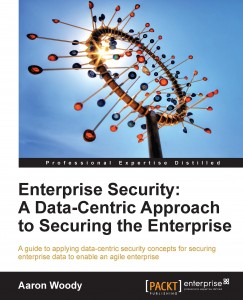
Enterprise Security – A Data Centric Approach – A brief review

05 Wednesday Feb 2014

Posted by mp3monster in Book Reviews, Books, General, Packt, Technology

≈ Leave a comment

Tags

Aaron Woody, book, data, datasec, enterprise, Packt, review, Security

So I have previously blogged a series of largely chapter by chapter reviews of Aaron Woody’s book Enterprise Security – A Data Centric Approach. This post tries to provide a brief summarised view pulling my thoughts of the book overall together.

As an Enterprise Architect I took an interest in this book as an opportunity to validate my understanding of security and ensure in the design and guidance work that I do I am providing good insights and directions so that the application architects and developers are both ensuring good security practices and also asking the helpful information available to other teams such as IT Security, operational support and so on.

The book has been overall very well written and extremely accessible to even those not versed in the dark arts of IT Security. Anyone in my position, or fulfilling a role as an application designer or product development manager would really benefit from this book. Even those on the business end of IT would probably benefit in terms of garnering an insight into what IT Security should be seeking to achieve and why they often appear to make lives more difficult (I.e. putting restrictions in, perhaps blocking your favourite websites).

So why so helpful, well Aaron has explained the issues and challenges that need to be confronted in terms of Security from the perspective of the organisations key assets – mainly its data (certainly the asset that is likely to cause most visible problems if compromised). Not only that the book presents a framework to help qualify and quantify the risks as a result device a justifiable approach to securing the data and most importantly make defensible cases for budget spend.

I have to admit that the 1st chapter that that introduces the initial step in the strategy was a bit of a struggle as it seemed to adopt and try to define a view of the world that felt a little too simplistic. The truth is that this the 1st step in a journey, and in hindsight important – so stick with it.

Once the basic framework is in place we start looking at tooling strategies and technologies to start facilitating security. The book addresses categories of product rather than specific solutions so the book isn’t going to date too quickly. The solution examination includes the pros and cons of their use (e.g wifi lock down) which is very helpful.

Finally to really help the book comes with a rich set of appendices providing a raft of references to additional material that will help people translate principles into practice.

To conclude, a little effort maybe needed to get you started but ultimately a well written, informative, information rich book on security.

Previous blog entries:

  • Chapter 1
  • Chapter 2
  • Chapter 3
  • Chapter 4
  • Chapter 5 & 6
  • Chapter 7 & 8
  • Final Chapter

There is also a supporting website for the book athttp://www.datacentricsec.com/
Enterprise Security - A Data Centric Approach

Share this:

  • Share on Facebook (Opens in new window) Facebook
  • Share on X (Opens in new window) X
  • Share on Reddit (Opens in new window) Reddit
  • Email a link to a friend (Opens in new window) Email
  • Share on WhatsApp (Opens in new window) WhatsApp
  • Print (Opens in new window) Print
  • Share on Tumblr (Opens in new window) Tumblr
  • Share on Mastodon (Opens in new window) Mastodon
  • Share on Pinterest (Opens in new window) Pinterest
  • More
  • Share on Bluesky (Opens in new window) Bluesky
  • Share on LinkedIn (Opens in new window) LinkedIn
Like Loading...

Enterprise Security – A Data Centric Approach – the final chapter

05 Wednesday Feb 2014

Posted by mp3monster in Book Reviews, Books, General, Packt, Technology

≈ 1 Comment

Tags

Aaron Woody, book, data, enterprise, Packt, review, Security

so I have reached the final chapter of the book which covers the handling of security events and security incidents (the differentiation of the two being the consequences of the event – a piece of malware being detected on a desktop can an event as the consequences are relatively trivial compared to the defacing of an e’tailer’s website).

I have to admit I glossed through this chapter as my role within an organisation doesn’t demand the operational management of issues. That said, the book provides some clear guidance on how to develop a process to support the handling of a security issue – important as you don’t want be figuring these things out when something happens, you want to get on and focus on execution. s with previous chapters, this well written and doesn’t demand knowledge of security dark arts to get to grips with.

The book finishes with a series of appendices which provides some illustrative information for chapters in the book, plus a series of appendices of really useful additional reference information sites cover a spectrum of information from security education resources to security tools.

This series of blogs on this book will wrapped up with a short review of the whole book. But I would like to congratulate Aaron Woody on a fine book rich with helpful additional information.

Previous blog entries:

  • Chapter 1
  • Chapter 2
  • Chapter 3
  • Chapter 4
  • Chapter 5 & 6
  • Chapter 7 & 8

There is also a supporting website for the book athttp://www.datacentricsec.com/
Enterprise Security - A Data Centric Approach

Share this:

  • Share on Facebook (Opens in new window) Facebook
  • Share on X (Opens in new window) X
  • Share on Reddit (Opens in new window) Reddit
  • Email a link to a friend (Opens in new window) Email
  • Share on WhatsApp (Opens in new window) WhatsApp
  • Print (Opens in new window) Print
  • Share on Tumblr (Opens in new window) Tumblr
  • Share on Mastodon (Opens in new window) Mastodon
  • Share on Pinterest (Opens in new window) Pinterest
  • More
  • Share on Bluesky (Opens in new window) Bluesky
  • Share on LinkedIn (Opens in new window) LinkedIn
Like Loading...

The Boxer Rebellion @ The Brook Southampton

04 Tuesday Feb 2014

Posted by mp3monster in General

≈ Leave a comment

The Boxer Rebellion @ The Brook Southampton by Phil & Catherine Wilkins
The Boxer Rebellion @ The Brook Southampton, a photo by Phil & Catherine Wilkins on Flickr.

We got to see the excellent boxer Rebellion last night at the Brook venue in Southampton.

Both the venue (which we’d never been to before) and the band where excellent.

Share this:

  • Share on Facebook (Opens in new window) Facebook
  • Share on X (Opens in new window) X
  • Share on Reddit (Opens in new window) Reddit
  • Email a link to a friend (Opens in new window) Email
  • Share on WhatsApp (Opens in new window) WhatsApp
  • Print (Opens in new window) Print
  • Share on Tumblr (Opens in new window) Tumblr
  • Share on Mastodon (Opens in new window) Mastodon
  • Share on Pinterest (Opens in new window) Pinterest
  • More
  • Share on Bluesky (Opens in new window) Bluesky
  • Share on LinkedIn (Opens in new window) LinkedIn
Like Loading...

Enterprise Security – A Data Centric Approach – Chapters 7 & 8

28 Tuesday Jan 2014

Posted by mp3monster in Book Reviews, Books, General, Packt

≈ 2 Comments

Tags

Aaron Woody, engineering, enterprise, Kevin Mitnick, networks, review, Security, social, social engineering, wireless

Chapters 7 and 8 of the book in many respects are the polar opposites in their nature, with Chapter 7 looking at Wireless networks in the Enterprise and technicalities of different encryption frameworks, authentication and authorization.  Then at the other end is chapter 8 facing into the difficulties of social engineering – the approach of using people’s own nature to divulge sensitive information.  Probably one of the most famous people for this sort of thing is Kevin Mitnick and to acts of social engineering are will illustrated in the influential book  Bruce Stirling’s Hacker Crackdown.

Although Chapter 7 is addressing an area many would view as the dark art of wireless network setup; it is well explained and actually worth reading by anyone who would like to better understand their own home wireless network as lot of the information (not all) is relevant even in that context. For example the benefit of supressing the visibility of the Network ID (SSID) doesn’t make the network invisible – it simply makes it harder to spot as any device such as smart phone will call out yo the network to see if it is present and this information can be picked up just as easily if you know what you’re doing.

Drilling into the social engineering aspect, the book looks at the more obvious and perhaps brute force models such as spam to increasingly subtle takes such using social media communications through the likes of linkedin to send emails loaded with malware and see the end user open them. For example pretending to be an agent with a job offer who has found you via LinkedIn. But beyond that, the amount of information being made available via social sites as it can be a means to establish a organisations’ IT fingerprint and therefore suggest the best routes to attacking IT.  The chapter addresses training, and the pros and cons of different approaches, plus mitigation strategies for the different attack strategies.

Previous blog entries:

  • Chapter 1
  • Chapter 2
  • Chapter 3
  • Chapter 4
  • Chapter 5 & 6

There is also a supporting website for the book athttp://www.datacentricsec.com/
Enterprise Security - A Data Centric Approach

Share this:

  • Share on Facebook (Opens in new window) Facebook
  • Share on X (Opens in new window) X
  • Share on Reddit (Opens in new window) Reddit
  • Email a link to a friend (Opens in new window) Email
  • Share on WhatsApp (Opens in new window) WhatsApp
  • Print (Opens in new window) Print
  • Share on Tumblr (Opens in new window) Tumblr
  • Share on Mastodon (Opens in new window) Mastodon
  • Share on Pinterest (Opens in new window) Pinterest
  • More
  • Share on Bluesky (Opens in new window) Bluesky
  • Share on LinkedIn (Opens in new window) LinkedIn
Like Loading...

Gaps in Oracle’s Cloud Cover?

20 Monday Jan 2014

Posted by mp3monster in General, Oracle

≈ 2 Comments

Tags

AWS, Cloud, connector, development, integration, Oracle, Salesforce, SOA Suite

As an Enterprise Integration Architect I need to get my hands dirty with products such as Oracle’s SOA suite and AIA Foundation Pack.  In the past, I’ve dealt with this by talking with our infrastructure team – obtaining a VM or a laptop with sufficient guts to host SOA Suite (and it doesn’t have a small footprint).  This is all well and fine, but means I have to lug a big old laptop (our current standard laptop spec’s are lovely light machines with SSD’s but just don’t pack the punch for SOA Suite when it comes to memory) or have to leap through a series of security steps to get remote access – again not a problem unless I want to share my skunk works with someone outside the organisation.  Nor, do I really want to invest chunks of time building a SOA Suite environment to work with – I don’t do it enough to be able to throw these things together quickly.  Even Oracle recognise that with the support for a prebuilt VirtualBox with SOA Suite and BPM. The only problem with VirtualBox is I’ve saved on the build time, but still need that heavy laptop or remote access.

Oracle Cloud Java

With the rise of the cloud, particularly Oracle’s big push (announcements at Open World 2013), Amazon offering small footprint dev platforms more or less for free I thought we’d be able to get a PaaS deployment of SOA Suite – after all Oracle offer a range of Fusion Apps in the cloud (built on top of SOA Suite technologies), have launched development of Java and ADF solutions in their cloud and even offer Weblogic on Microsoft’s Azure.  How I wrong could I have been.  So I started looking around, perhaps someone has an AMI ready to go – well sort of if I want 10g.  So I’ve dug around, and found the odd provider who could deliver what was needed (e.g. Titan GS) but we’re talking big bucks – not a low cost dev/skunk works environment.  

This is very surprising really, and sort of ironic, given Oracle’s recent announcement for SaaS Adapters for the likes of SalesForce and WorkDay along with convenience tooling to connect to Oracle Cloud solutions such as HCM.  I say ironic, because to use the cloud adapters you can’t have a SaaS middleware; in fact the whitepaper Oracle published on Simplifying Cloud Integration infers/assumes that you’d be hosting your own middleware.  So if a midsized business has Has HCM, Taleo etc for their staffing management, SalesForce for the Sales/CRM operations and perhaps EBis or JD Edwards to move your business into the cloud you have to either go IaaS and carry the labour of maintaining the middleware platform or self host (one of the things the adoption of SaaS is trying to free you from).

All of this seems to be a really missed opportunity for Oracle.  If the oracle wants to host the world (and I think Larry Ellison would like that) and definitely get into that midmarket sector that JDEwards particularly tries to inhabit they need to make it easy for businesses to cloud all aspects of their IT solution, that includes orchestrating specialist solutions that will be hosted by someone other than Oracle (shock, horror). All of which means SOA Suite (and ideally AIA) need to be in the cloud.

As for my problem, its either the pain of building something on Amazon or setting up several copies of the VirtualBox deployment linked to a common GIT repository, and hope those I would like to collaborate with can also get their hands on the virtualbox and connect to GIT.

Share this:

  • Share on Facebook (Opens in new window) Facebook
  • Share on X (Opens in new window) X
  • Share on Reddit (Opens in new window) Reddit
  • Email a link to a friend (Opens in new window) Email
  • Share on WhatsApp (Opens in new window) WhatsApp
  • Print (Opens in new window) Print
  • Share on Tumblr (Opens in new window) Tumblr
  • Share on Mastodon (Opens in new window) Mastodon
  • Share on Pinterest (Opens in new window) Pinterest
  • More
  • Share on Bluesky (Opens in new window) Bluesky
  • Share on LinkedIn (Opens in new window) LinkedIn
Like Loading...

Enterprise Security – A Data Centric Approach – Chapters 5 & 6

17 Friday Jan 2014

Posted by mp3monster in Book Reviews, Books, General, Packt, Technology

≈ 3 Comments

Tags

Aaron Woody, Enterprise Security, security processes

Continuing with Enterprise Security: A Data-Centric Approach to Securing the Enterprise by Aaron Woody Chapter 5 gest into some of the security processes and technologies to securing you compute platforms covering topics such as:

  • anti-virus (or not),
  • network lock down through the use of local firewalls built into the OS (so people can’t then just access the server by any means they desire SSH, RDP, telnet etc)
  • user permissions
  • auditing (so you can see what is happening/happened and by whom)
  • detection of file change in parts of the system that shouldn’t change except through specific mechanisms e.g. OS files should only change when patching the OS

But more importantly the chapter links these kinds of activities to the analysis of risk and previously developed trust models. So that you can understand how much security is suitable and justifiable.  The ideas along with the pros and cons of each activity are well explained and clearly presented.

Chapter 6 takes us back to central theme of the book – data.  With our policies and models identified we need to locate the data – this is harder than it may sound, not everything is in a database (the amount of business operation that runs on spreadsheets on people’s desktops, is endlessly amazing and then compounded by how we make the data collaborative – emailing, moving with personal USB storage, cloud services and on and on). To help find, track and potentially constrain it  (prevent undue leakage) the book walks through the ideas of classification and ownership/accountability and then really starts to tie together the earlier chapters, as well as introduce some additional technology concepts such as the encryption of data when in transit and at rest. Like chapter 5, you don’t need a PhD to understand where to apply security and why – the doing maybe a different kettle of fish of course.

Previous blog entries:

  • Chapter 1
  • Chapter 2
  • Chapter 3

There is also a supporting website for the book athttp://www.datacentricsec.com/
Enterprise Security - A Data Centric Approach

Share this:

  • Share on Facebook (Opens in new window) Facebook
  • Share on X (Opens in new window) X
  • Share on Reddit (Opens in new window) Reddit
  • Email a link to a friend (Opens in new window) Email
  • Share on WhatsApp (Opens in new window) WhatsApp
  • Print (Opens in new window) Print
  • Share on Tumblr (Opens in new window) Tumblr
  • Share on Mastodon (Opens in new window) Mastodon
  • Share on Pinterest (Opens in new window) Pinterest
  • More
  • Share on Bluesky (Opens in new window) Bluesky
  • Share on LinkedIn (Opens in new window) LinkedIn
Like Loading...

Enterprise Security – A Data Centric Approach – Chapter 4

01 Wednesday Jan 2014

Posted by mp3monster in Books, General, Technology

≈ 3 Comments

Tags

Aaron Woody, book, data, Data-Centric Approach, enterprise, Enterprise Security, network security, Security

Continuing into a chapter 4 of
Enterprise Security: A Data-Centric Approach to Securing the Enterprise by Aaron Woody we start to look at some technical aspects of security and technology covering things like the capabilities of new generation of firewalls, DNS security and so on. The information is presented in a very readable manner.

As an Enterprise Technology Architect, and having security specialist friends I thought I was reasonably well informed in this aspect of IT, but the book still taught me me things. Interestingly, perhaps not intended but the chapter left me with a number of things that could be incorporated into development governance that would make the work of network security a lot easier.

The chapter continues with lots of really helpful references many, maybe all are incorporated into a series of appendices that are full of helpful information references and links. If these are made available on the book’s website (see below) it would likely become a must go to site for security resources.

It does leave me asking one question how does this all fit in when using a PaaS solution such as those offered by the likes of Amazon and Rackspace?

Previous blog entries:

  • Chapter 1
  • Chapter 2
  • Chapter 3

The book has been published by Packt (who at the time of writing are running a promotion – more here)

There is also a supporting website for the book at http://www.datacentricsec.com/
Enterprise Security - A Data Centric Approach

Share this:

  • Share on Facebook (Opens in new window) Facebook
  • Share on X (Opens in new window) X
  • Share on Reddit (Opens in new window) Reddit
  • Email a link to a friend (Opens in new window) Email
  • Share on WhatsApp (Opens in new window) WhatsApp
  • Print (Opens in new window) Print
  • Share on Tumblr (Opens in new window) Tumblr
  • Share on Mastodon (Opens in new window) Mastodon
  • Share on Pinterest (Opens in new window) Pinterest
  • More
  • Share on Bluesky (Opens in new window) Bluesky
  • Share on LinkedIn (Opens in new window) LinkedIn
Like Loading...

Enterprise Security – A Data Centric Approach — Chapter 3

29 Sunday Dec 2013

Posted by mp3monster in Books, General, Technology

≈ 5 Comments

Tags

Aaron Woody, book, Data-Centric Approach, review, risk, Security

So I’m back to reading Enterprise Security: A Data-Centric Approach to Securing the Enterprise by Aaron Woody. I’ve not finished reading the book yet but as I’m reviewing one or two chapters at a time, I thought I’d blog about Chapter 3 – particularly given its value (previous blog entry here and here).

Chapter 3 goes by the name of Security As A Process, which addresses the processes to determining security risk, the analysis of cost benefit of implementing security features to address those risks. The chapter then goes on to provide guidance on defining good policies and standards.

In hindsight the process for determining and analyzing the security risks and classifying them is fairly obvious – it took the reading to to draw the points and the mechanisms into focus. But the fact it makes sense in hindsight suggests that the approach the workability and the chance for the business to understand the risks and challenges being taken on.

The chapter also provides some really good information sources for people to use to support the adotion of the processes described. Some I’ve known about such as the SANS Institute others I hadn’t.

I have to say that based on the strength of this chapter alone I’d recommend the book to any architect who is seeking to develop practical appreciation of addressing security considerations or understand what they should be looking for what to ask for in a new organisation. Those trying to drive up the quality of processes or get across the need for a more proactive security strategy that is also pragmatic – reading this chapter alone should help provide some serious points to get a handle on things.

The book has been published by Packt (who at the time of writing are running a promotion – more here)

There is also a supporting website for the book at http://www.datacentricsec.com/
Enterprise Security - A Data Centric Approach

Share this:

  • Share on Facebook (Opens in new window) Facebook
  • Share on X (Opens in new window) X
  • Share on Reddit (Opens in new window) Reddit
  • Email a link to a friend (Opens in new window) Email
  • Share on WhatsApp (Opens in new window) WhatsApp
  • Print (Opens in new window) Print
  • Share on Tumblr (Opens in new window) Tumblr
  • Share on Mastodon (Opens in new window) Mastodon
  • Share on Pinterest (Opens in new window) Pinterest
  • More
  • Share on Bluesky (Opens in new window) Bluesky
  • Share on LinkedIn (Opens in new window) LinkedIn
Like Loading...
← Older posts
Newer posts →

    I work for Oracle, all opinions here are my own & do not necessarily reflect the views of Oracle

    • About
      • Internet Profile
      • Music Buying
      • Presenting Activities
    • Books & Publications
      • Logging in Action with Fluentd, Kubernetes and More
      • Logs and Telemetry using Fluent Bit
      • Oracle Integration
      • API & API Platform
        • API Useful Resources
        • Useful Reading Sources
    • Mindmaps Index
    • Monster On Music
      • Music Listening
      • Music Reading
    • Oracle Resources
    • Useful Tech Resources
      • Fluentd & Fluent Bit Additional stuff
        • Logging Frameworks and Fluent Bit and Fluentd connectivity
        • REGEX for BIC and IBAN processing
      • Formatting etc
      • Java and Graal Useful Links
      • Official Sources for Product Logos
      • Python Setup & related tips
      • Recommended Tech Podcasts

    Oracle Ace Director Alumni

    TOGAF 9

    Logs and Telemetry using Fluent Bit


    Logging in Action — Fluentd

    Logging in Action with Fluentd


    Oracle Cloud Integration Book


    API Platform Book


    Oracle Dev Meetup London

    Blog Categories

    • App Ideas
    • Books
      • Book Reviews
      • manning
      • Oracle Press
      • Packt
    • Enterprise architecture
    • General
      • economy
      • ExternalWebPublications
      • LinkedIn
      • Website
    • Music
      • Music Resources
      • Music Reviews
    • Photography
    • Podcasts
    • Technology
      • AI
      • APIs & microservices
      • chatbots
      • Cloud
      • Cloud Native
      • Dev Meetup
      • development
        • languages
          • java
          • node.js
          • python
      • drone
      • Fluent Observability
        • Fluentbit
        • Fluentd
        • OpAMP
      • logsimulator
      • mindmap
      • OMESA
      • Oracle
        • API Platform CS
          • tools
        • Helidon
        • ITSO & OEAF
        • Java Cloud
        • NodeJS Cloud
        • OIC – ICS
        • Oracle Cloud Native
        • OUG
      • railroad diagrams
      • TOGAF
    • xxRetired
    • AI
    • API Platform CS
    • APIs & microservices
    • App Ideas
    • Book Reviews
    • Books
    • chatbots
    • Cloud
    • Cloud Native
    • Dev Meetup
    • development
    • drone
    • economy
    • Enterprise architecture
    • ExternalWebPublications
    • Fluent Observability
    • Fluentbit
    • Fluentd
    • General
    • Helidon
    • ITSO & OEAF
    • java
    • Java Cloud
    • languages
    • LinkedIn
    • logsimulator
    • manning
    • mindmap
    • Music
    • Music Resources
    • Music Reviews
    • node.js
    • NodeJS Cloud
    • OIC – ICS
    • OMESA
    • OpAMP
    • Oracle
    • Oracle Cloud Native
    • Oracle Press
    • OUG
    • Packt
    • Photography
    • Podcasts
    • python
    • railroad diagrams
    • Technology
    • TOGAF
    • tools
    • Website
    • xxRetired

    Enter your email address to subscribe to this blog and receive notifications of new posts by email.

    Join 2,556 other subscribers

    RSS

    RSS Feed RSS - Posts

    RSS Feed RSS - Comments

    March 2026
    M T W T F S S
     1
    2345678
    9101112131415
    16171819202122
    23242526272829
    3031  
    « Feb    

    Twitter

    Tweets by mp3monster

    History

    Speaker Recognition

    Open Source Summit Speaker

    Flickr Pics

    Gogo Penguin at the BarbicanGogo Penguin at the BarbicanGogo Penguin at the BarbicanGogo Penguin at the Barbican
    More Photos

    Social

    • View @mp3monster’s profile on Twitter
    • View philwilkins’s profile on LinkedIn
    • View mp3monster’s profile on GitHub
    • View mp3monster’s profile on Flickr
    • View mp3muncher’s profile on WordPress.org
    • View philmp3monster’s profile on Twitch
    Follow Phil (aka MP3Monster)'s Blog on WordPress.com

    Blog at WordPress.com.

    • Subscribe Subscribed
      • Phil (aka MP3Monster)'s Blog
      • Join 234 other subscribers
      • Already have a WordPress.com account? Log in now.
      • Phil (aka MP3Monster)'s Blog
      • Subscribe Subscribed
      • Sign up
      • Log in
      • Report this content
      • View site in Reader
      • Manage subscriptions
      • Collapse this bar
    Privacy & Cookies: This site uses cookies. By continuing to use this website, you agree to their use.
    To find out more, including how to control cookies, see here: Our Cookie Policy
    %d