So a strong message for Oracle Enterprise Manager (OEM) Cloud Control is the ‘Single Pane of Glass’ on your IT systems. It isn’t Just Oracle who will make this case, you can expect it from all the general purpose monitoring products ranging from ManageEngine to the CA products and into Nagios. That’s before the general press articles (e.g. InformationWeek). But what I wanted to do is examine the case and potential for OEM to meet this aspiration and the sort of things that will help a tool achieve this magical goal.
Why examine the case? Well some will tell you ‘single pane of glass’ is not the best goal (e.g. TechTarget). In addition to which some vendors have a reputation of being very strong in some specific areas – for example SolarWinds for network monitoring. Finally, it is common for the larger product vendors (IBM/CA/Oracle) to offer monitoring capabilities that are strong for their own products but not so great beyond that (so if you’re running a number of Oracle products the buy OEM; IBM then consider Tivoli Monitoring and so on).
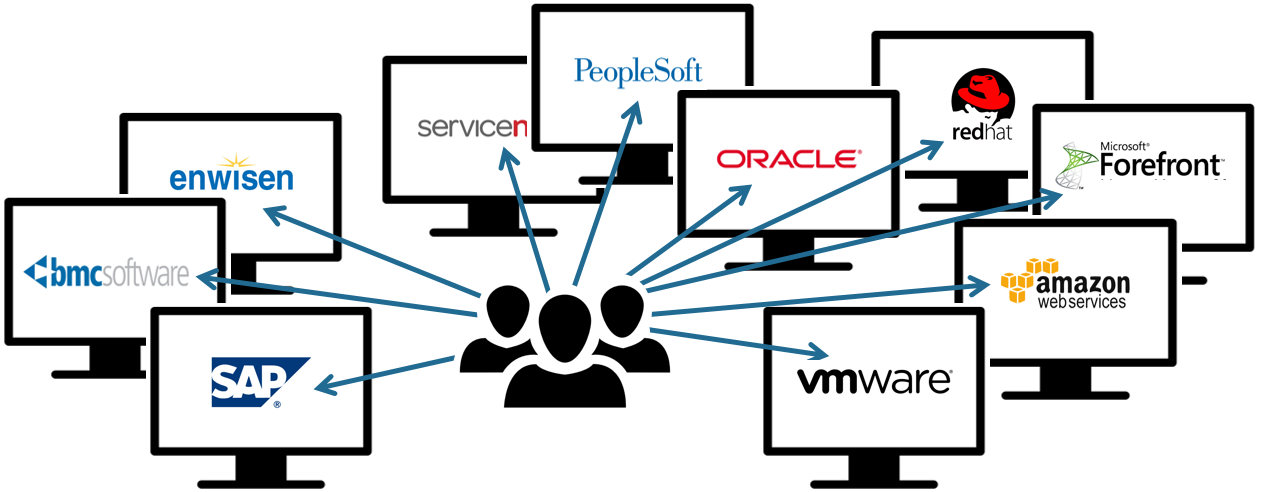
So can OEM reach beyond Oracle products? What does it offer to do this? Well starting with our first question, the answer is simply yes, it can do more than Oracle. So let’s look at the means through which OEM can reach beyond prebuilt monitoring for its own products.
Firstly, as a Java solution is is naturally able to exploit JMX to the maximum. This is ideal for Java solutions (assuming they are suitably instrumented with MBeans). So your custom java apps running in your Weblogic container can be easily monitored. But this is an ever shrinking estate as more solutions become available from vendors and SaaS providers, and what if you’ve got specialist hardware as could be expected with a manufacturer?
So the next stop is the ability to monitor web services. OEM provides the tools to generate monitoring configurations that can invoke a web service. The tooling achieves this by parsing a WSDL file which works out what services are available and allowing you to select a service to invoke. So you can then invoke the service. However the information you capture reflects things like basic performance measures and fault responses.
There is support for the WS-Management standard which is overseen by the DMTF (Distributed Management Task Force). WS-Management although also ratified as an ISO standard is a bit of an oddity given the majority of WS-* standards are covered by OASIS. That said WS-Management has all the major players you would expect involved (EMC, IBM, Oracle and so on). If you wanted to instrument your product using this protocol then there are open source implementations that may help jump start that initiative. Although it has to be said, that a lot of adoption of this standard has come from OS/platform & hardware vendors. I am unaware of an equivalent capability for REST engagement at present, however the REST framework used by Weblogic can provide additional monitoring insights that could be harvested.
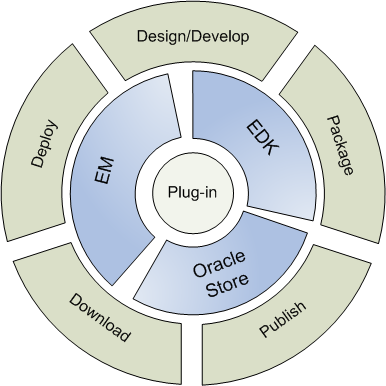
One answer is the Extensibility Development Kit which allows vendors to build their own product plugins for OEM. These can then be offered by the vendors directly or through the Exchange Oracle has provided. It is worth noting that not all vendors are building these plugins, they may come from third parties. For example there are 2 plugins for F5 BigIP – one from F5 themselves, and another through a software house called Comtrade. If there is a plugin available from a 3rd party rather than a vendor, you do have the opportunity to see if the vendor has used the Oracle Partner programme to validate their plugin (background here). Although I have to say that the Exchange is a disappointing platform. Of course there is nothing to stop customers building their own plugins using this framework.
There is also a .Net specific framework as well to build monitoring for a Windows environment.
Next option is use of system level information capture so you can hook up SNMP traps, or log file monitoring. The log file monitoring is relatively simplistic in so far as it effectively tracks a log file scanning for occurrences of that match Perl expressions. This is unfortunately relatively simple compared to some more sophisticated log management mechanisms where you can describe the log file layout and attribute semantic meaning to perform more intelligent log monitoring as a result.

Of course in all this, there is the human perspective which from my experience, when it comes to IT tools things can take on something of a zealous perspective (another being IDEs in the Java world). In Oracle’s perspective an answer other than using OEM as the single pain of glass isn’t desirable. But the reality is that customers will license OEM to make it easy to manage the Oracle products and want to use something else for the single pane. OEM does accommodate this situation with connectors for Events and Ticketing. Again connectors can be built by other vendors or yourself and the Exchange offers these as well. Additionally there is a bidirectional exchange connector available for the reversed role, so if you want to bring in additional data such as BAM measures or data points/events from 3rd party tools such as SolarWinds you can.
If you’re going to leverage multiple products you probably want to consider developing a portal for bringing the UIs of the different tools together. So you can start with the single pane view, but as you drill down in analysis of either an operational issue or even just a simple SLA performance failure.
So for on premise systems, even if they’re not out of the box friendly to OEM you can with a bit of effort build out monitoring capabilities from a very quick error detection or occurrence of log messages count through to creating custom extensions that can ‘probe’ more effectively the target. But SaaS is a bit more challenging, you have the Web service invocation capability, although service providers are more and more frequently offering REST interfaces that are JSON conversent. Beyond again building custom capabilities the next option is to exploit OEM enhancing products such as Real User Experience Insight (RUEI) – a very powerful tool that reaches far beyond the norm of operational monitoring and awareness to provide analytics on websites.
So back to my second question – it is possible to get OEM to offer a single pane of glass? Unless you’re one of the few organisations that is a pure Oracle only environment then you’re likely to have to configure/build out additional capabilities and potentially invest in additional products (RUEI isn’t presented as a plugin and its capabilities extend beyond that of a plugin) to stand a chance of succeeding. There is no doubt that OEM offers plenty of extensibility potential – the points of extension go beyond those described here. It does raise the question of how OEM custom extensions could migrate to the cloud monitoring offering.
We may write a future blog on OEM to show how these plugins can be actually implemented.
OEM Resources:

 So I have a trusty 64GB iPod classic for a fair few years, and loved it, the ability to take a sensible chunk of my music with me – what’s not to like? Although of recent, I’ve not used it as much as the iPod does feel somewhat bulky, I don’t have a handy charger these days as my other devices are all using lightning or micro USB connectors.
 Well, I think I have found a good alternate solution, with a cool gadget called a Leef iAccess – it takes a micro SD card and plugs into the Lightning socket. When combined with the leef app, can play music or videos etc straight from the device. So we get one device to carry – my phone; music capacity isn’t a challenge with 64GB storage costing very little in micro SD card terms, and if that isn’t enough then just swap cards. No premium on phone upgrades, no iTunes to load the micro SD card with music. As to the question of power consumption, I think the Leef consumes a bit more power than using phone storage. But can probably be overcome with a power pack case that provides pass through on the Lightening connector – although I’ve yet to prove this. The iAccess is shaped to support the idea, as it doesn’t to hug the phone’s casing shape wise – so cases aren’t an issue (unlike some of the camera gadgets).

 Note: ACC has now been superseded by Oracle Kubernetes Engine (OKE)
 So an interesting piece of research was published by the
  The research shows the growth of document sharing in the enterprise through the use of cloud services. The interesting thing is one of the positives of adopting SaaS and PaaS is easing the challenge of ensuring environments are patched for security. But at the same time the need to educate the wider employee community even more on being security aware.


 Phil (aka MP3Monster)'s Blog
You must be logged in to post a comment.