
• Home
  • About
    • Background
    • LinkedIn
    • Presenting Activities
    • Internet Profile
    • About
    • www.cloud-native.info
    • AI Disclosure
  • Observability, Fluent(d) Bit & OpAMP
    • OpAMP Product
    • OpAMP Overview
    • Log Generator
    • Fluent Bit Classic to YAML Format configurations
  • My Books
    • Logs and Telemetry using Fluent Bit
      • Fluent Bit book
      • Book Resources in GitHub
    • Logging in Action with Fluentd, Kubernetes and More
      • Logging in Action with Fluentd – Book
      • Fluentd Book Resources
      • Fluentd & Fluent Bit Additional stuff
    • API & API Platform
      • API Useful Resources
    • Oracle Integration
      • Book Website
      • Useful Reading Sources
    • Publication Contributions
  • Resources
    • GitHub
    • Oracle Integration Site
    • Oracle Resources
    • Mindmaps Index
    • Useful Tech Resources
      • Fluentd & Fluent Bit Additional stuff
      • Recommended Tech Podcasts
      • Official Sources for Product Logos
      • Java and Graal Useful Links
      • DevTips
  • Music
    • Monster On Music
    • Music Listening
    • Music Reading

Phil (aka MP3Monster)'s Blog

~ from Technology to Music

Phil (aka MP3Monster)'s Blog

Tag Archives: Oracle

A single pane of glass to manage and monitor with?

19 Thursday Nov 2015

Posted by mp3monster in General, Oracle

≈ 1 Comment

Tags

Cloud Control, Enterprise Manager, monitoring, OEM, Oracle

So a strong message for Oracle Enterprise Manager (OEM) Cloud Control is the ‘Single Pane of Glass’ on your IT systems. It isn’t Just Oracle who will make this case, you can expect it from all the general purpose monitoring products ranging from ManageEngine to the CA products and into Nagios. That’s before the general press articles (e.g. InformationWeek). But what I wanted to do is examine the case and potential for OEM to meet this aspiration and the sort of things that will help a tool achieve this magical goal.

Why examine the case? Well some will tell you ‘single pane of glass’ is not the best goal (e.g. TechTarget). In addition to which some vendors have a reputation of being very strong in some specific areas – for example SolarWinds for network monitoring. Finally, it is common for the larger product vendors (IBM/CA/Oracle) to offer monitoring capabilities that are strong for their own products but not so great beyond that (so if you’re running a number of Oracle products the buy OEM; IBM then consider Tivoli Monitoring and so on).

catalog-sprawl

So can OEM reach beyond Oracle products?  What does it offer to do this? Well starting with our first question, the answer is simply yes, it can do more than Oracle. So let’s look at the means through which OEM can reach beyond prebuilt monitoring for its own products.

Firstly, as a Java solution is is naturally able to exploit JMX to the maximum. This is ideal for Java solutions (assuming they are suitably instrumented with MBeans). So your custom java apps running in your Weblogic container can be easily monitored. But this is an ever shrinking estate as more solutions become available from vendors and SaaS providers, and what if you’ve got specialist hardware as could be expected with a manufacturer?

So the next stop is the ability to monitor web services.  OEM provides the tools to generate monitoring configurations that can invoke a web service. The tooling achieves this by parsing a WSDL file which works out what services are available and allowing you to select a service to invoke.  So you can then invoke the service. However the information you capture reflects things like basic performance measures and fault responses.

There is support for the WS-Management standard which is  overseen by the DMTF (Distributed Management Task Force). WS-Management although also ratified as an ISO standard is a bit of an oddity given the majority of WS-* standards are covered by OASIS. That said WS-Management has all the major players you would expect involved (EMC, IBM, Oracle and so on). If you wanted to instrument your product using this protocol then there are open source implementations that may help jump start that initiative. Although it has to be said, that a lot of adoption of this standard has come from OS/platform & hardware vendors. I am unaware of an equivalent capability for REST engagement at present, however the REST framework used by Weblogic can provide additional monitoring insights that could be harvested.
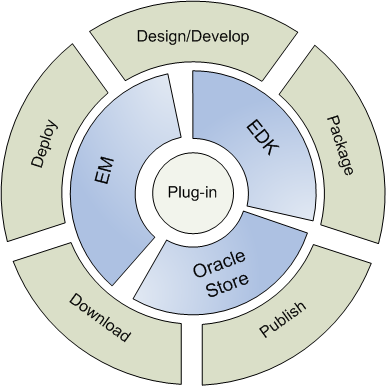
plugindevelopmentdiagram

One answer is the Extensibility Development Kit which allows vendors to build their own product plugins for OEM. These can then be offered by the vendors directly or through the Exchange Oracle has provided.  It is worth noting that not all vendors are building these plugins, they may come from third parties. For example there are 2 plugins for F5 BigIP – one from F5 themselves, and another through a software house called Comtrade. If there is a plugin available from a 3rd party rather than a vendor, you do have the opportunity to see if the vendor has used the Oracle Partner programme to validate their plugin (background here). Although I have to say that the Exchange is a disappointing platform. Of course there is nothing to stop customers building their own plugins using this framework.

There is also a .Net specific framework as well to build monitoring for a Windows environment.

Next option is use of system level information capture so you can hook up SNMP traps, or log file monitoring.  The log file monitoring is relatively simplistic in so far as it effectively tracks a log file scanning for occurrences of that match Perl expressions. This is unfortunately relatively simple compared to some more sophisticated log management mechanisms where you can describe the log file layout and attribute semantic meaning to perform more intelligent log monitoring as a result.

fig1_1

Of course in all this, there is the human perspective which from my experience, when it comes to IT tools things can take on something of a zealous perspective (another being IDEs in the Java world). In Oracle’s perspective an answer other than using OEM as the single pain of glass isn’t desirable. But the reality is that customers will license OEM to make it easy to manage the Oracle products and want to use something else for the single pane.  OEM does accommodate this situation with connectors for Events and Ticketing. Again connectors can be built by other vendors or yourself and the Exchange  offers these as well. Additionally there is a bidirectional exchange connector available for the reversed role, so if you want to bring in additional data such as BAM measures or data points/events from 3rd party tools such as SolarWinds you can.

If you’re going to leverage multiple products you probably want to consider developing a portal for bringing the UIs of the different tools together. So you can start with the single pane view, but as you drill down in analysis of either an operational issue or even just a simple SLA performance failure.

So for on premise systems, even if they’re not out of the box friendly to OEM you can with a bit of effort build out monitoring capabilities from a very quick error detection or occurrence of log messages count through to creating custom extensions that can ‘probe’ more effectively the target. But SaaS is a bit more challenging, you have the Web service invocation capability, although service providers are more and more frequently offering REST interfaces that are JSON conversent.  Beyond again building custom capabilities the next option is to exploit OEM enhancing products such as Real User Experience Insight (RUEI) – a very powerful tool that reaches far beyond the norm of operational monitoring and awareness to provide analytics on websites.

So back to my second question – it is possible to get OEM to offer a single pane of glass?  Unless you’re one of the few organisations that is a pure Oracle only environment then you’re likely to have to configure/build out additional capabilities and potentially invest in additional products (RUEI isn’t presented as a plugin and its capabilities extend beyond that of a plugin) to stand a chance of succeeding.  There is no doubt that OEM offers plenty of extensibility potential – the points of extension go beyond those described here.  It does raise the question of how OEM custom extensions could migrate to the cloud monitoring offering.

We may write a future blog on OEM to show how these plugins can be actually implemented.

OEM Resources:

  • OEM Documentation (general), Extensibility Development Kit
  • OEM Blog
  • OEM Extension Exchange
  • Hooking up SNMP Traps
  • Creating Data Exchange Connectors
  • Web Service Monitoring
  • WS-Management standard
  • .Net specific framework
  • Cloud Monitoring Strategies

Share this:

  • Share on Facebook (Opens in new window) Facebook
  • Share on X (Opens in new window) X
  • Share on Reddit (Opens in new window) Reddit
  • Share on LinkedIn (Opens in new window) LinkedIn
  • Email a link to a friend (Opens in new window) Email
  • Share on WhatsApp (Opens in new window) WhatsApp
  • Print (Opens in new window) Print
  • Share on Tumblr (Opens in new window) Tumblr
  • Share on Mastodon (Opens in new window) Mastodon
  • Share on Pinterest (Opens in new window) Pinterest
  • Share on Bluesky (Opens in new window) Bluesky
Like Loading...

Oracle Open World – Session Presentations

05 Thursday Nov 2015

Posted by mp3monster in General, Oracle

≈ Leave a comment

Tags

OOW, Oracle, presentations

Some time after Open World all (well nearly) the presentation material is made available to attendees. Some presenters however don’t wait for that and their presentation material available online through their own various channels. So here are some links to those that I have become aware of:

  • http://www.slideshare.net/brunoborges/presentations – Java & PaaS
  • http://www.slideshare.net/lucbors/real-life-maf-22-oracle-open-world-2015 Real Life MAF
  • http://www.talkapex.com/2015/10/oow-15-presentations.html – Apex
  • http://www.slideshare.net/BobbyCurtisMBA/database-as-a-service-oem-oda-oow-15-presentation – OEM 12c &  DB appliance
  • http://debrasoracle.blogspot.co.uk/2015/11/oow15-my-presentation-forming-your.html – Fusion Apps & Cloud Migration
  • http://www.slideshare.net/Veriton – Oracle DB Appliance
  • http://andrejusb.blogspot.co.uk/2015/11/oow15-session-slides-oracle-alta-ui.html – Alta UI
  • Tips and Tricks for Oracle SOA Suite https://drive.google.com/file/d/0B5sPDQfAYEUAUjlWbXBoTjhGRVk/view 
  • AMIS’ OOW15 comprehensive reviews in multiple parts:
    • part 1 http://www.slideshare.net/AMIS_Services/amis-oracle-openworld-2015-review-part-1-overview-main-themes-announcements-and-future-roadmaps
    • part 2 http://www.slideshare.net/AMIS_Services/amis-oracle-openworld-2015-review-part-2-hardware-iaas-and-paas-cloud-foundation-jcs-wls?related=1
    • part 3 http://www.slideshare.net/AMIS_Services/amis-oracle-openworld-2015-review-part-3-paas-database-integration-identity-mgt-it-ops-and-devops?related=2
    • part 4 http://www.slideshare.net/AMIS_Services/amis-oracle-openworld-2015-review-part-4-paas-application-development-javaone-mobile-collaboration-and-saas-and-user-experience?related=3
  • Richard Olrich on App Builder Cloud Service http://www.olrichs.nl/2015/11/oow15-coming-soon-abcservice.html

As I spot the posts we’ll update this blog entry

Share this:

  • Share on Facebook (Opens in new window) Facebook
  • Share on X (Opens in new window) X
  • Share on Reddit (Opens in new window) Reddit
  • Share on LinkedIn (Opens in new window) LinkedIn
  • Email a link to a friend (Opens in new window) Email
  • Share on WhatsApp (Opens in new window) WhatsApp
  • Print (Opens in new window) Print
  • Share on Tumblr (Opens in new window) Tumblr
  • Share on Mastodon (Opens in new window) Mastodon
  • Share on Pinterest (Opens in new window) Pinterest
  • Share on Bluesky (Opens in new window) Bluesky
Like Loading...

ITSO Mindmap

05 Thursday Nov 2015

Posted by mp3monster in General, Oracle

≈ Leave a comment

Tags

ITSO, mindmap, Oracle, xmind

I’ve just made the latest version of my IT Strategies from Oracle mindmap available via the XMind maps site (http://www.xmind.net/m/cPQH/)

ITSO

Share this:

  • Share on Facebook (Opens in new window) Facebook
  • Share on X (Opens in new window) X
  • Share on Reddit (Opens in new window) Reddit
  • Share on LinkedIn (Opens in new window) LinkedIn
  • Email a link to a friend (Opens in new window) Email
  • Share on WhatsApp (Opens in new window) WhatsApp
  • Print (Opens in new window) Print
  • Share on Tumblr (Opens in new window) Tumblr
  • Share on Mastodon (Opens in new window) Mastodon
  • Share on Pinterest (Opens in new window) Pinterest
  • Share on Bluesky (Opens in new window) Bluesky
Like Loading...

Oracle Open World 15 – The Recovery

03 Tuesday Nov 2015

Posted by mp3monster in General, Oracle

≈ Leave a comment

Tags

OOW, Oracle, OTN

So we’re back home from a week in San Francisco and the city dominating Oracle Open World conference and almost straightened up after the jet lag (don’t remember ever suffering from it this much).

A very interesting, very busy week that was absolutely shattering (it didn’t help our Hotel was in the middle if the city, but not very sound insulated or air conditioned – so if you don’t sleep well not the best).

I’ll piece together a presentation deck, but briefly, what we picked up/did:

  • Oracle is a cloud company now – with the word cloud presented so many times in a week that the early morning mist (or is that thin cloud) on a couple of days in SF I wasn’t sure if I was hallucinating it or whether it was genuine – it had disappeared by the time I was seeing presentations with the word cloud.
  • Oracle is getting hip with adoption of Docker and Open Stack.
  • Weblogic 12.2 announcements just before OOW somewhat swallowed up in all the other messages but I think this release will have some longer term subtle impacts, just like multi Tenancy database announcements lead  the subsequent cloud transition.
  • Oracle cloud isn’t all sales story – early adopters such as GE talked about their experiences
  • For those of you who want the benefit of cloud on premise – the hyperconvergence of Oracle hardware to SaaS solutions can be deployed on premise – or just the apps.
  • Conversations with Oracle Press and Bob Rhubart of OTN fame.
  • A day with the SOA product leadership – as part of the Customer Advisory Board. Can’t say what is happening but let’s say its all exciting.
  • Various meetings & receptions with Oracle UK and our strategic SIs, plus of course the obligatory Oracle Appreciation event
  • Investment in hardware to provide better security to protect against attacks like Heartbleed & Venom and some fancy new memory coming from Intel.

Checkout blogs such as this one and I’m sure a lot of other material will start coming through.

OOW 15 - Appreciation Event 2015

Share this:

  • Share on Facebook (Opens in new window) Facebook
  • Share on X (Opens in new window) X
  • Share on Reddit (Opens in new window) Reddit
  • Share on LinkedIn (Opens in new window) LinkedIn
  • Email a link to a friend (Opens in new window) Email
  • Share on WhatsApp (Opens in new window) WhatsApp
  • Print (Opens in new window) Print
  • Share on Tumblr (Opens in new window) Tumblr
  • Share on Mastodon (Opens in new window) Mastodon
  • Share on Pinterest (Opens in new window) Pinterest
  • Share on Bluesky (Opens in new window) Bluesky
Like Loading...

Oracle SOA Cloud

29 Tuesday Sep 2015

Posted by mp3monster in Oracle, Technology

≈ 1 Comment

Tags

"SOA CS", API, API Management, Cloud, JCS, Oracle, OUG, SOA, SOA Suite

It has been a while coming but the Oracle SOA Cloud was announced yesterday. Surprisingly, the fanfare for this key product hasn’t been held back for Oracle Open World which is only a few weeks away now. So no more building SOA on top of the Java Cloud Service. Along with SOA CS (Cloud Service) is API Management. But the release of information with yesterday’s announcement is coming quickly – for example UKOUG are running an innovation day which has had SOA Cloud session included in it.  Here are a few resources that I’ve seen so far :

  • SOA Cloud Service by Simon Haslam
  • Oracle Blog
  • Overview Video & Overview Playlist Videos
  • Data Sheet

It looks like from the details available that SOA Cloud includes the core composites, BPEL and OSB pieces, but BAM, Scheduling, B2B are yet to be released.

The Oracle Customer Advisory Board on the end of Open World should be a very interesting day.

Share this:

  • Share on Facebook (Opens in new window) Facebook
  • Share on X (Opens in new window) X
  • Share on Reddit (Opens in new window) Reddit
  • Share on LinkedIn (Opens in new window) LinkedIn
  • Email a link to a friend (Opens in new window) Email
  • Share on WhatsApp (Opens in new window) WhatsApp
  • Print (Opens in new window) Print
  • Share on Tumblr (Opens in new window) Tumblr
  • Share on Mastodon (Opens in new window) Mastodon
  • Share on Pinterest (Opens in new window) Pinterest
  • Share on Bluesky (Opens in new window) Bluesky
Like Loading...

…. For Dummies

23 Wednesday Sep 2015

Posted by mp3monster in Books, General, Oracle

≈ Leave a comment

Tags

'For Dummies', book, Cloud, Dummies, ebook, HR, Oracle, SaaS, virtualization

It seems to becoming the done thing to license the use of the ‘For Dummies’ brand and publishing books (or are they large booklets) on a specific subject. These can then often be picked up as print freebies at conferences. I saw a couple at the Oracle Cloud Event today – though I’d share the ebook versions here:

  • Database Storage for Dummies
  • SaaS for Dummies
  • In Memory Data Grids for Dummies
  • Enterprise Mobility for Dummies
  • Server Consolidation for Dummies
  • LTFS for Dummies
  • Modern HR for Dummies
  • Social Recruiting for Dummies
  • Enterprise Cloud Infrastructure for Dummies
  • Server Virtualization for Dummies
  • Enterprise Computing with Oracle Solaris for Dummies

Share this:

  • Share on Facebook (Opens in new window) Facebook
  • Share on X (Opens in new window) X
  • Share on Reddit (Opens in new window) Reddit
  • Share on LinkedIn (Opens in new window) LinkedIn
  • Email a link to a friend (Opens in new window) Email
  • Share on WhatsApp (Opens in new window) WhatsApp
  • Print (Opens in new window) Print
  • Share on Tumblr (Opens in new window) Tumblr
  • Share on Mastodon (Opens in new window) Mastodon
  • Share on Pinterest (Opens in new window) Pinterest
  • Share on Bluesky (Opens in new window) Bluesky
Like Loading...

UKOUG Journal + ITSO Mindmap

15 Tuesday Sep 2015

Posted by mp3monster in ITSO & OEAF, mindmap, Oracle, Technology

≈ Leave a comment

Tags

ITSO, journal, magazine, mindmap, Oracle, Oracle Scene, OUG

Been a busy couple of days reviewing submissions for the Oracle Scene Journal as part of the UKOUG.  Some really good articles, have been submitted around a broad range of Oracle technologies from core database to mobile and beyond.


I have also been working on a mindmap relating to the IT Solutions from Oracle (ITSO) – you can see previous posts on this including ITSO Mind Mapped here is the latest update which is also available via WiseMap here.


ITSO

Share this:

  • Share on Facebook (Opens in new window) Facebook
  • Share on X (Opens in new window) X
  • Share on Reddit (Opens in new window) Reddit
  • Share on LinkedIn (Opens in new window) LinkedIn
  • Email a link to a friend (Opens in new window) Email
  • Share on WhatsApp (Opens in new window) WhatsApp
  • Print (Opens in new window) Print
  • Share on Tumblr (Opens in new window) Tumblr
  • Share on Mastodon (Opens in new window) Mastodon
  • Share on Pinterest (Opens in new window) Pinterest
  • Share on Bluesky (Opens in new window) Bluesky
Like Loading...

Deployment considerations for Oracle Product Hub

09 Wednesday Sep 2015

Posted by mp3monster in General, Oracle, Technology

≈ Leave a comment

Tags

AIA, deployment, EBiz, Oracle, PDH, PIP

Aside from being big users of Oracle Middleware we use  make use of a range of Oracle application capabilities from the EBusiness Suite family. This includes several of the ‘hub’ products such as Product Data Hub which is central to our Master Data Management strategy for product data definition and creation. A commitment to remove all the different components in the legacy estate that can author or modify product data was made and has been rolled out – not all legacy authoring solutions have been decommissioned although this is more the nature of our legacy deployment strategy.

When we setup PDH the organisation went through a lot of internal debate on whether to deploy PDH as part of our core transactional  EBusiness Suite which performs all our accounting (and a lot more complex than may appear to be) or to adopt a separate deployment approach and keep the instances in sync using the Product Data MDM Process Integration Pack (PIP) which includes an extension to integrate with EBusiness. This later approach prevailed. However we are now in a place where we are having to re-examine this decision as a result of the PIP’s EBusiness extension hitting end of life (Oracle’s declared position being that the extension has so little adoption that it is economically not sensible to maintain it).

Rather than drag through our decision history, I thought it might be insightful to share the considerations being made on how do we go forward. So what are the perceived options? We see it as:

  1. Retain the deployment split and taken on the responsibility of maintaining the PIP
  2. As PDH is a discrete solution we could take the hit of adopting the Fusion Applications version of Product Data Hub and solve the synchronisation through the co-existence strategy
  3. Merge PDH into our main transactional EBusiness instance and remove the integration challenge by eliminating the need for it
  4. Build an alternate integration solution through the use of something like Golden Gate.

Clearly several of these options challenge the reasoning for separating the instances in the first place. So it is worth looking at the arguments for the separation and against it.

The key factors for separate instances:

  • System workloads in the transactional solution (for example end of month or year process runs) could impact user experience and productivity around the work of product data management. If this is the case and you can share the data but isolate the servers you will see a benefit
  • PDH and other hub solutions have dependencies on the core EBusiness suite, so if you want to capitalise on the improvements around the hub capability by upgrading, then isolating the instance minimises the upgrade depends considerations. If the hub was part of an EBusiness deployment with many components such as billing, manufacturing etc there is potentially a complex dependency chain to be resolved and upgrade activity that may become necessary with all the regression testing etc to be addressed with it.

The factors for keeping everything as one large EBusiness suite are:

  • The co-location of the hub and other features means that if you product authoring processes are complex and result in dependencies within the setup of other modules for example you want to align activities so buyers can both author the product data but also work with the purchasing processes you either have a multi phase authoring process – PDH to author the SKU which is distributed and then enriched within the other EBusiness instance of you end up with more modules in your hub instance and a data synchronisation challenge greater than can be resolved by the PIP.
  • remove the need for the additional licensed components – I.e. The PIP (therefore AIA foundation pack, SOA Suite, Weblogic,  OEM SOA Suite  monitoring etc).

The Fusion apps option creates some interesting questions. So the messaging around Fusion is that you can migrate from the non Fusion environments in a phased approach through the idea of co-existance (effectively data replication and transformation). However, despite the fact Fusion apps are maturing, the capability atleast here we’re told this green, although the migration process is well established as a mix of automation and manual process all packaged up as a consulting engagement. In addition to this the AIA Product MDM connector which supports EBusiness needs some small changes to work with the Fusion application.

Why even look at Fusion, aside from we know that Fusion is Oracle’s long term strategic product, from the information provided to us, it has a number of handy features for us that are unlikely to be retrofitted to the EBusiness product.

Share this:

  • Share on Facebook (Opens in new window) Facebook
  • Share on X (Opens in new window) X
  • Share on Reddit (Opens in new window) Reddit
  • Share on LinkedIn (Opens in new window) LinkedIn
  • Email a link to a friend (Opens in new window) Email
  • Share on WhatsApp (Opens in new window) WhatsApp
  • Print (Opens in new window) Print
  • Share on Tumblr (Opens in new window) Tumblr
  • Share on Mastodon (Opens in new window) Mastodon
  • Share on Pinterest (Opens in new window) Pinterest
  • Share on Bluesky (Opens in new window) Bluesky
Like Loading...

API catalogues

30 Sunday Aug 2015

Posted by mp3monster in General, Oracle, Technology

≈ Leave a comment

Tags

API, catalog, catalogue, management, Oracle

I have been looking at API catalogue tools to help facilitate reuse particularly given we use a lot of 3rd party vendors and System Integrators where having a tool that can be used to easily pickup integration points. We don’t monetise the interfaces but having a means to harvest the interfaces and generate documentation that can be published.

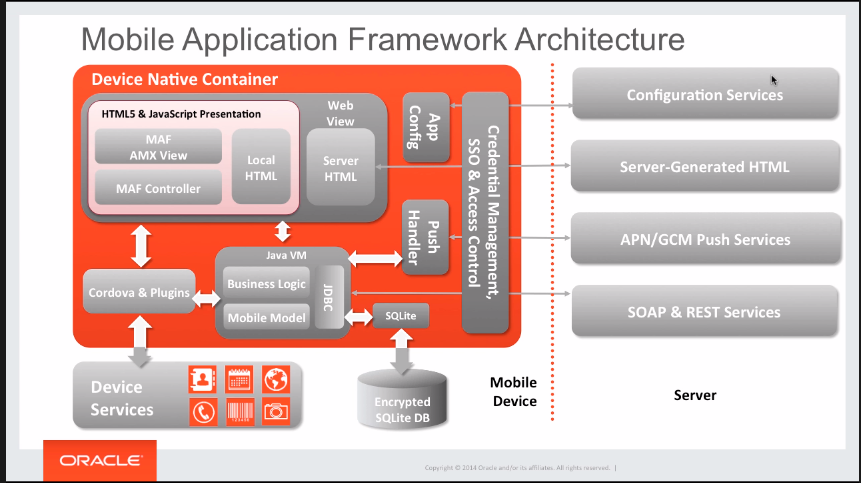
It is interesting that a lot of the tooling requires manual loading of the interface information and focuses on monetisation and security (Apigee, 3Scale etc). Oracle provides these capabilities through the API Management product. But the API catalogue offers the documentation, publication and critically the harvesting capabilities. The only downside is the API Catalogue can only describe SOAP and REST interfaces today.  It would be great to be able to describe other interfaces such as XML over JMS as well. The one advantage that 3Scale and Apigee have at present is the fact they are cloud solutions, Oracle’s API tools are presently not offered as discreet solutions, that said I’d not bet against Oracle launching API Management and API Catalogue as cloud services.

Share this:

  • Share on Facebook (Opens in new window) Facebook
  • Share on X (Opens in new window) X
  • Share on Reddit (Opens in new window) Reddit
  • Share on LinkedIn (Opens in new window) LinkedIn
  • Email a link to a friend (Opens in new window) Email
  • Share on WhatsApp (Opens in new window) WhatsApp
  • Print (Opens in new window) Print
  • Share on Tumblr (Opens in new window) Tumblr
  • Share on Mastodon (Opens in new window) Mastodon
  • Share on Pinterest (Opens in new window) Pinterest
  • Share on Bluesky (Opens in new window) Bluesky
Like Loading...

Oracle & Xamarin Hookup

26 Wednesday Aug 2015

Posted by mp3monster in General, Oracle, Technology

≈ Leave a comment

Tags

"mobile cloud service", Cloud, MAF, MBaaS, MCS, mobile, Oracle, Xamarin

When I first heard about the Oracle & Xamarin tie up to support Oracle’s Mobile Cloud Service  – MCS(to use one of those xaaS acronyms we’re talking MBaaS – Mobile Backend aaS) I was little surprised and puzzled as for any Java/Javascript developer Oracle already their Mobile Application Framework which includes Apache Cordova and some Xamarin style cross compiling for native capabilities for Java.

It’s when you look at information such as that provided by DeveloperEconomics.com some sense becomes apparent. Oracle aren’t so much as abandoning MAF as trying to create conditions where all roads lead to MCS as the 2 most popular cross platform/x-compile mobile frameworks which represent 75% or more of the framework usage.  It is also likely (but I speculate here) that providing an Xamarin API and SDK probably isn’t that significant an investment given all of it has been built to support MAF already.

As late comers to the cloud service market, his sort of approach stands to increase Oracle’s potential to gain market share. The fact that they have got Xamarin onboard and the commitment (regardless of how easy it may have been to leverage existing work) Oracle’s decision to seek global domination in PaaS and SaaS markets. For this to pay off though Oracle need to shed the image of its only for the big boys with deep pockets.

Some helpful other resource:

  • free MAF training and YouTube resources
  • Xamarin development guides

Share this:

  • Share on Facebook (Opens in new window) Facebook
  • Share on X (Opens in new window) X
  • Share on Reddit (Opens in new window) Reddit
  • Share on LinkedIn (Opens in new window) LinkedIn
  • Email a link to a friend (Opens in new window) Email
  • Share on WhatsApp (Opens in new window) WhatsApp
  • Print (Opens in new window) Print
  • Share on Tumblr (Opens in new window) Tumblr
  • Share on Mastodon (Opens in new window) Mastodon
  • Share on Pinterest (Opens in new window) Pinterest
  • Share on Bluesky (Opens in new window) Bluesky
Like Loading...
← Older posts
Newer posts →
    • About
      • AI Disclosure
      • Internet Profile
      • Music Buying
      • Presenting Activities
    • Books & Publications
      • Logging in Action with Fluentd, Kubernetes and More
      • Logs and Telemetry using Fluent Bit
      • Oracle Integration
      • API & API Platform
        • API Useful Resources
        • Useful Reading Sources
    • Mindmaps Index
    • Monster On Music
      • Music Listening
      • Music Reading
    • OpAMP explained: the control plane for observability agents
    • Oracle Resources
    • Useful Tech Resources
      • Fluentd & Fluent Bit Additional stuff
        • Logging Frameworks and Fluent Bit and Fluentd connectivity
        • REGEX for BIC and IBAN processing
      • Formatting etc
      • Java and Graal Useful Links
      • Official Sources for Product Logos
      • Python Setup & related tips
      • Recommended Tech Podcasts

    TOGAF 9

    Logs and Telemetry using Fluent Bit


    Logging in Action — Fluentd

    Logging in Action with Fluentd


    Oracle Ace Director Alumni

    Oracle Cloud Integration Book


    API Platform Book


    Oracle Dev Meetup London

    Blog Categories

    • App Ideas
    • Books
    • Enterprise architecture
    • General
      • ExternalWebPublications
      • LinkedIn
      • Website
    • Music
      • Music Resources
      • Music Reviews
    • Photography
    • Podcasts
    • Security
    • Technology
      • AI
      • APIs & microservices
      • chatbots
      • Cloud
      • Cloud Native
      • Dev Meetup
      • development
        • languages
      • drone
      • Fluent Observability
        • Fluentbit
        • Fluentd
        • OpAMP
      • logsimulator
      • mindmap
      • OMESA
      • Oracle
        • API Platform CS
          • tools
        • ITSO & OEAF
        • OIC – ICS
        • Oracle Cloud Native
        • OUG
      • railroad diagrams
      • TOGAF

    Enter your email address to subscribe to this blog and receive notifications of new posts by email.

    Join 2,628 other subscribers

    RSS

    RSS Feed RSS - Posts

    RSS Feed RSS - Comments

    November 2026
    M T W T F S S
     1
    2345678
    9101112131415
    16171819202122
    23242526272829
    30  
    « Oct    

    Speaker Recognition

    Open Source Summit Speaker

    Twitter

    Tweets by mp3monster

    History

    Flickr Pics

    More Photos

    Social

    • View @mp3monster’s profile on Twitter
    • View philwilkins’s profile on LinkedIn
    • View mp3monster’s profile on GitHub
    • View mp3monster’s profile on Flickr
    • View mp3muncher’s profile on WordPress.org
    • View philmp3monster’s profile on Twitch
    Follow Phil (aka MP3Monster)'s Blog on WordPress.com

    Blog at WordPress.com.

    • Subscribe Subscribed
      Phil (aka MP3Monster)'s Blog
      Join 232 other subscribers

      Have a WordPress.com account? Log in now.

    • Phil (aka MP3Monster)'s Blog
      View site in Reader
      Manage subscriptionsSign upLog in
      Report this content
      Collapse this bar
    Loading Comments...

    You must be logged in to post a comment.

    Privacy & Cookies: This site uses cookies. By continuing to use this website, you agree to their use.
    To find out more, including how to control cookies, see here: Our Cookie Policy
    %d