• Home
  • Site Aliases
    • www.cloud-native.info
  • About
    • Background
    • Presenting Activities
    • Internet Profile
      • LinkedIn
    • About
  • Books & Publications
    • Log Generator
    • Logs and Telemetry using Fluent Bit
      • Fluent Bit book
      • Book Resources in GitHub
      • Fluent Bit Classic to YAML Format configurations
    • Logging in Action with Fluentd, Kubernetes and More
      • Logging in Action with Fluentd – Book
      • Fluentd Book Resources
      • Fluentd & Fluent Bit Additional stuff
    • API & API Platform
      • API Useful Resources
    • Oracle Integration
      • Book Website
      • Useful Reading Sources
    • Publication Contributions
  • Resources
    • GitHub
    • Oracle Integration Site
    • Oracle Resources
    • Mindmaps Index
    • Useful Tech Resources
      • Fluentd & Fluent Bit Additional stuff
      • Recommended Tech Podcasts
      • Official Sources for Product Logos
      • Java and Graal Useful Links
      • Python Setup & related stuff
  • Music
    • Monster On Music
    • Music Listening
    • Music Reading

Phil (aka MP3Monster)'s Blog

~ from Technology to Music

Phil (aka MP3Monster)'s Blog

Category Archives: Book Reviews

Specifically book reviews

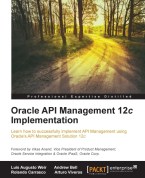
Review of Oracle API Management 12c

22 Monday Feb 2016

Posted by mp3monster in Book Reviews, Books, General, Oracle, Packt, Technology

≈ Leave a comment

Tags

API, book, Oracle, OUG, review

3635en_4575_oracle20api20management2012c20implementation_0My review of the Oracle API Management 12c has been published the the UKOUG at http://www.ukoug.org/what-we-offer/news/review-of-oracle-api-management-12c-implementation/ – rather than repeat the review here, I’d recommed people go read the page.  But I will say here is that it is an excellent book.  The book can be found at:

  • Packt
  • Amazon

Along with a range of other book sellers.

Share this:

  • Click to share on Facebook (Opens in new window) Facebook
  • Click to share on X (Opens in new window) X
  • Click to share on Pocket (Opens in new window) Pocket
  • Click to share on Reddit (Opens in new window) Reddit
  • Click to email a link to a friend (Opens in new window) Email
  • Click to share on WhatsApp (Opens in new window) WhatsApp
  • Click to print (Opens in new window) Print
  • Click to share on Tumblr (Opens in new window) Tumblr
  • Click to share on Mastodon (Opens in new window) Mastodon
  • Click to share on Pinterest (Opens in new window) Pinterest
  • More
  • Click to share on Bluesky (Opens in new window) Bluesky
  • Click to share on LinkedIn (Opens in new window) LinkedIn
Like Loading...

Java EE Development with Eclipse 2nd Edition

06 Tuesday Oct 2015

Posted by mp3monster in Book Reviews, Books, Packt, Technology

≈ Leave a comment

Tags

book, ebook, Eclipse, java, Packt

I have just been told that the 2nd Edition of Java EE Development with Eclipse has now been published.  This is another book that I have supported as a technical reviewer.  Looking forward to receiving my print copy so I can see how my suggestions and feedback have carried through to the final copy.

You can see the book on the Packt site with  https://www.packtpub.com/application-development/java-ee-development-eclipse-second-edition  or Amazon here


IMG_2232

Here is the finished article!

Share this:

  • Click to share on Facebook (Opens in new window) Facebook
  • Click to share on X (Opens in new window) X
  • Click to share on Pocket (Opens in new window) Pocket
  • Click to share on Reddit (Opens in new window) Reddit
  • Click to email a link to a friend (Opens in new window) Email
  • Click to share on WhatsApp (Opens in new window) WhatsApp
  • Click to print (Opens in new window) Print
  • Click to share on Tumblr (Opens in new window) Tumblr
  • Click to share on Mastodon (Opens in new window) Mastodon
  • Click to share on Pinterest (Opens in new window) Pinterest
  • More
  • Click to share on Bluesky (Opens in new window) Bluesky
  • Click to share on LinkedIn (Opens in new window) LinkedIn
Like Loading...

Packt Java EE with Eclipse 2nd Edition

19 Wednesday Aug 2015

Posted by mp3monster in Book Reviews, Books, Packt

≈ Leave a comment

Tags

books, ebook, free, Packt, review

Might be a little early for Packt, but I have completed reviewing the 2nd Edition of Java EE with Eclipse for Packt now.  So the book should be available in the next couple of months.

On the subject of Packt, the Free Learning scheme they are running continues. I’ve seen a couple of books repair since the start of the promotion. But for main part each day is new and different and covers a wide range of things from JQuery and Node, to Hadoop and into Drupal and WordPress. So worth checking back on a daily basis.

All of this means time to do some more Oracle writing.

Share this:

  • Click to share on Facebook (Opens in new window) Facebook
  • Click to share on X (Opens in new window) X
  • Click to share on Pocket (Opens in new window) Pocket
  • Click to share on Reddit (Opens in new window) Reddit
  • Click to email a link to a friend (Opens in new window) Email
  • Click to share on WhatsApp (Opens in new window) WhatsApp
  • Click to print (Opens in new window) Print
  • Click to share on Tumblr (Opens in new window) Tumblr
  • Click to share on Mastodon (Opens in new window) Mastodon
  • Click to share on Pinterest (Opens in new window) Pinterest
  • More
  • Click to share on Bluesky (Opens in new window) Bluesky
  • Click to share on LinkedIn (Opens in new window) LinkedIn
Like Loading...

My Praise for Cloud Patterns Book

17 Tuesday Mar 2015

Posted by mp3monster in Book Reviews, Books, General, Technology

≈ Leave a comment

Tags

book, Cloud, Patterns, servicetech, ServiceTech Press, Thomas Erl

This book continues the very high standard we have come to expect from ServiceTech Press. The book provides well explained vendor agnostic patterns to the challenges of providing or using cloud solutions from PaaS to SaaS. The book is not only a great patterns reference, but also a worth reading from cover to cover as the patterns are thought provoking, drawing out points that you should consider and ask of a potential vendor if you’re adopting a cloud solution.

Phil Wilkins, Enterprise Integration Architect


Useful Links:

  • http://www.cloudpatterns.org/ 
  • http://servicetechbooks.com/cloudpatterns

Share this:

  • Click to share on Facebook (Opens in new window) Facebook
  • Click to share on X (Opens in new window) X
  • Click to share on Pocket (Opens in new window) Pocket
  • Click to share on Reddit (Opens in new window) Reddit
  • Click to email a link to a friend (Opens in new window) Email
  • Click to share on WhatsApp (Opens in new window) WhatsApp
  • Click to print (Opens in new window) Print
  • Click to share on Tumblr (Opens in new window) Tumblr
  • Click to share on Mastodon (Opens in new window) Mastodon
  • Click to share on Pinterest (Opens in new window) Pinterest
  • More
  • Click to share on Bluesky (Opens in new window) Bluesky
  • Click to share on LinkedIn (Opens in new window) LinkedIn
Like Loading...

Ansible Book Review Part 4

14 Saturday Mar 2015

Posted by mp3monster in Book Reviews, Books, Packt, Technology

≈ 1 Comment

Tags

Ansible, automation, AWS, book, Chef, configuration, deployment, DigitalOcean, Docker, Hadoop, Packt, Packt Publishing, Puppet, Puppet Labs, review

This the final part of the detailed look at Packt book, Learning Ansible. As the book says in the opening to chapter 6 we’re into the back straight, into the final mile. The first of  two final  chapters look at provisioning of platforms on Amazon AWS, DigitalOcean and the use of the very hip and cool Docker plus updating your inventory of systems given that we have dynamically introduced new ones.  The approach is illustrated by not only instantiating servers but delivering a configured Hadoop cluster. As with everything else we’ve seen in Ansible there isn’t a standardised approach to all IaaS platforms as that restricts you the lowest common denominator which is contrary to Ansible goals described early on. But deploying the Hadoop elements on the two cloud IaaS providers is common.  Although the chapter is pretty short, I did have to read through this more carefully, as the book leverages a lot of demonstrated features from previous chapters (configuration arrays etc) which meant seeing the key element of the interaction with AWS was harder. It does mean if you tried diving into this chapter straight away, although not impossible does require a bit more investment from the reader to see all the value points. That said it is great to see through the use of the various features how easy to setup the provisioning in the cloud is, and the inventory update. Perhaps the win would have been to just so the simple provision and then the clever approach.

Chapter 7 focuses on Deployment. When I read this, I was a little nonplussed, hadn’t we been reading about this in the previous 6 chapters. But when you look at the definition provided:

“To position (troops) in readiness for combat, as along a front or line.”
Excerpt From: “Learning Ansible.” Packt Publishing. 

You can start to see the true target of what we’re really thinking about, which is the process of going from software build to production readiness. So having  gone through the software packaging activities you need to orchestrate the deployment across potentially multiple servers across a server farm. This orchestration piece is really just pulling together everything that has been explained before but also share some Ansible best practise. Then finally an examination of the Ansible approach for the nodes to pull deployments and updates.

The final piece of the book is an Appendix which looks at the work to bring Ansible to the Windows platform, Ansible Galaxy and Ansible Tower.  Ansible Galaxy is a repository of roles build by the Ansible community. Ansible Tower provides a web front end to the Ansible server. The Tower product is the commercial side of the Ansible company – and effectively sales here fund the full time Ansible development effort.

So to summarise …

The Learning Ansible book explains from first principles to the very rich capabilities of building packaging software, instantiating cloud servers or containers through to configuring systems and deploying applications into new environments; and then capturing instantiated system details into the Ansible inventory. How Ansible compares with the more established solutions in this space in the form of Puppet and Chef is discussed, and the pros and cons of the different tools. All the way through, the books has been written in an easy engaging manner. You might even say wonderfully written. The examples are very good with the possible exception of 2 cases (just merely good in my opinion), the examples are supported with very clear explanations that demonstrate the power of the Ansible product. Even if you choose not to use Ansible, this book does an excellent job of showing the value of not resorting to the ‘black art’ of system build and configuration and suggesting good ways to realising automation of this kind of activity, in many place undoubtedly thought provoking

Prior Review Parts:

  • Part 1
  • Part 2
  • Part 3

Share this:

  • Click to share on Facebook (Opens in new window) Facebook
  • Click to share on X (Opens in new window) X
  • Click to share on Pocket (Opens in new window) Pocket
  • Click to share on Reddit (Opens in new window) Reddit
  • Click to email a link to a friend (Opens in new window) Email
  • Click to share on WhatsApp (Opens in new window) WhatsApp
  • Click to print (Opens in new window) Print
  • Click to share on Tumblr (Opens in new window) Tumblr
  • Click to share on Mastodon (Opens in new window) Mastodon
  • Click to share on Pinterest (Opens in new window) Pinterest
  • More
  • Click to share on Bluesky (Opens in new window) Bluesky
  • Click to share on LinkedIn (Opens in new window) LinkedIn
Like Loading...

Learning Ansible Review Part 3

08 Sunday Mar 2015

Posted by mp3monster in Book Reviews, Books, Packt, Technology

≈ 1 Comment

Tags

Ansible, book, ebook, error, learning, Packt, publishing, python, reporting, review, rollback

Chapters 4 & 5 of Packt’s Learning Ansible continue to build out strategies needed for enterprise class deployment and configuration management, for example error handling, rollback and reporting in chapter 4.  As chapter, the amount of new Ansible capabilities being introduced is not as substantive as prior chapters, and emphasis is more only what could be described as best practise. For example creating Playbooks that have the means to be invoked to re-establish a prior state if the the execution of the current playbook was to throw up an error.  The callback explanation does need a bit more understanding of how Python works as implementing a callback involves a little bit of Python coding, but the points into which you can hook actions is very rich.

From knowing how to trap callbacks it becomes possible to initiate notifications when events occur in playbooks which is where this chapter moves onto with monitoring and alerting. This really focuses on has my playbook executed as expected and reporting back through means such as email, nagios and graphite.  The examples with email and nagios miss a trick, although the text says you can incorporate output from tasks – it isn’t illustrated; yet if something falters you’d want to see the task output.

Chapter 5 goes into how you might write your own custom modules and test them. Ansible will support any language that is available in your target environment, although Python is the recommended language given its general availability and is the language used to write Ansible, and Ansible modules can be leveraged to shorten the effort in creating custom modules. The chapter then walks through examples using Python, Bash shell scripting and Ruby. A lot of the work appears to be centred on extracting the appropriate parameters to allow the module to run with. The final part of the chapter looks at testing with the Python Nose library.

Solid chapters, and perhaps a little shorter than the first few, but importantly continuing to be well written although perhaps a couple of small missed opportunities to be great chapters.

Prior chapter reviews:

  • Learning Ansible Part 2
  • Learning Ansible Part 1

Share this:

  • Click to share on Facebook (Opens in new window) Facebook
  • Click to share on X (Opens in new window) X
  • Click to share on Pocket (Opens in new window) Pocket
  • Click to share on Reddit (Opens in new window) Reddit
  • Click to email a link to a friend (Opens in new window) Email
  • Click to share on WhatsApp (Opens in new window) WhatsApp
  • Click to print (Opens in new window) Print
  • Click to share on Tumblr (Opens in new window) Tumblr
  • Click to share on Mastodon (Opens in new window) Mastodon
  • Click to share on Pinterest (Opens in new window) Pinterest
  • More
  • Click to share on Bluesky (Opens in new window) Bluesky
  • Click to share on LinkedIn (Opens in new window) LinkedIn
Like Loading...

Learning Ansible Review Part 2

18 Wednesday Feb 2015

Posted by mp3monster in Book Reviews, Books, General, Packt, Technology

≈ 2 Comments

Tags

Ansible, book, environments, Git, Packt, Playbooks, review, Spec

Example Ansible playbook

So having had a significant introduction to Ansible and its capabilities, chapter 2 gets into developing Ansible Playbooks. To do this the book confronts development practises of environment creation and management scripts, or the tendency for ops teams not to apply development like rigour. It is refreshing to read things like ….

… seen these practices at close quarters, we firmly believe that these are more or less similar to voodoo practices that need to be done away with.

Excerpt From: “Learning Ansible.” Packt Publishing.


The book does there for dig into the basics of using Git, and illustrating it using the configuration files from an earlier example. The next step would be if you follow development practises to use a Continuous Integration (CI). The book is surprisingly brief on this subject, compared to say Git.

In a development lifecycle the next step is to test, which elegantly introduces Ansible and Vagrant for instantiating virtual machines that the Ansible playbook can be tested against.

This creates the environment by which several additional capabilities provided by Ansible can aide testing activities particularly the ability to tag activities and then run the Ansible script targeting the specifically tagged activities. The additional ability that allows Ansible Playbooks to be executed in a way that allows it only tell what would be changed, rather than perform the change.

The book takes you on from there to introducing how Serverspec could be used. Things for me gain a little too much velocity, perhaps it doesn’t help that I am not familiar with Ruby.

The final part of the chapter and we’re back on solid ground with options on configuring SCM solutions such as Git to support deployment and how Ansible can support the same playbook in different environments such production, preproduction where the playbook is the same but you will be working with different server ids and credentials.

Even if you weren’t to use Ansible there are some thought provoking and good principles for config management and system scripting here.

So by having completed the first two chapters all the principle of Ansible are covered along a range of guiding practises that reflect good development practises in the context of producing environment management. There are limits and the next chapters then go into how to build upon the basics for so it is easy to create  more advanced Playbooks for real world environments with capabilities like playbook iteration, including Playbooks within Playbooks and conditionals for example.

The chapter builds upon the simple examples used on the first chapters showing how the Playbooks can be made to be a lot smarter. For example rather than a task to install each individual application required you can build a table of configuration values and get the task to iterate through the set of RPMs and versions for example. The structures to iterate over can be multi dimensional so you can define some advanced configuration and keep the tasks simple. By building on the earlier examples it helps highlight the benefits of the feature being explained which really helps.

Other features explained here include handlers, so you can trigger one or more activities to be performed once the playbook tasks have completed – so restarting processes can be executed only when all tasks are completed for example.  Other development like features like including other Playbooks are introduced (inline with the idea of DRY – Don’t Repeat Yourself). This leads into using roles, where than identifying your target servers by name or IP you can bring everything together by assigning the server roles e.g. DBTier, AppTier etc. The final two elements are the approach to templating using the Python Jinga2 framework and most crucially given that you will be handling configuration data and passwords Security.

Another couple of well written chapters that embody both insight into Ansible but also hung on the good development ideas so even if you choose not to use Ansible, some of the thinking here could be applied or at-least used to formulate questions as to how the ideas might translate to chef or puppet for example.


Share this:

  • Click to share on Facebook (Opens in new window) Facebook
  • Click to share on X (Opens in new window) X
  • Click to share on Pocket (Opens in new window) Pocket
  • Click to share on Reddit (Opens in new window) Reddit
  • Click to email a link to a friend (Opens in new window) Email
  • Click to share on WhatsApp (Opens in new window) WhatsApp
  • Click to print (Opens in new window) Print
  • Click to share on Tumblr (Opens in new window) Tumblr
  • Click to share on Mastodon (Opens in new window) Mastodon
  • Click to share on Pinterest (Opens in new window) Pinterest
  • More
  • Click to share on Bluesky (Opens in new window) Bluesky
  • Click to share on LinkedIn (Opens in new window) LinkedIn
Like Loading...

Learning Ansible Review Part 1

05 Thursday Feb 2015

Posted by mp3monster in Book Reviews, Books, Packt, Technology

≈ 2 Comments

Tags

Ansible, automation, book, Chef, Packt, Puppet, review, SSH

I was going to publish the first part of my review of the Packt book Learning Ansible after every couple of chapters, but the preface and 1st chapter are pretty substantive not mention starts to address some of my questions regarding Ansible compared to Puppet and Chef.

So the first thing that is sticking is that the author’s style is a very easy to read flowing style. It means that your entire focus is on the content, and you don’t feel like you’re being lectured.

The preface is carries a lot of really valuable content setting the context and capabilities into which Ansible is working. It openly identifies the other leading products covering the different aspects in which someone interested in the space would want to know about or may already understand. So the following areas are called out:

  • Configuration Management
  • Provisioning
  • Deployment
  • Orchestration
  • Monitoring and Alerting
  • Logging

Chapter 1 pretty much faces into the question of differentiating Ansible from Chef and Puppet. The key being that Ansible is not a master and distributed client model which Puppet and Chef offer (although both offer a Masterless models which just distribute the client). What is missing from this initial conversation is that consideration of security. In a master and client model security can be stronger because even if you compromise the master, you still have an intermediary in the agent to protect against malicious actions. Where as breaching the Ansible node means you will have obtained SSH access to all the nodes available for management as this is how Ansible interacts with the nodes it is managing.

Despite this, the arguments are simply laid out, particularly the other significant difference is that a lot of the client-agent approaches mean they offer an abstraction of the types of activities you might want for example install an application which are abstracted from the likes of msi, yum, Red Hat Network and so on. The argument for not having this is that to provide abstraction you potentially end up dropping to the lowest common denominator (unless the tool implements capabilities not naturally available on the platform). A very fair and valid argument. It is also likely in an enterprise environment you’re probably using a small set of different types of environment and potentially only type type of environment for different solutions I.e. Your website is unlikely to be hosted by servers running Red Hat, Debian, Ubuntu and Fedora.

The first chapter takes you through a series of simple examples derived from a classic variant of IT’s classic Hello World solution. This does make for a sizeable first chapter (about 1/5th of the book) but does introduce all the core principles, ideas and capabilities that are embodied and provided by Ansible. If you want to know whether Ansible is likely to meet what you want to do then reading just this chapter will probably give you a view on whether you’re likely to be able to do what you want.

Although the book makes references to the support of Windows, but this is still in Alpha phase (Ansible Windows is Coming).This does mean that the examples are Linux only. Additionally it appears from the ansible site (the book doesn’t provide any indication of this) the central Ansible node(s) will still have to be Linux. The book in this case appears to trying to future proof itself. We hope that the author will provide Windows equivalent downloadable demos.

The long and short of it, a great start to a book.

Share this:

  • Click to share on Facebook (Opens in new window) Facebook
  • Click to share on X (Opens in new window) X
  • Click to share on Pocket (Opens in new window) Pocket
  • Click to share on Reddit (Opens in new window) Reddit
  • Click to email a link to a friend (Opens in new window) Email
  • Click to share on WhatsApp (Opens in new window) WhatsApp
  • Click to print (Opens in new window) Print
  • Click to share on Tumblr (Opens in new window) Tumblr
  • Click to share on Mastodon (Opens in new window) Mastodon
  • Click to share on Pinterest (Opens in new window) Pinterest
  • More
  • Click to share on Bluesky (Opens in new window) Bluesky
  • Click to share on LinkedIn (Opens in new window) LinkedIn
Like Loading...

Next Generation SOA book – part of the Thomas Erl Series

14 Sunday Sep 2014

Posted by mp3monster in Book Reviews, Books, General

≈ 1 Comment

Tags

book, erl, next gen, praise, review, SOA

I recently contributed to the prepublication review of the Next Generation SOA book. Aside from offering feedback, I also provided some praise for the book which has been published at servicetechbooks.com/nextgen and quoted below …

“This is the perfect book for anyone who wants to refresh, or get a handle on the foundations of SOA without delving into the deep technical details & implementation specifics. By working from the principles, the book shows how the SOA concepts and goals have matured, influenced and grown with technologies such as Master Data, Virtualization and Cloud. The book points to other volumes in the series for the depth of detail and technicalities, allowing you to get the broad picture view and without any vendor colouration.”

– Phil Wilkins, Enterprise Integration Architect

I would actively recommend the book to anyone who has an IT leadership role.

IMG_0099.JPG

Share this:

  • Click to share on Facebook (Opens in new window) Facebook
  • Click to share on X (Opens in new window) X
  • Click to share on Pocket (Opens in new window) Pocket
  • Click to share on Reddit (Opens in new window) Reddit
  • Click to email a link to a friend (Opens in new window) Email
  • Click to share on WhatsApp (Opens in new window) WhatsApp
  • Click to print (Opens in new window) Print
  • Click to share on Tumblr (Opens in new window) Tumblr
  • Click to share on Mastodon (Opens in new window) Mastodon
  • Click to share on Pinterest (Opens in new window) Pinterest
  • More
  • Click to share on Bluesky (Opens in new window) Bluesky
  • Click to share on LinkedIn (Opens in new window) LinkedIn
Like Loading...

Puppet Reporting & Monitoring Book Review

27 Friday Jun 2014

Posted by mp3monster in Book Reviews, Books, General, Packt, Technology

≈ Leave a comment

Tags

book, Michael Duffy, monitoring, Packt, packtpub, Puppet, reporting, review, Ruby

So the Packt book (Puppet Reporting and Monitoring) focuses down on a couple of aspects of the Puppet Toolset, as a result this is a relatively short book with only a couple hundred pages. As an enterprise architect I am no expert Puppet practitioner, my knowledge of Ruby is high level (part of the reason I reviewed this book is I wanted to better understand the art of the possible in these areas).  But despite this the book does an exceptionally good job defining a context and then explaining and showing what could be done, down to code examples.  In doing so, the author Michael Duffy introduces a number of open source libraries that can be leveraged to provide dashboard views, presentation of report content whilst maximising the leveraging of the Puppet ecosystem such as the Puppet DB (an abstracted database with a REST + JSON API).  The book goes beyond just implementation of monitoring and reporting but also engages with considerations such as deployment.  without ‘boiling the ocean’ the book provides a very good illustrations of the art of the possible and provides plenty of references to source information so working how you want to implement you own solutions.

My only criticism of the book, and it is a minor one at that is a few more diagrams to help illustrate ideas (particularly in the first chapter when discussing deployment considerations) would help get ideas across easily.

On the strength of this  book,  I hope that Michael considers taking on other authoring projects as this has been one of the best written technical books I’ve read in sometime.

Puppet Reporting & Monitoring
Useful Links:

  • Book – http://bit.ly/1qbSxKC
  • Puppet Labs – http://puppetlabs.com/
  • Puppet DB – http://docs.puppetlabs.com/puppetdb/
  • Ruby – https://www.ruby-lang.org/
  • Michael Duffy – http://www.stunthamster.com/, http://uk.linkedin.com/pub/michael-duffy/40/809/17a

Share this:

  • Click to share on Facebook (Opens in new window) Facebook
  • Click to share on X (Opens in new window) X
  • Click to share on Pocket (Opens in new window) Pocket
  • Click to share on Reddit (Opens in new window) Reddit
  • Click to email a link to a friend (Opens in new window) Email
  • Click to share on WhatsApp (Opens in new window) WhatsApp
  • Click to print (Opens in new window) Print
  • Click to share on Tumblr (Opens in new window) Tumblr
  • Click to share on Mastodon (Opens in new window) Mastodon
  • Click to share on Pinterest (Opens in new window) Pinterest
  • More
  • Click to share on Bluesky (Opens in new window) Bluesky
  • Click to share on LinkedIn (Opens in new window) LinkedIn
Like Loading...
← Older posts
Newer posts →

    I work for Oracle, all opinions here are my own & do not necessarily reflect the views of Oracle

    • About
      • Internet Profile
      • Music Buying
      • Presenting Activities
    • Books & Publications
      • Logging in Action with Fluentd, Kubernetes and More
      • Logs and Telemetry using Fluent Bit
      • Oracle Integration
      • API & API Platform
        • API Useful Resources
        • Useful Reading Sources
    • Mindmaps Index
    • Monster On Music
      • Music Listening
      • Music Reading
    • Oracle Resources
    • Useful Tech Resources
      • Fluentd & Fluent Bit Additional stuff
        • Logging Frameworks and Fluent Bit and Fluentd connectivity
        • REGEX for BIC and IBAN processing
      • Java and Graal Useful Links
      • Official Sources for Product Logos
      • Python Setup & related tips
      • Recommended Tech Podcasts

    Oracle Ace Director Alumni

    TOGAF 9

    Logs and Telemetry using Fluent Bit


    Logging in Action — Fluentd

    Logging in Action with Fluentd


    Oracle Cloud Integration Book


    API Platform Book


    Oracle Dev Meetup London

    Blog Categories

    • App Ideas
    • Books
      • Book Reviews
      • manning
      • Oracle Press
      • Packt
    • Enterprise architecture
    • General
      • economy
      • ExternalWebPublications
      • LinkedIn
      • Website
    • Music
      • Music Resources
      • Music Reviews
    • Photography
    • Podcasts
    • Technology
      • AI
      • APIs & microservices
      • chatbots
      • Cloud
      • Cloud Native
      • Dev Meetup
      • development
        • languages
          • java
          • node.js
      • drone
      • Fluentbit
      • Fluentd
      • logsimulator
      • mindmap
      • OMESA
      • Oracle
        • API Platform CS
          • tools
        • Helidon
        • ITSO & OEAF
        • Java Cloud
        • NodeJS Cloud
        • OIC – ICS
        • Oracle Cloud Native
        • OUG
      • railroad diagrams
      • TOGAF
    • xxRetired
    • AI
    • API Platform CS
    • APIs & microservices
    • App Ideas
    • Book Reviews
    • Books
    • chatbots
    • Cloud
    • Cloud Native
    • Dev Meetup
    • development
    • drone
    • economy
    • Enterprise architecture
    • ExternalWebPublications
    • Fluentbit
    • Fluentd
    • General
    • Helidon
    • ITSO & OEAF
    • java
    • Java Cloud
    • languages
    • LinkedIn
    • logsimulator
    • manning
    • mindmap
    • Music
    • Music Resources
    • Music Reviews
    • node.js
    • NodeJS Cloud
    • OIC – ICS
    • OMESA
    • Oracle
    • Oracle Cloud Native
    • Oracle Press
    • OUG
    • Packt
    • Photography
    • Podcasts
    • railroad diagrams
    • Technology
    • TOGAF
    • tools
    • Website
    • xxRetired

    Enter your email address to subscribe to this blog and receive notifications of new posts by email.

    Join 2,555 other subscribers

    RSS

    RSS Feed RSS - Posts

    RSS Feed RSS - Comments

    December 2025
    M T W T F S S
    1234567
    891011121314
    15161718192021
    22232425262728
    293031  
    « Nov    

    Twitter

    Tweets by mp3monster

    History

    Speaker Recognition

    Open Source Summit Speaker

    Flickr Pics

    Turin Brakes Acoustic Tour 24 @ The Maltings FarnhamTurin Brakes Acoustic Tour 24 @ The Maltings FarnhamTurin Brakes Acoustic Tour 24 @ The Maltings FarnhamTurin Brakes Acoustic Tour 24 @ The Maltings Farnham
    More Photos

    Social

    • View @mp3monster’s profile on Twitter
    • View philwilkins’s profile on LinkedIn
    • View mp3monster’s profile on GitHub
    • View mp3monster’s profile on Flickr
    • View mp3muncher’s profile on WordPress.org
    • View philmp3monster’s profile on Twitch
    Follow Phil (aka MP3Monster)'s Blog on WordPress.com

    Blog at WordPress.com.

    • Subscribe Subscribed
      • Phil (aka MP3Monster)'s Blog
      • Join 233 other subscribers
      • Already have a WordPress.com account? Log in now.
      • Phil (aka MP3Monster)'s Blog
      • Subscribe Subscribed
      • Sign up
      • Log in
      • Report this content
      • View site in Reader
      • Manage subscriptions
      • Collapse this bar
     

    Loading Comments...
     

    You must be logged in to post a comment.

      Privacy & Cookies: This site uses cookies. By continuing to use this website, you agree to their use.
      To find out more, including how to control cookies, see here: Our Cookie Policy
      %d