The book is progressing well – we have the cover art mocked up now and a domain for any additional stuff we do to support the book – http://oracle-integration.cloud/ ….


27 Friday May 2016
The book is progressing well – we have the cover art mocked up now and a domain for any additional stuff we do to support the book – http://oracle-integration.cloud/ ….
02 Saturday Apr 2016
Posted in General, Oracle, Technology
Tags
apiary, apiary.io, Boomerang, Citizen Integrator, Cloud, mockable, mockable.io, mocking, OIC - ICS, Oracle, REST, SOAP, SoapUI, testing, WSDL
 We’ve been developing the example integrations to go with book on ICS and have encountered some interesting challenges for the Citizen Integrator (CI) when using an iPaaS (integration Platform as a Service). To say it in non techno speak someone wanting to plumb system together without needing to be equipped and have the skills of a developer and just using the cloud. One such example is SOAP API testing, before connecting live systems together even a CI will probably want to check that you have mapped the data correctly – important when you’ve potentially got functions and repeating structures in the mapping. To go back to my old analogy that tools for a CI like ICS are the same as Excel to ERP. Then like when creating formulas in a spreadsheet you’re going to plumb in some numbers and check the formula’s results before using in anger.
So far so obvious, the fun comes not when you’re wanting to simulate the source event coming into the tool – this can be done through a raft of utilities from Chrome Browser extensions such as Boomerang,  SoapUI for example. Things become a lot more challenging when comes when you want the integration output to go to a mock SOAP API. The choices available are limited, and pretty much come down to:

With REST services things are somewhat easier, as there is a lot more tools geared to helping the design of APIs, testing them and critically providing a proxy based framework  to enable monetisation. For example Apiary.io can create a test harness for you. Others such as Apigee, also offer such abilities. Apiary offers a trial account and we’ll be hearing a lot more about Apiary in the near future. There is a possible work around, which is to create test integrations that map the SOAP content into a REST service (Apigee offers such a capability) but with certain constraints you could also do this within ICS itself. But we’ll look at such options within the book (can’t go without to money shot 😀 ).
This of course has only looked at the conventional use of SOAP, if you need to work with a SOAP interface that makes use of the more advanced WS-* extensions such as Reliable Messaging then things come pretty serious, and I’m afraid today you’re going to need to resort to development, and I suspect you’ll not escape that in the future either.
19 Saturday Mar 2016
Posted in General, Oracle, Technology
 Although Oracle have been late to the cloud party they are certainly making up for it, by bringing products to the cloud at an amazing pace, and using their core products to build out new offerings at a rate that will mean they will at least catch all the competition across the breadth of PaaS very quickly.
When it comes to taking on Oracle PaaS it does have some quirks, some relate to Oracle’s normal licensing approach, and others I’m told relate to the way US accounting has to work when it comes to realised revenue. A couple of other characteristics I suspect are linked to the fact that the infrastructure for Oracle’s cloud is still being rolled out and grown for capacity.
So firstly the carry over – well outside of a trial account you need to agree and sign a general agreement which provides an overarching legal framework defining terms, conditions and liabilities. This makes dealing with each subsequent purchase a little simpler. Rather than purchasing services as you go, you then purchase credits from Oracle which have a maximum life of 1 year. This does mean you’re not got a pure OPEX spend model – although you do stand a chance of negotiating a better deal as the numbers are naturally bigger. As part of the agreement you’ll get a rate card, so different services cost different amounts – for example a standard edition database will cost x and an enterprise high performance version will cost a bit more. The credits are for specific product families such as SaaS products, products in the PaaS domain for example document cloud, Java cloud, SOA and so on. But make sure the products you might want are in the families you get credits for, there is the odd surprise for example MBaaS isn’t in the same family as the integration products.
In addition your negotiation you need to consider whether services are in metered or unmetered models. Unmetered means you agree a level of capacity for the year. This will obviously work out cheaper than a metered model where you can use up your credits as you choose, with different metering rates – for example hourly and monthly. When this was first explained it looked really good for dealing with the situation of having a baseline demand which could be unmetered and then purchasing metered services to capacity burst. Sadly this isn’t possible out of the box. I suspect because of the way Oracle cloud allocates workload to different work domains. So bursting workload would have to be done as if you’re bursting in 2 different clouds. So if you have a dynamic load you either go unmetered to your maximum demand or metered for everything. Either way you’re not getting the best in terms of cost management. I have to admit I don’t know whether the likes of AWS and Azure when you enter into long term agreements have the same challenges.
One the positive side, with the credits you can then purchase a broad range of configurations of products from just ADB schema all the way a full size Exadata setup. So performing PoCs is pretty easy and figuring out scaling just means burning your credits quickly and instantiating more capacity.
Before getting into instantiating your cloud instances you’d best setup access controls to allow people access controls to creating instances. Then you can start creating instances of the products you want. Make sure you protect your credentials as the way things are setup anyone else recovering them will be a problem.
With services such as SOA and Java you do need to go through the process of creating the different layers, storage, then the database and so on. But unlike building on premise each step only requires a couple of clicks and your done. To put it into context the first time I built a small footprint 11g environment took me a couple of days to work my way through on my own create a DB, deploy RCU,Weblogic, SOA and AIA foundation (no load balancing or security etc) and was no way near secure as a cloud instance. Oracle PaaS in three hours we:
With SOA CS and atleast some of the other cloud offerings you also get SSH access to the OS so you can tinker and tune your SOA container and Weblogic etc. Some would argue that totally undermines the ideal of PaaS and that exploiting such a capability means you can end up customising your deployment to the point it will break the moment an update or patch comes along. So it is very double edged. In my mind (but I’m a techie at heart so seeing the engine running is always interesting) it’s good, but must be handled with great care. As they say – with great freedom comes great responsibility.
One of the real wins is that Oracle allocate customers a Cloud Success Manager who are tasked with enabling you to use the Oracle cloud – any problems, guidance needed can be addressed through these people. A cynic might say they exist to help you spend money which becomes released revenue. But our experience is the CSMs are genuinely enthusiastic and helpful – answering questions at 6pm on a Friday (despite my school boy error).
So in our experience so far I’d suggest Oracle could do two things to really make a big advancement – commercially atleast:
This was first made available at https://community.oracle.com/groups/united-kingdom-user-group/blog/2016/03/25/starting-with-oracles-soa-cs
19 Saturday Mar 2016
Posted in General, Oracle, Technology
Many organisations come to cloud from an approach of ‘not my computer’. This is occurs for a number of reasons but considerations such as:

But cloud by which I mean IaaS (Infrastructure as a Service), does not really equate to someone housing my computer, or potentially even as simple as virtualising my computer. This comes from several factors:
So how does this relate to Oracle and High Availability? Well when you want to make you data tier of an oracle solution both highly available as well as scaling through scale out you end up using Real Application Cluster (RAC) at the database. Simply providing VM resilience will not give sufficient availability for continuously on conditions, you need the software tier to continuously pickup demand, and availability of servers to do that is handled by the virtualisation tier so if you have a node failure then you will have at least 1 remaining whilst the virtualisation launches another instance.
 The problems start because RAC has some platform requirements (disk sharing either virtual or physical) that can’t be offered by all cloud (IaaS) that can be typically established with on premise hardware such as a SAN. Microsoft Azure has one of these very issues meaning it presently can’t run RAC (see here). Amazon doesn’t have this issue (details here) and obviously not be a problem for Oracle cloud (see here).
 The second consideration that tends to get overlooked is data centre level DR. It is very easy to forget regardless how good the data centre is with precautions and redundancy there are some events that can bring a centre down. Even the most sophisticated monitoring and live VM movement can’t avoid the data centre level problems. There are well published illustrations of such issues, the best known are those Amazon have had (probably because it has hit some many customers – Amazon’s own analysis of one event here). So if you want a truly resilient always on, you need Dataguard replicating to another data centre if possible. You can of course use Dataguard within a data centre as well to offset the possibility on not having RAC, but it does mean scaling is limited to what you can do vertically (I.e. More CPU cores, more memory, or disk). It will also place different demands on the design of you application tiers.
22 Monday Feb 2016
Posted in Books, General, Oracle, Technology
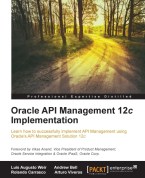 My review of the Oracle API Management 12c has been published the the UKOUG at http://www.ukoug.org/what-we-offer/news/review-of-oracle-api-management-12c-implementation/ – rather than repeat the review here, I’d recommed people go read the page. But I will say here is that it is an excellent book. The book can be found at:
Along with a range of other book sellers.
15 Monday Feb 2016
Posted in General, Oracle, Technology
 So the A-Team (not the TV show which managed to have lots of things blow up and no one ever get hurt) but the technology gurus at Oracle have started to write blog posts about Integration Cloud Service (ICS). This is will be a reflection of the increasing uptake of the cloud service. A fellow Oracle Ace Associate (Robert van Mölken – blog here) and I should about to get a book on the subject underway.
As an aside to this, as part of creating a case to the publishers of the potential value of a book on the subject, I picked up a number of market assessments which are pretty interesting:
All that before you look at what other analysts are saying such as Forrester, Ovum and others.
14 Sunday Feb 2016
Posted in General, ITSO & OEAF, mindmap, Oracle, Technology
So I have been chipping away at my mind mapping of the foundation reference architecture from Oracle (part of the IT Strategies from Oracle – ITSO material). So I have recently updated the mind map. You can see it via WiseMapping here. Navigate an image of it below (very large now).

15 Friday Jan 2016
We’ve just passed the submission deadline for the next edition of Oracle Scene. So the submitted articles have been shared with the review team. I have to admit, I look forward the week after the deadline, a chance to read the raw articles before all the art work is applied, layout applied etc.
Each article teaches you something new and you’re reminded just how big the Oracle ecosystem is (something that is easy to forget when you’re working day to day in your own specialism).
The review process does throw up the odd bump – the occasional article that reads more like an Infomercial (which usually result in a recommendation not to include) and occasionally the article where you’re not entirely sure what the author is trying to get across. But these later scenarios, the reviewers will make suggestions on how to refine a submission.
The sense of joy and reward in reviewing is easily beaten by submitting an article and seeing it published and feeling the published article in printed form. Don’t just take my word for it – Martin Widlake writes about it on his blog here.
I ‘ve had 1 proper article in Oracle Scene here and a couple of smaller pieces such as book reviews included. The reward of being published can only be topped by your article being used to inform the cover art. I have been fortunate enough to have achieved that with an article for the Oracle Apps User Group (OAUG) with an article called Journey To The Cloud.
  The only down side is OAUG are more restrictive on access, and you have to be a member to see the article.
So go on, write an article – I hope that i’ll be reviewing it in the near future.
10 Sunday Jan 2016
Posted in General, Oracle, Technology
 So Oracle have determined to become a cloud solution vendor. This includes offering DBaaS, with several options being offered built on the core Oracle database. But Oracle also owns MySQL, as a foot hold into the more open source centric community. Which brings us to our question, will Oracle offer the MySQL community a DBaaS? There certainly appears to be a demand for the capability with a number of vendors offering such a capability including Amazon RDS and ScaleDB (a more comprehensive list of vendors can be seen at Butler Analytics).
A superficial response would be, why have two DBaaS solutions? After all Oracle provides a migration tool which could be used to transition an on-premise MySQL solution so it can work on the DBaaS (about the transition see Oracle here). But DBaaS can eliminate the platform and basic configuration considerations, but it doesn’t overcome the means by which you can tune and optimise the database – this requires the skill and knowledge of your DBA and how many DBAs are practising experts on both platforms? It won’t address the SQL that may be wired into the code (particularly if the SQL include database hints) including the subtle differences in JDBC connector differences.
During Open World 15, Larry Ellison declared that he was going to take the battle to Amazon when it comes to cloud services. By offering MySQL as a DBaaS it would certainly be going toe to toe with RDS. At the same time opening new entry level cloud offering.
It is worth also considering the fact that a lot of the uptake of Oracle cloud solutions have SaaS solutions aren’t the traditional large on premise organisations for the main, but the midsized businesses that see SaaS as a means to get enterprise solutions for a fraction of the cost of running (or trying to run) themselves. It is these organisations who will probably also want to leverage MySQL to get the smaller footprint services running such as web front ends running on solutions such as Drupal or WordPress.
31 Thursday Dec 2015
Posted in General, Oracle, Technology
A while back I posted about using the use of Node.js cloud service Oracle had marked as coming soon (Blog post here). Well we have checked back to see if the free trial is openly available and it still appears not yet to be the case. But more than that, Oracle have reorganised the capability here to form what they are now calling Application Container Cloud (ACC). The application container cloud provides a number of options for running Node.js or a pure play J2SE solution.

The good news is that there is a lot more detail of what the options are with this cloud which includes just Node.js – the details can be seen here. So node 0.10 and 0.12 are supported and JDKs 7 & 8 are supported. With the JDK you also get the use of cruise control. The metering periods go down to the hour as well which is great for PoC activities. The level of detail provided, suggests that these cloud solutions are currently available to partners and paying customers (the JDK service is certainly the case based on discussions I have had with my account manager). So hopefully as Oracle rollout their cloud offerings into data centres and capacity grows we should see public trial access.
 Note: ACC has now been superseded by Oracle Kubernetes Engine (OKE)


You must be logged in to post a comment.