• Home
  • Site Aliases
    • www.cloud-native.info
  • About
    • Background
    • Presenting Activities
    • Internet Profile
      • LinkedIn
    • About
  • Books & Publications
    • Log Generator
    • Logs and Telemetry using Fluent Bit
      • Fluent Bit book
      • Book Resources in GitHub
      • Fluent Bit Classic to YAML Format configurations
    • Logging in Action with Fluentd, Kubernetes and More
      • Logging in Action with Fluentd – Book
      • Fluentd Book Resources
      • Fluentd & Fluent Bit Additional stuff
    • API & API Platform
      • API Useful Resources
    • Oracle Integration
      • Book Website
      • Useful Reading Sources
    • Publication Contributions
  • Resources
    • GitHub
    • Oracle Integration Site
    • Oracle Resources
    • Mindmaps Index
    • Useful Tech Resources
      • Fluentd & Fluent Bit Additional stuff
      • Recommended Tech Podcasts
      • Official Sources for Product Logos
      • Java and Graal Useful Links
      • Python Setup & related stuff
      • DevTips
  • Music
    • Monster On Music
    • Music Listening
    • Music Reading

Phil (aka MP3Monster)'s Blog

~ from Technology to Music

Phil (aka MP3Monster)'s Blog

Category Archives: Technology

Booking Puppet and SOA

21 Thursday Aug 2014

Posted by mp3monster in Books, General, Technology

≈ Leave a comment

Tags

Archtura, book, books, Packt, Patterns, Puppet, review, SOA, Thomas Erl

So having been a little quiet on the book review side of things, having had a bit of time away with the family Packt have asked me to take a look at their book Mastering Puppet  (Packt site, Amazon); and excitingly I have been talking with people at Architura (the people behind the Thomas ERL SOA books published by Prentice Hall (Amazon)) and the architecture resources such as SOA Patterns with the possibility of contributing to the pre-publication reviewing of a new book in the series in the next month or so – should be interesting.

Talking of pre-publication reviews Applied SOA Patterns on the Oracle Platform which I contributed reviews to is now publisher on the Packt Site and Amazon.


Share this:

  • Share on Facebook (Opens in new window) Facebook
  • Share on X (Opens in new window) X
  • Share on Reddit (Opens in new window) Reddit
  • Email a link to a friend (Opens in new window) Email
  • Share on WhatsApp (Opens in new window) WhatsApp
  • Print (Opens in new window) Print
  • Share on Tumblr (Opens in new window) Tumblr
  • Share on Mastodon (Opens in new window) Mastodon
  • Share on Pinterest (Opens in new window) Pinterest
  • More
  • Share on Bluesky (Opens in new window) Bluesky
  • Share on LinkedIn (Opens in new window) LinkedIn
Like Loading...

JDeveloper 12c

29 Tuesday Jul 2014

Posted by mp3monster in General, Oracle, Technology

≈ Leave a comment

Tags

11g, 12c, editor, JDeveloper, Oracle, SOA Suite, XSD

So I have been using JDeveloper 11g for a while and have to admit that I wasn’t a big fan finding a bit flaky and prone to crashing. The biggest driver to using it has been the fact that it offers a lot of XMLSpy like features without the stupidly high XMLSpy license costs.

With JDeveloper 12c arriving I took the opportunity to give it a go. Wow, is it so much better – quicker particularly during the startup cycle and way more reliable. The features around XSD editing haven’t significantly changed but just feels subtly easier to use.

With all the features around working with SOA Suite 12c and Weblogic 12c for core Oracle development I can imagine it is a huge step forward.

With the easier deployment of 12c getting PoC work done should be a lot easier. It’s just a shame still needs that huge 8GB footprint to do anything meaningful and my company laptop being a notebook (great for travelling with) doesn’t pack that punch and Oracle isn’t yet offering low cost SOA Suite deployments in the cloud yet.

Share this:

  • Share on Facebook (Opens in new window) Facebook
  • Share on X (Opens in new window) X
  • Share on Reddit (Opens in new window) Reddit
  • Email a link to a friend (Opens in new window) Email
  • Share on WhatsApp (Opens in new window) WhatsApp
  • Print (Opens in new window) Print
  • Share on Tumblr (Opens in new window) Tumblr
  • Share on Mastodon (Opens in new window) Mastodon
  • Share on Pinterest (Opens in new window) Pinterest
  • More
  • Share on Bluesky (Opens in new window) Bluesky
  • Share on LinkedIn (Opens in new window) LinkedIn
Like Loading...

Evaluating SSL certificates for SaaS

29 Tuesday Jul 2014

Posted by mp3monster in General, Technology

≈ Leave a comment

Tags

cryptography, NIST, SaaS, Security, sophos, SSL

So when looking at SaaS solutions one of the things we consider is the strength of the SSL certificate, and when using a small provider who the Certificate Authority as commercial authorities will provide insurance for a breach which can go to paying some of the cleanup costs (assuming the breach isn’t from negligence).

So how to evaluate SSL certificates in terms of robustness (i.e. cryptographic strength) after all some people will talk. About 128 bit certificates and others such as Google mention 2048 which on the surface don’t seem comparable.

So the bit length is to do with the cryptographic algorithm used of which there are several such as AES, 3DES and so on. No I’m no expert on this so I won’t presume to explain the pros and cons of the different algorithms, there are other resources on the web for that (such as this document).

The point I have been working towards is that NIST (National Institute of Standards and Technology)(aside from being a good resource on security) have tables  that recommends the size of the key used to help build the certificate (the document is here and tables 1 & 2 contain the key details, more here). The tables shown below takes into account the algorithm (therefore a comparator on key size) but also a recommended growth in key size.


NISTTable2 NISTTable


An alternative representation of the same information can be found here and the 1st table here.

So why grow a key size well one of the factors in driving key size is that as computing power increases the time and effort to brute force crack of a key shrinks. So every time the key size increases so does the effort to brute force the cracking of the key.

This leads to secondary consideration – that of the certificate life i.e. how long the certificate is valid for. This is in effect to potentially greatest period of exposure based on the fact that someone may brute force your certificate and then simply listen to the traffic so you never know of the compromise. Obviously you can revoke the certificate at any time.

Finally remember the need and level of security should be informed by assessing the data being transferred (in motion). Data security should also be considered for data at rest I.e being stored (data loss from a data store is likely to be far more damaging).

Share this:

  • Share on Facebook (Opens in new window) Facebook
  • Share on X (Opens in new window) X
  • Share on Reddit (Opens in new window) Reddit
  • Email a link to a friend (Opens in new window) Email
  • Share on WhatsApp (Opens in new window) WhatsApp
  • Print (Opens in new window) Print
  • Share on Tumblr (Opens in new window) Tumblr
  • Share on Mastodon (Opens in new window) Mastodon
  • Share on Pinterest (Opens in new window) Pinterest
  • More
  • Share on Bluesky (Opens in new window) Bluesky
  • Share on LinkedIn (Opens in new window) LinkedIn
Like Loading...

Review of Creating Flat Design Websites

18 Friday Jul 2014

Posted by mp3monster in Books, General, Technology

≈ Leave a comment

Tags

book, Bootstrap, Design, Designmodo, HTML, Packt, review, skeuomorphic, UI, website

I always find when looking at book if I encounter early in the book comments such as “…eventually I found out that design is not about the answers, it’s about asking the right questions …” as Antonio Pratas does in the Acknowledgement of Creating Flat Design Websites that the book feels like I can trust the author as this sort of thing is both an honest observation and one that reflects some more considered thinking. The book beards this point out. For example rather than pitching the technology or approach as a tool for all things as many IT books have habit if doing, even in the first couple of chapters we are clearly informed that flat design isn’t necessarily correct approach in all cases and examples are given to illustrate the point.

The opening chapter explains the ideas of flat design vs skeuomorphic, and a brief history of the design approaches and “flat’s” ruse in popularity. Even providing an incredibly simple illustration that doesn’t demand that you be a graphic artist to achieve to show the differences and how you might move from skeuomorphic to flat.

The following chapters look at the consideration for usability, referencing Jakob Neilsen’s work (and if design piques your interest I’d highly recommend the work of Neilsen’s partner at NN/g – Don Norman with writing such as the Design of Everyday Things). The only criticism I might make here is with UI design, and specifically web there are legal (in the UK this cones presently as part if disability discrimination) and industry standards (particularly W3C’s WCAG standard/guidelines) aren’t really mentioned. But if you start digging into good usability material you will encounter these aspects.

From this point when are then guided through a design approach with plenty of recommendations on how to approach the design phase (from the basics of considering your target audience onwards).  It is only chapter 5 that really get stuck into web tech with HTML and the Designmodo framework built on Twitter’s Bootstrap and chapter 6 covers building your own flat UI framework. So this book maybe pitched at web app development, but actually the bulk of the books content holds true whether you’re working on web solutions, thick apps for the desktop or the mobile variety as it embodies the principles if good interface design.

Not only does it successfully talk about good design it bridges the gap between techies and graphic artists without the sense it is trying to address either skills base. No mean feat.

Rather than stealing the book’s wealth of useful resources, I’ll point you at links relevant the book and it’s author. From there you’ll find a cast array of helpful resources. The references :

  • Packt Book webpage
  • Antonio Pratas’ website
  • Antonio Pratas on LinkedIn
  • An article on skeuomorphic design
  • Twitter Bootstrap
  • Designmodo framework

CreatingFlatDesignWebsite

Share this:

  • Share on Facebook (Opens in new window) Facebook
  • Share on X (Opens in new window) X
  • Share on Reddit (Opens in new window) Reddit
  • Email a link to a friend (Opens in new window) Email
  • Share on WhatsApp (Opens in new window) WhatsApp
  • Print (Opens in new window) Print
  • Share on Tumblr (Opens in new window) Tumblr
  • Share on Mastodon (Opens in new window) Mastodon
  • Share on Pinterest (Opens in new window) Pinterest
  • More
  • Share on Bluesky (Opens in new window) Bluesky
  • Share on LinkedIn (Opens in new window) LinkedIn
Like Loading...

Pure REST is not always a good thing

05 Saturday Jul 2014

Posted by mp3monster in General, Technology

≈ 2 Comments

Tags

DPA, JSON, REST, Security, Web Service, WSDL

So following REST web service best practice is not always a good thing, but of a controversial statement. That said I came across a situation that beautifully illustrated it.

I was recently asked for my opinion on a web solution that had to interact with customer data. The developers concerned implemented the functionality using REST web services and followed the principles to the letter. Except one of the services needed to locate a unique customer object. To do this the service enough customer details are provided in the URL to obtain a unique record.

So regardless of the security Implemented using strong SSL and payload encryption in the solution implementation we have just exposed every element in the network that can log URIs to DPA levels of security (not to mention information commissioner requests). That is before you consider man in the middle and packet URL attacks.

What to do, such sensitive web services need to be delivered without personal data in the URL, we could go via WSDL (but our use case points to REST being a better approach) or we follow the object creation pattern for REST (and pay the price of not caching the results on the web tier although if we are concerned about security then this isn’t such a bad thing and we can still get performance on the DB tier. Using the payload is probably the right thing to do.

Share this:

  • Share on Facebook (Opens in new window) Facebook
  • Share on X (Opens in new window) X
  • Share on Reddit (Opens in new window) Reddit
  • Email a link to a friend (Opens in new window) Email
  • Share on WhatsApp (Opens in new window) WhatsApp
  • Print (Opens in new window) Print
  • Share on Tumblr (Opens in new window) Tumblr
  • Share on Mastodon (Opens in new window) Mastodon
  • Share on Pinterest (Opens in new window) Pinterest
  • More
  • Share on Bluesky (Opens in new window) Bluesky
  • Share on LinkedIn (Opens in new window) LinkedIn
Like Loading...

Puppet Reporting & Monitoring Book Review

27 Friday Jun 2014

Posted by mp3monster in Book Reviews, Books, General, Packt, Technology

≈ Leave a comment

Tags

book, Michael Duffy, monitoring, Packt, packtpub, Puppet, reporting, review, Ruby

So the Packt book (Puppet Reporting and Monitoring) focuses down on a couple of aspects of the Puppet Toolset, as a result this is a relatively short book with only a couple hundred pages. As an enterprise architect I am no expert Puppet practitioner, my knowledge of Ruby is high level (part of the reason I reviewed this book is I wanted to better understand the art of the possible in these areas).  But despite this the book does an exceptionally good job defining a context and then explaining and showing what could be done, down to code examples.  In doing so, the author Michael Duffy introduces a number of open source libraries that can be leveraged to provide dashboard views, presentation of report content whilst maximising the leveraging of the Puppet ecosystem such as the Puppet DB (an abstracted database with a REST + JSON API).  The book goes beyond just implementation of monitoring and reporting but also engages with considerations such as deployment.  without ‘boiling the ocean’ the book provides a very good illustrations of the art of the possible and provides plenty of references to source information so working how you want to implement you own solutions.

My only criticism of the book, and it is a minor one at that is a few more diagrams to help illustrate ideas (particularly in the first chapter when discussing deployment considerations) would help get ideas across easily.

On the strength of this  book,  I hope that Michael considers taking on other authoring projects as this has been one of the best written technical books I’ve read in sometime.

Puppet Reporting & Monitoring
Useful Links:

  • Book – http://bit.ly/1qbSxKC
  • Puppet Labs – http://puppetlabs.com/
  • Puppet DB – http://docs.puppetlabs.com/puppetdb/
  • Ruby – https://www.ruby-lang.org/
  • Michael Duffy – http://www.stunthamster.com/, http://uk.linkedin.com/pub/michael-duffy/40/809/17a

Share this:

  • Share on Facebook (Opens in new window) Facebook
  • Share on X (Opens in new window) X
  • Share on Reddit (Opens in new window) Reddit
  • Email a link to a friend (Opens in new window) Email
  • Share on WhatsApp (Opens in new window) WhatsApp
  • Print (Opens in new window) Print
  • Share on Tumblr (Opens in new window) Tumblr
  • Share on Mastodon (Opens in new window) Mastodon
  • Share on Pinterest (Opens in new window) Pinterest
  • More
  • Share on Bluesky (Opens in new window) Bluesky
  • Share on LinkedIn (Opens in new window) LinkedIn
Like Loading...

Oracle SOA Suite, AIA, PIPs and Fusion apps

23 Monday Jun 2014

Posted by mp3monster in General, Oracle, Technology

≈ 1 Comment

Tags

AIA, Application Integration Architecture, FMW, fusion, middleware, Oracle, PIP, PIPs, Presentation, Process Integration Pack, slides, SOA, SOA Suite

I recently presented on the subject of Oracle middleware (FMW) with an emphasis on  SOA Suite, Application Integration Architecture (AIA), Process Integration Packs (PIPs) and Oracle Fusion Applications.  Below is a derivative of the presentation.  I’ve sought to identify how the technologies relate, and how Fusion applications relate to the non Fusion products.

For those trying to get to grips with this technology stack – you might find the notes useful as I’ve included plenty of links to associated information.

Share this:

  • Share on Facebook (Opens in new window) Facebook
  • Share on X (Opens in new window) X
  • Share on Reddit (Opens in new window) Reddit
  • Email a link to a friend (Opens in new window) Email
  • Share on WhatsApp (Opens in new window) WhatsApp
  • Print (Opens in new window) Print
  • Share on Tumblr (Opens in new window) Tumblr
  • Share on Mastodon (Opens in new window) Mastodon
  • Share on Pinterest (Opens in new window) Pinterest
  • More
  • Share on Bluesky (Opens in new window) Bluesky
  • Share on LinkedIn (Opens in new window) LinkedIn
Like Loading...

Impact on Integration when Moving to Fusion Apps

17 Tuesday Jun 2014

Posted by mp3monster in General, Oracle, Technology

≈ Leave a comment

Tags

ABCS, AIA, EBO, EBusiness, Foundation Pack, fusion, integration, master data management, MDM, middleware, OER, Oracle, PDH, PIP, product data hub, R12, Siebel, SOA

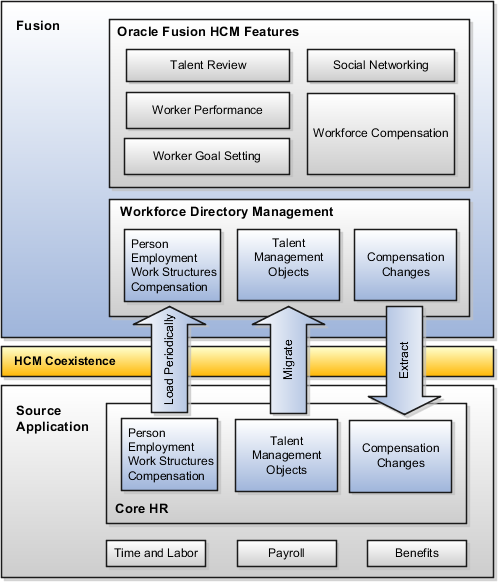
So as a road mapping question I have been thinking about the migration to using Fusion Apps so we have a road map and more importantly design patterns that will support a transitions from the likes of Ebiz R12, Siebel etc to their Fusion successors.

Example of Coexistance

Example of Coexistance

In broad terms the application level transition through the principles of co-existence are well established. What is currently exercising the grey matter is the middle migration. Perhaps the best way to explain this is through an example. The Product Data Hub (PDH) solution exists to provide a Master Data Management capability for your widest and gadgets.

You will want to share that master data with other apps such as Ebiz so you can deal with say order management. All fairly obvious, and in Fusion Apps world the different components should inherently work together. Back in R12 world though you are probably going to be using the Product MDM PIP (Process Integration Pack) with the Ebiz extension pack. When using the PIP like this then it’s just a case of retiring the PIP. But this PIP is designed so that you can extend the process to publish Master Data to your own apps for example you also push the data to your design systems as you maybe sharing available parts data.

So now we have an extended PIP whic in a simple Fusion apps migration you’d leave behind. But leaving the PIP behind also means an integration gap. So what is the answer.

Well on the early days of Fusion Apps the suggestion was that AIA and PIPs would be part of the ongoing story. but the reality is little has moved in this space. Understandable, Fusion Apps development had been far bigger than anyone expected, if fusion Apps are directly conversant then how much real demand exists for the PIP transformation. So what is the answer, well at this stage I’m not sure. I can say I have seen ABCS’ mentioned in the public FusionAppsOER. We know that AIA Foundation Pack EBOs are realised in Fusion Apps albeit via ADF BCs.

Given Fusion Apps underpinnings are the same as AIA so it should be possible to drop the AIA Foundation Pack (FP) into your Fusion Apps environment (setting aside all the licensing questions it would raise). Can you therefore drop in the PIP and disable the legacy Oracle app elements leaving your custom extensions? Do you accept a rewrite of your integration all be it you should just need to redevelop the orchestration layer (ABCS’ for Fusion App exist and you can carry forward your own ABCS’ for your app such as the design system in our illustration)?

Deployment of Fusion Apps with Non Fusion Apps

Deployment of Fusion Apps with Non Fusion Apps

Hopefully in the coming weeks we will get the opportunity to uncover answers with Oracle.

Share this:

  • Share on Facebook (Opens in new window) Facebook
  • Share on X (Opens in new window) X
  • Share on Reddit (Opens in new window) Reddit
  • Email a link to a friend (Opens in new window) Email
  • Share on WhatsApp (Opens in new window) WhatsApp
  • Print (Opens in new window) Print
  • Share on Tumblr (Opens in new window) Tumblr
  • Share on Mastodon (Opens in new window) Mastodon
  • Share on Pinterest (Opens in new window) Pinterest
  • More
  • Share on Bluesky (Opens in new window) Bluesky
  • Share on LinkedIn (Opens in new window) LinkedIn
Like Loading...

Designing in a license constrainted World – Reprise

16 Monday Jun 2014

Posted by mp3monster in General, Technology

≈ Leave a comment

Tags

constrained, Design, license, Licensing

A while back I blogged (here) about designing in a license constrained world.  Well I’ve taken that blog further and developed a supporting slide deck, to help elaborate on the thinking.


Share this:

  • Share on Facebook (Opens in new window) Facebook
  • Share on X (Opens in new window) X
  • Share on Reddit (Opens in new window) Reddit
  • Email a link to a friend (Opens in new window) Email
  • Share on WhatsApp (Opens in new window) WhatsApp
  • Print (Opens in new window) Print
  • Share on Tumblr (Opens in new window) Tumblr
  • Share on Mastodon (Opens in new window) Mastodon
  • Share on Pinterest (Opens in new window) Pinterest
  • More
  • Share on Bluesky (Opens in new window) Bluesky
  • Share on LinkedIn (Opens in new window) LinkedIn
Like Loading...

SOA Patterns on the Oracle Platform

12 Thursday Jun 2014

Posted by mp3monster in Books, General, Technology

≈ Leave a comment

Tags

book, Oracle, Packt, Patterns, review, SOA

The last Packt book I contributed to as a technical reviewer is due for release this month according to the Packt site (go here).  Looking forward to seeing the final result.


Share this:

  • Share on Facebook (Opens in new window) Facebook
  • Share on X (Opens in new window) X
  • Share on Reddit (Opens in new window) Reddit
  • Email a link to a friend (Opens in new window) Email
  • Share on WhatsApp (Opens in new window) WhatsApp
  • Print (Opens in new window) Print
  • Share on Tumblr (Opens in new window) Tumblr
  • Share on Mastodon (Opens in new window) Mastodon
  • Share on Pinterest (Opens in new window) Pinterest
  • More
  • Share on Bluesky (Opens in new window) Bluesky
  • Share on LinkedIn (Opens in new window) LinkedIn
Like Loading...
← Older posts
Newer posts →

    I work for Oracle, all opinions here are my own & do not necessarily reflect the views of Oracle

    • About
      • Internet Profile
      • Music Buying
      • Presenting Activities
    • Books & Publications
      • Logging in Action with Fluentd, Kubernetes and More
      • Logs and Telemetry using Fluent Bit
      • Oracle Integration
      • API & API Platform
        • API Useful Resources
        • Useful Reading Sources
    • Mindmaps Index
    • Monster On Music
      • Music Listening
      • Music Reading
    • Oracle Resources
    • Useful Tech Resources
      • Fluentd & Fluent Bit Additional stuff
        • Logging Frameworks and Fluent Bit and Fluentd connectivity
        • REGEX for BIC and IBAN processing
      • Formatting etc
      • Java and Graal Useful Links
      • Official Sources for Product Logos
      • Python Setup & related tips
      • Recommended Tech Podcasts

    Oracle Ace Director Alumni

    TOGAF 9

    Logs and Telemetry using Fluent Bit


    Logging in Action — Fluentd

    Logging in Action with Fluentd


    Oracle Cloud Integration Book


    API Platform Book


    Oracle Dev Meetup London

    Blog Categories

    • App Ideas
    • Books
      • Book Reviews
      • manning
      • Oracle Press
      • Packt
    • Enterprise architecture
    • General
      • economy
      • ExternalWebPublications
      • LinkedIn
      • Website
    • Music
      • Music Resources
      • Music Reviews
    • Photography
    • Podcasts
    • Technology
      • AI
      • APIs & microservices
      • chatbots
      • Cloud
      • Cloud Native
      • Dev Meetup
      • development
        • languages
          • java
          • node.js
          • python
      • drone
      • Fluentbit
      • Fluentd
      • logsimulator
      • mindmap
      • OMESA
      • Oracle
        • API Platform CS
          • tools
        • Helidon
        • ITSO & OEAF
        • Java Cloud
        • NodeJS Cloud
        • OIC – ICS
        • Oracle Cloud Native
        • OUG
      • railroad diagrams
      • TOGAF
    • xxRetired
    • AI
    • API Platform CS
    • APIs & microservices
    • App Ideas
    • Book Reviews
    • Books
    • chatbots
    • Cloud
    • Cloud Native
    • Dev Meetup
    • development
    • drone
    • economy
    • Enterprise architecture
    • ExternalWebPublications
    • Fluentbit
    • Fluentd
    • General
    • Helidon
    • ITSO & OEAF
    • java
    • Java Cloud
    • languages
    • LinkedIn
    • logsimulator
    • manning
    • mindmap
    • Music
    • Music Resources
    • Music Reviews
    • node.js
    • NodeJS Cloud
    • OIC – ICS
    • OMESA
    • Oracle
    • Oracle Cloud Native
    • Oracle Press
    • OUG
    • Packt
    • Photography
    • Podcasts
    • python
    • railroad diagrams
    • Technology
    • TOGAF
    • tools
    • Website
    • xxRetired

    Enter your email address to subscribe to this blog and receive notifications of new posts by email.

    Join 2,556 other subscribers

    RSS

    RSS Feed RSS - Posts

    RSS Feed RSS - Comments

    March 2026
    M T W T F S S
     1
    2345678
    9101112131415
    16171819202122
    23242526272829
    3031  
    « Feb    

    Twitter

    Tweets by mp3monster

    History

    Speaker Recognition

    Open Source Summit Speaker

    Flickr Pics

    Gogo Penguin at the BarbicanGogo Penguin at the BarbicanGogo Penguin at the BarbicanGogo Penguin at the Barbican
    More Photos

    Social

    • View @mp3monster’s profile on Twitter
    • View philwilkins’s profile on LinkedIn
    • View mp3monster’s profile on GitHub
    • View mp3monster’s profile on Flickr
    • View mp3muncher’s profile on WordPress.org
    • View philmp3monster’s profile on Twitch
    Follow Phil (aka MP3Monster)'s Blog on WordPress.com

    Blog at WordPress.com.

    • Subscribe Subscribed
      • Phil (aka MP3Monster)'s Blog
      • Join 234 other subscribers
      • Already have a WordPress.com account? Log in now.
      • Phil (aka MP3Monster)'s Blog
      • Subscribe Subscribed
      • Sign up
      • Log in
      • Report this content
      • View site in Reader
      • Manage subscriptions
      • Collapse this bar
     

    Loading Comments...
     

    You must be logged in to post a comment.

      Privacy & Cookies: This site uses cookies. By continuing to use this website, you agree to their use.
      To find out more, including how to control cookies, see here: Our Cookie Policy
      %d