• Home
  • Site Aliases
    • www.cloud-native.info
  • About
    • Background
    • Presenting Activities
    • Internet Profile
      • LinkedIn
    • About
  • Books & Publications
    • Log Generator
    • Logs and Telemetry using Fluent Bit
      • Fluent Bit book
      • Book Resources in GitHub
      • Fluent Bit Classic to YAML Format configurations
    • Logging in Action with Fluentd, Kubernetes and More
      • Logging in Action with Fluentd – Book
      • Fluentd Book Resources
      • Fluentd & Fluent Bit Additional stuff
    • API & API Platform
      • API Useful Resources
    • Oracle Integration
      • Book Website
      • Useful Reading Sources
    • Publication Contributions
  • Resources
    • GitHub
    • Oracle Integration Site
    • Oracle Resources
    • Mindmaps Index
    • Useful Tech Resources
      • Fluentd & Fluent Bit Additional stuff
      • Recommended Tech Podcasts
      • Official Sources for Product Logos
      • Java and Graal Useful Links
      • Python Setup & related stuff
  • Music
    • Monster On Music
    • Music Listening
    • Music Reading

Phil (aka MP3Monster)'s Blog

~ from Technology to Music

Phil (aka MP3Monster)'s Blog

Tag Archives: review

Design of Web APIs – 2nd Edition

06 Monday Oct 2025

Posted by mp3monster in APIs & microservices, Books, General, Technology

≈ Leave a comment

Tags

API, API Evangelist, APIHandyman, AsyncAPI, book, development, OAS, Open API, practises, review, Swagger

When it comes to REST-based web APIs, I’ve long been an advocate of the work of Arnaud Lauret (better known as the API Handyman) and his book The Design of Web APIs. I have, with Arnaud’s blessing, utilized some of his web resources to help illustrate key points when presenting at conferences and to customers on effective API design. I’m not the only one who thinks highly of Arnaut’s content; other leading authorities, such as Kin Lane (API Evangelist), have also expressed the same sentiment. The news that a 2nd Edition of the book has recently been published is excellent. Given that the 1st edition was translated into multiple languages, it is fair to presume this edition will see the same treatment (as well as having the audio treatment).

Why 2nd Edition?

So, why a second edition, and what makes it good news? While the foundational ideas of REST remain the same, the standard used to describe and bootstrap development has evolved to address practices and offer a more comprehensive view of REST APIs. Understanding the Open API specification in its latest form also helps with working with the Asynchronous API specifications, as there is a significant amount of harmony between these standards in many respects.

The new edition also tackles a raft of new considerations as the industry has matured, from the use of tooling to lint and help consistency as our catalogue of APIs grows, to be able to use linting tools, we need guidelines on how to use the specification, and what we might want to make uniform nd ensure the divergence is addressed. Then there are the questions about how to integrate my API support / fit into an enriched set of documents and resources, such as those often offered by a developer portal.

However, the book isn’t simply a guide to Open API; the chapters delve into the process of API design itself, including what to expose and how to expose it. How to make the APIs consistent, so that a developer understanding one endpoint can apply that understanding to others. For me, the book shows some great visual tools for linking use cases, resources, endpoint definitions, and operations. Then, an area that is often overlooked is the considerations under the Non-Functional Requirements heading, such as those that ensure an API is performant/responsive, secure, supports compatibility (avoiding or managing breaking changes), and clear about how it will respond in ‘unhappy paths’. Not to mention, as we expand our API offerings, the specification content can become substantial, so helping to plot a way through this is excellent.

Think You Know API Design

There will be some who will think, ‘Hey, I understand the OpenAPI Specification; I don’t need a book to teach me how to design my APIs.’ To those, I challenge you to reconsider and take a look at the book. The spec shows you how to convey your API. The spec won’t guarantee a good API. The importance of good APIs grows from an external perspective – it’s a way to differentiate your service from others. When there is competition, and if your API is complex to work with, developers will fight to avoid using it. Not only that, in a world where AI utilizes protocols like MCP, having a well-designed, well-documented API increases the likelihood of an LLM being able to reason and make calls to it.

Conclusion

If there is anything to find fault with – and I’m trying hard, is it would be it would have been nice if it expanded its coverage a little further to Asynchronous APIs (there is a lot of Kafka and related tech out there which could benefit from good AsyncAPI material) and perhaps venture further into how we can make it easier to achieve natural language to API (NL2API) for use cases like working with MCP (and potentially with A2A).

  • Amazon UK
  • Amazon US
  • Manning Direct
  • Barnes & Noble

Share this:

  • Click to share on Facebook (Opens in new window) Facebook
  • Click to share on X (Opens in new window) X
  • Click to share on Pocket (Opens in new window) Pocket
  • Click to share on Reddit (Opens in new window) Reddit
  • Click to email a link to a friend (Opens in new window) Email
  • Click to share on WhatsApp (Opens in new window) WhatsApp
  • Click to print (Opens in new window) Print
  • Click to share on Tumblr (Opens in new window) Tumblr
  • Click to share on Mastodon (Opens in new window) Mastodon
  • Click to share on Pinterest (Opens in new window) Pinterest
  • More
  • Click to share on Bluesky (Opens in new window) Bluesky
  • Click to share on LinkedIn (Opens in new window) LinkedIn
Like Loading...

Microservices Patterns 2nd edition in the works

24 Sunday Aug 2025

Posted by mp3monster in Book Reviews, Books, General, manning, Technology

≈ Leave a comment

Tags

book, ebook, Microservices, Patterns, review

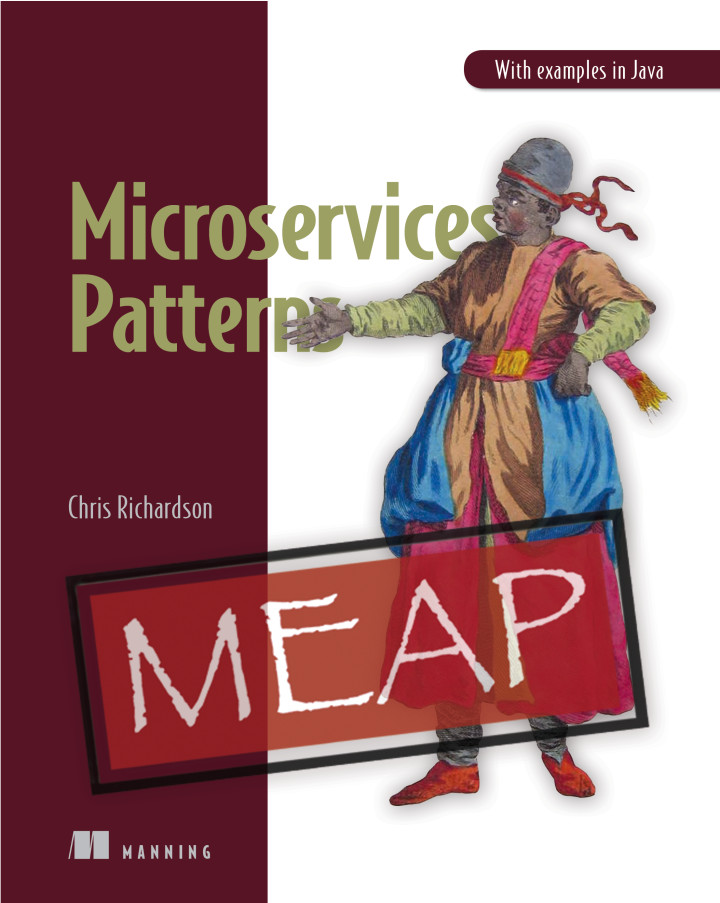
Back in 2018, Manning published Chris Richardson‘s Microservices Patterns book. In many respects, this book is the microservices version of the famous Gang of Four patterns book. The exciting news is that Chris is working on a second edition.

One key difference between the GoF book and this is that engaging with patterns like Inversion of Control, Factories, and so on isn’t impacted by considerations around architecture, organization, and culture.

While the foundational ideas of microservices are established, the techniques for designing and deploying have continued to evolve and mature. If you follow Chris through social media, you’ll know he has, in the years since the book’s first edition, worked with numerous organisations, training and helping them engage effectively with microservices. As a result, a lot of processes and techniques that Chris has identified and developed with customers are grounded in real practical experience.

As the book is in its early access phase (MEAP), not all chapters are available yet, so plenty to look forward to.

So even if you have the 1st edition and work with microservice patterns, the updates will, I think, offer insights that could pay dividends.

If you’re starting your software career or considering the adoption of microservices (and Chris will tell you it isn’t always the right answer), I highly recommend getting a copy, as with the 1st edition, the 2nd will become a must-read book.

Share this:

  • Click to share on Facebook (Opens in new window) Facebook
  • Click to share on X (Opens in new window) X
  • Click to share on Pocket (Opens in new window) Pocket
  • Click to share on Reddit (Opens in new window) Reddit
  • Click to email a link to a friend (Opens in new window) Email
  • Click to share on WhatsApp (Opens in new window) WhatsApp
  • Click to print (Opens in new window) Print
  • Click to share on Tumblr (Opens in new window) Tumblr
  • Click to share on Mastodon (Opens in new window) Mastodon
  • Click to share on Pinterest (Opens in new window) Pinterest
  • More
  • Click to share on Bluesky (Opens in new window) Bluesky
  • Click to share on LinkedIn (Opens in new window) LinkedIn
Like Loading...

Fluent Bit with Kubernetes book update

05 Tuesday Mar 2024

Posted by mp3monster in Books, Fluentbit, manning, Technology

≈ Leave a comment

Tags

book, development, FluentBit, review

A quick update on the book – very early this morning or late last night (depending on your perspective), we sent our development editor the final chapter of the Fluent Bit with Kubernetes book. There is still a way to go before we’re completed (with multiple reviews to happen, appropriate edits to be made, copy editing, etc. Still, it is an important milestone from an author’s perspective.

For the keen readers who have signed up for the MEAP (Manning Early Access Programme) of the book, I can confirm that the editorial team (preparation for eBook and website formatting, checking the edits to address the Technical Editor and Development Editor haven’t introduced any obvious issues) are working on the preparation of Chapter 7 – so that should be available soon. When this chapter is available, the content covering all the foundational aspects of Fluent Bit will be available. The remaining chapters reflect the advanced features.

Share this:

  • Click to share on Facebook (Opens in new window) Facebook
  • Click to share on X (Opens in new window) X
  • Click to share on Pocket (Opens in new window) Pocket
  • Click to share on Reddit (Opens in new window) Reddit
  • Click to email a link to a friend (Opens in new window) Email
  • Click to share on WhatsApp (Opens in new window) WhatsApp
  • Click to print (Opens in new window) Print
  • Click to share on Tumblr (Opens in new window) Tumblr
  • Click to share on Mastodon (Opens in new window) Mastodon
  • Click to share on Pinterest (Opens in new window) Pinterest
  • More
  • Click to share on Bluesky (Opens in new window) Bluesky
  • Click to share on LinkedIn (Opens in new window) LinkedIn
Like Loading...

Cloud Observability in Action – Book Review

04 Thursday Jan 2024

Posted by mp3monster in Book Reviews, Books, General, manning

≈ Leave a comment

Tags

book, development, FluentBit, Fluentd, manning, Michael Hausenblas, o11y, observability, OpenTelemetry, Prometheus, review

With the Christmas holidays happening, things slowed down enough to sit and catch up on some reading – which included reading Cloud Observability in Action by Michael Hausenblas from Manning. You could ask – why would I read a book about a domain you’ve written about (Logging In Action with Fluentd) and have an active book in development (Fluent Bit with Kubernetes)? The truth is, it’s good to see what others are saying on the subject, not to mention it is worth confirming I’m not overlapping/duplicating content. So what did I find?

Observability in Action by Michael Hausenblas
Cloud Observability in Action by Michael Hausenblas

Cloud Observability In Action has been an easygoing and enjoyable read. Tech books can sometimes get a bit heavy going or dry, not the case here. Firstly, Michael went back to first principles, making the difference between Observability and monitoring – something that often gets muddied (and I’ve been guilty of this, as the latter is a subset of the former). Observability doesn’t roll off the tongue as smoothly as monitoring (although I rather like the trend of using O11y). This distinction, while helpful, particularly if you’re still finding your feet in this space, is good. What is more important is stepping back and asking what should we be observing and why we need to observe it. Plus, one of my pet points when presenting on the subject – we all have different observability needs – as a developer, an ops person, security, or auditors.

Next is Michael’s interesting take on how much O11y code is enough. Historically, I’ve taken the perspective – that enough is a factor of code complexity. More complex code – warrants more O11y or logging as this is where bugs are most likely to manifest themselves; secondly, I’ve looked at transaction and service boundaries. The problem is this approach can sometimes generate chatty code. I’ve certainly had to deal with chatty apps, and had to filter out the wheat from the chaff. So Michael’s approach of cost/benefit and measuring this using his B2I ratio (how much code is addressing the business problems over how much is instrumentation) was a really fresh perspective and presented in a very practical manner, with warnings about using such a measure too rigidly. It’s a really good perspective as well if you’re working on hyperscaling solutions where a couple of percentage point improvements can save tens of thousands of dollars. Pretty good going, and we’re only a couple of chapters into the book.

The book gets into the underlying ideas and concepts that inform OpenTelemetry, such as traces and spans, metrics, and how these relate to Observability. Some of the classic mistakes are called out, such as dimensioning metrics with high cardinality and why this will present real headaches for you.

As the data is understood, particularly metrics you can start to think about how to identify what normal is, what is abnormal, or an outlier. That then leads to developing Service Level Objectives (SLOs), such as an acceptable level of latency in the solution or how many errors can be tolerated.

The book isn’t all theory. The ideas are illustrated with small Go applications, which are instrumented, and the generated metrics, traces, and logs. Rather than using a technology such as Fluentd or Fluent Bit, Michael starts by keeping things simple and directly connecting the gathering of the metrics into tools such as Prometheus, Zipkin, Jaeger, and so on. In later chapters, the complexity of agents, aggregators, and collectors is addressed. Then, the choices and considerations for different backend solutions from cloud vendor-provided services such as OpenSearch, ElasticSearch, Splunk, Instana and so on. Then, the front-end visualization of the data is explored with tools such as Grafana, Kibana, cloud-provided tools, and so on.

As the book progresses, the chapters drill down into more detail, such as the differences and approaches for measuring containerized solutions vs. serverless implementations such as Lambda and the kinds of measures you may want. The book isn’t tied to technologies typically associated with modern Cloud Native solutions, but more traditional things like relational databases are taken into account.

The closing chapters address questions such as how to address alerting, incident management, and implementing SLOs. How to use these techniques and tools can help inform the development processes, not just production.

So I would recommend the book, if you’re trying to understand Observability (regardless of a cloud solution or not). If you’re trying to advance from the more traditional logging to a fuller capability, then this book is a great guide, showing what, why, and how to evaluate the value of doing so.

To come back to my opening question. The books have small points of overlap, but this is no bad thing, as it helps show how the different viewpoints intersect. I would actually say that the Observability in Action shows how the wider landscape fits together, the underlying value propositions that can help make the case for implementing a full observability solution. Then, Logging in Action and the new book, Fluent Bit with Kubernetes, give you some of the common context, and we drill into the details of how and what can be done with Fluent Bit and Fluentd. All Manning needs now is content to deep dive into Prometheus, Grafana, Jaeger, and OpenSearch to provide an end-to-end coverage of first principles to the art of the possible in Observability.

I also have to thank Michael for pointing his readers and sections of Logging in Action that directly relate and provide further depth into an area.

Further reading

  • Michael’s medium blog
  • Michael’s website
  • Return on Investment Driven Observability
  • CNCF Observability Whitepaper
  • My additional resources for Fluent Bit and Fluentd which includes some of the related content

Share this:

  • Click to share on Facebook (Opens in new window) Facebook
  • Click to share on X (Opens in new window) X
  • Click to share on Pocket (Opens in new window) Pocket
  • Click to share on Reddit (Opens in new window) Reddit
  • Click to email a link to a friend (Opens in new window) Email
  • Click to share on WhatsApp (Opens in new window) WhatsApp
  • Click to print (Opens in new window) Print
  • Click to share on Tumblr (Opens in new window) Tumblr
  • Click to share on Mastodon (Opens in new window) Mastodon
  • Click to share on Pinterest (Opens in new window) Pinterest
  • More
  • Click to share on Bluesky (Opens in new window) Bluesky
  • Click to share on LinkedIn (Opens in new window) LinkedIn
Like Loading...

Peter Gabriel I/O

06 Monday Nov 2023

Posted by mp3monster in General, Music, Music Reviews

≈ Leave a comment

Tags

album, IO, Peter Gabriel, review

It’s been about twenty years since we’ve had any new original songs from Peter Gabriel. Now, for the last year, he has been teasing us by releasing a new track every month with two mixes called The Bright Side and The Dark Side. which sort of makes sense, given you could see I/O as a rather abstract representation of Ying and Yang.

With a track, each month has created an interesting experience, as it has given us time to absorb each track, rather than a big audio feast of an album, where the singles leap out at you, and then you start to appreciate the other tracks. If there is a downside, it is probably the fact it is no longer easy to say – these tracks are the singles. But to be honest I don’t think it matters to Peter Gabriel. There may be fan favorites, but that’s it certainly as far as it goes since Us.

However, even knowing which tracks are becoming fan favorites has been tough as Peter toured the album, and depending upon where you are in the world, you’ll have only heard some of the new songs, even though the core of the live show has been I/O.

The musical core of the band remains largely unchanged, with David Rhodes and Tony Levin with Manu Katche back on drums for most of the tracks. John Metcalfe is back, having also contributed so wonderfully with New Blood and the tours over the last ten years where Gabriel has used orchestral arrangement.

With this team, we have a real mix of style and sounds. From the very reflective Playing For Time, which opens with the muted horn reminiscent of tracks like Father Son on Ovo. Then there are tracks that are rhythm-heavy, like The Court, that would have fit in on the Up album.

As with all the two-letter-titled albums, there is a loose theme to the album. For I/O that is input and output, whether that is input from observation as suggested by Panopticom to the title track about how to absorb and contribute to the environment.

What the album shows and the tour demonstrated is that unlike some of his peers, Peter’s voice has changed, but the songs fit what sounds like a more weathered voice. The older songs, which may have been pitched higher, still have the energy and dynamics but perhaps pitched a little differently. So none of the challenges faced like Jim Kerr, who leans more of backing vocalists live, or Sting and Bono, who you can hear have to really work to hit some of the notes.

Peter has continued the idea that each song gets its own artwork associated with it, which came to prominence on the Us album (you can see more with Art From US). Some videos of this work can be seen here.

Artwork for IO
I/O
Panopticom (artist Davif Spriggs)
The Court
Playing For Time
Olive Tree (artist Barthélémy Toguo)
Love Can Heal (Artist Antony Micallef)
This Is Home (artist David Moreno)
And Still (Artist Megan Rooney)
Road To Joy (Artist Ai Weiwei)
Four Kinds of Horses (artist Cornelia Parker)

Along with the artwork, there have been some amazing videos. This is not big news, and the use of technology – particularly the application of some Generative AI. Check out these:

Some images from the videos …

Share this:

  • Click to share on Facebook (Opens in new window) Facebook
  • Click to share on X (Opens in new window) X
  • Click to share on Pocket (Opens in new window) Pocket
  • Click to share on Reddit (Opens in new window) Reddit
  • Click to email a link to a friend (Opens in new window) Email
  • Click to share on WhatsApp (Opens in new window) WhatsApp
  • Click to print (Opens in new window) Print
  • Click to share on Tumblr (Opens in new window) Tumblr
  • Click to share on Mastodon (Opens in new window) Mastodon
  • Click to share on Pinterest (Opens in new window) Pinterest
  • More
  • Click to share on Bluesky (Opens in new window) Bluesky
  • Click to share on LinkedIn (Opens in new window) LinkedIn
Like Loading...

Kubernetes Best Practises – Review & Mindmaps

13 Thursday Jan 2022

Posted by mp3monster in APIs & microservices, Book Reviews, Books, Cloud, Cloud Native, development, General, Technology

≈ 2 Comments

Tags

"best practise", book, Istio, Kubernetes, mindmap, review

I’ve had some time to catch up on books I’d like to read, including Kubernetes Best Practises in the last few weeks. While I think I have a fair handle on Kubernetes, the development of my understanding has been a bit ad-hoc as I’ve dug into different areas as I’ve needed to know more. This meant reading a Dummies/Introduction to entry style guide would, to an extent, likely prove to be a frustrating read. Given this, I went for the best practises book because if I don’t understand the practises, then there are gaps in my understanding still, and I can look at more foundation resources.

As it goes, this book was perfect. It quickly covered the basics of the different aspects of Kubernetes helping to give context to the more advanced aspects, and the best practices become almost a formulated summary in each section. The depth of coverage and detail is certainly very comprehensive, explaining the background of CNI (Container Network Interface) to network-level security within Kubernetes.

The book touched upon Service Meshes such as Istio and Linkerd2 but didn’t go into great depth, but again this is probably down to the fact that Service Mesh ideas are still maturing, and you have initiatives like SMI (Service Mesh Interface still in the CNCF’s sandbox).

In terms of best practices, that really stood out for me:

  • Use of Taints and Tolerations for refined control of pod deployment (Allowing affinity to be controlled to optimise resilience, or direct types of pod deployment to nodes with specialist capabilities such as GPU).
  • There are a lot more differences and options then you might realize in terms of ingress controller capabilities, so take time to identify what you may need from an ingress controller.
  • Don’t forget pods can be scaled vertically with the VPA (Vertical Pod Autoscaler)as well as horizontally through the HPA.
  • While using a managed persistence service will make statement storage a lot easier, stateful sets will give you a very portable solution.

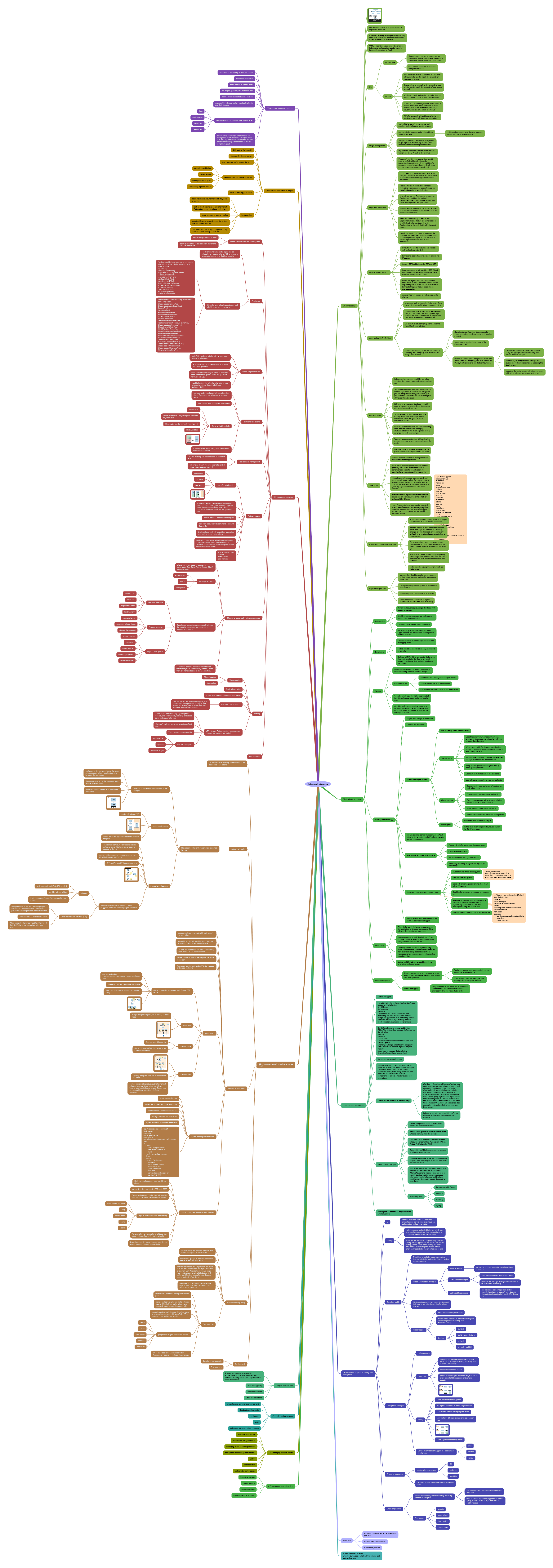
As with a lot of technical books I read. As I go through the book I build up a mind map of what I think are the key points. Doing so leaves me with a resource I can use as a quick reference, but creating the mind map helps reinforce the learning. So here is the mind map …


  • mindmap in iThoughts format
  • mindmap in FreeMind format
  • mindmap as an expanded png

Share this:

  • Click to share on Facebook (Opens in new window) Facebook
  • Click to share on X (Opens in new window) X
  • Click to share on Pocket (Opens in new window) Pocket
  • Click to share on Reddit (Opens in new window) Reddit
  • Click to email a link to a friend (Opens in new window) Email
  • Click to share on WhatsApp (Opens in new window) WhatsApp
  • Click to print (Opens in new window) Print
  • Click to share on Tumblr (Opens in new window) Tumblr
  • Click to share on Mastodon (Opens in new window) Mastodon
  • Click to share on Pinterest (Opens in new window) Pinterest
  • More
  • Click to share on Bluesky (Opens in new window) Bluesky
  • Click to share on LinkedIn (Opens in new window) LinkedIn
Like Loading...

Building Evolutionary Architectures

16 Saturday Mar 2019

Posted by mp3monster in Book Reviews, Books, General, Technology

≈ Leave a comment

Tags

architecture, book, evolutionary, mindmap, review, Technology

I have been working my way through Building Evolutionary Architectures by Neal Forward, Rebecca Parsons and Patrick Kua. Three senior and respected members of Thoughtworks (also the home of Martin Fowler). Having read and listened to Neal and Rebecca’s presentations and writing I had expected a deeply thought-provoking read, but have to admit to being disappointed. There are some good points without a doubt, but the book pretty much focuses on one idea, the application of fitness functions. But I’m not convinced it warrants several hundred pages of a book as a result the point does at times feel laboured.

There are some arguments made, that leaves me thinking that there is a view that the only answer is microservices in the conventional model of Kubernetes, Docker etc, which I agree is a powerful paradigm to allow solutions to evolve, but it isn’t a silver bullet and not always right in every case (if you have a team lacking the underlying appreciation of the goals, or put in to place in an ad-hoc manner (see Chris Richardson‘s work) it isn’t going to help.

Alongside this, there is little said about the interface definition for microservices (typically APIs of one form or another). Whilst mention of leaky abstractions are made, the material illustrations such as code lead API definitions are omitted (risk being, code changes, the API changes and the impact cascades).

What surprised me the most is the on more than one occasion the books points to ERPs not being sufficiently customisable. Yet, anyone working with ERPs will tell you that ERPs are at their best when you use them to leverage industry best practices rather than crowbar them to fit unconventional ways of operating. If you’re a manufacturer, is fiscal reporting part of your differentiator; probably not, so why not take best practice OOTB.

As usual, I have mind mapped things as I read through the book.  The dynamic/interactive version is here, the image (but not in full detail) is below.

evolutionary architectures.png


Share this:

  • Click to share on Facebook (Opens in new window) Facebook
  • Click to share on X (Opens in new window) X
  • Click to share on Pocket (Opens in new window) Pocket
  • Click to share on Reddit (Opens in new window) Reddit
  • Click to email a link to a friend (Opens in new window) Email
  • Click to share on WhatsApp (Opens in new window) WhatsApp
  • Click to print (Opens in new window) Print
  • Click to share on Tumblr (Opens in new window) Tumblr
  • Click to share on Mastodon (Opens in new window) Mastodon
  • Click to share on Pinterest (Opens in new window) Pinterest
  • More
  • Click to share on Bluesky (Opens in new window) Bluesky
  • Click to share on LinkedIn (Opens in new window) LinkedIn
Like Loading...

Blue Notebooks

19 Sunday Aug 2018

Posted by mp3monster in General, Music, Music Reviews

≈ Leave a comment

Tags

"Blue Notebooks", "Max Richter", Music, review, Sonos, Spotify

Whilst Sonos might be great for convenience, and Spotify for freedom and trying music out you still can’t beat well produced physical media (those round silver or black things) on some separates HiFi. I don’t have an extravagant setup, but what I can do with Max Richter’s The Blue Notebooks Anniversary Edition makes the hairs on your arms standup.

Take On The Nature Of Daylight and the violins float over the Cellos and eventually resolve together. It sounds so elegiac and so sad it can take you to tears. Then Iconography sounds almost other worldly with a base notes so deep that you physically feel as much as hear them.
The piano of Vladimir’s Blues each note is distinct and you can hear the decay of each and every note, so very blue.

Old Song comes on incredibly cinematic, as if you are sat listening to someone in another room playing the piano with your window open. You hear ambient background of a plane flying past and a train in the distance, a wood pigeon in the garden cooing.

The Trees brings together strings and piano, a wonderfully written and performed piece as the melody seems to move between the different instruments he other parts take terms to propel the music along or provide notes emphasising the melody. As the piece progresses the momentum gains and the the dynamic range expands with greater deeper notes and the experience becomes ever more physical as an experience.

The album closes with Written In The Sky, which whilst still in a minor key, seems to evoke a small sense of hope. When it comes to an end, you sit wanting more, but routed to your seat not wanting to move away from centre of an amazing performance.

If you go to a proper separates HiFi shop, which has listening rooms to try out audio setups, I think this would apart from the musical beauty would help show you see if the kit being tried magic of the kit being tried.

Share this:

  • Click to share on Facebook (Opens in new window) Facebook
  • Click to share on X (Opens in new window) X
  • Click to share on Pocket (Opens in new window) Pocket
  • Click to share on Reddit (Opens in new window) Reddit
  • Click to email a link to a friend (Opens in new window) Email
  • Click to share on WhatsApp (Opens in new window) WhatsApp
  • Click to print (Opens in new window) Print
  • Click to share on Tumblr (Opens in new window) Tumblr
  • Click to share on Mastodon (Opens in new window) Mastodon
  • Click to share on Pinterest (Opens in new window) Pinterest
  • More
  • Click to share on Bluesky (Opens in new window) Bluesky
  • Click to share on LinkedIn (Opens in new window) LinkedIn
Like Loading...

Praise for Microservice Patterns

18 Friday May 2018

Posted by mp3monster in Book Reviews, Books, General, manning

≈ 1 Comment

Tags

book, Chris Richardson, Microservices, review

richardson-mp-meap-hiI’ve been reading Chris Richardson’s new book Mixroservice Patterns published by Manning (here or here). Whilst I haven’t finished the book yet, I have read enough to feel I can provide worthwhile observation.

The book is supported by Chris’ website microservices.io which provides the patterns and related content in summarised form – great for a memory jogger and quick reference, but doesn’t make a substitute for the book.

When it comes to the book, Chris’ writing is extremly engaging whilst economic with its language – no long passages when a short sentence can convey everything necessary (unlike this one for example 🙂 ). For example, in three short paragraphs is an explination as to why there is a tendancy for IT people to point at particular technologies or techniques as silver bullets. As a result is incredibly informative and points to sources that inform the thinking – such references can be as diverse as Sam Newman’s Building Microservices to the (real) architect Christopher Alexander and Jonathan Haidt (The Righteous Mind).

The book is grounded in honest real world thinking being upfront and clearly pointing to when Microservices aren’t the right answer, to talking about the difficulties that can be expected in working with microservices. This won’t surprise anyone who has heard Chris speaking (here for example).

A recommended read.

microservicepatternlanguage

Share this:

  • Click to share on Facebook (Opens in new window) Facebook
  • Click to share on X (Opens in new window) X
  • Click to share on Pocket (Opens in new window) Pocket
  • Click to share on Reddit (Opens in new window) Reddit
  • Click to email a link to a friend (Opens in new window) Email
  • Click to share on WhatsApp (Opens in new window) WhatsApp
  • Click to print (Opens in new window) Print
  • Click to share on Tumblr (Opens in new window) Tumblr
  • Click to share on Mastodon (Opens in new window) Mastodon
  • Click to share on Pinterest (Opens in new window) Pinterest
  • More
  • Click to share on Bluesky (Opens in new window) Bluesky
  • Click to share on LinkedIn (Opens in new window) LinkedIn
Like Loading...

Innovators

24 Friday Mar 2017

Posted by mp3monster in Books, General

≈ Leave a comment

Tags

Baarden, Babbage, book, Brattian, innovators, John Baarden, Lovelace, review, Technology, Vint Cerf, von Nuemann, Walter Brattain, Walter Isaacson

Recently I’ve given some time over to catching up on some reading. Which has included Walter Isaacson’s tremendous book Innovators. I picked this up  more because I liked Walter’s approach to the Steve Job’s biography. I thought this was going to be more focused on individuals and how they brought through new technology innovations. But actually it is a very good potted history of the development of modern computing.  Whilst I work in IT and thought I knew key contributors, from Babbage, Lovelace to von Neumann and Turing.  I was rather surprised at how many signficiant contributors I didnt know, or only vaguely aware of.  For example the work of Douglas Engelbart who pretty much lead the design for the mouse.  What about Vint Cerf who made key contributions to TCP/IP? Stephen Crocker who was responsible for the RFC that we all associate with the IETF now?

Not only is the history interesting, the book looks at the dynamics of innovation and how much innovation comes from the individuals working away on their own and having a eureka moment compared to that constant dialogue between people which sounding off each other lead to new ideas? The later is beautifully illustrated with the development of the transistor and the work of John Baarden and Walter Brattain. It’s interesting that as the history moves into the pre-internet era that more and more of advancements are a result of collective effort, but also recognised as such. I wonder whether that is because technologies made collaboration easier, or the effects of socio-cultural developments that meant people recognised the collaborative efforts?

I’d recommend this book to anyone who is interested in IT has developed or even just interested in the interplay of personalities and events such as World war II that influenced scientific advancement.

Share this:

  • Click to share on Facebook (Opens in new window) Facebook
  • Click to share on X (Opens in new window) X
  • Click to share on Pocket (Opens in new window) Pocket
  • Click to share on Reddit (Opens in new window) Reddit
  • Click to email a link to a friend (Opens in new window) Email
  • Click to share on WhatsApp (Opens in new window) WhatsApp
  • Click to print (Opens in new window) Print
  • Click to share on Tumblr (Opens in new window) Tumblr
  • Click to share on Mastodon (Opens in new window) Mastodon
  • Click to share on Pinterest (Opens in new window) Pinterest
  • More
  • Click to share on Bluesky (Opens in new window) Bluesky
  • Click to share on LinkedIn (Opens in new window) LinkedIn
Like Loading...
← Older posts

    I work for Oracle, all opinions here are my own & do not necessarily reflect the views of Oracle

    • About
      • Internet Profile
      • Music Buying
      • Presenting Activities
    • Books & Publications
      • Logging in Action with Fluentd, Kubernetes and More
      • Logs and Telemetry using Fluent Bit
      • Oracle Integration
      • API & API Platform
        • API Useful Resources
        • Useful Reading Sources
    • Mindmaps Index
    • Monster On Music
      • Music Listening
      • Music Reading
    • Oracle Resources
    • Useful Tech Resources
      • Fluentd & Fluent Bit Additional stuff
        • Logging Frameworks and Fluent Bit and Fluentd connectivity
        • REGEX for BIC and IBAN processing
      • Java and Graal Useful Links
      • Official Sources for Product Logos
      • Python Setup & related tips
      • Recommended Tech Podcasts

    Oracle Ace Director Alumni

    TOGAF 9

    Logs and Telemetry using Fluent Bit


    Logging in Action — Fluentd

    Logging in Action with Fluentd


    Oracle Cloud Integration Book


    API Platform Book


    Oracle Dev Meetup London

    Blog Categories

    • App Ideas
    • Books
      • Book Reviews
      • manning
      • Oracle Press
      • Packt
    • Enterprise architecture
    • General
      • economy
      • ExternalWebPublications
      • LinkedIn
      • Website
    • Music
      • Music Resources
      • Music Reviews
    • Photography
    • Podcasts
    • Technology
      • AI
      • APIs & microservices
      • chatbots
      • Cloud
      • Cloud Native
      • Dev Meetup
      • development
        • languages
          • java
          • node.js
      • drone
      • Fluentbit
      • Fluentd
      • logsimulator
      • mindmap
      • OMESA
      • Oracle
        • API Platform CS
          • tools
        • Helidon
        • ITSO & OEAF
        • Java Cloud
        • NodeJS Cloud
        • OIC – ICS
        • Oracle Cloud Native
        • OUG
      • railroad diagrams
      • TOGAF
    • xxRetired
    • AI
    • API Platform CS
    • APIs & microservices
    • App Ideas
    • Book Reviews
    • Books
    • chatbots
    • Cloud
    • Cloud Native
    • Dev Meetup
    • development
    • drone
    • economy
    • Enterprise architecture
    • ExternalWebPublications
    • Fluentbit
    • Fluentd
    • General
    • Helidon
    • ITSO & OEAF
    • java
    • Java Cloud
    • languages
    • LinkedIn
    • logsimulator
    • manning
    • mindmap
    • Music
    • Music Resources
    • Music Reviews
    • node.js
    • NodeJS Cloud
    • OIC – ICS
    • OMESA
    • Oracle
    • Oracle Cloud Native
    • Oracle Press
    • OUG
    • Packt
    • Photography
    • Podcasts
    • railroad diagrams
    • Technology
    • TOGAF
    • tools
    • Website
    • xxRetired

    Enter your email address to subscribe to this blog and receive notifications of new posts by email.

    Join 2,555 other subscribers

    RSS

    RSS Feed RSS - Posts

    RSS Feed RSS - Comments

    December 2025
    M T W T F S S
    1234567
    891011121314
    15161718192021
    22232425262728
    293031  
    « Nov    

    Twitter

    Tweets by mp3monster

    History

    Speaker Recognition

    Open Source Summit Speaker

    Flickr Pics

    Turin Brakes Acoustic Tour 24 @ The Maltings FarnhamTurin Brakes Acoustic Tour 24 @ The Maltings FarnhamTurin Brakes Acoustic Tour 24 @ The Maltings FarnhamTurin Brakes Acoustic Tour 24 @ The Maltings Farnham
    More Photos

    Social

    • View @mp3monster’s profile on Twitter
    • View philwilkins’s profile on LinkedIn
    • View mp3monster’s profile on GitHub
    • View mp3monster’s profile on Flickr
    • View mp3muncher’s profile on WordPress.org
    • View philmp3monster’s profile on Twitch
    Follow Phil (aka MP3Monster)'s Blog on WordPress.com

    Blog at WordPress.com.

    • Subscribe Subscribed
      • Phil (aka MP3Monster)'s Blog
      • Join 233 other subscribers
      • Already have a WordPress.com account? Log in now.
      • Phil (aka MP3Monster)'s Blog
      • Subscribe Subscribed
      • Sign up
      • Log in
      • Report this content
      • View site in Reader
      • Manage subscriptions
      • Collapse this bar
     

    Loading Comments...
     

    You must be logged in to post a comment.

      Privacy & Cookies: This site uses cookies. By continuing to use this website, you agree to their use.
      To find out more, including how to control cookies, see here: Our Cookie Policy
      %d