• Home
  • Site Aliases
    • www.cloud-native.info
  • About
    • Background
    • Presenting Activities
    • Internet Profile
      • LinkedIn
    • About
  • Books & Publications
    • Log Generator
    • Logs and Telemetry using Fluent Bit
      • Fluent Bit book
      • Book Resources in GitHub
      • Fluent Bit Classic to YAML Format configurations
    • Logging in Action with Fluentd, Kubernetes and More
      • Logging in Action with Fluentd – Book
      • Fluentd Book Resources
      • Fluentd & Fluent Bit Additional stuff
    • API & API Platform
      • API Useful Resources
    • Oracle Integration
      • Book Website
      • Useful Reading Sources
    • Publication Contributions
  • Resources
    • GitHub
    • Oracle Integration Site
    • Oracle Resources
    • Mindmaps Index
    • Useful Tech Resources
      • Fluentd & Fluent Bit Additional stuff
      • Recommended Tech Podcasts
      • Official Sources for Product Logos
      • Java and Graal Useful Links
      • Python Setup & related stuff
  • Music
    • Monster On Music
    • Music Listening
    • Music Reading

Phil (aka MP3Monster)'s Blog

~ from Technology to Music

Phil (aka MP3Monster)'s Blog

Tag Archives: review

Mastering Puppet Review

09 Tuesday Sep 2014

Posted by mp3monster in Books, General, Technology

≈ Leave a comment

Tags

book, EasticSearch, Foreman, Kibana, Logstash, mCollective, Packt, Pulp, Puppet, review, Ruby, Splunk, Thomas Uphill, YAML

Packt’s Mastering Puppet kicks off with substantial first chapter on how to setup Puppet in a manner that can then scale. The core of this is driven by an explanation of the constituent parts of a Puppet solution and where the workload is. In terms of execution this is as much about understanding the configuration of things like Apache, Passenger and Ningx as it is Puppet. As part of the explanation there are indicative numbers in terms of supportable scale which reflects the knowledge of the product.

Looking at configuration distribution for headless deployments with Git is a solid well considered piece and the writing suggests considers all the needs of a solid deployment of a production quality solution such as access control, whilst supporting collaborative working etc. it would be interesting to have seen how that would have stacked against capabilities such as Zookeeper.

As we move through the chapters the books continues with more advanced themes such as using Hiera as a object hierarchical framework for managing configuration and on into leveraging Puppet forge and various Git repositories (and the challenges when linking to git repositories of the latest code vs a release). With the repositories we can draw in additional tooling and how to incorporate these capabilities into a deployment. This includes looking at several modules that practical experience from the author would recommend.

By chapter 6 we’re into writing our own custom modules and facts and deploying them. So you can do things such as create modules to manage your custom solutions.

The next natural step is to look at the reporting aspects of Puppet, orchestration through marionette collective (mCollective). Obviously to report you need to gather the activity information, so the book touches on the out of the box (OOTB) approach and moves onto the idea of using IRC; presentation via Foreman and Puppet Dashboard. Finally then with a reporting view, the next step is to dynamically query the nodes in Puppet environment which uses mcollective to communicate back & forth with the nodes.

So now we have a dynamically configurable set of Nodes, which can report and have dynamic querying against the nodes.  Final chapters cover the use of things like PuppetDB, roles & profiles and developing and debugging your puppet environment.

Reading the book, I get the feeling that a fair grasp of Linux system administration would help (i.e. a bit more than the average developer). There are a few useful touches that I think could have been included, such as external references such as man pages for RPM or site for the Pulp tool mentioned. But, as criticisms go, this as much me being too lazy to Google. The only other refinement would be inclusion of some diagrams to support the words. As they say a picture can tell a 1000 words, even if this was to just show the hierarchy or directory structures involved.

Compared to the recently reviewed Puppet Reporting book, this book isn’t for someone starting out with Puppet (but the Packt site says as much). You atleast need to have got some basic understanding or practical exposure to Puppet,  and exposure to a development environment is an added bonus.  So if you’re setting out with Puppet you might consider starting with the Puppet 3 Beginner’s Guide (Amazon) or Instant Puppet 3 Starter (Amazon).  Having got those under your belt, try this book to to really develop the use of Puppet configuration and deployment.  When it comes to reporting I’d look at this book along with reporting book (reviewed here).  This book feels like more options are on offer, but Puppet Reporting is a lot richer (but you’d expect that given the different book emphasis).

In summary – good solid book, full of practical experience and ideas.  But don’t try to use this as a jumpstart to Puppet.

Below are a few links I thought might be helpful as they aren’t in the book:

  • YAML – human readable serialization format
  • Pulp – software repository management app
  • Ruby – Open Source OO programming language
  • Foreman – tool capable of extending puppet to deliver PXE capabilities along with capabilities such as reporting
  • Splunk – BigData style analytics on log files etc
  • Elasticsearch / Logstash / Kibana (ELK) – set of tools to provide analytics against log files
  • ActiveMQ – Apache implementation of a JMS compliant messaging solution used my mcollective

Mastering Puppet at Amazon.

Share this:

  • Share on Facebook (Opens in new window) Facebook
  • Share on X (Opens in new window) X
  • Share on Pocket (Opens in new window) Pocket
  • Share on Reddit (Opens in new window) Reddit
  • Email a link to a friend (Opens in new window) Email
  • Share on WhatsApp (Opens in new window) WhatsApp
  • Print (Opens in new window) Print
  • Share on Tumblr (Opens in new window) Tumblr
  • Share on Mastodon (Opens in new window) Mastodon
  • Share on Pinterest (Opens in new window) Pinterest
  • More
  • Share on Bluesky (Opens in new window) Bluesky
  • Share on LinkedIn (Opens in new window) LinkedIn
Like Loading...

Booking Puppet and SOA

21 Thursday Aug 2014

Posted by mp3monster in Books, General, Technology

≈ Leave a comment

Tags

Archtura, book, books, Packt, Patterns, Puppet, review, SOA, Thomas Erl

So having been a little quiet on the book review side of things, having had a bit of time away with the family Packt have asked me to take a look at their book Mastering Puppet  (Packt site, Amazon); and excitingly I have been talking with people at Architura (the people behind the Thomas ERL SOA books published by Prentice Hall (Amazon)) and the architecture resources such as SOA Patterns with the possibility of contributing to the pre-publication reviewing of a new book in the series in the next month or so – should be interesting.

Talking of pre-publication reviews Applied SOA Patterns on the Oracle Platform which I contributed reviews to is now publisher on the Packt Site and Amazon.


Share this:

  • Share on Facebook (Opens in new window) Facebook
  • Share on X (Opens in new window) X
  • Share on Pocket (Opens in new window) Pocket
  • Share on Reddit (Opens in new window) Reddit
  • Email a link to a friend (Opens in new window) Email
  • Share on WhatsApp (Opens in new window) WhatsApp
  • Print (Opens in new window) Print
  • Share on Tumblr (Opens in new window) Tumblr
  • Share on Mastodon (Opens in new window) Mastodon
  • Share on Pinterest (Opens in new window) Pinterest
  • More
  • Share on Bluesky (Opens in new window) Bluesky
  • Share on LinkedIn (Opens in new window) LinkedIn
Like Loading...

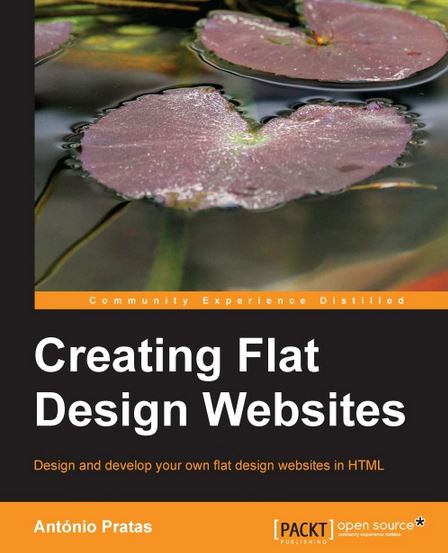
Review of Creating Flat Design Websites

18 Friday Jul 2014

Posted by mp3monster in Books, General, Technology

≈ Leave a comment

Tags

book, Bootstrap, Design, Designmodo, HTML, Packt, review, skeuomorphic, UI, website

I always find when looking at book if I encounter early in the book comments such as “…eventually I found out that design is not about the answers, it’s about asking the right questions …” as Antonio Pratas does in the Acknowledgement of Creating Flat Design Websites that the book feels like I can trust the author as this sort of thing is both an honest observation and one that reflects some more considered thinking. The book beards this point out. For example rather than pitching the technology or approach as a tool for all things as many IT books have habit if doing, even in the first couple of chapters we are clearly informed that flat design isn’t necessarily correct approach in all cases and examples are given to illustrate the point.

The opening chapter explains the ideas of flat design vs skeuomorphic, and a brief history of the design approaches and “flat’s” ruse in popularity. Even providing an incredibly simple illustration that doesn’t demand that you be a graphic artist to achieve to show the differences and how you might move from skeuomorphic to flat.

The following chapters look at the consideration for usability, referencing Jakob Neilsen’s work (and if design piques your interest I’d highly recommend the work of Neilsen’s partner at NN/g – Don Norman with writing such as the Design of Everyday Things). The only criticism I might make here is with UI design, and specifically web there are legal (in the UK this cones presently as part if disability discrimination) and industry standards (particularly W3C’s WCAG standard/guidelines) aren’t really mentioned. But if you start digging into good usability material you will encounter these aspects.

From this point when are then guided through a design approach with plenty of recommendations on how to approach the design phase (from the basics of considering your target audience onwards).  It is only chapter 5 that really get stuck into web tech with HTML and the Designmodo framework built on Twitter’s Bootstrap and chapter 6 covers building your own flat UI framework. So this book maybe pitched at web app development, but actually the bulk of the books content holds true whether you’re working on web solutions, thick apps for the desktop or the mobile variety as it embodies the principles if good interface design.

Not only does it successfully talk about good design it bridges the gap between techies and graphic artists without the sense it is trying to address either skills base. No mean feat.

Rather than stealing the book’s wealth of useful resources, I’ll point you at links relevant the book and it’s author. From there you’ll find a cast array of helpful resources. The references :

  • Packt Book webpage
  • Antonio Pratas’ website
  • Antonio Pratas on LinkedIn
  • An article on skeuomorphic design
  • Twitter Bootstrap
  • Designmodo framework

CreatingFlatDesignWebsite

Share this:

  • Share on Facebook (Opens in new window) Facebook
  • Share on X (Opens in new window) X
  • Share on Pocket (Opens in new window) Pocket
  • Share on Reddit (Opens in new window) Reddit
  • Email a link to a friend (Opens in new window) Email
  • Share on WhatsApp (Opens in new window) WhatsApp
  • Print (Opens in new window) Print
  • Share on Tumblr (Opens in new window) Tumblr
  • Share on Mastodon (Opens in new window) Mastodon
  • Share on Pinterest (Opens in new window) Pinterest
  • More
  • Share on Bluesky (Opens in new window) Bluesky
  • Share on LinkedIn (Opens in new window) LinkedIn
Like Loading...

Puppet Reporting & Monitoring Book Review

27 Friday Jun 2014

Posted by mp3monster in Book Reviews, Books, General, Packt, Technology

≈ Leave a comment

Tags

book, Michael Duffy, monitoring, Packt, packtpub, Puppet, reporting, review, Ruby

So the Packt book (Puppet Reporting and Monitoring) focuses down on a couple of aspects of the Puppet Toolset, as a result this is a relatively short book with only a couple hundred pages. As an enterprise architect I am no expert Puppet practitioner, my knowledge of Ruby is high level (part of the reason I reviewed this book is I wanted to better understand the art of the possible in these areas).  But despite this the book does an exceptionally good job defining a context and then explaining and showing what could be done, down to code examples.  In doing so, the author Michael Duffy introduces a number of open source libraries that can be leveraged to provide dashboard views, presentation of report content whilst maximising the leveraging of the Puppet ecosystem such as the Puppet DB (an abstracted database with a REST + JSON API).  The book goes beyond just implementation of monitoring and reporting but also engages with considerations such as deployment.  without ‘boiling the ocean’ the book provides a very good illustrations of the art of the possible and provides plenty of references to source information so working how you want to implement you own solutions.

My only criticism of the book, and it is a minor one at that is a few more diagrams to help illustrate ideas (particularly in the first chapter when discussing deployment considerations) would help get ideas across easily.

On the strength of this  book,  I hope that Michael considers taking on other authoring projects as this has been one of the best written technical books I’ve read in sometime.

Puppet Reporting & Monitoring
Useful Links:

  • Book – http://bit.ly/1qbSxKC
  • Puppet Labs – http://puppetlabs.com/
  • Puppet DB – http://docs.puppetlabs.com/puppetdb/
  • Ruby – https://www.ruby-lang.org/
  • Michael Duffy – http://www.stunthamster.com/, http://uk.linkedin.com/pub/michael-duffy/40/809/17a

Share this:

  • Share on Facebook (Opens in new window) Facebook
  • Share on X (Opens in new window) X
  • Share on Pocket (Opens in new window) Pocket
  • Share on Reddit (Opens in new window) Reddit
  • Email a link to a friend (Opens in new window) Email
  • Share on WhatsApp (Opens in new window) WhatsApp
  • Print (Opens in new window) Print
  • Share on Tumblr (Opens in new window) Tumblr
  • Share on Mastodon (Opens in new window) Mastodon
  • Share on Pinterest (Opens in new window) Pinterest
  • More
  • Share on Bluesky (Opens in new window) Bluesky
  • Share on LinkedIn (Opens in new window) LinkedIn
Like Loading...

SOA Patterns on the Oracle Platform

12 Thursday Jun 2014

Posted by mp3monster in Books, General, Technology

≈ Leave a comment

Tags

book, Oracle, Packt, Patterns, review, SOA

The last Packt book I contributed to as a technical reviewer is due for release this month according to the Packt site (go here).  Looking forward to seeing the final result.


Share this:

  • Share on Facebook (Opens in new window) Facebook
  • Share on X (Opens in new window) X
  • Share on Pocket (Opens in new window) Pocket
  • Share on Reddit (Opens in new window) Reddit
  • Email a link to a friend (Opens in new window) Email
  • Share on WhatsApp (Opens in new window) WhatsApp
  • Print (Opens in new window) Print
  • Share on Tumblr (Opens in new window) Tumblr
  • Share on Mastodon (Opens in new window) Mastodon
  • Share on Pinterest (Opens in new window) Pinterest
  • More
  • Share on Bluesky (Opens in new window) Bluesky
  • Share on LinkedIn (Opens in new window) LinkedIn
Like Loading...

Tori Amos – Unrepentant Geraldines

27 Tuesday May 2014

Posted by mp3monster in General, Music, Music Reviews

≈ Leave a comment

Tags

album, Little Earthquakes, lyrics, Music, review, Tori Amos, Unrepentant Geraldines

So, after twenty years, Tori Amos has, in many respects, come full circle, returning to the musical style of Little Earthquakes with her latest album, Unrepentant Geraldines. It isn’t a complete return, as in life, a forty-something can, at best, mimic themselves as a twenty-something. After twenty years, you’re going to be a bit more worldly-wise or world-weary. Parenthood changes your perspective in a manner that can’t be undone.

So, does this relate to Unrepentant Geraldines? Well, it reflects the piano lead style of Little Earthquakes with subtle other instrumentation to help and texture. But the similarities end there (although on initial listens, it is those likenesses that really hit). The point I was making really applies to the lyrical differences. The very direct, perhaps even brutal lyrics of Me And A Gun:

These things go through you head
When there’s a man on your back
And you’re pushed flat on your stomach

or Silent All These Years

So you found a girl
Who thinks really deep thougts
What’s so amazing about really deep thoughts
Boy you best pray that I bleed real soon

They are more subtle in delivery and less direct as they are wrapped in the storytelling of Tori’s characters—perhaps a reflection of confidence and a matured skill as a songwriter, not to mention possibly a more nuanced worldview.

So, after some adventures into more classical arrangements (Gold Dust), we have an album with an end result that is musically brilliant and will be much loved by Tori’s original fan base. The lyrics will undoubtedly reaffirm her relationship with those fans as well. It is a recommended album.


Share this:

  • Share on Facebook (Opens in new window) Facebook
  • Share on X (Opens in new window) X
  • Share on Pocket (Opens in new window) Pocket
  • Share on Reddit (Opens in new window) Reddit
  • Email a link to a friend (Opens in new window) Email
  • Share on WhatsApp (Opens in new window) WhatsApp
  • Print (Opens in new window) Print
  • Share on Tumblr (Opens in new window) Tumblr
  • Share on Mastodon (Opens in new window) Mastodon
  • Share on Pinterest (Opens in new window) Pinterest
  • More
  • Share on Bluesky (Opens in new window) Bluesky
  • Share on LinkedIn (Opens in new window) LinkedIn
Like Loading...

Oracle Big Data Handbook – part 3 reviewed

05 Monday May 2014

Posted by mp3monster in Book Reviews, Books, General, Oracle, Oracle Press, Technology

≈ 2 Comments

Tags

BDA, Big Data, book, CRAN, data mining, Endeca, ODM, Oracle, Oracle Press, Oracle R Enterprise, review, Revolution analytics, RStudio, spatial, warehouse

This is the third and final part of the review of Oracle Press’ Oracle Big Data Handbook (and last part of our detailed review – previous parts can be seen Part 1 here and Part 2 here). With the first sections having introduced the Big Data Appliance and the case for adopting an appliance, followed by an in depth look at the technologies provided on the BDA for storing data we move into the section that really delivers the pay off, namely the mechanics of converting data to information i.e. Analytics. This means this section of the book concentrates on the likes of Oracle Data Mining (ODM), Oracle R Enterprise and Endeca. The first of the chapters in this part of the book looks at different types of analytics you might need to perform for example data mining, predictive analytics, text mining and so on, the result is that the chapter does seem to flip flop between more classic data warehousing (still Big Data in terms of shear data volumes) to the more contemporary hip and trendy of ‘Big Data’ in the form of Hadoop and R. This may work nicely for a DBA/Data Scientist, but as a technologist and enterprise architect it isn’t so easy as personally I’d prefer to get a sense of each product stack then look at how they compliment/overlap. That said, after the first couple of sections where both the tools and ideas are introduced the flip/flopping is quicker making it easier to cope with, but it also makes for a sizeable opening chapter for this section of the book. But let me show you the kinds in sights that can be gained from the book.

ODM extensions are built around the common Oracle toolkits of RDBMS, SQLDeveloper and additional packages to provide powerful visual paradigms and precanned analytics functionality. Not being a data warehouse expert, I like the fact that the book takes time to describe the processes for building a data model and predictive engine and the likely paths through these steps. The books goes onto to explaining the available Excel tooling. Most of this is helped along with the context of a scenario. Given the claim of realtime capability to take a transaction and use a predictive model against the transactions values to ascertain whether the transaction is likely to be indicative of the characteristics being sought after it would have been nice for the book to provide some outline benchmarks for the scenario. Realtime could be interpreted as a second or two. Which when you’re running millions of transactions with small profit margins per transaction means using such capabilities is a also expectation. Still this doesn’t take away from the clarity of the information that is explained.

From ODM the chapter moves onto introducing the R language. What really got my attention by the book is the apparent willingness to engage with an Open Source model (given the other major players in the evolution of R – Google, Facebook, LinkedIn etc you might argue there is no choice). But the book upfront addresses the fact that Oracle hasn’t (or not yet) incorporated an R editor into SQLDeveloper or JDeveloper and the book suggests a specific tool of RStudio. Then there is the engagement with a library of R extensions (CRAN – Comprehensive R Archive Network with over 5000 extensions).

Google Trends view of Analytics Tools

All of which begs the question, what is Oracle’s value proposition in this pace. The book answers this be describing the challenges of using the Open Source edition of R (memory consumption and single threaded characteristics) and how they have addressed those by extending R into Oracle R Enterprise. In addition to these constraints Oracle’s extension recognises and works with the database governance and security layers properly. It is at this point we’re brought back to earlier focus of the BDA as the extensions allow the BDA Hadoop deployment to be used as a data source (along with Oracle RDBMS). In many respects it feels like a similar proposition to Revolution Analytics (other than the RDBMS emphasis being different). As with the Data Mining the example scenario is used to illustrate the applications of R in conjunction with Hadoop and Oracle RDBMS. To support the illustration the different additional libraries are explained (such as the Hadoop connector, RDBMS connector etc).

R enterprise doesn’t stop here, but has been integrated with PL/SQL, OBIEE and BI Publisher meaning that although some of the tools and the core solution are open source Oracle has achieved a rather rich ecosystem – a point not really called out by the book, but the presentation of the details really makes this jump out.

Still with Chapter 9 we move onto text mining for activities such as sentiment analysis and jump back to ODM with an explanation of the product’s capability in this space and the challenges that this kind of analysis presents. Which is followed by a view of the support R offers. The chapter moves onto things like Spatial analytics and so on. The later forms of analytics don’t confront the ideas of ‘Big Data’ based on the book’s opening definition of big data. That isn’t to say that a brief overview of how Oracle Spatial works and its capabilities to support ideas such as Location Intelligence isn’t interesting but I don’t see any differentiation between big data and normal patterns of use for Oracle Spatial. The examples provided such as knowing if there are patterns of location based usage, but such analysis can be done by ensuring a consistent representation of location from which you can select by a range – either a postal/zip code or by latitude and longitude for example, for which there are more cost effective tools and don’t necessitate pulling data out of a Hadoop cluster to perform such analysis. I would conceded that Oracle Spatial has an information rich data set that could be very effective, but to explore such ideas should we not be looking at ideas like that of ESRI’s integration to Hadoop (and more here) for example if Oracle offer such a capability.

Having crossed a range of technologies Chapter 10 briefly talks about IDEs, but then goes for a deeper dive into R covering the supported Open Source Edition and Enterprise Edition (ORE). The differences between the two versions and the licensing issues are well explained. Based on the description what Oracle have done to make the optimisation and ability to transparently leverage the database seems pretty impressive. The only thing to remember is by transparently moving R’s computational load into the DB is what impact on other processes. Oracle have also enabled ORE to access the predictave analytics capabilities that can reside within an Enterprise Database which are also illustrated here.

After looking at ORE’s capabilities the book moves onto its connection to Hadoop for R (Oracle R Connector for Hadoop – ORCH). ORCH provides the means to interact with HDFS along with the file system and RDBMS. The connector allows for the creating of MapReduce jobs using the R language and interacting the the job scheduler. To fully leverage these capabilities you do want to pull in CRAN libraries. The book then walks through a detailed example of using ORCH with MapReduce (including R script elements). This is then followed by a similar set of examples demonstrating direct interaction with HDFS.

Chapter 11, gives us a focus change again, this time to Endeca for Information Discovery. The book takes us through the history of Endeca and Oracle explaining the component naming – before and after the acquisition and the two dimensions of the Endeca product stack – eCommerce specific and for more general BI.

The chapter looks at the Endeca data model as it is a faceted or tagged model (i.e. all values are represented as label & value). The book emphasis’ the benefits of this model – but not downsides (needing to use the label to determine semantic meaning can have performance implications). This is important is it has implications of the flexibility to enrich data that Endeca can then leverage. Once the basic product and technicalities are examined the book actually steps back to explain the differences between BI and information Discovery and therefore the approaches to using these tools. Then onto to the tooling such as the studio, engine and integration capabilities. The book continues to build on the technical side with the classic NFRs of how to make the technology scale. We then flip back to look at a number of example use cases. Before a final jump to look at mechanics of deploying Endeca and getting some development work underway. The sequencing of the chapter sections does seem a little odd, but it does work, but trying to dive into just the technical dimensions alone probably not a practical proposition here.


Big Data governance is taken on the final chapter of the book – Chapter 12. The emphasis here is to look at the definition of Data Management (e.g. definition by Data Management Association – DAMA) and how Big Data relates to this. So the chapter walks through the key data governance factors – many of which are characterised in the diagram above for example focusing on common legislative considerations such as HIPAA, and Patriot’s Act KYC (Know Your Customer) through to EU Data Protection and UK Financial Services Act. Having a breadth wise view of Data Governance then the book starts to look at how Big Data scenarios differ from raw data and day to day data sets. The problem I have with the chapter here, that all the points being made are valid, but they’re not Big Data issues they are any data governance issues. What Big Data does is introduce technology to capture and use data in ways previously not considered so using the technologies in this way may impact declarations that you may have made to data protection registrar e.g. declare you keep customer data to enable order fulfillment but then use the data to determine effectiveness of sales channels would be an issue. But you dont have to have big data technology to create such an issue (the book itself acknowledges that you could do the analysis with older approaches but the difference is it is easier and quicker now). Having described some ‘any data’ guidance for your big data scenarios the book goes into a raft of big data scenarios in different domains and references some of the relevant legislation. If you read the chapter as just data governance it is a good reminder of the different considerations in data governance.
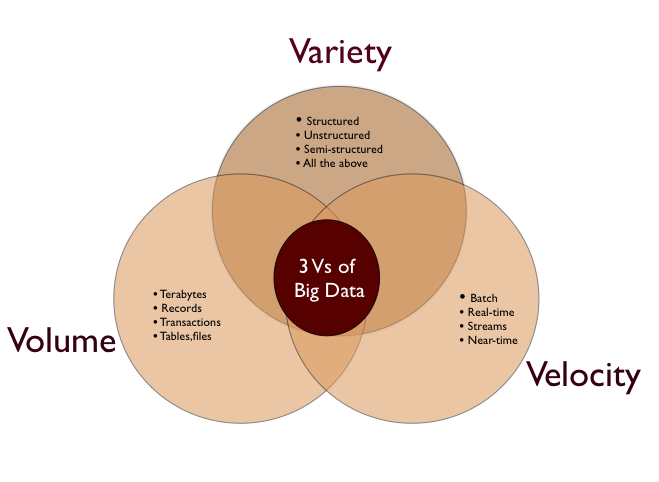
The final Chapter takes on architectural and road mapping considerations. A good way to conclude as this sort of thing will draw on all the preceeding chapters’ points; and this precisely how the chapter starts recapping the value proposition described up front followed the infrastructure considerations – data volumes need to process in parrallel to handle the volumes in timeframes that mean the insights can be assessed and reacted to in a meaningful manner. After the recap the book moves into a maturity model although the origins of the model aren’t clear (I’d have thought that the basis of what is presented is routed in a wider model). This naturally leads into looking at the Oracle Architecture Design Process (OADP). The details of OADP walks thought the goals and mechanics of developing your ‘As-Is’ and ‘To-Be’ architecture so you develop a transitional roadmap. The final step is obviously enabling the journey by developing the human skills necessary to perform such as journey.


Previous Reviews:

  • Part 1
  • Part 2

Share this:

  • Share on Facebook (Opens in new window) Facebook
  • Share on X (Opens in new window) X
  • Share on Pocket (Opens in new window) Pocket
  • Share on Reddit (Opens in new window) Reddit
  • Email a link to a friend (Opens in new window) Email
  • Share on WhatsApp (Opens in new window) WhatsApp
  • Print (Opens in new window) Print
  • Share on Tumblr (Opens in new window) Tumblr
  • Share on Mastodon (Opens in new window) Mastodon
  • Share on Pinterest (Opens in new window) Pinterest
  • More
  • Share on Bluesky (Opens in new window) Bluesky
  • Share on LinkedIn (Opens in new window) LinkedIn
Like Loading...

Oracle Big Data Handbook – part 2 reviewed

22 Tuesday Apr 2014

Posted by mp3monster in Book Reviews, General, Oracle, Oracle Press, Technology

≈ 2 Comments

Tags

adaptors, BDA, BerkeleyDB, Big Data, book, connectors, Hadoop, NoSQL, ODI, Oracle, Oracle Press, review, Sleepycat, sqoop

After an excellent start in Part 1 of Oracle Press’ Oracle Big Data Handbook (reviewed here). Part 2 moves on to looking at Apache Hadoop, Oracle’s Big Data Appliance and Oracle’s NoSQL offerings.

So chapter 3 provides a brilliant overview of Hadoop and the echo system that has been developed around it. Addressing the divergent versions of Map Reduce leading to the likes of YARN. Touching on how commericalised versions of Hadoop have been taken forward with this (such as Cloudera).


Apache Hadoop echo system

Moving onto to describe the core solution components such as Node Managers and the relationship to hardware and the use of more commodity kit rather than using nice expensive SAN technology.

Hadoop Structure

So now we have good (pretty much uncoloured by Oracle) view of Hadoop. Which leads into the the next chapter (chapter 4) which looks at why Oracle have taken the approach of an Appliance (which could be seen as contrary to the previous stated adoption of commodity kit).

Oracle Big Data

So as you can see Oracle woven together a set of technologies into an Exadata based platform which would not only deal with Big Data Analytics but ideally support other volume scenario needs so you’re not adding another data silo. all of which fits with Oracle’s Engineered Solutions view point. The book takes on a explains the other factors involved in the BDA design – those of commercial considerations and value propositions in relation to its customer base – very refreshing to see (rather than rationalisation through technical arguments alone).

The book addresses the challenge of why should I go to Oracle for big data? Which is well argued on the experience of very large relational deployments. Oracle’s contributions to Hadoop via Cloudera and so on. The chapter finishes with the argument around cost comparison between buying a comparable hardware solution to build your own cluster. Taking just list prices compared to HP and the hardware costs come in more or less the same, that’s before you account for the fact the Oracle price includes all the software.


Chapter 5 addresses the deployment of the BDA, explaining the configuration process, which with the combination of a tool called Mammoth (appropriate really) and the lies of Puppet seems pretty simple as a lot of the solution is preconfigured on the box ready. all of which is reasonably well explained. my only grumble is that we do seem to revisit the details of the hardware fairly regularly as the details are again presented here, although we go into a deeper dive in the configuration. One surprise that I’d not picked up on is that Oracle have made their NoSQL solution available as open source, although a little digging might contribute to why as it has links back to Sleepycat’s BerkeleyDB that Oracle acquired (more here). As the chapter move through the physical aspects of the deployment it also highlights in clear terms any constraints Oracle imposes to ensure that the whole appliance is supportable, the most significant of these areas is the advanced networking that is setup.

Chapter 5 as it moves through deployment considerations addresses the means to know that the appliance is running properly – so we’re talking about system monitoring not just of the hardware but the distributed nature of Hadoop and Map Reduce. So a brief view of the products deployed is given. Obviously this centres on the Enterprise Manager extensions, but also the component level tooling such as Cloudera’s Hadoop Manager.

Chapter 6 in many respects continues building out the view of Hadoop to describe briefly the analytics tooling both in the Oracle RDBMS, R language and data mining/discovery of Endeca. The interesting points in the chapter are about the relationship with RDBMS particularly as an enterprise data warehouse – something I’ve not seen really addressed elsewhere as the common world view seems to put Hadoop in the same camp as NoSQL which seems to be gaining the zeal and polarity that Linux vs Windows used to have when it comes to RDBMS. But I think the book makes a good case for right tool for the right job.

Oracle’s Strategic Product View

Chapter 7 starts to drill in to how the connector package offers which consider Oracle database data transfer, combining the R language with MapReduce and ODI.

The database connector aim to provide efficiency in transferring data between Hadoop and the Oracle RDBMS over say using Sqoop to transfer data to and from an Oracle database (ODI connectors, JDBC, direct OCI etc). To fully understand the explanation of how this works you do need to understand the basics of MapReduce although as the chapter progresses the relevant MapReduce operations are elaborated upon. As the chapter progresses we start being shown configuration fragments for the different connection approaches.

The final chapter of this section of the book looks at the NoSQL database in detail, starting with high level ideas such as how NoSQL relates to ACID and BASE ideas, dropping down into significant (but valuable) detail by describing how clients are kept in sync through the use of separate threads picking up data about the data partitioning (sharding).  Once the key components have been well described the chapter moves onto explain how Oracle has optimized the process to make the NoSQL as performant as is possible whilst providing a solution that is elastic in nature and highly resilient but still predictable in its dynamics.

The chapter finishes off with considerations such as installation, how it integrates with Hadoop and OBIEE.

Overall, this a very informative chapter, occasionally it feels like some of the information is being repeated but in a different structure but it isn’t the end of the world, although if you’re reading from cover to cover you need to just press on.


Part 1 of the book is reviewed here.

Share this:

  • Share on Facebook (Opens in new window) Facebook
  • Share on X (Opens in new window) X
  • Share on Pocket (Opens in new window) Pocket
  • Share on Reddit (Opens in new window) Reddit
  • Email a link to a friend (Opens in new window) Email
  • Share on WhatsApp (Opens in new window) WhatsApp
  • Print (Opens in new window) Print
  • Share on Tumblr (Opens in new window) Tumblr
  • Share on Mastodon (Opens in new window) Mastodon
  • Share on Pinterest (Opens in new window) Pinterest
  • More
  • Share on Bluesky (Opens in new window) Bluesky
  • Share on LinkedIn (Opens in new window) LinkedIn
Like Loading...

Oracle Fusion Applications Development and Extensibility Handbook – Summary Review

14 Monday Apr 2014

Posted by mp3monster in Book Reviews, Books, General, Oracle, Oracle Press, Technology

≈ Leave a comment

Tags

applications, book, extension, fusion, Fusion Applications, Oracle, Oracle Press, review


So having written a series of detailed blog entries reviewing a couple of chapters at at time I thought it might be worth just providing a very brief review. Writing a book that provides both breadth of coverage for a very large subject area as well as meaningful depth is a very difficult trick to pull off. But the authors of this book have succeeded magnificently. The book tackles the subject of basic customization that users can perform through to in-depth feature development using the Oracle SOA stack. Not to mention reporting and analytics. The book has been written in an engaging way providing context, background and Fusion Application principles and then taking examples of how to implement the different kinds of capabilities. From this book, you should have a good grasp of what to expect and how to approach Fusion application Extension work.

As a result I’d recommend this book to Architects, Project Manager’s who want to understand what their development team should be doing and the risks of their approach. This would also form a good roadmap into the detail for developers starting out in the Fusion applications space.


Detailed reviews can be seen at:

  • Chapters 1 & 2
  • Chapters 3 & 4
  • Chapters 5 & 6
  • Chapters 7 & 8
  • Chapters 9 & 10
  • Chapters 11 & 12
  • Chapters 13, 14 & 15

Share this:

  • Share on Facebook (Opens in new window) Facebook
  • Share on X (Opens in new window) X
  • Share on Pocket (Opens in new window) Pocket
  • Share on Reddit (Opens in new window) Reddit
  • Email a link to a friend (Opens in new window) Email
  • Share on WhatsApp (Opens in new window) WhatsApp
  • Print (Opens in new window) Print
  • Share on Tumblr (Opens in new window) Tumblr
  • Share on Mastodon (Opens in new window) Mastodon
  • Share on Pinterest (Opens in new window) Pinterest
  • More
  • Share on Bluesky (Opens in new window) Bluesky
  • Share on LinkedIn (Opens in new window) LinkedIn
Like Loading...

Oracle Fusion Applications Development and Extensibility Handbook – Chapters 13, 14 & 15 reviewed

12 Saturday Apr 2014

Posted by mp3monster in Book Reviews, Books, General, Oracle, Oracle Press, Technology

≈ 1 Comment

Tags

ADF, applications, book, fusion, integration, look and feel, OER, Oracle, Oracle Press, review, scheduler, Scheduling

Our final detailed visit to  Oracle Fusion Applications Development and Extensibility Handbook (Oracle Press) covers the final 3 chapters which engage with the Scheduler, Look and Feel customisation and the relationship with integration and service concepts (dare I use the acronym SOA).

The chapter on the scheduler is pretty short, but then compared to many other chapters the size of the product/component is small. The book relates how the scheduler behaves compared to the Schedule Management offered in EBusiness. The surprising things is that each product domain (Financials, HCM, CRM etc) has its own scheduler rather than a single shared service; the book doesn’t attempt to explain the rational here which is a shame.  It does describe how it deploys into each domain, where the configuration exists and how to work with the configuration of the scheduler itself (e.g. where logging goes etc) and attempts to address some obvious questions from a administration perspective.  It then goes onto how to create a custom scheduled process with a worked illustration. All very well done, although I have to admit to a nagging feeling of I’m missing something – it maybe simply that deployment is very much through server administration rather than through an automated mechanism (so if you develop and test in a preproduction environment, you can package up the process of deploying config custom app to your production environment without needing to repeat the admin UI interactions, so you can be assured there is no inconsistency between deployment instances).

The Look and Feel chapter is about largely applying the changes so that the product feels like part of your business’ corporate solution – important if you’re exposing any aspects of it to the outside world. So aside from the use of the tools you have the ADF controls to effectively ‘skin’ the product. The chapter provides a brief but concise view of how skinning works, in relation to the old EBusiness technologies (CLAF and UIX) and current HTML technology of CSS and the key part of ADF (Rich Faces). More importantly it points out the relevant documentation on all the sources of information, and tooling such as the skinning editor. Not to mention addressing the issue of deployment. Obviously there is a short illustration demonstrating an element of skinning.

ADF Architecture

The initial emphasis on the last chapter is the reality that organisations can’t simply migrate all non Fusion Apps such as EBusines, Seibel etc to the Fusion solutions in one hit therefore you need to provide a degree of integration between solutions for as long as the transition may take. This neatly leads into the question of well how do I know what components exist to support integration, which brings OER (Oracle Enterprise Repository) into the picture. So obviously the book provides a brief overview to the use of OER. The various Fusion apps offer different interfaces for different tasks (from bulk data export to business events) so each of these ‘patterns’ are briefly explianed and as Fusion apps is offered as a SaaS solution how that might impact the ‘pattern’ availability. The chapter finishes by walking through the use of using a SCA Composite and web services to interact with a Fusion App – probably one of the most common approaches to integration at a transactional (rather than bulk) manner.  The only thing missing for me would be a brief discussion on Process Integration Packs (PIPs) which leverage all of  the technologies underpinning Fusion Apps into a custom package of integration operations or ready made integrations.

So the final chapters provide a strong close to the book continuing to offer an excellent overview, pointing you to resources to ‘deep dive’ as necessary.


Previous Chapter reviews:

    • Chapters 1 & 2
    • Chapters 3 & 4
    • Chapters 5 & 6
    • Chapters 7 & 8
    • Chapters 9 & 10
    • Chapters 11 & 12

Share this:

  • Share on Facebook (Opens in new window) Facebook
  • Share on X (Opens in new window) X
  • Share on Pocket (Opens in new window) Pocket
  • Share on Reddit (Opens in new window) Reddit
  • Email a link to a friend (Opens in new window) Email
  • Share on WhatsApp (Opens in new window) WhatsApp
  • Print (Opens in new window) Print
  • Share on Tumblr (Opens in new window) Tumblr
  • Share on Mastodon (Opens in new window) Mastodon
  • Share on Pinterest (Opens in new window) Pinterest
  • More
  • Share on Bluesky (Opens in new window) Bluesky
  • Share on LinkedIn (Opens in new window) LinkedIn
Like Loading...
← Older posts
Newer posts →

    I work for Oracle, all opinions here are my own & do not necessarily reflect the views of Oracle

    • About
      • Internet Profile
      • Music Buying
      • Presenting Activities
    • Books & Publications
      • Logging in Action with Fluentd, Kubernetes and More
      • Logs and Telemetry using Fluent Bit
      • Oracle Integration
      • API & API Platform
        • API Useful Resources
        • Useful Reading Sources
    • Mindmaps Index
    • Monster On Music
      • Music Listening
      • Music Reading
    • Oracle Resources
    • Useful Tech Resources
      • Fluentd & Fluent Bit Additional stuff
        • Logging Frameworks and Fluent Bit and Fluentd connectivity
        • REGEX for BIC and IBAN processing
      • Java and Graal Useful Links
      • Official Sources for Product Logos
      • Python Setup & related tips
      • Recommended Tech Podcasts

    Oracle Ace Director Alumni

    TOGAF 9

    Logs and Telemetry using Fluent Bit


    Logging in Action — Fluentd

    Logging in Action with Fluentd


    Oracle Cloud Integration Book


    API Platform Book


    Oracle Dev Meetup London

    Blog Categories

    • App Ideas
    • Books
      • Book Reviews
      • manning
      • Oracle Press
      • Packt
    • Enterprise architecture
    • General
      • economy
      • ExternalWebPublications
      • LinkedIn
      • Website
    • Music
      • Music Resources
      • Music Reviews
    • Photography
    • Podcasts
    • Technology
      • AI
      • APIs & microservices
      • chatbots
      • Cloud
      • Cloud Native
      • Dev Meetup
      • development
        • languages
          • java
          • node.js
          • python
      • drone
      • Fluentbit
      • Fluentd
      • logsimulator
      • mindmap
      • OMESA
      • Oracle
        • API Platform CS
          • tools
        • Helidon
        • ITSO & OEAF
        • Java Cloud
        • NodeJS Cloud
        • OIC – ICS
        • Oracle Cloud Native
        • OUG
      • railroad diagrams
      • TOGAF
    • xxRetired
    • AI
    • API Platform CS
    • APIs & microservices
    • App Ideas
    • Book Reviews
    • Books
    • chatbots
    • Cloud
    • Cloud Native
    • Dev Meetup
    • development
    • drone
    • economy
    • Enterprise architecture
    • ExternalWebPublications
    • Fluentbit
    • Fluentd
    • General
    • Helidon
    • ITSO & OEAF
    • java
    • Java Cloud
    • languages
    • LinkedIn
    • logsimulator
    • manning
    • mindmap
    • Music
    • Music Resources
    • Music Reviews
    • node.js
    • NodeJS Cloud
    • OIC – ICS
    • OMESA
    • Oracle
    • Oracle Cloud Native
    • Oracle Press
    • OUG
    • Packt
    • Photography
    • Podcasts
    • python
    • railroad diagrams
    • Technology
    • TOGAF
    • tools
    • Website
    • xxRetired

    Enter your email address to subscribe to this blog and receive notifications of new posts by email.

    Join 2,555 other subscribers

    RSS

    RSS Feed RSS - Posts

    RSS Feed RSS - Comments

    February 2026
    M T W T F S S
     1
    2345678
    9101112131415
    16171819202122
    232425262728  
    « Jan    

    Twitter

    Tweets by mp3monster

    History

    Speaker Recognition

    Open Source Summit Speaker

    Flickr Pics

    Gogo Penguin at the BarbicanGogo Penguin at the BarbicanGogo Penguin at the BarbicanGogo Penguin at the Barbican
    More Photos

    Social

    • View @mp3monster’s profile on Twitter
    • View philwilkins’s profile on LinkedIn
    • View mp3monster’s profile on GitHub
    • View mp3monster’s profile on Flickr
    • View mp3muncher’s profile on WordPress.org
    • View philmp3monster’s profile on Twitch
    Follow Phil (aka MP3Monster)'s Blog on WordPress.com

    Blog at WordPress.com.

    • Subscribe Subscribed
      • Phil (aka MP3Monster)'s Blog
      • Join 233 other subscribers
      • Already have a WordPress.com account? Log in now.
      • Phil (aka MP3Monster)'s Blog
      • Subscribe Subscribed
      • Sign up
      • Log in
      • Report this content
      • View site in Reader
      • Manage subscriptions
      • Collapse this bar
     

    Loading Comments...
     

    You must be logged in to post a comment.

      Privacy & Cookies: This site uses cookies. By continuing to use this website, you agree to their use.
      To find out more, including how to control cookies, see here: Our Cookie Policy
      %d