All quiet?

We’ve not blogged much in the last month as we have been busy On a number of activities that will result in a fair bit coming out I a while, we have also been posting a little bit on the Community.oracle.com site. So what is it we’ve been working on? Well …

  • Formally contracted now with Packt to write a book on Oracle Integration Cloud Service – we’ve been working on this for a while now but with the goal of being in print for Oracle Open World we’ve been going flat out.
  • With Oracle Open World proposals open we have submitted a number of proposals both with my book co-author and independently.
  • UKOUG activities are happening with a contributing role to to a special event on cloud adoption – the agenda for this is looking really good. The next middleware SIG planning is moving on nicely. Plus the review cycle of the next Oracle Scene.
  • Participated in a OTN Archbeat podcast recording – was great deal of fun.

Challenges for the Citizen Integrator

Tags

, , , , , , , , , , , , , ,

cloudgs_integrationWe’ve been developing the example integrations to go with book on ICS and have encountered some interesting challenges for the Citizen Integrator (CI) when using an iPaaS (integration Platform as a Service). To say it in non techno speak  someone wanting to plumb system together without needing to be equipped and have the skills of a developer and just using the cloud. One such example is SOAP API testing, before connecting live systems together even a CI will probably want to check that you have mapped the data correctly – important when you’ve potentially got functions and repeating structures in the mapping. To go back to my old analogy that tools for a CI like ICS are the same as Excel to ERP. Then like when creating formulas in a spreadsheet you’re going to plumb in some numbers and check the formula’s results before using in anger.boomerang2b1366

So far so obvious, the fun comes not when you’re wanting to simulate the source event coming into the tool – this can be done through a raft of utilities from Chrome Browser extensions such as Boomerang, soapui_logoSoapUI for example. Things become a lot more challenging when   comes when you want the integration output to go to a mock SOAP API.   The choices available are limited, and pretty much come down to:

  • If you’re lucky you might be able to connect to a test instance of the target service. SalesForce offers a sandbox instance for example to those with a production instance of SalesForce.
  • However sandbox/test instances are less likely for ‘in house’ solutions or products offered as an on premise solution unless there happens to be active development on the solution taking place.screenshot_48
  • Ideally a mocking tool is the route to go – but only 1 option in this space appears to be available for SOAP called mockable.io
  • Other than mockable you’re into using locally installed software and things get messy as it means getting the outbound web traffic routed to your own machine and then use something like MockServer (there is a great article about this tool by my book co-author Robert van Molken here). The chances are unless the network & security manager(s) are good friends or you like messing with your home network it isn’t going to happen.
  • The final option is instantiating an IaaS platform such as Amazon (AWS Free Developer intro scheme to keep your cost down) or perhaps Oracle IaaS, although I’d suggest this is a fairly expensive route to enable the testing of an integration, not to mention the effort to setup things to run the test.

With REST services things are somewhat easier, as there is a lot more tools geared to helping the design of APIs, testing them and critically providing a proxy based framework 65f3fc0eadfae8135439b4ff48f63fd4to enable monetisation. For example Apiary.io can create a test harness for you. Others such as Apigee, also offer such abilities. Apiary offers a trial account and we’ll be hearing a lot more about Apiary in the near future. There is a possible work around, which is to create test integrations that  map the SOAP content into a REST service (Apigee offers such a capability) but with certain constraints you could also do this within ICS itself. But we’ll look at such options within the book (can’t go without to money shot 😀 ).

This of course has only looked at the conventional use of SOAP, if you need to work with a SOAP interface that makes use of the more advanced WS-* extensions such as Reliable Messaging then things come pretty serious, and I’m afraid today you’re going to need to resort to development, and I suspect you’ll not escape that in the future either.

Oracle PaaS – the Good and opportunities to get better

Tags

, , , , , ,

IMG_0180Although Oracle have been late to the cloud party they are certainly making up for it, by bringing products to the cloud at an amazing pace, and using their core products to build out new offerings at a rate that will mean they will at least catch  all the competition across  the breadth of PaaS very quickly.

When it comes to taking on Oracle PaaS  it does have  some quirks, some relate to Oracle’s normal licensing approach, and others I’m told relate to the way US accounting has to work when it comes to realised revenue. A couple of other characteristics I suspect are linked to the fact that the infrastructure for Oracle’s cloud is still being rolled out and grown for capacity.

So firstly the carry over – well outside of a trial account you need to agree and sign a general agreement which provides an overarching legal framework defining terms, conditions and liabilities. This makes dealing with each subsequent purchase a little simpler. Rather than purchasing services as you go, you then purchase credits from Oracle which have a maximum life of 1 year. This does mean you’re not got a pure OPEX spend model – although you do stand a chance of negotiating a better deal as the numbers are naturally bigger. As part of the agreement you’ll get a rate card, so different services cost different amounts – for example a standard edition database will cost x and an enterprise high performance version will cost a bit more. The credits are for specific product families such as SaaS products, products in the PaaS domain for example document cloud, Java cloud, SOA and so on. But make sure the products you might want are in the families you get credits for, there is the odd surprise for example MBaaS isn’t in the same family as the integration products.

In addition your negotiation you need to consider whether  services are in metered or unmetered models.  Unmetered means you agree a level of capacity for the year. This will obviously work out cheaper than a metered model where you can use up your credits as you choose, with different metering rates – for example hourly and monthly. When this was first explained it looked really good for dealing with the situation of having a baseline demand which could be unmetered and then purchasing metered services to capacity burst. Sadly this isn’t possible out of the box. I suspect because of the way Oracle cloud allocates workload to different work domains. So bursting workload would have to be done as if you’re bursting in 2 different clouds. So if you have a dynamic load you either go unmetered to your maximum demand or metered for everything. Either way you’re not getting the best in terms of cost management.  I have to admit I don’t know whether the likes of AWS and Azure when you enter into long term agreements have the same challenges.

One the positive side, with the credits you can then purchase a broad range of configurations of products from just ADB schema all the way a full size  Exadata setup. So performing PoCs is pretty easy and figuring out scaling just means burning your credits quickly and instantiating more capacity.

Before getting into instantiating your cloud instances you’d best  setup access controls to allow people access controls to creating instances. Then you can start creating instances of the products you want. Make sure you protect your credentials as the way things are setup anyone else recovering them will be a problem.

With services such as SOA and Java you do need to go through the process of creating the different layers, storage, then the database and so on. But unlike building on premise each step only requires a couple of clicks and your done. To put it into context the first time I built a small footprint 11g environment took me a couple of days to work my way through on my own create a DB, deploy RCU,Weblogic, SOA and AIA foundation (no load balancing or security etc) and was no way near secure as a cloud instance. Oracle PaaS in three hours we:

  • Meet our Customer Success Manager (more on this shortly)
  • Got the utilities such as putty installed on my laptop
  •  Walked through putty’s key generation quirks and how to avoid the gotchyas
  • being walked through the process, of setting up management rights to our credits and instance creation
  • Instaniated storage, debated on the DB option to use, created the SOA CS instance with OSB, a load balancer and configured SSH security and web access routes to our cloud. Plus setup my developers
  • Had a couple cups of coffee and ordered lunch

With SOA CS and atleast some of the other cloud offerings you also get SSH access to the OS so you can tinker and tune your SOA container and Weblogic etc. Some would argue that totally undermines the ideal of PaaS and that exploiting such a capability means you can end up customising your deployment to the point it will break the moment an update or patch comes along. So it is very double edged. In my mind (but I’m a techie at heart so seeing the engine running is always interesting) it’s good, but must be handled with great care. As they say – with great freedom comes great responsibility.

One of the real wins is that Oracle allocate customers a Cloud Success Manager who are tasked with enabling you to use the Oracle cloud – any problems, guidance needed can be addressed through these people. A cynic might say they exist to help you spend money which becomes released revenue. But our experience is the CSMs are genuinely enthusiastic and helpful  – answering questions at 6pm on a Friday (despite my school boy error).

So in our experience so far I’d suggest Oracle could do two things to really make a big advancement – commercially atleast:

  • Allow payments to be made on a reoccurring model as an alternative to the credits model, perhaps this approach restricts you to metered only services
  • Allow metered and unmetered services to be utilised together – perhaps as a stretched cluster mentality.

This was first made available at https://community.oracle.com/groups/united-kingdom-user-group/blog/2016/03/25/starting-with-oracles-soa-cs 

Oracle High Availability on Azure – What & Why

Tags

, , , , ,

Many organisations come to cloud from an approach of ‘not my computer’. This is occurs for a number of reasons but considerations such as:

  • OPEX (operational spend) over CAPEX (capital spend)- converting significant upfront expenditure into an outlay on more regular intervals. Some years ago this might have been approached through lease agreements once you got into the server space
  • Flexibility in sizing (although many forget that this flexibility does come at a premium)
  • Ability to host the kit – many organisations won’t have he appropriate physical infrastructure necessary to house servers to a standard that offers the desirable levels of security and assurance for always on capabilities.everest-group-cloud-chart

But cloud by which I mean IaaS (Infrastructure as a Service), does not really equate to someone housing my computer, or potentially even as simple as virtualising my computer. This comes from several factors:

  • Really big cloud providers such as Amazon with AWS, Microsoft with Azure, Google, Dropbox are not using run of the mill servers, but build their own servers so they can optimise the design to allow the best VM to server densities
  • Ability to make hardware be very cost effective, for example Google is well known for by commodity storage and using data distribution techniques to give performance and. Failure resilience.

So how does this relate to Oracle and High Availability? Well when you want to make you data tier of an oracle solution both highly available as well as scaling through scale out you end up using Real Application Cluster (RAC) at the database. Simply providing VM resilience will not give sufficient availability for continuously on conditions, you need the software tier to continuously pickup demand, and availability of servers to do that is handled by the virtualisation tier so if you have a node failure then you will have at least 1 remaining whilst the virtualisation launches another instance.

cloud-azureThe problems start because RAC has some platform requirements (disk sharing either virtual or physical) that can’t be offered by all cloud (IaaS) that can be typically established with on premise hardware such as a SAN. Microsoft Azure has one of these very issues meaning it presently can’t run RAC (see here).  Amazon doesn’t have this issue (details here) and obviously not be a problem for Oracle cloud (see here).

mapThe second consideration that tends to get overlooked is data centre level DR. It is very easy to forget regardless how good the data centre is with precautions and redundancy there are some events that can bring a centre down. Even the most sophisticated monitoring and live VM movement can’t avoid the data centre level problems. There are well published illustrations of such issues, the best known are those Amazon have had (probably because it has hit some many customers – Amazon’s own analysis of one event here). So if you want a truly resilient always on, you need Dataguard replicating to another data centre if possible. You can of course use Dataguard within a data centre as well to offset the possibility on not having RAC, but it does mean scaling is limited to what you can do vertically (I.e. More CPU cores, more memory, or disk). It will also place different demands on the design of you application  tiers.

Turin Brakes

I was fortunate enough to catch Turin Brakes touring their latest album Lost Property and got a few photos of their performance = you call see the full set here.
Turin Brakes at The Brook

Review of Oracle API Management 12c

Tags

, , , ,

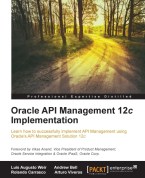
3635en_4575_oracle20api20management2012c20implementation_0My review of the Oracle API Management 12c has been published the the UKOUG at http://www.ukoug.org/what-we-offer/news/review-of-oracle-api-management-12c-implementation/ – rather than repeat the review here, I’d recommed people go read the page.  But I will say here is that it is an excellent book.  The book can be found at:

Along with a range of other book sellers.

Integration Cloud Service – In the Eyes of the A-Team

Tags

, , , , , ,

ics-dev-testSo the A-Team (not the TV show which managed to have lots of things blow up and no one ever get hurt) but the technology gurus at Oracle have started to write blog posts about Integration Cloud Service (ICS).  This is will be a reflection of the increasing uptake of the cloud service.  A fellow Oracle Ace Associate (Robert van Mölken – blog here) and I should about to get a book on the subject underway.

As an aside to this, as part of creating a case to the publishers of the potential value of a book on the subject, I picked up a number of market assessments which are pretty interesting:

  • “​By 2016, at least 35% of all large and midsized organizations worldwide will be using one or more iPaaS offerings in some form” (Gartner RAS Core Research Note G00210747 – March 11)
  • 2013 Gartner say iPaaS is going to really take off (G00258046)
  • Last summer Gartner forecast by 2018 that iPaaS will be the 2nd largest PaaS offering (G00277176)
  • By 2018, in most organizations, at least 50% of new integration flows will be implemented by citizen integrators – January 2016
  • Various tweets from Gertner researchers have indicated Oracle’s entry into this form of iPaaS is going to be a market disruptor.

All that before you look at what other analysts are saying such as Forrester, Ovum and others.

Oracle ITSO Mindmap Update

Tags

, , , ,

So I have been chipping away at my mind mapping of the foundation reference architecture from Oracle (part of the IT Strategies from Oracle – ITSO material).  So I have recently updated the mind map.  You can see it via WiseMapping here. Navigate an image of it below (very large now).

ITSO

TOGAF is document centric & has no place in the Agile world?

There is an almost constant drip of articles about why Enterprise Architecture and TOGAF particularly is or is not appropriate/valid, particularly in an agile environment because it typically results in lots of documentation which often date rather quickly when it comes to describing the landscape rather than be sustained.

So why am adding to this mass of MBs and GBs of text on the subject?  Well, when I do look at these articles (which can be frustrating at times) there seems to me several  points often overlooked, which is what I want to address.  These points are:

  • A document might not generate vast amounts of value (unless you’re Gartner or a government think tank) but the process or journey (and hopefully act of engagement of the right parts of an organisation) should shake out influencing points.
  • On the agile documentation perspective that people often argue as a reason not to document we should remember the agile manifesto says ‘Individuals and interactions over processes and tools‘ and  ‘Working software over comprehensive documentation.

Let me expand on my first point a bit more.  When looking at a solution space it is easy to define the requirements (or be SME stakeholder)that deliver capabilities for current and near future operational needs and ways of working.  These challenges will always gain precedence over the desired direction of travel because you’re working shorter cycles.  Okay, the answer to this is bound to be – well that is what is needed and delivers value. But this always puts you in a position of delivering against now. If you’re focused on the now in a competitive landscape, the first organisation to build for a likely future is going stand a good chance of winning ground. Or worse a sudden change of direction or focus can set you onto the back foot. This is where EA can help.  Well engaged EA effort will bring the right people together  because it seeks to draw out not just the end users but the influencers, the people defining the business capabilities, and value propositions. Typically those stakeholders will differ from those involved as directly or 1 step removed from the delivery engagement). As EA techniques and modelling challenges people to look at fundamentals it should  draw people away from considering the short and near term  focuses and address the bigger game. We could reduce this to extracting business capabilities rather than defining function points. As a result you have a business roadmap on which an IT roadmap can be hung. With this   you can focus on what delivers value and when, it may even validate the original position held by the delivery team. This validation could be easily considered a waste of time. Except it isn’t because you have a confirmation, but more critically those a bit more removed from the day to day will appreciate the value being delivered as they have helped define and confirm it, and hopefully more brought into the delivery goal. It may even present the opportunity show how technology innovation can inform the business of opportunity.

Let me illustrate with an example. Many IT systems deal with user and customers, and as a result a level of data security can be defined (at its most simplistic how would I want my details to be handled).  A development programme can be running smoothly delivering, but because the bigger picture/full business capability needed is not been recognised. That can be expected as those involved in delivery are more likely to be thinking about how to make now and next week easier. However if the organisation then  starts pitching and winning government contracts, as they perceive the business to be essentially the same service.  But those closer to the details of Government contracts will know that they often have a higher bar regarding data residency.  If you’ve been building against a single deployment location model (plenty fine for Joe public) then the change  can throw a seriously big spanner at the works if the contract doesn’t happen to be in the same place as your data centre. Yes, you can refactor the solution but actually what would have been easier is if this direction had determined at the outset, then you’d have designed ready to build the features when the work came in that handled residency questions. Ideally the process of getting the engagement and working towards EA views should have drawn out the view of a capability being wider than justJoe public.

The naysayers will probably argue back that you cant know everything in advance. To which I agree to an extent, but life is not black and white and there are varying probabilities and you can choose to only work the certainties, or work and engage with the probabilities. If you work with a bigger picture and probabilities it will be easier to handle now and potentially be ahead of the competition. Oh, and that is where Gartner & the government think tankers I mentioned make their money understanding trends and likely needs.

As to the second point,  as you have seen I am emphasising the tool (EA and TOGAF) as means to achieve the bigger picture aspects of individuals & interactions. Where bringing some of these people together to interact may not be the easiest as they will be the furthest from the day to day development. Remember that TOGAF does not need to be swallowed verbatim – infact like delivery methodologies such as OUM and RUP you’re encouraged to tailor the framework. The benefit of something being codified creates a context in which people well invest greater effort to achieve the process.  Consider this, standups in an agile operation happen consistently and reliably because the timing and obligation have been ‘codified’ (not necessarily formally) in the same way how standups actually function have.

So there are places for EA, but you’ve got to remember not the process that is the key, not the documents you will produce, but what is it you’re trying to achieve with its use.  It is not necessarily

Thought Provoking Video

Tags

, , ,

So, I’m not a great fan of things like the World Economic Forum (WEF) – unlike TED it appears to be overtly political (and an opportunity for big business to lobby governments) rather than pure presentation ideas and innovation. That said, last week at Oracle’s Digital Transformation conference I did see a couple of videos produced by WEF that really got some messages across.