It’s a busy time with books at the moment. I am excited, and pleased to hear that Fernando Harris‘ first book project has been published. It can be found on amazon.com and amazon.co.uk among sites.
Having been fortunate enough to be a reviewer of the book, I can say that what makes this book different from others that examine cloud-native architecture is its holistic approach to the challenge. Successful adoption of cloud-native approaches isn’t just technical (although this is an important element that the book addresses); it also considers organizational, processes, and people dimensions. Without these dimensions, the best technology in the world will only be successful as a result of chance rather than by intent.
As a result, this book guides and connects content to the Kubernetes technical content (technical how-to books we typically see from publishers like Manning and O’Reilly) and the more organizational leadership books that you might expect from IT Revolution (Gene Kim et al.).
A read I’d recommend to any architect or technical lead who wants to understand the different aspects of achieving cloud-native adoption rather than just the mastery of an individual technology.
A couple of years ago I got to discuss some of the design ideas behind API Platform Cloud Service. One of the points we discussed was how API Platform CS kept the configuration of APIs entirely within the platform, which meant some version management tasks couldn’t be applied like any other code. Whilst we’ve solved that problem (and you can see the various tools for this here API Platform CS tools). The argument made that your API policies are pretty important, if they get into the public domain then people can better understand to go about attacking your APIs and possibly infer more.
Move on a couple of years, Oracle’s 2nd generation cloud is established an maturing rapidly (OCI) and the organisational changes within Oracle mean PaaS was aligned to SaaS (Oracle Integration Cloud, Visual Builder CS as examples) or more cloud native IaaS. The gateway which had a strong foot in both camps eventually became aligned to IaaS (note that this doesn’t mean that the latest evolution of the API platform (Oracle Infrastructure API) will lose its cloud agnostic capabilities, as this is one of unique values of the solution, but over time the underpinnings can be expected to evolve).
Any service that has elements of infrastructure associated with it has been mandated to use Terraform as the foundation for definition and configuration. The Terraform mandate is good, we have some consistency across products with something that is becoming a defacto standard. However, by adopting the Terraform approach does mean all of our API configurations are held outside the product, raising the security risk of policy configuration is not hidden away, but conversely configuration management is a lot easier.
This has had me wondering for a long time, with the use of Terraform how do we mitigate the risks that API CS’s approach was trying to secure? But ultimately the fundamental question of security vs standardisation.
Mitigation’s
Any security expert will tell you the best security is layered, so if one layer is found to be vulnerable, then as long as the next layer is different then you’re not immediately compromised.
What this tells us is, we should look for ways to mitigate or create additional layers of security to protect the security of the API configuration. These principles probably need to extend to all Terraform files, after all it not only identifies security of not just OCI API, but also WAF, networks that are public and how they connect to private subnets (this isn’t an issue unique to Oracle, its equally true for AWS and Azure). Some mitigation actions worth considering:
Consider using a repository that can’t be accidentally exposed to the net – configuration errors is the OWASP Top 10. So let’s avoid the mistake if possible. If this isn’t an option, then consider how to mitigate, for example …
Strong restrictions on who can set or change visibility/access to the repo
Configure a simple regular check that looks to see if your repos have been accidentally made publicly visible. The more frequent the the check the smaller the potential exposure window
Make sure the Terraform configurations doesn’t contain any hard coded credentials, there are tools that can help spot this kind of error, so use them. Tools exist to allow for the scanning of such errors.
Think about access control to the repository. It is well known that a lot of security breaches start within an organisation.
Terraform supports the ability to segment up and inject configuration elements, using this will allow you to reuse configuration pieces, but could also be used to minimize the impact of a breach.
Of course he odds are you’re going to integrate the Terraform into a CI/CD pipeline at some stage, so make sure credentials into the Terraform repo are also secure, otherwise you’ve undone your previous security steps.
Minimize breach windows through credentials tokens and certificate hanging. If you use Let’s Encrypt (automated certificate issuing solution supported by the Linux Foundation). Then 90 day certificates isn’t new.
Paranoid?
This may sound a touch paranoid, but as the joke goes….
Just because I’m paranoid, it doesn’t mean they’re not out to get me
Fundamental Security vs Standardisation?
As it goes the standardisation is actually a dimension of security. (This article illustrates the point and you can find many more). The premise is, what can be ensured as the most secure environment, one that is consistent using standards (defacto or formal) or one that is non standard and hard to understand?
We’ve been told because of current events in the US that this event is going to be rescheduled.
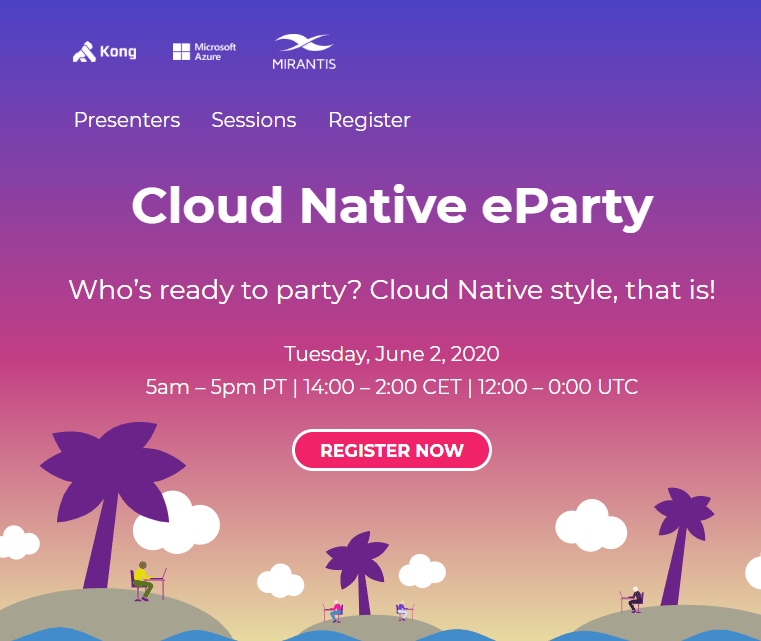
I am pleased to say that I will be talking about Fluentd at the Cloud Native eParty virtual conference on 2nd June 2020. I’ll be presenting at 4pm, and then hanging out on the conference slack channel to answer any more questions people might have.



 Phil (aka MP3Monster)'s Blog
You must be logged in to post a comment.