• Home
  • Site Aliases
    • www.cloud-native.info
  • About
    • Background
    • Presenting Activities
    • Internet Profile
      • LinkedIn
    • About
  • Books & Publications
    • Log Generator
    • Logs and Telemetry using Fluent Bit
      • Fluent Bit book
      • Book Resources in GitHub
      • Fluent Bit Classic to YAML Format configurations
    • Logging in Action with Fluentd, Kubernetes and More
      • Logging in Action with Fluentd – Book
      • Fluentd Book Resources
      • Fluentd & Fluent Bit Additional stuff
    • API & API Platform
      • API Useful Resources
    • Oracle Integration
      • Book Website
      • Useful Reading Sources
    • Publication Contributions
  • Resources
    • GitHub
    • Oracle Integration Site
    • Oracle Resources
    • Mindmaps Index
    • Useful Tech Resources
      • Fluentd & Fluent Bit Additional stuff
      • Recommended Tech Podcasts
      • Official Sources for Product Logos
      • Java and Graal Useful Links
      • Python Setup & related stuff
      • DevTips
  • Music
    • Monster On Music
    • Music Listening
    • Music Reading

Phil (aka MP3Monster)'s Blog

~ from Technology to Music

Phil (aka MP3Monster)'s Blog

Tag Archives: Fluent Bit

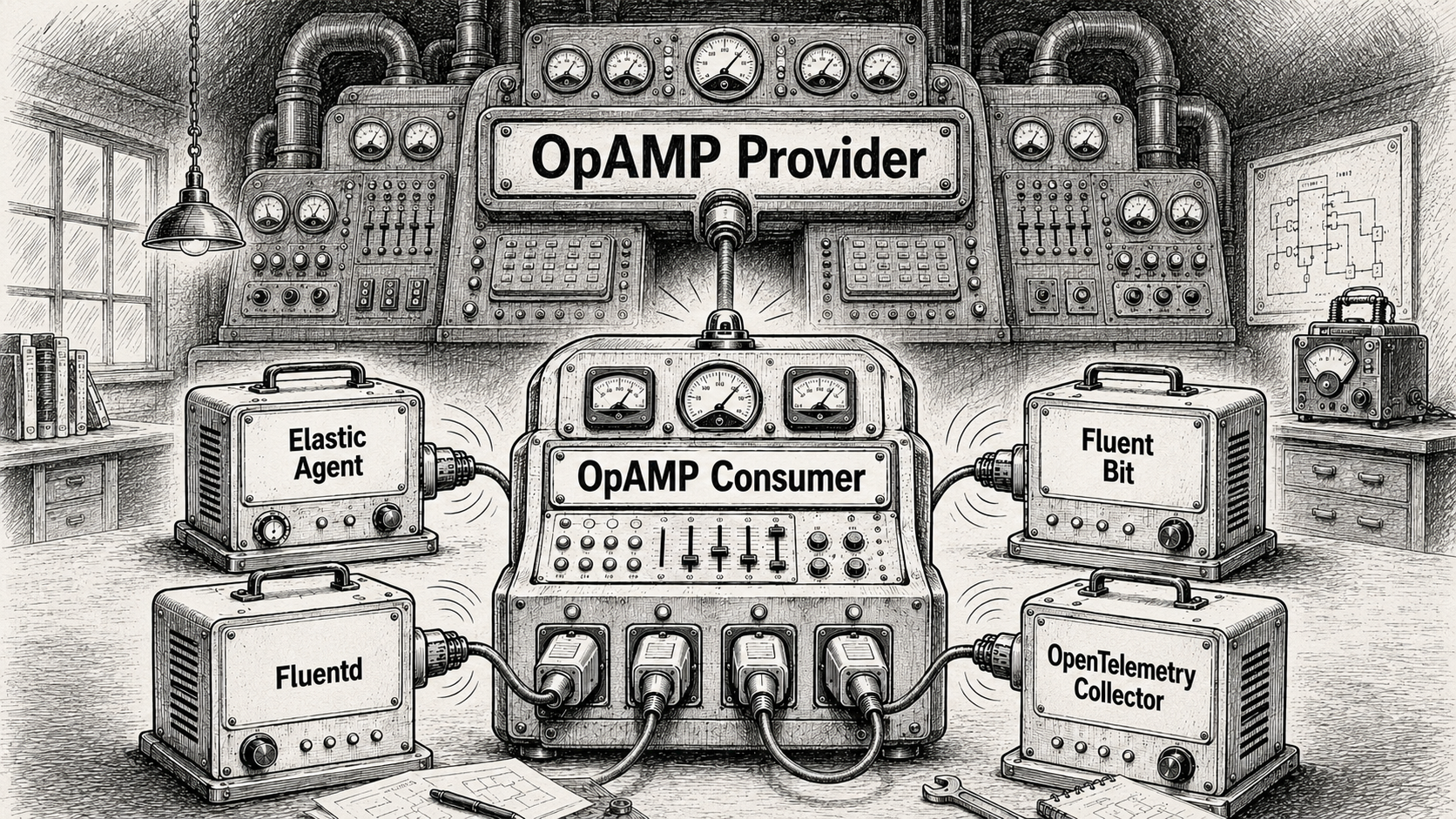
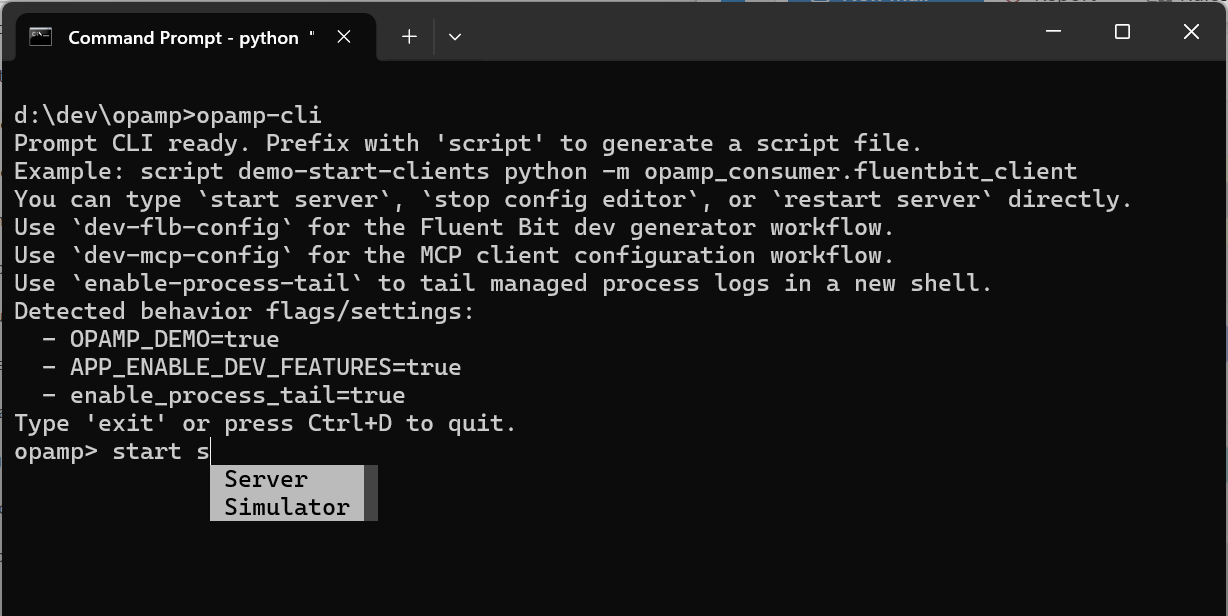
OpAMP server with MCP – aka conversational Fluent Bit control

14 Tuesday Apr 2026

Posted by mp3monster in AI, chatbots, development, Fluent Observability, General, OpAMP, Technology

≈ Leave a comment

Tags

AI, chatops, Fluent Bit, Fluentd, LangGraph, LLM, MCP, OpAMP, OpenTelemetry, OTel, OTLP

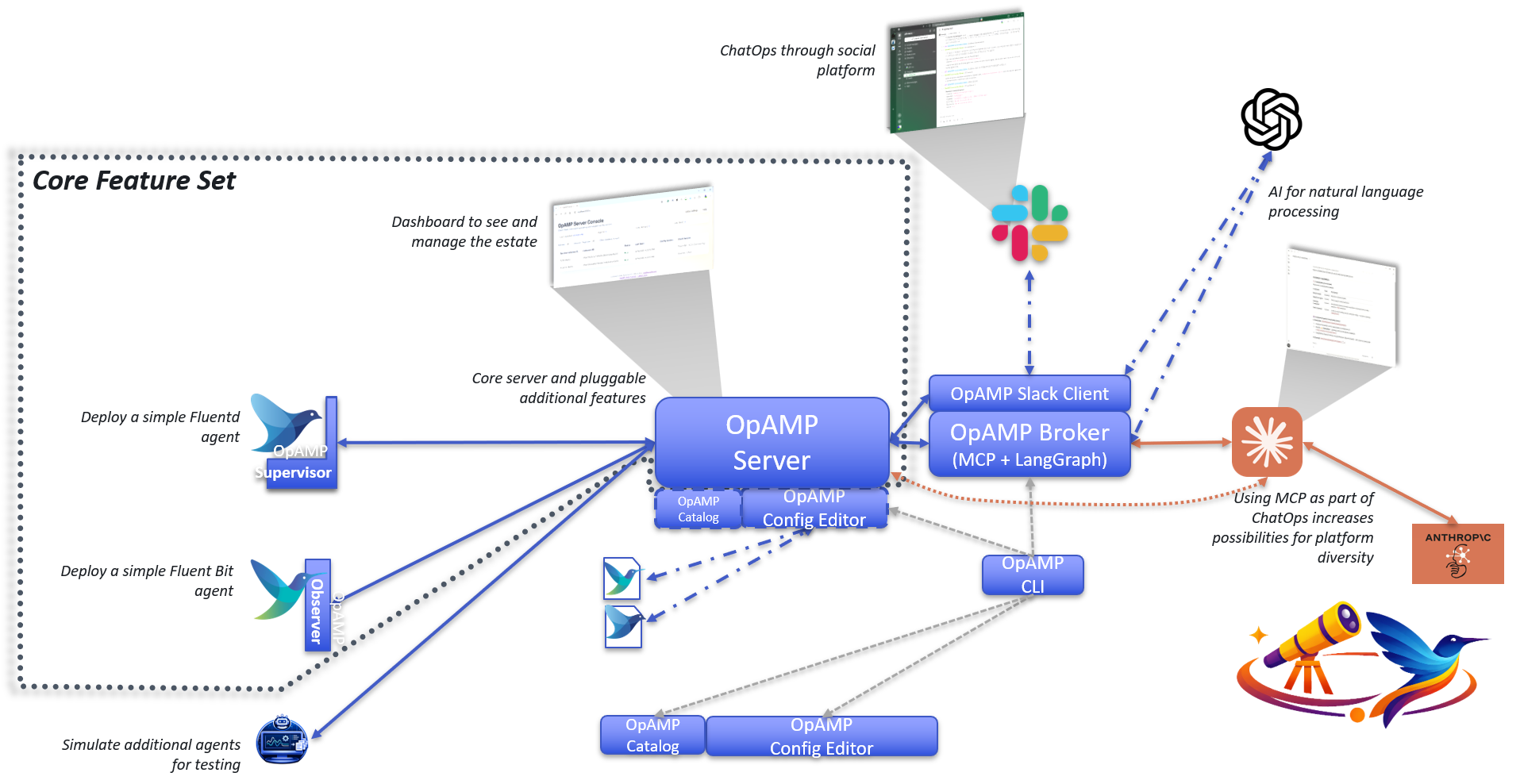
I’ve written a few times about how OpAMP (Open Agent Management Protocol) may emerge from the OpenTelemetry CNCF project, but like OTLP (OpenTelemetry Protocol), it applies to just about any observability agent, not just the OTel Collector. As a side project, giving a real-world use case work on my Python skills, as well as an excuse to work with FastMCP (and LangGraph shortly). But also to bring the evolved idea of ChatOps (see here and here).

One of the goals of ChatOps was to free us from having to actively log into specific tools to mine for information once metrics, traces, and logs reach the aggregating back ends, but being able to. If we leverage a decent LLM with Model Context Protocol tools through an app such as Claude Desktop or ChatGPT (or their mobile variants). Ideally, we have a means to free ourselves to use social collaboration tools, rather than being tied to a specific LLM toolkit.

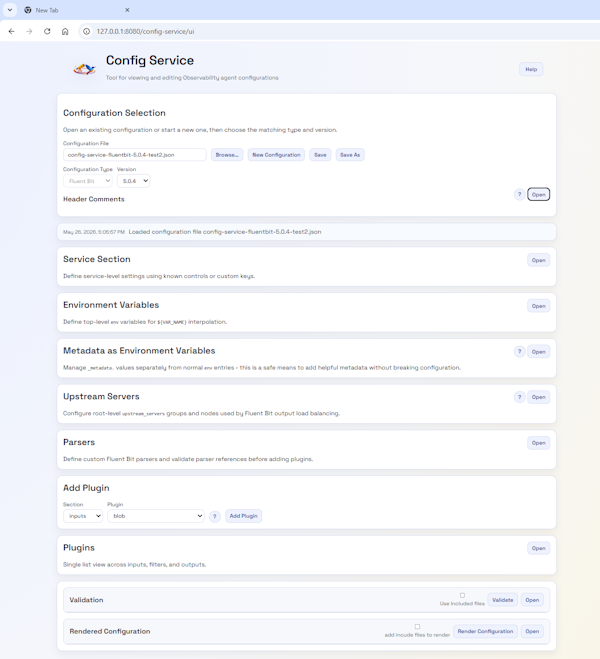
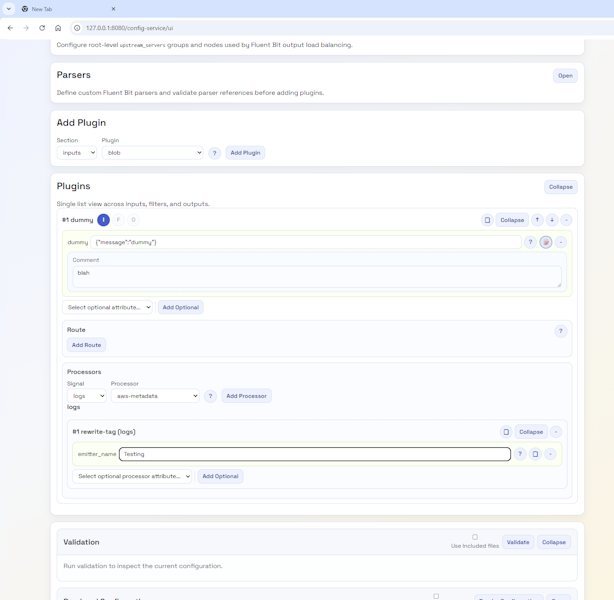
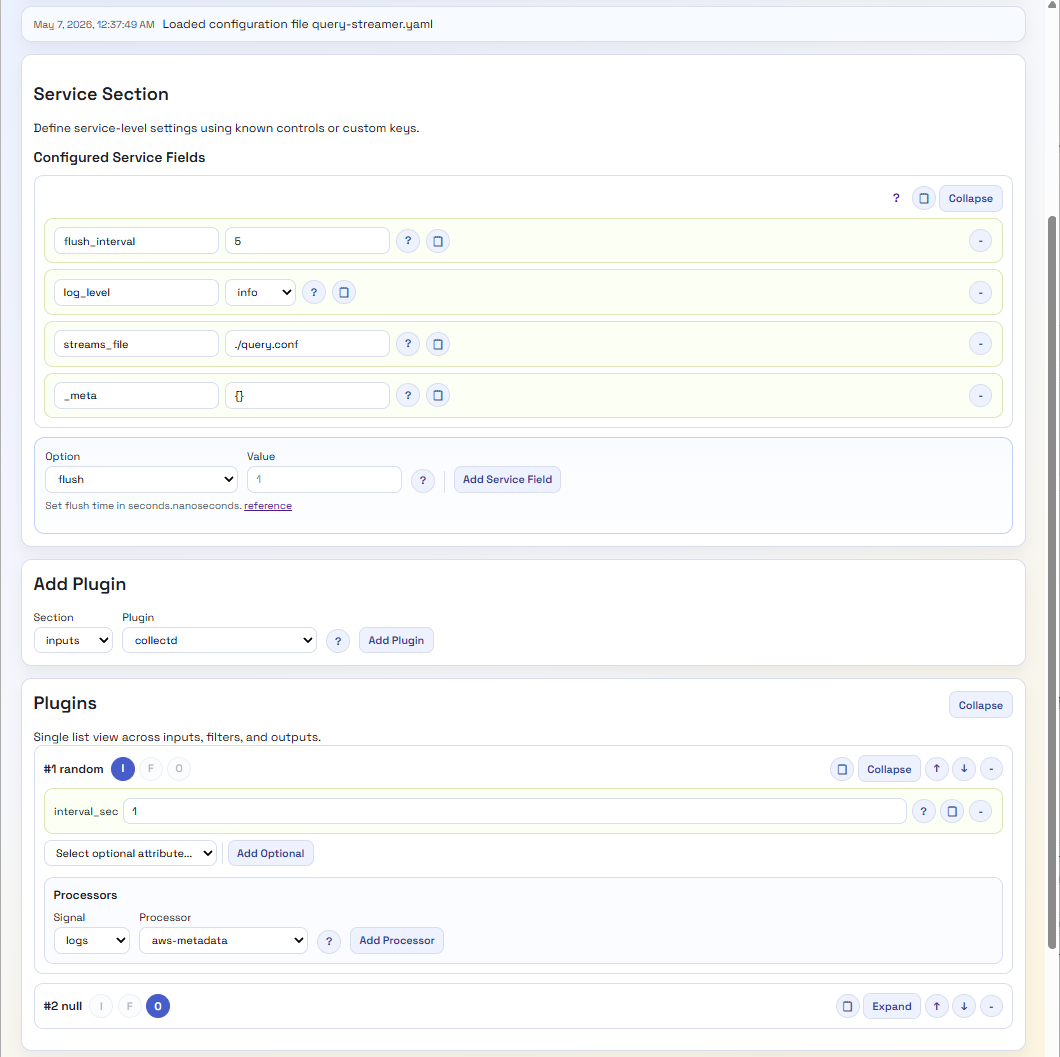
With a UI and the ability to communicate with Fluentd and Fluent Bit without imposing changes on the agent code base (we use a supervisor model), issue commands, track what is going on, and have the option of authentication. (more improvements in this space to come).

New ChatOps – Phase 1

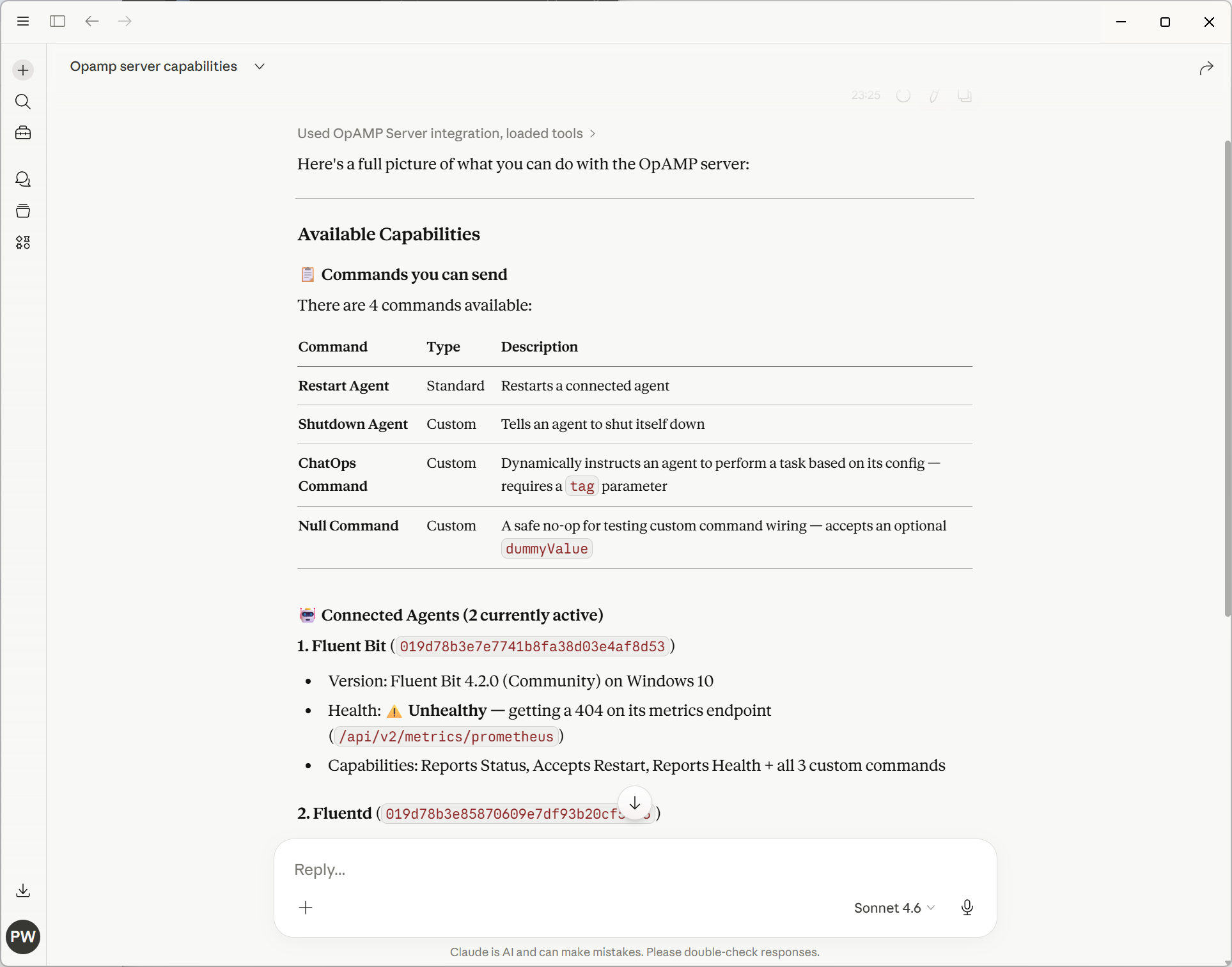
With the first level of the new ChatOps dynamism being through LLM desktop tooling and MCP, the following are screenshots showing how we’ve exposed part of our OpAMP server via APIs. As you can see in the screenshot within our OpAMP server, we have the concept of commands. What we have done is take some of the commands described in the OpAMP spec, call them standard commands, and then define a construct for Custom Commands (which can be dynamically added to the server and client).

interaction through Claude Desktop which has been configured with our MCP server (part of our OpAMP server) showing us what can be done

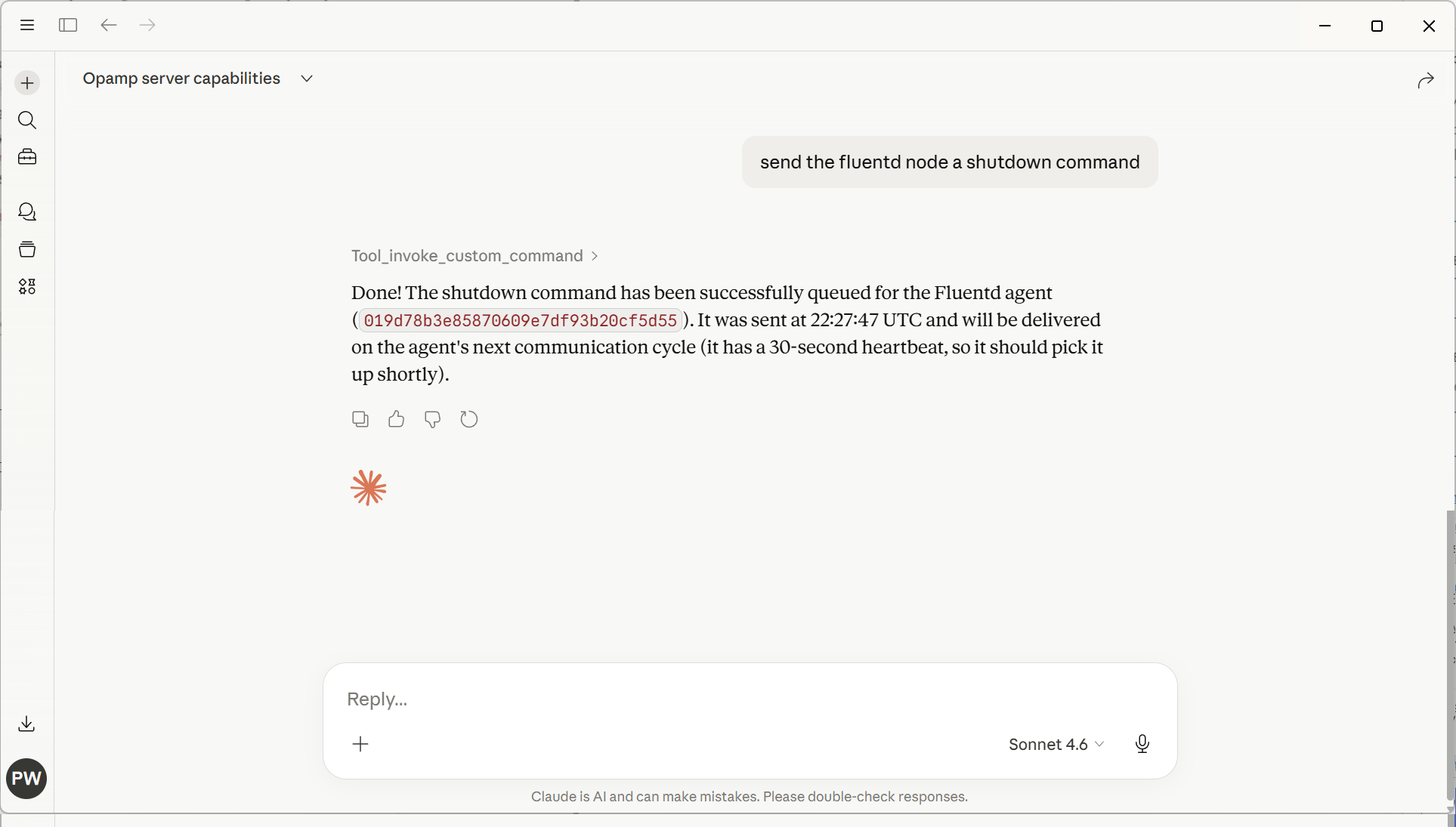
The following screenshot illustrates using plain text rather than trying to come up with structured English to get the OpAMP server to shut down a Fluentd node (in this case, as we only had 1 Fluentd node, it worked out which node to stop).

Claude Desktop showing conversation to shutdown a FLuentd node

Interesting considerations

What will be interesting to see is the LLM token consumption changes as the portfolio of managed agents changes, given that, to achieve the shutdown, the LLM will have had to obtain all the Fluent Bit & Fluentd instances being managed. If we provide an endpoint to find an agent instance, would the LLM reason to use that rather than trawl all the information?

Next phase

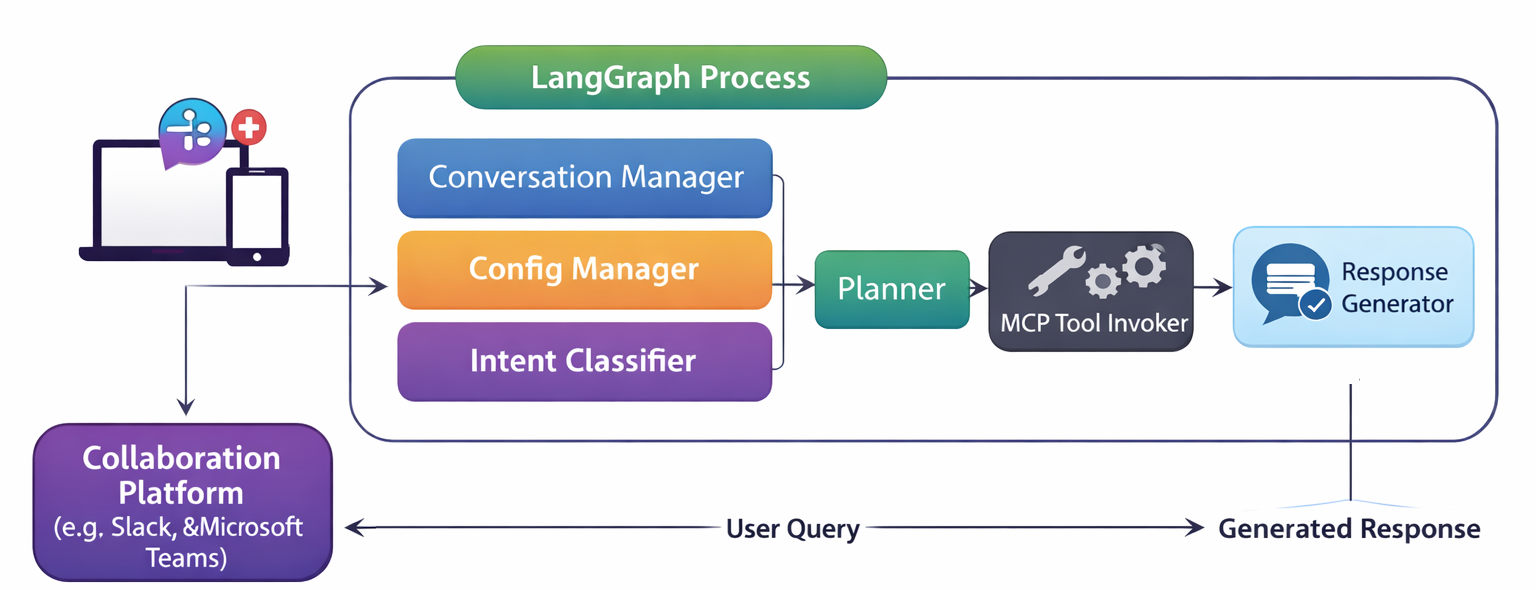
ChatGPT, Claude Desktop, and others already incorporate some level of collaboration capabilities if the users involved are on a suitable premium account (Team/Enterprise). It would be good to enable greater freedom and potentially lower costs by enabling the capability to operate through collaboration platforms such as Teams and Slack. This means the next steps need to look something along the lines of:

Share this:

  • Share on Facebook (Opens in new window) Facebook
  • Share on X (Opens in new window) X
  • Share on Reddit (Opens in new window) Reddit
  • Email a link to a friend (Opens in new window) Email
  • Share on WhatsApp (Opens in new window) WhatsApp
  • Print (Opens in new window) Print
  • Share on Tumblr (Opens in new window) Tumblr
  • Share on Mastodon (Opens in new window) Mastodon
  • Share on Pinterest (Opens in new window) Pinterest
  • More
  • Share on Bluesky (Opens in new window) Bluesky
  • Share on LinkedIn (Opens in new window) LinkedIn
Like Loading...

Returning to Chat Ops

03 Tuesday Mar 2026

Posted by mp3monster in chatbots, Fluent Observability, Fluentbit, Fluentd, General, OpAMP, Technology

≈ Leave a comment

Tags

AI, chatops, development, Fluent Bit, IncidentFox, innovation, LLM, OpAMP, OTel, runbooks, SRE

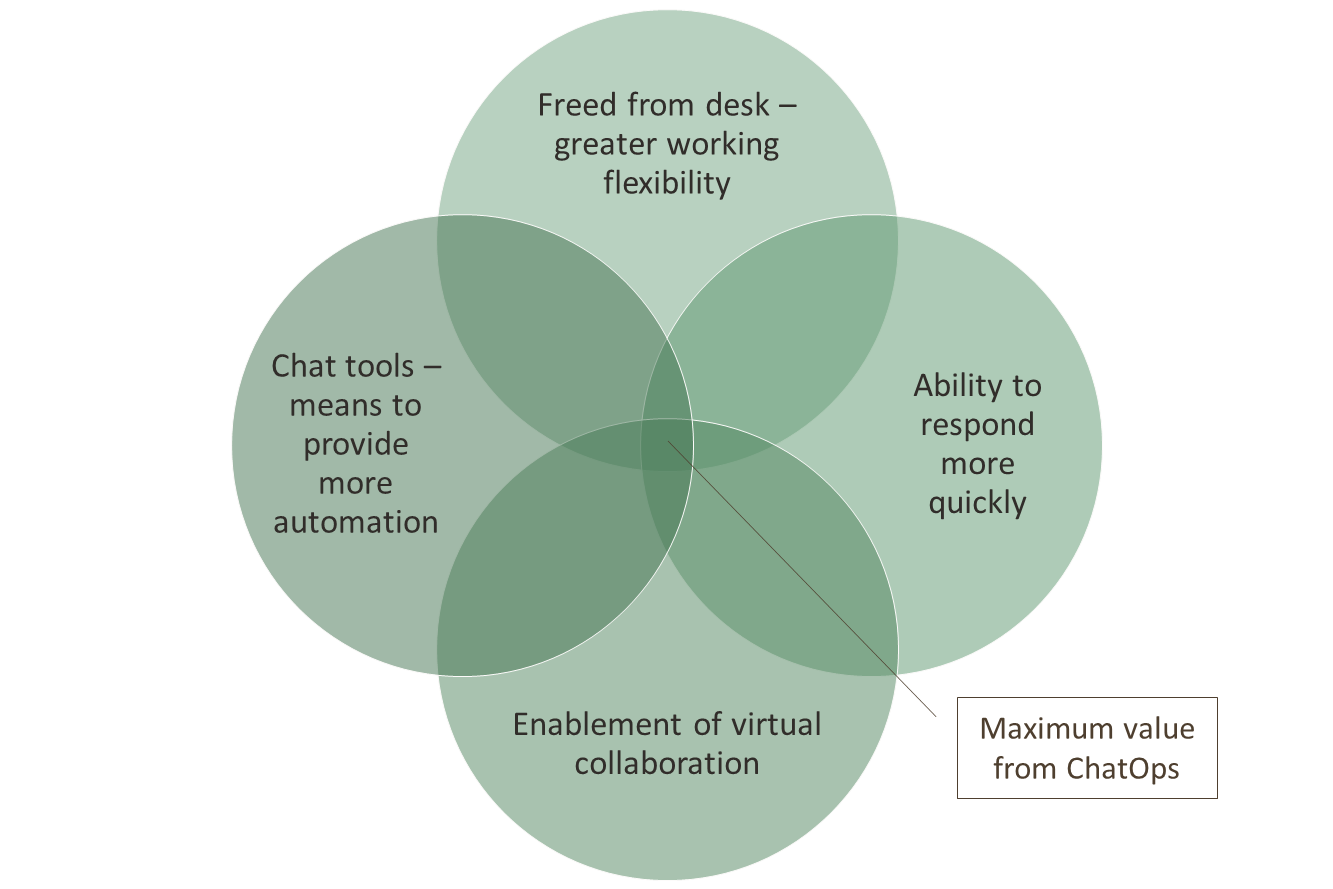
A couple of years ago, we wrote about the idea of Chat Ops, why the idea is valuable and interesting (see Fluent Bit – Powering Chat Ops, Fluent Bit with Chat Ops, for example). The essence of the idea was:

  • Using a collaboration or chat platform like Slack could ease and even accelerate the response to operational issues (as systems process more data and faster).
  • Conversational collaborative platforms are pervasive, usable across many devices, while still being able to enforce security. Taking away the need to log in to laptops, signing in to portals before you can even start considering what the problem is.
  • The quicker we can understand and resolve things, the better, and the less potential damage that may need to be addressed. Using collaboration platforms does this through collaborative work, and the fact that we can see content quickly and easily because of the push model of tools like Slack.
  • Any Observability agent tool that can detect issues as data is moved to a backend aggregation and analytics tool gives you a head start. This is something Fluent Bit can do easily.

We illustrated it this way:

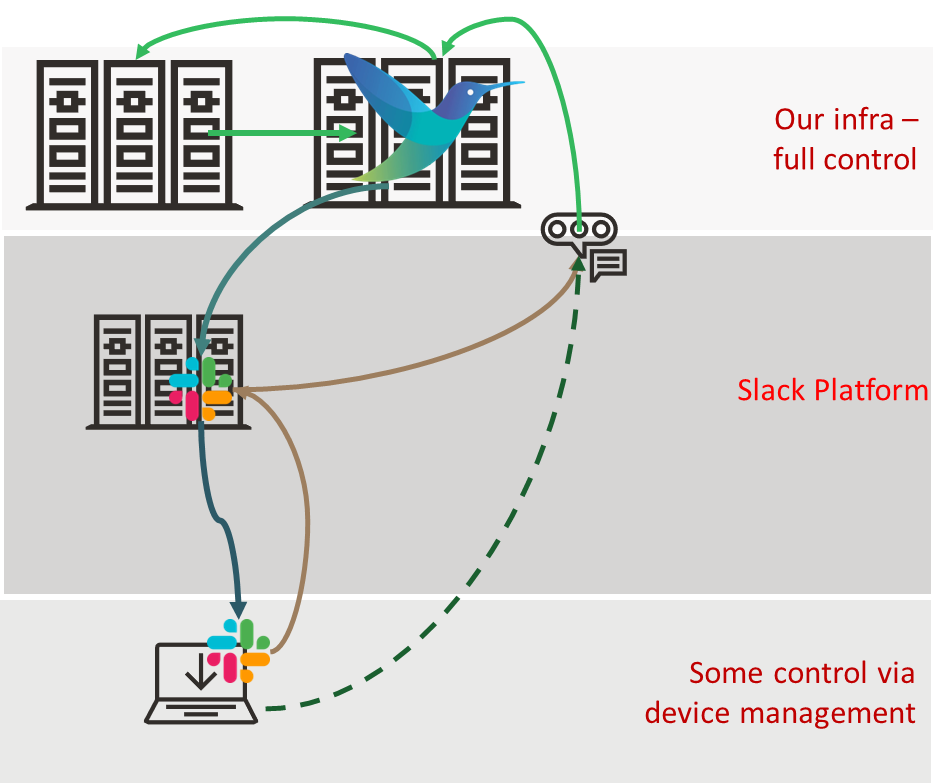
The ChatOps deployment looked like:

ChatOps deployed using Slack to power collaboration, with Fluent Bit for ops execution

How do we advance this?

The demo was very light-touch to illustrate an idea, but we’ve since heard people pursuing the concept. So the question becomes: what has happened in the observability space that could make it easier to industrialize (e.g., scale, resilience, security, manageability)? One of the key advances being driven by the OpenTelemetry working groups within the CNCF is OpAMP. OpAMP provides a protocol for standardizing the management and control of agents and collectors such as Fluent Bit. I won’t go into the details of OpAMP here, as we covered that in a separate blog (here). But what it means is that we can either tap into the OpAMP protocol more directly as it provides a means to deliver custom commands to agents, or better still simplify by extending the management service so that we can talk to that, and it is responsible to sending on the command to the relevant agents and talk back to us if its knowledge about agent capabilities tells us its not possible.

This improves security (our bot only needs to talk to a single point in our infrastructure). Our agents, like Fluent Bit, can have a trust relationship with a central point. Effectively, we have introduced a better multifaceted trust layer into the answer. Not only that, as the OpAMP server has visibility into more of the agent deployment, we can also leverage its information and ask it to deploy our custom Fluent Bit configurations that help us observe and execute remediation processes.

Let’s look deeper

While industrialization is good, it occurs to me that there is more to collaboration and conversational (or chat) interfaces than we first envisaged.

Collaboration, to a large extent, is not about bringing multiple ideas to the table and choosing the best one; it is actually about knowledge mining. Our ideas and insights are built from individual knowledge banks, or as we might put it, experience. Conversational interfaces also allow us to see what has gone before (in effect, harvesting information to improve our knowledge). So perhaps we should be asking, within the context of a platform that allows us to easily access, share, and interpret knowledge for a specific context (i.e., our current problem), what can we do?

Knowledge is unstructured or semistructured information, and information is a semistructured composition of context and data. So how do we find and leverage information if not knowledge, particularly at 2am when we’re the only person on call? The answer is to facilitate enhanced information retrieval, which could be more Slack bots that we can use to provide structured commands to retrieve relevant data from our metrics tooling, traces, etc. Organizations that follow more ITIL-guided processes will most likely have runbooks, a knowledge base with error-code information, and previous incident logs documenting resolutions. All of which can bring together a wealth of information. Doing this in a collaborative conversational tool like Slack and MS Teams will save time and effort, as you will not have to sign in to different portals to track down the details.

But we can go better, with the rise of LLMs (large language models, Gen AI if you prefer), combined with techniques such as RAG (Retrieval Augmented Generation), MCP (Model Context Protocol), and further accelerate things as we no longer have to make our Slack bot requests use what structured commands. We use natural language, we can easily paste parts of the information we’re given as part of the request – all of which means that while a single LLM may take longer to execute a single request, it is more likely to surface the details faster because we’re not having to worry about getting the notation for the bot request correct, we’re not going to have to repeat requests to narrow data immediately. With agentic techniques, you can have the LLM pull data from multiple systems in a single go.

All of which is very achievable; many vendors (and open-source teams) have been seeking a competitive edge and exposing their APIs through MCP tools. There is the possibility that some of this is ‘AI washing’, but the frameworks to support MCP development are well progressed, so you can always refine or create your own MCP server. Here are just a few examples:

  • Prometheus
  • Loki
  • Grafana
  • OpenTelemetry extension OpenLLMetry
  • OTEL Collector
  • OpenSearch

In addition to these, which align with widely used open-source solutions, there are MCP servers for vendor-specific offerings, such as Honeycomb and Chronosphere.

The use of MCP raises an interesting possibility – as it becomes very possible to have a universal MCP client, which can be easily interfaced into any conversational tool – after all, we just need to send the text that is addressed to the client, i.e., the adaptor to Slack, MS Teams, etc. is pretty simple. This means we can start to consider things like the same tooling, supporting tools like Claude Desktop, and its mobile equivalent.

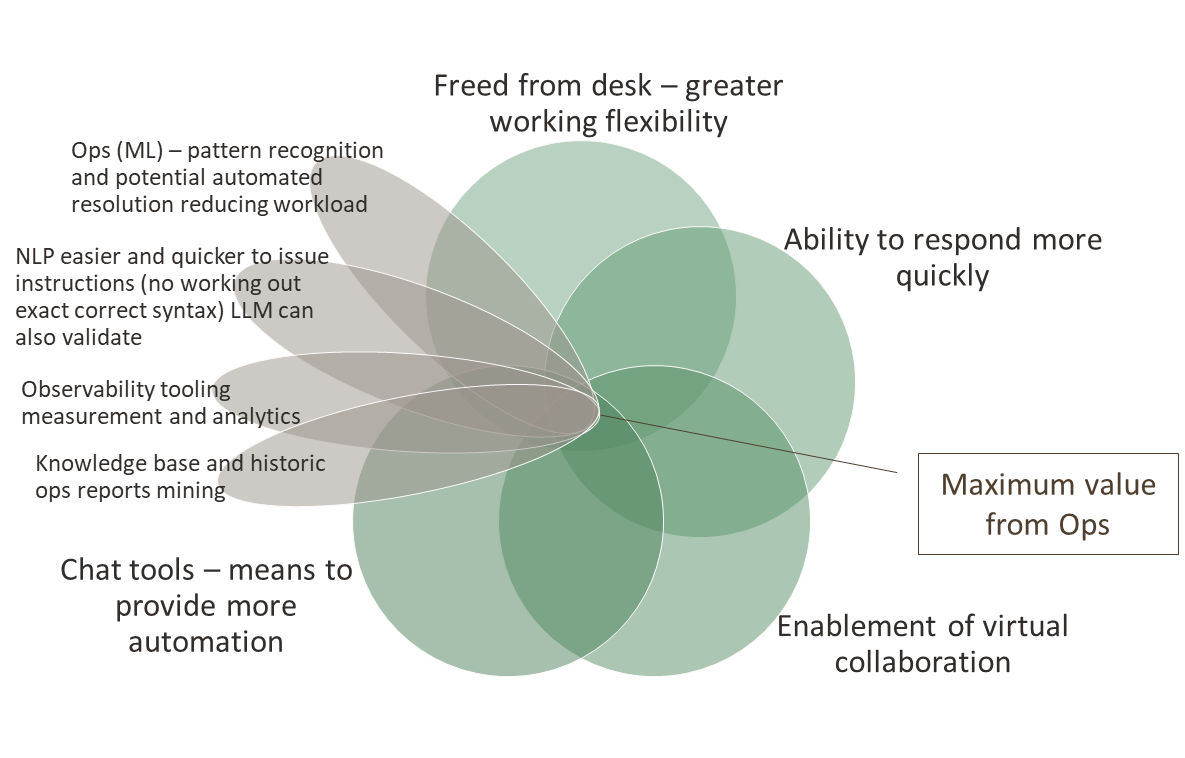
If we bring AI into the equation, consider ML and small models as well, we can start looking at exploiting pattern recognition in the occurrences of issues. This would mean the value diagram becomes more like:

We should also keep in mind the development of the new OpAMP spec from the CNCF OpenTelemetry project that provides a mechanism to centrally track and interact with all our agents, such as Fluent Bit (not to mention Fluentd, OTel Collectors, and others).

Bringing all of this together isn’t a small task, and what of these ideas already exist? Are there building blocks we can lean on to show that the ideas expressed here are achievable? This brought us to IncidentFox.ai (GitHub link – IncidentFox). IncidentFox already exploits MCP servers from several products, such as Grafana, and supports a knowledge base geared towards intelligent searching that can also tap into common sources of operational knowledge, such as Confluence.

But IncidentFox has taken the use of LLMs further with its agentic approach, recommending actions, and once it has access to source code, LLMs can be used to start looking for root causes. To do this, IncidentFox has harnessed the improvements in Gen AI reasoning and the selection and use of the MCP-enabled tools we mentioned, which enable the extraction of data and information from mainstream observability tools.

IncidentFox isn’t the only organization heading in this direction (Resolve.ai, Randoli, and Kloudfuse are building AI SRE tools, but with a fully proprietary business model), but it is supporting an open-source core. All of these solutions come under the banner of AI SRE. Interestingly, a new LLM benchmark has emerged called SRESkillsBench, in addition to the models such as Bird and Spider, which specifically evaluate LLMs against SRE tasks. This kind of information certainly is going to create some interesting debates – do you use the best LLM for specific tasks, or the LLM the vendor has worked with and optimized their prompting to get the best from it?

A lot of these tools focus on detection and diagnostics, and steer you to the relevant runbooks, there seems to be less said about how runbooks can be translated into remediation actions that can be executed. The ability to translate runbooks into executable steps will require either tooling via MCP or custom models with suitable embedded functions. Whichever approach is adopted, having a well-understood control plane, such as Kubernetes, will make it easier. But not everything is native K8s. Lots of organizations still use just virtualization, or even bare metal. We also see this with cloud vendors that offer bare-metal services due to the need for maximum compute horsepower. To address these scenarios from a centralized control, either needs to allow remote access (ssh tunnels) to all the nodes, or a means to work with a distributed tooling mechanism, which is what we had with our original chatops idea and the possibilities offered through OpAMP.

Of course, introducing LLMs opens up another set of challenges in the observability space, which OpenLLMetry (driven by TraceLoop) and LangFuse are working to address. But that’s for another blog.

What does this mean to our ChatOps proof of concept?

Sticking with an open-source/standards-based approach means there is a clear direction of enabling AI Agents to be part of the OTLP (Open Telemetry Protocol) pipeline and leverage the MCP tooling of backend observability platforms. IncidentFox doesn’t yet provide an inline OTLP capability (although some of the proprietary options have gone this way), but that is less of a concern, as Fluent Bit provides a lot of capability to help identify issues (such as timeseries/frequency measurement, error identification, etc.), which can be combined with IncidentFox’ means to instruct it to initiate an incident. We could do this with direct API calls, but what would be more interesting and flexible is that, when our Fluent Bit process notifies the Ops team in Slack of an issue, it also ensures that the IncidentFox Slack agent picks up the message, allowing it to start its own analysis. In effect, a collaboration platform can be as impactful as an integration platform.

Furthermore, now that we have early warning of an issue via Fluent Bit, we can interact with IncidentFox through its tooling to start interrogating the diverse range of tools well before the new problem’s details have been fully ingested into the backend tooling and been detected as an issue. So we can now get a jump start by prompting IncidentFox, which can mine for information and recommendations. This is where, at 2am, we can still work collaboratively, albeit with a collaborator that is not another person but an LLM.

As I’ve mentioned, the challenge is making the runbook executable in environments that don’t provide a strong control plane, such as K8s. Here, we can further develop our ChatOps concept. By providing a set of MCP tools for Fluent Bit (IncidentFox supports providing your own tools), the runbook can describe remediation steps, and the use of the LLM ensures the Fluent Bit tool is invoked appropriately.

This would still mean that the central point of Incident Fox would need to talk with each Fluent Bit deployment, better than just opening up SSH directly. But we could be smarter. OpAMP provides a central coordination point, and through its Supervisor or embedded logic in an observability client, the protocol’s support for custom commands could be exploited. So we expose the way we interact with Fluent Bit via the custom command mechanism, and we have a robust, controlled mechanism. Furthermore, the concept could be extended to exploit the aggregated knowledge of agents and their configuration (or pushing out new configurations to solve operational problems as OpAMP has been designed to enable), we can automate the determination of whether the remediation action needs to be executed across operational nodes.

Let’s walk through a hypothetical (but plausible) scenario. We have manually deployed systems across a load-balanced set of servers in a pre-production environment used for load testing, each with TLS certificates. As it is a pre-production environment, we use self-signed certificates. We are starting to see errors because the certificates have expired, and someone forgot to recycle them. Fluent Bit has been forwarding the various error log messages to Loki, but the high frequency of the errors causes it to send details to Slack for the Ops team. This, in turn, nudges IncidentFox to act, determines the root issue, and finds remediation in a runbook that points to running a script on the host to provide a fresh self-signed certificate. As we have a Fluent Bit ops pipeline that can trigger that script, and it is deemed low risk, we allow IncidentFox to execute the runbook unsupervised. To execute the run book, it uses the OpAMP server to send the custom command to Fluent Bit. But the runbook says other nodes should be checked. As a result, IncidentFox works with the OpAMP server via its MCP tooling to identify which other Fluent Bit deployments are monitoring other nodes and to direct the custom command to those nodes as well.

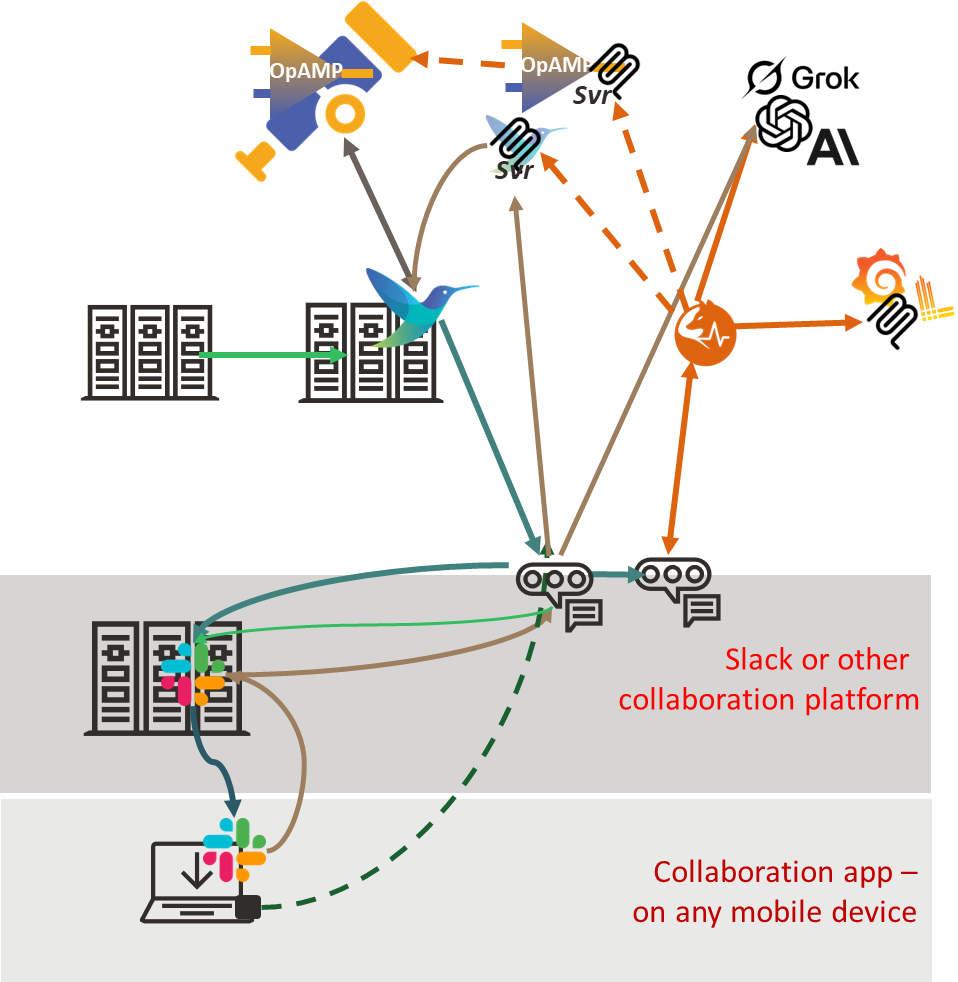
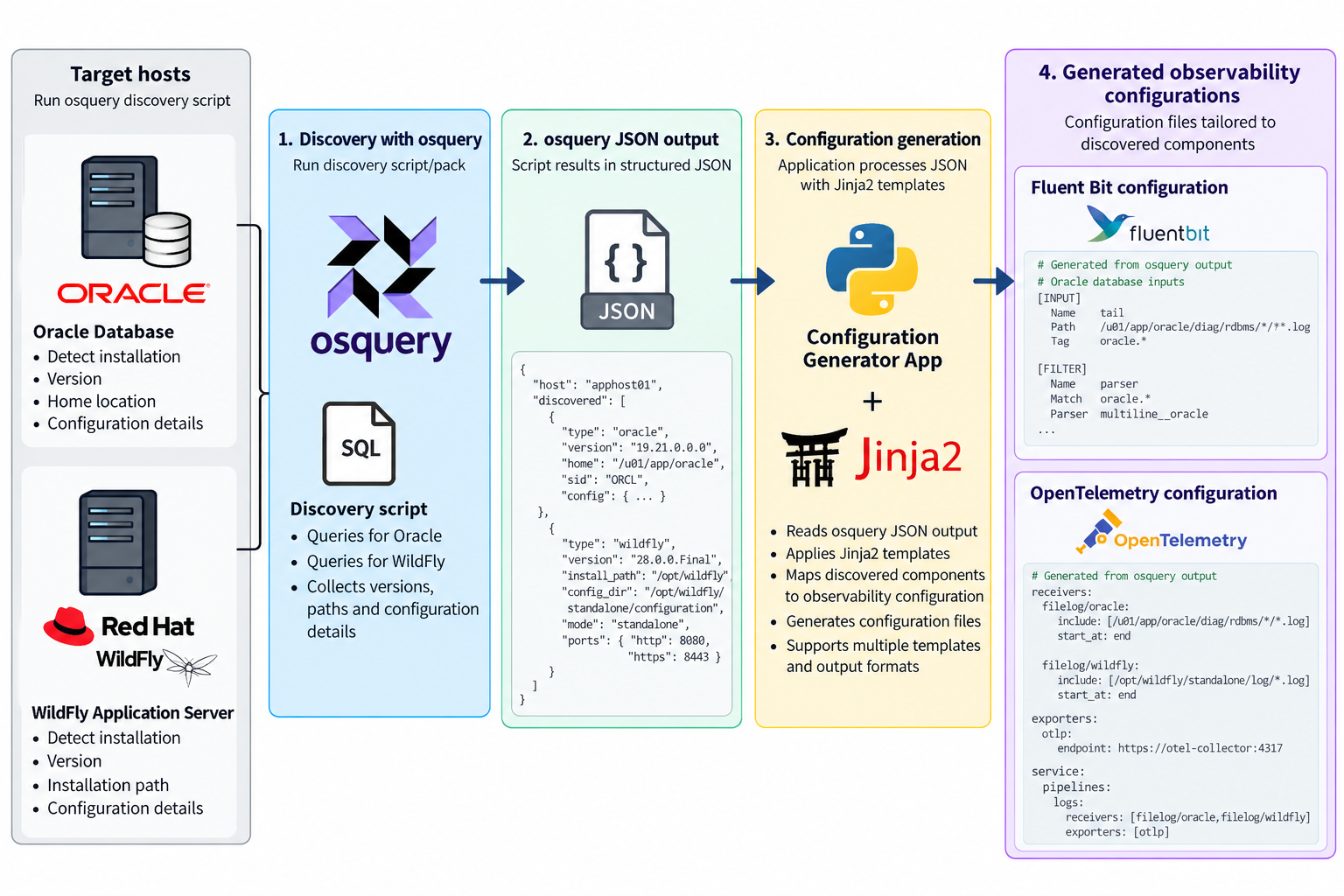
To achieve this, we need an architecture along the following lines, in addition to IncidentFox and the associated MCP tools, we would need to have the OpAMP server, either the OpAMP client embeddable into Fluent Bit or an OpAMP supervisor that understands how to pass custom commands, something it perhaps could do by using another MCP interface to Fluent Bit directly.

Conclusion

As you can see, there has been significant advancement in how LLMs and MCP tooling can be used to enable operational support activities. To turn this into a reality, the core Fluent Bit committers need to ideally press on with supporting OpAMP. A standardized MCP tooling arrangement for an open-source OpAMP server will also make a significant advancement. Although we could get things working directly with MCP using Fluent Bit.

IncidentFox being able to function as an OpAMP server itself would really enable it shift the narrative, particularly if it provided a means to plug into a supervisor to handle custom actions.

Root cause analysis – understanding deployment changes

Looking at all of this, one dimension of operational issues is the ability to correlate an issue with environmental changes. That means understanding not only software versions, but also the live configuration. Again, not too difficult when your control plane is K8s. But trickier outside of that ecosystem. You need to identify when the change was defined and when it was applied. Is it time for some functionality that understands when details such as file stamps for configurations or certain binary files change? Perhaps a proxy service that can spot API calls to configuration endpoints and file system changes to configuration files? Then have that information logged centrally so that problems can be correlated to a system configuration or deployment problem.

Updates

Since writing this, we came across Mezmo, which, like Resolve.ai, is developing a proprietary solution but is looking to make an open-source offering. As part of that journey, they have sponsored an O’Reilly Report on Context Engineering for Observability.

Share this:

  • Share on Facebook (Opens in new window) Facebook
  • Share on X (Opens in new window) X
  • Share on Reddit (Opens in new window) Reddit
  • Email a link to a friend (Opens in new window) Email
  • Share on WhatsApp (Opens in new window) WhatsApp
  • Print (Opens in new window) Print
  • Share on Tumblr (Opens in new window) Tumblr
  • Share on Mastodon (Opens in new window) Mastodon
  • Share on Pinterest (Opens in new window) Pinterest
  • More
  • Share on Bluesky (Opens in new window) Bluesky
  • Share on LinkedIn (Opens in new window) LinkedIn
Like Loading...

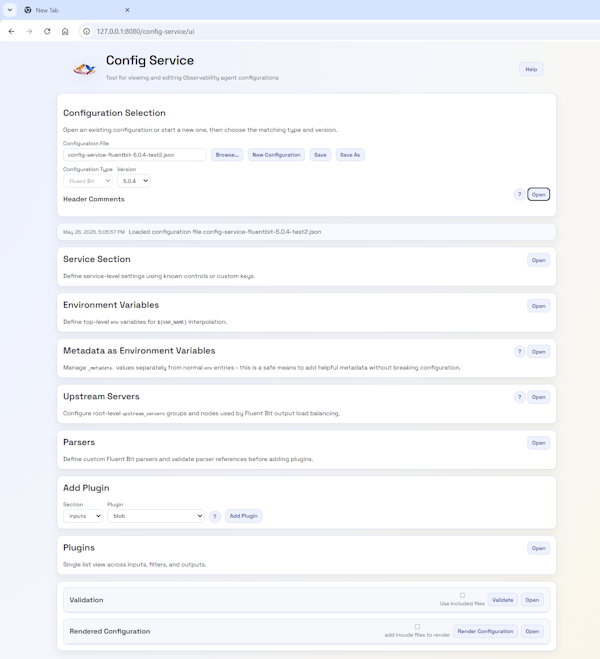
Fluent Bit classic to YAML

16 Friday Jan 2026

Posted by mp3monster in development, Fluentbit, Fluentd, General, python, Technology

≈ Leave a comment

Tags

Fluent Bit, Fluentbit, tool, utility, YAML

Many of the most potent features being added to Fluent Bit are only available in the newer YAML format. At the same time Fluent Bit is celebrating its 10th anniversary, so we can be sure that are some established deployments that are being maintained with the classic format.

The transition between the two Fluent Bit formats can be a bit fiddly. We built a tool as described in my Fluent Bit config from classic to YAML post using Java over a year ago. While it addressed many of the needs, I wasn’t entirely happy with the solution, for several reasons:

  • Written in Java, which, as a language, is the one I’m most at home with, as an implementation, it does increase the workload for using and implementing – needing a container, etc., ideally. Not unreasonable, but as a small tool project, we’re not working with a nice enterprise build pipeline, so from a code tweak to test is just fiddlier. I’m sure any Java devs reading this will be shouting, ” Setting up Maven, Jenkins, JUnit isn’t difficult – and they’re right, but it’s a time-consuming distraction from working on the real problem.
  • While it works, the code didn’t feel as clean as it could or should.

Over the last couple of years, we’ve become more comfortable with Python, and messing around with LLMs and code generation has helped accelerate our development skills. Python offers a potentially better solution: many environments that use Fluentd or Fluent Bit are Linux-based and include Python by default, so you can use the tool without messing with containers if you don’t want to. For a tool intended to support development and maintenance of configurations rather than in production being able to use or modify/extend the code easily is attractive.

We’ve started afresh and built a new implementation that is more extensible and maintainable. The new Python implementation is under the same Apache 2 license, but in a different repo so that existing use and forks of the Java implementation aren’t disrupted.

We can wrap Python with all the production-class build processes, but it’s not necessary to get a tool up and running or to enable people to tinker as needed. So we have focused on that. Over time, we’ll play with Poetry or other packaging mechanisms to make it even easier.

The new implementation can be found at https://github.com/mp3monster/fluent-bit-classic-to-yaml-converter

Continue reading →

Share this:

  • Share on Facebook (Opens in new window) Facebook
  • Share on X (Opens in new window) X
  • Share on Reddit (Opens in new window) Reddit
  • Email a link to a friend (Opens in new window) Email
  • Share on WhatsApp (Opens in new window) WhatsApp
  • Print (Opens in new window) Print
  • Share on Tumblr (Opens in new window) Tumblr
  • Share on Mastodon (Opens in new window) Mastodon
  • Share on Pinterest (Opens in new window) Pinterest
  • More
  • Share on Bluesky (Opens in new window) Bluesky
  • Share on LinkedIn (Opens in new window) LinkedIn
Like Loading...

Fluent Bit Processors and Processor Conditions

18 Tuesday Nov 2025

Posted by mp3monster in Fluentbit, General, Technology

≈ Leave a comment

Tags

conditional, configuration, examples, FLB, Fluent Bit, Logs and Telemetry, processors

Fluent Bit’s processors were introduced in version 3. But we have seen the capability continue to advance, with the introduction of the ability to conditionally execute processors. Until the ability to define conditionality directly with the processor, the control has had to be fudged around (putting processors further downstream and controlling it with filters and routing, etc).

In the Logs and Telemetry book, we go through the basic Processor capabilities and constraints, such as:

  • Configuration file constraints
  • Performance differences compared to using filter plugins

So we’re not going to revisit those points here.

We can chain processors to run in a sequence by directly defining the processors in the order in which they need to be executed. You can see the chaining in the example below.

Scenario

In the following configuration, we have created several input plugins using both the Dummy plugin and the HTTP plugin. Using the HTTP plugin makes it easy for us to control execution speed and change test data values, which helps us see different filter behaviours. To make life easy we’ve provided several payloads, and a simple caller.[bat|sh] script which takes a single parameter [1, 2, 3, …] which identifies the payload file to send.

All of these resources are available in the Book’s GitHub repository as part of the extras folder, which can be found here. This saves us from embedding everything into this blog.

Filters as Processors and Chaining

Filters can be used as processors as well as the dedicated processor types such as SQL asnd content modifier. The Filters just need to be referenced using the name attribute e.g. name: regex would use the REGEX filter.

Processor Conditions

If you’re familiar with Kubernetes selectors syntax, then the definition conditions for a processor will feel familiar. The condition is made up of a condition (#–A–) and the condition will contain one or more rules (#–B–). The rule defines an expression which will yield a Boolean outcome by identifying:

  • An element of the payload (for example, a field/element in the log structure, or a metric, etc).
  • The value to evaluate the field against
  • The evaluation operator, which can be one of the typical operators e.g eq (equals), (see below for the full list).

Since the rules are a list, you can include as many as needed. The condition, in addition to the rule , has its own operator (#–C–), which tells the condition how to combine the results of each of the rules together. As we need a Boolean value, we can only use a logical and or a logical or. When we have a single rule then the operation is tested with itself.

In the following example, we have two inputs with processors to help demonstrate the different behavior. In the dummy source, we can see how a nested element can be accessed (i.e.  $<element name>[‘<child element name>‘] ), performing a string comparison. Here we’re using a normal filter plugin as a processor.

With our HTTP source, we’re demonstrating that we can have two processors with their own conditions. The first processor is interesting, as it illustrates an exception to the convention; we can express conditionality within the Lua code (#–D–), but it ignores the condition construct. It is obviously debatable as to the value of a condition for the Lua processor, but it is worth considering, as there is an overhead when calling the LuaJIT if the condition can be quickly resolved internally.

service:
  flush: 1
  log_level: debug
  
pipeline:
  inputs:
    - name: dummy
      dummy: '{"request": {"method": "GET", "path": "/api/v1/resource"}}'
      tag: request.log
      Interval_sec: 60
      processors:
        logs:
          - name: content_modifier
            action: insert
            key: content_modifier_processor
            value: true
            condition:     #--A--
              op: and      #--C--
              rules:       #--B--
                - field: $request['method']"
                  op: eq
                  value: "GET"    
    - name: http
      port: 9881
      listen: 0.0.0.0
      successful_response_code: 201
      success_header: x-fluent-bit received
      tag: http
      tag_key: token
      processors:
        logs:
          - name: lua
            call: modify
            code: |
              function modify(tag, timestamp, record)
                new_record = record
                new_record["conditional"] = "condition-triggered"
                return 1, timestamp, new_record
              end
            condition:   #--D--
              op: and
              rules:
                - field: "$classifier"
                  op: eq
                  value:  "1"
          - name: content_modifier
            action: insert
            key: content_modifier_processor2
            value: true
            condition:
              op: and
              rules:
                - field: "$classifier"
                  op: eq
                  value: "2"
          - name: sql
            query: "SELECT token, classifier FROM STREAM;"
            condition:
              op: and
              rules:
                - field: "$classifier"
                  op: eq
                  value: "3"
  outputs:
    - name: stdout
      match: "*"

To run the demonstration, we’ve provided several test payloads and a simple script that will call the Fluent Bit HTTP input plugin with the correct file. We just need to pass the number associated with the log file e.g. <Log>1<.json> is caller.[bat|sh] 1, and so on. The script is a variation of:

set fn=log%1%.json
echo %fn
curl -X POST --location 127.0.0.1:9881 --header Content-Type:application/json --data @%fn%

An example of one of the test payloads:

{"msg" : "dynamic tag", "helloTo" : "the World", "classifier" : 1, "token": "token1"}

Conclusion

Once you’ve got a measure of the condition structure, making the processors conditional is very easy.

Operators available

OperatorGreater than ( > )
eqEquals
neqNot Equals
gtGreater than, or equal to ( >= )
gteGrather than, or equal to ( >= )
ltLess than ( < )
lteLess than or equal to ( =< )
inIs a value in a defined set (array) e.g.
op: in
value: [“a”, “b”, “c”]
not_inIs a value not in a defined set (array) e.g.
op: not_in
value: [“a”, “b”, “c”]
regexMatches the regular expression defined e.g
op: regex
value: ^a*z
not_regexDoes not match the regular expression provided e.g
op: not_regex
value: ^a*z

Share this:

  • Share on Facebook (Opens in new window) Facebook
  • Share on X (Opens in new window) X
  • Share on Reddit (Opens in new window) Reddit
  • Email a link to a friend (Opens in new window) Email
  • Share on WhatsApp (Opens in new window) WhatsApp
  • Print (Opens in new window) Print
  • Share on Tumblr (Opens in new window) Tumblr
  • Share on Mastodon (Opens in new window) Mastodon
  • Share on Pinterest (Opens in new window) Pinterest
  • More
  • Share on Bluesky (Opens in new window) Bluesky
  • Share on LinkedIn (Opens in new window) LinkedIn
Like Loading...

Fluent Bit 4.1 what to be excited about in this major release?

10 Friday Oct 2025

Posted by mp3monster in Fluentbit, General, Technology

≈ Leave a comment

Tags

4.1, Fluent Bit, Fluentbit, release

Fluent Bit version 4’s first major release dropped a couple of weeks ago (September 24, 2025). The release’s feature list isn’t as large as 4.0.4 (see my blog here). It would therefore be easy to interpret the change as less profound. But that isn’t the case. There are some new features, which we’ll come to shortly, but there are some significant improvements under the hood.

Under the hood

Fluent Bit v4.1 has introduced significant enhancements to its processing capabilities, particularly in the handling of JSON. This is really important as handling JSON is central to Fluent Bit. As many systems are handling JSON, there is at the lowest levels, continuous work happening in different libraries to make it as fast as possible. Fluent Bit has amended its processing to use a mechanism based on a yyjson, without going into the deep technical details. If you examine the benchmarking of yyjson and other comparable libraries, you’ll see that its throughput is astonishing. So accelerating processing by even a couple of percentage points can have a profound performance enhancement.

The next improvement in this area is the use of SIMD (Single Instruction, Multiple Data). This is all about how our code can exploit microprocessor architecture to achieve faster processing. As logs often need characters like new line, quotes, and other special characters encoding, and logs often carry these characters (and we tend to overlook this – consider a stack trace, where each step of the stack chain is provided on a new line, or embedding a stringified XML or JSON block in the log, which will hve multiple uses of quotes etc. As a result, any optimization of string encoding will quickly yield performance benefits. As SIMD takes advantage of CPU characteristics, not every build will have the feature. You can check to see if SIMD is being used by checking the output during startup, like tthis:

This build for Windows x86-64 as shown in the 3rd info statement doesn’t have SIMD enabled.

Other backend improvements have been made with TLS handling. The ability to collect GPU metrics with AMD hardware (significant as GPUs are becoming ever more critical not only in large AI arrays, but also for AI at the edge).

So, how do we as app developers benefit?

If Fluent Bit’s performance improves, we benefit from reduced risk of backpressure-related issues. We can either complete more work with the same compute (assuming we’re at maximum demand all the time), or we can reduce our footprint – saving money either as capital expenditure (capex) or operational expenditure (opex) (not something that most developers are typically seeking until systems are operating at hyperscale). Alternatively, we can further utilize Fluent Bit to make our operational life easier, for example, by reducing sampling slightly, implementing additional filtering/payload load logic, and streaming to detect scenarios as they occur rather than bulk processing on a downstream platform.

Functional Features

In terms of functionality, which as a developer we’re very interested in as it can make our day job easier, we have a few features.

AWS

In terms of features, there are a number of enhancements to support AWS services. This isn’t unusual; as the AWS team appears to have a very active and team of contributors for their plugins. Here the improvement is for supporting Parquet files in S3.

Supervisory Process

As our systems go ever faster, and become more complex, particularly when distributed it becomes harder to observe and intervene if a process appears to fail or worse becomes unresponsive. As a result, we need tools to have some ‘self awareness’. Fluen bit introduces the idea of an optional supervisor process. This is a small, relatively simple process that spawns the core of Fluent Bit and has the means to check the process and act as necessary. To enable the supervisor , we can add to the command line –supervisor. This feature is not available on all platforms, and the logic should report back to you during startup if you can’t use the feature. Unfortunately, the build I’m trying doesn’t appear to have the supervisor correctly wired in (it returns an error message saying it doesn’t recognize the command-line parameter).

If you want to see in detail what the supervisor is doing – you can find its core in /src/flb_supervisor.c with the supervisor_supervise_loop function, specifically.

Conclusion

With the number of differently built and configured systems, we’ll see a 4.1.x releases as these edge case gremlins are found and resolved.

Share this:

  • Share on Facebook (Opens in new window) Facebook
  • Share on X (Opens in new window) X
  • Share on Reddit (Opens in new window) Reddit
  • Email a link to a friend (Opens in new window) Email
  • Share on WhatsApp (Opens in new window) WhatsApp
  • Print (Opens in new window) Print
  • Share on Tumblr (Opens in new window) Tumblr
  • Share on Mastodon (Opens in new window) Mastodon
  • Share on Pinterest (Opens in new window) Pinterest
  • More
  • Share on Bluesky (Opens in new window) Bluesky
  • Share on LinkedIn (Opens in new window) LinkedIn
Like Loading...

More Posts at The New Stack

12 Friday Sep 2025

Posted by mp3monster in Books, Fluentbit, Fluentd, manning, Technology

≈ Leave a comment

Tags

blog, book, development, ebook, FLB, Fluent Bit, logging, TheNewStack, TNS

As The New Stack regularly posts new extracts, we’re updating this page; accordingly, the date below reflects the last update.

December 22, 2025

With the publication of Logging Best Practices (for background to this, go here), more articles have been published through The New Stack, extending the original list we blogged about here.

The latest articles:

  • Kubernetes Auditing and Events: Monitoring Cluster Activity (19th December 25) NEW
  • What To Know Before Building Fluent Bit Plugins With Go (21st November 25)
  • How Are OpenTelemetry and Fluent Bit Related? (29th October 25)
  • A Guide To Fluent Bit’s Health Check API Endpoints (17th September 25)
  • Understanding Log Events: Why Context Is Key (11th September 25)
  • How to Evaluate Logging Frameworks: 10 Questions (21st August 25)
  • Using Logging Frameworks for Application Development (7th August 25)
  • Logging Best Practices: Defining Error Codes (18th July 25)

The previous list:

  • What’s Driving Fluent Bit Adoption? (26th June 25)
  • What Is Fluent Bit? (10th June 25)
  • What Are the Differences Between OTel, Fluent Bit and Fluentd? (8th July 25)
  • Fluent Bit, a Specialized Event Capture and Distribution Tool (30th May 25)

Share this:

  • Share on Facebook (Opens in new window) Facebook
  • Share on X (Opens in new window) X
  • Share on Reddit (Opens in new window) Reddit
  • Email a link to a friend (Opens in new window) Email
  • Share on WhatsApp (Opens in new window) WhatsApp
  • Print (Opens in new window) Print
  • Share on Tumblr (Opens in new window) Tumblr
  • Share on Mastodon (Opens in new window) Mastodon
  • Share on Pinterest (Opens in new window) Pinterest
  • More
  • Share on Bluesky (Opens in new window) Bluesky
  • Share on LinkedIn (Opens in new window) LinkedIn
Like Loading...

Fluent Bit 4.0.4

21 Monday Jul 2025

Posted by mp3monster in development, Fluentbit, General, Technology

≈ 1 Comment

Tags

characters, encoding, filters, Fluent Bit, fstat, GBK, Lua, Open Telemetry, ShiftJIS, tail, Technology, WhatWG

The latest release of Fluent Bit is only considered a patch release (based on SemVer naming). But given the enhancements included it would be reasonable to have called it a minor change. There are some really good enhancements here.

Character Encoding

As all mainstream programming languages have syntaxes that lend themselves to English or Western-based languages, it is easy to forget that a lot of the global population use languages that don’t have this heritage, and therefore can’t be encoded using UTF-8. For example, according to the World Factbook, 13.8% speak Mandarin Chinese. While this doesn’t immediately translate into written communication or language use with computers, it is a clear indicator that when logging, we need to support log files that can be encoded to support idiomatic languages, such as Simplified Chinese, and recognized extensions, such as GSK and BIG5. However, internally, Fluent Bit transmits the payload as JSON, so the encoding needs to be handled. This means log file ingestion with the Tail plugin ideally needs to support such encodings. To achieve this, the plugin features a native character encoding engine that can be directed using a new attribute called generic. encoding, which is used to specify the encoding the file is using.

service:
  flush: 1

pipeline:
  inputs:
    - name: tail
      path: ./basic-file.gsk
      read_from_head: true
      exit_on_eof: true
      tag: basic-file
      generic.encoding: gsk

  outputs:
    - name: stdout
      match: "*"

The encoders supported out of the box, and the recognized names (in italics are) are:

  • GB18030 (earlier Simplifed Chinese Standard from the Chinese government called Information Technology – Chinese coded character set)
  • GBK (standard that extends the GB18030 standard for Simplified Chinese)
  • UHC (Unified Hangul Code also known as Extended Wandung – for Korean)
  • ShiftJIS (Japanese characters)
  • Big5 (for Chinese as used in Taiwan, Hong Kong, Macau)
  • Win866 (Cyrillic Russian)
  • Win874 (Thai)
  • Win1250 (Latin 2 & Central European languages)
  • Win1251 (Cyrillic)
  • Win1252 (Latin 1 & Western Europe)
  • Win1254 (Turkish)
  • Win1255 (also known as cp1255 and supports Hebrew)
  • Win1256 (Arabic)
  • Win2513 (suspect this should be Win1253, which covers the Greek language)

These standards are governed by the WhatWG specification (Web Hypertext Application Technology Group), not a well-known name, but have an agreement with the well-known W3C for various HTML and related standards.

The Win**** encodings are Windows-based formats that predate the adoption of UTF-8 by Microsoft.

Log Rotation handling

The Tail plugin, has also seen another improvement. Working with remote file mounts has been challenging, as it is necessary to ensure that file rotation is properly recognized. To improve the file rotation recognition, Fluent Bit has been modified to take full advantage of fstat. From a configuration perspective, we’ll not see any changes, but from the viewpoint of handling edge cases the plugin is far more robust.

Lua scripting for OpenTelemetry

In my opinion, the Lua plugin has been an underappreciated filter. It provides the means to create customized filtering and transformers with minimal overhead and effort. Until now, Lua has been limited in its ability to interact with OpenTelemetry payloads. This has been rectified by introducing a new callback signature with an additional parameter, which allows access to the OLTP attributes, enabling examination and, if necessary, return of a modified set. The new signature does not invalidate existing Lua scripts with the older three or four parameters. So backward compatibility is retained.

The most challenging aspect of using Lua scripts with OpenTelemetry is understanding the attribute values. Given this, let’s just see an example of the updated Lua callback. We’ll explore this feature further in future blogs.

function cb(tag, ts, group, metadata, record)
  if group['resource']['attributes']['service.name'] then
    record['service_name'] = group['resource']['attributes']['service.name']
  end

  if metadata['otlp']['severity_number'] == 9 then
    metadata['otlp']['severity_number'] = 13
    metadata['otlp']['severity_text'] = 'WARN'
  end

  return 1, ts, metadata, record
end

Other enhancements

With nearly every release of Fluent Bit, you can find plugin enhancements to improve performance (e.g., OpenTelemetry) or leverage the latest platform enhancements, such as AWS services.

Links

  • Fluent Bit
  • Fluent Bit on GitHub
  • Logs and Telemetry (Using Fluent Bit)

Share this:

  • Share on Facebook (Opens in new window) Facebook
  • Share on X (Opens in new window) X
  • Share on Reddit (Opens in new window) Reddit
  • Email a link to a friend (Opens in new window) Email
  • Share on WhatsApp (Opens in new window) WhatsApp
  • Print (Opens in new window) Print
  • Share on Tumblr (Opens in new window) Tumblr
  • Share on Mastodon (Opens in new window) Mastodon
  • Share on Pinterest (Opens in new window) Pinterest
  • More
  • Share on Bluesky (Opens in new window) Bluesky
  • Share on LinkedIn (Opens in new window) LinkedIn
Like Loading...

Fluent Bit Articles on TheNewStack – a Biproduct of a book sponsor?

12 Thursday Jun 2025

Posted by mp3monster in Books, Fluentbit, Fluentd, General, manning, Technology

≈ 1 Comment

Tags

author, book, books, Fluent Bit, manning, reading, The New Stack, TNS, writing

Like many developers and architects, I track the news feeds from websites such as The New Stack and InfoQ. I’ve even submitted articles to some of these sites and saw them published. However, in the last week, something rather odd occurred: articles in The New Stack (TNS) appeared, attributed to me, although I had no involvement in the publication process with TNS; yet, the content is definitely mine. So what appears to be happening?

To help answer this, let me provide a little backstory. Back in October and November last year, we completed the publication of my book about Fluent Bit (called Logs and Telemetry with a working title of Fluent Bit with Kubernetes), a follow-up from Logging In Action (which covered Fluent Bit’s older sibling, Fluentd). During the process of writing these books, I have had the opportunity to get to know members of the team behind these CNCF projects and consider them as engineering friends. Through several changes, the core team has primarily come to work for Chronosphere. To cut a long story short, I connected the Fluent Bit team to Manning, and they sponsored my book (giving them the privilege of giving away a certain number of copies of the book, cover branding, and so on).

It appears that, as part of working with Manning’s marketing team, authors are invited to submit articles and agree to have them published on Manning’s website. Upon closer examination, the articles appear to have been sponsored by Chronosphere, with an apparent reference to Manning publications. So somewhere among the marketing and sales teams, an agreement has been made, and content has been reused. Sadly, no one thought to tell the author.

I don’t in principle have an issue with this, after all, I wrote the book, and blog on these subjects because I believe enabling an understanding of technologies like Fluent Bit is valuable and my way of contributing to the IT community (Yes, I do see a little bit of money from sales, but the money-to-time and effort ratio works out to be less than minimum wage).

The most frustrating bit of all of this is that one of the articles links to a book I’ve not been involved with, and the authors of Effective Platform Engineering aren’t being properly credited. It turns out that Chronosphere is sponsoring Effective Platform Engineering (Manning’s page for this is here).

26th June Update – another article

The New Stack published another sponsored article – What’s Driving Fluent Bit Adoption? This one does feel like it has been ‘tweaked’.

2nd July Update – and more …

Another bit of the book on New Stack – What Is Fluent Bit?

8th July Update – and more …

Another bit of the book on New Stack – What Are the Differences Between OTel, Fluent Bit and Fluentd?

Other Posts …

If you’d like to see the articles and my bio now on The New Stack:

  • Fluent Bit Core Concepts
  • Specialized Event Capture and Distribution Tool
  • The New Stack Bio

Share this:

  • Share on Facebook (Opens in new window) Facebook
  • Share on X (Opens in new window) X
  • Share on Reddit (Opens in new window) Reddit
  • Email a link to a friend (Opens in new window) Email
  • Share on WhatsApp (Opens in new window) WhatsApp
  • Print (Opens in new window) Print
  • Share on Tumblr (Opens in new window) Tumblr
  • Share on Mastodon (Opens in new window) Mastodon
  • Share on Pinterest (Opens in new window) Pinterest
  • More
  • Share on Bluesky (Opens in new window) Bluesky
  • Share on LinkedIn (Opens in new window) LinkedIn
Like Loading...

Fluent Bit v4 the big news

17 Thursday Apr 2025

Posted by mp3monster in Books, Fluentbit, General, Technology

≈ Leave a comment

Tags

book, CNCF, development, eBPF, Fluent Bit, logs, OpenTelemetry, processors, sampling, Security, Trace, zig

With the announcement of Fluent Bit v4 at Kubecon Europe, we thought it worthwhile to take a look at what it means, aside from celebrating 10 years of Fluent Bit.

Firstly, normally using Semantic Versioning would suggest likely breaking (or incompatible changes to use SemVer wording) changes. The good news is that, like all the previous version changes for Fluent Bit the numbering change only reflects the arrival of major new features.

This is good news for me as the author of Logs and Telemetry with Fluent Bit, as it means the book remains entirely relevant. The book obviously won’t address the latest features, but we’ll try to cover those here as supplemental content.

Let’s reflect upon the new features, their benefits, and their implications.

  • New features in Processors allowing:
    • Conditionality to be included.
    • Trace sampling.
  • More flexible support for TLS (v1.3, choosing ciphers to enable)
  • New language for custom plugins in the form of Zig

Security Improvements

While security for many is not something that will get most developers excited about, there are things here that will make a CSO (Chief Security Officer) smile. Any developer who knows implementing security behaviors because it is a good thing, rather than because you have been told to do it, makes a CSO happy, puts them in a good place, to be given some more lianency when there is a need to do something that would get the CSO hot under the collar. Given this, we can now win those points with CSOs by using new Fluent Bit configurations that control TLS versions (1.1 – 1.3) and ciphers to support in use.

But even more fundamental than that are the improvements around basic credentials management. Historically, credentials and tokens had to be explicit in a configuration file or referenced back to an environment variable. Now, such values can come from a file, and as a result, there is no explicitness in the configuration. File security can manage access and visibility of such details. This will also make credentials rotation a lot easier to implement.

Processor Improvements

The processor improvements are probably the most exciting changes. Processors allow us to introduce additional activities within the pipeline as part of a process such as an input, rather than requiring additional buffer fetch and return which we see in standard plugin operations.

Of course, the downside is that if the processor introduces a lot of effort, we can create unexpected problems, such as back pressure, for example, as a result of a processor working hard on an input.

The other factor that extending processors bring is that they are not supported in classic format, meaning that to exploit such formats, you do need to define your configuration using YAML. The only thing I’m not a fan of, is that the configuration for these features does make me think I’m having to read algorithms expressed with Backus Naur form (BNF).

Trace Sampling

Firstly, the processors supporting OpenTelemetry Tracing can now sample. This is probably Fluent Bit’s only weakness in the Open Telemetry domain until now. Sampling is essential here as traces can become significant as you track application executions through many spans. When combined with each new transaction creating a new trace, traces can become voluminous. To control this explosion on telemetry data, we want to sample traces, collecting a percentage of typical traces (performance, latency, no errors, etc) and the outliers, where tracing will show us where a process is suffering, e.g., an end-to-end process is slowing because of a bottleneck. We can dictate how the sampling is applied based on values of existing attributes, the trace status, status codes, latencies, the number of spans, etc.

Conditionality in Processors

Conditionality makes it easier to respond to aspects of logs. For example, only when the logging payload has several attributes with specific values do we want to filter the event out for more attention. For example, an application reporting that it is starting up, and logs are classified as representing an error – then we may want to add a tag to the event so it can be easily filtered and routed to the escalation process.

Plugins with Zig

The enablement of Zig for plugin development (input, output and filters) is strictly an experimental feature. The contributors are confident they have covered all the typical use cases. But the innate flexibility supporting a language always represents potential edge cases never considered and may require some additional work to address.

Let’s be honest: Zig isn’t a well-known language. So, let’s start by looking briefly at it and why the community has adopted it for custom plugin development as an alternative to the existing options with Lua and WASM.

So Zig has a number of characteristics that align with the Fluent Bit ethos better than Lua and WASM, specifically:

  • It is a compiled rather than interpreted language, meaning that we reduce the runtime overheads of an interpreter or JIT compiler such as Lua and the proxy layer of WASM. This aligns to be very fast/minimal compute overhead to do its job, – ideal for IoT and minimising the cost of side-care container deployments.
  • The footprint for the Zig executable is very, very small—smaller than even a C-generated binary! As with the previous point, this lends itself to common Fluent Bit deployments.
  • The language definition is formally defined, compact, and freely available. This means you should be able to take a tool chain from anyone, and it is easy for specialist chip vendors to provide compilers.
  • Based on those who have tried, cross-compiling is far easier to deal with than working with GCC, MSVC, etc. Making it a lot easier to develop with the benefits we want from Go. Unlike Go – to connect to the C binary of Fluent Bit doesn’t require the use of a translation layer.

One of Zig’s characteristics that differs from C is its stronger typing and its approach of, rather than prescribing how edge cases are handled, e.g., null pointers, working to prevent you from entering those conditions.

Zig has been around for a few years (the first pre-release was in 2017, and the first non-pre-release was in August 2023). This is long enough for the supporting tooling to be pretty well fleshed out with package management, important building blocks such as the HTTP server, etc.

While asking a large enterprise with more conservative approaches to development (particularly when IT is seen as an overhead, and source of risk rather than a differentiator/revenue generator) to consider adopting Zig could be challenging compared to adopting, say Go. The different potential values here, make for some interesting potential.

Not Only, but Also

While we have made some significant advancements, each Fluent Bit release brings a variety of improvements in its plugins. For example, working with it with eBPF, HTTP output supports more compression techniques, such as Snappy and ZSTD, and Exit having a configurable delay.

The Plus version of library dependencies is being updated to exploit new capabilities or ensure Fluent Bit isn’t using libraries with vulnerabilities.

Additional resources

    • Chronosphere announcement

    • Announcement YouTube video

    • book
    • My links to technical resources – we’ve extended to include Zig related resources

Share this:

  • Share on Facebook (Opens in new window) Facebook
  • Share on X (Opens in new window) X
  • Share on Reddit (Opens in new window) Reddit
  • Email a link to a friend (Opens in new window) Email
  • Share on WhatsApp (Opens in new window) WhatsApp
  • Print (Opens in new window) Print
  • Share on Tumblr (Opens in new window) Tumblr
  • Share on Mastodon (Opens in new window) Mastodon
  • Share on Pinterest (Opens in new window) Pinterest
  • More
  • Share on Bluesky (Opens in new window) Bluesky
  • Share on LinkedIn (Opens in new window) LinkedIn
Like Loading...

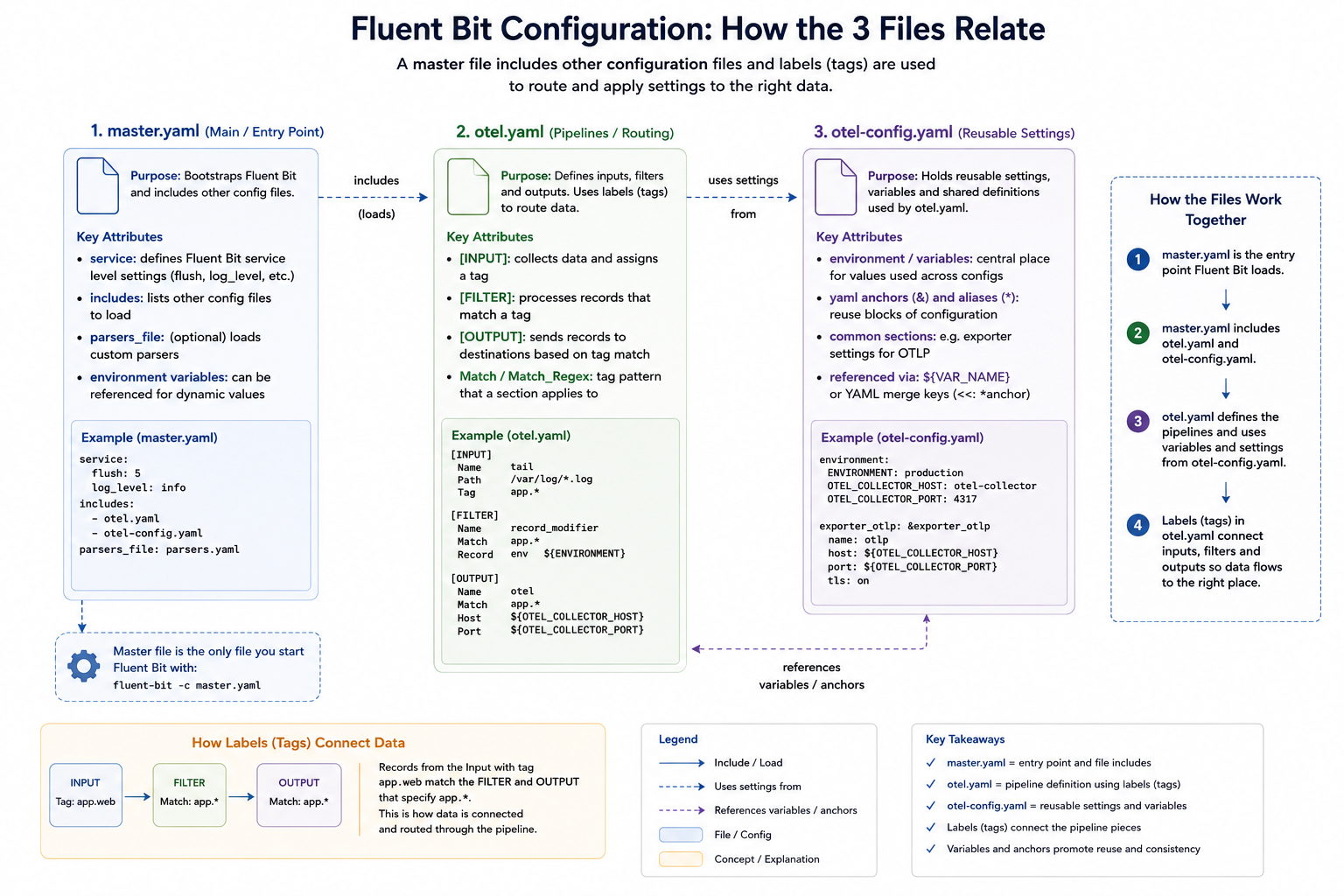
Fluentd Labels and Fluent Bit

31 Monday Mar 2025

Posted by mp3monster in Fluentbit, Fluentd, General, Technology

≈ 1 Comment

Tags

configuration, Fluent Bit, Fluentd, labels, migrating, migration, regex, relabelling, tag, tags

Recently, a question came up on the Fluent Bit Slack group about how the Fluentd Label feature and the associated relabel plugin map from Fluentd to Fluent Bit.

Fluentd Labels are a way to implement event routing, and we’ll look more closely at them in a moment. Both Fluent Bit and Fluentd support the control of which plugins respond to an event by using tags, which are based on a per-plugin basis.

To address this, let’s take a moment to see what Fluentd’s labels do.

What do Fluentd’s Labels Do?

Fluentd introduced the concept of labels, where one or more plugins could be grouped, creating a pipeline of plugins. Events can also be labeled, effectively putting them into a pipeline that can be defined with that label.

As a result, we would see something like:

<input>
  Label myLabel
</input>

<input>
  Label myOtherLabel
</input>

<label myLabel>
    <filter>
         -- do something to the log event
    </filter>

    <filter>
         -- do something to the log event
    </filter>

    <output>
    </output>
</label>

<label myOtherLabel>
    <filter>
         -- do something to the log event
    </filter>

    <output>
    </output>
</label>

<output tagName>
</output>

Fluentd’s labelling essentially tries to simplify the routing of events within a Fluentd deployment, particularly when multiple plugins are needed, aka a pipeline.

Fluent Bit’s routing

Fluent Bit doesn’t support the concept of labels. While both support tags can include wildcards within the tag name, Fluent Bit has an extension that adds power to the routing using tags. Rather than introducing an utterly separate routing control, it extended how tags can be used by allowing the matching to be achieved through regular expressions, which is far more flexible. This could look like (using classic format):

[INPUT]
    Name plugin-name
    Tag  myTag

[INPUT]
    Name another-plugin-name
    Tag  myOtherTag

[INPUT]
    Name alternate-plugin-name
    Tag  myAlternateTag

[OUTPUT]
    Name   output-plugin-name
    Match  myTag

[OUTPUT]
    Name   another-output-plugin
    Match_regex  my[Other|Alternate]Tag

The only downsides to processing regular expressions this way are the potentially greater computational effort (depending on the sophistication of the regular expression) and the use of the match on every plugin.

Migration options

The original question was prompted by the idea of migrating from Fluentd to Fluent Bit. When considering this, Labels don’t have a natural like-for-like transition path.

There are several options …

  • Refactor to use a structured tag approach
  • Adopt REGEX matches against tags
  • Separate Fluent Bit deployments

Refactor

Often, tags originate from a characteristic or direct attribute of the event message (payload). Instead, treat a tag purely as a routing mechanism, design a hierarchical routing strategy based on domains, and then use your tags for just this purpose. Aligning tags to domains rather than technical characteristics will help.

This creates the opportunity to progressively refactor out the need for labels. this will then make the transition through

REGEX

An alternative to this is to adopt regular expressions to select appropriate tags regardless of their structure, naming convention, or use of case. While this is very flexible, the expressions can be harder to maintain, and if some tags are driven by event data, there is an element of risk (although likely small) of an unexpected event being caught and processed by a plugin as it unwittingly matches a regular expression.

Multiple Fluent Bit Instances

Fluent Bit’s footprint is very small, notably smaller than that of Fluentd, as no runtime components like Ruby are involved. This means we could deploy multiple instances, with each instance acting as an implicit pipeline for events to be processed. The downside is that the equivalent of relabelling is more involved, as you’ll have to have a plugin to explicitly redirect the event to another instance. We also need to ensure that the events start with the correct Fluent Bit node.

Conclusion

When we try to achieve the same behaviour in two differing products that do have feature differences, trying to force a new product to produce exactly the same behaviour can result in decisions that can feel like compromises. In these situations, we tend to forget that we may have made trade-off decisions that led to the use of a feature in the first place.

When we find ourselves in such situations, while it may feel more costly, it may be worth reflecting on whether it is more cost-effective to return to the original problem, design the solution based on the new product’s features, and maximize the benefit.

Fluentd to Fluent Bit Portability a possibility?

This may start to sound like Fluentd to Fluent Bit portability is impossible and requires us to build our monitoring stack from scratch. Based on my experiences, these tools are siblings, not direct descendants, so there will be differences. In the work on building a migration tool (a project I’ve not had an opportunity to conclude), I’d suggest there is an 85/15 match, and migration is achievable, and the bulk of such a task can be automated. But certainly not all, and just seeking a push-button cutover means you’ll miss the opportunity to take advantage of the newer features.

Do you need a migration?

Fluentd may not be on the bleeding edge feature-wise now, but if your existing systems aren’t evolving and demanding or able to benefit from switching to Fluent Bit, then why force the migration? Let your core product path drive the transition from one tool to another. Remember, the two have interoperable protocols – so a mixed estate is achievable, and for the most part will be transparent.

More reading

  • Fluent Bit Format Converter (branch for Fluentd –> Fluent Bit)
  • More of Fluentd and Fluent Bit
  • Logging in Action (Fluentd)
  • Logs and Telemetry (Fluent Bit)

Share this:

  • Share on Facebook (Opens in new window) Facebook
  • Share on X (Opens in new window) X
  • Share on Reddit (Opens in new window) Reddit
  • Email a link to a friend (Opens in new window) Email
  • Share on WhatsApp (Opens in new window) WhatsApp
  • Print (Opens in new window) Print
  • Share on Tumblr (Opens in new window) Tumblr
  • Share on Mastodon (Opens in new window) Mastodon
  • Share on Pinterest (Opens in new window) Pinterest
  • More
  • Share on Bluesky (Opens in new window) Bluesky
  • Share on LinkedIn (Opens in new window) LinkedIn
Like Loading...
← Older posts

    I work for Oracle, all opinions here are my own & do not necessarily reflect the views of Oracle

    • About
      • Internet Profile
      • Music Buying
      • Presenting Activities
    • Books & Publications
      • Logging in Action with Fluentd, Kubernetes and More
      • Logs and Telemetry using Fluent Bit
      • Oracle Integration
      • API & API Platform
        • API Useful Resources
        • Useful Reading Sources
    • Mindmaps Index
    • Monster On Music
      • Music Listening
      • Music Reading
    • Oracle Resources
    • Useful Tech Resources
      • Fluentd & Fluent Bit Additional stuff
        • Logging Frameworks and Fluent Bit and Fluentd connectivity
        • REGEX for BIC and IBAN processing
      • Formatting etc
      • Java and Graal Useful Links
      • Official Sources for Product Logos
      • Python Setup & related tips
      • Recommended Tech Podcasts

    Oracle Ace Director Alumni

    TOGAF 9

    Logs and Telemetry using Fluent Bit


    Logging in Action — Fluentd

    Logging in Action with Fluentd


    Oracle Cloud Integration Book


    API Platform Book


    Oracle Dev Meetup London

    Blog Categories

    • App Ideas
    • Books
      • Book Reviews
      • manning
      • Oracle Press
      • Packt
    • Enterprise architecture
    • General
      • economy
      • ExternalWebPublications
      • LinkedIn
      • Website
    • Music
      • Music Resources
      • Music Reviews
    • Photography
    • Podcasts
    • Technology
      • AI
      • APIs & microservices
      • chatbots
      • Cloud
      • Cloud Native
      • Dev Meetup
      • development
        • languages
          • java
          • node.js
          • python
      • drone
      • Fluent Observability
        • Fluentbit
        • Fluentd
        • OpAMP
      • logsimulator
      • mindmap
      • OMESA
      • Oracle
        • API Platform CS
          • tools
        • Helidon
        • ITSO & OEAF
        • Java Cloud
        • NodeJS Cloud
        • OIC – ICS
        • Oracle Cloud Native
        • OUG
      • railroad diagrams
      • TOGAF
    • xxRetired
    • AI
    • API Platform CS
    • APIs & microservices
    • App Ideas
    • Book Reviews
    • Books
    • chatbots
    • Cloud
    • Cloud Native
    • Dev Meetup
    • development
    • drone
    • economy
    • Enterprise architecture
    • ExternalWebPublications
    • Fluent Observability
    • Fluentbit
    • Fluentd
    • General
    • Helidon
    • ITSO & OEAF
    • java
    • Java Cloud
    • languages
    • LinkedIn
    • logsimulator
    • manning
    • mindmap
    • Music
    • Music Resources
    • Music Reviews
    • node.js
    • NodeJS Cloud
    • OIC – ICS
    • OMESA
    • OpAMP
    • Oracle
    • Oracle Cloud Native
    • Oracle Press
    • OUG
    • Packt
    • Photography
    • Podcasts
    • python
    • railroad diagrams
    • Technology
    • TOGAF
    • tools
    • Website
    • xxRetired

    Enter your email address to subscribe to this blog and receive notifications of new posts by email.

    Join 2,616 other subscribers

    RSS

    RSS Feed RSS - Posts

    RSS Feed RSS - Comments

    April 2026
    M T W T F S S
     12345
    6789101112
    13141516171819
    20212223242526
    27282930  
    « Mar    

    Twitter

    Tweets by mp3monster

    History

    Speaker Recognition

    Open Source Summit Speaker

    Flickr Pics

    Boxer Rebellion @ Brixton ElectricBoxer Rebellion @ Brixton ElectricBoxer Rebellion @ Brixton ElectricBoxer Rebellion @ Brixton Electric
    More Photos

    Social

    • View @mp3monster’s profile on Twitter
    • View philwilkins’s profile on LinkedIn
    • View mp3monster’s profile on GitHub
    • View mp3monster’s profile on Flickr
    • View mp3muncher’s profile on WordPress.org
    • View philmp3monster’s profile on Twitch
    Follow Phil (aka MP3Monster)'s Blog on WordPress.com

    Blog at WordPress.com.

    • Subscribe Subscribed
      • Phil (aka MP3Monster)'s Blog
      • Join 228 other subscribers
      • Already have a WordPress.com account? Log in now.
      • Phil (aka MP3Monster)'s Blog
      • Subscribe Subscribed
      • Sign up
      • Log in
      • Report this content
      • View site in Reader
      • Manage subscriptions
      • Collapse this bar
     

    Loading Comments...
     

    You must be logged in to post a comment.

      Privacy & Cookies: This site uses cookies. By continuing to use this website, you agree to their use.
      To find out more, including how to control cookies, see here: Our Cookie Policy
      %d