• Home
  • Site Aliases
    • www.cloud-native.info
  • About
    • Background
    • Presenting Activities
    • Internet Profile
      • LinkedIn
    • About
  • Books & Publications
    • Log Generator
    • Logs and Telemetry using Fluent Bit
      • Fluent Bit book
      • Book Resources in GitHub
      • Fluent Bit Classic to YAML Format configurations
    • Logging in Action with Fluentd, Kubernetes and More
      • Logging in Action with Fluentd – Book
      • Fluentd Book Resources
      • Fluentd & Fluent Bit Additional stuff
    • API & API Platform
      • API Useful Resources
    • Oracle Integration
      • Book Website
      • Useful Reading Sources
    • Publication Contributions
  • Resources
    • GitHub
    • Oracle Integration Site
    • Oracle Resources
    • Mindmaps Index
    • Useful Tech Resources
      • Fluentd & Fluent Bit Additional stuff
      • Recommended Tech Podcasts
      • Official Sources for Product Logos
      • Java and Graal Useful Links
      • Python Setup & related stuff
      • DevTips
  • Music
    • Monster On Music
    • Music Listening
    • Music Reading

Phil (aka MP3Monster)'s Blog

~ from Technology to Music

Phil (aka MP3Monster)'s Blog

Monthly Archives: March 2026

Enterprise scale NL2SQL

05 Thursday Mar 2026

Posted by mp3monster in AI, General, Technology

≈ Leave a comment

Tags

Cipher, context, GQL, graph, LLM, LLMs, Natural Language, NL, NL2SQL, ontology, OpenCipher, Oracle, OWL, PGQL, RDF, SPARQL

A number of books on the use of LLMs demonstrate how to generate queries against a table from natural language. There is no doubt that providing an LLM and the definition of a simple database and a natural language question, and seeing it provide a valid result is impressive.

The problem is that this struggles to scale to enterprise scenarios where queries need to run on very large databases with tens, if not hundreds, of tables and views. Take a look at the results of the evaluation and benchmarking frameworks like Bird, Spider2, NL2SQL360, and others.

So why do we see a drop in efficacy between small use cases and enterprise systems. Let’s call out the headline challenges you may run into…

  • The larger the database schema, the more tokens we use just to describe it.
  • Understanding how relationships between tables work isn’t easy – do we need SQL to include a join, union, or nested queries?
  • Which tables does the LLM start with?
  • Does our natural language need the LLM to perform on-the-fly calculations or transformations (for example, I ask for data using inches, but data is stored using millimeters)?
  • When the entity needs to use attributes that contain names (particularly people, places, chemicals, and medicines), the queries will fail, as there are often multiple spellings and truncations of names.
  • Does the LLM have permissions to access all the schema (enterprise systems will typically have data subject to PII).

Does this mean that NL2SQL, in practice, is a bust? Not necessarily, but it is a lot harder than it might appear, and how we apply the power of LLM’s may need to be applied in more informed and targeted ways. But we should ask a few questions about the application of LLMs that may impact tolerance to issues…

  • Will users understand and tolerate a degree of risk and the possibility of an error resulting from hallucination? It’s just like using a calculator for performing calculations – an error in the keying sequence or a failure to apply mathematical precedence, and the result will be wrong, but do you look at the answer and ask yourself whether this is in the right ‘ballpark’? For example, 4 + 2 x 8, if you simplify to 6 x 8, you’ll get the wrong result, as multipliers have precedence over addition, so we should perform 2 x 8 first. If there is no tolerance for error, you need your solution to be completely deterministic, which rules out the use of LLMs.
  • More generally, will we tolerate SQL that is not performance-optimized? As we’re dealing with a non-deterministic system, we can’t anticipate all the possible indices that might help or other optimizations that could improve the query. If you’re thinking of simply creating many indexes to mitigate risk, remember that maintaining indexes comes at a cost, and the more indexes the SQL engine has to choose from, the harder it has to work to select one.
  • What level of ‘explainability’ to the answer does the user want? Very few users of enterprise systems will want to have an answer to their questions explained by providing the SQL, and in the world of SaaS, we don’t want that to happen either.
  • The last dimension is: if a user submits a question prematurely or with poor expression, do we really want to return hundreds or hundreds of thousands of records?

In addition to these questions, we should look at the complexity of our database. This can be covered using several metrics, such as:

  • NA – Number of Attributes
  • RD – Referential Degree (the amount of table cross-referencing)
  • DRT – Depth Relational Tree (the number of relational steps that can be performed to traverse the data model)

The complexity score indicates how hard it will be to formulate queries; in other words, the LLM will have to work harder and, as a result, be more susceptible to errors. So, if we want to move forward with NL2SQL then we need to find a means to reduce the scores.

If you’d like to understand the formulas and theory, there are papers on the subject, such as:

  • Database Complexity Metrics
  • Object-relational database metrics

How we respond to these questions will demonstrate our tolerance for challenges and our ability to drive enterprise adoption. Let’s look at some possible strategies to improve things.

Moving forward

One step forward is that each attribute and table can be described; this is essential when using shortened names and acronyms. Such schema metadata can be further extended by describing the relationships and purposes of tables, and even advise the LLM on how to approach common questions, start with table x when being asked about widgets, for example. In many respects, this is not too dissimilar to how we should approach APIs. The best APIs are clearly documented, have consistent naming, and so on.

We can use the LLM to analyse the question and use the result to truncate the provided schema details. For example, in an ERP system, we could easily generate natural-language questions about a supplier or monthly operating costs. But reducing the schema by excluding details from supplier-related tables will narrow the LLM’s scope and, therefore, reduce the likelihood of getting details wrong. This is no different from addressing an exam question and taking a moment to strike out redundant information, as it is noise. You could say we’re removing confounding variables. This idea could be taken further by restricting agents to only working with specific subdomains within the data model.

We can clean up questions. When names are involved, we can use standard language models to extract nouns and their types, then look them up before we formulate an SQL statement. If the question relates to a supplier name, we can easily extract it from the natural-language statement and determine whether such an entity exists. This sort of task doesn’t require us to use powerful, clever foundational LLMs; there are plenty of smaller language models that can do this.

Inject context from the UI

Ideally when a natural query is provided, the more traditional parts of the UI are showing the data, the user can navigate through in traditional manner – replacing years of UI use with a blank conversation page is going to really limit the users understanding of what is available in terms of data and the relationships that already exist, I’ve mentioned this before – Challenges of UX for AI. Assuming that we have something more than a blank conversation window, there is plenty of context to the natural language input. Let’s ensure we’re providing this in a rich manner; this could be more than just the fields on the screen, but associated attributes. For example, if the UI is showing a table, then identifying the entities or filters applied may well help.

Simplifying the schema

Most of our systems are not designed to support NL2SQL, but for core processes that demand considerations, such as frequently occurring queries that are efficient, even more importantly, so that we don’t have issues relating to data integrity. Unless you’re fortunate to be working with a greenfield and keeping the data model simple so processes like NL2SQL have an easy time, we’re going to need to take advantage of database techniques to try to simplify the schema (at least as the NL2SQL process sees it). The sort of things we can do include:

  • simplify with views
    • We can join tables and denormalize table structures, such as supplier and address, for example. Navigating table relationships is one of the biggest risks in SQL processing.
    • Use virtual columns so we can offer data in different formats, such as inches and millimetres, so the LLM doesn’t need to apply unnecessary logic, such as transforming data values. Providing the calculation ourselves means we have control over issues such as precision.
    • Exclude columns that your NL2SQL does not require. For example, if each table has columns that record who made a change and when, is that needed by the LLM?
  • Synonyms and other aliasing techniques
    • We can use synonyms to represent the same tables or columns, enabling us to map question entities to schema tables and columns. This can really help overcome specialist column names in a schema that the LLM is less likely to resolve.
    • We can also use this to disambiguate meaning; for example, in our ERP, an orders table could have a column called sales. In the context of orders, that would be better expressed as sales-quantity. But then, in the accounting ledger, when we have a sales attribute, that really means sales value.

Simplifying through an Ontology and Graphs

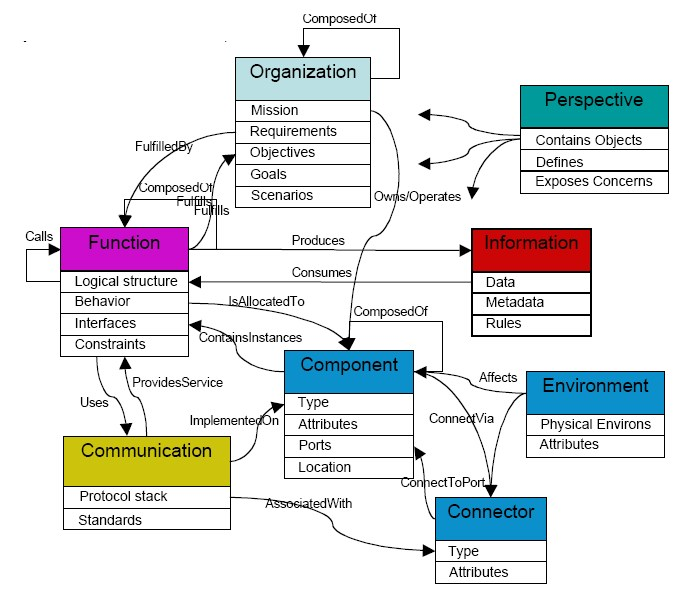
We can model our data and the relationships using an ontology. This isn’t a small undertaking and can bring disruptions of its own. Using an ontology affords us several benefits:

  • Ontology can drive consistency in our language and its meaning.
  • An ontology in its pure form will capture the types of objects (entities), their relationships to other entities, and their connections to concepts.
  • We have the option to exploit standards to notate the ontology in a implementation independent manner.

Applying an ontology allows us to describe the objects, attributes, and relationships in our data model using a structured language. For example supplier has an invoicing address. One key is that we’ve abstracted away how the data is stored (some might refer to this as the physical model, but I hedge on that, as there is a whole layer of science in data-to-storage hardware).

To get to grips with ontology and how we can use it in practice, we need some familiarity with concepts such as Knowledge Graphs, OWL, and RDF. Rather than explaining all these ideas here, here are some resources that cover each technology or concept.

To get to grips with ontology and how we can practically use it, we need some familiarity with concepts such as Knowledge Graphs, OWL, and RDF. Rather than explaining all these ideas here, here are some resources that cover each technology or concept. We’ve added some references for this below.

By modelling our data this way, we make it easier for the LLM by describing our entities and relationships, and, importantly, the description makes it much easier to infer and understand those relationships.

The step up using an ontology gives us the fact that we can express it with a Graph database. We can describe the ontology using graph notation (our entities are objects connected by edges that represent relationships; e.g., a supplier object and an address object are connected by an edge indicating that a supplier has an invoicing address. When we start describing our schema this way, we can begin to think about resolving our question using a graph query.

Not only do we have the relationship between our entities, but we can also describe entity instances with the relationship of ‘is a ‘, e.g., Acme Inc is a supplier.

But, before we start thinking, this is an easily solvable problem; there are still some challenges to be overcome. There is a lot of published advice on how to approach ontology development, including not extrapolating from a database schema (sometimes referred to as a bottom-up approach). If you develop your ontology from a top-down approach, you’ll likely have a nice logical representation of your data. But, the more practical issue is that we can’t convert our existing ERP schema to a fit the logical model, or impose a graph database onto our existing solution; that has horrible implications, such as:

  • Our existing data model will, even with abstraction layers, affect our application code (yes, the abstractions will mitigate and simplify), but those abstractions will need to be overhauled.
  • Existing application schemas reflect a balancing act of performance, managing data integrity, and maintainability. Replacing the relational model with a Graph will impact the performance dimension because we’ve abstracted the relationships.
  • There is also the double-edged challenge of a top-down approach that may reveal entities and relationships we should have in our ERP that aren’t represented for one reason or another. I say double-edged, because knowing the potential gap and representation is a good thing, but it may also create pressure to introduce those entities into a system that doesn’t make it easy to realize them.
Taking a schema view and blending with an ontology – https://www.wikiwand.com/en/articles/Ontology_engineering

If you follow the guidance on developing an Ontology from the research referenced by NIST, which points to defining ontologies in layers and avoiding drawing on data models.

That said, there is guidance, standards, and tooling for building an ontology from a relational schema, such as the W3C’s A Direct Mapping of Relational Data to RDF, papers such as Bringing Relational Databases into the Semantic Web: A Survey. The true magic of an ontology, aside from its role in driving clarity, is that it can be modelled in a Graph database and therefore queried easily.

There is also the challenge of avoiding the ontology from imposing an enterprise-wide data model, which slows an organization’s ability to adapt to new needs quickly (the argument for microservices and schema alignment to services). While the effective use of an ontology should act as an accelerator (we know how to represent data constructs, etc.) within an organization that is more siloed in its thinking, it could well become an impediment. Eric Evans’ book Domain Driven Design tries to address indirectly.

Graphs – the magic sauce of ontology and its application

With a schema expressed as a graph (tables and attributes are nodes, and edges represent relationships), we can query the graph to determine how to traverse the schema (if possible or practical) to reach different entities. If the relational schema’s details can be enriched with strong semantic meaning in the relationships, we get further clues about which tables need to be joined. We say practical because it may be possible to traverse the schema, but the number of steps can result in a series of joins that generate unworkable datasets.

We could consider storing not just the schema as a graph, but also the data. There are limits when the nodes become records, and the edges link each node; as a result, data volume explodes, particularly if each leaf node is an attribute. Some graph databases also try to manage things in memory – for multimillion-row tables, this is going to be a challenge.

Some databases that support a converged model can map queries, schemas, and data across the different models. This is very true for Oracle, where services exist that allow us to retrieve the schema as a graph (docs on RDF-based capabilities), translate graph queries (SPARQL / GQL) into relational ones, and so on. The following papers address this sort of capability more generally:

  • A mapping of SPARQL into conventional SQL
  • Mapping between Relational Database Schema and OWL Ontology for Deep Annotation

One consideration when using graph queries is the constraints imposed by meeting data manipulation needs, since most relational database SQL provides many more operators.

Ontology more than an aide to AI

A lot of research and thought pieces on ontology have focused on its role in supporting the application of AI. But the concepts as applied to IT and software aren’t new. We can see this by examining standards such as OWL and RDF. Ontology can support many design activities, such as developing initial data models (pre-normalization), API design, and user journey description. The change is that these processes implicitly or indirectly engage with ontological ideas. For example, when we’re designing APIs, particularly for graph queries, we’re thinking about entities and how they relate. While we tend to view relationships through the CRUD lens, this is a crude classification of the relationship that exists.

Getting from Natural Language to the query

This leads us to the question of how to translate our natural language question into a Graph query without encountering the same problems. This is a question of understanding intent; the focus is no longer to jump to prompting for SQL generation, but to extract the attributes that are wanted by examining the natural language (we can even look to do this with smaller models focusing on language), and tease out the actual values (keys) that may be referenced. With this information, we can determine how to traverse the schema and potentially generate the query. If we can’t make that direct step with the graph (we may be asked to perform data manipulation operations that graph query languages aren’t designed for), relational databases offer a wealth of DML operators that graph query languages lack. We can now provide more explicit instructions to the LLM to generate SQL. To the point, our prompt for this step could look more like a developer prompt. Of course, with these prechecks, we can also direct the process to address ambiguities, such as matching the NL statement to the schemas’ attributes that should be involved.

As you can see through the use of graph representations of our relational data, we can look to move the LLM from trying to reason about complex schemas to examining the natural language, providing information on its intent, and then directing it to generate a formalized syntax – all of which leans into the strengths of LLMs. Yes, LLMs are getting better as research and development drive ever-improving reasoning. But ultimately, to assure results and eliminate hallucination, the more we can push towards deterministic behaviour, the better. After all, determinism means we can be confident that the result is right for the right reasons, rather than getting things right, but that the means by which the answer was achieved was wrong.

Growing evidence that graph is the way to go

This blog has been evolving for some time, since I started to dial into the use of ontologies and, more critically, graphs. I’ve started to see more articles on the strategy as a way to make NL2SQL work with enterprise schemas. So I’ve added a few of these references to the following useful resources.

Useful Resources

  • Why ontology for SQL
  • Palantir ontology blog series
  • Reverse engineering an ontology
  • NIST Guidance on ontology
  • Basic Formal Ontology
  • Timbr.ai on ontology for AI
  • Semantic Web Journal
  • A novel approach for learning ontology from relational database: from the construction to the evaluation
  • Ontology Development 101: A Guide to Creating Your First Ontology
  • SPARQL Standard – for querying RDF data.
  • Graph Query Language (GQL)
  • Property Graph Query Language (PGQL) (and formal standard specification)
  • Resource Description Framework (RDF) standard
  • Web Ontology Language – OWL standard
  • Knowledge Graph & RDF
  • Ontology Engineering
  • QueryWeaver – open source tool uses Graph to build SQL
  • Timbre.ai blog post

A final note on Graph Querying

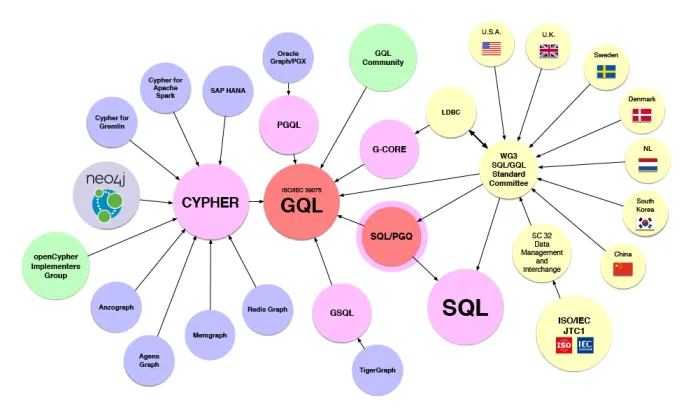
Graph querying can be a bit of a challenging landscape to initially get your head around; after all, there is SPARQL, PGQL, GQL, and if you come from a Neo4J background, you’ll be most familiar with Cipher/OpenCipher. Rather than try to address this here, there is a handy blog here, and the following diagram from graph.build.

Share this:

  • Share on Facebook (Opens in new window) Facebook
  • Share on X (Opens in new window) X
  • Share on Reddit (Opens in new window) Reddit
  • Email a link to a friend (Opens in new window) Email
  • Share on WhatsApp (Opens in new window) WhatsApp
  • Print (Opens in new window) Print
  • Share on Tumblr (Opens in new window) Tumblr
  • Share on Mastodon (Opens in new window) Mastodon
  • Share on Pinterest (Opens in new window) Pinterest
  • More
  • Share on Bluesky (Opens in new window) Bluesky
  • Share on LinkedIn (Opens in new window) LinkedIn
Like Loading...

Returning to Chat Ops

03 Tuesday Mar 2026

Posted by mp3monster in chatbots, Fluentbit, Fluentd, General, Technology

≈ Leave a comment

Tags

AI, chatops, development, Fluent Bit, IncidentFox, innovation, LLM, OpAMP, OTel, runbooks, SRE

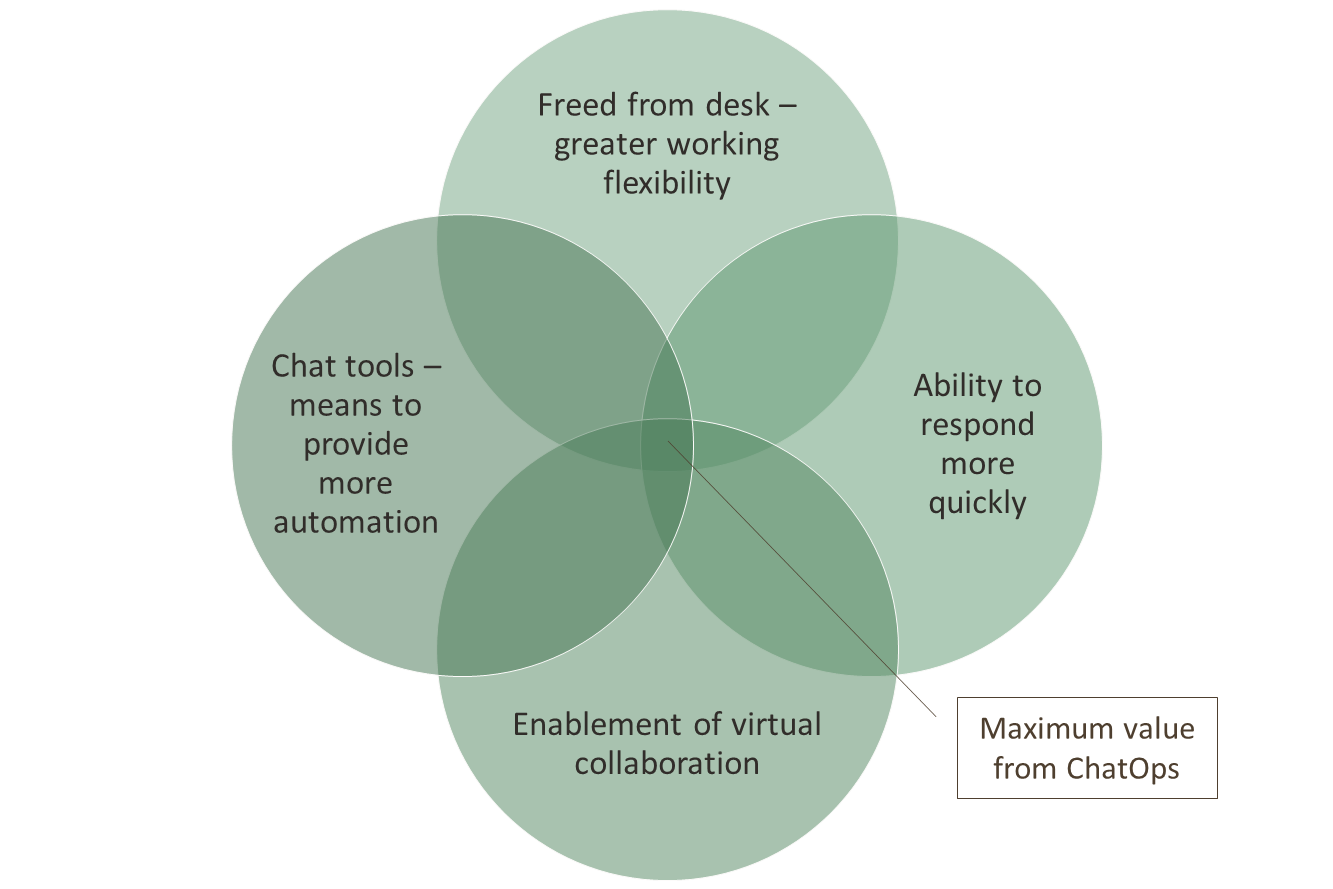
A couple of years ago, we wrote about the idea of Chat Ops, why the idea is valuable and interesting (see Fluent Bit – Powering Chat Ops, Fluent Bit with Chat Ops, for example). The essence of the idea was:

  • Using a collaboration or chat platform like Slack could ease and even accelerate the response to operational issues (as systems process more data and faster).
  • Conversational collaborative platforms are pervasive, usable across many devices, while still being able to enforce security. Taking away the need to log in to laptops, signing in to portals before you can even start considering what the problem is.
  • The quicker we can understand and resolve things, the better, and the less potential damage that may need to be addressed. Using collaboration platforms does this through collaborative work, and the fact that we can see content quickly and easily because of the push model of tools like Slack.
  • Any Observability agent tool that can detect issues as data is moved to a backend aggregation and analytics tool gives you a head start. This is something Fluent Bit can do easily.

We illustrated it this way:

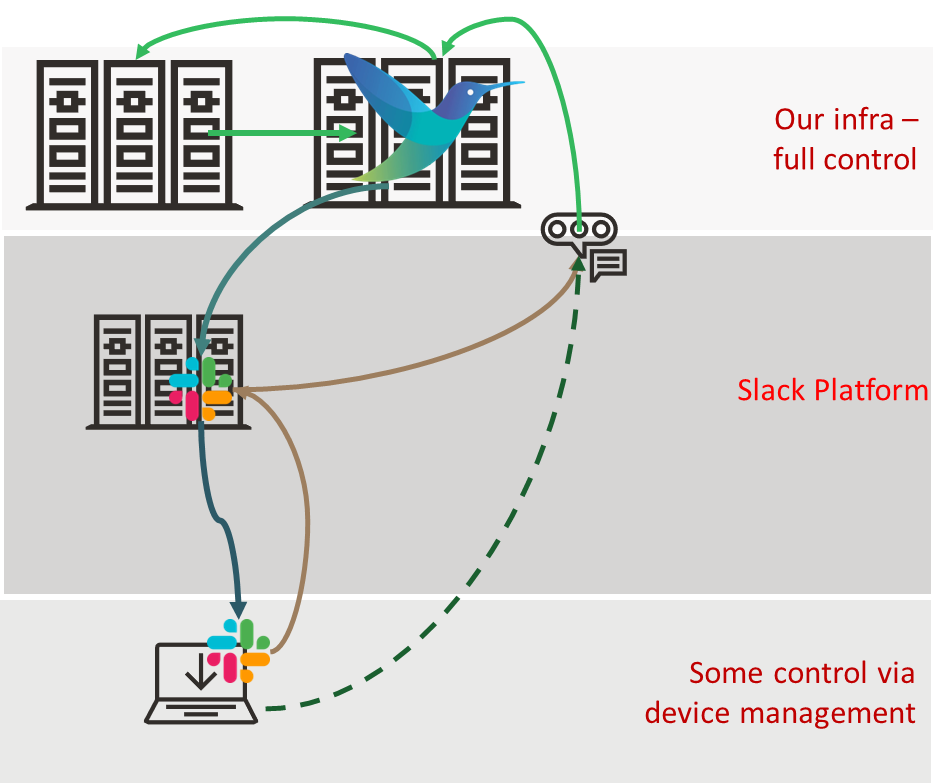
The ChatOps deployment looked like:

ChatOps deployed using Slack to power collaboration, with Fluent Bit for ops execution

How do we advance this?

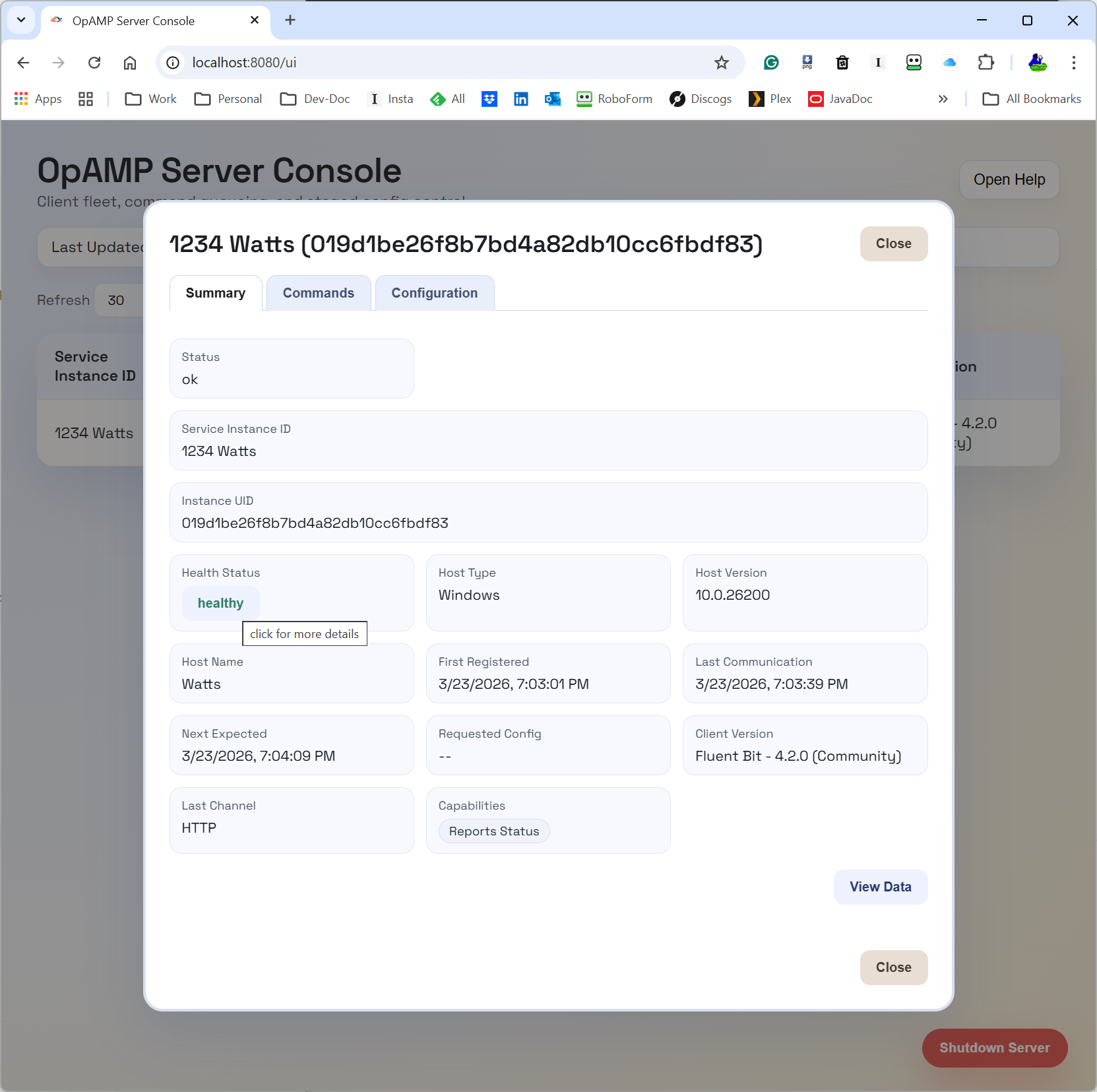
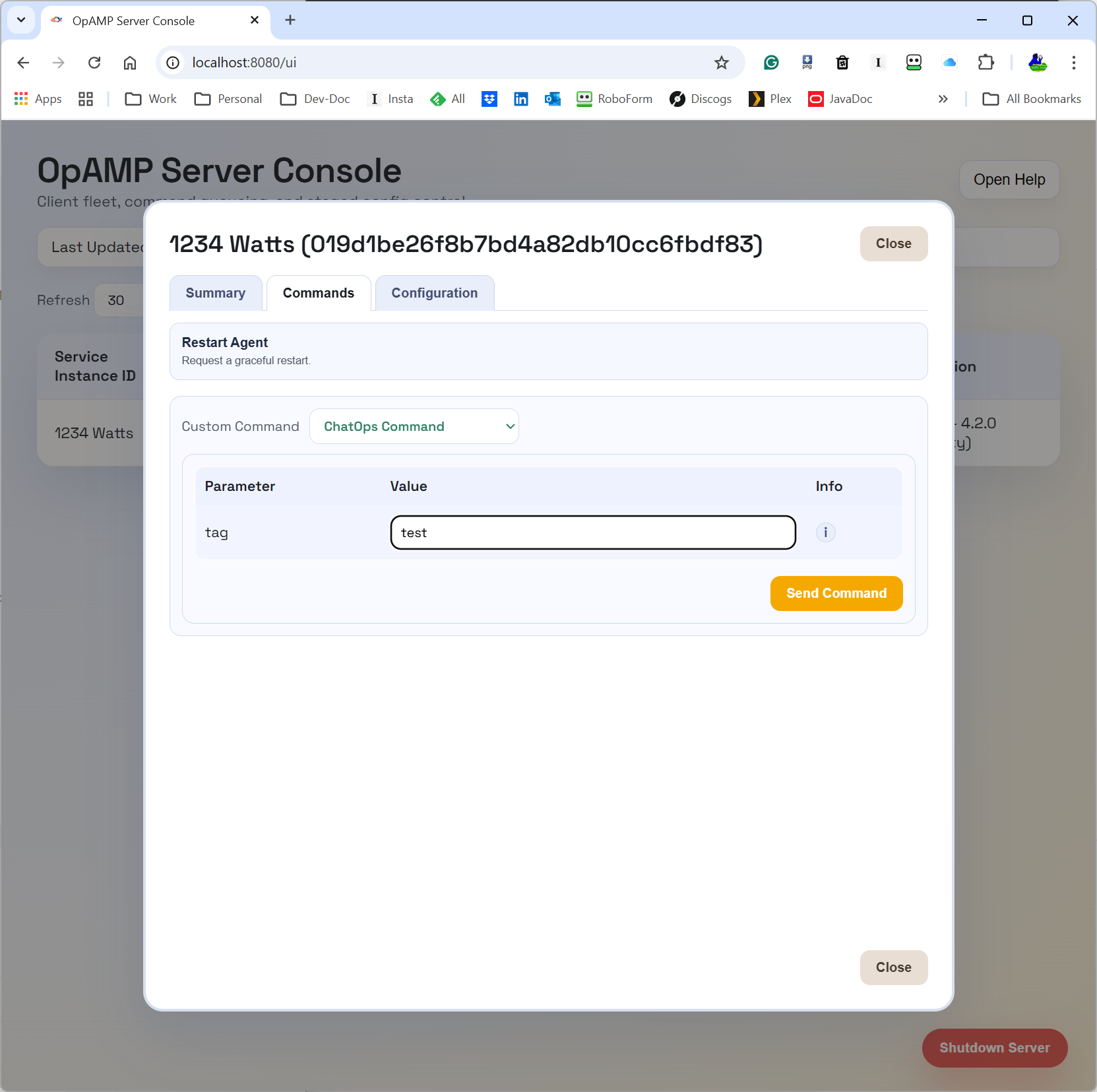
The demo was very light-touch to illustrate an idea, but we’ve since heard people pursuing the concept. So the question becomes: what has happened in the observability space that could make it easier to industrialize (e.g., scale, resilience, security, manageability)? One of the key advances being driven by the OpenTelemetry working groups within the CNCF is OpAMP. OpAMP provides a protocol for standardizing the management and control of agents and collectors such as Fluent Bit. I won’t go into the details of OpAMP here, as we covered that in a separate blog (here). But what it means is that we can either tap into the OpAMP protocol more directly as it provides a means to deliver custom commands to agents, or better still simplify by extending the management service so that we can talk to that, and it is responsible to sending on the command to the relevant agents and talk back to us if its knowledge about agent capabilities tells us its not possible.

This improves security (our bot only needs to talk to a single point in our infrastructure). Our agents, like Fluent Bit, can have a trust relationship with a central point. Effectively, we have introduced a better multifaceted trust layer into the answer. Not only that, as the OpAMP server has visibility into more of the agent deployment, we can also leverage its information and ask it to deploy our custom Fluent Bit configurations that help us observe and execute remediation processes.

Let’s look deeper

While industrialization is good, it occurs to me that there is more to collaboration and conversational (or chat) interfaces than we first envisaged.

Collaboration, to a large extent, is not about bringing multiple ideas to the table and choosing the best one; it is actually about knowledge mining. Our ideas and insights are built from individual knowledge banks, or as we might put it, experience. Conversational interfaces also allow us to see what has gone before (in effect, harvesting information to improve our knowledge). So perhaps we should be asking, within the context of a platform that allows us to easily access, share, and interpret knowledge for a specific context (i.e., our current problem), what can we do?

Knowledge is unstructured or semistructured information, and information is a semistructured composition of context and data. So how do we find and leverage information if not knowledge, particularly at 2am when we’re the only person on call? The answer is to facilitate enhanced information retrieval, which could be more Slack bots that we can use to provide structured commands to retrieve relevant data from our metrics tooling, traces, etc. Organizations that follow more ITIL-guided processes will most likely have runbooks, a knowledge base with error-code information, and previous incident logs documenting resolutions. All of which can bring together a wealth of information. Doing this in a collaborative conversational tool like Slack and MS Teams will save time and effort, as you will not have to sign in to different portals to track down the details.

But we can go better, with the rise of LLMs (large language models, Gen AI if you prefer), combined with techniques such as RAG (Retrieval Augmented Generation), MCP (Model Context Protocol), and further accelerate things as we no longer have to make our Slack bot requests use what structured commands. We use natural language, we can easily paste parts of the information we’re given as part of the request – all of which means that while a single LLM may take longer to execute a single request, it is more likely to surface the details faster because we’re not having to worry about getting the notation for the bot request correct, we’re not going to have to repeat requests to narrow data immediately. With agentic techniques, you can have the LLM pull data from multiple systems in a single go.

All of which is very achievable; many vendors (and open-source teams) have been seeking a competitive edge and exposing their APIs through MCP tools. There is the possibility that some of this is ‘AI washing’, but the frameworks to support MCP development are well progressed, so you can always refine or create your own MCP server. Here are just a few examples:

  • Prometheus
  • Loki
  • Grafana
  • OpenTelemetry extension OpenLLMetry
  • OTEL Collector
  • OpenSearch

In addition to these, which align with widely used open-source solutions, there are MCP servers for vendor-specific offerings, such as Honeycomb and Chronosphere.

The use of MCP raises an interesting possibility – as it becomes very possible to have a universal MCP client, which can be easily interfaced into any conversational tool – after all, we just need to send the text that is addressed to the client, i.e., the adaptor to Slack, MS Teams, etc. is pretty simple. This means we can start to consider things like the same tooling, supporting tools like Claude Desktop, and its mobile equivalent.

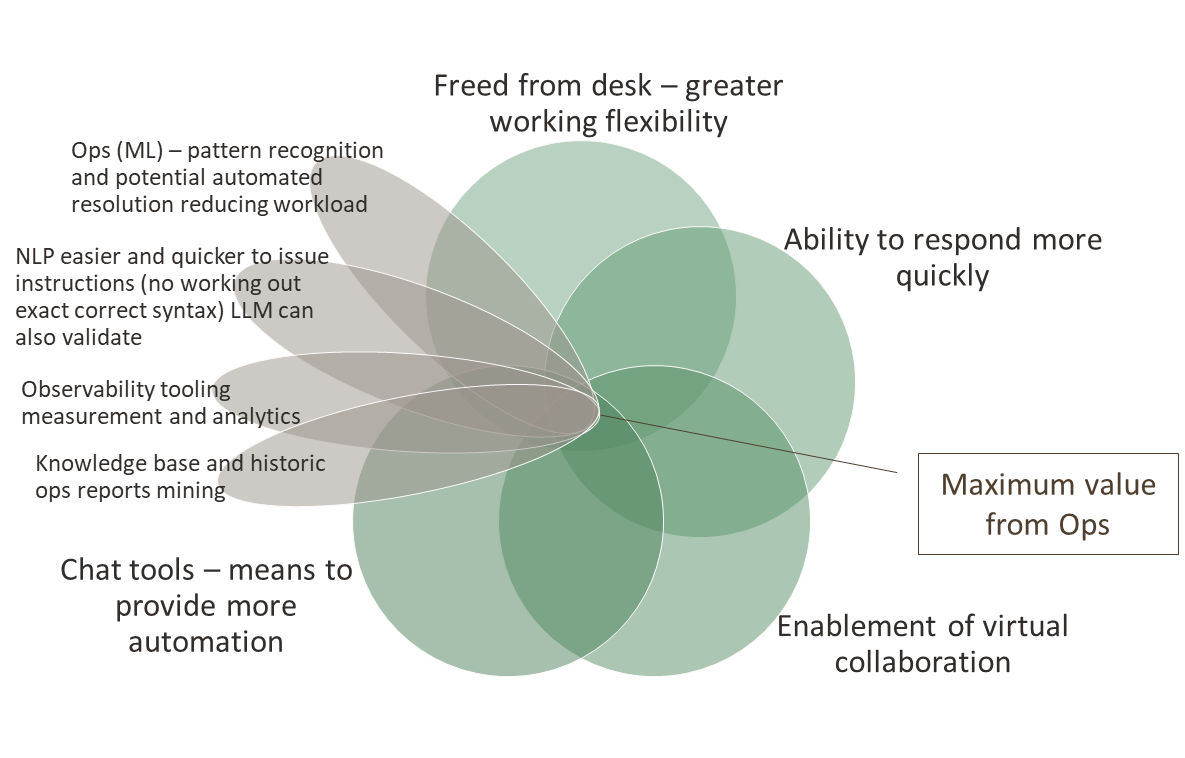
If we bring AI into the equation, consider ML and small models as well, we can start looking at exploiting pattern recognition in the occurrences of issues. This would mean the value diagram becomes more like:

We should also keep in mind the development of the new OpAMP spec from the CNCF OpenTelemetry project that provides a mechanism to centrally track and interact with all our agents, such as Fluent Bit (not to mention Fluentd, OTel Collectors, and others).

Bringing all of this together isn’t a small task, and what of these ideas already exist? Are there building blocks we can lean on to show that the ideas expressed here are achievable? This brought us to IncidentFox.ai (GitHub link – IncidentFox). IncidentFox already exploits MCP servers from several products, such as Grafana, and supports a knowledge base geared towards intelligent searching that can also tap into common sources of operational knowledge, such as Confluence.

But IncidentFox has taken the use of LLMs further with its agentic approach, recommending actions, and once it has access to source code, LLMs can be used to start looking for root causes. To do this, IncidentFox has harnessed the improvements in Gen AI reasoning and the selection and use of the MCP-enabled tools we mentioned, which enable the extraction of data and information from mainstream observability tools.

IncidentFox isn’t the only organization heading in this direction (Resolve.ai, Randoli, and Kloudfuse are building AI SRE tools, but with a fully proprietary business model), but it is supporting an open-source core. All of these solutions come under the banner of AI SRE. Interestingly, a new LLM benchmark has emerged called SRESkillsBench, in addition to the models such as Bird and Spider, which specifically evaluate LLMs against SRE tasks. This kind of information certainly is going to create some interesting debates – do you use the best LLM for specific tasks, or the LLM the vendor has worked with and optimized their prompting to get the best from it?

A lot of these tools focus on detection and diagnostics, and steer you to the relevant runbooks, there seems to be less said about how runbooks can be translated into remediation actions that can be executed. The ability to translate runbooks into executable steps will require either tooling via MCP or custom models with suitable embedded functions. Whichever approach is adopted, having a well-understood control plane, such as Kubernetes, will make it easier. But not everything is native K8s. Lots of organizations still use just virtualization, or even bare metal. We also see this with cloud vendors that offer bare-metal services due to the need for maximum compute horsepower. To address these scenarios from a centralized control, either needs to allow remote access (ssh tunnels) to all the nodes, or a means to work with a distributed tooling mechanism, which is what we had with our original chatops idea and the possibilities offered through OpAMP.

Of course, introducing LLMs opens up another set of challenges in the observability space, which OpenLLMetry (driven by TraceLoop) and LangFuse are working to address. But that’s for another blog.

What does this mean to our ChatOps proof of concept?

Sticking with an open-source/standards-based approach means there is a clear direction of enabling AI Agents to be part of the OTLP (Open Telemetry Protocol) pipeline and leverage the MCP tooling of backend observability platforms. IncidentFox doesn’t yet provide an inline OTLP capability (although some of the proprietary options have gone this way), but that is less of a concern, as Fluent Bit provides a lot of capability to help identify issues (such as timeseries/frequency measurement, error identification, etc.), which can be combined with IncidentFox’ means to instruct it to initiate an incident. We could do this with direct API calls, but what would be more interesting and flexible is that, when our Fluent Bit process notifies the Ops team in Slack of an issue, it also ensures that the IncidentFox Slack agent picks up the message, allowing it to start its own analysis. In effect, a collaboration platform can be as impactful as an integration platform.

Furthermore, now that we have early warning of an issue via Fluent Bit, we can interact with IncidentFox through its tooling to start interrogating the diverse range of tools well before the new problem’s details have been fully ingested into the backend tooling and been detected as an issue. So we can now get a jump start by prompting IncidentFox, which can mine for information and recommendations. This is where, at 2am, we can still work collaboratively, albeit with a collaborator that is not another person but an LLM.

As I’ve mentioned, the challenge is making the runbook executable in environments that don’t provide a strong control plane, such as K8s. Here, we can further develop our ChatOps concept. By providing a set of MCP tools for Fluent Bit (IncidentFox supports providing your own tools), the runbook can describe remediation steps, and the use of the LLM ensures the Fluent Bit tool is invoked appropriately.

This would still mean that the central point of Incident Fox would need to talk with each Fluent Bit deployment, better than just opening up SSH directly. But we could be smarter. OpAMP provides a central coordination point, and through its Supervisor or embedded logic in an observability client, the protocol’s support for custom commands could be exploited. So we expose the way we interact with Fluent Bit via the custom command mechanism, and we have a robust, controlled mechanism. Furthermore, the concept could be extended to exploit the aggregated knowledge of agents and their configuration (or pushing out new configurations to solve operational problems as OpAMP has been designed to enable), we can automate the determination of whether the remediation action needs to be executed across operational nodes.

Let’s walk through a hypothetical (but plausible) scenario. We have manually deployed systems across a load-balanced set of servers in a pre-production environment used for load testing, each with TLS certificates. As it is a pre-production environment, we use self-signed certificates. We are starting to see errors because the certificates have expired, and someone forgot to recycle them. Fluent Bit has been forwarding the various error log messages to Loki, but the high frequency of the errors causes it to send details to Slack for the Ops team. This, in turn, nudges IncidentFox to act, determines the root issue, and finds remediation in a runbook that points to running a script on the host to provide a fresh self-signed certificate. As we have a Fluent Bit ops pipeline that can trigger that script, and it is deemed low risk, we allow IncidentFox to execute the runbook unsupervised. To execute the run book, it uses the OpAMP server to send the custom command to Fluent Bit. But the runbook says other nodes should be checked. As a result, IncidentFox works with the OpAMP server via its MCP tooling to identify which other Fluent Bit deployments are monitoring other nodes and to direct the custom command to those nodes as well.

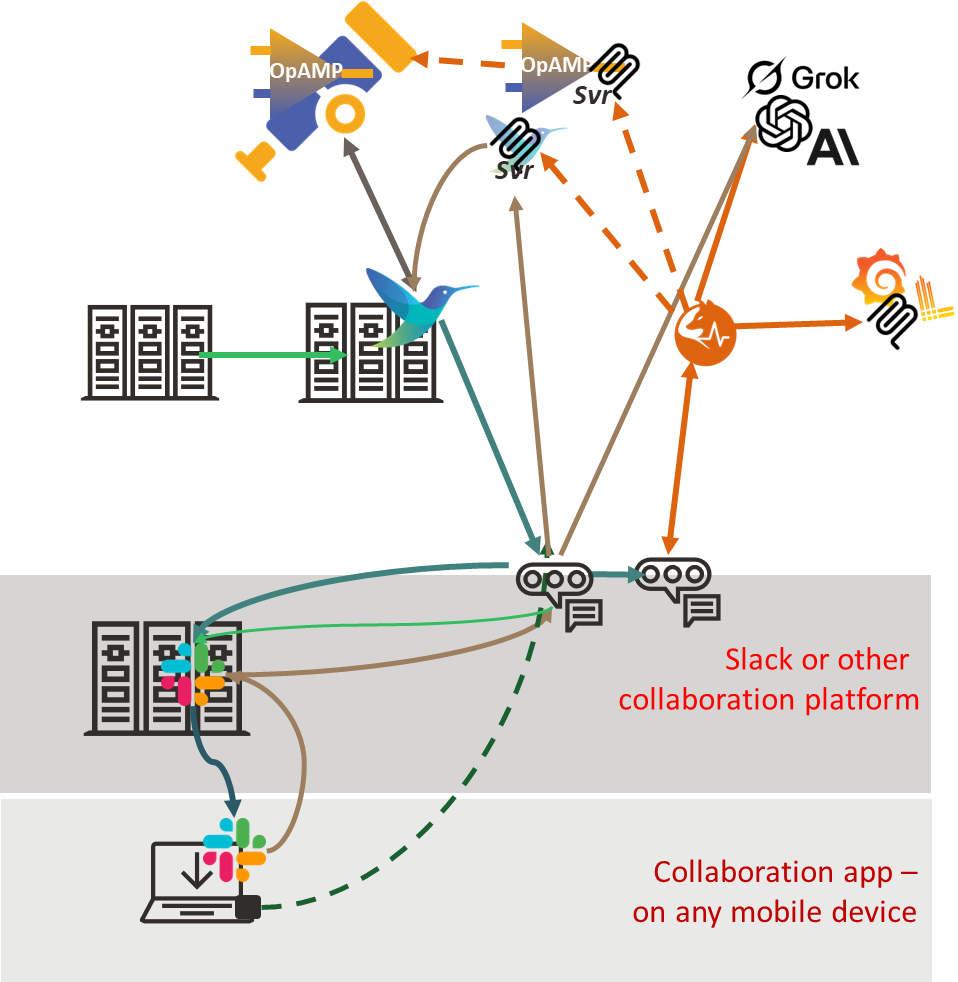
To achieve this, we need an architecture along the following lines, in addition to IncidentFox and the associated MCP tools, we would need to have the OpAMP server, either the OpAMP client embeddable into Fluent Bit or an OpAMP supervisor that understands how to pass custom commands, something it perhaps could do by using another MCP interface to Fluent Bit directly.

Conclusion

As you can see, there has been significant advancement in how LLMs and MCP tooling can be used to enable operational support activities. To turn this into a reality, the core Fluent Bit committers need to ideally press on with supporting OpAMP. A standardized MCP tooling arrangement for an open-source OpAMP server will also make a significant advancement. Although we could get things working directly with MCP using Fluent Bit.

IncidentFox being able to function as an OpAMP server itself would really enable it shift the narrative, particularly if it provided a means to plug into a supervisor to handle custom actions.

Root cause analysis – understanding deployment changes

Looking at all of this, one dimension of operational issues is the ability to correlate an issue with environmental changes. That means understanding not only software versions, but also the live configuration. Again, not too difficult when your control plane is K8s. But trickier outside of that ecosystem. You need to identify when the change was defined and when it was applied. Is it time for some functionality that understands when details such as file stamps for configurations or certain binary files change? Perhaps a proxy service that can spot API calls to configuration endpoints and file system changes to configuration files? Then have that information logged centrally so that problems can be correlated to a system configuration or deployment problem.

Updates

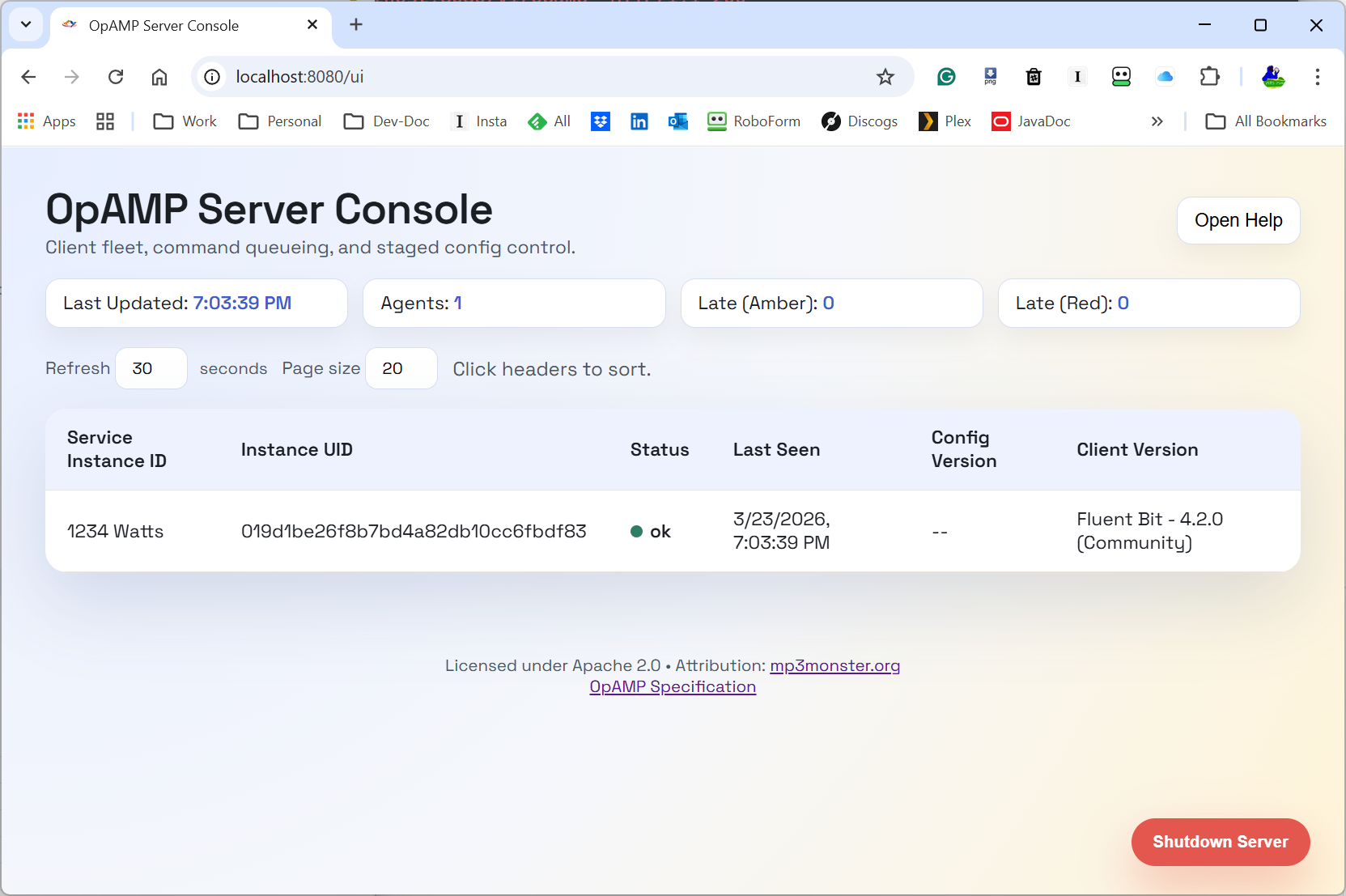
Since writing this, we came across Mezmo, which, like Resolve.ai, is developing a proprietary solution but is looking to make an open-source offering. As part of that journey, they have sponsored an O’Reilly Report on Context Engineering for Observability.

Share this:

  • Share on Facebook (Opens in new window) Facebook
  • Share on X (Opens in new window) X
  • Share on Reddit (Opens in new window) Reddit
  • Email a link to a friend (Opens in new window) Email
  • Share on WhatsApp (Opens in new window) WhatsApp
  • Print (Opens in new window) Print
  • Share on Tumblr (Opens in new window) Tumblr
  • Share on Mastodon (Opens in new window) Mastodon
  • Share on Pinterest (Opens in new window) Pinterest
  • More
  • Share on Bluesky (Opens in new window) Bluesky
  • Share on LinkedIn (Opens in new window) LinkedIn
Like Loading...

    I work for Oracle, all opinions here are my own & do not necessarily reflect the views of Oracle

    • About
      • Internet Profile
      • Music Buying
      • Presenting Activities
    • Books & Publications
      • Logging in Action with Fluentd, Kubernetes and More
      • Logs and Telemetry using Fluent Bit
      • Oracle Integration
      • API & API Platform
        • API Useful Resources
        • Useful Reading Sources
    • Mindmaps Index
    • Monster On Music
      • Music Listening
      • Music Reading
    • Oracle Resources
    • Useful Tech Resources
      • Fluentd & Fluent Bit Additional stuff
        • Logging Frameworks and Fluent Bit and Fluentd connectivity
        • REGEX for BIC and IBAN processing
      • Formatting etc
      • Java and Graal Useful Links
      • Official Sources for Product Logos
      • Python Setup & related tips
      • Recommended Tech Podcasts

    Oracle Ace Director Alumni

    TOGAF 9

    Logs and Telemetry using Fluent Bit


    Logging in Action — Fluentd

    Logging in Action with Fluentd


    Oracle Cloud Integration Book


    API Platform Book


    Oracle Dev Meetup London

    Blog Categories

    • App Ideas
    • Books
      • Book Reviews
      • manning
      • Oracle Press
      • Packt
    • Enterprise architecture
    • General
      • economy
      • ExternalWebPublications
      • LinkedIn
      • Website
    • Music
      • Music Resources
      • Music Reviews
    • Photography
    • Podcasts
    • Technology
      • AI
      • APIs & microservices
      • chatbots
      • Cloud
      • Cloud Native
      • Dev Meetup
      • development
        • languages
          • java
          • node.js
          • python
      • drone
      • Fluentbit
      • Fluentd
      • logsimulator
      • mindmap
      • OMESA
      • Oracle
        • API Platform CS
          • tools
        • Helidon
        • ITSO & OEAF
        • Java Cloud
        • NodeJS Cloud
        • OIC – ICS
        • Oracle Cloud Native
        • OUG
      • railroad diagrams
      • TOGAF
    • xxRetired
    • AI
    • API Platform CS
    • APIs & microservices
    • App Ideas
    • Book Reviews
    • Books
    • chatbots
    • Cloud
    • Cloud Native
    • Dev Meetup
    • development
    • drone
    • economy
    • Enterprise architecture
    • ExternalWebPublications
    • Fluentbit
    • Fluentd
    • General
    • Helidon
    • ITSO & OEAF
    • java
    • Java Cloud
    • languages
    • LinkedIn
    • logsimulator
    • manning
    • mindmap
    • Music
    • Music Resources
    • Music Reviews
    • node.js
    • NodeJS Cloud
    • OIC – ICS
    • OMESA
    • Oracle
    • Oracle Cloud Native
    • Oracle Press
    • OUG
    • Packt
    • Photography
    • Podcasts
    • python
    • railroad diagrams
    • Technology
    • TOGAF
    • tools
    • Website
    • xxRetired

    Enter your email address to subscribe to this blog and receive notifications of new posts by email.

    Join 2,556 other subscribers

    RSS

    RSS Feed RSS - Posts

    RSS Feed RSS - Comments

    March 2026
    M T W T F S S
     1
    2345678
    9101112131415
    16171819202122
    23242526272829
    3031  
    « Feb    

    Twitter

    Tweets by mp3monster

    History

    Speaker Recognition

    Open Source Summit Speaker

    Flickr Pics

    Gogo Penguin at the BarbicanGogo Penguin at the BarbicanGogo Penguin at the BarbicanGogo Penguin at the Barbican
    More Photos

    Social

    • View @mp3monster’s profile on Twitter
    • View philwilkins’s profile on LinkedIn
    • View mp3monster’s profile on GitHub
    • View mp3monster’s profile on Flickr
    • View mp3muncher’s profile on WordPress.org
    • View philmp3monster’s profile on Twitch
    Follow Phil (aka MP3Monster)'s Blog on WordPress.com

    Blog at WordPress.com.

    • Subscribe Subscribed
      • Phil (aka MP3Monster)'s Blog
      • Join 234 other subscribers
      • Already have a WordPress.com account? Log in now.
      • Phil (aka MP3Monster)'s Blog
      • Subscribe Subscribed
      • Sign up
      • Log in
      • Report this content
      • View site in Reader
      • Manage subscriptions
      • Collapse this bar
     

    Loading Comments...
     

    You must be logged in to post a comment.

      Privacy & Cookies: This site uses cookies. By continuing to use this website, you agree to their use.
      To find out more, including how to control cookies, see here: Our Cookie Policy
      %d