Praise for Microservice Patterns

Tags

, , ,

richardson-mp-meap-hiI’ve been reading Chris Richardson’s new book Mixroservice Patterns published by Manning (here or here). Whilst I haven’t finished the book yet, I have read enough to feel I can provide worthwhile observation.

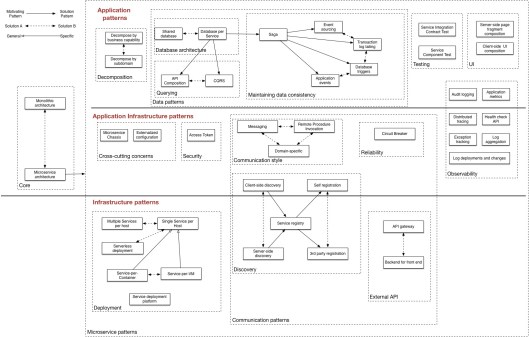
The book is supported by Chris’ website microservices.io which provides the patterns and related content in summarised form – great for a memory jogger and quick reference, but doesn’t make a substitute for the book.

When it comes to the book, Chris’ writing is extremly engaging whilst economic with its language – no long passages when a short sentence can convey everything necessary (unlike this one for example 🙂 ). For example, in three short paragraphs is an explination as to why there is a tendancy for IT people to point at particular technologies or techniques as silver bullets. As a result is incredibly informative and points to sources that inform the thinking – such references can be as diverse as Sam Newman’s Building Microservices to the (real) architect Christopher Alexander and Jonathan Haidt (The Righteous Mind).

The book is grounded in honest real world thinking being upfront and clearly pointing to when Microservices aren’t the right answer, to talking about the difficulties that can be expected in working with microservices. This won’t surprise anyone who has heard Chris speaking (here for example).

A recommended read.
microservicepatternlanguage

Registries in a Monolith World

Tags

, , , ,

I have a new article about service registries that follows on from the Article I wrote last year on the Oracle Technology Network (see here). The article has been posted on the Capgemini website – here.

Microservices are not simple

Tags

, , , , ,

It’s a bit controversial to say ‘Microservices are not simple’ given much is said about using Microservices to simplify and accelerate software delivery. So, how can this statement be made? It is a point actually stated in Chris Richardson’s excellent new book Microservice Patterns (avalable here and here), indirectly in Eric Evan’s Domain Driven Design (here). Martin Fowler in one his blogs says that they come at a premium (here). So, I’m not the first to say this, and wont be the last.

But the assertion that Microservices done right are simpler, and allow rapid delivery and evolution of solutions – a bit of a contradiction. As they say a picture is worth a thousand words, so take a look at this …

Continue reading

UKOUG Tech 18 Conference

Tags

, , , ,

The call for papers for the U.K. Oracle User Group’s 2018 Conference in December is out. The committee are looking for papers across not just core Oracle technologies like the database and SOA Suite but newer technologies such as Event Hub. With Oracle’s engagement with developers and the commitment to open source the UKOUG has moved to engage with these users as well. So the committee will welcome submissions about open source tech that maybe run on an Oracle platform. You can submit your proposals here.

If you’re considering making a submission but want some advise or suggestions then reachout to the UKOUG and its committee members – contact details are here.

Terch18

We look forward to seeing you in Liverpool in December.

Lessons in Oracle Cloud Password Management

Tags

, , , , ,

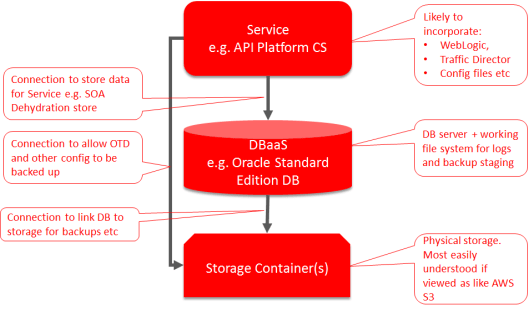
Oracle Cloud is growing and maturing at a tremendous rate if the breadth of PaaS capabilities is any indication.  However, there are a few gotchas out there, that can cause some headaches if they get you. These typically relate to processes that impact across different functional areas. A common middleware stack (API CS, SOA CS, OIC etc) will look something like the following:

cloudPassword

As the diagram shows when you build the cloud services, the layers get configured with credentials to the lower layers needed (although Oracle have in the pipeline the Oracle managed version of many services where this is probably going to be hidden from us). Continue reading

Oracle Dev Meetup

Tags

, , , , , ,

Another month and another Meetup.  Last night was the quietest session we’ve had. But then we covered Identity Management and whilst the subject is so important it isn’t too popular.

Tanks to Atul Kumar for taking on the task of presenting on this subject.  You can find out more about Atul at:

The content covering use of Messaging Cloud and our drone project can be seen here:

Domain Driven Design

Tags

, , ,

I have been wading through Eric Evan’s Domain Driven Design Book. As with many design and architecture focussed books I try to mindmap as I go so I have a quick reference resource. The mindmap for this book can be seen below and is linked to the WiseMap version which is dynamic.

In terms of of a review of the book, it contains lots of nuggets of helpful ideas and information but it is a rather heavy going to read. Some points feel over laboured such as the use of consistent language, at times it feels like half the book is dedicated to this one point. Whilst Chapter 14 – Maintaining Model Integrity sounds unadventurous as a chapter, I found this to have a lot of really helpful content such as going into the details Bounded Contexts and so on which is highly relevant to the world of microservices.

design book.png

Successful PaaS Team

Tags

, , , , ,

39919340285_bde0aacde1_zLast week we attended the Oracle EMEA PaaS Forum in Budapest. I have to say we’re proud to be part of a team that has picked up two conference awards.  Firstly our CTO Luis Weir for Contributions to API Solutions and then the wider team have collected an award for overall Outstanding PaaS Contributions.

40823835111_5b00f7963e_z

L-R, me, Amy Grange, Soham Dasgupta (Capgemini Netherlands), Luis Weir (Oracle Delivery Unit CTO), Jurijs (Yury) Fjodorovs

Some photos from the trip can be found a here.

London Oracle Developer Meetup No. 2

Tags

, , , , , ,

Last night was the 2nd London Oracle Developer meetup with 100 people registered and  CTO Luis Weir presented on 3rd generation APIs which included their relationship to microservices. The outcomes was not only a excellently delivered presentation with an enaged audience, but led to some really thought provoking discussions, particuarly on the application of microservices in financial  contexts.  For example is it possible for for financial institutions to get near the post child Netflix in terms of building and delivering solutions to production given the certification and compliance requirements? Some interesting insights on PSD2 (Payments Service Directive 2)  as well.  Are questions like is a monolith wrong?

Screenshot 2018-03-06 14.27.26In addition to the high level architectural debate the evening included a shortened walk through on the possibilities of deploying the API Gateway and its relative ease compared to other products.

Finally we concluded with an update on the project that we’re running as an underlying theme for some of the meetups – that of using variuous tech to command the drone(s) via a set pf published APIs.  This included a call to arms to contribute eith to building your own apps to use the API or contribute to the back end as the solution gets built using an API  1st approach.

The slides from the event.

Resources:


Managing API Policy Versioning in Oracle API Platform

Tags

, , , , , , , , ,

Updated reflecting changes discussed in blog post:
 Making Scripts Work with IDCS Deployed PaaS

Oracle’s API Platform (API-P) product avoids the use of external configuration management. If you want to better understand why, then checkout our forthcoming book as it goes into detail about why this is the case (it can be pre-release version of the book can be obtained here). In a previous blog I wrote about and illustrated the use of the API-P’s own APIs so that it was possible to see what API iterations had been deployed to API Gateways.

In this blog I want to explore the issues of version management a bit further. API-P provides internal version management through the idea of iterations as previously explored (Understanding API Deployment State on API Platform). In addition to this there are API policy attributes called version, status etc. This information whilst having some impact on behaviour reflects the version of the ‘contract’ that the API represents between the consumer and provider, and requires a manual change.

The API policies themselves are version tracked through the iteration identifiers. Each time a policy is saved the iteration is is incremented. What the API-P doesn’t support is the concept of branching. In relatively simple API Policy branching is unlikely to ever be an issue.

Why is a reversion capability needed?

Let’s take a more complex scenario.  In our book API Platform we introduced the some APIs that would allow the retrieval of meta data about artists in the record companies’ catalog. It has however come to light that the API has been targeted with malicious calls, firstly through trying to attack using injection attacks and secondly trying to overload the back end by creating data requests that make the back-end work hard in retrieving data.

To defend against this, the API Policy has been enhanced to include some custom groovy policies to inspect the values provided. Strictly speaking following the principles of Semantic Versioning the API version should go from 1.0.0 to 1.0.1. However seeing that the ‘contract’ as presented to the consumer hasn’t really changed – the data models are the same, the URI goes unaltered resulting in the implementation team not changing the version.

During development processes, it is not unusual to be developing existing logic, and decide that approach being used isn’t right or not going to perform as well. So you abandon your changes and revert back to the last approved version. However, this isn’t possible as any save will result in a new iteration. The API-P will be getting some enhanced version management features. But today to be able to undo the changes we need a means to ‘revert forward‘ (hence the tool name) that is to take an older iteration and make it the latest, as illustrated in the next diagram.

Today the API-P doesn’t provide a means to perform this process within the User interface. However when looking at a gateway you can review the API policy deployed. As we established previously that you may have different gateways deployed with different iterations. Given this, as API-P has been built true to the principles of separating the UI from the back-end through the use of APIs we can deduce there should be a means to get the details of an API with a specific iteration.

To this end we have built on the pattern previously illustrated to provide the means to ‘Revert Forward’ by creating a Groovy script that will use the APIs provided by API-P to retrieve an iteration and push it back at the latest version. When the policy is pushed back it also modifies the description to show which iteration has been pushed.

You may ask, why not use the conventional developer approach of branching as suggested in the following diagram. However API-P’s iteration framework doesn’t extend to support this.

The next with this is pretty predictable – how do I know which iteration to revert to. You have two options here, firstly either revert in order so you can see the prior version in turn – which whilst visually good, is not necessarily the most practical option. So in the tool we have a parameter that will allow you to display on the console the configuration of each iteration. This does mean you are going to see the policies in a JSON presentation. To make life easier we would recommend good practise and recording in the policy description information that helps determine the policy’s characteristics – and this can be used to better determine iteration behaviour.

If we are able to take an earlier iteration and make it the latest one by pushing it back then it is a short step to actually target a different management cloud in effect migrating the policies. Whilst possible it comes with some serious cautions …

  • You risk undermining your version management, which management cloud has the master, and the iteration numbers will NOT migrate so it’s not like this info can be used to distinguish the laster version
  • The logic included doesn’t accommodate handling differences in policy versions – so if trying move between instances of the API Platform they need to be the same version otherwise your configuration could make a mess of thing
  • This issue is further compounded if you are deploying custom Java policies.
  • Environment specific policies simply won’t work for example gateway based routing.

Oracle does not recommend that the policies be stored anywhere outside of the platform, whilst it this utility makes that a possibility, it deliberately avoids writing any of the information to the file, the policies only reside outside of the platform for the duration of the process execution.

The Tools Commands

All the parameters assume the values will not contain any space characters. Each command is preceded by a dash eg. revertForward.groovy -inpassword mypass -inSvr https://a.b.com

  • -h or -help – provides this information
  • -inName – user name to access the source management cloud
  • -inPass – password for the source management cloud
  • -inSvr – The server address without any attributes e.g. https://1.2.3.4
  • -policy – numeric identifier for the policy of interest
  • -iter – iteration number of interest for the policy – optional
  • -outNameoptional, the target management cloud username, only needed for migrations
  • -outPassoptional, the target management cloud password, only needed for migrations
  • -outSvroptional, the target management cloud server address – same formatting as inSvr, only needed for migrations
  • -overrideoptional, if migrating to another management, tells the script to replace the existing policy of the same name if found
  • -viewoptional, separate command to allow viewing of the policy – requires one of the following values:
    • display – displays all the details of the policy, if no iteration is provided this will be the latest iteration
    • summary – provides the headline information of the policy including name, change date etc
    • summary-all – summarizes all the iterations from the current one back to the 1st
  • -debugoptional, will get script to report more information about what is happening

The code can be obtained from my GitHub repository here.