• Home
  • Site Aliases
    • www.cloud-native.info
  • About
    • Background
    • Presenting Activities
    • Internet Profile
      • LinkedIn
    • About
  • Books & Publications
    • Log Generator
    • Logs and Telemetry using Fluent Bit
      • Fluent Bit book
      • Book Resources in GitHub
      • Fluent Bit Classic to YAML Format configurations
    • Logging in Action with Fluentd, Kubernetes and More
      • Logging in Action with Fluentd – Book
      • Fluentd Book Resources
      • Fluentd & Fluent Bit Additional stuff
    • API & API Platform
      • API Useful Resources
    • Oracle Integration
      • Book Website
      • Useful Reading Sources
    • Publication Contributions
  • Resources
    • GitHub
    • Oracle Integration Site
    • Oracle Resources
    • Mindmaps Index
    • Useful Tech Resources
      • Fluentd & Fluent Bit Additional stuff
      • Recommended Tech Podcasts
      • Official Sources for Product Logos
      • Java and Graal Useful Links
      • Python Setup & related stuff
  • Music
    • Monster On Music
    • Music Listening
    • Music Reading

Phil (aka MP3Monster)'s Blog

~ from Technology to Music

Phil (aka MP3Monster)'s Blog

Tag Archives: CLI

A Fast (and Dirty) Way to Publish API specs

03 Monday Jun 2024

Posted by mp3monster in APIs & microservices, General, Technology

≈ Leave a comment

Tags

API, AstyncAPI, AsyncAPI, Backstage, CLI, CNCF, Git, GitHub, npm, OAS, Open API, Simple Web Server

The API specs created using Open API Specification (OAS) and ASyncAPI specification aren’t just for public API consumption. In today’s world of modular component services that make up a business solution, we’re more than likely to have APIs of one sort or another. These need documenting, perhaps not as robustly as those public-facing ones, but the material needs to be easily accessible.

Spotify’s contribution to the CNCF—Backstage is a great tool for sharing development content, particularly when your document and code repository is at least git-based if not GitHub (you move away from this or don’t easily have permissions to configure application authentication, you can still work with Backstage, but your workload will grow a lot). There is no doubt that Backstage is a very powerful, information-rich product. But that does come at the cost of needing lots of configuration, the generation of metadata descriptors additional to the APIs to be cataloged, etc. All of these can be a little heavy if you’re using Backstage as a low-cost API documentation portal that might fill the gaps that your corporate wiki/doc management (Confluence/SharePoint) solution can’t support (it is one of the very, very few open-source options that can support both OAS and AsyncAPI reader friendly API rendering tools).

We could, of course, adopt the approach of there are free VS Code plugins that can render the friendly views of APIs, so just perform a git pull (or copy the API specs from a central location) to give the nice visualization. This is fine, but the obligation is now on the developer to ensure they have the latest version of the API spec and that they are using VSCode – while it is very dominant as an IDE – not everyone uses it, particularly if you’re working with low code tooling.

There is a fast and inelegant solution to this if you’re not in need of nice features such as attribute-based search and sorting, etc. Both the Open API Specification and the Async API communities have built command line-based renderers that will read your API specification (even if the schema is spread across multiple files) and generate HTML (an index.html file), CCS, and JavaScript renderings that you see in many tools (hyperlinked, folding, with code and payload examples of the API).

So, we need to grab the YAML/JSON specifications and run them through the tool to get the presentation formatting. You do need to get the specs, but we can easily script that with a bit of shell script that retrieves/finds the relevant files from a repository and then runs the CLI utility on the files.

We want to bring the static content to life across the network for developers. So, on a little server, we can host this logic, plus an instance of Apache, IIS, or Nginx if you’re comfortable with one of the industrial superpower web servers. Or use a spin-off project from the Chrome Server called the Simple Web Server. This tool is incredibly simple and provides you with a UI that allows you to configure quickly and easily and then start a web server that can dish up static content. I would hesitate to suggest such an approach for production use cases, but it’s not to be sniffed at for internal solutions, safely behind firewalls, network security, etc.

Steps in summary:

  • Install NPM
  • Install a Simpler Web Server – Apache, Nginx, or even Simple Web Server
  • Install the CLI tools for OpenAPI and AsyncAPI
  • Script to identify API documents and use the CLIs

Steps …

As all the functionality is dependent on Node, we need both Niode.js and NPM (Node Package Manager). Installing the Node Version Manager (NVM) is the easiest way to do that for Linux, and Mac with the command:

curl -o- https://raw.githubusercontent.com/nvm-sh/nvm/v0.39.7/install.sh | bash

Windows has a separately produced binary called NVM for Windows (which will eventually be superseded by Runtime), which has an installer that can be downloaded from the GitHub releases part of the repo.

Once nvm is installed (and ideally in the OS’ PATH environment variable) we can complete the process with the command:

nvm install lts

Which will see the latest Long Term Support (LTS) version installed.

Open API

To install Open API using NPM:

npm install @openapitools/openapi-generator-cli -g

The command that we will need to wrap in a script is:

npx @openapitools/openapi-generator-cli generate -i <your-open-api-spec.yaml> -g html2 -o <your-output-folder-for-this-api>

As the output generated is index.html with subfolders for the stylesheet and Javascript needed, we recommend using the name of the API Spec file (without the postfix, e.g., .yaml) as the folder name.

AsyncAPI

Just Like the Open API command line, we need to install the Async version using the command line:

npm install -g @asyncapi/cli

The equivalent command to generate the HTML is pretty similar, but, note over time, the template-referenced version will evolve (i.e. @2.3.5 to be a newer version)

asyncapi generate fromTemplate <your-async-api-spec.yaml> @asyncapi/html-template@2.3.5 -o ./<your-output-folder-for-this-api> --force-write

Scripting the Process

As you can see, we need to tease out the API files from the source folder, which may contain other resources, even if such resources are schemas that get included in the API (as our APIs grow in scope, we’ll want to break the definitions up to keep things manageable. but also re-use common schema definitions.

The easiest way to do this is to have a text file providing the path and name of the API definition. Each type of API has its own file – removing the need to first work out which type of API needs to be run.

This also means we can read all the API list files to determine then if any API spec pages need to be removed.

Final Thoughts

One of the things we saw when adopting this approach is that the generating process did highlight an issue in the API YAML that the VS Code plugin for Open API didn’t flag, which was the accidental duplication of the operationId when defining an API (an error when creating related API definitions using a bit of cut, paste, and edit).

A static documentation generator is also available for GraphQL (https://2fd.github.io/graphdoc/); although we have not tested it, the available examples, while making the schema navigable, it isn’t as elegant in presenting the details as our Async and Open APIs,

Share this:

  • Click to share on Facebook (Opens in new window) Facebook
  • Click to share on X (Opens in new window) X
  • Click to share on Pocket (Opens in new window) Pocket
  • Click to share on Reddit (Opens in new window) Reddit
  • Click to email a link to a friend (Opens in new window) Email
  • Click to share on WhatsApp (Opens in new window) WhatsApp
  • Click to print (Opens in new window) Print
  • Click to share on Tumblr (Opens in new window) Tumblr
  • Click to share on Mastodon (Opens in new window) Mastodon
  • Click to share on Pinterest (Opens in new window) Pinterest
  • More
  • Click to share on Bluesky (Opens in new window) Bluesky
  • Click to share on LinkedIn (Opens in new window) LinkedIn
Like Loading...

Simplifying the escaping of JSON strings

08 Thursday Jun 2023

Posted by mp3monster in development, General, Technology

≈ Leave a comment

Tags

CLI, development, JQ, JSON, software, Technology, utility

when you’re testing apps, it is pretty common to want to send JSON via CURL to a local endpoint. The problem is that this usually means that the string you provide curl needs to have characters escaped, such as quote marks. By hand, this can be irritating to sort out, particularly if you’re using an IDE to make sure the JSON is correct. I’d concluded this is hardly a new problem; someone must have produced a nice little multiple-platform command line utility that can do it for you. The result was a bit more surprising.

There are plenty of online utils that solve it, but if you’re working with data, you don’t want to publicly share (or the fiddling around with copy-pasting to your browser). Nothing wrong with these tools, but you can’t script them without resorting to RPA (Robotic Process Automation) either. Here are a couple of services I found that are straightforward, and when I’ve tried them, not plagued by annoying ads.

  • https://wtools.io/json-escape-unescape
  • https://www.jsonescaper.com/
  • https://toolslick.com/text/escaper/json
  • https://codebeautify.org/json-escape-unescape
  • https://appdevtools.com/json-escape-unescape

But finding command line tools, well, finding an answer, has proven a bit more challenging. For removing escaped characters, you could use jq, but we actually want to go the other way to use curl with JSON that has been escaped. I have come across conversations covering the use of bash (making use of awk and sed. Plus, details about how the manipulation could be done in various languages (so you could code your own solution if so inclined. Coding is unlikely to take much effort, but testing permutations is going to demand effort).

The one solution I have found that meant I could escape (or reverse) JSON locally is a plugin for VS Code called appropriately JSON-escaper, which does what is needed in a nice and clean manner. All credit to Joshua Poehls for the tool.

The solution JSON-escaper built on top of a more generic JavaScript utility which addresses escaping special characters which can be found here.

Share this:

  • Click to share on Facebook (Opens in new window) Facebook
  • Click to share on X (Opens in new window) X
  • Click to share on Pocket (Opens in new window) Pocket
  • Click to share on Reddit (Opens in new window) Reddit
  • Click to email a link to a friend (Opens in new window) Email
  • Click to share on WhatsApp (Opens in new window) WhatsApp
  • Click to print (Opens in new window) Print
  • Click to share on Tumblr (Opens in new window) Tumblr
  • Click to share on Mastodon (Opens in new window) Mastodon
  • Click to share on Pinterest (Opens in new window) Pinterest
  • More
  • Click to share on Bluesky (Opens in new window) Bluesky
  • Click to share on LinkedIn (Opens in new window) LinkedIn
Like Loading...

Oracle Cloud Shell Tool

15 Sunday Mar 2020

Posted by mp3monster in General, Oracle, Technology

≈ Leave a comment

Tags

CLI, Cloud, Git, OCI, Oracle, shell, Terraform

A few weeks ago Oracle announced a new tool for all Oracle cloud users including the Always Free tier. Cloud Shell provides a Linux (Oracle v7.7) environment to freely use ( (within your tenancy’s monthly limits) – no paying for VM or using your limited set of VMs (for free-tier users) or anything like that.

As you can see the Shell can be started using a new icon at the top right (highlighted).  When you open the shell for the 1st time, it takes a few moments to instantiate – and you’ll see the message at the top of the console window (also highlighted). The window provides a number of controls which allows you to expand to full screen and back again etc.

The shell comes preconfigured with a number of tools, such as Terraform with the Oracle extensions, OCI CLI, Java and Git, so linking to Developer Cloud or GitHub for example to manage your scripts etc is easy (as long as you know you GIT CLI – cheat sheet here).  The info for these can be seen in the following screenshots.

In addition to the capabilities illustrated, the Shell is set up with:

  • Python (2 and 3)
  • SQL Plus
  • kubectl
  • helm
  • maven
  • Gradle

The benefit of all of this is that you can work from pretty much any device you like. It removes the need to manage and refresh security tokens locally to run scripts.

A few things to keep in mind whilst trying to use the Shell:

  • It is access controlled through IAM, so you can of course grant or block the use of the tool. Even with access to the shell, users will need to obviously have to have access to the other services to use the shell effectively.
  • The capacity of the home folder is limited to 5GB – more than enough for executing scripts and a few CLI based tools and plugins – but that will be all.
  • If the shell goes unused for 6 months then the tenancy admin will be warned, but if not used, then the storage will be released.  You can, of course, re-activate the Shell features at a future date, but of course, it will be a blank canvas again.
  • For reasons of security access to the shell using SSH is blocked.

The shell makes for a great environment to manage and perform infrastructure development from and will be a dream for Linux hard code users.  For those who like to be lazy with a visual IDE, there are ways around it (e.g. edit in GitHub) and sync. But power users will be more than happy with vim or vi.

Oracle’s own documentation can be fiound at https://docs.cloud.oracle.com/en-us/iaas/Content/API/Concepts/cloudshellintro.htm

Share this:

  • Click to share on Facebook (Opens in new window) Facebook
  • Click to share on X (Opens in new window) X
  • Click to share on Pocket (Opens in new window) Pocket
  • Click to share on Reddit (Opens in new window) Reddit
  • Click to email a link to a friend (Opens in new window) Email
  • Click to share on WhatsApp (Opens in new window) WhatsApp
  • Click to print (Opens in new window) Print
  • Click to share on Tumblr (Opens in new window) Tumblr
  • Click to share on Mastodon (Opens in new window) Mastodon
  • Click to share on Pinterest (Opens in new window) Pinterest
  • More
  • Click to share on Bluesky (Opens in new window) Bluesky
  • Click to share on LinkedIn (Opens in new window) LinkedIn
Like Loading...

Analytics and Stats for APIs

05 Friday Oct 2018

Posted by mp3monster in API Platform CS, General, Oracle, Technology, tools

≈ 3 Comments

Tags

API, CLI, Cloud, Groovy, monetization, Oracle, reporting, stats, util

NOTE:This utility needs revamping to support IDCS for more see Making Scripts Work with IDCS Deployed PaaS

The Oracle API Platform provides the means to examine statistics and slice and dice the numbers by application, gateway, duration and so on resulting in visually appealing graphical representations.  The way the analytics works means you can book mark specific views, so you can return the same report view with the relevant features as often as you like.  However, presently there is no data export option.

The question why would I want to export the information comes down to several possible use cases, all of which relate to cost management.  The API Platform will eventually have all the desired data views, but now something to help address the following:

  • money-tization, we can see which consumer has been using the services by how much and then send the data to a companies accounting systems to invoice the users
  • Ability to examine demand and workload over time to create a projection of the likely infrastructure – to achieve this the API statistics need to be overlaid with infrastructure and performance details so we can extrapolate API growth against server workload.

To address these kinds of requirements, we have taken advantage of the fact the API Platform has drunk its own Champagne as they say and made many of the analytics querying APIs publicly available.  As with the other API Platform tools, the logic has been written in Groovy, and freely available for use – we’ve covered the code through a Create Common license.

Tool includes a range of parameters to allow the data retrieved into a CSV file having filtered in a number of different ways – which logical gateways to examine, which API or Application(s) to report on.  Finally, just to help some basic stats are produced with a count of logical gateways, API calls, APIs defined and Application definitions. The first three factors inform your cloud costs. Together the stats can help Oracle understand your use case. Note that the parameters which impact the CSV generation can also materially impact the reporting numbers.

Parameters:

The 1st three values must always be provided and in the order shown here

  1. user name to access the source management cloud
  2. password for the source management cloud
  3. The server address without any attributes e.g. https://1.2.3.4

All the following values are optional

  • -h or -help – provides this information
  • -g – Logical gateway to retrieve numbers from e.g. production or development. using ALL with this parameter will result in ALL gateways being examined
  • -f – the file to target the CSV data should be written to. If not set then the default of
  • -t – indicates whether the data provided should be taken from an APPS perspective or from an API view by passing either APPS | API
  • -d – will get script to report more information about what is happening
  • -p – reporting period which is defined by a number as follows:
    • 0 – Last 365 days – data is given as per month
    • 1 – Last 30 days – this is the default if no information is provided – data is given as per day
    • 2 – Last 7 days – data is given as per day
    • 3 – Last day – data is given as per hour

NB – still testing the utility at this moment – will remove this comment once happy

Share this:

  • Click to share on Facebook (Opens in new window) Facebook
  • Click to share on X (Opens in new window) X
  • Click to share on Pocket (Opens in new window) Pocket
  • Click to share on Reddit (Opens in new window) Reddit
  • Click to email a link to a friend (Opens in new window) Email
  • Click to share on WhatsApp (Opens in new window) WhatsApp
  • Click to print (Opens in new window) Print
  • Click to share on Tumblr (Opens in new window) Tumblr
  • Click to share on Mastodon (Opens in new window) Mastodon
  • Click to share on Pinterest (Opens in new window) Pinterest
  • More
  • Click to share on Bluesky (Opens in new window) Bluesky
  • Click to share on LinkedIn (Opens in new window) LinkedIn
Like Loading...

Managing API Policy Versioning in Oracle API Platform

27 Tuesday Feb 2018

Posted by mp3monster in API Platform CS, APIs & microservices, Books, General, Oracle, Technology

≈ 6 Comments

Tags

API Platform, API-P, APIs & microservices, CLI, command line, GitHub, Oracle, revert forward, utility, versioning

Updated reflecting changes discussed in blog post:
 Making Scripts Work with IDCS Deployed PaaS

Oracle’s API Platform (API-P) product avoids the use of external configuration management. If you want to better understand why, then checkout our forthcoming book as it goes into detail about why this is the case (it can be pre-release version of the book can be obtained here). In a previous blog I wrote about and illustrated the use of the API-P’s own APIs so that it was possible to see what API iterations had been deployed to API Gateways.

In this blog I want to explore the issues of version management a bit further. API-P provides internal version management through the idea of iterations as previously explored (Understanding API Deployment State on API Platform). In addition to this there are API policy attributes called version, status etc. This information whilst having some impact on behaviour reflects the version of the ‘contract’ that the API represents between the consumer and provider, and requires a manual change.

The API policies themselves are version tracked through the iteration identifiers. Each time a policy is saved the iteration is is incremented. What the API-P doesn’t support is the concept of branching. In relatively simple API Policy branching is unlikely to ever be an issue.

Why is a reversion capability needed?

Let’s take a more complex scenario.  In our book API Platform we introduced the some APIs that would allow the retrieval of meta data about artists in the record companies’ catalog. It has however come to light that the API has been targeted with malicious calls, firstly through trying to attack using injection attacks and secondly trying to overload the back end by creating data requests that make the back-end work hard in retrieving data.

To defend against this, the API Policy has been enhanced to include some custom groovy policies to inspect the values provided. Strictly speaking following the principles of Semantic Versioning the API version should go from 1.0.0 to 1.0.1. However seeing that the ‘contract’ as presented to the consumer hasn’t really changed – the data models are the same, the URI goes unaltered resulting in the implementation team not changing the version.

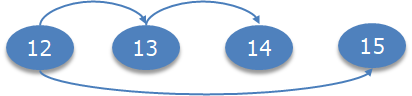
During development processes, it is not unusual to be developing existing logic, and decide that approach being used isn’t right or not going to perform as well. So you abandon your changes and revert back to the last approved version. However, this isn’t possible as any save will result in a new iteration. The API-P will be getting some enhanced version management features. But today to be able to undo the changes we need a means to ‘revert forward‘ (hence the tool name) that is to take an older iteration and make it the latest, as illustrated in the next diagram.

Today the API-P doesn’t provide a means to perform this process within the User interface. However when looking at a gateway you can review the API policy deployed. As we established previously that you may have different gateways deployed with different iterations. Given this, as API-P has been built true to the principles of separating the UI from the back-end through the use of APIs we can deduce there should be a means to get the details of an API with a specific iteration.

To this end we have built on the pattern previously illustrated to provide the means to ‘Revert Forward’ by creating a Groovy script that will use the APIs provided by API-P to retrieve an iteration and push it back at the latest version. When the policy is pushed back it also modifies the description to show which iteration has been pushed.

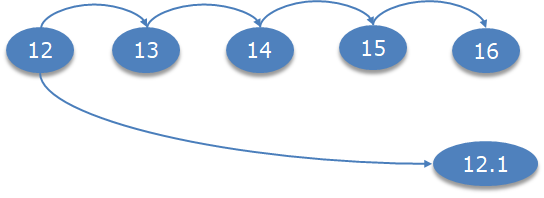
You may ask, why not use the conventional developer approach of branching as suggested in the following diagram. However API-P’s iteration framework doesn’t extend to support this.

The next with this is pretty predictable – how do I know which iteration to revert to. You have two options here, firstly either revert in order so you can see the prior version in turn – which whilst visually good, is not necessarily the most practical option. So in the tool we have a parameter that will allow you to display on the console the configuration of each iteration. This does mean you are going to see the policies in a JSON presentation. To make life easier we would recommend good practise and recording in the policy description information that helps determine the policy’s characteristics – and this can be used to better determine iteration behaviour.

If we are able to take an earlier iteration and make it the latest one by pushing it back then it is a short step to actually target a different management cloud in effect migrating the policies. Whilst possible it comes with some serious cautions …

  • You risk undermining your version management, which management cloud has the master, and the iteration numbers will NOT migrate so it’s not like this info can be used to distinguish the laster version
  • The logic included doesn’t accommodate handling differences in policy versions – so if trying move between instances of the API Platform they need to be the same version otherwise your configuration could make a mess of thing
  • This issue is further compounded if you are deploying custom Java policies.
  • Environment specific policies simply won’t work for example gateway based routing.

Oracle does not recommend that the policies be stored anywhere outside of the platform, whilst it this utility makes that a possibility, it deliberately avoids writing any of the information to the file, the policies only reside outside of the platform for the duration of the process execution.

The Tools Commands

All the parameters assume the values will not contain any space characters. Each command is preceded by a dash eg. revertForward.groovy -inpassword mypass -inSvr https://a.b.com

  • -h or -help – provides this information
  • -inName – user name to access the source management cloud
  • -inPass – password for the source management cloud
  • -inSvr – The server address without any attributes e.g. https://1.2.3.4
  • -policy – numeric identifier for the policy of interest
  • -iter – iteration number of interest for the policy – optional
  • -outName – optional, the target management cloud username, only needed for migrations
  • -outPass – optional, the target management cloud password, only needed for migrations
  • -outSvr – optional, the target management cloud server address – same formatting as inSvr, only needed for migrations
  • -override – optional, if migrating to another management, tells the script to replace the existing policy of the same name if found
  • -view – optional, separate command to allow viewing of the policy – requires one of the following values:
    • display – displays all the details of the policy, if no iteration is provided this will be the latest iteration
    • summary – provides the headline information of the policy including name, change date etc
    • summary-all – summarizes all the iterations from the current one back to the 1st
  • -debug – optional, will get script to report more information about what is happening

The code can be obtained from my GitHub repository here.

Share this:

  • Click to share on Facebook (Opens in new window) Facebook
  • Click to share on X (Opens in new window) X
  • Click to share on Pocket (Opens in new window) Pocket
  • Click to share on Reddit (Opens in new window) Reddit
  • Click to email a link to a friend (Opens in new window) Email
  • Click to share on WhatsApp (Opens in new window) WhatsApp
  • Click to print (Opens in new window) Print
  • Click to share on Tumblr (Opens in new window) Tumblr
  • Click to share on Mastodon (Opens in new window) Mastodon
  • Click to share on Pinterest (Opens in new window) Pinterest
  • More
  • Click to share on Bluesky (Opens in new window) Bluesky
  • Click to share on LinkedIn (Opens in new window) LinkedIn
Like Loading...

    I work for Oracle, all opinions here are my own & do not necessarily reflect the views of Oracle

    • About
      • Internet Profile
      • Music Buying
      • Presenting Activities
    • Books & Publications
      • Logging in Action with Fluentd, Kubernetes and More
      • Logs and Telemetry using Fluent Bit
      • Oracle Integration
      • API & API Platform
        • API Useful Resources
        • Useful Reading Sources
    • Mindmaps Index
    • Monster On Music
      • Music Listening
      • Music Reading
    • Oracle Resources
    • Useful Tech Resources
      • Fluentd & Fluent Bit Additional stuff
        • Logging Frameworks and Fluent Bit and Fluentd connectivity
        • REGEX for BIC and IBAN processing
      • Java and Graal Useful Links
      • Official Sources for Product Logos
      • Python Setup & related tips
      • Recommended Tech Podcasts

    Oracle Ace Director Alumni

    TOGAF 9

    Logs and Telemetry using Fluent Bit


    Logging in Action — Fluentd

    Logging in Action with Fluentd


    Oracle Cloud Integration Book


    API Platform Book


    Oracle Dev Meetup London

    Blog Categories

    • App Ideas
    • Books
      • Book Reviews
      • manning
      • Oracle Press
      • Packt
    • Enterprise architecture
    • General
      • economy
      • ExternalWebPublications
      • LinkedIn
      • Website
    • Music
      • Music Resources
      • Music Reviews
    • Photography
    • Podcasts
    • Technology
      • AI
      • APIs & microservices
      • chatbots
      • Cloud
      • Cloud Native
      • Dev Meetup
      • development
        • languages
          • java
          • node.js
      • drone
      • Fluentbit
      • Fluentd
      • logsimulator
      • mindmap
      • OMESA
      • Oracle
        • API Platform CS
          • tools
        • Helidon
        • ITSO & OEAF
        • Java Cloud
        • NodeJS Cloud
        • OIC – ICS
        • Oracle Cloud Native
        • OUG
      • railroad diagrams
      • TOGAF
    • xxRetired
    • AI
    • API Platform CS
    • APIs & microservices
    • App Ideas
    • Book Reviews
    • Books
    • chatbots
    • Cloud
    • Cloud Native
    • Dev Meetup
    • development
    • drone
    • economy
    • Enterprise architecture
    • ExternalWebPublications
    • Fluentbit
    • Fluentd
    • General
    • Helidon
    • ITSO & OEAF
    • java
    • Java Cloud
    • languages
    • LinkedIn
    • logsimulator
    • manning
    • mindmap
    • Music
    • Music Resources
    • Music Reviews
    • node.js
    • NodeJS Cloud
    • OIC – ICS
    • OMESA
    • Oracle
    • Oracle Cloud Native
    • Oracle Press
    • OUG
    • Packt
    • Photography
    • Podcasts
    • railroad diagrams
    • Technology
    • TOGAF
    • tools
    • Website
    • xxRetired

    Enter your email address to subscribe to this blog and receive notifications of new posts by email.

    Join 2,555 other subscribers

    RSS

    RSS Feed RSS - Posts

    RSS Feed RSS - Comments

    December 2025
    M T W T F S S
    1234567
    891011121314
    15161718192021
    22232425262728
    293031  
    « Nov    

    Twitter

    Tweets by mp3monster

    History

    Speaker Recognition

    Open Source Summit Speaker

    Flickr Pics

    Turin Brakes Acoustic Tour 24 @ The Maltings FarnhamTurin Brakes Acoustic Tour 24 @ The Maltings FarnhamTurin Brakes Acoustic Tour 24 @ The Maltings FarnhamTurin Brakes Acoustic Tour 24 @ The Maltings Farnham
    More Photos

    Social

    • View @mp3monster’s profile on Twitter
    • View philwilkins’s profile on LinkedIn
    • View mp3monster’s profile on GitHub
    • View mp3monster’s profile on Flickr
    • View mp3muncher’s profile on WordPress.org
    • View philmp3monster’s profile on Twitch
    Follow Phil (aka MP3Monster)'s Blog on WordPress.com

    Blog at WordPress.com.

    • Subscribe Subscribed
      • Phil (aka MP3Monster)'s Blog
      • Join 233 other subscribers
      • Already have a WordPress.com account? Log in now.
      • Phil (aka MP3Monster)'s Blog
      • Subscribe Subscribed
      • Sign up
      • Log in
      • Report this content
      • View site in Reader
      • Manage subscriptions
      • Collapse this bar
     

    Loading Comments...
     

    You must be logged in to post a comment.

      Privacy & Cookies: This site uses cookies. By continuing to use this website, you agree to their use.
      To find out more, including how to control cookies, see here: Our Cookie Policy
      %d