Tags
blog, development, DZone, FluentBit, observability, OpAMP, OpenTelemetry, OTel, Technology
Just a quick post, we’ve had an article about OpAMP published on DZone check it out at OpenTelemetry’s OpAMP Potential Far Beyond Supporting Collectors

27 Monday Jul 2026
Posted in Fluent Observability, General, OpAMP
Tags
blog, development, DZone, FluentBit, observability, OpAMP, OpenTelemetry, OTel, Technology
Just a quick post, we’ve had an article about OpAMP published on DZone check it out at OpenTelemetry’s OpAMP Potential Far Beyond Supporting Collectors
02 Tuesday Jun 2026
Posted in Fluent Observability, General, OpAMP, Technology
A short post, I’m excited to share that I will be presenting a Webinar for the CNCF Malaga meetup on the 11th June 6.30pm CEST where I’ll be talking about OpAMP – registration link.
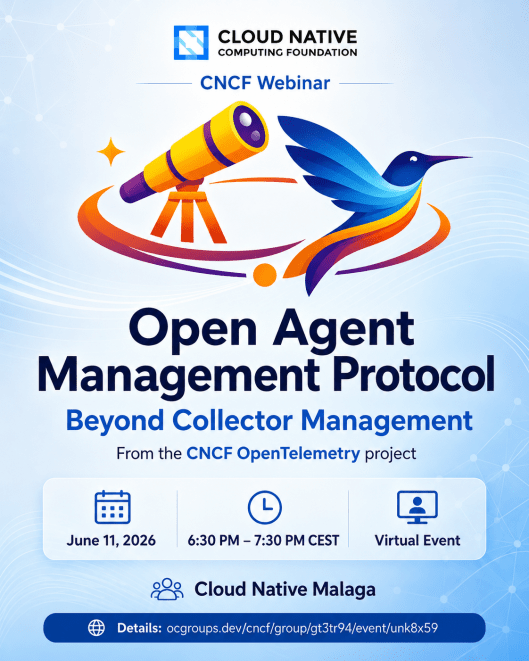
I hope you can join me to hear about the value of the OpAMP protocol, which originated from the CNCF OpenTelemetry project. I’ll be talking about what the protocol can do for us, how it works, and while it has origins within the OpenTelemetry project, it has far-reaching value for almost any deployment context.
This isn’t all theory, I’ll be demoing the functionality we’ve built that leverages the OpAMP spec. While the focus will be on Fluent Bit, it will convey the value of the protocol. We’ll also look at how it can scale in both volume and the range of client applications it can support.
14 Tuesday Apr 2026
Posted in AI, chatbots, development, Fluent Observability, General, OpAMP, Technology
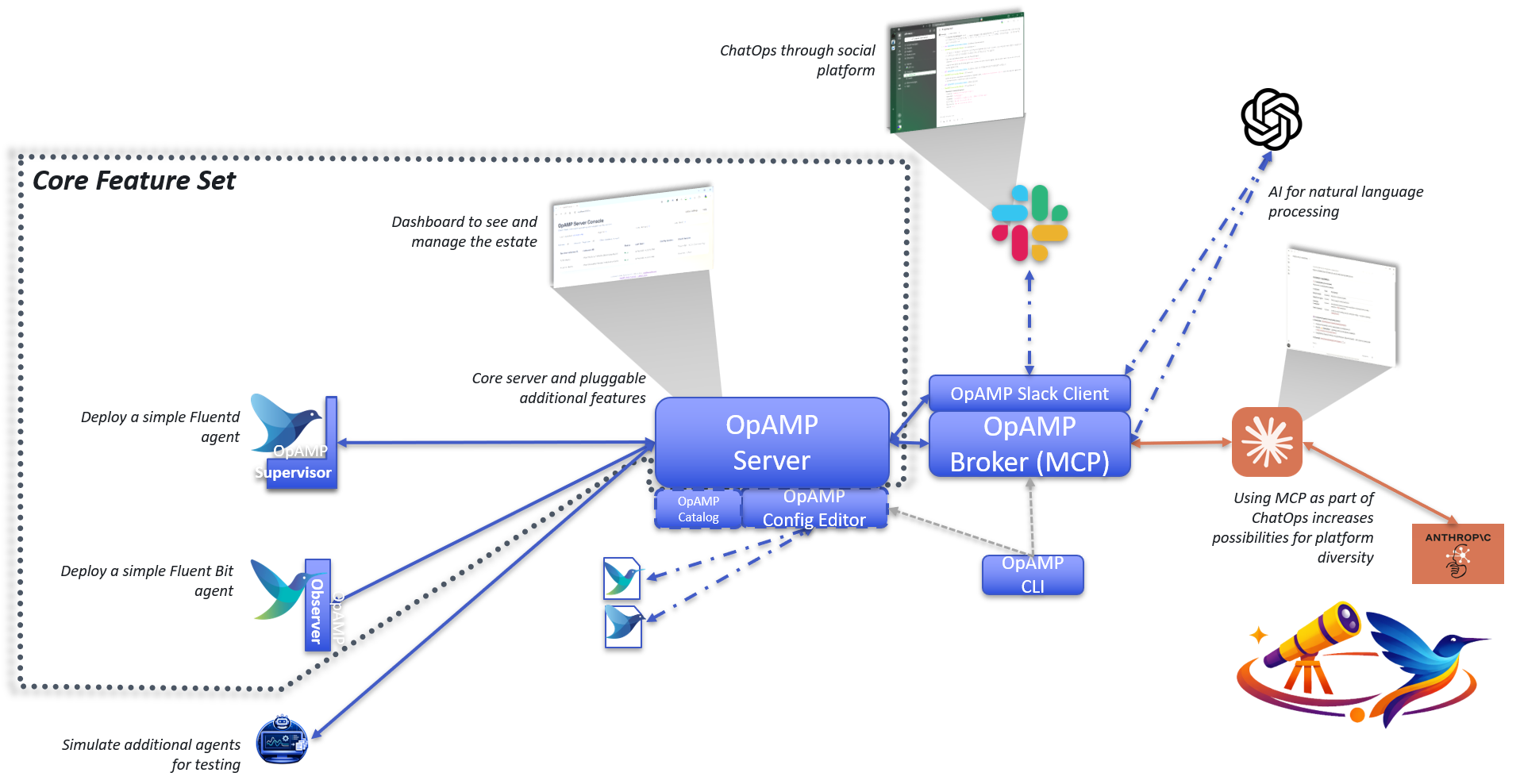
I’ve written a few times about how OpAMP (Open Agent Management Protocol) may emerge from the OpenTelemetry CNCF project, but like OTLP (OpenTelemetry Protocol), it applies to just about any observability agent, not just the OTel Collector. As a side project, giving a real-world use case work on my Python skills, as well as an excuse to work with FastMCP (and LangGraph shortly). But also to bring the evolved idea of ChatOps (see here and here).
One of the goals of ChatOps was to free us from having to actively log into specific tools to mine for information once metrics, traces, and logs reach the aggregating back ends, but being able to. If we leverage a decent LLM with Model Context Protocol tools through an app such as Claude Desktop or ChatGPT (or their mobile variants). Ideally, we have a means to free ourselves to use social collaboration tools, rather than being tied to a specific LLM toolkit.
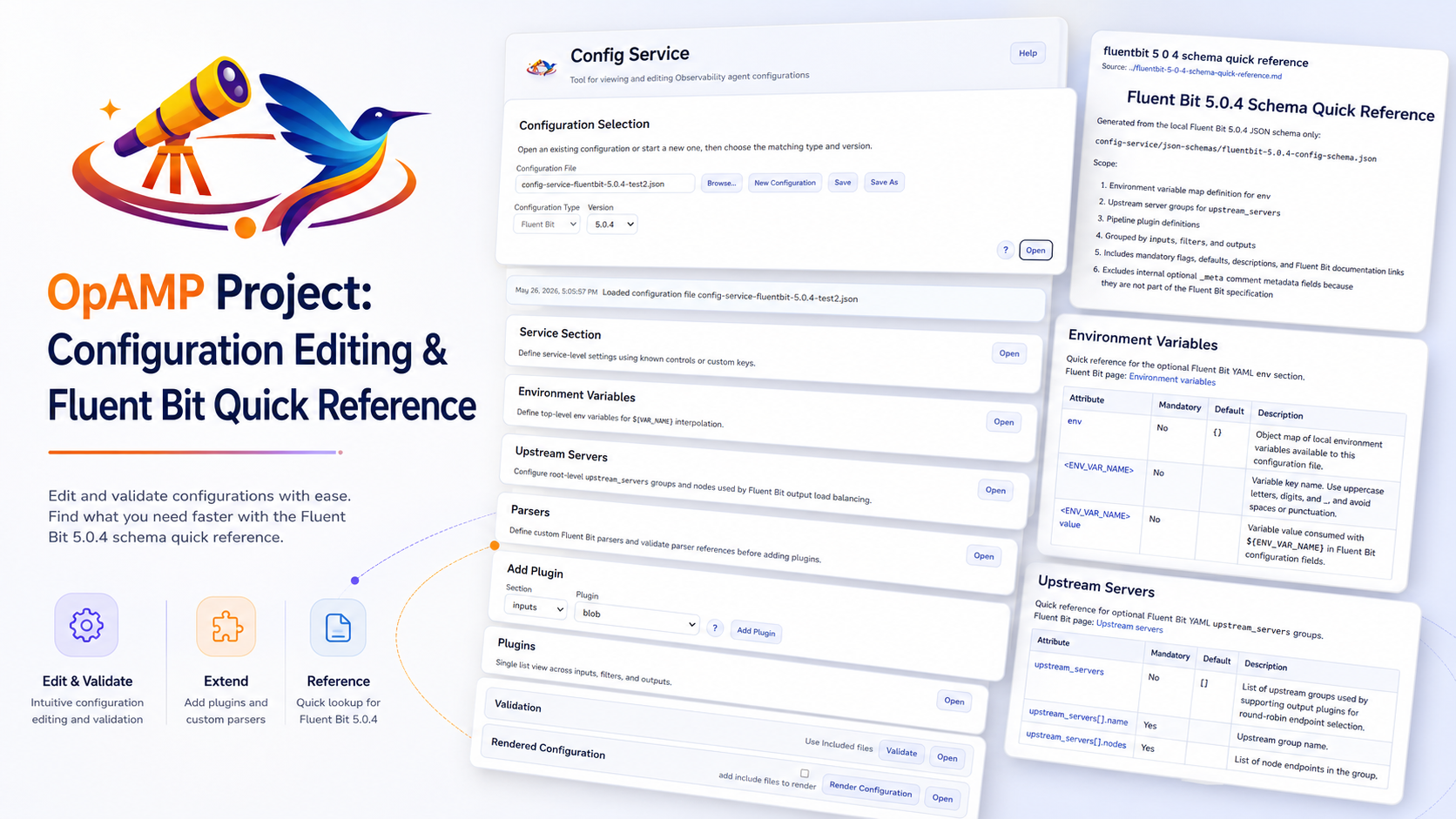
With a UI and the ability to communicate with Fluentd and Fluent Bit without imposing changes on the agent code base (we use a supervisor model), issue commands, track what is going on, and have the option of authentication. (more improvements in this space to come).
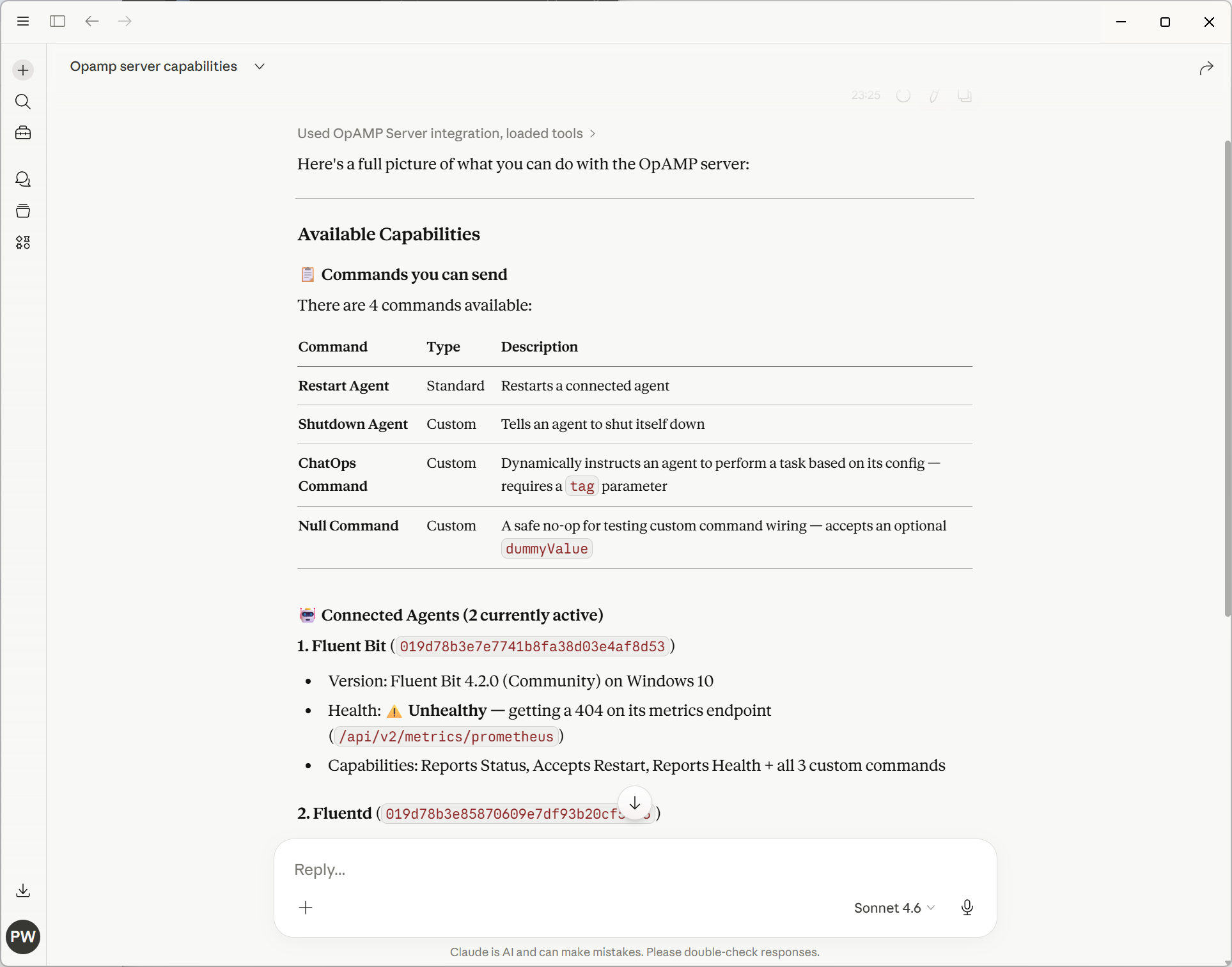
With the first level of the new ChatOps dynamism being through LLM desktop tooling and MCP, the following are screenshots showing how we’ve exposed part of our OpAMP server via APIs. As you can see in the screenshot within our OpAMP server, we have the concept of commands. What we have done is take some of the commands described in the OpAMP spec, call them standard commands, and then define a construct for Custom Commands (which can be dynamically added to the server and client).
The following screenshot illustrates using plain text rather than trying to come up with structured English to get the OpAMP server to shut down a Fluentd node (in this case, as we only had 1 Fluentd node, it worked out which node to stop).
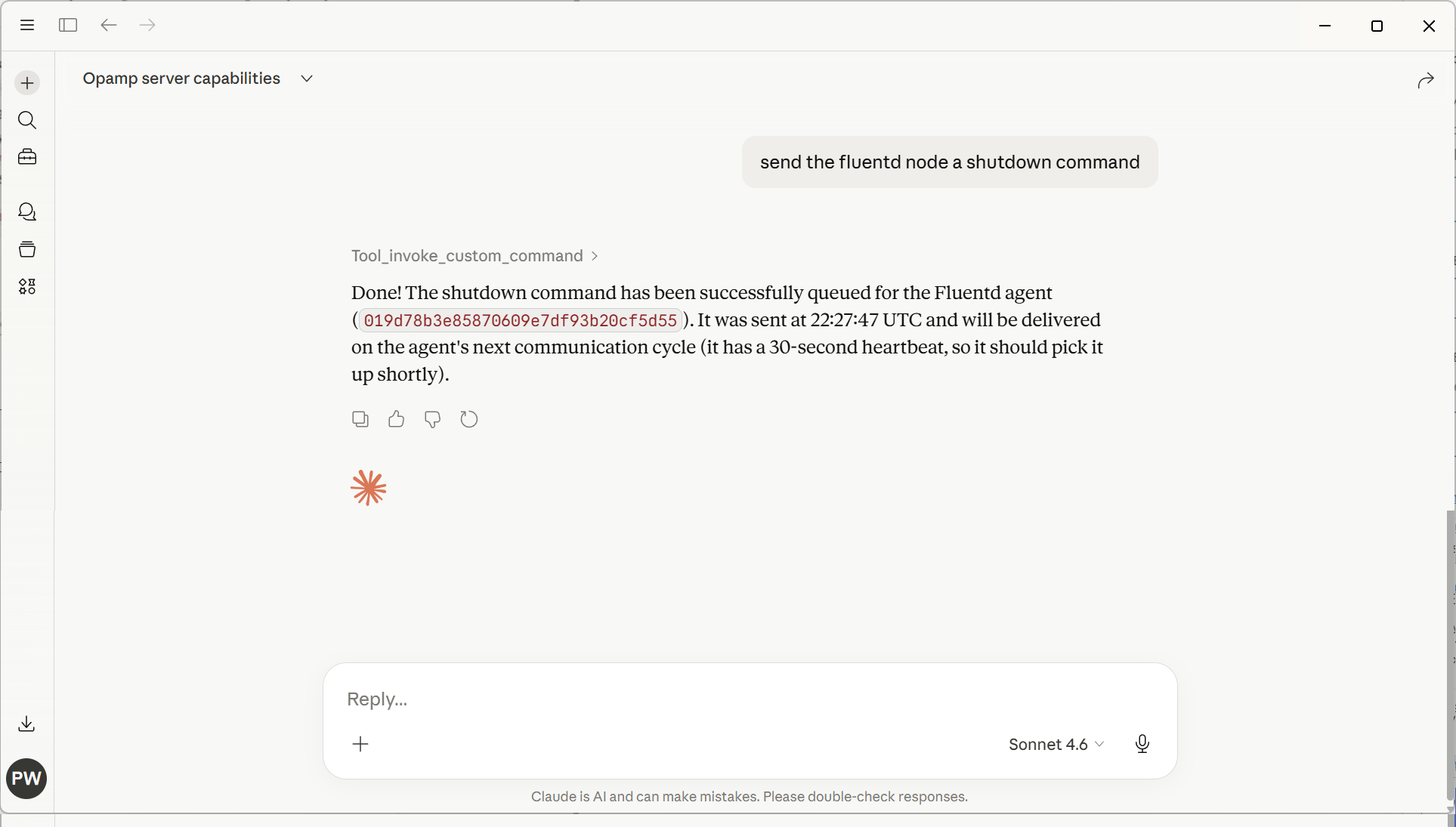
What will be interesting to see is the LLM token consumption changes as the portfolio of managed agents changes, given that, to achieve the shutdown, the LLM will have had to obtain all the Fluent Bit & Fluentd instances being managed. If we provide an endpoint to find an agent instance, would the LLM reason to use that rather than trawl all the information?
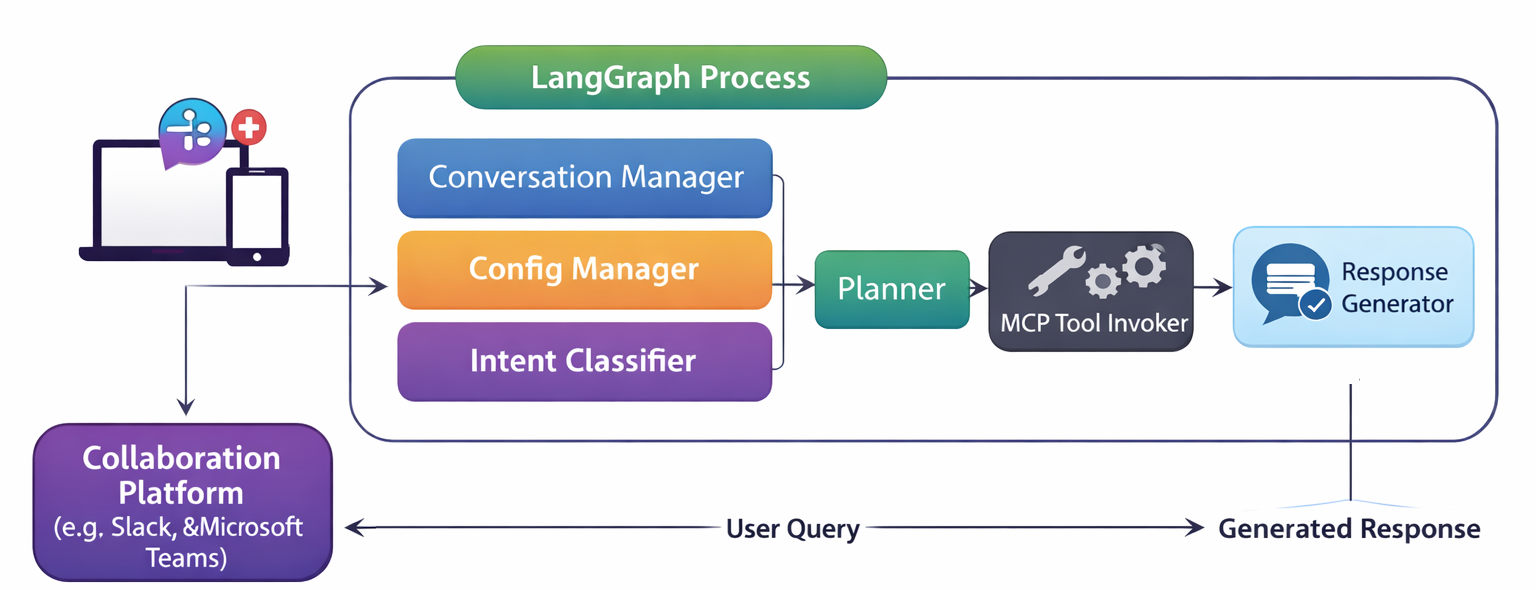
ChatGPT, Claude Desktop, and others already incorporate some level of collaboration capabilities if the users involved are on a suitable premium account (Team/Enterprise). It would be good to enable greater freedom and potentially lower costs by enabling the capability to operate through collaboration platforms such as Teams and Slack. This means the next steps need to look something along the lines of:
02 Thursday Apr 2026
Posted in Fluent Observability, General, Technology
Tags
API, Cloud, development, observability, OpAMP, OTel, Technology
Time to share a short update on our OpAMP project to support Fluent Bit and Fluentd in a supervisor model. We’ve just put a V0.3 label on the GitHub repo (https://github.com/mp3monster/fluent-opamp). The trigger for this has been the refactoring so that the framework on the client side is as reusable as possible for both Fluentd and Fluent Bit (the benefit of implementing Opamp using a supervisor model)
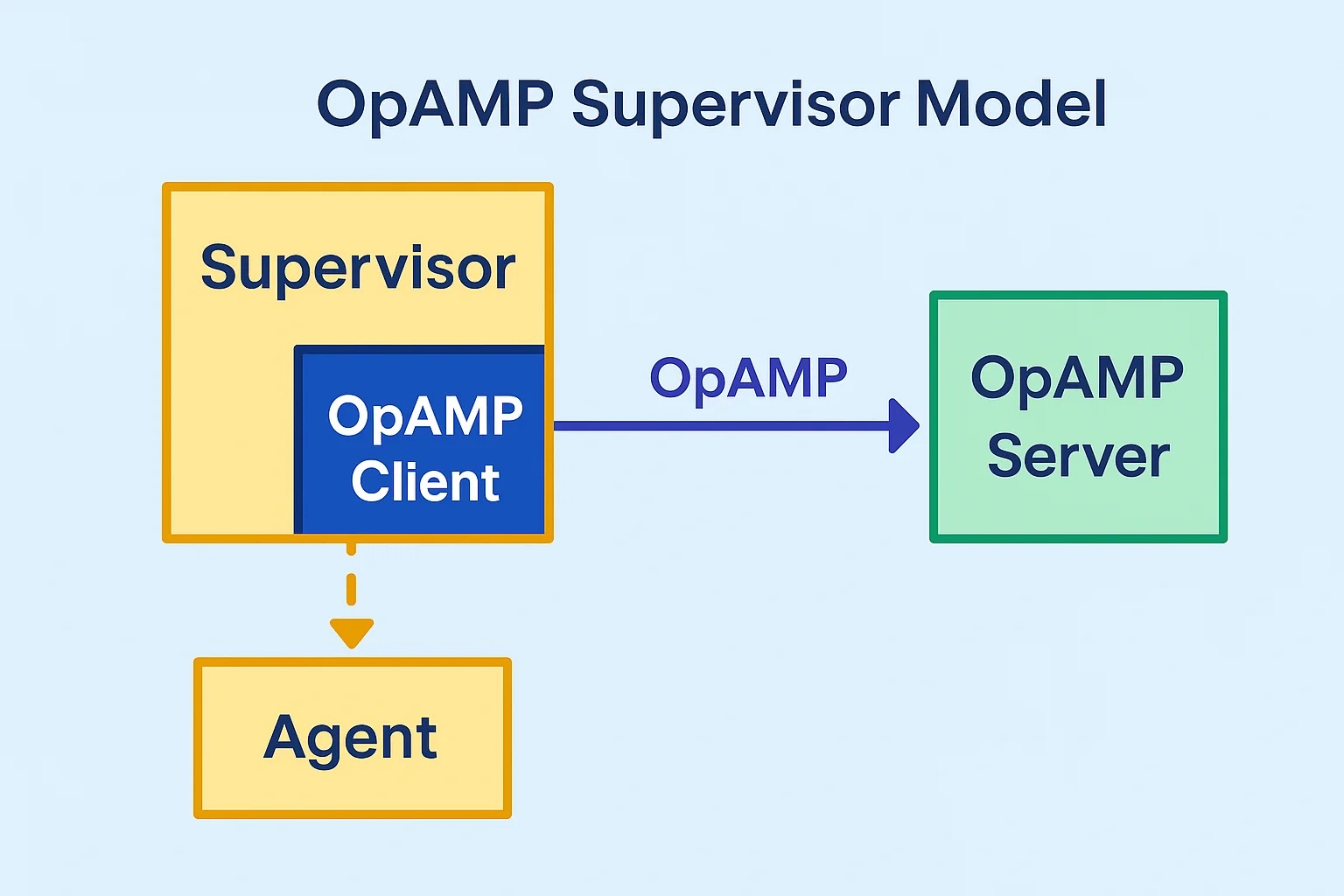
As OpAMP defines what happens between the Client and Server rather than how the client, server and agent must behave as well as the protocol we’ve introduced some features not mandated by the standard but can be delivered using the OpAMP framework. Such as shutting the agent down completely.
The following sections summarize what has recently been incorporated.
Over the last set of releases, we focused on three areas that matter in day-to-day operations:
This post is a walkthrough of what changed and why.
We restructured the consumer so Fluent Bit and Fluentd are now explicit concrete implementations built on a shared abstract client.
Before this work, behavior could drift toward Fluent Bit defaults in places where Fluentd needed different handling. The new structure makes those differences deliberate and visible.
fluentd.conf/YAMLWe’ve created scripts to make it easy to get things started quickly. The startup scripts were standardized:
scripts/run_fluentbit_supervisor.sh|cmdscripts/run_fluentd_supervisor.sh|cmdscripts/run_all_supervisors.sh|cmdWe added optional bearer-token auth for the UI and MCP end points in the server. The OPAMP spec points to different authentication strategies that need to be addressed. For bearer-token-managed endpoints (where you can direct the server to do things that are potentially much more harmful), the design goal is to keep development and unit testing simple, so we have some controllable modes..
Authentication is controlled by environment variables:
disabled (default): no auth checks.static: bearer token checked against a configured shared token.jwt: JWT bearer validation via JWKS (for example with Keycloak).Protection is prefix-based (for example /tool, /sse, /messages, /mcp) and configurable.
This means teams can gradually expand the scope of protection over time by updating path prefixes, rather than doing an all-or-nothing rollout.
Authorisation rejections are logged with mode, method, path, source, and reason, making failed requests easier to troubleshoot.
A major part of OpAMP behavior is deciding when to send compact updates versus a fuller state snapshot. We now fully observe the approach defined by OpAMP, but also have explicit controller-driven rules to provide robustness to the solution.
The client tracks reporting flags for optional outbound sections, such as:
agent_descriptioncapabilitiescustom_capabilitieshealthIf a flag is set, that section is included on send. After inclusion, the flag resets. Controllers determine when those flags are re-enabled for a future full refresh.
We support three controller types:
AlwaysSendre-enable all report flags after each successful send.SentCount: re-enable all report flags after N successful sends (fullResendAfter).TimeSend: re-enable all report flags after a configured elapsed interval.Controller updates happen after a successful send. This means a controller schedules what the next message should include; it does not mutate the already-transmitted message.
If the server sets ReportFullState in ServerToAgent.flags, the client immediately re-enables all reporting flags so the next outbound message contains full reportable state.
This gives operators a direct way to request state re-synchronization when needed.
A recurring theme in this work was avoiding “security vs usability” tradeoffs:
That same principle guided client behavior:
This foundation makes the next iterations easier:
If you’re running both Fluent Bit and Fluentd, this release should make the platform easier to operate, easier to secure, and easier to reason about under change.
03 Tuesday Mar 2026
Posted in chatbots, Fluent Observability, Fluentbit, Fluentd, General, OpAMP, Technology
Tags
AI, chatops, development, Fluent Bit, IncidentFox, innovation, LLM, OpAMP, OTel, runbooks, SRE
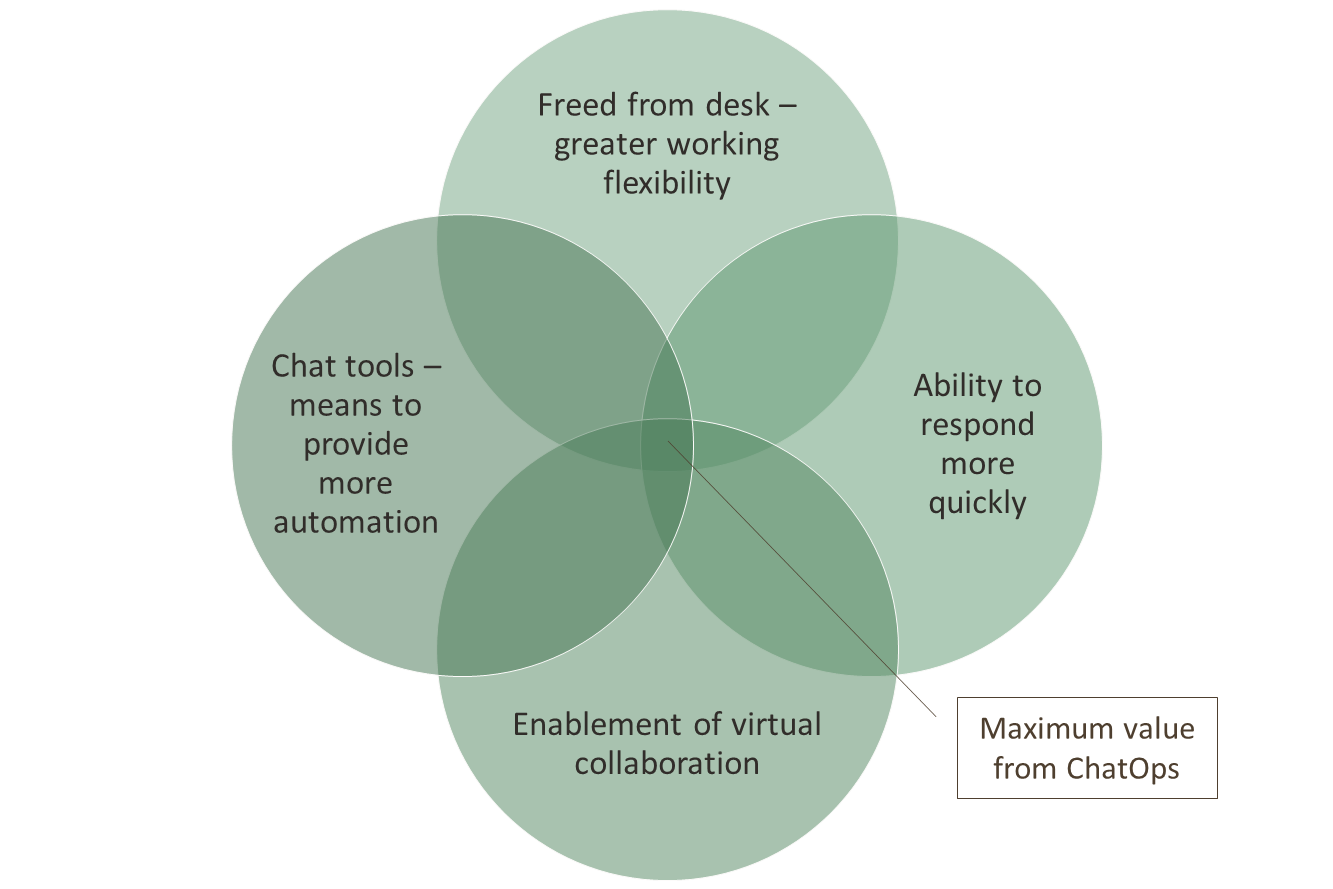
A couple of years ago, we wrote about the idea of Chat Ops, why the idea is valuable and interesting (see Fluent Bit – Powering Chat Ops, Fluent Bit with Chat Ops, for example). The essence of the idea was:
We illustrated it this way:
The ChatOps deployment looked like:
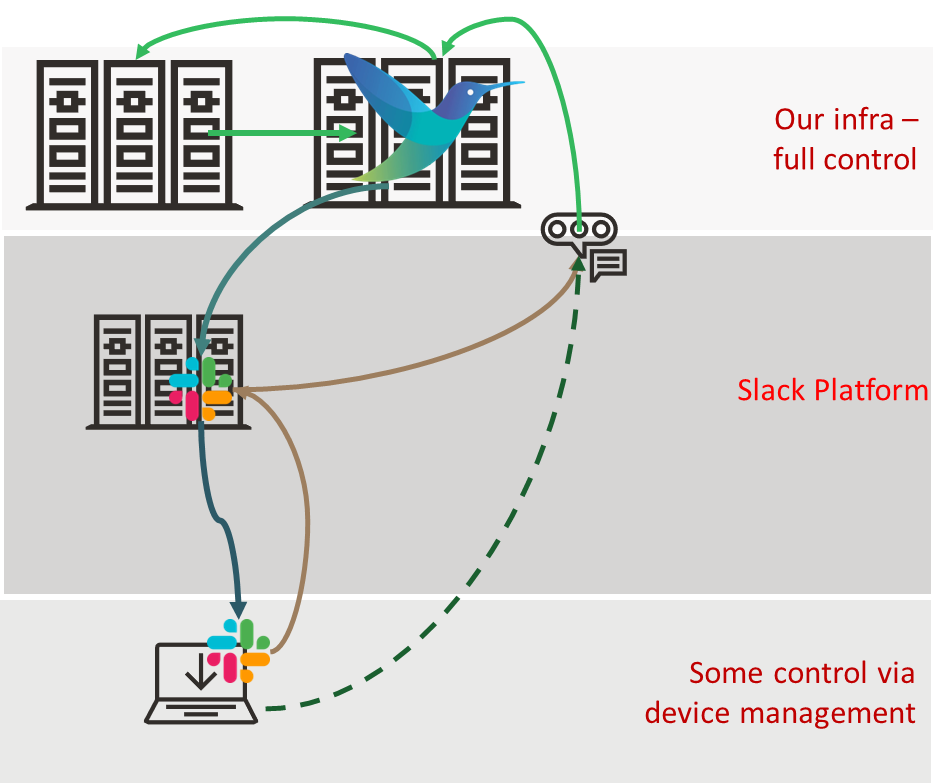
The demo was very light-touch to illustrate an idea, but we’ve since heard people pursuing the concept. So the question becomes: what has happened in the observability space that could make it easier to industrialize (e.g., scale, resilience, security, manageability)? One of the key advances being driven by the OpenTelemetry working groups within the CNCF is OpAMP. OpAMP provides a protocol for standardizing the management and control of agents and collectors such as Fluent Bit. I won’t go into the details of OpAMP here, as we covered that in a separate blog (here). But what it means is that we can either tap into the OpAMP protocol more directly as it provides a means to deliver custom commands to agents, or better still simplify by extending the management service so that we can talk to that, and it is responsible to sending on the command to the relevant agents and talk back to us if its knowledge about agent capabilities tells us its not possible.
This improves security (our bot only needs to talk to a single point in our infrastructure). Our agents, like Fluent Bit, can have a trust relationship with a central point. Effectively, we have introduced a better multifaceted trust layer into the answer. Not only that, as the OpAMP server has visibility into more of the agent deployment, we can also leverage its information and ask it to deploy our custom Fluent Bit configurations that help us observe and execute remediation processes.
While industrialization is good, it occurs to me that there is more to collaboration and conversational (or chat) interfaces than we first envisaged.
Collaboration, to a large extent, is not about bringing multiple ideas to the table and choosing the best one; it is actually about knowledge mining. Our ideas and insights are built from individual knowledge banks, or as we might put it, experience. Conversational interfaces also allow us to see what has gone before (in effect, harvesting information to improve our knowledge). So perhaps we should be asking, within the context of a platform that allows us to easily access, share, and interpret knowledge for a specific context (i.e., our current problem), what can we do?
Knowledge is unstructured or semistructured information, and information is a semistructured composition of context and data. So how do we find and leverage information if not knowledge, particularly at 2am when we’re the only person on call? The answer is to facilitate enhanced information retrieval, which could be more Slack bots that we can use to provide structured commands to retrieve relevant data from our metrics tooling, traces, etc. Organizations that follow more ITIL-guided processes will most likely have runbooks, a knowledge base with error-code information, and previous incident logs documenting resolutions. All of which can bring together a wealth of information. Doing this in a collaborative conversational tool like Slack and MS Teams will save time and effort, as you will not have to sign in to different portals to track down the details.
But we can go better, with the rise of LLMs (large language models, Gen AI if you prefer), combined with techniques such as RAG (Retrieval Augmented Generation), MCP (Model Context Protocol), and further accelerate things as we no longer have to make our Slack bot requests use what structured commands. We use natural language, we can easily paste parts of the information we’re given as part of the request – all of which means that while a single LLM may take longer to execute a single request, it is more likely to surface the details faster because we’re not having to worry about getting the notation for the bot request correct, we’re not going to have to repeat requests to narrow data immediately. With agentic techniques, you can have the LLM pull data from multiple systems in a single go.
All of which is very achievable; many vendors (and open-source teams) have been seeking a competitive edge and exposing their APIs through MCP tools. There is the possibility that some of this is ‘AI washing’, but the frameworks to support MCP development are well progressed, so you can always refine or create your own MCP server. Here are just a few examples:
In addition to these, which align with widely used open-source solutions, there are MCP servers for vendor-specific offerings, such as Honeycomb and Chronosphere.
The use of MCP raises an interesting possibility – as it becomes very possible to have a universal MCP client, which can be easily interfaced into any conversational tool – after all, we just need to send the text that is addressed to the client, i.e., the adaptor to Slack, MS Teams, etc. is pretty simple. This means we can start to consider things like the same tooling, supporting tools like Claude Desktop, and its mobile equivalent.
If we bring AI into the equation, consider ML and small models as well, we can start looking at exploiting pattern recognition in the occurrences of issues. This would mean the value diagram becomes more like:
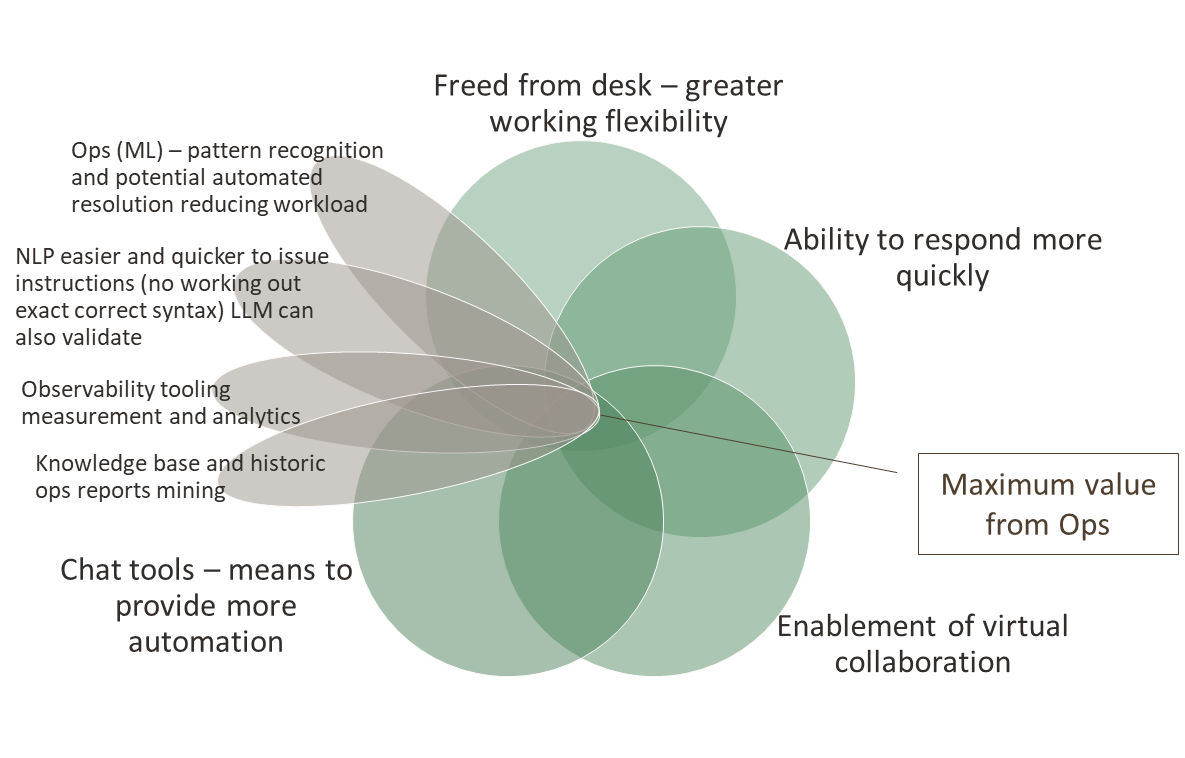
We should also keep in mind the development of the new OpAMP spec from the CNCF OpenTelemetry project that provides a mechanism to centrally track and interact with all our agents, such as Fluent Bit (not to mention Fluentd, OTel Collectors, and others).
Bringing all of this together isn’t a small task, and what of these ideas already exist? Are there building blocks we can lean on to show that the ideas expressed here are achievable? This brought us to IncidentFox.ai (GitHub link – IncidentFox). IncidentFox already exploits MCP servers from several products, such as Grafana, and supports a knowledge base geared towards intelligent searching that can also tap into common sources of operational knowledge, such as Confluence.
But IncidentFox has taken the use of LLMs further with its agentic approach, recommending actions, and once it has access to source code, LLMs can be used to start looking for root causes. To do this, IncidentFox has harnessed the improvements in Gen AI reasoning and the selection and use of the MCP-enabled tools we mentioned, which enable the extraction of data and information from mainstream observability tools.
IncidentFox isn’t the only organization heading in this direction (Resolve.ai, Randoli, and Kloudfuse are building AI SRE tools, but with a fully proprietary business model), but it is supporting an open-source core. All of these solutions come under the banner of AI SRE. Interestingly, a new LLM benchmark has emerged called SRESkillsBench, in addition to the models such as Bird and Spider, which specifically evaluate LLMs against SRE tasks. This kind of information certainly is going to create some interesting debates – do you use the best LLM for specific tasks, or the LLM the vendor has worked with and optimized their prompting to get the best from it?
A lot of these tools focus on detection and diagnostics, and steer you to the relevant runbooks, there seems to be less said about how runbooks can be translated into remediation actions that can be executed. The ability to translate runbooks into executable steps will require either tooling via MCP or custom models with suitable embedded functions. Whichever approach is adopted, having a well-understood control plane, such as Kubernetes, will make it easier. But not everything is native K8s. Lots of organizations still use just virtualization, or even bare metal. We also see this with cloud vendors that offer bare-metal services due to the need for maximum compute horsepower. To address these scenarios from a centralized control, either needs to allow remote access (ssh tunnels) to all the nodes, or a means to work with a distributed tooling mechanism, which is what we had with our original chatops idea and the possibilities offered through OpAMP.
Of course, introducing LLMs opens up another set of challenges in the observability space, which OpenLLMetry (driven by TraceLoop) and LangFuse are working to address. But that’s for another blog.
Sticking with an open-source/standards-based approach means there is a clear direction of enabling AI Agents to be part of the OTLP (Open Telemetry Protocol) pipeline and leverage the MCP tooling of backend observability platforms. IncidentFox doesn’t yet provide an inline OTLP capability (although some of the proprietary options have gone this way), but that is less of a concern, as Fluent Bit provides a lot of capability to help identify issues (such as timeseries/frequency measurement, error identification, etc.), which can be combined with IncidentFox’ means to instruct it to initiate an incident. We could do this with direct API calls, but what would be more interesting and flexible is that, when our Fluent Bit process notifies the Ops team in Slack of an issue, it also ensures that the IncidentFox Slack agent picks up the message, allowing it to start its own analysis. In effect, a collaboration platform can be as impactful as an integration platform.
Furthermore, now that we have early warning of an issue via Fluent Bit, we can interact with IncidentFox through its tooling to start interrogating the diverse range of tools well before the new problem’s details have been fully ingested into the backend tooling and been detected as an issue. So we can now get a jump start by prompting IncidentFox, which can mine for information and recommendations. This is where, at 2am, we can still work collaboratively, albeit with a collaborator that is not another person but an LLM.
As I’ve mentioned, the challenge is making the runbook executable in environments that don’t provide a strong control plane, such as K8s. Here, we can further develop our ChatOps concept. By providing a set of MCP tools for Fluent Bit (IncidentFox supports providing your own tools), the runbook can describe remediation steps, and the use of the LLM ensures the Fluent Bit tool is invoked appropriately.
This would still mean that the central point of Incident Fox would need to talk with each Fluent Bit deployment, better than just opening up SSH directly. But we could be smarter. OpAMP provides a central coordination point, and through its Supervisor or embedded logic in an observability client, the protocol’s support for custom commands could be exploited. So we expose the way we interact with Fluent Bit via the custom command mechanism, and we have a robust, controlled mechanism. Furthermore, the concept could be extended to exploit the aggregated knowledge of agents and their configuration (or pushing out new configurations to solve operational problems as OpAMP has been designed to enable), we can automate the determination of whether the remediation action needs to be executed across operational nodes.
Let’s walk through a hypothetical (but plausible) scenario. We have manually deployed systems across a load-balanced set of servers in a pre-production environment used for load testing, each with TLS certificates. As it is a pre-production environment, we use self-signed certificates. We are starting to see errors because the certificates have expired, and someone forgot to recycle them. Fluent Bit has been forwarding the various error log messages to Loki, but the high frequency of the errors causes it to send details to Slack for the Ops team. This, in turn, nudges IncidentFox to act, determines the root issue, and finds remediation in a runbook that points to running a script on the host to provide a fresh self-signed certificate. As we have a Fluent Bit ops pipeline that can trigger that script, and it is deemed low risk, we allow IncidentFox to execute the runbook unsupervised. To execute the run book, it uses the OpAMP server to send the custom command to Fluent Bit. But the runbook says other nodes should be checked. As a result, IncidentFox works with the OpAMP server via its MCP tooling to identify which other Fluent Bit deployments are monitoring other nodes and to direct the custom command to those nodes as well.
To achieve this, we need an architecture along the following lines, in addition to IncidentFox and the associated MCP tools, we would need to have the OpAMP server, either the OpAMP client embeddable into Fluent Bit or an OpAMP supervisor that understands how to pass custom commands, something it perhaps could do by using another MCP interface to Fluent Bit directly.
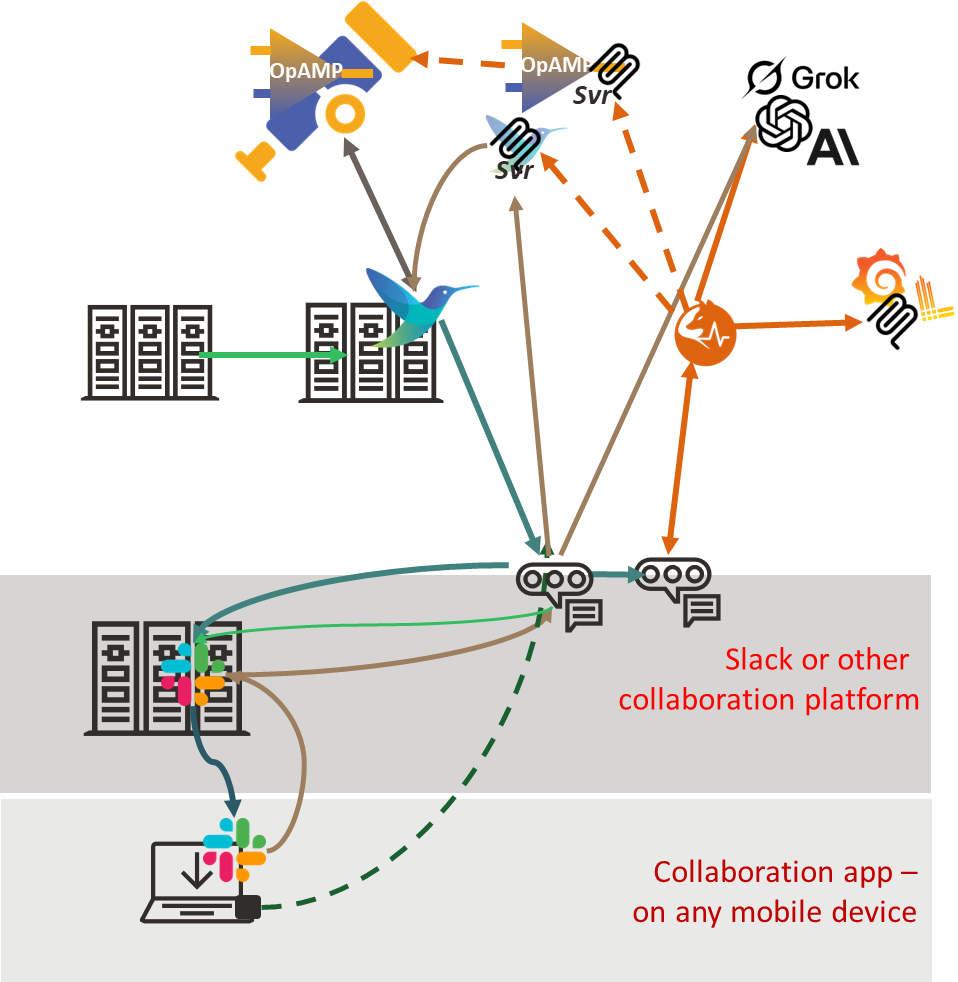
As you can see, there has been significant advancement in how LLMs and MCP tooling can be used to enable operational support activities. To turn this into a reality, the core Fluent Bit committers need to ideally press on with supporting OpAMP. A standardized MCP tooling arrangement for an open-source OpAMP server will also make a significant advancement. Although we could get things working directly with MCP using Fluent Bit.
IncidentFox being able to function as an OpAMP server itself would really enable it shift the narrative, particularly if it provided a means to plug into a supervisor to handle custom actions.
Looking at all of this, one dimension of operational issues is the ability to correlate an issue with environmental changes. That means understanding not only software versions, but also the live configuration. Again, not too difficult when your control plane is K8s. But trickier outside of that ecosystem. You need to identify when the change was defined and when it was applied. Is it time for some functionality that understands when details such as file stamps for configurations or certain binary files change? Perhaps a proxy service that can spot API calls to configuration endpoints and file system changes to configuration files? Then have that information logged centrally so that problems can be correlated to a system configuration or deployment problem.
Since writing this, we came across Mezmo, which, like Resolve.ai, is developing a proprietary solution but is looking to make an open-source offering. As part of that journey, they have sponsored an O’Reilly Report on Context Engineering for Observability.
26 Thursday Feb 2026
Posted in Fluentbit, General, Technology
Tags
AI, artificial-intelligence, Cloud, LLM, OpAMP, Open Telemetry, OTel, Protobuf, Spec, Technology
Fluent Bit and OpenTelemetry’s Collector (as well as many other observability tools) are designed to use a distributed/agent model for deployment. This model can pose challenges, including ensuring that all agents are operating healthily and correctly configured. This is particularly true outside of a Kubernetes ecosystem. But even within a Kubernetes ecosystem, more than basic insights are required (for example, is it running flat out or over-resourced). Fluent Bit exposes its own metrics and logs so that you can either configure Fluent Bit to forward the metrics and logs to an endpoint (or allow Prometheus to scrape the metrics).
As we’re usually using Fluent Bit to collect data and route it to tools like Prometheus, Grafana, etc., or perhaps a more commercial product. So it makes sense that Fluent Bit is also sharing its own status and health.
When it comes managing the configuration of Fluent Bit, we have lots of options for Kubernetes deployments (from forcing pod replacement, to sharing configurations via persistent volume claims, and Fluent Bit reloading configs), but given that Observability needs to operate on simple virtualized and bare metal scenarios, and not everything can be treated as dynamically replaceable more general strategies such as GITOps and potentially using Istio (yes, there really good use cases for Istio outside of Kubernetes) are available. But there is also more advanced tooling, such as Puppet, Chef, and Ansible.
The challenge is non of these tools provides out-of-the-box capabilities to fully exploit the control surface that OTel Collectors and Fluent Bit offer. So the OpenTelemetry community has elected to develop a new standard called OpAMP, which fits snuggly into the OTel ecosystem.
OpAMP defines an agent/client and server model in which the central server provides control, measurement, etc., to all Collectors. The agent/client side can be deployed in two ways: wired directly into a collector or via a separate supervisor tool. Integrating the client-side directly into the client is great, as it avoids introducing a new local process. The heart of OpAMP is the message exchange, which we’ll look at more in a moment.
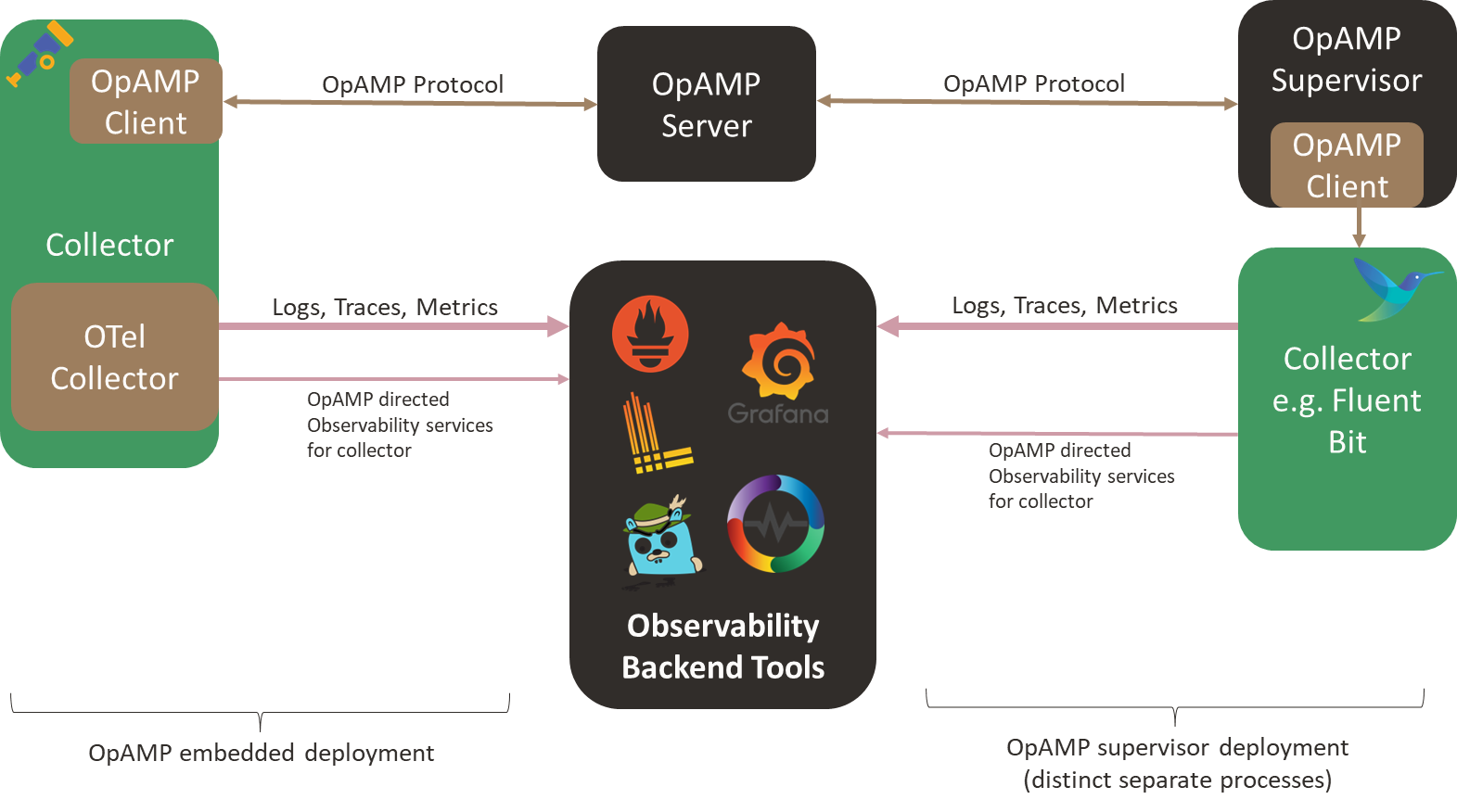
Today, Fluent Bit would need to use the Supervisor model without modification (although GitHub shows a feature request to support the protocol, we haven’t heard whether or when it will be implemented). But it is early days, and some aspects of the protocol are still classified as ‘development’. That said, it is worth looking more closely at OpAMP as it offers some interesting opportunities, particularly around how we could easily evolve ideas such as chatOps.
While I’m not a fan of having a peer process for Fluent Bit, on the basis that we now have two distinct processes to support observability, we could experiment with the supervisor spawning Fluent Bit as a child process, which would let the supervisor easily spot Fluent Bit failing. At the sametime the supervisor can communicate with Fluent Bit using the localhost loopback adapter and the usual APIs.
Lets start with what the OpAMP protocol offers, firstly very little of it is mandatory (this is both good and bad – it means we can build compatibility in a more incremental manner, if certain behaviours are provided elsewhere, then the agent doesn’t have to offer a capability it is also tolerant of what an agent or collector can and can’t do):
The heart of this protocol is the contract between the client (agent/collector) and the server, defined using Protobuf3. This means you can easily create the code skeleton to handle the payload objects, which will be transmitted in binary form (giving network traffic efficiency and the price of not being humanly readable or dynamically processable, insofar as you need to know the Protobuf definition to extract any meaning).
In addition to the Protobuf definitions, there are rules for handling messages, specifying when a message or response is required, message sequence numbering, and the default heartbeat frequency. But there aren’t any complex exchanges involved.
The binary payloads are exchanged over Sockets (allowing full-duplex exchanges where the server can send requests at any time) or over HTTP (providing half-duplex, aka polling/client check-in, at which point the server can respond with an instruction) – a strategy that is becoming increasingly common today.
Regardless of whether you’re in a Kubernetes environment, the ability to ask agents/collectors to quickly tweak their configuration is attractive. If you start suspecting a service or application is not behaving as expected, if Fluent Bit is filtering your logs or sampling traces, you can quickly push a config change out to allow more through, providing further insight into what is going on – you don’t need to wait for a Kubernetes scheduler to roll through with replacing pods.
With the rise of AI, having a central point of contact makes it easier to wrap a central server as an MCP tool and have a natural language command interface. Along with the possibility that you can potentially send custom commands to the agent (or supervisor) to initiate a task. This was part of the functionality we effectively implemented in our original chatops showcase. The problem was that in the original solution, we deployed a small Slack bot that directed HTTP calls to Fluent Bit. With the OpAMP framework, we can direct the request to the server, which will route the command to the correct Fluent Bit node through a more trustworthy channel.
The OpAMP protocol is likely to be widely adopted by commercial service providers (Bindplane, OneUpTime, for example), as it allows them to start working with additional agents/collectors that are already deployed (for example, a supervisor could be used to manage a Fluentd fleet, where there isnt the appetite to refactor all the configuration to Fluent Bit or an OTel Collector). Furthermore, it has the potential to simplify by standardizing functionality.
In terms of resource richness in the OpenTelemetry GitHub repo, I suspect (and hope) there will be more to come (a UI and richer details on how a base server can be extended, for example). At the time of writing, within the OpenTelemetry GitHub repository, we can see:
 Phil (aka MP3Monster)'s Blog
You must be logged in to post a comment.