• Home
  • Site Aliases
    • www.cloud-native.info
  • About
    • Background
    • Presenting Activities
    • Internet Profile
      • LinkedIn
    • About
  • Books & Publications
    • Log Generator
    • Logs and Telemetry using Fluent Bit
      • Fluent Bit book
      • Book Resources in GitHub
      • Fluent Bit Classic to YAML Format configurations
    • Logging in Action with Fluentd, Kubernetes and More
      • Logging in Action with Fluentd – Book
      • Fluentd Book Resources
      • Fluentd & Fluent Bit Additional stuff
    • API & API Platform
      • API Useful Resources
    • Oracle Integration
      • Book Website
      • Useful Reading Sources
    • Publication Contributions
  • Resources
    • GitHub
    • Oracle Integration Site
    • Oracle Resources
    • Mindmaps Index
    • Useful Tech Resources
      • Fluentd & Fluent Bit Additional stuff
      • Recommended Tech Podcasts
      • Official Sources for Product Logos
      • Java and Graal Useful Links
      • Python Setup & related stuff
      • DevTips
  • Music
    • Monster On Music
    • Music Listening
    • Music Reading

Phil (aka MP3Monster)'s Blog

~ from Technology to Music

Phil (aka MP3Monster)'s Blog

Author Archives: mp3monster

Oracle Dev Meetup

24 Tuesday Apr 2018

Posted by mp3monster in Dev Meetup, General

≈ Leave a comment

Tags

Atul Kumar, dev, IDCS, identity, meetup, messaging, Oracle

Another month and another Meetup.  Last night was the quietest session we’ve had. But then we covered Identity Management and whilst the subject is so important it isn’t too popular.

Tanks to Atul Kumar for taking on the task of presenting on this subject.  You can find out more about Atul at:

  • Atul Kumar on LinkedIn
  • K21 Academy

The content covering use of Messaging Cloud and our drone project can be seen here:

Share this:

  • Share on Facebook (Opens in new window) Facebook
  • Share on X (Opens in new window) X
  • Share on Reddit (Opens in new window) Reddit
  • Email a link to a friend (Opens in new window) Email
  • Share on WhatsApp (Opens in new window) WhatsApp
  • Print (Opens in new window) Print
  • Share on Tumblr (Opens in new window) Tumblr
  • Share on Mastodon (Opens in new window) Mastodon
  • Share on Pinterest (Opens in new window) Pinterest
  • More
  • Share on Bluesky (Opens in new window) Bluesky
  • Share on LinkedIn (Opens in new window) LinkedIn
Like Loading...

Domain Driven Design

05 Thursday Apr 2018

Posted by mp3monster in APIs & microservices, General, mindmap, Technology

≈ Leave a comment

Tags

book, Design, mindmap, Patterns

I have been wading through Eric Evan’s Domain Driven Design Book. As with many design and architecture focussed books I try to mindmap as I go so I have a quick reference resource. The mindmap for this book can be seen below and is linked to the WiseMap version which is dynamic.

In terms of of a review of the book, it contains lots of nuggets of helpful ideas and information but it is a rather heavy going to read. Some points feel over laboured such as the use of consistent language, at times it feels like half the book is dedicated to this one point. Whilst Chapter 14 – Maintaining Model Integrity sounds unadventurous as a chapter, I found this to have a lot of really helpful content such as going into the details Bounded Contexts and so on which is highly relevant to the world of microservices.

design book.png

Share this:

  • Share on Facebook (Opens in new window) Facebook
  • Share on X (Opens in new window) X
  • Share on Reddit (Opens in new window) Reddit
  • Email a link to a friend (Opens in new window) Email
  • Share on WhatsApp (Opens in new window) WhatsApp
  • Print (Opens in new window) Print
  • Share on Tumblr (Opens in new window) Tumblr
  • Share on Mastodon (Opens in new window) Mastodon
  • Share on Pinterest (Opens in new window) Pinterest
  • More
  • Share on Bluesky (Opens in new window) Bluesky
  • Share on LinkedIn (Opens in new window) LinkedIn
Like Loading...

Successful PaaS Team

17 Saturday Mar 2018

Posted by mp3monster in General

≈ Leave a comment

Tags

award, Capgemini, community, contribution, Oracle, PaaS

39919340285_bde0aacde1_zLast week we attended the Oracle EMEA PaaS Forum in Budapest. I have to say we’re proud to be part of a team that has picked up two conference awards.  Firstly our CTO Luis Weir for Contributions to API Solutions and then the wider team have collected an award for overall Outstanding PaaS Contributions.

40823835111_5b00f7963e_z

L-R, me, Amy Grange, Soham Dasgupta (Capgemini Netherlands), Luis Weir (Oracle Delivery Unit CTO), Jurijs (Yury) Fjodorovs

Some photos from the trip can be found a here.

Share this:

  • Share on Facebook (Opens in new window) Facebook
  • Share on X (Opens in new window) X
  • Share on Reddit (Opens in new window) Reddit
  • Email a link to a friend (Opens in new window) Email
  • Share on WhatsApp (Opens in new window) WhatsApp
  • Print (Opens in new window) Print
  • Share on Tumblr (Opens in new window) Tumblr
  • Share on Mastodon (Opens in new window) Mastodon
  • Share on Pinterest (Opens in new window) Pinterest
  • More
  • Share on Bluesky (Opens in new window) Bluesky
  • Share on LinkedIn (Opens in new window) LinkedIn
Like Loading...

London Oracle Developer Meetup No. 2

06 Tuesday Mar 2018

Posted by mp3monster in Dev Meetup, development, General, Technology

≈ Leave a comment

Tags

@luisw19, @soacommunity, APIs & microservices, dev, Luis Weir, meetup, PSD2

Last night was the 2nd London Oracle Developer meetup with 100 people registered and  CTO Luis Weir presented on 3rd generation APIs which included their relationship to microservices. The outcomes was not only a excellently delivered presentation with an enaged audience, but led to some really thought provoking discussions, particuarly on the application of microservices in financial  contexts.  For example is it possible for for financial institutions to get near the post child Netflix in terms of building and delivering solutions to production given the certification and compliance requirements? Some interesting insights on PSD2 (Payments Service Directive 2)  as well.  Are questions like is a monolith wrong?

Screenshot 2018-03-06 14.27.26In addition to the high level architectural debate the evening included a shortened walk through on the possibilities of deploying the API Gateway and its relative ease compared to other products.

Finally we concluded with an update on the project that we’re running as an underlying theme for some of the meetups – that of using variuous tech to command the drone(s) via a set pf published APIs.  This included a call to arms to contribute eith to building your own apps to use the API or contribute to the back end as the solution gets built using an API  1st approach.

The slides from the event.

Resources:

  • Git Hub Repository : https://github.com/oracledeveloperslondon/droneAPI
  • Apiary Definition (also held in GitHub) : http://dronedevmeetup.docs.apiary.io
  • SDK between Drone and API App : http://developer.parrot.com/docs/SDK3/


Share this:

  • Share on Facebook (Opens in new window) Facebook
  • Share on X (Opens in new window) X
  • Share on Reddit (Opens in new window) Reddit
  • Email a link to a friend (Opens in new window) Email
  • Share on WhatsApp (Opens in new window) WhatsApp
  • Print (Opens in new window) Print
  • Share on Tumblr (Opens in new window) Tumblr
  • Share on Mastodon (Opens in new window) Mastodon
  • Share on Pinterest (Opens in new window) Pinterest
  • More
  • Share on Bluesky (Opens in new window) Bluesky
  • Share on LinkedIn (Opens in new window) LinkedIn
Like Loading...

Managing API Policy Versioning in Oracle API Platform

27 Tuesday Feb 2018

Posted by mp3monster in API Platform CS, APIs & microservices, Books, General, Oracle, Technology

≈ 6 Comments

Tags

API Platform, API-P, APIs & microservices, CLI, command line, GitHub, Oracle, revert forward, utility, versioning

Updated reflecting changes discussed in blog post:
 Making Scripts Work with IDCS Deployed PaaS

Oracle’s API Platform (API-P) product avoids the use of external configuration management. If you want to better understand why, then checkout our forthcoming book as it goes into detail about why this is the case (it can be pre-release version of the book can be obtained here). In a previous blog I wrote about and illustrated the use of the API-P’s own APIs so that it was possible to see what API iterations had been deployed to API Gateways.

In this blog I want to explore the issues of version management a bit further. API-P provides internal version management through the idea of iterations as previously explored (Understanding API Deployment State on API Platform). In addition to this there are API policy attributes called version, status etc. This information whilst having some impact on behaviour reflects the version of the ‘contract’ that the API represents between the consumer and provider, and requires a manual change.

The API policies themselves are version tracked through the iteration identifiers. Each time a policy is saved the iteration is is incremented. What the API-P doesn’t support is the concept of branching. In relatively simple API Policy branching is unlikely to ever be an issue.

Why is a reversion capability needed?

Let’s take a more complex scenario.  In our book API Platform we introduced the some APIs that would allow the retrieval of meta data about artists in the record companies’ catalog. It has however come to light that the API has been targeted with malicious calls, firstly through trying to attack using injection attacks and secondly trying to overload the back end by creating data requests that make the back-end work hard in retrieving data.

To defend against this, the API Policy has been enhanced to include some custom groovy policies to inspect the values provided. Strictly speaking following the principles of Semantic Versioning the API version should go from 1.0.0 to 1.0.1. However seeing that the ‘contract’ as presented to the consumer hasn’t really changed – the data models are the same, the URI goes unaltered resulting in the implementation team not changing the version.

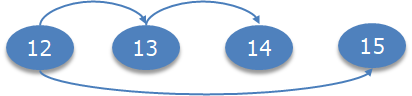
During development processes, it is not unusual to be developing existing logic, and decide that approach being used isn’t right or not going to perform as well. So you abandon your changes and revert back to the last approved version. However, this isn’t possible as any save will result in a new iteration. The API-P will be getting some enhanced version management features. But today to be able to undo the changes we need a means to ‘revert forward‘ (hence the tool name) that is to take an older iteration and make it the latest, as illustrated in the next diagram.

Today the API-P doesn’t provide a means to perform this process within the User interface. However when looking at a gateway you can review the API policy deployed. As we established previously that you may have different gateways deployed with different iterations. Given this, as API-P has been built true to the principles of separating the UI from the back-end through the use of APIs we can deduce there should be a means to get the details of an API with a specific iteration.

To this end we have built on the pattern previously illustrated to provide the means to ‘Revert Forward’ by creating a Groovy script that will use the APIs provided by API-P to retrieve an iteration and push it back at the latest version. When the policy is pushed back it also modifies the description to show which iteration has been pushed.

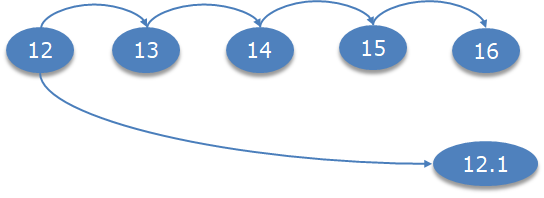
You may ask, why not use the conventional developer approach of branching as suggested in the following diagram. However API-P’s iteration framework doesn’t extend to support this.

The next with this is pretty predictable – how do I know which iteration to revert to. You have two options here, firstly either revert in order so you can see the prior version in turn – which whilst visually good, is not necessarily the most practical option. So in the tool we have a parameter that will allow you to display on the console the configuration of each iteration. This does mean you are going to see the policies in a JSON presentation. To make life easier we would recommend good practise and recording in the policy description information that helps determine the policy’s characteristics – and this can be used to better determine iteration behaviour.

If we are able to take an earlier iteration and make it the latest one by pushing it back then it is a short step to actually target a different management cloud in effect migrating the policies. Whilst possible it comes with some serious cautions …

  • You risk undermining your version management, which management cloud has the master, and the iteration numbers will NOT migrate so it’s not like this info can be used to distinguish the laster version
  • The logic included doesn’t accommodate handling differences in policy versions – so if trying move between instances of the API Platform they need to be the same version otherwise your configuration could make a mess of thing
  • This issue is further compounded if you are deploying custom Java policies.
  • Environment specific policies simply won’t work for example gateway based routing.

Oracle does not recommend that the policies be stored anywhere outside of the platform, whilst it this utility makes that a possibility, it deliberately avoids writing any of the information to the file, the policies only reside outside of the platform for the duration of the process execution.

The Tools Commands

All the parameters assume the values will not contain any space characters. Each command is preceded by a dash eg. revertForward.groovy -inpassword mypass -inSvr https://a.b.com

  • -h or -help – provides this information
  • -inName – user name to access the source management cloud
  • -inPass – password for the source management cloud
  • -inSvr – The server address without any attributes e.g. https://1.2.3.4
  • -policy – numeric identifier for the policy of interest
  • -iter – iteration number of interest for the policy – optional
  • -outName – optional, the target management cloud username, only needed for migrations
  • -outPass – optional, the target management cloud password, only needed for migrations
  • -outSvr – optional, the target management cloud server address – same formatting as inSvr, only needed for migrations
  • -override – optional, if migrating to another management, tells the script to replace the existing policy of the same name if found
  • -view – optional, separate command to allow viewing of the policy – requires one of the following values:
    • display – displays all the details of the policy, if no iteration is provided this will be the latest iteration
    • summary – provides the headline information of the policy including name, change date etc
    • summary-all – summarizes all the iterations from the current one back to the 1st
  • -debug – optional, will get script to report more information about what is happening

The code can be obtained from my GitHub repository here.

Share this:

  • Share on Facebook (Opens in new window) Facebook
  • Share on X (Opens in new window) X
  • Share on Reddit (Opens in new window) Reddit
  • Email a link to a friend (Opens in new window) Email
  • Share on WhatsApp (Opens in new window) WhatsApp
  • Print (Opens in new window) Print
  • Share on Tumblr (Opens in new window) Tumblr
  • Share on Mastodon (Opens in new window) Mastodon
  • Share on Pinterest (Opens in new window) Pinterest
  • More
  • Share on Bluesky (Opens in new window) Bluesky
  • Share on LinkedIn (Opens in new window) LinkedIn
Like Loading...

Tracing Executions in an API Environment

07 Wednesday Feb 2018

Posted by mp3monster in API Platform CS, APIs & microservices, General, Technology

≈ 2 Comments

Tags

API, API Platform, code, ecid, Groovy, Kibana, UUID, Zipkin

As APIs become more pervasive within our solutions we see the arrival of not just design and cataloging tools such as Apiary, Apigee and others but also the arrival of gateways. The gateways provide execution of operations including validation, accounting (moneytization), routing, and other controls such as throttled checks that would often not occur until the first contact with a service bus. For example initial routing based on the API call, fine grained authentication and authorisation (differing from your firewalls who will just perhaps authorise).

In the more traditional integration middleware of Oracle Service Bus and SOA (regardless of cloud, on-premises) you can trace the execution through the middleware end to end. This tracing can be achieved because the platform creates and assigns the a UUID (aka eCID) and ensures that it is carried through the middleware. It is this very behaviour that allows Oracle to provide Business Activity Monitoring without any need to be invasive. Burt not only that in a highly distyributed environment you can track the processing of a transaction from end to end.

The challenge now is that the first point of middleware style behaviour can be at the gateway. So we actually need to move forward the UUID or equivalent forward the the first point of contact. Not only that we need to think about the fact we will see non Oracle integration middleware involved.  Within Spring, Kabana and other established frameworks and tools which are getting signficiant traction with the rise of Microservices, the Ids being used are not the same as the UUIDs used by Oracle. For example Spring Cloud Slueth uses the same HTTP header Ids that Zipkin and Kabana support:

  • X-B3-TraceId
  • X-B3-SpanId
  • X-B3-ParentSpanId

More information can be found here and here.

For the new Oracle API Platform Cloud Service we can check for the existance of the header attributes as a policy and apply actions such as:

  • Apply a header with a TraceId or spanId,
  • If a SpanId exists then we may wish to nest our call as a child span by moving the SpandId to the ParentSpanId and creating a new SpanId.

Ultimately it would be more attractive to apply the logic using the API Platform’s SDK but to get things rolling applying the IDs with the API Groovy policy is sufficient (more here).

Next question that begs, is where to put the ID and want to call it? Put the value in the body, and you’re invading the business aspect of an API with execution specific details, not to mention potentially  changing the API definition. Whilst stuffing HTTP(s) headers with custom attributes is often discouraged as the values aren’t to immediately visible. In my opinion at least the answer largely has been set by president for us. If you weren’t using HTTPS but JMS then you would use the header, but also a number of frameworks already exist that do make use of this strategy such as those mentioned above.

Using the header defined by Kabana etc means that the very process will mean that a number of Support tools out of the box will understand and be able to help visualise your logs with no additional effort.

The following is a Groovy script that could ber used for the purposes of applying an Id appropriately into the HTTP header in the API Platform:

if (!context.getApiRequest().getHeaders().containsKey ("baggage-UUID "))
{
  // use current time to seed random generator
  def now = java.time.Instant.now()
  def random = new java.util.Random(now.getEpochSecond())

  // create an array of 16 bytes to hold the random value
  byte[] uid = new byte[16]
  random.nextBytes(uid)

  // convert the random string from Hex to an ASCII string
  Writable uidInHex= uid.encodeHex()
  String uidStr= uidInHex.toString() 

  // set the outbound header
  context.getServiceRequest().setHeader("baggage-UUID", uidStr)
}

Share this:

  • Share on Facebook (Opens in new window) Facebook
  • Share on X (Opens in new window) X
  • Share on Reddit (Opens in new window) Reddit
  • Email a link to a friend (Opens in new window) Email
  • Share on WhatsApp (Opens in new window) WhatsApp
  • Print (Opens in new window) Print
  • Share on Tumblr (Opens in new window) Tumblr
  • Share on Mastodon (Opens in new window) Mastodon
  • Share on Pinterest (Opens in new window) Pinterest
  • More
  • Share on Bluesky (Opens in new window) Bluesky
  • Share on LinkedIn (Opens in new window) LinkedIn
Like Loading...

API Design

05 Monday Feb 2018

Posted by mp3monster in API Platform CS, APIs & microservices, Books, General, mindmap

≈ Leave a comment

Tags

"best practise", API, apiary, book, mindmap

When it comes to ensuring I keep up good practises, I try to look at books  in areas I think I have a good handle on such as APIs.  Why?  well it confirms and validates I’m upto date; sometimes another view point can spark ideas on how to make something better, improve an approach or simply understand another way of explaining an idea.  The later is important as the key benefit of knowing something is the opportunity to help someone else. Not everyone communicates or understands ideas in the same so this is always helpful.

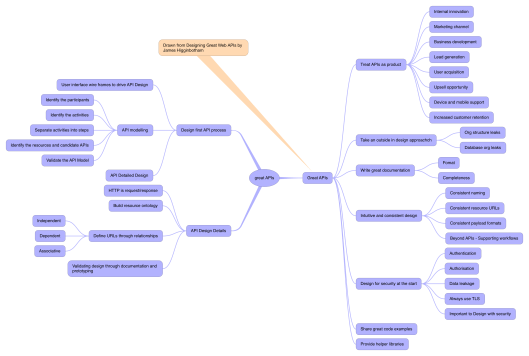
Designing Great Web APIsSo recently I ran through James Higginbotham’s Designing Great Web API’s book(let).  Often when goping through a book I mindmap it so that I can share it, and refer to it as a lit of prompts reminders if necessary.  Whilst’s James’ book doesnt  reveal anything new or relevatory for anyone working with APIs it does provide a good succinct explination to  basic practises. So here is the mindmap:

great APIs

You can also access my MapWise view here. James’ book can be obtained freely from O’Reilly here.

The book doesn’t go into the depth of details for practises that Apiary (Pro Edition) offers with style guidelines which will describe morec detailed recommended practises (more here).

Share this:

  • Share on Facebook (Opens in new window) Facebook
  • Share on X (Opens in new window) X
  • Share on Reddit (Opens in new window) Reddit
  • Email a link to a friend (Opens in new window) Email
  • Share on WhatsApp (Opens in new window) WhatsApp
  • Print (Opens in new window) Print
  • Share on Tumblr (Opens in new window) Tumblr
  • Share on Mastodon (Opens in new window) Mastodon
  • Share on Pinterest (Opens in new window) Pinterest
  • More
  • Share on Bluesky (Opens in new window) Bluesky
  • Share on LinkedIn (Opens in new window) LinkedIn
Like Loading...

Validating API Platform Policies & Gateway Deployments

01 Thursday Feb 2018

Posted by mp3monster in API Platform CS, APIs & microservices, General, Oracle, Technology

≈ 3 Comments

Tags

API, API Platform, code, development, node.js, Oracle, PlatformTest, policies

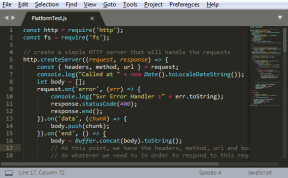
When configuring API Policies in the the Oracle API Platform it helps if there is a simple back end that can take the received payload and record the sent values (header & body) as well as reflect the call details back as the response, or possibly respond with a test payload (so that response policies, particularly policies that require payload navigation  can be exercised correctly).  By having this facility it becomes a lot easier to determine whether the policies are executing correctly in terms of routing, transforming, filtering etc. without needing to worry about whether the API implementation is correct. You could say that this is a kind of mock for testing the API Platform.

The added benefit of having a mock back end is that it is easy to ‘smoke test’ a gateway deployment very easily.  Particularly if the mock is happy to receive any form of call.

Whilst implementing such a capability can be done in pretty much any language and platform you like.  We have in the past for example built a Springboot Java application that can have the dependencies configured to then deploy into WebLogic for example.  We have come to refer these test apps/mocks as PlatformTests as that’s exactly what they help do. A Node.js implementation of a PlatformTest such as as the following implementation is particularly appealing as the Node.js footprint is small and simple to deploy and undeploy. A basic Node.js implementation can also consume any URL and operation you choose to use. The nature of JavaScript makes it very quick to adapt the mock if need be. Although in the ideal world, we write the solution once and then use simple configuration to tune behavior.

The following code looks for a local file called testResponse.json if found then returns the content of the file (assumed to be JSON) otherwise it reflects back in the body, the received header and body.  This reflection makes it extremely easy to see how the policies have changed the inbound call.  The content is also logged to the console – making it easy to also see what came through to the back end.

The implementation also assumes port 8080, but changing the port is exceptionally easy.

There one enhancement planned, and this is to allow the response test payload to be handled as XML.  This will need a little tweaking of the code as presently a JSON Object is currently stringified.

JavaScriptThe code is also available in my GitHub repository – https://github.com/mp3monster/Utils/blob/master/PlatformTest.js and an example test response file is at https://github.com/mp3monster/Utils/blob/master/testResponse.json

const http = require('http');
const fs = require('fs');

// create a simple HTTP server that will handle the requests
http.createServer((request, response) => {
const { headers, method, url } = request;
console.log("Called at " + new Date().toLocaleDateString());
let body = [];
request.on('error', (err) => {
console.log("Svr Error Handler :" + err.toString);
response.statusCode(400);
response.end();
}).on('data', (chunk) => {
body.push(chunk);
}).on('end', () => {
body = Buffer.concat(body).toString();
// At this point, we have the headers, method, url and body, and can now
// do whatever we need to in order to respond to this request.

});

// record in the console what details have been received
console.log ("Received:\nMethod:" + method.toString() +
"\n URL:"+ url.toString + "\nheaders:\n"+headers.toString() +
"\nBody:\n" + body);
// now build the response
response.setHeader('Content-Type', 'application/json');
response.setHeader('PlatformTestTime', new Date().toLocaleDateString());

// initialise our response object so that if we don't load a response
// file then we reflect the content
var responseBody = { headers, method, url, body };

try {
// try reading a response file
fs.readFile('testResponse.json', function(err, data) {
console.log("handling file");
if (err != null) {
if (err.code === 'ENOENT') {
console.log("on return file - will reflect");
} else {
console.log("Read error:" + err.toString());
}
} else {
// a file exists - but is empty?
if ((data != null) && (data.length > 0)) {
// we have a file with content - lets process so it into a JSON
// object
if (Buffer.isBuffer(data)) {
// convert the buffer from hex to an ASCII string
body = data.toString('utf8');
console.log("test response:" + body);
responseBody = JSON.parse(body);
}
}
}

// create an array with our values and then make it

// JSON with stringfy

var output = JSON.stringify(responseBody);
response.write(output);
console.log("Returning:" + output);
response.statusCode = 200;
response.end();

});

} catch (err) {

if (err.code === 'ENOENT') {
console.log("on return file - will reflect");
} else {
console.log(err.toString());
}
var output = JSON.stringify(responseBody);
response.write(output);
console.log("Returning:" + output);
response.statusCode = 200;
response.end();
}
}).listen(8080); // Activates this server, listening on port 8080.

Share this:

  • Share on Facebook (Opens in new window) Facebook
  • Share on X (Opens in new window) X
  • Share on Reddit (Opens in new window) Reddit
  • Email a link to a friend (Opens in new window) Email
  • Share on WhatsApp (Opens in new window) WhatsApp
  • Print (Opens in new window) Print
  • Share on Tumblr (Opens in new window) Tumblr
  • Share on Mastodon (Opens in new window) Mastodon
  • Share on Pinterest (Opens in new window) Pinterest
  • More
  • Share on Bluesky (Opens in new window) Bluesky
  • Share on LinkedIn (Opens in new window) LinkedIn
Like Loading...

Understanding API Deployment State on API Platform

25 Thursday Jan 2018

Posted by mp3monster in API Platform CS, APIs & microservices, development, General, Oracle, Technology, tools

≈ 6 Comments

Tags

API, API Platform, API-PCS, Groovy, iterations, Oracle, Script, Technology, utility, versions

The new Oracle API Platform makes it possible to deploy different versions of your APIs to different gateway instances. When you you’re managing the Development API Policies through all the different stages of the lifecycle (Design to Production) from a single management tier such a capability is essential. This is further challenged by the fact that each save of you API Definition creates a new iteration (the term used to identify each saved ‘version’ of the API)

However it does lead the challenge from a management perspective of knowing which iterations are running on each Gateway.. you can get the information from the current UI but it requires multiple steps to get the information. The UI also lends itself more to the design processes today than perhaps the more dense information views that a operational report might warrant.

I’m sure that over time these views will come, but today we can solve the problem by taking advantage of the fact that the product lives by its own ‘mission’ by offering a very rich set of APIs. As a result it becomes possible to actually build your own views. To that end I have written a Groovy script which will go through each API that can be seen and retrieves the iteration deployed to each logical gateway.

In terms of running the script you obviously need Groovy installed. It expects 3 parameters which are:

  • Server address e.g. https://1.2.3.4
  • Username e.g. weblogic
  • Password e.g. Welcome1

You can hardwire into the script default values which will then be used if no parameters are provided.

Here is a screenshot of some output.  I have masked out some information for reasons of security. But there should be enough here to give a sense of what is happening:

APIPlatformScript

The script includes suppressing certificate validation – necessary if you haven’t yet deployed your own specific certificate and still working with the default Oracle certificate.

Feel free to take the script and play with it. I make no claims to it’s elegance etc but I have tried to comment it so you can see what is going on. I have tried to keep the code fairly simple so you can see how it works and processes the JSON responses. The script is available at: https://github.com/mp3monster/Utils/blob/master/getDeployedIterations.groovy

For more about the APIs involved in the script, checkout

  •  https://docs.oracle.com/en/cloud/paas/api-platform-cloud/apfrm/api-APIs.html
  • https://docs.oracle.com/en/cloud/paas/api-platform-cloud/

Share this:

  • Share on Facebook (Opens in new window) Facebook
  • Share on X (Opens in new window) X
  • Share on Reddit (Opens in new window) Reddit
  • Email a link to a friend (Opens in new window) Email
  • Share on WhatsApp (Opens in new window) WhatsApp
  • Print (Opens in new window) Print
  • Share on Tumblr (Opens in new window) Tumblr
  • Share on Mastodon (Opens in new window) Mastodon
  • Share on Pinterest (Opens in new window) Pinterest
  • More
  • Share on Bluesky (Opens in new window) Bluesky
  • Share on LinkedIn (Opens in new window) LinkedIn
Like Loading...

2017 into 2018 as a Geek

30 Saturday Dec 2017

Posted by mp3monster in General, Technology

≈ Leave a comment

Tags

conference, integration, OIC - ICS, OUG, Technology

It seems that it becoming common for people to write a personal review of the year. If you’re old school Christmas Card sort then it gets printed and put in the card. If you’re a bit more hip then it’s a Facebook post. For those trendier than that, who knows?

Anyway, I thought I’d use my blog to reflect on what has happened and what we hope to be upto in 2018.

So the big headlines for us …

  • 1st book published as a co-author about ICS, started another book project which should be finished in 2018.Artwork-front
  • Packt have been talking to me about another book project (even though my contribution to book 2 not yet finished!) Have to admit what is being suggested is intriguing and a bit different
  • Then there was the UKOUG Journey to the Cloud event. Having been postponed because of venue flooding it was good to see this happen. Not to mention it being one of s number of events I have presented at this year.39178284831_45be4e943c_m
  • We attended and presented at the Oracle EMEA Partner Conference for the 1st time and presented with my co-author on ICS.
  • Contributions to supporting the UKOUG as part of a SIG committee member, reviewed for Oracle Scene. Being involved in a SIG committee also meant helping plan the conference.
  • Writing hasn’t just been about the books, we continue to write our own blog posts, content for Oracle-integration.cloud plus several journals including Oracle Technology Network,
  • Presenting at Oracle Open World for the 1st time, and signing copies of our book on ICS
  • Promoted from an Oracle Ace Associate to a full Oracle Ace.

So where will 2018 take us, well somethings we’re confident of …

  • Wrapping up my contribution to the API Platform book8683
  • Blog posts both here and at Oracle-Integration.cloud
  • Middleware SIG committee activities in addition to event committee activities
  • Presenting to the nlOUG SIG on OMESA
  • Lots more with London Oracle Developer Meetup – perhaps flying some drones with APIs.

What do we hope to pull off …

  • Another year presenting at Open World,
  • UKOUG Tech 18 presentations
  • Articles for Oracle Scene
  • Submissions accepted at Oracle Code London
  • Presenting at Oracle EMEA Partner Conference

Share this:

  • Share on Facebook (Opens in new window) Facebook
  • Share on X (Opens in new window) X
  • Share on Reddit (Opens in new window) Reddit
  • Email a link to a friend (Opens in new window) Email
  • Share on WhatsApp (Opens in new window) WhatsApp
  • Print (Opens in new window) Print
  • Share on Tumblr (Opens in new window) Tumblr
  • Share on Mastodon (Opens in new window) Mastodon
  • Share on Pinterest (Opens in new window) Pinterest
  • More
  • Share on Bluesky (Opens in new window) Bluesky
  • Share on LinkedIn (Opens in new window) LinkedIn
Like Loading...
← Older posts
Newer posts →

    I work for Oracle, all opinions here are my own & do not necessarily reflect the views of Oracle

    • About
      • Internet Profile
      • Music Buying
      • Presenting Activities
    • Books & Publications
      • Logging in Action with Fluentd, Kubernetes and More
      • Logs and Telemetry using Fluent Bit
      • Oracle Integration
      • API & API Platform
        • API Useful Resources
        • Useful Reading Sources
    • Mindmaps Index
    • Monster On Music
      • Music Listening
      • Music Reading
    • Oracle Resources
    • Useful Tech Resources
      • Fluentd & Fluent Bit Additional stuff
        • Logging Frameworks and Fluent Bit and Fluentd connectivity
        • REGEX for BIC and IBAN processing
      • Formatting etc
      • Java and Graal Useful Links
      • Official Sources for Product Logos
      • Python Setup & related tips
      • Recommended Tech Podcasts

    Oracle Ace Director Alumni

    TOGAF 9

    Logs and Telemetry using Fluent Bit


    Logging in Action — Fluentd

    Logging in Action with Fluentd


    Oracle Cloud Integration Book


    API Platform Book


    Oracle Dev Meetup London

    Blog Categories

    • App Ideas
    • Books
      • Book Reviews
      • manning
      • Oracle Press
      • Packt
    • Enterprise architecture
    • General
      • economy
      • ExternalWebPublications
      • LinkedIn
      • Website
    • Music
      • Music Resources
      • Music Reviews
    • Photography
    • Podcasts
    • Technology
      • AI
      • APIs & microservices
      • chatbots
      • Cloud
      • Cloud Native
      • Dev Meetup
      • development
        • languages
          • java
          • node.js
          • python
      • drone
      • Fluentbit
      • Fluentd
      • logsimulator
      • mindmap
      • OMESA
      • Oracle
        • API Platform CS
          • tools
        • Helidon
        • ITSO & OEAF
        • Java Cloud
        • NodeJS Cloud
        • OIC – ICS
        • Oracle Cloud Native
        • OUG
      • railroad diagrams
      • TOGAF
    • xxRetired
    • AI
    • API Platform CS
    • APIs & microservices
    • App Ideas
    • Book Reviews
    • Books
    • chatbots
    • Cloud
    • Cloud Native
    • Dev Meetup
    • development
    • drone
    • economy
    • Enterprise architecture
    • ExternalWebPublications
    • Fluentbit
    • Fluentd
    • General
    • Helidon
    • ITSO & OEAF
    • java
    • Java Cloud
    • languages
    • LinkedIn
    • logsimulator
    • manning
    • mindmap
    • Music
    • Music Resources
    • Music Reviews
    • node.js
    • NodeJS Cloud
    • OIC – ICS
    • OMESA
    • Oracle
    • Oracle Cloud Native
    • Oracle Press
    • OUG
    • Packt
    • Photography
    • Podcasts
    • python
    • railroad diagrams
    • Technology
    • TOGAF
    • tools
    • Website
    • xxRetired

    Enter your email address to subscribe to this blog and receive notifications of new posts by email.

    Join 2,556 other subscribers

    RSS

    RSS Feed RSS - Posts

    RSS Feed RSS - Comments

    March 2026
    M T W T F S S
     1
    2345678
    9101112131415
    16171819202122
    23242526272829
    3031  
    « Feb    

    Twitter

    Tweets by mp3monster

    Meta

    • Create account
    • Log in
    • Entries feed
    • Comments feed
    • WordPress.com

    History

    Speaker Recognition

    Open Source Summit Speaker

    Flickr Pics

    Gogo Penguin at the BarbicanGogo Penguin at the BarbicanGogo Penguin at the BarbicanGogo Penguin at the Barbican
    More Photos

    Meta

    • Create account
    • Log in
    • Entries feed
    • Comments feed
    • WordPress.com

    Social

    • View @mp3monster’s profile on Twitter
    • View philwilkins’s profile on LinkedIn
    • View mp3monster’s profile on GitHub
    • View mp3monster’s profile on Flickr
    • View mp3muncher’s profile on WordPress.org
    • View philmp3monster’s profile on Twitch
    Follow Phil (aka MP3Monster)'s Blog on WordPress.com

    Blog at WordPress.com.

    • Subscribe Subscribed
      • Phil (aka MP3Monster)'s Blog
      • Join 234 other subscribers
      • Already have a WordPress.com account? Log in now.
      • Phil (aka MP3Monster)'s Blog
      • Subscribe Subscribed
      • Sign up
      • Log in
      • Report this content
      • View site in Reader
      • Manage subscriptions
      • Collapse this bar
     

    Loading Comments...
     

    You must be logged in to post a comment.

      Privacy & Cookies: This site uses cookies. By continuing to use this website, you agree to their use.
      To find out more, including how to control cookies, see here: Our Cookie Policy
      %d