
• Home
  • Site Aliases
    • www.cloud-native.info
  • About
    • Background
    • LinkedIn
    • Presenting Activities
    • Internet Profile
    • About
  • Books & Projects
    • Logs and Telemetry using Fluent Bit
      • Fluent Bit book
      • Book Resources in GitHub
      • Fluent Bit Classic to YAML Format configurations
    • Logging in Action with Fluentd, Kubernetes and More
      • Logging in Action with Fluentd – Book
      • Fluentd Book Resources
      • Fluentd & Fluent Bit Additional stuff
    • OpAMP
    • Log Generator
    • API & API Platform
      • API Useful Resources
    • Oracle Integration
      • Book Website
      • Useful Reading Sources
    • Publication Contributions
  • Resources
    • GitHub
    • Oracle Integration Site
    • Oracle Resources
    • Mindmaps Index
    • Useful Tech Resources
      • Fluentd & Fluent Bit Additional stuff
      • Recommended Tech Podcasts
      • Official Sources for Product Logos
      • Java and Graal Useful Links
      • DevTips
  • Music
    • Monster On Music
    • Music Listening
    • Music Reading

Phil (aka MP3Monster)'s Blog

~ from Technology to Music

Phil (aka MP3Monster)'s Blog

Tag Archives: Security

API Security

01 Saturday Jun 2019

Posted by mp3monster in API Platform CS, APIs & microservices, General, Oracle, Technology

≈ Leave a comment

Tags

API, API Platform, api Security.io, Owasp, pen testing, SANS, Security

I’ve started to subscribe to the APISecurity.io newsletter. The newsletter includes the analysis of recent API based security breaches along with other useful API related news. Some of the details of the breaches make for interesting reading and provide some good examples of what not to do. It is rather surprising how regularly the lack of the application of good practises is, including:

  • Checking the payload is valid to the definition,
  • Checking the payload size to ensure it is in the expected bounds,
  • Use strong typing on the content received it will help validate the content and limit the chances of poisonous content like injected SQL,
  • owaspEnsuring the API has mitigation’s against the classic OWASP Top 10 – SQL Injection, poor authentication implementation.

More broadly, we see that people will recognise the need for applying penetration testing, and look to external organisations to perform the testing, when such work is commissioned the understanding of what the pen tester does is not understood by those logocommissioning the tests (SANS paper of security scoping), therefore know whether all the risks are checked. When you add to that, the temptation to keep such costs down resulting in the service provider not necessarily probing your APIs to the fullest extent. Not all penetration test services are equal, so simply working to a budget isn’t wise, yes there is a need for pragmatism, but only when you understand the cost/risk trade-off.

But also remember application logic and API definitions and the security controls in place change over time as do the discovery of new vulnerabilities on the stack you’re using, along with evolving compliance requirements. All meaning that a penetration test at the initial go-live is not enough and should be an inherent part of an APIs lifecycle.

cloudgs_apimgrWhen it comes to payload checks etc, products like Oracle’s API Platform make it easy to realise or provide out of the box checks for factors such as size limits, implementing payload checks, so better to use them.
If you ever need to be reminded that of why best practises are needed and should be implemented; a mindset of when not if a breach will happen will ensure you’re prepared and the teams are motivated to put the good practises in.

Share this:

  • Share on Facebook (Opens in new window) Facebook
  • Share on X (Opens in new window) X
  • Share on Reddit (Opens in new window) Reddit
  • Share on LinkedIn (Opens in new window) LinkedIn
  • Email a link to a friend (Opens in new window) Email
  • Share on WhatsApp (Opens in new window) WhatsApp
  • Print (Opens in new window) Print
  • Share on Tumblr (Opens in new window) Tumblr
  • Share on Mastodon (Opens in new window) Mastodon
  • Share on Pinterest (Opens in new window) Pinterest
  • Share on Bluesky (Opens in new window) Bluesky
Like Loading...

Experian data breach report and analysis

15 Saturday Dec 2018

Posted by mp3monster in General, Technology

≈ Leave a comment

Tags

analysis, “Howard Durdle”, Experian, Security

A good friend of mine (Howard Durdle) is a security expert and CSO, he pointed out this really good Twitter trail breaking down the newly published report on the massive Experian data breach.

Alright, today is the day we get to find out if I was right or wrong about the level of dysfunction necessary for the failures that allowed the #Equifax breach to occur.

Why today? Because the House Oversight report has been released. Merry Christmas! https://t.co/bBsVfZdaHQ https://t.co/LLIW52fQ35

— Adrian Sanabria (@sawaba) (@sawaba) December 11, 2018

https://twitter.com/sawaba/status/1072319618352627714

You don’t need to be a geek or a security expert to understand what is being said here, and more importantly reading between the lines as they say, the likely root causes. For me, this all points to cultural challenges, where organisational pressures or a lack of appreciation by mid level decision makers struggle to appreciate the need to invest in non functional factors such as security, patching and maintenance.

Sadly, Experian aren’t the first with this challenge, and won’t be the last. With DevSecOps etc the people building the software will understand the issue. But, I think we need to be working with educating the business stakeholders on the need for dealing with NFRs, and the need to prioritise certain types of issues.

Share this:

  • Share on Facebook (Opens in new window) Facebook
  • Share on X (Opens in new window) X
  • Share on Reddit (Opens in new window) Reddit
  • Share on LinkedIn (Opens in new window) LinkedIn
  • Email a link to a friend (Opens in new window) Email
  • Share on WhatsApp (Opens in new window) WhatsApp
  • Print (Opens in new window) Print
  • Share on Tumblr (Opens in new window) Tumblr
  • Share on Mastodon (Opens in new window) Mastodon
  • Share on Pinterest (Opens in new window) Pinterest
  • Share on Bluesky (Opens in new window) Bluesky
Like Loading...

Lessons in Oracle Cloud Password Management

07 Monday May 2018

Posted by mp3monster in General, Oracle, Technology

≈ 2 Comments

Tags

APIP CS, Cloud, DaaS, Oracle, password, Security

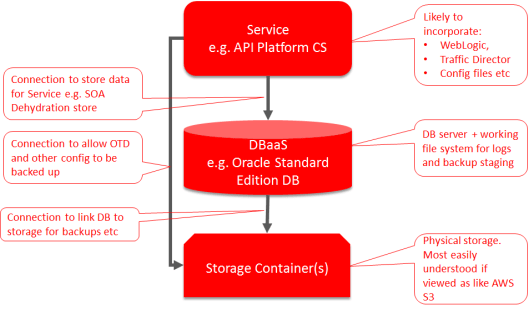
Oracle Cloud is growing and maturing at a tremendous rate if the breadth of PaaS capabilities is any indication.  However, there are a few gotchas out there, that can cause some headaches if they get you. These typically relate to processes that impact across different functional areas. A common middleware stack (API CS, SOA CS, OIC etc) will look something like the following:

cloudPassword

As the diagram shows when you build the cloud services, the layers get configured with credentials to the lower layers needed (although Oracle have in the pipeline the Oracle managed version of many services where this is probably going to be hidden from us). Continue reading →

Share this:

  • Share on Facebook (Opens in new window) Facebook
  • Share on X (Opens in new window) X
  • Share on Reddit (Opens in new window) Reddit
  • Share on LinkedIn (Opens in new window) LinkedIn
  • Email a link to a friend (Opens in new window) Email
  • Share on WhatsApp (Opens in new window) WhatsApp
  • Print (Opens in new window) Print
  • Share on Tumblr (Opens in new window) Tumblr
  • Share on Mastodon (Opens in new window) Mastodon
  • Share on Pinterest (Opens in new window) Pinterest
  • Share on Bluesky (Opens in new window) Bluesky
Like Loading...

Equifax Security Breach – Time for a Change In Mindset

27 Friday Oct 2017

Posted by mp3monster in General, Technology

≈ Leave a comment

Tags

equifax, Security

I was reading a blog post from the Cloud Security Alliance (here) about the on-going mess and disinformation around Equifax’s security breach.

The article makes a very good point. Sadly Security is seen as just a cost, and whilst people have that mindset we will see decisions being made that favours ‘high share value now’ over long time assurance of sensitive data which means that ‘now value doesnt nose dive’.


The article goes on to show the approximate cost to the US public of the breach. But if we can quantify the costs, can we not quantify the value of protection?

Even with today’s legislation in many countries it is a legal obligation to disclose the details of a security breach. The only problem here, is ignorance is bliss, if I don’t know I’m being compromised then nothing to report. The blog post also points out that often the only time security investment is recognised is, and often that information doesn’t propergate within an organisation. This got me to thinking why can’t companies also disclose how many attempts on their security have been mitigated on in the same way companies have to declare profit and loss.

It could produce some interesting information, as you could compare data from different companies of similar profile. When plotting the data, any outliers suggest something maybe wrong. But it would give consumers a means to decide do they trust their data with X over Y when they get a chance to influence the decision.  But we’re now moving into the territory where security is becoming a positive measure.  If nothing else it may engender an ‘arms war’ of who has the best protection.

As with all things, they way you measure something influences behaviour. This sort of measurement may encourage companies to invest in more ‘white hat’ attacks. That’s no bad thing as if a white hat attack suceeds – the vulnerability has been found.

The interesting thing is that, the article points out that Equifax and other large companies that have been breached have been certified as ISO 9001 compliant, PCI DSS compliant and so on. The issue here is, that these accreditations have a strong emphasis on process and policy, and are down to the auditor spotting non-compliance. In a large organisation the opportunity to steer the auditor towards what is good exists. But more importantly, process requires people to know and follow it. Following process and being prepared to uphold the processes requires an organizational culture that genders its adherence. I can have a rulebook as big as the Encyclopedia Britannica but if my boss, and his boss apply constant pressure to say we have to deliver and there is no repercutions to bending the rules – well then I’m going to start bending.

Leaders like Gray understand the value of an organization’s culture. This can be defined as the set of deeply embedded, self-reinforcing behaviors, beliefs, and mind-sets that determine “how we do things around here.” People within an organizational culture share a tacit understanding of the way the world works, their place in it, the informal and formal dimensions of their workplace, and the value of their actions. Though it seems intangible, the culture has a substantial influence on everyday actions and on performance.

https://www.strategy-business.com/article/11108?gko=f4e8d

This brings us back to the idea – hard data on the execution (not that i have a process for execution) will give strong indications of compliance. This kind of data is difficult to fudge and with a good sample set, then fudges  are more likely to stand out.

Practical? I don’t know, but worth exploring? If we are to change security thinking then yes.

Share this:

  • Share on Facebook (Opens in new window) Facebook
  • Share on X (Opens in new window) X
  • Share on Reddit (Opens in new window) Reddit
  • Share on LinkedIn (Opens in new window) LinkedIn
  • Email a link to a friend (Opens in new window) Email
  • Share on WhatsApp (Opens in new window) WhatsApp
  • Print (Opens in new window) Print
  • Share on Tumblr (Opens in new window) Tumblr
  • Share on Mastodon (Opens in new window) Mastodon
  • Share on Pinterest (Opens in new window) Pinterest
  • Share on Bluesky (Opens in new window) Bluesky
Like Loading...

Cloud Document Security

30 Monday Nov 2015

Posted by mp3monster in General, Technology

≈ Leave a comment

Tags

Cloud, CSA, Security

So an interesting piece of research was published by the Cloud Security Alliance. The research shows the growth of document sharing in the enterprise through the use of cloud services.  The interesting thing is one of the positives of adopting SaaS and PaaS is easing the challenge of ensuring environments are patched for security. But at the same time the need to educate the wider employee community even more on being security aware.

It also raises the question of managing the accidental or deliberate leakage in such an environment. As the article says, some sharing of documents to the public or 3rd parties to enable cross business collaboration may well be legitimate so businesses are going to need strategies to address this.

Share this:

  • Share on Facebook (Opens in new window) Facebook
  • Share on X (Opens in new window) X
  • Share on Reddit (Opens in new window) Reddit
  • Share on LinkedIn (Opens in new window) LinkedIn
  • Email a link to a friend (Opens in new window) Email
  • Share on WhatsApp (Opens in new window) WhatsApp
  • Print (Opens in new window) Print
  • Share on Tumblr (Opens in new window) Tumblr
  • Share on Mastodon (Opens in new window) Mastodon
  • Share on Pinterest (Opens in new window) Pinterest
  • Share on Bluesky (Opens in new window) Bluesky
Like Loading...

Just trusting security to VPNs

20 Thursday Aug 2015

Posted by mp3monster in General, Technology

≈ Leave a comment

Tags

network, Security, VPN

I regularly encounter arguments where people justify relaxed security in a design with the argument of – well the connection between systems will be protected by a VPN (Virtual Private Network) – so everything is fine.

Trying to dissuade a someone like a project manager or business end user that just trusting to just a VPN is challenging, after all private networks are safe aren’t they. So I have tried to identify a few resources – that can simply and clearly explain why this approach alone is not good. Just pointing to the principle of ‘security in depth’ is difficult to sell. So hopefully the following will help:

  • http://www.sans.org/security-resources/malwarefaq/pptp-vpn.php – not the easiest for non techies to consume but it’s authoritive presentation (not to mention the fact it is the SANs Institute), the last 3 paragraphs of The Basics of Virtual Private Networks is uniquivical and clear.
  • http://www.cisco.com/web/about/security/intelligence/05_08_SSL-VPN-Security.html#4 provides a brief explination of how man in the middle attacks work on VPNs – very clear hit by this and an attacker has access to your network
  • http://www.infosecurity-magazine.com/news/ssl-vpns-pose-network-security-risks/ – good article which highlights that you dont even need to be directly attacked to be compromised

Share this:

  • Share on Facebook (Opens in new window) Facebook
  • Share on X (Opens in new window) X
  • Share on Reddit (Opens in new window) Reddit
  • Share on LinkedIn (Opens in new window) LinkedIn
  • Email a link to a friend (Opens in new window) Email
  • Share on WhatsApp (Opens in new window) WhatsApp
  • Print (Opens in new window) Print
  • Share on Tumblr (Opens in new window) Tumblr
  • Share on Mastodon (Opens in new window) Mastodon
  • Share on Pinterest (Opens in new window) Pinterest
  • Share on Bluesky (Opens in new window) Bluesky
Like Loading...

Some Good Security Resources

29 Friday May 2015

Posted by mp3monster in General

≈ Leave a comment

Tags

$5, links, resources, Security

As a result of working my through several books (published and unpublished at present) I’ve come across a number of really useful security resources. So I thought i’d bring them together (as much for my own reference) as anything else. The following list provides a brief description of the resource and its link.

  1. SANS Institute (http://www.sans.org/reading-room/) site providing a alot of documentation security and research findings, in addition to more commercial arrangements such as training
  2. OWASP (https://www.owasp.org) guides on threat types and characteristics and guidance on developing secure solutions includes a training tool called webgoat
  3. CXOWare (http://www.cxoware.com/) – home of FAIR risk analysis process and guidance
  4. Metasploit (http://www.offensive-security.com/metasploit-unleashed/Main_Page) a site that provides free security training to help understand how hack attacks work. includes free tools
  5. RadioLabs (http://www.radiolabs.com/stations/wifi_calc.html) provides the means to calculate how far a wifi signal will carry. Important if you don’t want people parking up outside your home/office and hacking your wifi
  6. PolicyTool (http://socialmedia.policytool.net/) provides the means to create fair and reasonable polices for the use of social media in a work environment
  7. TrustedSec’s Atillery (https://www.trustedsec.com/downloads/artillery/) open source tool for detecting security attacks
  8. OSSEC (http://www.ossec.net/) open source intrusion detection system.
  9. NIST (http://csrc.nist.gov/) standards institute with a lot of information on security.
  10. CERT (http://www.cert.org/cert/) SEI’s security activities
  11. Stride (http://msdn.microsoft.com/en-us/library/ee823878) Microsoft’s threat assessment model

Share this:

  • Share on Facebook (Opens in new window) Facebook
  • Share on X (Opens in new window) X
  • Share on Reddit (Opens in new window) Reddit
  • Share on LinkedIn (Opens in new window) LinkedIn
  • Email a link to a friend (Opens in new window) Email
  • Share on WhatsApp (Opens in new window) WhatsApp
  • Print (Opens in new window) Print
  • Share on Tumblr (Opens in new window) Tumblr
  • Share on Mastodon (Opens in new window) Mastodon
  • Share on Pinterest (Opens in new window) Pinterest
  • Share on Bluesky (Opens in new window) Bluesky
Like Loading...

Free Network Security eBook

23 Tuesday Dec 2014

Posted by mp3monster in Books, Technology

≈ Leave a comment

Tags

computer crime, computer networks, ebook, network, network security, Network Security For Dummies, Security

I came across the following promotion via LinkedIn. The book isn’t that new, but looking at Amazon reviews suggests that there maybe some value still:

“Network Security For Dummies — eBook (usually $22.99) FREE until January 1st!“

Get quick, easy, low-cost solutions to all your network security concerns.

CNN is reporting that a vicious new virus is wreaking havoc on the world’s computer networks. Somebody’s hacked one of your favorite Web sites and stolen thousands of credit card numbers. The FBI just released a new report on computer crime that’s got you shaking in your boots. The experts will tell you that keeping your network safe from the cyber-wolves howling after your assets is complicated, expensive, and best left to them. But the truth is, anybody with a working knowledge of networks and computers can do just about everything necessary to defend their network against most security threats.

Whether your network consists of one computer with a high-speed Internet connection or hundreds of workstations distributed across dozens of locations, you’ll find what you need to confidently:

  • Identify your network’s security weaknesses
  • Install an intrusion detection system
  • Use simple, economical techniques to secure your data
  • Defend against viruses
  • Keep hackers at bay
  • Plug security holes in individual applications
  • Build a secure network from scratch

– Download from: http://opensourceuniverse.tradepub.com/free/w_wile145/?p=w_wile145#sthash.i4fHNQgA.dpuf

Share this:

  • Share on Facebook (Opens in new window) Facebook
  • Share on X (Opens in new window) X
  • Share on Reddit (Opens in new window) Reddit
  • Share on LinkedIn (Opens in new window) LinkedIn
  • Email a link to a friend (Opens in new window) Email
  • Share on WhatsApp (Opens in new window) WhatsApp
  • Print (Opens in new window) Print
  • Share on Tumblr (Opens in new window) Tumblr
  • Share on Mastodon (Opens in new window) Mastodon
  • Share on Pinterest (Opens in new window) Pinterest
  • Share on Bluesky (Opens in new window) Bluesky
Like Loading...

Adopting Collaboration Tools in the Workplace

14 Sunday Sep 2014

Posted by mp3monster in General, Technology

≈ Leave a comment

Tags

adoption, collaboration, demographics, Security

I was recently reading an article from MIT Sloan about the use of collaboration tools in the enterprise. The article made the point that collaboration tools are being introduced into the workplace, but not being effectively leveraged and people continuing to use email. I think there is a correlation here to some of the statistics for mobile and web applications.

So let me start with some facts, and some thoughts before I bring it back to the point about office collaboration.

We know from research from organisations such as PEW (general view of use, older generation view) that there is a correlation between age and use of mobile devices, and mobile apps. This I believe reflects on technology in general. As collaboration technology goes, it is a fairly young set of ideas. Although many will associate collaboration with social – there is a difference when social is more simply just sharing information. Collaboration is not just sharing but collectively working on assets such as documents.

Add to this a view of the demographics of any enterprise leadership (although IT is something of an exception) and you will see that leadership is an older generation (illustrated by this FT article). So, understandably less likely to lead an organisation into technology adoption.

Add to this the constant noise and increased pressure on information security, remembering that the most harmful security compromises originate internally. So with this sort of consideration you’re likely to see downward pressure to keep things tightly controlled. Such tight reigns seriously impact collaboration from my experience.

The last key thread, is the fastest way to encourage adoption of something is for the executive and senior leadership visibly adopt something. Organisational role comes with an inferred command (a well established piece of psychology) best illustrated by a story where a chief exec wanted to motivate staff, so spent time wondering around talking with his staff, and in doing so made observations and suggestions to people thinking he was helping. But as his role inferred a level of command, he sound discovered that those suggestions and ideas had been read as instructions and his staff where rapidly implementing such suggestions.

So here you have a recipe, where executives potentially don’t get the power of collaborative technology, potentially nervous of the security implications and least of all not using position to leverage it. You can see why the technologies aren’t being effectively exploited.

What is worse, is that you will see hotspots of collaboration which will be established by those who get the ideas and will inspire their colleagues. This is the true risk of collaboration as it is unlikely to controlled or properly secured with no contingency or remedial actions in the event of a security breach as those situations aren’t being dealt with by

Share this:

  • Share on Facebook (Opens in new window) Facebook
  • Share on X (Opens in new window) X
  • Share on Reddit (Opens in new window) Reddit
  • Share on LinkedIn (Opens in new window) LinkedIn
  • Email a link to a friend (Opens in new window) Email
  • Share on WhatsApp (Opens in new window) WhatsApp
  • Print (Opens in new window) Print
  • Share on Tumblr (Opens in new window) Tumblr
  • Share on Mastodon (Opens in new window) Mastodon
  • Share on Pinterest (Opens in new window) Pinterest
  • Share on Bluesky (Opens in new window) Bluesky
Like Loading...

Evaluating SSL certificates for SaaS

29 Tuesday Jul 2014

Posted by mp3monster in General, Technology

≈ Leave a comment

Tags

cryptography, NIST, SaaS, Security, sophos, SSL

So when looking at SaaS solutions one of the things we consider is the strength of the SSL certificate, and when using a small provider who the Certificate Authority as commercial authorities will provide insurance for a breach which can go to paying some of the cleanup costs (assuming the breach isn’t from negligence).

So how to evaluate SSL certificates in terms of robustness (i.e. cryptographic strength) after all some people will talk. About 128 bit certificates and others such as Google mention 2048 which on the surface don’t seem comparable.

So the bit length is to do with the cryptographic algorithm used of which there are several such as AES, 3DES and so on. No I’m no expert on this so I won’t presume to explain the pros and cons of the different algorithms, there are other resources on the web for that (such as this document).

The point I have been working towards is that NIST (National Institute of Standards and Technology)(aside from being a good resource on security) have tables  that recommends the size of the key used to help build the certificate (the document is here and tables 1 & 2 contain the key details, more here). The tables shown below takes into account the algorithm (therefore a comparator on key size) but also a recommended growth in key size.


NISTTable2 NISTTable


An alternative representation of the same information can be found here and the 1st table here.

So why grow a key size well one of the factors in driving key size is that as computing power increases the time and effort to brute force crack of a key shrinks. So every time the key size increases so does the effort to brute force the cracking of the key.

This leads to secondary consideration – that of the certificate life i.e. how long the certificate is valid for. This is in effect to potentially greatest period of exposure based on the fact that someone may brute force your certificate and then simply listen to the traffic so you never know of the compromise. Obviously you can revoke the certificate at any time.

Finally remember the need and level of security should be informed by assessing the data being transferred (in motion). Data security should also be considered for data at rest I.e being stored (data loss from a data store is likely to be far more damaging).

Share this:

  • Share on Facebook (Opens in new window) Facebook
  • Share on X (Opens in new window) X
  • Share on Reddit (Opens in new window) Reddit
  • Share on LinkedIn (Opens in new window) LinkedIn
  • Email a link to a friend (Opens in new window) Email
  • Share on WhatsApp (Opens in new window) WhatsApp
  • Print (Opens in new window) Print
  • Share on Tumblr (Opens in new window) Tumblr
  • Share on Mastodon (Opens in new window) Mastodon
  • Share on Pinterest (Opens in new window) Pinterest
  • Share on Bluesky (Opens in new window) Bluesky
Like Loading...
← Older posts
Newer posts →
    • About
      • Internet Profile
      • Music Buying
      • Presenting Activities
    • Books & Publications
      • Logging in Action with Fluentd, Kubernetes and More
      • Logs and Telemetry using Fluent Bit
      • Oracle Integration
      • API & API Platform
        • API Useful Resources
        • Useful Reading Sources
    • Mindmaps Index
    • Monster On Music
      • Music Listening
      • Music Reading
    • Oracle Resources
    • Useful Tech Resources
      • Fluentd & Fluent Bit Additional stuff
        • Logging Frameworks and Fluent Bit and Fluentd connectivity
        • REGEX for BIC and IBAN processing
      • Formatting etc
      • Java and Graal Useful Links
      • Official Sources for Product Logos
      • Python Setup & related tips
      • Recommended Tech Podcasts

    TOGAF 9

    Logs and Telemetry using Fluent Bit


    Logging in Action — Fluentd

    Logging in Action with Fluentd


    Oracle Ace Director Alumni

    Oracle Cloud Integration Book


    API Platform Book


    Oracle Dev Meetup London

    Blog Categories

    • App Ideas
    • Books
    • Enterprise architecture
    • General
      • ExternalWebPublications
      • LinkedIn
      • Website
    • Music
      • Music Resources
      • Music Reviews
    • Photography
    • Podcasts
    • Security
    • Technology
      • AI
      • APIs & microservices
      • chatbots
      • Cloud
      • Cloud Native
      • Dev Meetup
      • development
        • languages
      • drone
      • Fluent Observability
        • Fluentbit
        • Fluentd
        • OpAMP
      • logsimulator
      • mindmap
      • OMESA
      • Oracle
        • API Platform CS
          • tools
        • ITSO & OEAF
        • OIC – ICS
        • Oracle Cloud Native
        • OUG
      • railroad diagrams
      • TOGAF

    Enter your email address to subscribe to this blog and receive notifications of new posts by email.

    Join 2,619 other subscribers

    RSS

    RSS Feed RSS - Posts

    RSS Feed RSS - Comments

    August 2026
    M T W T F S S
     12
    3456789
    10111213141516
    17181920212223
    24252627282930
    31  
    « Jul    

    Speaker Recognition

    Open Source Summit Speaker

    Twitter

    Tweets by mp3monster

    History

    Flickr Pics

    The real C4 LogoThe real C4 LogoBoxer Rebellion @ Brixton ElectricBoxer Rebellion @ Brixton Electric
    More Photos

    Social

    • View @mp3monster’s profile on Twitter
    • View philwilkins’s profile on LinkedIn
    • View mp3monster’s profile on GitHub
    • View mp3monster’s profile on Flickr
    • View mp3muncher’s profile on WordPress.org
    • View philmp3monster’s profile on Twitch
    Follow Phil (aka MP3Monster)'s Blog on WordPress.com

    Blog at WordPress.com.

    • Subscribe Subscribed
      • Phil (aka MP3Monster)'s Blog
      • Join 232 other subscribers
      • Already have a WordPress.com account? Log in now.
      • Phil (aka MP3Monster)'s Blog
      • Subscribe Subscribed
      • Sign up
      • Log in
      • Report this content
      • View site in Reader
      • Manage subscriptions
      • Collapse this bar
    Loading Comments...

    You must be logged in to post a comment.

    Privacy & Cookies: This site uses cookies. By continuing to use this website, you agree to their use.
    To find out more, including how to control cookies, see here: Our Cookie Policy
    %d