We’ve got the peer review comments back on the completed 1st draft back of the book. So I’d like to take this opportunity to thanks those who have been involved as peer reviewers, particularly those involved in the previous review cycles. I hope the reviewers found it satisfying to see between iterations that their suggestions and feedback have been taken on board and where we can.
The feed back is really exciting to read. Some tweaks and refinements to do to address the suggestions made.
The work on the Kubernetes and Docker elements and the chapter which has become available on MEAP has helped round that aspect off. But importantly, the final chapters help address the wider challenges of logging, and some of the feedback positively reflects this.
To paraphrase the comments, we’ve addressed the issues of logging which don’t get the attention that they deserve. Which for me is a success.
Last night saw the final chapter of Logging in Action with Fluentd go back to my editor. The next step is that Chapter (and others I hope) will go to MEAP, so early readers not only get the final chapter, but also the raft of improvements we’ve made. Along with that, the manuscript goes for a full peers review. Once that’s back, its time for a round of edits as I address the feedback then into copy editing and Manning sign off review.
As you might have guessed, we’ve kept busy with an article in the 25th edition of OraWorld. This follows Part 1 talking about GraphQL with a look at considerations for API Security.
In addition to that we’re working on a piece around automation of OCI management activities such as setting up developers, allowing them a level of freedom to experiment without accidentally burning through all your credits by spinning up Exadata servers or 500 node Kubernetes clusters.
We might even have some time to write more about APIs and integration.
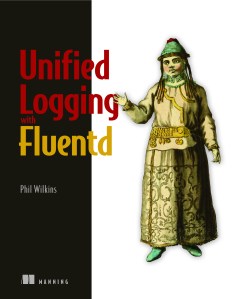
The book has had a title change as Manning found that links the book was clashing with other solutions using the term ‘Unified Logging’. With the name change it helps bring the book inline with the Manning naming with their In action series. This means the book website is now https://www.manning.com/books/logging-in-action.
With the name change we’ve agreed that there should an additional chapter added. As I’d written the book with a view that everything we cover applies to both modern solutions such as Microservices coming from the CNCF camp but equally relevant to more traditional IT landscapes. Within the book we have explianed how things are positioned and can be used in Kubernetes, but it was agreed with our editorial team that not tackling the configuration of Fluentd with Kubernetes and Docker was to an extent ignoring a key community that will be using Fluentd. So the new chapter will be introduced to address this aspect.
In terms of progress we’re into the 1’s – 1 Chapter to start (the new one), 1 Chapter back from the Technical Editor (Logging Best Practises) – some edits to be done, 1 Chapter now with the editor (How To Create Custom Plugins), 1 Chapter being finished (Logging Frameworks) and finally 1 peer review cycle to go.
Given the lovely review comments that have been quoted on the book’s page. I can only recommend if you have an interest in logging and monitoring then check it out through Manning Early Access Programme (MEAP).
My blogging is way down compared with only a post about OKit – OCI Design (on Windows). It largely comes down to lots of work on our Fluentd book. Chapter 6 is now available in the MEAP. As the promo info says …
Last chapter, we touched on the use of the Filter directive. But that was just the tip of the iceberg! In Chapter 6, we’ll plunge below the surface, exploring the when, why, and how of applying filters to give us more insight and precise control over events.
Promo Email from Manning
Earlier chapters have been tweaked, with some additional improvements which will make the live reading experience better.
Another chapter and an appendix should be finding their way to MEAP very soon as it was handed over by our project editor. That will make it seven chapters available, and all the appendices.
Whilst the peer review is taking place the chapter covering plugin development is progressing. The development work has got the basics of the output plugin with log events being stored in Redis and the input being worked on as well. If you want a peak, keep an eye on my GitHub repository (here).
But is isn’t all writing…
I presented on Twitch – you can catch that at https://m.twitch.tv/videos/809295979 I’ve been offered the opportunity to present again, so keep an eye out for something next year.
We recorded a podcast with the excellent guys over at Adventures In DevOps. We don’t have the exact date for the podcast to be released, but I imagine it will sometime during Jan 2021. I’d recommend checking out the podcasts. I’ve been dipping into their back catalogue of recordings and the team ask some really thought provoking questions.
If that wasn’t enough, we’ve been fortunate enough to have some time to talk with leading members of the Fluentd and Fluent Bit projects which was a real pleasure. Hopefully, as we leave this horrendous year behind we’ll get to talk and possibly collaborate some more.
Things have been very hectic, so much so we’ve not really had much time to write a blog. Most of which has been related to my Fluentd book, so what has been happening (and keep an eye on my Twitter account for a promo code 🙂 ) …
Several virtual conferences (Open Source Summit, SPOUG and Oracle APAC Groundbreakers to name just a few)
Perhaps the biggest bit has been the book:
First 4 chapters went through a rigorous peer review, as a result a number of improvements have been made,
with Chapter 5 having been reviewed by our technical editor, and little bit of refinement applied it should be reaching MEAP very very soon along with updated appendices,
Chapter 6 has been reviewed by our development editor, so some revisions to apply and then onto the technical editor,
Chapter 7 writing in progress, with about 1/3rd complete including examples of applying scaling configuration that can be run on a desktop
So what is to follow:
We’re on Manning’s Twitch channel to do a session, which will cover Fluentd, some examples, the book and what it will cover,
Once Chapter 7 is done, then we go through a comprehensive review with external input. Depending on the feedback from this, we make another sweep through the existing chapters to make further improvements,
Chapter 8 I suspect will be the hardest to write, as we actually get into creating our own Plugin. So I it maybe a little while before this gets completed. The subsequent chapters will come more easily as we’ve got them part written in a rough draft already,
We have another round of external peer reviewing to come which will cover everything, so I’m sure we’ll be doing some refinements
A podcast recording is scheduled in December.
Talking of Manning on Twitch, this looks like a bit of a hidden Gem – worth looking at not only because of the live stream, but all the previous recordings with other Manning authors are available to watch.
If that isn’t enough with a day job, we have had some major work done on our house. Now we’re moved back in, there are lots of DIY jobs to do, get all the furniture back from storage. Every room apart from the kitchen needs to be painted. But that is my sob story.
I’m hoping to find time to experiment with Oracle’s new cloud native Log Management as this is built on Fluentd foundations and a little bit with API tech – but this is likely to be the Christmas break.
I’ve been reading Chris Richardson’s new book Mixroservice Patterns published by Manning (here or here). Whilst I haven’t finished the book yet, I have read enough to feel I can provide worthwhile observation.
The book is supported by Chris’ website microservices.io which provides the patterns and related content in summarised form – great for a memory jogger and quick reference, but doesn’t make a substitute for the book.
When it comes to the book, Chris’ writing is extremly engaging whilst economic with its language – no long passages when a short sentence can convey everything necessary (unlike this one for example 🙂 ). For example, in three short paragraphs is an explination as to why there is a tendancy for IT people to point at particular technologies or techniques as silver bullets. As a result is incredibly informative and points to sources that inform the thinking – such references can be as diverse as Sam Newman’s Building Microservices to the (real) architect Christopher Alexander and Jonathan Haidt (The Righteous Mind).
The book is grounded in honest real world thinking being upfront and clearly pointing to when Microservices aren’t the right answer, to talking about the difficulties that can be expected in working with microservices. This won’t surprise anyone who has heard Chris speaking (here for example).


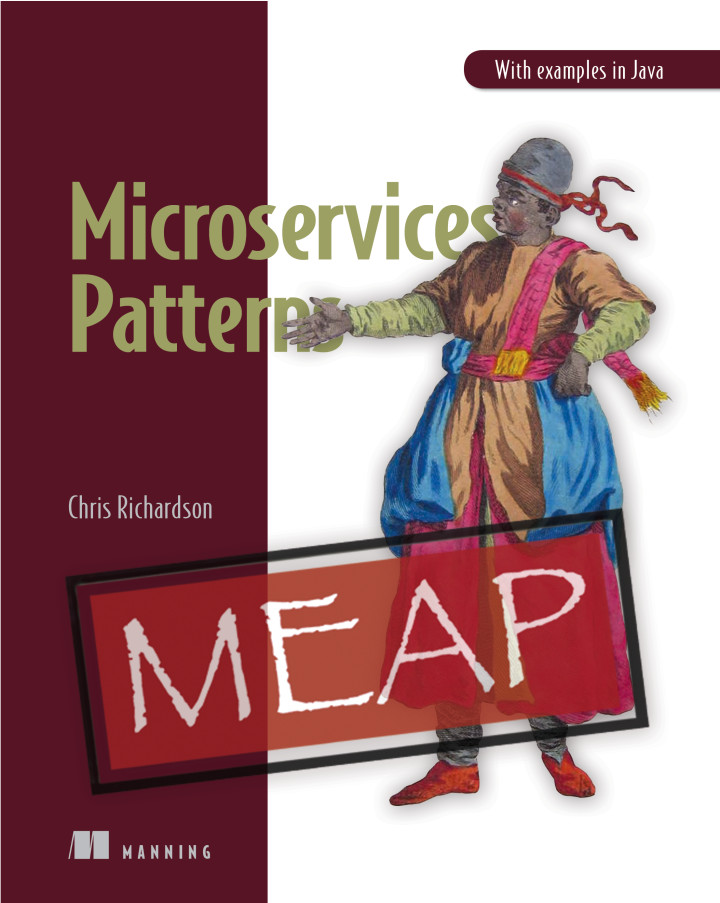 I’ve been reading Chris Richardson’s new book Mixroservice Patterns published by Manning (
 Phil (aka MP3Monster)'s Blog
You must be logged in to post a comment.