• Home
  • Site Aliases
    • www.cloud-native.info
  • About
    • Background
    • Presenting Activities
    • Internet Profile
      • LinkedIn
    • About
  • Books & Publications
    • Log Generator
    • Logs and Telemetry using Fluent Bit
      • Fluent Bit book
      • Book Resources in GitHub
      • Fluent Bit Classic to YAML Format configurations
    • Logging in Action with Fluentd, Kubernetes and More
      • Logging in Action with Fluentd – Book
      • Fluentd Book Resources
      • Fluentd & Fluent Bit Additional stuff
    • API & API Platform
      • API Useful Resources
    • Oracle Integration
      • Book Website
      • Useful Reading Sources
    • Publication Contributions
  • Resources
    • GitHub
    • Oracle Integration Site
    • Oracle Resources
    • Mindmaps Index
    • Useful Tech Resources
      • Fluentd & Fluent Bit Additional stuff
      • Recommended Tech Podcasts
      • Official Sources for Product Logos
      • Java and Graal Useful Links
      • Python Setup & related stuff
  • Music
    • Monster On Music
    • Music Listening
    • Music Reading

Phil (aka MP3Monster)'s Blog

~ from Technology to Music

Phil (aka MP3Monster)'s Blog

Tag Archives: book

Content Not here

22 Friday Dec 2023

Posted by mp3monster in Books, General, manning, Technology

≈ Leave a comment

Tags

book, DevRel, DZone, Oracle, publications

We’ve recently had several pieces published on other websites, so I thought we should link them together.

  • Here is a short piece on Ubuntu security on OCI here.
  • Another here (DZone) on the use of Solace for multi-cloud messaging.

We’re expecting another article to appear here in the New Year as well. Plus, the book is moving along at a very nice pace – we’ve got a separate post for that.

On the book front – watch out for the Manning and Packt festive promotions.

Share this:

  • Click to share on Facebook (Opens in new window) Facebook
  • Click to share on X (Opens in new window) X
  • Click to share on Pocket (Opens in new window) Pocket
  • Click to share on Reddit (Opens in new window) Reddit
  • Click to email a link to a friend (Opens in new window) Email
  • Click to share on WhatsApp (Opens in new window) WhatsApp
  • Click to print (Opens in new window) Print
  • Click to share on Tumblr (Opens in new window) Tumblr
  • Click to share on Mastodon (Opens in new window) Mastodon
  • Click to share on Pinterest (Opens in new window) Pinterest
  • More
  • Click to share on Bluesky (Opens in new window) Bluesky
  • Click to share on LinkedIn (Opens in new window) LinkedIn
Like Loading...

It’s all about … Fluent Bit

06 Monday Nov 2023

Posted by mp3monster in Books, development, ExternalWebPublications, Fluentbit, General, manning, Technology

≈ Leave a comment

Tags

book, Calyptia, FluentBit, manning, MEAP, OpenTelemetry

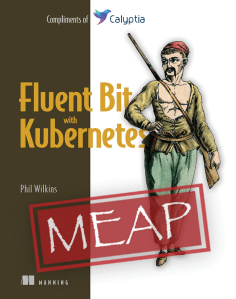
We can reveal why things have been quieter than usual on the blogging front. Logging in Action with Fluentd has a partner title … Fluent Bit with Kubernetes.

The new book focuses on Fluent Bit, given its significant advances, reflected by the fact it is now at Version 2 and is deserving of its own title. The new book is a free-standing book but is complimentary to the Logging In Action book. Logging in Action focuses on Fluentd but compliments by addressing more deeply deployment strategies for Fluent Bit and Fluentd. The new book engages a lot more with OpenTelemetry now it has matured, along with technologies such as Prometheus.

It is the fact that we’ve seen increasing focus in the cloud native space on startup speeds and efficiency in footprints that have helped drive Fluent Bit, as it operates with native binaries rather than using a Just-In-Time compilation like Ruby (used for Fluentd). The other significant development is the support for OpenTelemetry.

The book has entered the MEAP (Manning Early Access Program). The first three chapters have been peer-reviewed, and changes have been applied; another three are with the development editor. If you’ve not read a MEAP title before, you’ll find the critical content is in the chapters, but from my experience, as we work through the process, the chapters improve as feedback is received. In addition, as an author, when we have had time away from a chapter and then revisit it – it is easier to spot things that aren’t as clear as they could be. So, it is always worth returning as a reader and looking at chapters. Then, as we move to the production phases, any linguistic or readability issues that still exist are addressed as a copy editor goes through the manuscript.

I’d like to thank those involved with the peer review. Their suggestions and insights have been really helpful. Plus, the team at Calyptia is sponsoring the book (and happens to be employing a number of the Fluent Bit contributors).

We also have a discount code on the book, valid until 20th November – mlwilkins2

Share this:

  • Click to share on Facebook (Opens in new window) Facebook
  • Click to share on X (Opens in new window) X
  • Click to share on Pocket (Opens in new window) Pocket
  • Click to share on Reddit (Opens in new window) Reddit
  • Click to email a link to a friend (Opens in new window) Email
  • Click to share on WhatsApp (Opens in new window) WhatsApp
  • Click to print (Opens in new window) Print
  • Click to share on Tumblr (Opens in new window) Tumblr
  • Click to share on Mastodon (Opens in new window) Mastodon
  • Click to share on Pinterest (Opens in new window) Pinterest
  • More
  • Click to share on Bluesky (Opens in new window) Bluesky
  • Click to share on LinkedIn (Opens in new window) LinkedIn
Like Loading...

Road to Kubernetes – MEAP book review

22 Thursday Jun 2023

Posted by mp3monster in Book Reviews, Books, General, Technology

≈ Leave a comment

Tags

book, K8s, Kubernetes, manning

One of the benefits of being a Manning author is that we get access to the Manning book catalog, including those currently in the MEAP early access programme (MEAP). The Road to Kubernetes title was bought to my attention. The book has just become available as a MEAP title; this means that the book has just completed its first major review milestone, and about a third of the book has been written. It does mean our review only covers the first 3 chapters at the moment.

What got my attention with this book is that unlike other titles about Kubernetes \9of which there are a number of great titles in the Manning portfolio already) is that it has adopted a different approach.

Most books focus on one technology and deep dive into that technology and dig into the more advanced features of that specific area. For an experienced IT person, that is great. But, when it comes to Kubernetes, if you’re skills are largely just focused on largely coding with languages like Java, Python, and JavaScript – not unusual for a graduate or junior developers it means the amount of reading and learning curve to get to grips with developing and deploying containers to Kubernetes is considerable. Here, Justin has taken the approach of assuming basic development skills and then taking you on a journey of focussing on the basics of containers, deployment automation, and then Kubernetes with just enough to be able to deploy a simple solution using good practices. This makes the learning path to gaining the skills that allow you to work within a team and building containerized solutions a lot easier.

I imagine once the book is complete and you’ve followed it through, you’ll be in a position to focus on learning new, more advanced aspects of containers and Kubernetes in a focused manner to meet the needs of a day-to-day job.

Having coached and mentored junior developers and graduates, this is a book I’d recommend to help them along, and if my experience with the Manning book development process is anything to go by, as Justin goes through the major milestones, this book will go from good to great.

My only word of caution is that this book will take the reader on a journey of building and deploying microservices to Kubernetes. Don’t be fooled into thinking Kubernetes and microservices are easy – there is a lot of technologies that I don’t think the book will go into (but then not all developers need to understand details such the differences in network fabric (Calico, Flannel) or container engines cri-o, Docker Engine, deploying support tooling for things like observability). Without good design and, depending upon your solution, a handle in a variety of more specialized areas, it is still possible to get yourself into a mess, even for the most experienced of teams.

Share this:

  • Click to share on Facebook (Opens in new window) Facebook
  • Click to share on X (Opens in new window) X
  • Click to share on Pocket (Opens in new window) Pocket
  • Click to share on Reddit (Opens in new window) Reddit
  • Click to email a link to a friend (Opens in new window) Email
  • Click to share on WhatsApp (Opens in new window) WhatsApp
  • Click to print (Opens in new window) Print
  • Click to share on Tumblr (Opens in new window) Tumblr
  • Click to share on Mastodon (Opens in new window) Mastodon
  • Click to share on Pinterest (Opens in new window) Pinterest
  • More
  • Click to share on Bluesky (Opens in new window) Bluesky
  • Click to share on LinkedIn (Opens in new window) LinkedIn
Like Loading...

Phoenix project

21 Saturday Jan 2023

Posted by mp3monster in Book Reviews, Books, General, Technology

≈ 1 Comment

Tags

agility, automation, book, CI/CD, CICD, devops, DevSecOps, Gene Kim, IaC, OWASP Top 10, Phoenix project, Security, software, Work

The Phoenix Project by Gene Kim has been recommended reading for the IT industry for a long time now. It’s been on my to-read list for a good while, but to be candid, it never made the top of my reading list, as I had some reservations. Who wants to read a novel about IT if you already work and live it every day.

Recently IT Revolution, to celebrate its 10th anniversary, offered the book through Amazon for free for a limited period (even now, as a Kindle ebook, it isn’t that expensive anymore). Given I had determined I should read it at some point, I took the opportunity to get a copy. As it happens, through the Christmas break, I got into a run of reading books, and with it being at the top of my ebook list, I bit the bullet.

First of all, the story was engaging and very readable, characters are likable, human, and relatable. It isn’t a huge book either (perhaps I’ve been looking at too many 500+ page novels), making it a fairly quick read. As a pure novel, some of the devices to keep the narrative moving along were perhaps a little obvious, but then given the goal of the story, that isn’t really an issue. It didn’t break the reading flow, which did keep the pages turning with a plausible story; plausible enough to wonder how much of the story was based on a real-life experience of Gene or one of his writing collaborators.

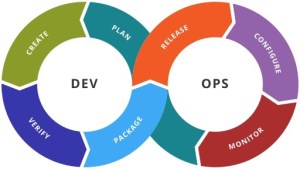
What struck me the most is that most industry writing I have read doesn’t address all the points the book makes. So, DevOps, as is typically presented by a lot (most ?) content, uses some variation of a diagram like the infinite cycle, as shown here:

Image courtesy of Amis.nl

Not only that, it is common to view DevOps as focusing on either :

  • Automation, particularly around CI/CD and IaC (Infrastructure as Code)
  • The development team also owns the operations tasks

But the book portrayed DevOps as both and neither of these. I say this as these approaches can help with the goal, but they should be subservient to the larger objective. Unfortunately, we do get caught up with the mechanics and tools and not the wider goal. The story is about how to deliver business value and needs in a streamlined manner, so we aren’t tying up the investment (time or spend) any longer than necessary. Yes, that does mean IaC and CI/CD style automation but only in service of the goal, which is the business need, not IaC.

The book also highlights the point of continuously working on improvement and paying down against debt, as removing debt is part of the way we remove the blockages to the streamlining (in the story, we actually see the release pipeline being temporarily stopped so that time could be invested in paying down the debt). Yet, this aspect is rarely discussed in a lot of the industry content on the subject. Maybe we are, in part, our own enemy here, as debit work is not greenfield. It is going back over old ground and making it better. We all love breaking new ground and leaving the past behind. Not to mention many organizations measure progress on the number of features rather than how well a feature serves the business goals. I have to admit to that mistake, which in our world of microservices is a bit of a mistake. After all, aren’t microservices about doing one thing and doing it well?

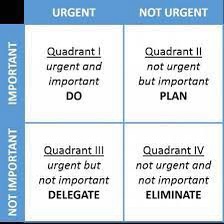
Another interesting view that the book put a lot of emphasis on was a variant of what is sometimes called the Eisenhower matrix. Anyone who has done any leadership training will most likely recognize it (see below).

However, the quadrants of work are as the book describes them are:

  • Quadrant 1 – Project work (i.e., planned activities central to the business)
  • Quadrant II – IT work (work that is planned and needed but doesn’t originate from the business, such as building new infrastructure)
  • Quadrant III – Updates and changes (e.g., system patching)
  • Quadrant IV – Unplanned (e.g., outage recovery work, demands on the team that has bypassed scheduling / divert individuals from the agreed goals, etc.)

The key difference between this representation and that of the book’s work definition is the words on each of the columns and rows. For example, Quadrant IV isn’t ‘Not Important’ and ‘Not Urgent’ – but it would be fair to say ‘Not Wanted’ and ‘Not Productive’. Unplanned work is the killer and roughly aligns with quadrant IV. This comes from the issues of not dealing with technical debt and solution facilities etc.

My last observation is that in the last couple of years, we have seen the rise of DevSecOps, which recognizes the need that security should be as much of the delivery process as Dev and Ops. The book (written 10 years ago) showed that security should be part of the DevOps process. Like other areas, the story seeks to address the point that security focussing on just the development and operational processes while necessary for things like catching OWASP Top 10 also needs to see the bigger picture otherwise, you could easily add additional needs that are already handled by controls elsewhere in the end-to-end business processes. That doesn’t mean to say security controls can5 be in software, but are they part o& improvement and pushing actions left vs. getting out of the starting blocks?

More reading

The book provides references, but for my own personal benefit, a number of particularly interesting and useful references are made, which may interest:

  • The Goal by Eliyahu M. Goldratt (a novel addressing his Theory of Constraints in the same way as The Phoenix Project is a novel around the DevOps handbook)
  • Beyond the Goal by Eliyahu M. Goldratt
  • Value stream mapping
  • Theory of Constraints
  • DevOps Kaizen: Find and Fix What Is Really Behind Your Problems
  • Tech debt spiral
  • Work In Progress and impact of high amounts of WIP

Share this:

  • Click to share on Facebook (Opens in new window) Facebook
  • Click to share on X (Opens in new window) X
  • Click to share on Pocket (Opens in new window) Pocket
  • Click to share on Reddit (Opens in new window) Reddit
  • Click to email a link to a friend (Opens in new window) Email
  • Click to share on WhatsApp (Opens in new window) WhatsApp
  • Click to print (Opens in new window) Print
  • Click to share on Tumblr (Opens in new window) Tumblr
  • Click to share on Mastodon (Opens in new window) Mastodon
  • Click to share on Pinterest (Opens in new window) Pinterest
  • More
  • Click to share on Bluesky (Opens in new window) Bluesky
  • Click to share on LinkedIn (Opens in new window) LinkedIn
Like Loading...

Podcast with Anatolii Ulitovskyi of UNmiss

28 Wednesday Dec 2022

Posted by mp3monster in Books, General, Podcasts, Technology

≈ Leave a comment

Tags

API, book, integration, manning, Oracle, podcast

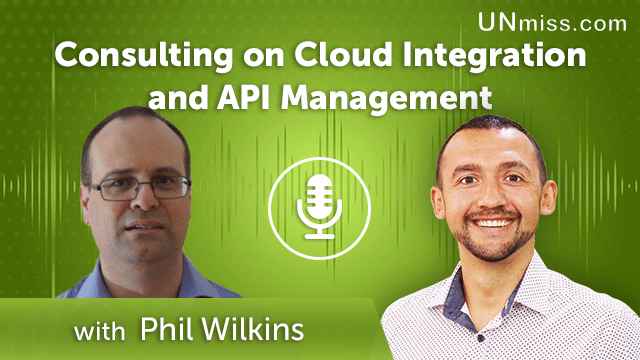
Just before the Christmas break, I got to record an excellent podcast with Anatolii of UNmiss. It was a great conversation about Cloud Integration, APIs, and approaches to Cloud-based integration. While I am not in a consulting role in the conventional sense, a lot of an Evangelist’s task is still to listen, understand, and, when necessary, challenge assumptions and help people understand how technologies can help address problems. This might include sketching out a journey of evolution and improvement. During the podcast, we discussed some of these ideas.

You can listen to the podcast audio or the live video stream of the conversation here.

In addition to some of the practices, we’ve used. The conversation touched upon books. My books are on the sidebar, including links to Manning, who, as a publisher, I’d recommend. I’ve previously blogged some reading recommendations and previously written some book reviews which may be of interest to anyone following up.

Share this:

  • Click to share on Facebook (Opens in new window) Facebook
  • Click to share on X (Opens in new window) X
  • Click to share on Pocket (Opens in new window) Pocket
  • Click to share on Reddit (Opens in new window) Reddit
  • Click to email a link to a friend (Opens in new window) Email
  • Click to share on WhatsApp (Opens in new window) WhatsApp
  • Click to print (Opens in new window) Print
  • Click to share on Tumblr (Opens in new window) Tumblr
  • Click to share on Mastodon (Opens in new window) Mastodon
  • Click to share on Pinterest (Opens in new window) Pinterest
  • More
  • Click to share on Bluesky (Opens in new window) Bluesky
  • Click to share on LinkedIn (Opens in new window) LinkedIn
Like Loading...

Published content

22 Thursday Dec 2022

Posted by mp3monster in ExternalWebPublications, General, Technology

≈ Leave a comment

Tags

API, book, Cloud, DevRel, external, external publications, Notification, OCI, Oracle, Queue, SEDaily, Software Engineering Daily

We haven’t blogged too much recently as we have been busy helping get and producing content for my employer Oracle, working with Software Engineering Daily, and developing a collaborative book. So, I thought I’d pull together some links to these new resources.

Continue reading →

Share this:

  • Click to share on Facebook (Opens in new window) Facebook
  • Click to share on X (Opens in new window) X
  • Click to share on Pocket (Opens in new window) Pocket
  • Click to share on Reddit (Opens in new window) Reddit
  • Click to email a link to a friend (Opens in new window) Email
  • Click to share on WhatsApp (Opens in new window) WhatsApp
  • Click to print (Opens in new window) Print
  • Click to share on Tumblr (Opens in new window) Tumblr
  • Click to share on Mastodon (Opens in new window) Mastodon
  • Click to share on Pinterest (Opens in new window) Pinterest
  • More
  • Click to share on Bluesky (Opens in new window) Bluesky
  • Click to share on LinkedIn (Opens in new window) LinkedIn
Like Loading...

LogSimulator New Feature – Custom Targets with OCI Logging example

14 Friday Oct 2022

Posted by mp3monster in Cloud, development, General, logsimulator, Oracle, Technology

≈ Leave a comment

Tags

book, loggenerator, logging, logsimulator, OCI, Prometheus

Those who have been using my Logging in Action book will know that to help test the configuration of monitoring tools including Fluentd we have built a LogGenerator that can very easily play and replay logging events into a variety of destinations and formats. all written in Groovy to make the utility easy to run as a script and extend without needing to set up a proper Java development environment.

With the number of different destinations built into the script and the logic to load the source log events and format them the utility is getting rather large for a single file. Rather than letting it continue to grow as we add more destinations to pump log events too, I’ve extended the implementation so you can point to a Groovy file that implements the logic to send the log events. It only requires three simple methods to be implemented.

To demonstrate the feature we have created a custom extension and fully documented it. The extension allows you to send log events to the OCI Logging service. This includes an optional crude aggregation mechanism as sending individual log events is a little inefficient over REST. By doing this we can send synthetic or playback logs as if we’re an application in real-life to ensure that any alerting or routing for the logging works properly before we get anywhere production and do not need to run the application and induce error events.

Beyond this, we’re also thinking about creating a plugin to fire log events at Prometheus so we can send events using the Prometheus pushgateway. As a result, we can tune Prometheus’ configuration.

More improvements – refactoring the existing code

We will refactor the existing code to use the same approach which should make the code more maintainable, but the changes won’t stop the utility from working as it always has (so we won’t break out the existing output channels from the core).

We have also started to improve the code commenting – so hopefully it will make the code a bit more navigable.

Share this:

  • Click to share on Facebook (Opens in new window) Facebook
  • Click to share on X (Opens in new window) X
  • Click to share on Pocket (Opens in new window) Pocket
  • Click to share on Reddit (Opens in new window) Reddit
  • Click to email a link to a friend (Opens in new window) Email
  • Click to share on WhatsApp (Opens in new window) WhatsApp
  • Click to print (Opens in new window) Print
  • Click to share on Tumblr (Opens in new window) Tumblr
  • Click to share on Mastodon (Opens in new window) Mastodon
  • Click to share on Pinterest (Opens in new window) Pinterest
  • More
  • Click to share on Bluesky (Opens in new window) Bluesky
  • Click to share on LinkedIn (Opens in new window) LinkedIn
Like Loading...

Practical Steps when it comes to writing a technical book

11 Tuesday Oct 2022

Posted by mp3monster in Books, General, manning, Oracle Press, Packt, Technology

≈ 1 Comment

Tags

author, book, tips, writing

Following my article on Software Engineering Daily, here are some practical things that will help you if you’re considering taking on a technical book project.

Identifying a Publisher

While it is easy to self-publish today. The recognition comes from having worked with a traditional publisher as they have processes that ensure a level of quality. Not all publishers are equal, and some publishers are attributed with more prestige than others. In addition to this, some publishers are willing to take a risk on a subject and/or author. Have a look at the titles already published, and whether there are any publishers you can connect to.

When comes to contacting the publishers, most of their websites will have a page for recruiting authors. Some are easier to find than others. Here are a couple:

  • Packt
  • Manning
  • Pearson
  • APress

If, or when you get to talk to a publisher it is worth ensuring you understand how their editorial process works and what is expected from you? Plus what happens if you find yourself in the position of not being able to work to the original schedule. Day-to-day work can get in the way which you hadn’t expected.

Continue reading →

Share this:

  • Click to share on Facebook (Opens in new window) Facebook
  • Click to share on X (Opens in new window) X
  • Click to share on Pocket (Opens in new window) Pocket
  • Click to share on Reddit (Opens in new window) Reddit
  • Click to email a link to a friend (Opens in new window) Email
  • Click to share on WhatsApp (Opens in new window) WhatsApp
  • Click to print (Opens in new window) Print
  • Click to share on Tumblr (Opens in new window) Tumblr
  • Click to share on Mastodon (Opens in new window) Mastodon
  • Click to share on Pinterest (Opens in new window) Pinterest
  • More
  • Click to share on Bluesky (Opens in new window) Bluesky
  • Click to share on LinkedIn (Opens in new window) LinkedIn
Like Loading...

Contributing to Software Engineering Daily

10 Monday Oct 2022

Posted by mp3monster in General, Technology

≈ Leave a comment

Tags

blog, book, external, external publications, SE Daily, software engineering, writing

For a long time, I’ve tracked and read articles on Software Engineering Daily. We’ll day represents what is hopefully the first of many articles that we will write for them. The article is about the kind of people that make technical book authors, and the perception we have of authors – so if you’re interested check it out here.

Some more content on the subject of books …

  • What does it take to write a tech book?
  • Creating screenshots of application shells – easing the writing process
  • Practical Steps when it comes to writing a technical book

Share this:

  • Click to share on Facebook (Opens in new window) Facebook
  • Click to share on X (Opens in new window) X
  • Click to share on Pocket (Opens in new window) Pocket
  • Click to share on Reddit (Opens in new window) Reddit
  • Click to email a link to a friend (Opens in new window) Email
  • Click to share on WhatsApp (Opens in new window) WhatsApp
  • Click to print (Opens in new window) Print
  • Click to share on Tumblr (Opens in new window) Tumblr
  • Click to share on Mastodon (Opens in new window) Mastodon
  • Click to share on Pinterest (Opens in new window) Pinterest
  • More
  • Click to share on Bluesky (Opens in new window) Bluesky
  • Click to share on LinkedIn (Opens in new window) LinkedIn
Like Loading...

Coding over Cocktails with Fluentd

06 Friday May 2022

Posted by mp3monster in Books, Fluentd, General, manning, Podcasts, Technology

≈ Leave a comment

Tags

book, Coding over Cocktails, Logging in Action, podcast, Toro Cloud

I’ve been fortunate enough to appear on a podcast with the excellent Coding Over Cocktails team from Toro Cloud. we got to talk about some of the ideas discussed in my Logging In Action book. You can check the podcast out via their website which includes all the episode details and links to all the platforms that host the podcast. There have been some great previous guests such as Luis Weir (my old boss), Chris Richardson of Microservices.io, Matthew Reinbold from Postman, Sam Newman to name just a few.

Share this:

  • Click to share on Facebook (Opens in new window) Facebook
  • Click to share on X (Opens in new window) X
  • Click to share on Pocket (Opens in new window) Pocket
  • Click to share on Reddit (Opens in new window) Reddit
  • Click to email a link to a friend (Opens in new window) Email
  • Click to share on WhatsApp (Opens in new window) WhatsApp
  • Click to print (Opens in new window) Print
  • Click to share on Tumblr (Opens in new window) Tumblr
  • Click to share on Mastodon (Opens in new window) Mastodon
  • Click to share on Pinterest (Opens in new window) Pinterest
  • More
  • Click to share on Bluesky (Opens in new window) Bluesky
  • Click to share on LinkedIn (Opens in new window) LinkedIn
Like Loading...
← Older posts
Newer posts →

    I work for Oracle, all opinions here are my own & do not necessarily reflect the views of Oracle

    • About
      • Internet Profile
      • Music Buying
      • Presenting Activities
    • Books & Publications
      • Logging in Action with Fluentd, Kubernetes and More
      • Logs and Telemetry using Fluent Bit
      • Oracle Integration
      • API & API Platform
        • API Useful Resources
        • Useful Reading Sources
    • Mindmaps Index
    • Monster On Music
      • Music Listening
      • Music Reading
    • Oracle Resources
    • Useful Tech Resources
      • Fluentd & Fluent Bit Additional stuff
        • Logging Frameworks and Fluent Bit and Fluentd connectivity
        • REGEX for BIC and IBAN processing
      • Java and Graal Useful Links
      • Official Sources for Product Logos
      • Python Setup & related tips
      • Recommended Tech Podcasts

    Oracle Ace Director Alumni

    TOGAF 9

    Logs and Telemetry using Fluent Bit


    Logging in Action — Fluentd

    Logging in Action with Fluentd


    Oracle Cloud Integration Book


    API Platform Book


    Oracle Dev Meetup London

    Blog Categories

    • App Ideas
    • Books
      • Book Reviews
      • manning
      • Oracle Press
      • Packt
    • Enterprise architecture
    • General
      • economy
      • ExternalWebPublications
      • LinkedIn
      • Website
    • Music
      • Music Resources
      • Music Reviews
    • Photography
    • Podcasts
    • Technology
      • AI
      • APIs & microservices
      • chatbots
      • Cloud
      • Cloud Native
      • Dev Meetup
      • development
        • languages
          • java
          • node.js
      • drone
      • Fluentbit
      • Fluentd
      • logsimulator
      • mindmap
      • OMESA
      • Oracle
        • API Platform CS
          • tools
        • Helidon
        • ITSO & OEAF
        • Java Cloud
        • NodeJS Cloud
        • OIC – ICS
        • Oracle Cloud Native
        • OUG
      • railroad diagrams
      • TOGAF
    • xxRetired
    • AI
    • API Platform CS
    • APIs & microservices
    • App Ideas
    • Book Reviews
    • Books
    • chatbots
    • Cloud
    • Cloud Native
    • Dev Meetup
    • development
    • drone
    • economy
    • Enterprise architecture
    • ExternalWebPublications
    • Fluentbit
    • Fluentd
    • General
    • Helidon
    • ITSO & OEAF
    • java
    • Java Cloud
    • languages
    • LinkedIn
    • logsimulator
    • manning
    • mindmap
    • Music
    • Music Resources
    • Music Reviews
    • node.js
    • NodeJS Cloud
    • OIC – ICS
    • OMESA
    • Oracle
    • Oracle Cloud Native
    • Oracle Press
    • OUG
    • Packt
    • Photography
    • Podcasts
    • railroad diagrams
    • Technology
    • TOGAF
    • tools
    • Website
    • xxRetired

    Enter your email address to subscribe to this blog and receive notifications of new posts by email.

    Join 2,555 other subscribers

    RSS

    RSS Feed RSS - Posts

    RSS Feed RSS - Comments

    January 2026
    M T W T F S S
     1234
    567891011
    12131415161718
    19202122232425
    262728293031  
    « Nov    

    Twitter

    Tweets by mp3monster

    History

    Speaker Recognition

    Open Source Summit Speaker

    Flickr Pics

    Gogo Penguin at the BarbicanGogo Penguin at the BarbicanGogo Penguin at the BarbicanGogo Penguin at the Barbican
    More Photos

    Social

    • View @mp3monster’s profile on Twitter
    • View philwilkins’s profile on LinkedIn
    • View mp3monster’s profile on GitHub
    • View mp3monster’s profile on Flickr
    • View mp3muncher’s profile on WordPress.org
    • View philmp3monster’s profile on Twitch
    Follow Phil (aka MP3Monster)'s Blog on WordPress.com

    Blog at WordPress.com.

    • Subscribe Subscribed
      • Phil (aka MP3Monster)'s Blog
      • Join 233 other subscribers
      • Already have a WordPress.com account? Log in now.
      • Phil (aka MP3Monster)'s Blog
      • Subscribe Subscribed
      • Sign up
      • Log in
      • Report this content
      • View site in Reader
      • Manage subscriptions
      • Collapse this bar
     

    Loading Comments...
     

    You must be logged in to post a comment.

      Privacy & Cookies: This site uses cookies. By continuing to use this website, you agree to their use.
      To find out more, including how to control cookies, see here: Our Cookie Policy
      %d