• Home
  • Site Aliases
    • www.cloud-native.info
  • About
    • Background
    • Presenting Activities
    • Internet Profile
      • LinkedIn
    • About
  • Books & Publications
    • Log Generator
    • Logs and Telemetry using Fluent Bit
      • Fluent Bit book
      • Book Resources in GitHub
      • Fluent Bit Classic to YAML Format configurations
    • Logging in Action with Fluentd, Kubernetes and More
      • Logging in Action with Fluentd – Book
      • Fluentd Book Resources
      • Fluentd & Fluent Bit Additional stuff
    • API & API Platform
      • API Useful Resources
    • Oracle Integration
      • Book Website
      • Useful Reading Sources
    • Publication Contributions
  • Resources
    • GitHub
    • Oracle Integration Site
    • Oracle Resources
    • Mindmaps Index
    • Useful Tech Resources
      • Fluentd & Fluent Bit Additional stuff
      • OpAMP
      • Recommended Tech Podcasts
      • Official Sources for Product Logos
      • Java and Graal Useful Links
      • Python Setup & related stuff
      • DevTips
  • Music
    • Monster On Music
    • Music Listening
    • Music Reading

Phil (aka MP3Monster)'s Blog

~ from Technology to Music

Phil (aka MP3Monster)'s Blog

Tag Archives: artificial-intelligence

AI to Agriculture

17 Friday Oct 2025

Posted by mp3monster in General, Oracle, Technology

≈ Leave a comment

Tags

AI, artificial-intelligence, Cloud, development, Oracle, Technology

Now that details of the product I’ve been involved with for the last 18 months or so are starting to reach the public domain  (such as the recent announcement at the UN General Assembly on September 25), I can talk to a bit about what we’ve been doing.  Oracle’s Digital Government Global Industry Unit has been working on a solution that can help governments address the questions of food security.

So what is food security?  The World Food Programme describes it as:

Food security exists when people have access to enough safe and nutritious food for normal growth and development, and an active and healthy life. By contrast, food insecurity refers to when the aforementioned conditions don’t exist. Chronic food insecurity is when a person is unable to consume enough food over an extended period to maintain a normal, active and healthy life. Acute food insecurity is any type that threatens people’s lives or livelihoods.

World Food Programme

By referencing the World Food Programme, it would be easy to interpret this as a 3rd world problem. But in reality, it applies to just about every nation. We can see this, with the effect the war in Ukraine has had on crops like Wheat, as reported by organizations such as CGIAR, European Council, and World Development journal. But global commodities aren’t the only driver for every nation to consider food security. Other factors such as Food Miles (an issue that perhaps has been less attention over the last few years) and national farming economics (a subject that comes up if you want to it through a humour filter with Clarkson’s Farm to dry UK government reports and US Department of Agriculture.

Looking at it from another perspective, some countries will have a notable segment of their export revenue coming from the production of certain crops.  We know this from simple anecdotes like ‘for all the tea in China’, coffee variants are often referred to by their country of origin (Kenyan, Columbian etc.). For example, Palm Oil is the fourth-largest economic contributor in Malaysia (here). 

So, how is Oracle helping countries?

One of the key means of managing food security is understanding food production and measuring the factors that can impact it (both positively and negatively), which range from the obvious—like weather (and its relationship to soil, water management, etc.) —to what crop is being planted and when. All of which can then be overlayed with government policies for land management and farming subsidies (paying farmers to help them diversify crops, periodically allowing fields to go fallow, or subsidizing the cost of fertilizer).

Oracle is a technology company capable of delivering systems that can operate at scale. Technology and the recent progress in using AI to help solve problems are not new to agriculture; in fact, several trailblazing organizations in this space run on Oracle’s Cloud (OCI), such as Agriscout. Before people start assuming that this is another story of a large cloud provider eating their customers’ lunch, far from it, many of these companies operate at the farm or farm cooperative level, often collecting data through aerial imagery from drones and aircraft, along with ground-based sensors.  Some companies will also leverage satellite imagery for localized areas to complement these other sources. This is where Oracle starts to differentiate itself – by taking high-resolution imagery (think about the resolution level needed to differentiate Wheat and Maize, or spot rice and carrots, differentiate an orchard from a natural copse of trees). To get an idea, look at Google Earth and try to identify which crops are growing.

We take the satellite multi-spectral images from each ‘satellite over flight’ and break it down, working out what the land is being used for (ruling out roads, tracks, buildings, and other land usage).  To put the effort to do this into context, the UK is 24,437,600,000 square meters and is only 78th in the list of countries by area (here).  It’s this level of scale that makes it impractical to use more localized data sources (imagine how many people and the number of drones needed to fly over every possible field in a country, even at a monthly frequency).

This only solves the 1st step of the problem, which is to tell us the total crop growing area.  It doesn’t tell us whether the crop will actually grow well and produce a good yield.  For this, you’re going to need to know about weather (current, forecast, and historic trends), soil chemical composition and structure, and information such as elevation, angle, etc. Combined with an understanding of optimal crop growing needs (water levels, sun light duration, atmospheric moisture, soil types and health) – good crops can be ruined by it simply being too wet to harvest them, or store them dryly.  All these factors need to be taken into account for each ‘cell’ we’re detecting, so we can calculate with any degree of confidence what can be produced.

If this isn’t hard enough, we need to account for the fact that some crops may have several growing seasons per year, or succession planting is used, where Carrots may be grown between March and June, followed by Cucumbers through to August, and so on.

Using technology

Hopefully, you can see there are tens of millions of data points being processed every day, and Oracle’s data products can handle that. As a cloud vendor, we’re able to provide the computing scale and, importantly, elasticity, so we can crunch the numbers quickly enough that users benefit from the revised numbers and can work out mitigation actions to communicate to farmers. As mentioned, this could be planning where to best use fertilizer or publishing advice on when to plant which crops for optimal growing conditions. In the worst cases recognizing there is going to be a national shortage of a staple crop and start purchasing crops from elsewhere and ensure when the crops arrive in ports they get moved out to the markets  (like all large operations – as we saw with the Covid crises – if you need to react quickly, more mistakes can be made, costs grow massively driven by demand).

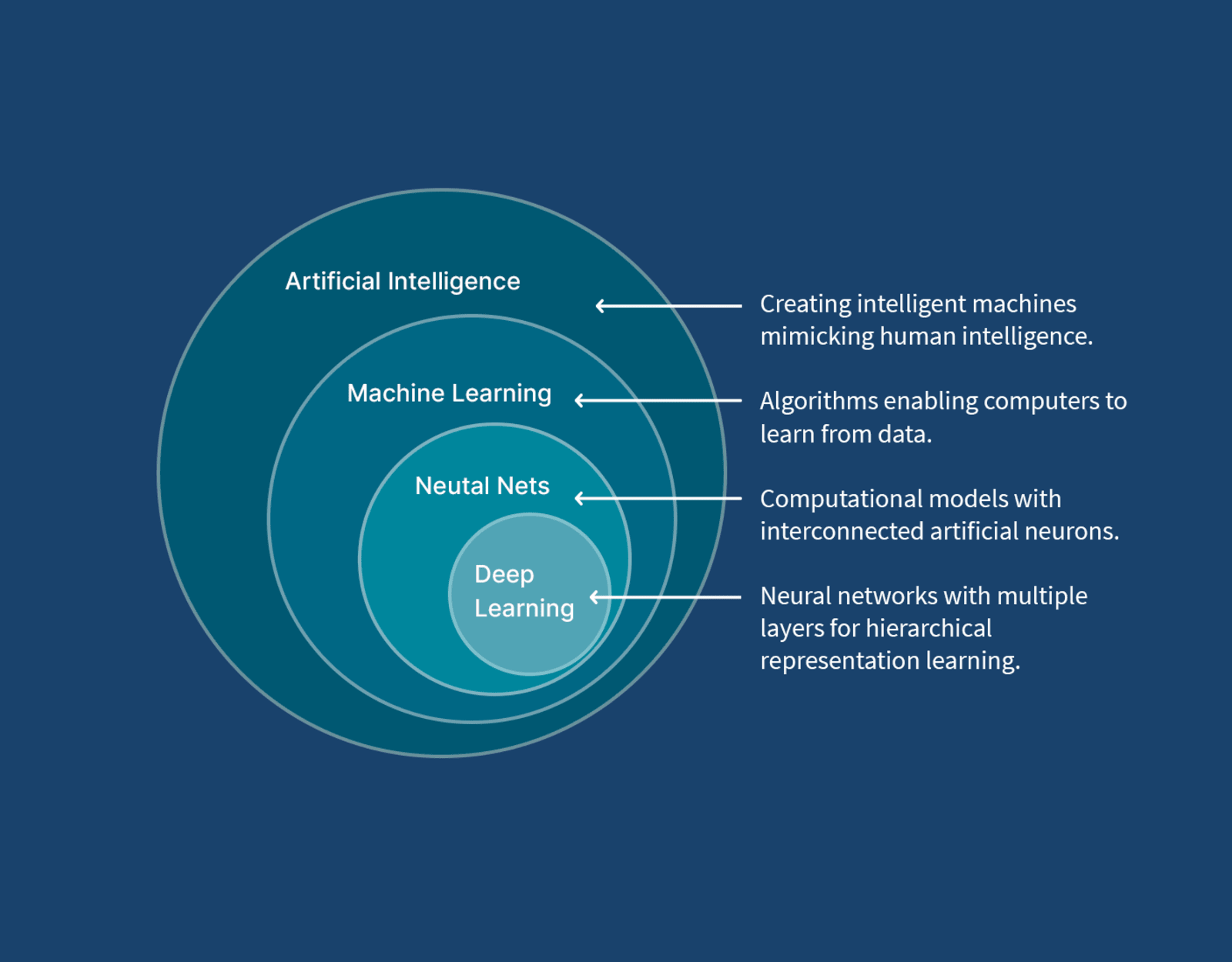
I mentioned AI, if you have more than the most superficial awareness of AI, you will probably be wondering how we use it, and the problems of AI hallucination – the last thing you want is a being asked to evaluate something and hallucinating (injecting data/facts that are not based on the data you have collected) to create a projection.  At worst, this would mean providing an indication that everything is going well, when things are about to really go wrong.  So, first, most of the AI discussed today is generative, and that is where we see issues like hallucinations.  We’re have and are adopting this aspect of AI where it fits best, such as explainability and informing visualization, but Oracle is making heavy use of the more traditional ideas of AI in the form of Machine Learning and Deep Learning which are best suited to heavy numerical computational uses, that is not to say there aren’t challenges to be ddressed with training the AI.

Conclusion

When it comes to Oracle’s expertise in the specialized domains of agriculture and government, Oracle has a strong record of working with governments and government agencies from its inception. But we’ve also worked closely with the Tony Blair Institute for Global Change, which works with many national government agencies, including the agriculture sector.

My role in this has been as an architect, focused primarily on applying integration techniques (enabling scaling and operational resilience, data ingestion, and how our architecture can work as we work with more and more data sources) and on applying AI (in the generative domain). We’re fortunate to be working alongside two other architects who cover other aspects of the product, such as infrastructure needs and the presentation tier. In addition, there is a specialist data science team with more PhDs and related awards than I can count.

Oracle’s Digital Government business is more than just this agriculture use case; we’ve identified other use cases that can benefit from the data and its volume being handled here. This is in addition to bringing versions of its better-known products, such as ERP, Healthcare (digital health records management, vaccine programmes, etc.), national Energy and Water (metering, infrastructure management, etc).

For more on the agricultural product:

  • Government Data Intelligence for Agriculture
  • Agriculture on the Digital Government page
  • TBI on Food Security
  • iGrow News
  • Oracle Launches AI Platform to Strengthen Government Led Agricultural Resilience – AgroTechSpace

Share this:

  • Share on Facebook (Opens in new window) Facebook
  • Share on X (Opens in new window) X
  • Share on Reddit (Opens in new window) Reddit
  • Email a link to a friend (Opens in new window) Email
  • Share on WhatsApp (Opens in new window) WhatsApp
  • Print (Opens in new window) Print
  • Share on Tumblr (Opens in new window) Tumblr
  • Share on Mastodon (Opens in new window) Mastodon
  • Share on Pinterest (Opens in new window) Pinterest
  • More
  • Share on Bluesky (Opens in new window) Bluesky
  • Share on LinkedIn (Opens in new window) LinkedIn
Like Loading...

Fluent Bit and AI: Unlocking Machine Learning Potential

30 Monday Dec 2024

Posted by mp3monster in Fluentbit, General, Technology

≈ Leave a comment

Tags

AI, artificial-intelligence, Cloud, Data Drift, development, Fluent Bit, GenAI, Machine Learning, ML, observability, Security, Technology, Tensor Lite, TensorFlow

These days, everywhere you look, there are references to Generative AI, to the point that what have Fluent Bit and GenAI got to do with each other? GenAI has the potential to help with observability, but it also needs observation to measure its performance, whether it is being abused, etc. You may recall a few years back that Microsoft was trailing new AI features for Bing, and after only having it in use for a couple of days, it had been recorded generating abusive comments and so on (Microsoft’s Tay is such an example).

But this isn’t the aspect of GenAI (or the foundations of AI with Machine Learning (ML)) I was thinking about. Fluent Bit can be linked to GenAI through its TensorFlow plugin. Is this genuinely of value or just a bit of ‘me too’?

There are plenty of backend use cases once the telemetry has been incorporated into an analytics platform, for example:

  • Making it easy to query and mine the observability data, such as natural language searching – to simplify expressing what is being looked for.
  • Outlier / Anomaly detection – when signals, particularly metrics, diverge from the normal patterns of behavior, we have the first signs of a problem. This is more Machine Learning than generative AI.
  • Using AI agents to tune monitoring thresholds and alerting scenarios

But these are all backend, big data style use cases and do not center on Fluent Bit’s core value of getting data sources to appropriate destination systems for such analysis or visualization.

To incorporate AI into Fluent Bit pipelines, we need to overcome a key issue – AI tends to be computationally heavy – making it potentially too slow for streams of signals being generated by our applications and too expensive given that most logs reflecting ‘business as usual’ are, in effect, low value.

There are some genuine use cases where lightweight AI can deliver value. First, we should be a little more precise. The TensorFlow plugin is the TensorFlow Lite version, also known as LiteRT. The name comes from the fact that it is a lite-weight solution intended to be deployable using small devices (by AI standards). This fits the Fluent Bit model of having a small footprint.

So, where can we put such a use case:

  • Translating stack traces into actionable information can be challenging. A trained ML or AI model can help classify and characterize the cause of a stack trace. As a result, we can move from the log to triggering appropriate actions.
  • Targeted use cases where we’ve filtered out most signal data to help analyze specific events – for example, we want to prevent the propagation of PII data downstream. Some PII data can be easily isolated through patterns using REGEX. For example, credit card IDs are a pattern of 4 digits in 4 groups. Phone numbers and email addresses can also be easily identified. However, postal addresses aren’t easy, particularly when handling multinational addresses, where the postal code/zip code can’t be used as an indicative pattern. Using AI to help with such checks means we must filter out signals to only examine messages that could accidentally carry such information.

When adopting AI into such scenarios, we have to be aware of the problems that can impact the use of ML and AI. These use cases are less high profile than the issues of hallucinations but just as important. As we’re observing software, which will change over time. As a result, payloads or data shifts (technically referred to as data drift) and the detection rate can drop. So, we need to measure the efficacy of the model. However, issues such as data drift need to be taken into account, as the scenario being detected may change in volume, reflecting changes in software usage and/or changes in how the solution works.

There are ways to help address such considerations, such as tracking false positive outcomes, and if the model can provide confidence scoring, is there a trend in the score?

Conclusion

There are good use cases for using Machine Learning (and, to an extent, Artificial Intelligence) within an observability pipeline – but we have to be selective in its application as:

  • The cost of the computation can outweigh the benefits
  • The execution time for such computation can be notably slower than our pipeline, leading to risks of back pressure if applied to every event in the pipeline.
  • The effectiveness and how much data drift might occur (we might initially see very good results, but then things can fall off).

Possibly, the most useful application is when the AI/ML engine has been trained to recognize patterns of events that preceded a serious operational issue (strictly, this is the use of ML).

Forward-looking

The true potential for Gen AI is when we move beyond isolating potential faults based on pattern recognition to using AI to help recommend or even trigger remediation processes.

Share this:

  • Share on Facebook (Opens in new window) Facebook
  • Share on X (Opens in new window) X
  • Share on Reddit (Opens in new window) Reddit
  • Email a link to a friend (Opens in new window) Email
  • Share on WhatsApp (Opens in new window) WhatsApp
  • Print (Opens in new window) Print
  • Share on Tumblr (Opens in new window) Tumblr
  • Share on Mastodon (Opens in new window) Mastodon
  • Share on Pinterest (Opens in new window) Pinterest
  • More
  • Share on Bluesky (Opens in new window) Bluesky
  • Share on LinkedIn (Opens in new window) LinkedIn
Like Loading...
Newer posts →
    • About
      • Internet Profile
      • Music Buying
      • Presenting Activities
    • Books & Publications
      • Logging in Action with Fluentd, Kubernetes and More
      • Logs and Telemetry using Fluent Bit
      • Oracle Integration
      • API & API Platform
        • API Useful Resources
        • Useful Reading Sources
    • Mindmaps Index
    • Monster On Music
      • Music Listening
      • Music Reading
    • Oracle Resources
    • Useful Tech Resources
      • Fluentd & Fluent Bit Additional stuff
        • Logging Frameworks and Fluent Bit and Fluentd connectivity
        • REGEX for BIC and IBAN processing
      • Formatting etc
      • Java and Graal Useful Links
      • Official Sources for Product Logos
      • Python Setup & related tips
      • Recommended Tech Podcasts

    Oracle Ace Director Alumni

    TOGAF 9

    Logs and Telemetry using Fluent Bit


    Logging in Action — Fluentd

    Logging in Action with Fluentd


    Oracle Cloud Integration Book


    API Platform Book


    Oracle Dev Meetup London

    Blog Categories

    • App Ideas
    • Books
      • Book Reviews
      • manning
      • Oracle Press
      • Packt
    • Enterprise architecture
    • General
      • economy
      • ExternalWebPublications
      • LinkedIn
      • Website
    • Music
      • Music Resources
      • Music Reviews
    • Photography
    • Podcasts
    • Technology
      • AI
      • APIs & microservices
      • chatbots
      • Cloud
      • Cloud Native
      • Dev Meetup
      • development
        • languages
          • java
          • node.js
          • python
      • drone
      • Fluent Observability
        • Fluentbit
        • Fluentd
        • OpAMP
      • logsimulator
      • mindmap
      • OMESA
      • Oracle
        • API Platform CS
          • tools
        • Helidon
        • ITSO & OEAF
        • Java Cloud
        • NodeJS Cloud
        • OIC – ICS
        • Oracle Cloud Native
        • OUG
      • railroad diagrams
      • TOGAF
    • xxRetired
    • AI
    • API Platform CS
    • APIs & microservices
    • App Ideas
    • Book Reviews
    • Books
    • chatbots
    • Cloud
    • Cloud Native
    • Dev Meetup
    • development
    • drone
    • economy
    • Enterprise architecture
    • ExternalWebPublications
    • Fluent Observability
    • Fluentbit
    • Fluentd
    • General
    • Helidon
    • ITSO & OEAF
    • java
    • Java Cloud
    • languages
    • LinkedIn
    • logsimulator
    • manning
    • mindmap
    • Music
    • Music Resources
    • Music Reviews
    • node.js
    • NodeJS Cloud
    • OIC – ICS
    • OMESA
    • OpAMP
    • Oracle
    • Oracle Cloud Native
    • Oracle Press
    • OUG
    • Packt
    • Photography
    • Podcasts
    • python
    • railroad diagrams
    • Technology
    • TOGAF
    • tools
    • Website
    • xxRetired

    Enter your email address to subscribe to this blog and receive notifications of new posts by email.

    Join 2,617 other subscribers

    RSS

    RSS Feed RSS - Posts

    RSS Feed RSS - Comments

    May 2026
    M T W T F S S
     123
    45678910
    11121314151617
    18192021222324
    25262728293031
    « Apr    

    Twitter

    Tweets by mp3monster

    History

    Speaker Recognition

    Open Source Summit Speaker

    Flickr Pics

    Boxer Rebellion @ Brixton ElectricBoxer Rebellion @ Brixton ElectricBoxer Rebellion @ Brixton ElectricBoxer Rebellion @ Brixton Electric
    More Photos

    Social

    • View @mp3monster’s profile on Twitter
    • View philwilkins’s profile on LinkedIn
    • View mp3monster’s profile on GitHub
    • View mp3monster’s profile on Flickr
    • View mp3muncher’s profile on WordPress.org
    • View philmp3monster’s profile on Twitch
    Follow Phil (aka MP3Monster)'s Blog on WordPress.com

    Blog at WordPress.com.

    • Subscribe Subscribed
      • Phil (aka MP3Monster)'s Blog
      • Join 229 other subscribers
      • Already have a WordPress.com account? Log in now.
      • Phil (aka MP3Monster)'s Blog
      • Subscribe Subscribed
      • Sign up
      • Log in
      • Report this content
      • View site in Reader
      • Manage subscriptions
      • Collapse this bar

    Loading Comments...

    You must be logged in to post a comment.

      Privacy & Cookies: This site uses cookies. By continuing to use this website, you agree to their use.
      To find out more, including how to control cookies, see here: Our Cookie Policy
      %d