• Home
  • Site Aliases
    • www.cloud-native.info
  • About
    • Background
    • Presenting Activities
    • Internet Profile
      • LinkedIn
    • About
  • Books & Publications
    • Log Generator
    • Logs and Telemetry using Fluent Bit
      • Fluent Bit book
      • Book Resources in GitHub
      • Fluent Bit Classic to YAML Format configurations
    • Logging in Action with Fluentd, Kubernetes and More
      • Logging in Action with Fluentd – Book
      • Fluentd Book Resources
      • Fluentd & Fluent Bit Additional stuff
    • API & API Platform
      • API Useful Resources
    • Oracle Integration
      • Book Website
      • Useful Reading Sources
    • Publication Contributions
  • Resources
    • GitHub
    • Oracle Integration Site
    • Oracle Resources
    • Mindmaps Index
    • Useful Tech Resources
      • Fluentd & Fluent Bit Additional stuff
      • Recommended Tech Podcasts
      • Official Sources for Product Logos
      • Java and Graal Useful Links
      • Python Setup & related stuff
  • Music
    • Monster On Music
    • Music Listening
    • Music Reading

Phil (aka MP3Monster)'s Blog

~ from Technology to Music

Phil (aka MP3Monster)'s Blog

Tag Archives: manning

Fluent Bit Articles on TheNewStack – a Biproduct of a book sponsor?

12 Thursday Jun 2025

Posted by mp3monster in Books, Fluentbit, Fluentd, General, manning, Technology

≈ 1 Comment

Tags

author, book, books, Fluent Bit, manning, reading, The New Stack, TNS, writing

Like many developers and architects, I track the news feeds from websites such as The New Stack and InfoQ. I’ve even submitted articles to some of these sites and saw them published. However, in the last week, something rather odd occurred: articles in The New Stack (TNS) appeared, attributed to me, although I had no involvement in the publication process with TNS; yet, the content is definitely mine. So what appears to be happening?

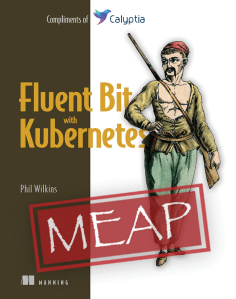
To help answer this, let me provide a little backstory. Back in October and November last year, we completed the publication of my book about Fluent Bit (called Logs and Telemetry with a working title of Fluent Bit with Kubernetes), a follow-up from Logging In Action (which covered Fluent Bit’s older sibling, Fluentd). During the process of writing these books, I have had the opportunity to get to know members of the team behind these CNCF projects and consider them as engineering friends. Through several changes, the core team has primarily come to work for Chronosphere. To cut a long story short, I connected the Fluent Bit team to Manning, and they sponsored my book (giving them the privilege of giving away a certain number of copies of the book, cover branding, and so on).

It appears that, as part of working with Manning’s marketing team, authors are invited to submit articles and agree to have them published on Manning’s website. Upon closer examination, the articles appear to have been sponsored by Chronosphere, with an apparent reference to Manning publications. So somewhere among the marketing and sales teams, an agreement has been made, and content has been reused. Sadly, no one thought to tell the author.

I don’t in principle have an issue with this, after all, I wrote the book, and blog on these subjects because I believe enabling an understanding of technologies like Fluent Bit is valuable and my way of contributing to the IT community (Yes, I do see a little bit of money from sales, but the money-to-time and effort ratio works out to be less than minimum wage).

The most frustrating bit of all of this is that one of the articles links to a book I’ve not been involved with, and the authors of Effective Platform Engineering aren’t being properly credited. It turns out that Chronosphere is sponsoring Effective Platform Engineering (Manning’s page for this is here).

26th June Update – another article

The New Stack published another sponsored article – What’s Driving Fluent Bit Adoption? This one does feel like it has been ‘tweaked’.

2nd July Update – and more …

Another bit of the book on New Stack – What Is Fluent Bit?

8th July Update – and more …

Another bit of the book on New Stack – What Are the Differences Between OTel, Fluent Bit and Fluentd?

Other Posts …

If you’d like to see the articles and my bio now on The New Stack:

  • Fluent Bit Core Concepts
  • Specialized Event Capture and Distribution Tool
  • The New Stack Bio

Share this:

  • Click to share on Facebook (Opens in new window) Facebook
  • Click to share on X (Opens in new window) X
  • Click to share on Pocket (Opens in new window) Pocket
  • Click to share on Reddit (Opens in new window) Reddit
  • Click to email a link to a friend (Opens in new window) Email
  • Click to share on WhatsApp (Opens in new window) WhatsApp
  • Click to print (Opens in new window) Print
  • Click to share on Tumblr (Opens in new window) Tumblr
  • Click to share on Mastodon (Opens in new window) Mastodon
  • Click to share on Pinterest (Opens in new window) Pinterest
  • More
  • Click to share on Bluesky (Opens in new window) Bluesky
  • Click to share on LinkedIn (Opens in new window) LinkedIn
Like Loading...

Books Books Books

22 Tuesday Oct 2024

Posted by mp3monster in Books, General, Technology

≈ Leave a comment

Tags

book, books, development, ebook, FluentBit, manning, pbook, print, published, reading

Today we got the official notification that our book has been published …

Logs and Telemetry book - order option

As you can see, the eBook is now available. The print edition can be purchased from Thursday (24th Oct). If you’ve been a MEAP subscriber, you should be able to download the complete book. The book will start showing up on other platforms in the coming weeks (Amazon UK has set an availability date, and Amazon.com you can preorder).

There are some lovely review quotes as well:

A detailed dive into building observability and monitoring.

Jamie Riedesel, author of Software Telemetry
Extensive real-life examples and comprehensive coverage! It’s a great resource for architects, developers, and SREs.

Sambasiva Andaluri, IBM
A must read for anyone managing a critical IT-system. You will truly understand what’s going on in your applications and infrastructure.

Hassan Ajan, Gain Momentum

And there is more …

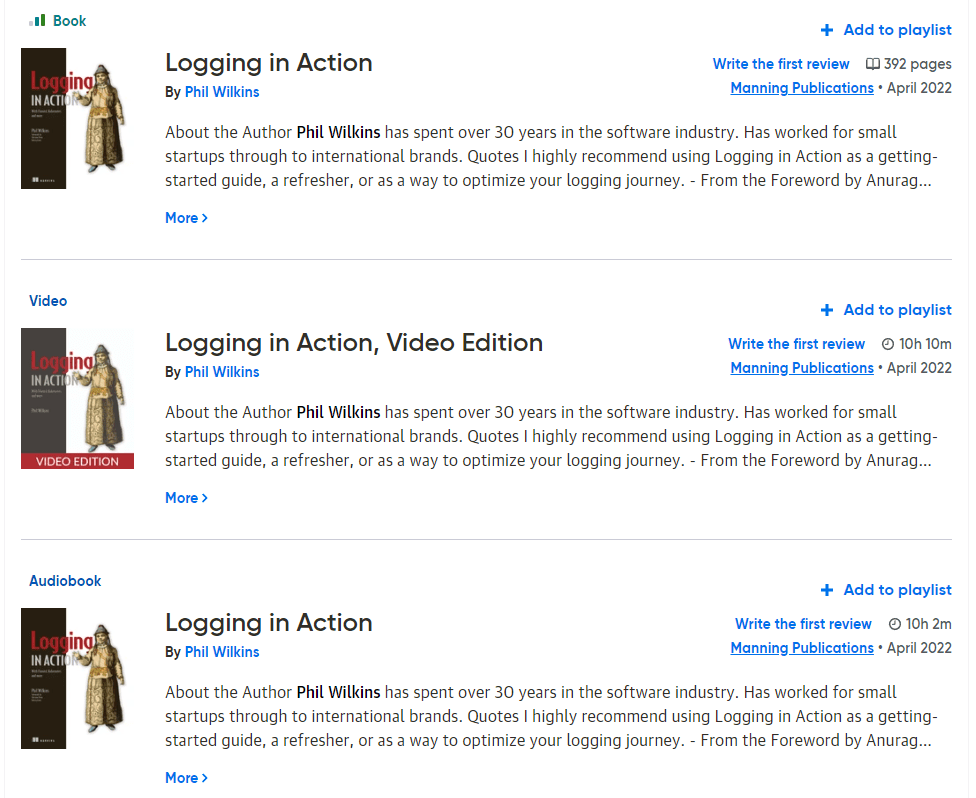
I hadn’t noticed until today, but the partner book Logging in Action, which covers Fluentd, is available in ebook and print as well as audio and video editions. As you can see, these are available on Manning and platforms like O’Reilly/Safari…

In Logging in Action you will learn how to:

Deploy Fluentd and Fluent Bit into traditional on-premises, IoT, hybrid, cloud, and multi-cloud environments, both small and hyperscaled
Configure Fluentd and Fluent Bit to solve common log management problems
Use Fluentd within Kubernetes and Docker services
Connect a custom log source or destination with Fluentd’s extensible plugin framework
Logging best practices and common pitfalls

Logging in Action is a guide to optimize and organize logging using the CNCF Fluentd and Fluent Bit projects. You’ll use the powerful log management tool Fluentd to solve common log management, and learn how proper log management can improve performance and make management of software and infrastructure solutions easier. Through useful examples like sending log-driven events to Slack, you’ll get hands-on experience applying structure to your unstructured data.

I have to say that my digital twin, who narrated the book, sounds pretty intelligent.

Update

Amazon UK is correct now, and has an availability date

Share this:

  • Click to share on Facebook (Opens in new window) Facebook
  • Click to share on X (Opens in new window) X
  • Click to share on Pocket (Opens in new window) Pocket
  • Click to share on Reddit (Opens in new window) Reddit
  • Click to email a link to a friend (Opens in new window) Email
  • Click to share on WhatsApp (Opens in new window) WhatsApp
  • Click to print (Opens in new window) Print
  • Click to share on Tumblr (Opens in new window) Tumblr
  • Click to share on Mastodon (Opens in new window) Mastodon
  • Click to share on Pinterest (Opens in new window) Pinterest
  • More
  • Click to share on Bluesky (Opens in new window) Bluesky
  • Click to share on LinkedIn (Opens in new window) LinkedIn
Like Loading...

shhh – Fluent Bit book has gone to the printers, and …

13 Sunday Oct 2024

Posted by mp3monster in Books, Fluentbit, General, manning, Technology

≈ Leave a comment

Tags

book, ebook, FluentBit, manning, webinar

I thought you might like to know that last week, the production process on the book (Logs and Telemetry with Fluent Bit, written with the working title of Fluent Bit with Kubernetes) was completed, and the book should be on its way to the printers. In the coming weeks, you’ll see the MEAP branding disappear, and the book will appear in the usual places.

If you’ve been brilliant and already purchased the book – the finished version will be available to download soon, and for those who have ordered the ‘tree’ media version – a few more weeks and ink and paper will be on their way.

As part of the promotion, we will be doing a webinar with the book’s sponsor, To register for their webinar – go to https://go.chronosphere.io/fluent-bit-with-kubernetes-meet-the-author.html

Share this:

  • Click to share on Facebook (Opens in new window) Facebook
  • Click to share on X (Opens in new window) X
  • Click to share on Pocket (Opens in new window) Pocket
  • Click to share on Reddit (Opens in new window) Reddit
  • Click to email a link to a friend (Opens in new window) Email
  • Click to share on WhatsApp (Opens in new window) WhatsApp
  • Click to print (Opens in new window) Print
  • Click to share on Tumblr (Opens in new window) Tumblr
  • Click to share on Mastodon (Opens in new window) Mastodon
  • Click to share on Pinterest (Opens in new window) Pinterest
  • More
  • Click to share on Bluesky (Opens in new window) Bluesky
  • Click to share on LinkedIn (Opens in new window) LinkedIn
Like Loading...

Secure APIs (MEAP) book – Initial Impressions

24 Friday May 2024

Posted by mp3monster in Book Reviews, General, manning

≈ Leave a comment

Tags

API, book, manning, MEAP, secure, Security

My day job as a technical architect means I spend a lot of time working on and around technical non-functional needs, from observability to APIs. And APIs are everywhere (sometimes we don’t talk about things like the OpenTelemetry Protocol (OTLP) as APIs, but this is what it is). and I’ve written and blogged on the subject many times in the past.

One of the things I tend to do is read books on the subject – always on the lookout for new strategies, ideas, and techniques for handling an API’s number one challenge – security. With a new book on Secure APIs from José Haro Peralto being published by Manning (as a Manning author, I have the perks of looking at books published and in the Early Access Program).

The Early Access Program means that after the first couple of chapters have been written and go through initial review processes, they’re made available. However, the book is still in development and has not gone through a full copy edit process. However, the core ideas and messages are there in the book.

The book so far looks really good. It comes across as very practical and illustrative of the points it needs from the outset, with some nicely presented insights about why API Security is such an important consideration—54% of web traffic is API-driven, organizations see as many as 10 million attacks per day, and a breach typically costs $6.1 million. If you’re trying to make a case for investing in API security – there are some great references here.

The book doesn’t just look at implementing the code that powers the API contract but also the tools from firewalls to gateways. It engages in the process of figuring out what risks an API needs to mitigate and the consequences of failing to do so. While the first couple of chapters look at the broader landscape and ideas. We can expect a closer look at things like the OWASP Top 10 (a resource that should be mandatory learning for anyone going to implement APIs or web app development more generally) as the book progresses.

The first couple of chapters read well and are easy to absorb, and we’re looking forward to reading the coming chapters, which will discuss the nuts and bolts of securing APIs.

The only observation to be aware of at this point is that, while not explicitly stated, the illustrations suggest a strong bias to RESTful web services with the appearance of just the Open API Initiative logo. While REST is the most common API approach, gRPC, and GraphQL are continuing to make big inroads and are supported by the Asynchronous API Spec. I suspect this will be addressed given José’ background and expertise. I#m looking forward to the coming chapters.

Share this:

  • Click to share on Facebook (Opens in new window) Facebook
  • Click to share on X (Opens in new window) X
  • Click to share on Pocket (Opens in new window) Pocket
  • Click to share on Reddit (Opens in new window) Reddit
  • Click to email a link to a friend (Opens in new window) Email
  • Click to share on WhatsApp (Opens in new window) WhatsApp
  • Click to print (Opens in new window) Print
  • Click to share on Tumblr (Opens in new window) Tumblr
  • Click to share on Mastodon (Opens in new window) Mastodon
  • Click to share on Pinterest (Opens in new window) Pinterest
  • More
  • Click to share on Bluesky (Opens in new window) Bluesky
  • Click to share on LinkedIn (Opens in new window) LinkedIn
Like Loading...

Fluent Bit with Kubernetes – more MEAP chapters

06 Saturday Apr 2024

Posted by mp3monster in Books, Fluentbit, manning, Technology

≈ Leave a comment

Tags

book, Calyptia, FluentBit, manning, MEAP

12th April Update – The last chapter, a use case Appendix, and a couple of chapter updates are heading to the MEAP release.

We’ve not been blogging too much as we’ve been very focused on the book. For the keen readers who have signed up for the MEAP (Manning Early Access Programme) of the book, another 2 chapters are in the process of being made available.

The last chapter has been submitted to our editor along with the appendix, which includes an enterprise use case that outlines a business scenario and illustrates how Fluent Bit can be applied.

We’ve received the feedback from the second peer review and have started to address it. I’m sure that every Manning author will testify as to how helpful the process is. While I recommended some of the reviewers to my editor, I didn’t know others. All the feedback comes back anomalously. So publicly, thank you to the reviewers. Constructive feedback is key to how we ensure that we are getting our points across, but also how details we may have overlooked or thought obvious get put right.

Unfortunately, authors can’t always address every comment. Sometimes, that is down to the fact that the layout has to work within the publisher’s guidelines. Sometimes, we simply can’t fit in suggested content, as we’re ultimately working to an agreed timeline, and people can be put off by 800-page books. For me, and I suspect other authors, those extras aren’t ignored; they’re fuel for blog ideas and content.

We’ve one more peer review cycle where the reviewers get pretty much the entire book, and once any edits for that are needed, we move into the copy editing, which is done by Manning, and I just need to confirm edits don’t accidentally change the meaning and emphasis. This will be a time when we can start blogging and sharing more.

Share this:

  • Click to share on Facebook (Opens in new window) Facebook
  • Click to share on X (Opens in new window) X
  • Click to share on Pocket (Opens in new window) Pocket
  • Click to share on Reddit (Opens in new window) Reddit
  • Click to email a link to a friend (Opens in new window) Email
  • Click to share on WhatsApp (Opens in new window) WhatsApp
  • Click to print (Opens in new window) Print
  • Click to share on Tumblr (Opens in new window) Tumblr
  • Click to share on Mastodon (Opens in new window) Mastodon
  • Click to share on Pinterest (Opens in new window) Pinterest
  • More
  • Click to share on Bluesky (Opens in new window) Bluesky
  • Click to share on LinkedIn (Opens in new window) LinkedIn
Like Loading...

Fluent Bit with Kubernetes – book update

23 Tuesday Jan 2024

Posted by mp3monster in Books, Fluentbit, General, manning

≈ Leave a comment

Tags

book, chatops, ebook, FluentBit, manning, MEAP, resources

The exciting news is that Manning have released several more chapters of our Fluent Bit with Kubernetes book into the MEAP (Manning Early Access Program) – which means about two-thirds of the book is now available in MEAP form.

We’ve also been beefing up the supporting and related information on this website – as we can’t get everything into the book – for the static pages, the most relevant are here and here, and the blog post content can be seen here.

The sample configurations are in our GitHub repo here, and additional demos can be found here. We’ve got a pretty cool demo being built, which takes Fluent Bit into the world of ChatOps (and it isn’t just sending notifications) – it will eventually become visible in the repo – but to see it sooner, keep an eye out for our conference presentations.

Share this:

  • Click to share on Facebook (Opens in new window) Facebook
  • Click to share on X (Opens in new window) X
  • Click to share on Pocket (Opens in new window) Pocket
  • Click to share on Reddit (Opens in new window) Reddit
  • Click to email a link to a friend (Opens in new window) Email
  • Click to share on WhatsApp (Opens in new window) WhatsApp
  • Click to print (Opens in new window) Print
  • Click to share on Tumblr (Opens in new window) Tumblr
  • Click to share on Mastodon (Opens in new window) Mastodon
  • Click to share on Pinterest (Opens in new window) Pinterest
  • More
  • Click to share on Bluesky (Opens in new window) Bluesky
  • Click to share on LinkedIn (Opens in new window) LinkedIn
Like Loading...

Cloud Observability in Action – Book Review

04 Thursday Jan 2024

Posted by mp3monster in Book Reviews, Books, General, manning

≈ Leave a comment

Tags

book, development, FluentBit, Fluentd, manning, Michael Hausenblas, o11y, observability, OpenTelemetry, Prometheus, review

With the Christmas holidays happening, things slowed down enough to sit and catch up on some reading – which included reading Cloud Observability in Action by Michael Hausenblas from Manning. You could ask – why would I read a book about a domain you’ve written about (Logging In Action with Fluentd) and have an active book in development (Fluent Bit with Kubernetes)? The truth is, it’s good to see what others are saying on the subject, not to mention it is worth confirming I’m not overlapping/duplicating content. So what did I find?

Observability in Action by Michael Hausenblas
Cloud Observability in Action by Michael Hausenblas

Cloud Observability In Action has been an easygoing and enjoyable read. Tech books can sometimes get a bit heavy going or dry, not the case here. Firstly, Michael went back to first principles, making the difference between Observability and monitoring – something that often gets muddied (and I’ve been guilty of this, as the latter is a subset of the former). Observability doesn’t roll off the tongue as smoothly as monitoring (although I rather like the trend of using O11y). This distinction, while helpful, particularly if you’re still finding your feet in this space, is good. What is more important is stepping back and asking what should we be observing and why we need to observe it. Plus, one of my pet points when presenting on the subject – we all have different observability needs – as a developer, an ops person, security, or auditors.

Next is Michael’s interesting take on how much O11y code is enough. Historically, I’ve taken the perspective – that enough is a factor of code complexity. More complex code – warrants more O11y or logging as this is where bugs are most likely to manifest themselves; secondly, I’ve looked at transaction and service boundaries. The problem is this approach can sometimes generate chatty code. I’ve certainly had to deal with chatty apps, and had to filter out the wheat from the chaff. So Michael’s approach of cost/benefit and measuring this using his B2I ratio (how much code is addressing the business problems over how much is instrumentation) was a really fresh perspective and presented in a very practical manner, with warnings about using such a measure too rigidly. It’s a really good perspective as well if you’re working on hyperscaling solutions where a couple of percentage point improvements can save tens of thousands of dollars. Pretty good going, and we’re only a couple of chapters into the book.

The book gets into the underlying ideas and concepts that inform OpenTelemetry, such as traces and spans, metrics, and how these relate to Observability. Some of the classic mistakes are called out, such as dimensioning metrics with high cardinality and why this will present real headaches for you.

As the data is understood, particularly metrics you can start to think about how to identify what normal is, what is abnormal, or an outlier. That then leads to developing Service Level Objectives (SLOs), such as an acceptable level of latency in the solution or how many errors can be tolerated.

The book isn’t all theory. The ideas are illustrated with small Go applications, which are instrumented, and the generated metrics, traces, and logs. Rather than using a technology such as Fluentd or Fluent Bit, Michael starts by keeping things simple and directly connecting the gathering of the metrics into tools such as Prometheus, Zipkin, Jaeger, and so on. In later chapters, the complexity of agents, aggregators, and collectors is addressed. Then, the choices and considerations for different backend solutions from cloud vendor-provided services such as OpenSearch, ElasticSearch, Splunk, Instana and so on. Then, the front-end visualization of the data is explored with tools such as Grafana, Kibana, cloud-provided tools, and so on.

As the book progresses, the chapters drill down into more detail, such as the differences and approaches for measuring containerized solutions vs. serverless implementations such as Lambda and the kinds of measures you may want. The book isn’t tied to technologies typically associated with modern Cloud Native solutions, but more traditional things like relational databases are taken into account.

The closing chapters address questions such as how to address alerting, incident management, and implementing SLOs. How to use these techniques and tools can help inform the development processes, not just production.

So I would recommend the book, if you’re trying to understand Observability (regardless of a cloud solution or not). If you’re trying to advance from the more traditional logging to a fuller capability, then this book is a great guide, showing what, why, and how to evaluate the value of doing so.

To come back to my opening question. The books have small points of overlap, but this is no bad thing, as it helps show how the different viewpoints intersect. I would actually say that the Observability in Action shows how the wider landscape fits together, the underlying value propositions that can help make the case for implementing a full observability solution. Then, Logging in Action and the new book, Fluent Bit with Kubernetes, give you some of the common context, and we drill into the details of how and what can be done with Fluent Bit and Fluentd. All Manning needs now is content to deep dive into Prometheus, Grafana, Jaeger, and OpenSearch to provide an end-to-end coverage of first principles to the art of the possible in Observability.

I also have to thank Michael for pointing his readers and sections of Logging in Action that directly relate and provide further depth into an area.

Further reading

  • Michael’s medium blog
  • Michael’s website
  • Return on Investment Driven Observability
  • CNCF Observability Whitepaper
  • My additional resources for Fluent Bit and Fluentd which includes some of the related content

Share this:

  • Click to share on Facebook (Opens in new window) Facebook
  • Click to share on X (Opens in new window) X
  • Click to share on Pocket (Opens in new window) Pocket
  • Click to share on Reddit (Opens in new window) Reddit
  • Click to email a link to a friend (Opens in new window) Email
  • Click to share on WhatsApp (Opens in new window) WhatsApp
  • Click to print (Opens in new window) Print
  • Click to share on Tumblr (Opens in new window) Tumblr
  • Click to share on Mastodon (Opens in new window) Mastodon
  • Click to share on Pinterest (Opens in new window) Pinterest
  • More
  • Click to share on Bluesky (Opens in new window) Bluesky
  • Click to share on LinkedIn (Opens in new window) LinkedIn
Like Loading...

It’s all about … Fluent Bit

06 Monday Nov 2023

Posted by mp3monster in Books, development, ExternalWebPublications, Fluentbit, General, manning, Technology

≈ Leave a comment

Tags

book, Calyptia, FluentBit, manning, MEAP, OpenTelemetry

We can reveal why things have been quieter than usual on the blogging front. Logging in Action with Fluentd has a partner title … Fluent Bit with Kubernetes.

The new book focuses on Fluent Bit, given its significant advances, reflected by the fact it is now at Version 2 and is deserving of its own title. The new book is a free-standing book but is complimentary to the Logging In Action book. Logging in Action focuses on Fluentd but compliments by addressing more deeply deployment strategies for Fluent Bit and Fluentd. The new book engages a lot more with OpenTelemetry now it has matured, along with technologies such as Prometheus.

It is the fact that we’ve seen increasing focus in the cloud native space on startup speeds and efficiency in footprints that have helped drive Fluent Bit, as it operates with native binaries rather than using a Just-In-Time compilation like Ruby (used for Fluentd). The other significant development is the support for OpenTelemetry.

The book has entered the MEAP (Manning Early Access Program). The first three chapters have been peer-reviewed, and changes have been applied; another three are with the development editor. If you’ve not read a MEAP title before, you’ll find the critical content is in the chapters, but from my experience, as we work through the process, the chapters improve as feedback is received. In addition, as an author, when we have had time away from a chapter and then revisit it – it is easier to spot things that aren’t as clear as they could be. So, it is always worth returning as a reader and looking at chapters. Then, as we move to the production phases, any linguistic or readability issues that still exist are addressed as a copy editor goes through the manuscript.

I’d like to thank those involved with the peer review. Their suggestions and insights have been really helpful. Plus, the team at Calyptia is sponsoring the book (and happens to be employing a number of the Fluent Bit contributors).

We also have a discount code on the book, valid until 20th November – mlwilkins2

Share this:

  • Click to share on Facebook (Opens in new window) Facebook
  • Click to share on X (Opens in new window) X
  • Click to share on Pocket (Opens in new window) Pocket
  • Click to share on Reddit (Opens in new window) Reddit
  • Click to email a link to a friend (Opens in new window) Email
  • Click to share on WhatsApp (Opens in new window) WhatsApp
  • Click to print (Opens in new window) Print
  • Click to share on Tumblr (Opens in new window) Tumblr
  • Click to share on Mastodon (Opens in new window) Mastodon
  • Click to share on Pinterest (Opens in new window) Pinterest
  • More
  • Click to share on Bluesky (Opens in new window) Bluesky
  • Click to share on LinkedIn (Opens in new window) LinkedIn
Like Loading...

Road to Kubernetes – MEAP book review

22 Thursday Jun 2023

Posted by mp3monster in Book Reviews, Books, General, Technology

≈ Leave a comment

Tags

book, K8s, Kubernetes, manning

One of the benefits of being a Manning author is that we get access to the Manning book catalog, including those currently in the MEAP early access programme (MEAP). The Road to Kubernetes title was bought to my attention. The book has just become available as a MEAP title; this means that the book has just completed its first major review milestone, and about a third of the book has been written. It does mean our review only covers the first 3 chapters at the moment.

What got my attention with this book is that unlike other titles about Kubernetes \9of which there are a number of great titles in the Manning portfolio already) is that it has adopted a different approach.

Most books focus on one technology and deep dive into that technology and dig into the more advanced features of that specific area. For an experienced IT person, that is great. But, when it comes to Kubernetes, if you’re skills are largely just focused on largely coding with languages like Java, Python, and JavaScript – not unusual for a graduate or junior developers it means the amount of reading and learning curve to get to grips with developing and deploying containers to Kubernetes is considerable. Here, Justin has taken the approach of assuming basic development skills and then taking you on a journey of focussing on the basics of containers, deployment automation, and then Kubernetes with just enough to be able to deploy a simple solution using good practices. This makes the learning path to gaining the skills that allow you to work within a team and building containerized solutions a lot easier.

I imagine once the book is complete and you’ve followed it through, you’ll be in a position to focus on learning new, more advanced aspects of containers and Kubernetes in a focused manner to meet the needs of a day-to-day job.

Having coached and mentored junior developers and graduates, this is a book I’d recommend to help them along, and if my experience with the Manning book development process is anything to go by, as Justin goes through the major milestones, this book will go from good to great.

My only word of caution is that this book will take the reader on a journey of building and deploying microservices to Kubernetes. Don’t be fooled into thinking Kubernetes and microservices are easy – there is a lot of technologies that I don’t think the book will go into (but then not all developers need to understand details such the differences in network fabric (Calico, Flannel) or container engines cri-o, Docker Engine, deploying support tooling for things like observability). Without good design and, depending upon your solution, a handle in a variety of more specialized areas, it is still possible to get yourself into a mess, even for the most experienced of teams.

Share this:

  • Click to share on Facebook (Opens in new window) Facebook
  • Click to share on X (Opens in new window) X
  • Click to share on Pocket (Opens in new window) Pocket
  • Click to share on Reddit (Opens in new window) Reddit
  • Click to email a link to a friend (Opens in new window) Email
  • Click to share on WhatsApp (Opens in new window) WhatsApp
  • Click to print (Opens in new window) Print
  • Click to share on Tumblr (Opens in new window) Tumblr
  • Click to share on Mastodon (Opens in new window) Mastodon
  • Click to share on Pinterest (Opens in new window) Pinterest
  • More
  • Click to share on Bluesky (Opens in new window) Bluesky
  • Click to share on LinkedIn (Opens in new window) LinkedIn
Like Loading...

Podcast with Anatolii Ulitovskyi of UNmiss

28 Wednesday Dec 2022

Posted by mp3monster in Books, General, Podcasts, Technology

≈ Leave a comment

Tags

API, book, integration, manning, Oracle, podcast

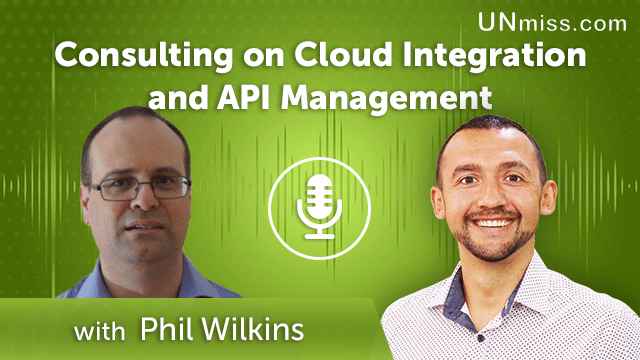
Just before the Christmas break, I got to record an excellent podcast with Anatolii of UNmiss. It was a great conversation about Cloud Integration, APIs, and approaches to Cloud-based integration. While I am not in a consulting role in the conventional sense, a lot of an Evangelist’s task is still to listen, understand, and, when necessary, challenge assumptions and help people understand how technologies can help address problems. This might include sketching out a journey of evolution and improvement. During the podcast, we discussed some of these ideas.

You can listen to the podcast audio or the live video stream of the conversation here.

In addition to some of the practices, we’ve used. The conversation touched upon books. My books are on the sidebar, including links to Manning, who, as a publisher, I’d recommend. I’ve previously blogged some reading recommendations and previously written some book reviews which may be of interest to anyone following up.

Share this:

  • Click to share on Facebook (Opens in new window) Facebook
  • Click to share on X (Opens in new window) X
  • Click to share on Pocket (Opens in new window) Pocket
  • Click to share on Reddit (Opens in new window) Reddit
  • Click to email a link to a friend (Opens in new window) Email
  • Click to share on WhatsApp (Opens in new window) WhatsApp
  • Click to print (Opens in new window) Print
  • Click to share on Tumblr (Opens in new window) Tumblr
  • Click to share on Mastodon (Opens in new window) Mastodon
  • Click to share on Pinterest (Opens in new window) Pinterest
  • More
  • Click to share on Bluesky (Opens in new window) Bluesky
  • Click to share on LinkedIn (Opens in new window) LinkedIn
Like Loading...
← Older posts

    I work for Oracle, all opinions here are my own & do not necessarily reflect the views of Oracle

    • About
      • Internet Profile
      • Music Buying
      • Presenting Activities
    • Books & Publications
      • Logging in Action with Fluentd, Kubernetes and More
      • Logs and Telemetry using Fluent Bit
      • Oracle Integration
      • API & API Platform
        • API Useful Resources
        • Useful Reading Sources
    • Mindmaps Index
    • Monster On Music
      • Music Listening
      • Music Reading
    • Oracle Resources
    • Useful Tech Resources
      • Fluentd & Fluent Bit Additional stuff
        • Logging Frameworks and Fluent Bit and Fluentd connectivity
        • REGEX for BIC and IBAN processing
      • Java and Graal Useful Links
      • Official Sources for Product Logos
      • Python Setup & related tips
      • Recommended Tech Podcasts

    Oracle Ace Director Alumni

    TOGAF 9

    Logs and Telemetry using Fluent Bit


    Logging in Action — Fluentd

    Logging in Action with Fluentd


    Oracle Cloud Integration Book


    API Platform Book


    Oracle Dev Meetup London

    Blog Categories

    • App Ideas
    • Books
      • Book Reviews
      • manning
      • Oracle Press
      • Packt
    • Enterprise architecture
    • General
      • economy
      • ExternalWebPublications
      • LinkedIn
      • Website
    • Music
      • Music Resources
      • Music Reviews
    • Photography
    • Podcasts
    • Technology
      • AI
      • APIs & microservices
      • chatbots
      • Cloud
      • Cloud Native
      • Dev Meetup
      • development
        • languages
          • java
          • node.js
      • drone
      • Fluentbit
      • Fluentd
      • logsimulator
      • mindmap
      • OMESA
      • Oracle
        • API Platform CS
          • tools
        • Helidon
        • ITSO & OEAF
        • Java Cloud
        • NodeJS Cloud
        • OIC – ICS
        • Oracle Cloud Native
        • OUG
      • railroad diagrams
      • TOGAF
    • xxRetired
    • AI
    • API Platform CS
    • APIs & microservices
    • App Ideas
    • Book Reviews
    • Books
    • chatbots
    • Cloud
    • Cloud Native
    • Dev Meetup
    • development
    • drone
    • economy
    • Enterprise architecture
    • ExternalWebPublications
    • Fluentbit
    • Fluentd
    • General
    • Helidon
    • ITSO & OEAF
    • java
    • Java Cloud
    • languages
    • LinkedIn
    • logsimulator
    • manning
    • mindmap
    • Music
    • Music Resources
    • Music Reviews
    • node.js
    • NodeJS Cloud
    • OIC – ICS
    • OMESA
    • Oracle
    • Oracle Cloud Native
    • Oracle Press
    • OUG
    • Packt
    • Photography
    • Podcasts
    • railroad diagrams
    • Technology
    • TOGAF
    • tools
    • Website
    • xxRetired

    Enter your email address to subscribe to this blog and receive notifications of new posts by email.

    Join 2,555 other subscribers

    RSS

    RSS Feed RSS - Posts

    RSS Feed RSS - Comments

    December 2025
    M T W T F S S
    1234567
    891011121314
    15161718192021
    22232425262728
    293031  
    « Nov    

    Twitter

    Tweets by mp3monster

    History

    Speaker Recognition

    Open Source Summit Speaker

    Flickr Pics

    Turin Brakes Acoustic Tour 24 @ The Maltings FarnhamTurin Brakes Acoustic Tour 24 @ The Maltings FarnhamTurin Brakes Acoustic Tour 24 @ The Maltings FarnhamTurin Brakes Acoustic Tour 24 @ The Maltings Farnham
    More Photos

    Social

    • View @mp3monster’s profile on Twitter
    • View philwilkins’s profile on LinkedIn
    • View mp3monster’s profile on GitHub
    • View mp3monster’s profile on Flickr
    • View mp3muncher’s profile on WordPress.org
    • View philmp3monster’s profile on Twitch
    Follow Phil (aka MP3Monster)'s Blog on WordPress.com

    Blog at WordPress.com.

    • Subscribe Subscribed
      • Phil (aka MP3Monster)'s Blog
      • Join 233 other subscribers
      • Already have a WordPress.com account? Log in now.
      • Phil (aka MP3Monster)'s Blog
      • Subscribe Subscribed
      • Sign up
      • Log in
      • Report this content
      • View site in Reader
      • Manage subscriptions
      • Collapse this bar
     

    Loading Comments...
     

    You must be logged in to post a comment.

      Privacy & Cookies: This site uses cookies. By continuing to use this website, you agree to their use.
      To find out more, including how to control cookies, see here: Our Cookie Policy
      %d