• Home
  • Site Aliases
    • www.cloud-native.info
  • About
    • Background
    • Presenting Activities
    • Internet Profile
      • LinkedIn
    • About
  • Books & Publications
    • Log Generator
    • Logs and Telemetry using Fluent Bit
      • Fluent Bit book
      • Book Resources in GitHub
      • Fluent Bit Classic to YAML Format configurations
    • Logging in Action with Fluentd, Kubernetes and More
      • Logging in Action with Fluentd – Book
      • Fluentd Book Resources
      • Fluentd & Fluent Bit Additional stuff
    • API & API Platform
      • API Useful Resources
    • Oracle Integration
      • Book Website
      • Useful Reading Sources
    • Publication Contributions
  • Resources
    • GitHub
    • Oracle Integration Site
    • Oracle Resources
    • Mindmaps Index
    • Useful Tech Resources
      • Fluentd & Fluent Bit Additional stuff
      • Recommended Tech Podcasts
      • Official Sources for Product Logos
      • Java and Graal Useful Links
      • Python Setup & related stuff
  • Music
    • Monster On Music
    • Music Listening
    • Music Reading

Phil (aka MP3Monster)'s Blog

~ from Technology to Music

Phil (aka MP3Monster)'s Blog

Tag Archives: utility

Migrating from Fluentd to Fluent Bit

08 Tuesday Oct 2024

Posted by mp3monster in Fluentbit, Fluentd, General, Technology

≈ Leave a comment

Tags

devops, FluentBit, Fluentd, Kubernetes, mapping, migration, tooling, utility

Earlier in the year, I made a utility available that supported the migration from Fluent Bit classic configuration format to YAML. I also mentioned I would explore the migration of Fluentd to Fluent Bit. I say explore because while both tools have a common conceptual foundation, there are many differences in the structure of the configuration.

We discussed the bigger ones in the Logs and Telemetry book. But as we’ve been experimenting with creating a Fluentd migration tool, it is worth exploring the fine details and discussing how we’ve approached it as part of a utility to help the transformation.

Routing

Many of the challenges come from the key difference in terms of routing and consumption of events from the buffer. Fluentd assumes that an event is consumed by a single output; if you want to direct the output to more than one output, you need to copy the event. Fluent Bit looks at things very differently, with every output plugin having the potential to output every event – the determination of output is controlled by the match attribute. These two approaches put a different emphasis on the ordering of declarations. Fluent Bit focuses on routing and the use of tags and match declarations to control the rounding of output.

  <match *>
    @type copy
    <store>
      @type file
      path ./Chapter5/label-pipeline-file-output
      <buffer>
        delayed_commit_timeout 10
        flush_at_shutdown true
        chunk_limit_records 50
        flush_interval 15
        flush_mode interval
      </buffer>
      <format>
        @type out_file
        delimiter comma
        output_tag true
      </format> 
    </store>
    <store>
      @type relabel
      @label common
    </store>
  </match>

Hierarchical

We can also see that Fluentd’s directives are more hierarchical (e.g., buffer, and format are within the store) than the structures used by Fluentd Bit, so we need to be able to ‘flatten’ the hierarchy. As a result, it makes sense that where the copy occurs, we’ll define both outputs in the copy declaration as having their own output plugins.

Buffering

There is a notable difference between the outputs’ buffer configurations: in Fluent Bit, the output can only control how much storage in the filesystem can be used. As you can see in the preceding example, we can set the flushing frequency, control the number of chunks involved (regardless of storage type).

Pipelines

Fluentd allows us to implicitly define multiple pipelines of sources and destinations, as ordering of declarations and event consumption is key. ~In addition to this, we can group plugin behavior with the use of the Fluentd label attribute. But the YAML representation of a Fluent Bit doesn’t support this idea.

<source>
  @type dummy
  tag dummy
  auto_increment_key counter
  dummy {"hello":"me"}
  rate 1
</source>
<filter dummy>
 @type stdout
 </filter>
<match dummy>
  @id redisTarget
  @type redislist
  port 6379
</match>
<source>
  @id redisSource
  @type redislist
  tag redisSource
  run_interval 1
</source>
<match *>
  @type stdout
</match>

Secondary outputs

Fluentd also supports the idea of a secondary output as the following fragment illustrates. If the primary output failed, you could write the event to an alternate location. Fluent Bit doesn’t have an equivalent mechanism. To create a mapping tool, we’ve taken the view we should create a separate output.

<match *>
    @type roundrobin
    <store> 
      @type forward
      buffer_type memory
      flush_interval 1s  
      weight 50
      <server>
        host 127.0.0.1
        port 28080
      </server>  
    </store>
    <store>
      @type forward
      buffer_type memory
      flush_interval 1s        
        weight 50
      <server>
        host 127.0.0.1
        port 38080
      </server> 
    </store>
  <secondary>
    @type stdout
  </secondary>
</match>

The reworked structure requires consideration for the matching configuration, which isn’t so easily automated and can require manual intervention. To help with this, we’ve included an option to add comments to link the new output to the original configuration.

Configuration differences

While the plugins have a degree of consistency, a closer look shows that there are also attributes and, as a result, features of plugins that don’t translate. To address this, we have commented out the attribute so that the translated configuration can be seen in the new configuration to allow manual modification.

Conclusion

While the tool we’re slowly piecing together will do a lot of the work in converting Fluentd to Fluent Bit, there aren’t exact correlations for all attributes and plugins. So the utility will only be able to perform the simplest of mappings without developer involvement. But we can at least help show where the input is needed.

Resources

  • Fluent Bit from Classic to YAML
  • https://github.com/mp3monster/fluent-bit-classic-to-yaml-converter
  • Fluent Bit
  • Fluentd
  • https://github.com/mp3monster/fluent-bit-classic-to-yaml-converter/tree/fluentd-experimental
  • Logs and Telemetry book

Share this:

  • Click to share on Facebook (Opens in new window) Facebook
  • Click to share on X (Opens in new window) X
  • Click to share on Pocket (Opens in new window) Pocket
  • Click to share on Reddit (Opens in new window) Reddit
  • Click to email a link to a friend (Opens in new window) Email
  • Click to share on WhatsApp (Opens in new window) WhatsApp
  • Click to print (Opens in new window) Print
  • Click to share on Tumblr (Opens in new window) Tumblr
  • Click to share on Mastodon (Opens in new window) Mastodon
  • Click to share on Pinterest (Opens in new window) Pinterest
  • More
  • Click to share on Bluesky (Opens in new window) Bluesky
  • Click to share on LinkedIn (Opens in new window) LinkedIn
Like Loading...

Simplifying the escaping of JSON strings

08 Thursday Jun 2023

Posted by mp3monster in development, General, Technology

≈ Leave a comment

Tags

CLI, development, JQ, JSON, software, Technology, utility

when you’re testing apps, it is pretty common to want to send JSON via CURL to a local endpoint. The problem is that this usually means that the string you provide curl needs to have characters escaped, such as quote marks. By hand, this can be irritating to sort out, particularly if you’re using an IDE to make sure the JSON is correct. I’d concluded this is hardly a new problem; someone must have produced a nice little multiple-platform command line utility that can do it for you. The result was a bit more surprising.

There are plenty of online utils that solve it, but if you’re working with data, you don’t want to publicly share (or the fiddling around with copy-pasting to your browser). Nothing wrong with these tools, but you can’t script them without resorting to RPA (Robotic Process Automation) either. Here are a couple of services I found that are straightforward, and when I’ve tried them, not plagued by annoying ads.

  • https://wtools.io/json-escape-unescape
  • https://www.jsonescaper.com/
  • https://toolslick.com/text/escaper/json
  • https://codebeautify.org/json-escape-unescape
  • https://appdevtools.com/json-escape-unescape

But finding command line tools, well, finding an answer, has proven a bit more challenging. For removing escaped characters, you could use jq, but we actually want to go the other way to use curl with JSON that has been escaped. I have come across conversations covering the use of bash (making use of awk and sed. Plus, details about how the manipulation could be done in various languages (so you could code your own solution if so inclined. Coding is unlikely to take much effort, but testing permutations is going to demand effort).

The one solution I have found that meant I could escape (or reverse) JSON locally is a plugin for VS Code called appropriately JSON-escaper, which does what is needed in a nice and clean manner. All credit to Joshua Poehls for the tool.

The solution JSON-escaper built on top of a more generic JavaScript utility which addresses escaping special characters which can be found here.

Share this:

  • Click to share on Facebook (Opens in new window) Facebook
  • Click to share on X (Opens in new window) X
  • Click to share on Pocket (Opens in new window) Pocket
  • Click to share on Reddit (Opens in new window) Reddit
  • Click to email a link to a friend (Opens in new window) Email
  • Click to share on WhatsApp (Opens in new window) WhatsApp
  • Click to print (Opens in new window) Print
  • Click to share on Tumblr (Opens in new window) Tumblr
  • Click to share on Mastodon (Opens in new window) Mastodon
  • Click to share on Pinterest (Opens in new window) Pinterest
  • More
  • Click to share on Bluesky (Opens in new window) Bluesky
  • Click to share on LinkedIn (Opens in new window) LinkedIn
Like Loading...

LogSimulator new features

03 Friday Sep 2021

Posted by mp3monster in development, Fluentd, General, logsimulator, Technology

≈ Leave a comment

Tags

Log, logging, tool, utility

The log simulator we’ve built and written about in the past has had a release made that lines up with the Logging In Action book (v0.1). I am now continuing to add improvements on the main line. Not best Git branching practice, but as I’m working on this solo it doesn’t represent a problem.

If you expect multi line events all you need to do, is add to the properties file a name value pair, with the name FIRSTOFMULTILINEREGEX and the value is a Java/Groovy regular expression which can be used to determine if a line in a log entry is the 1st line in a new log. Then all subsequent log lines are appended to the previous line until a line identifies as a new log entry. The log entry will be written with newline characters in the same place as the read.

In addition to this if the synthetic log events need to be set to be new line then using the ALLOWNL property to be set to true will result in any new line escape sequences (\n) to be made into proper new lines in the output.

The details are all included in the documentation in GitHub.

Continue reading →

Share this:

  • Click to share on Facebook (Opens in new window) Facebook
  • Click to share on X (Opens in new window) X
  • Click to share on Pocket (Opens in new window) Pocket
  • Click to share on Reddit (Opens in new window) Reddit
  • Click to email a link to a friend (Opens in new window) Email
  • Click to share on WhatsApp (Opens in new window) WhatsApp
  • Click to print (Opens in new window) Print
  • Click to share on Tumblr (Opens in new window) Tumblr
  • Click to share on Mastodon (Opens in new window) Mastodon
  • Click to share on Pinterest (Opens in new window) Pinterest
  • More
  • Click to share on Bluesky (Opens in new window) Bluesky
  • Click to share on LinkedIn (Opens in new window) LinkedIn
Like Loading...

Development Standards for API Policies?

16 Monday Dec 2019

Posted by mp3monster in API Platform CS, General, tools

≈ Leave a comment

Tags

API, Azure, code, GitHub, Oracle, quality, regex, utility

When it comes to development, we have had coding standards for almost as long as we have been coding. We tend to look at coding standards for purposes of helping to promote good quality code and reduce the likelihood of bugs and so on. But they also help with readability, making it easy to navigate a code base and so on. This is sufficiently important that there is a vast choice of tools to help us ensure we align with good practices.

That readability etc, when it comes to code interfaces lends to making it easier to use an interface as it promotes consistency and as Don Norman would say avoids ‘cognitive load‘, in other words, the effort involved in performing actions with the interface. Any Java Developer will tell you, want to print out an object (any object) you get a string representation using the .toString() method and direct it using the io packages.

That consistency and predictability are important not just for code if you look at any API best practises documents you’ll encounter directly or indirectly the need to use conventions that drive consistency – use of singular or plural for the name of entities, application of case – camel case, snake case etc. Good naming etc and we’ll see related things appear together in the documentation. Products such as Apiary and SwaggerHub include tooling to help police this in our API design work.

But what about policies that we use to define how an API Gateway handles the receipt and routing of API invocations? Well yes, we should have standards here as well. Some might say, governance gone mad. But gateways are often shared services, so making it easy to see and logically group APIs together at very least by using a good naming convention will help as a minimum. If API management is being administered in a more DevOps fashion, then information security professionals will probably want assurance that developers are applying policies in a recommended manner.

Continue reading →

Share this:

  • Click to share on Facebook (Opens in new window) Facebook
  • Click to share on X (Opens in new window) X
  • Click to share on Pocket (Opens in new window) Pocket
  • Click to share on Reddit (Opens in new window) Reddit
  • Click to email a link to a friend (Opens in new window) Email
  • Click to share on WhatsApp (Opens in new window) WhatsApp
  • Click to print (Opens in new window) Print
  • Click to share on Tumblr (Opens in new window) Tumblr
  • Click to share on Mastodon (Opens in new window) Mastodon
  • Click to share on Pinterest (Opens in new window) Pinterest
  • More
  • Click to share on Bluesky (Opens in new window) Bluesky
  • Click to share on LinkedIn (Opens in new window) LinkedIn
Like Loading...

Notifications from Oracle API Platform Cloud Service

11 Monday Nov 2019

Posted by mp3monster in API Platform CS, General, Oracle, Technology, tools

≈ 2 Comments

Tags

API, Cloud, CS, IDCS, Notifications, nudge, Oracle, Owasp, platform, slack, utility

There are circumstances in which notifications from the Oracle API Platform CS could be seen as desirable.  For example, if you wish to ensure that the developers are defining good APIs and not accidentally implementing APIs that hit the OWASP Top 10 for APIs. Then you will probably configure things such that developer users can design the APIs, configure the policies, but only request an API to be deployed.

However, presently notifications through mechanisms such as email or via collaboration platforms such as Slack aren’t available.  But implementing a solution isn’t difficult.  For the rest of this blog we’ll explore how this might be implemented, complete with a Slack implementation.

Continue reading →

Share this:

  • Click to share on Facebook (Opens in new window) Facebook
  • Click to share on X (Opens in new window) X
  • Click to share on Pocket (Opens in new window) Pocket
  • Click to share on Reddit (Opens in new window) Reddit
  • Click to email a link to a friend (Opens in new window) Email
  • Click to share on WhatsApp (Opens in new window) WhatsApp
  • Click to print (Opens in new window) Print
  • Click to share on Tumblr (Opens in new window) Tumblr
  • Click to share on Mastodon (Opens in new window) Mastodon
  • Click to share on Pinterest (Opens in new window) Pinterest
  • More
  • Click to share on Bluesky (Opens in new window) Bluesky
  • Click to share on LinkedIn (Opens in new window) LinkedIn
Like Loading...

Documenting APIs on the Oracle API Platform

21 Monday May 2018

Posted by mp3monster in API Platform CS, General, Oracle, Technology, tools

≈ 2 Comments

Tags

API, API Platform, documentation, Groovy, tool, utility

Updated reflecting changes discussed in blog post:
Making Scripts Work with IDCS Deployed PaaS

The last week or two I have been working on a new API Platform utility to add to my existing tools (see here). This tool addresses the question of generating documentation.  Much as been said about API documentation and the quality of it, check out these articles :

  • https://nordicapis.com/the-easiest-ways-to-generate-api-documentation/
  • https://dzone.com/articles/best-practices-in-api-documentation

If you look at these articles and others, there are some common themes, which are:

  • Document the URI / payload
  • Describe error handling
  • Describe contracts such as how many API calls
  • How the API is authenticated

Apiary covers the first theme to a first class standard,  and you will see Apiary called out for its ability to document APIs in a lot of articles. Well written API Blueprints will cover the bulk of the second bullet. But the other points tend to fall outside of a Blueprint and fit more the API Policies and their use.

Not everyone is so commited or enjoys writing documentation. The other driver for going beyond the use of Apiary is that some organizations feel the need to have a traditional word style document to capture/define an API’s contract in detail. With the API Platform the management portal enables an API to be published into the developer portal with the Apiary definition and a markdown file for further documentation.

Continue reading →

Share this:

  • Click to share on Facebook (Opens in new window) Facebook
  • Click to share on X (Opens in new window) X
  • Click to share on Pocket (Opens in new window) Pocket
  • Click to share on Reddit (Opens in new window) Reddit
  • Click to email a link to a friend (Opens in new window) Email
  • Click to share on WhatsApp (Opens in new window) WhatsApp
  • Click to print (Opens in new window) Print
  • Click to share on Tumblr (Opens in new window) Tumblr
  • Click to share on Mastodon (Opens in new window) Mastodon
  • Click to share on Pinterest (Opens in new window) Pinterest
  • More
  • Click to share on Bluesky (Opens in new window) Bluesky
  • Click to share on LinkedIn (Opens in new window) LinkedIn
Like Loading...

Managing API Policy Versioning in Oracle API Platform

27 Tuesday Feb 2018

Posted by mp3monster in API Platform CS, APIs & microservices, Books, General, Oracle, Technology

≈ 6 Comments

Tags

API Platform, API-P, APIs & microservices, CLI, command line, GitHub, Oracle, revert forward, utility, versioning

Updated reflecting changes discussed in blog post:
 Making Scripts Work with IDCS Deployed PaaS

Oracle’s API Platform (API-P) product avoids the use of external configuration management. If you want to better understand why, then checkout our forthcoming book as it goes into detail about why this is the case (it can be pre-release version of the book can be obtained here). In a previous blog I wrote about and illustrated the use of the API-P’s own APIs so that it was possible to see what API iterations had been deployed to API Gateways.

In this blog I want to explore the issues of version management a bit further. API-P provides internal version management through the idea of iterations as previously explored (Understanding API Deployment State on API Platform). In addition to this there are API policy attributes called version, status etc. This information whilst having some impact on behaviour reflects the version of the ‘contract’ that the API represents between the consumer and provider, and requires a manual change.

The API policies themselves are version tracked through the iteration identifiers. Each time a policy is saved the iteration is is incremented. What the API-P doesn’t support is the concept of branching. In relatively simple API Policy branching is unlikely to ever be an issue.

Why is a reversion capability needed?

Let’s take a more complex scenario.  In our book API Platform we introduced the some APIs that would allow the retrieval of meta data about artists in the record companies’ catalog. It has however come to light that the API has been targeted with malicious calls, firstly through trying to attack using injection attacks and secondly trying to overload the back end by creating data requests that make the back-end work hard in retrieving data.

To defend against this, the API Policy has been enhanced to include some custom groovy policies to inspect the values provided. Strictly speaking following the principles of Semantic Versioning the API version should go from 1.0.0 to 1.0.1. However seeing that the ‘contract’ as presented to the consumer hasn’t really changed – the data models are the same, the URI goes unaltered resulting in the implementation team not changing the version.

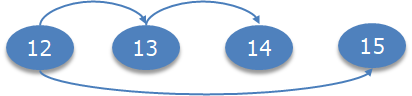
During development processes, it is not unusual to be developing existing logic, and decide that approach being used isn’t right or not going to perform as well. So you abandon your changes and revert back to the last approved version. However, this isn’t possible as any save will result in a new iteration. The API-P will be getting some enhanced version management features. But today to be able to undo the changes we need a means to ‘revert forward‘ (hence the tool name) that is to take an older iteration and make it the latest, as illustrated in the next diagram.
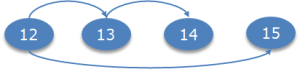
Today the API-P doesn’t provide a means to perform this process within the User interface. However when looking at a gateway you can review the API policy deployed. As we established previously that you may have different gateways deployed with different iterations. Given this, as API-P has been built true to the principles of separating the UI from the back-end through the use of APIs we can deduce there should be a means to get the details of an API with a specific iteration.

To this end we have built on the pattern previously illustrated to provide the means to ‘Revert Forward’ by creating a Groovy script that will use the APIs provided by API-P to retrieve an iteration and push it back at the latest version. When the policy is pushed back it also modifies the description to show which iteration has been pushed.

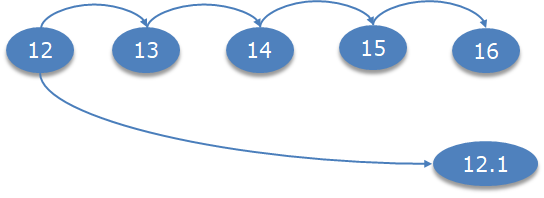
You may ask, why not use the conventional developer approach of branching as suggested in the following diagram. However API-P’s iteration framework doesn’t extend to support this.
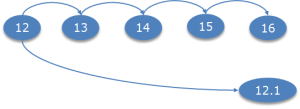
The next with this is pretty predictable – how do I know which iteration to revert to. You have two options here, firstly either revert in order so you can see the prior version in turn – which whilst visually good, is not necessarily the most practical option. So in the tool we have a parameter that will allow you to display on the console the configuration of each iteration. This does mean you are going to see the policies in a JSON presentation. To make life easier we would recommend good practise and recording in the policy description information that helps determine the policy’s characteristics – and this can be used to better determine iteration behaviour.

If we are able to take an earlier iteration and make it the latest one by pushing it back then it is a short step to actually target a different management cloud in effect migrating the policies. Whilst possible it comes with some serious cautions …

  • You risk undermining your version management, which management cloud has the master, and the iteration numbers will NOT migrate so it’s not like this info can be used to distinguish the laster version
  • The logic included doesn’t accommodate handling differences in policy versions – so if trying move between instances of the API Platform they need to be the same version otherwise your configuration could make a mess of thing
  • This issue is further compounded if you are deploying custom Java policies.
  • Environment specific policies simply won’t work for example gateway based routing.

Oracle does not recommend that the policies be stored anywhere outside of the platform, whilst it this utility makes that a possibility, it deliberately avoids writing any of the information to the file, the policies only reside outside of the platform for the duration of the process execution.

The Tools Commands

All the parameters assume the values will not contain any space characters. Each command is preceded by a dash eg. revertForward.groovy -inpassword mypass -inSvr https://a.b.com

  • -h or -help – provides this information
  • -inName – user name to access the source management cloud
  • -inPass – password for the source management cloud
  • -inSvr – The server address without any attributes e.g. https://1.2.3.4
  • -policy – numeric identifier for the policy of interest
  • -iter – iteration number of interest for the policy – optional
  • -outName – optional, the target management cloud username, only needed for migrations
  • -outPass – optional, the target management cloud password, only needed for migrations
  • -outSvr – optional, the target management cloud server address – same formatting as inSvr, only needed for migrations
  • -override – optional, if migrating to another management, tells the script to replace the existing policy of the same name if found
  • -view – optional, separate command to allow viewing of the policy – requires one of the following values:
    • display – displays all the details of the policy, if no iteration is provided this will be the latest iteration
    • summary – provides the headline information of the policy including name, change date etc
    • summary-all – summarizes all the iterations from the current one back to the 1st
  • -debug – optional, will get script to report more information about what is happening

The code can be obtained from my GitHub repository here.

Share this:

  • Click to share on Facebook (Opens in new window) Facebook
  • Click to share on X (Opens in new window) X
  • Click to share on Pocket (Opens in new window) Pocket
  • Click to share on Reddit (Opens in new window) Reddit
  • Click to email a link to a friend (Opens in new window) Email
  • Click to share on WhatsApp (Opens in new window) WhatsApp
  • Click to print (Opens in new window) Print
  • Click to share on Tumblr (Opens in new window) Tumblr
  • Click to share on Mastodon (Opens in new window) Mastodon
  • Click to share on Pinterest (Opens in new window) Pinterest
  • More
  • Click to share on Bluesky (Opens in new window) Bluesky
  • Click to share on LinkedIn (Opens in new window) LinkedIn
Like Loading...

Understanding API Deployment State on API Platform

25 Thursday Jan 2018

Posted by mp3monster in API Platform CS, APIs & microservices, development, General, Oracle, Technology, tools

≈ 6 Comments

Tags

API, API Platform, API-PCS, Groovy, iterations, Oracle, Script, Technology, utility, versions

The new Oracle API Platform makes it possible to deploy different versions of your APIs to different gateway instances. When you you’re managing the Development API Policies through all the different stages of the lifecycle (Design to Production) from a single management tier such a capability is essential. This is further challenged by the fact that each save of you API Definition creates a new iteration (the term used to identify each saved ‘version’ of the API)

However it does lead the challenge from a management perspective of knowing which iterations are running on each Gateway.. you can get the information from the current UI but it requires multiple steps to get the information. The UI also lends itself more to the design processes today than perhaps the more dense information views that a operational report might warrant.

I’m sure that over time these views will come, but today we can solve the problem by taking advantage of the fact that the product lives by its own ‘mission’ by offering a very rich set of APIs. As a result it becomes possible to actually build your own views. To that end I have written a Groovy script which will go through each API that can be seen and retrieves the iteration deployed to each logical gateway.

In terms of running the script you obviously need Groovy installed. It expects 3 parameters which are:

  • Server address e.g. https://1.2.3.4
  • Username e.g. weblogic
  • Password e.g. Welcome1

You can hardwire into the script default values which will then be used if no parameters are provided.

Here is a screenshot of some output.  I have masked out some information for reasons of security. But there should be enough here to give a sense of what is happening:

APIPlatformScript

The script includes suppressing certificate validation – necessary if you haven’t yet deployed your own specific certificate and still working with the default Oracle certificate.

Feel free to take the script and play with it. I make no claims to it’s elegance etc but I have tried to comment it so you can see what is going on. I have tried to keep the code fairly simple so you can see how it works and processes the JSON responses. The script is available at: https://github.com/mp3monster/Utils/blob/master/getDeployedIterations.groovy

For more about the APIs involved in the script, checkout

  •  https://docs.oracle.com/en/cloud/paas/api-platform-cloud/apfrm/api-APIs.html
  • https://docs.oracle.com/en/cloud/paas/api-platform-cloud/

Share this:

  • Click to share on Facebook (Opens in new window) Facebook
  • Click to share on X (Opens in new window) X
  • Click to share on Pocket (Opens in new window) Pocket
  • Click to share on Reddit (Opens in new window) Reddit
  • Click to email a link to a friend (Opens in new window) Email
  • Click to share on WhatsApp (Opens in new window) WhatsApp
  • Click to print (Opens in new window) Print
  • Click to share on Tumblr (Opens in new window) Tumblr
  • Click to share on Mastodon (Opens in new window) Mastodon
  • Click to share on Pinterest (Opens in new window) Pinterest
  • More
  • Click to share on Bluesky (Opens in new window) Bluesky
  • Click to share on LinkedIn (Opens in new window) LinkedIn
Like Loading...

    I work for Oracle, all opinions here are my own & do not necessarily reflect the views of Oracle

    • About
      • Internet Profile
      • Music Buying
      • Presenting Activities
    • Books & Publications
      • Logging in Action with Fluentd, Kubernetes and More
      • Logs and Telemetry using Fluent Bit
      • Oracle Integration
      • API & API Platform
        • API Useful Resources
        • Useful Reading Sources
    • Mindmaps Index
    • Monster On Music
      • Music Listening
      • Music Reading
    • Oracle Resources
    • Useful Tech Resources
      • Fluentd & Fluent Bit Additional stuff
        • Logging Frameworks and Fluent Bit and Fluentd connectivity
        • REGEX for BIC and IBAN processing
      • Java and Graal Useful Links
      • Official Sources for Product Logos
      • Python Setup & related tips
      • Recommended Tech Podcasts

    Oracle Ace Director Alumni

    TOGAF 9

    Logs and Telemetry using Fluent Bit


    Logging in Action — Fluentd

    Logging in Action with Fluentd


    Oracle Cloud Integration Book


    API Platform Book


    Oracle Dev Meetup London

    Blog Categories

    • App Ideas
    • Books
      • Book Reviews
      • manning
      • Oracle Press
      • Packt
    • Enterprise architecture
    • General
      • economy
      • ExternalWebPublications
      • LinkedIn
      • Website
    • Music
      • Music Resources
      • Music Reviews
    • Photography
    • Podcasts
    • Technology
      • AI
      • APIs & microservices
      • chatbots
      • Cloud
      • Cloud Native
      • Dev Meetup
      • development
        • languages
          • java
          • node.js
      • drone
      • Fluentbit
      • Fluentd
      • logsimulator
      • mindmap
      • OMESA
      • Oracle
        • API Platform CS
          • tools
        • Helidon
        • ITSO & OEAF
        • Java Cloud
        • NodeJS Cloud
        • OIC – ICS
        • Oracle Cloud Native
        • OUG
      • railroad diagrams
      • TOGAF
    • xxRetired
    • AI
    • API Platform CS
    • APIs & microservices
    • App Ideas
    • Book Reviews
    • Books
    • chatbots
    • Cloud
    • Cloud Native
    • Dev Meetup
    • development
    • drone
    • economy
    • Enterprise architecture
    • ExternalWebPublications
    • Fluentbit
    • Fluentd
    • General
    • Helidon
    • ITSO & OEAF
    • java
    • Java Cloud
    • languages
    • LinkedIn
    • logsimulator
    • manning
    • mindmap
    • Music
    • Music Resources
    • Music Reviews
    • node.js
    • NodeJS Cloud
    • OIC – ICS
    • OMESA
    • Oracle
    • Oracle Cloud Native
    • Oracle Press
    • OUG
    • Packt
    • Photography
    • Podcasts
    • railroad diagrams
    • Technology
    • TOGAF
    • tools
    • Website
    • xxRetired

    Enter your email address to subscribe to this blog and receive notifications of new posts by email.

    Join 2,555 other subscribers

    RSS

    RSS Feed RSS - Posts

    RSS Feed RSS - Comments

    January 2026
    M T W T F S S
     1234
    567891011
    12131415161718
    19202122232425
    262728293031  
    « Nov    

    Twitter

    Tweets by mp3monster

    History

    Speaker Recognition

    Open Source Summit Speaker

    Flickr Pics

    Gogo Penguin at the BarbicanGogo Penguin at the BarbicanGogo Penguin at the BarbicanGogo Penguin at the Barbican
    More Photos

    Social

    • View @mp3monster’s profile on Twitter
    • View philwilkins’s profile on LinkedIn
    • View mp3monster’s profile on GitHub
    • View mp3monster’s profile on Flickr
    • View mp3muncher’s profile on WordPress.org
    • View philmp3monster’s profile on Twitch
    Follow Phil (aka MP3Monster)'s Blog on WordPress.com

    Blog at WordPress.com.

    • Subscribe Subscribed
      • Phil (aka MP3Monster)'s Blog
      • Join 233 other subscribers
      • Already have a WordPress.com account? Log in now.
      • Phil (aka MP3Monster)'s Blog
      • Subscribe Subscribed
      • Sign up
      • Log in
      • Report this content
      • View site in Reader
      • Manage subscriptions
      • Collapse this bar
     

    Loading Comments...
     

    You must be logged in to post a comment.

      Privacy & Cookies: This site uses cookies. By continuing to use this website, you agree to their use.
      To find out more, including how to control cookies, see here: Our Cookie Policy
      %d